
Compare Hangzhou seasons and choose dates around your interests, weather and Chinese holidays, with practical advice on clothing and flexible itineraries.
For most first-time visitors, spring and autumn are the best starting points for a Hangzhou trip. Spring brings fresh growth, flowers and the main Longjing tea season. Autumn often offers a more comfortable setting for longer walks, with opportunities for osmanthus fragrance, changing leaves and wetland reeds.
If your main priority is a balanced itinerary with plenty of outdoor time, consider late March to May or mid-October to November, then check the holiday calendar before choosing dates. These are recommended planning windows, not promises of dry weather, peak flowers or uncrowded paths.
Hangzhou can be enjoyable throughout the year. Summer suits travellers who want lotus scenery and can adapt to heat. Winter can work for museums, shorter walks and a gentler cultural visit. The right month depends on what you want to do, how much walking feels comfortable and whether you can avoid the busiest travel periods.
This guide explains how seasons affect West Lake, tea villages, Xixi Wetland, archaeological visits and evening activities. It also covers clothing, weather alternatives and holiday planning, so your itinerary works with the conditions rather than relying on an ideal forecast.
Which Season Should You Choose?
| Season | Main appeal | Main planning challenge | A useful approach |
|---|---|---|---|
| Spring, broadly March–May | Fresh foliage, flowers and tea culture | Changeable weather, rain and popular seasonal weekends | Keep outdoor days movable and confirm harvest or bloom conditions |
| Summer, broadly June–August | Lush scenery and West Lake lotus | Early-summer rain, humidity and midsummer heat | Walk earlier, rest around midday and reduce exposed routes |
| Autumn, broadly September–November | Comfortable walking opportunities, osmanthus and later autumn scenery | September can remain hot; holidays and seasonal peaks draw visitors | Choose dates around the actual holiday calendar and current conditions |
| Winter, broadly December–February | Museums, short cultural outings and a different lake atmosphere | Cold or damp conditions and reduced outdoor comfort | Use shorter walks and indoor breaks; check seasonal operations |
The boundaries are approximate. Early September may feel like summer, while an unusually warm November day can make an outdoor visit very pleasant. Look at the forecast for your actual trip rather than packing only for the name of the season.
The Best Time Depends on Your Main Interest
| What matters most to you? | Suggested starting window | What to confirm |
|---|---|---|
| A first visit with West Lake, temples and tea | Spring or mid-to-late autumn | Holiday dates, entry bookings and the likely balance of indoor and outdoor time |
| Seeing the main spring tea harvest | Usually late March into April | The specific grower’s harvest and whether visitor activities are offered |
| Spring flowers | Late winter through spring, depending on the plant | Recent bloom reports and any temporary access arrangements |
| West Lake lotus | Summer, often July–August | Current flowering at the selected viewing area and the heat forecast |
| Osmanthus fragrance | Autumn, commonly September–October | Local bloom reports; flowering can occur in waves |
| Autumn foliage and Xixi reeds | Later autumn into early winter, depending on the location | Current colour or reed condition and the route that reaches it |
| A family trip with substantial walking | Mild spring or autumn dates outside major holidays | Children’s routine, breaks and accommodation location |
| Museums and a slower cultural trip | Any season, including winter | Opening days, exact branches and current entry procedures |
Treat seasonal scenery as a reason to investigate dates, not a guaranteed inclusion. Tea harvesting, flowers, leaf colour and wildlife all respond to conditions in a particular year.
Spring in Hangzhou: Flowers, Fresh Growth & Tea Culture
Spring is a strong choice if you want to combine West Lake with a tea village and a little time in the surrounding hills. The landscape begins to feel fresh, and different flowers appear at different stages of the season.
It is also popular. A scenic weekend during a flower display can be busy even when it falls outside a national holiday. Arrive earlier, keep the route selective and avoid assuming that a garden will be quiet simply because it is not peak summer.
March: A Changing Season
March can offer an appealing transition from winter to spring. Conditions may still feel cool, particularly beside water or on damp mornings.
Plan layers and a manageable outdoor route. If spring flowers are a priority, check current reports before selecting a park. A photograph from the same week in another year is not evidence of this year’s bloom.
A museum or a seated tea experience can provide a useful alternative if rain makes a long walk less attractive.
April: A Good Starting Point for Tea-Focused Travel
April is worth considering for visitors particularly interested in Longjing tea. The main spring harvest takes place around this part of the year, although the start and pace vary by cultivar, weather and growing area.
For example, harvesting began in the Wengjiashan protected area on 17 March in 2026. That is a record of one season, not a date to reuse for future trips.
If you want to see picking or processing, arrange the visit with a specific host. Ask what activity is expected on your day, whether you can observe or participate, and what happens if agricultural work or weather changes the plan.
A normal tea tasting can still be worthwhile without a live harvest. Do not make a meaningful tea visit depend on witnessing one exact stage of production.
May: More Warmth, With Holiday Planning Essential
May can support a varied itinerary, but warmer afternoons and the Labour Day travel period need consideration. Choose the dates before committing to a long programme of outdoor walking.
Keep a proper lunch break and allow time for transfers between the lake, temple area and tea villages. A pleasant season does not remove the distance between them.
What to Wear in Spring
Bring light layers, a warmer layer for cool periods and a compact waterproof outer layer. Comfortable shoes with grip are useful for temple steps, garden paths and wet paving.
Avoid relying on a single heavy coat or only short sleeves. Clothing you can add and remove is more practical when the day’s conditions change.

For the village setting and practical visit advice, see our Longjing Tea Village Guide.
Summer in Hangzhou: Lotus Scenery, Rain & Heat
Summer brings a lush setting and a reason to visit West Lake’s lotus-viewing areas. It also calls for the biggest adjustment to a walking-heavy itinerary.
June and midsummer should not be treated as identical. Early summer can involve persistent rain, while July and August are generally the hottest part of the year. Short thunderstorms and other weather disruptions remain possible.
June and the Plum-Rain Period
Hangzhou and the surrounding region experience the meiyu, or plum-rain season, around the transition from late spring to summer. June and early July are the main period to consider, but its onset, duration and intensity change each year.
Expect the possibility of humid conditions, repeated showers or longer spells of rain. It does not mean every day is unusable, but an itinerary that depends on several consecutive dry outdoor days is less robust.
The best adjustment is to preserve the trip’s themes while changing their order. Keep a museum day available, shorten wetland or tea-hill walks and confirm boat services before leaving the hotel.
July and August: Start Earlier and Rest Longer
If you travel in midsummer, begin outdoor sightseeing earlier and reduce the exposed walking planned for the middle of the day. A proper indoor lunch and hotel break can be more useful than trying to fit in an additional viewpoint.
West Lake lotus can provide an attractive seasonal focus. Select one viewing area and check recent conditions rather than chasing several flower locations in the heat.
Families and visitors who prefer a gentle pace should shorten causeway walks and archaeological park routes. Cars and boats can help with part of the journey, but waiting, boarding and the walks at each end still require energy.
Is Summer a Bad Time to Visit?
No. It can work well when school holidays determine your travel dates or lotus scenery is a priority. The itinerary should simply look different from a cool-weather walking trip.
Use one main outdoor experience each morning, an indoor or restful middle of the day and an optional short evening outing. Avoid assuming that more daylight means you should keep sightseeing for longer.
What to Wear in Summer
Pack lightweight, breathable clothing, comfortable footwear, a hat and sun protection. Carry drinking water and a compact rain layer or umbrella for walking.
A light extra layer can be useful in air-conditioned interiors and on journeys. Insect repellent may be useful around planted waterside areas; use it according to the product instructions.
Check the actual boat’s shelter arrangement. “Boat ride” does not automatically mean shade or protection from rain.
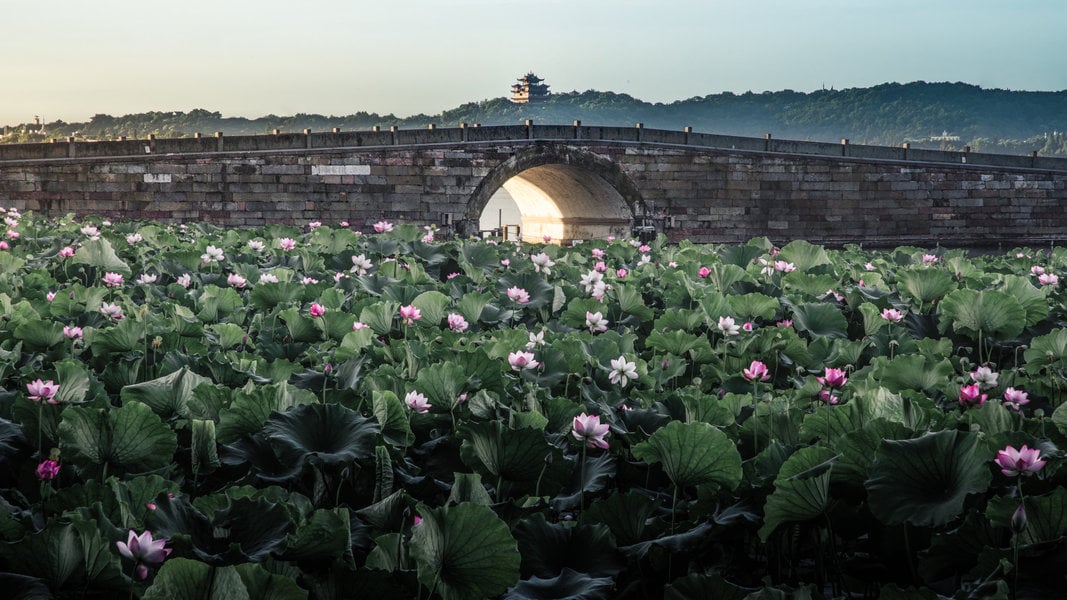
Summer lotus flowers beside West Lake in Hangzhou
Autumn in Hangzhou: Walking, Osmanthus & Later Colour
Autumn is an excellent starting point for visitors who want more outdoor time without the main midsummer heat. It is particularly appealing for a balanced trip that includes West Lake, tea landscapes and either the canal or Xixi.
There are two important distinctions: September can still be warm, and the first week of October is a major travel period. Choosing autumn does not automatically mean cooler conditions or fewer visitors.
September: A Transition Rather Than a Guarantee
September can suit travel, but check for lingering heat and any severe-weather forecast. Rain and wind associated with tropical weather systems can affect the region in late summer or early autumn; the timing is not fixed.
If osmanthus is a priority, follow local reports. Different varieties and locations can flower at different times, and early blossoms do not necessarily mean that a whole district has reached its main display.
October: Balance the Season With the Holiday Calendar
October is attractive for a first visit, particularly after the National Day travel peak if your dates are flexible. Plan around the official holiday period and the busiest arrival and departure movements rather than assuming every October date behaves alike.
A weekday outside the main holiday may be a useful choice for popular lake and temple areas. It is still sensible to arrange required bookings and keep a realistic pace.
November: A Strong Candidate for Longer Outdoor Visits
November can suit walkers and visitors interested in later autumn foliage or Xixi’s reeds. Check the current appearance at your chosen location before making a seasonal photograph the main purpose of the day.
The evening may feel considerably cooler than the afternoon. A shaded tea village, an open archaeological landscape and a seated night show can each call for an extra layer.
What to Wear in Autumn
Bring layers, including a jacket for mornings, evenings and colder days. Add rain protection and shoes suitable for wet leaves or paving.
Do not pack only for the warmest daytime forecast. Sitting outdoors for a performance or standing by the river feels different from walking in sunshine.
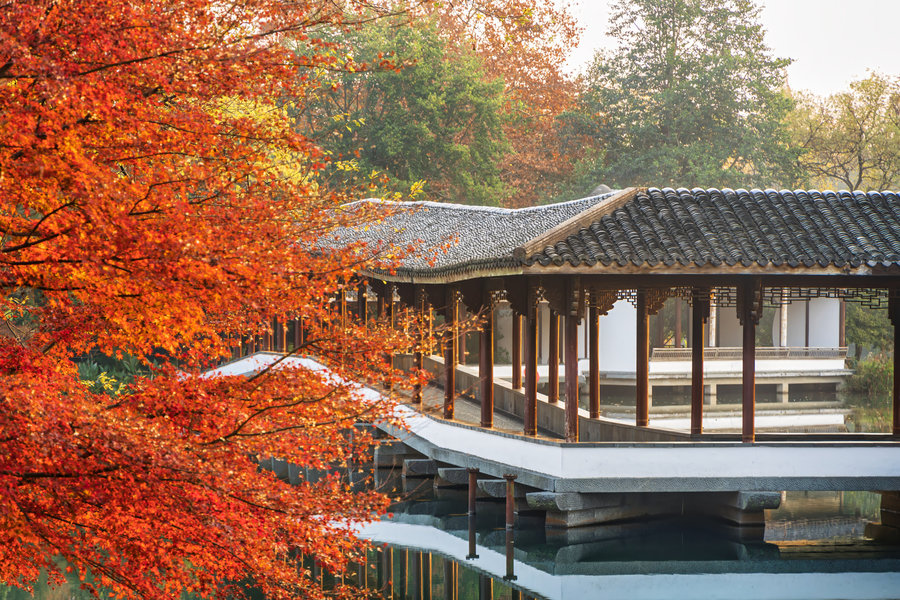
Autumn foliage beside West Lake in Hangzhou
Winter in Hangzhou: Museums and Shorter Outdoor Days
Winter can suit visitors who want a quieter pace, museum collections, cultural interpretation and shorter walks. The lake and waterways have a different appearance, without the dense greenery of summer.
Conditions can be cold or damp, and a waterside pause may feel chillier than the temperature alone suggests. Snow sometimes occurs, but it should not be the foundation of a winter itinerary.
What Works Well?
Choose one focused outdoor visit and combine it with indoor time. A short West Lake walk followed by a museum, lunch and rest can create a satisfying day.
Tea culture remains possible through a confirmed host or tasting, but winter is not the main spring-harvest experience. Plan the visit for its conversation and setting rather than promising active picking.
Late-winter plum blossoms can be a seasonal interest. Timing varies, so check recent conditions instead of treating a calendar month as proof of flowering.
Check Operations and Comfort
Outdoor shows, boats and attractions may have seasonal programmes, shorter service hours or temporary suspensions. Verify the actual service before buying or travelling to the venue.
Choose accommodation with comfortable room heating and convenient dining. A distant scenic hotel may offer a lovely setting while making short city visits less practical.
What to Wear in Winter
Bring a warm coat, useful layers and footwear suitable for damp conditions. A scarf and other warm accessories can help during boat rides or extended outdoor pauses.
Choose clothing around your actual activities. A seated outdoor show requires a different level of warmth from a brief walk between heated interiors.
How Weather Changes the Main Hangzhou Experiences
| Experience | Main weather consideration | Practical adjustment |
|---|---|---|
| West Lake walking | Heat, rain and exposure on longer routes | Select one section, start earlier in summer and shorten wet-weather walks |
| West Lake boats | Wind, storms and operator decisions | Confirm the chosen service and retain a shore-based alternative |
| Lingyin and Feilai Peak | Wet steps, wooded paths and walking demands | Keep the route focused, use shoes with grip and follow the booked entry window |
| Tea villages | Weather on permitted paths and seasonal agricultural work | Confirm a host and preserve a seated experience if walking is reduced |
| Xixi Wetland | Heat, wet surfaces and boat operations | Choose one entrance area and one boat or walking plan |
| Liangzhu archaeological park | Exposed distances and outdoor comfort | Use a selected route or make the museum the main visit |
| Canal neighbourhoods | Rain, hot afternoons and museum opening days | Combine a short street walk with one open indoor venue |
| Outdoor shows and cruises | Weather-dependent operations and seated comfort | Read dated notices and booking terms, and arrange the return before departure |
A weather adjustment should reduce demands or change the sequence. It should not automatically add another attraction to compensate for a cancelled one.
Planning Around Chinese Public Holidays
Public holidays can affect Hangzhou more than the difference between two neighbouring weeks of weather. Popular areas attract visitors, hotels and transport can fill, and queues can consume time that would otherwise be spent sightseeing.
If your dates are flexible, look at the official calendar for the travel year before booking flights or choosing a tour departure.
| Holiday or travel period | What to consider for a Hangzhou visit |
|---|---|
| Spring Festival / Chinese New Year | Major national travel movements, changing business hours and special opening arrangements |
| Qingming | Spring sightseeing demand alongside the holiday; popular seasonal areas may be busy |
| Labour Day in early May | A significant leisure-travel period; plan accommodation and transport earlier |
| Dragon Boat Festival | A shorter holiday that can coincide with wet or warm early-summer conditions |
| Mid-Autumn Festival | Evening activities and leisure travel; dates move with the lunar calendar |
| National Day in early October | A major travel peak affecting central sights, roads and intercity transport |
| Summer school holidays | Family travel demand even outside public holidays |
| Flower-season and autumn weekends | Concentrated demand at particular parks or viewing areas |
The length and arrangement of holiday breaks vary. Spring Festival, Dragon Boat Festival and Mid-Autumn dates move between Gregorian calendar years. Compensatory working weekends can also change the pattern of travel.
If You Must Travel During a Holiday
Choose accommodation and transport first, then secure any required attraction entry and hosted activities. Keep the number of daily stops modest.
Visit popular outdoor areas earlier where possible, eat near the route and allow longer transfers. Avoid a plan that depends on a quick boat queue followed immediately by a timed show across the city.
Check special museum opening notices instead of applying a normal Monday-closure rule blindly. Holiday opening can be followed by a different closure arrangement.
For evening displays, establish the pickup point and return journey in advance. A large crowd leaving together can affect both taxi availability and road access.
How Early Should You Book?
Arrange the parts with the greatest consequences first: accommodation, intercity travel and any must-have host, workshop or performance. Book train tickets when the relevant booking window opens rather than expecting every service to be available months ahead.
For attractions, follow their actual reservation window. A request to book early does not mean every venue sells entry far in advance.
There is no universal number of weeks that guarantees availability. Group size, room type, date and supplier all matter. If family occupancy, connecting rooms or specialised interpretation is important, start enquiring before the final details become urgent.
Events and Seasonal Activities: Verify the Year
Flower programmes, tea activities, reed-viewing events and special night experiences can add interest. Their dates, routes and booking arrangements need checking for the actual year.
A festival’s advertised dates and the best natural conditions are not necessarily the same. Flowers can peak before or after the main publicity period; an organised reed programme may use a particular boat service.
Before making an event central to your trip, confirm the venue, exact dates, activity content, entry requirements and language support. If no current announcement exists, keep the experience as an optional possibility rather than a guaranteed itinerary item.
The same principle applies to city lighting and fountains. Seasonal or holiday schedules should not be copied into a year-round evening timetable.
Rainy-Day Planning Without Overfilling the Trip
Have one realistic indoor alternative available, not a long list of places spread across the city.
A museum near your route is often more practical than a famous venue requiring a lengthy transfer. The China National Silk Museum, a selected canal museum, the Hangzhou branch of the Zhejiang Museum of Natural History or a suitable Zhejiang Provincial Museum branch can work, depending on interests and opening arrangements.
Specify the branch before travelling. The natural history museum’s Anji venue is a separate destination; Zhejiang Provincial Museum branches also occupy different locations.
For a Liangzhu day, the museum and archaeological park are separate venues. In poor outdoor conditions, a museum-only visit may be the sensible choice rather than forcing a shortened park stop afterwards.
Check current opening days, entry procedures and overseas document handling. Free admission does not mean immediate access during a busy wet-weather period.
A hotel break is also a useful option. Resting through the heaviest rain and taking a short walk later can preserve the family’s enjoyment more effectively than another cross-city journey.
What to Pack for Any Season
Build a small practical day bag around the conditions and route:
- Comfortable shoes with grip.
- Layers that suit the season and a compact rain option.
- Drinking water and any personal essentials.
- Sun protection when the forecast and activities call for it.
- A charged phone, booking confirmations and saved destination names.
- Original identification required for entry and travel.
For families, add a few snacks and spare clothing. For a boat or show, consider how long you will remain seated and exposed to the air. For tea hills or archaeology, consider surfaces and walking demands rather than choosing shoes only for city pavements.
Check the forecast shortly before packing and again during the visit. A monthly climate description helps you choose dates; a short-range forecast helps you choose the day’s clothing and route.
The Best Timing for Different Travellers
First-Time Visitors
Choose spring or mid-to-late autumn if possible, and give the classic lake, temple and tea experiences enough time. Avoid selecting dates solely for one seasonal photograph.
Families With Children
Mild conditions can make walking and breaks easier, but the hotel location and daily rhythm remain important. If school holidays require summer travel, shorten the outdoor programme and keep a substantial midday rest.
Visitors Who Prefer Less Walking
Choose a season that supports comfortable transfers and short outdoor stops. Museums and hosted tea experiences can work throughout the year when access and operations are confirmed.
Photographers and Nature Enthusiasts
Choose the seasonal subject first, then investigate current conditions and the correct viewing location. Leave more than one possible morning available if your stay allows it.
Travellers Looking for Value
Compare actual prices for dates outside major travel peaks. Winter or non-holiday weekdays may be worth investigating, but lower demand does not guarantee the cheapest room or service. A price saving is less useful if the selected period does not suit the experience you want.
A Practical Way to Finalise Your Dates
Begin with your main interest: a first cultural visit, tea harvest, summer lotus or autumn walking. Choose a broad seasonal window, then check the official holiday calendar and the actual transport and accommodation available.
Once the dates are set, organise required entry and hosted activities. Keep the outdoor days movable where possible, and identify one indoor alternative that fits the route.
During the final week, review the weather and any dated operator notices. Adjust walking length, clothing and activity order rather than rebuilding the entire trip around one forecast icon.
A well-planned Hangzhou visit should still work if one morning is wet, one boat does not operate or a flower display has not reached its peak.
Frequently Asked Questions
What Is the Best Month for a First Visit to Hangzhou?
April or a non-holiday period in October can be useful starting choices. April suits fresh scenery and tea interests; later October can suit a walking-focused trip. Your actual dates and forecast matter more than naming a single universal best month.
Is Spring Better Than Autumn?
Choose spring for flowers and the main tea season, or autumn for a walking-focused visit and seasonal fragrance or colour. Both can work well, and both have busy periods and variable weather.
When Is the Longjing Tea Harvest?
The main spring harvest generally falls around late March and April, with variation by weather, cultivar and growing area. Confirm the host’s actual work and visitor activity for your date.
Can I Visit Tea Villages Outside Spring?
Yes. The landscape, hospitality and a confirmed tasting can still be worthwhile. Do not expect the same agricultural activity as during the main spring harvest.
When Can I See West Lake Lotus?
Summer is the relevant season, often July and August. Check recent conditions at the selected viewing area, and plan the outing around heat and comfort.
When Does Osmanthus Bloom?
Autumn, commonly September and October, is the starting window. Varieties can bloom in waves and weather affects timing, so use recent local reports if fragrance is a priority.
When Is Hangzhou's Rainy Season?
The plum-rain period around June and early July deserves particular attention. Rain is possible in other seasons too, and the wet period’s exact dates change each year.
Should I Avoid June Completely?
Not necessarily. Travel with a flexible itinerary, a realistic indoor alternative and suitable clothing. June is less suited to a plan that requires several uninterrupted dry outdoor days.
Is July or August Too Hot for Sightseeing?
These months require adjustments. Start earlier, shorten walks, rest around midday and keep indoor options available. The trip can still be rewarding, especially if summer is when your family can travel.
Is September Already Cool?
Not reliably. It can remain warm and humid. Check the actual forecast and do not assume the start of autumn immediately brings comfortable all-day walking conditions.
Is Winter Worth Considering?
Yes, for museums, shorter walks and a slower cultural visit. Bring warm layers, check outdoor operations and treat snow or seasonal blossoms as possibilities rather than promises.
Which Holidays Are Most Important to Check?
Spring Festival, Labour Day and National Day deserve particular attention, alongside other public holidays and popular seasonal weekends. Use the official calendar for the travel year.
Does Rain Cancel Boats or Shows?
It depends on the operator and conditions. Check the dated notice and booking terms. Do not assume either that all rain cancels a service or that every booking will operate regardless of weather.
Are Museums a Reliable Monday Rain Alternative?
Not automatically. Opening days differ, and holiday arrangements can change the normal pattern. Check the exact museum and branch before travelling.
What Should I Wear for an Outdoor Evening Show?
Bring clothing for sitting still beside water, including an extra layer when conditions call for it. Check the weather and the venue’s rain arrangements before leaving the hotel.
How Far Ahead Should I Confirm Seasonal Events?
Research them while planning, then verify the current year’s announcement when available. Recheck dates and access before travel; an older event page should not become a guaranteed inclusion.
Plan Your Hangzhou Visit Around the Right Season
Would you like help choosing dates or adapting an itinerary to the weather? Share your proposed travel window, group ages, walking preferences and main interests with our Hangzhou-based team.
We can help shape a practical route around West Lake, tea culture, museums, the canal or wetlands, with seasonal activities included only where they are confirmed. Tell us whether your priority is comfortable walking, a particular natural display or travelling around school holidays.
For wider city planning, explore our Hangzhou Travel Guide.
Prepared for: Discover East China Tours
Last updated: 8 October 2026