
Plan a relaxed Tongli visit with Tuisi Garden, the Three Bridges, canal walks and practical advice on tickets, transport and overnight stays.
Tongli is a water town south of central Suzhou where canals, stone bridges and traditional houses form the setting for an unhurried day. Its appeal lies in the combination: a classical garden, historic residences, waterside streets and places to stop for tea as boats pass below.
For a first visit, give Tongli four to six hours in the town itself, plus travel time. Start with the Retreat and Reflection Garden, continue to the Three Bridges area, visit one or two historic houses, and leave room for lunch and a canal-side walk. A boat trip can add a different perspective if the service is operating and the conditions suit your group.
Tongli works well as a day trip from Suzhou. Staying overnight is worth considering if early morning walks and an evening beside the canals are important to you. From Shanghai, allow a full day and plan the return journey before setting out.
This guide covers the main sights, a practical visiting route, tickets, transport, food, accommodation and the choices that make the most difference to your experience.
Tongli at a Glance
| Planning detail | What to know |
|---|---|
| English name | Tongli Water Town / Tongli Ancient Town |
| Chinese name | 同里古镇 — Tongli Guzhen |
| Location | Tongli Town, Wujiang District, Suzhou, Jiangsu Province |
| Suggested time in town | Four to six hours for a first visit; longer for a boat trip, additional attractions or an evening stay |
| Main sights | Retreat and Reflection Garden, the Three Bridges, historic halls and canal-side lanes |
| Nearby metro connection | Suzhou Metro Line 4 to Tongli Station, followed by local transport to the ancient town |
| Ticket planning | Check the current daytime sightseeing ticket and its included attractions |
| Separate purchases to check | Canal boats, performances, special evening experiences and other optional activities |
| Best suited to | Visitors who enjoy gardens, traditional architecture, photography and relaxed walking |
The timings in this guide are suggested planning allowances. They exclude travel to and from Tongli.
Is Tongli Worth Visiting?
Tongli is a good choice if you want to experience a Jiangnan water town without limiting your visit to a quick photograph of a bridge. You can explore a recognised classical garden, step inside historic residences and then spend time along the canals.
The town is particularly appealing for:
- First-time visitors to Suzhou who want to add a water-town day.
- Travellers interested in traditional homes and garden design.
- Families who prefer a flexible walking day with regular breaks.
- Photographers who enjoy reflections, stone bridges and waterside architecture.
- Couples considering an overnight stay in a small guesthouse or boutique hotel.
Tongli is a well-established tourist destination. Expect shops, restaurants, organised visitor groups and busy stretches around its most familiar sights. Quieter moments are easier to find when you allow time to walk beyond the main concentration of visitors.
If your stay in Suzhou is very short, decide what you most want to see. A major city garden and a Pingjiang Road walk may be enough for one day. Add Tongli when you can give it a proper half day or more rather than squeezing it between timed city attractions.
Where Is Tongli, and How Does It Fit into a Suzhou Trip?
Tongli is in Suzhou’s Wujiang District, south of the central old town. It requires a separate journey from the area around the Humble Administrator’s Garden, Suzhou Museum and Pingjiang Road.
A common source of confusion is Tongli metro station. The station serves the broader area; it is not an entrance to the historic town. Plan a final transfer by a currently operating local service, taxi or ride-hailing car.
For a two-day Suzhou trip, a workable arrangement is:
- Day one: a classical garden and selected old-town neighbourhoods.
- Day two: Tongli, with time for the garden, canals, lunch and an optional boat ride.
If you have three days, consider spending one night in Tongli. That gives you time to appreciate the town before day visitors arrive and after many have left.
A Brief Introduction to Tongli’s History
Tongli developed within the waterways and trading networks of the lower Yangtze region. Its canals connected commercial activity with daily life, while prosperous households and scholars contributed to the town’s residential architecture.
The historic centre combines bridges, lanes, traditional homes and gardens. Some places have been restored, adapted or given new uses, so the town should not be understood as an entirely unchanged historical settlement.
The Retreat and Reflection Garden is a component of the UNESCO-listed Classical Gardens of Suzhou. This recognition applies to the garden within that World Heritage property; it should not be taken to mean that the entire Tongli ancient town has the same inscription.
That garden is one reason Tongli offers more than attractive canal scenery. It lets you compare a deliberately composed private landscape with the waterways and streets outside its walls.
The Best Things to See and Do in Tongli
1. Visit the Retreat and Reflection Garden — 退思园
The Retreat and Reflection Garden, also called Tuisi Garden, is the main cultural priority for most first-time visitors.
It was created in the late Qing dynasty for Ren Lansheng. Its name expresses the idea of reflection after withdrawing from official life. The compact setting brings buildings, water, rocks and planting into close relationship.
Give yourself 45 to 75 minutes as a planning allowance. You may want longer if you are interested in architecture, interpretation or photography.
Start by observing the transition from the residential spaces into the garden. Once you reach the water landscape, compare the views from different permitted paths and openings. The scale is intimate enough that a small change in position can alter the composition noticeably.
Look for:
- Buildings and covered passages close to the water.
- Reflections that connect rooflines with the pond below.
- Doorways and windows that frame parts of the landscape.
- The way a compact space creates a sequence of different scenes.
Follow the current visitor route and access signs. Some interiors or approaches may be restricted, and you do not need to enter every room to appreciate the design.
If you have already visited a larger garden in central Suzhou, use Tuisi Garden as a comparison. Notice how the smaller setting changes your sense of distance and the relationship between buildings and water.
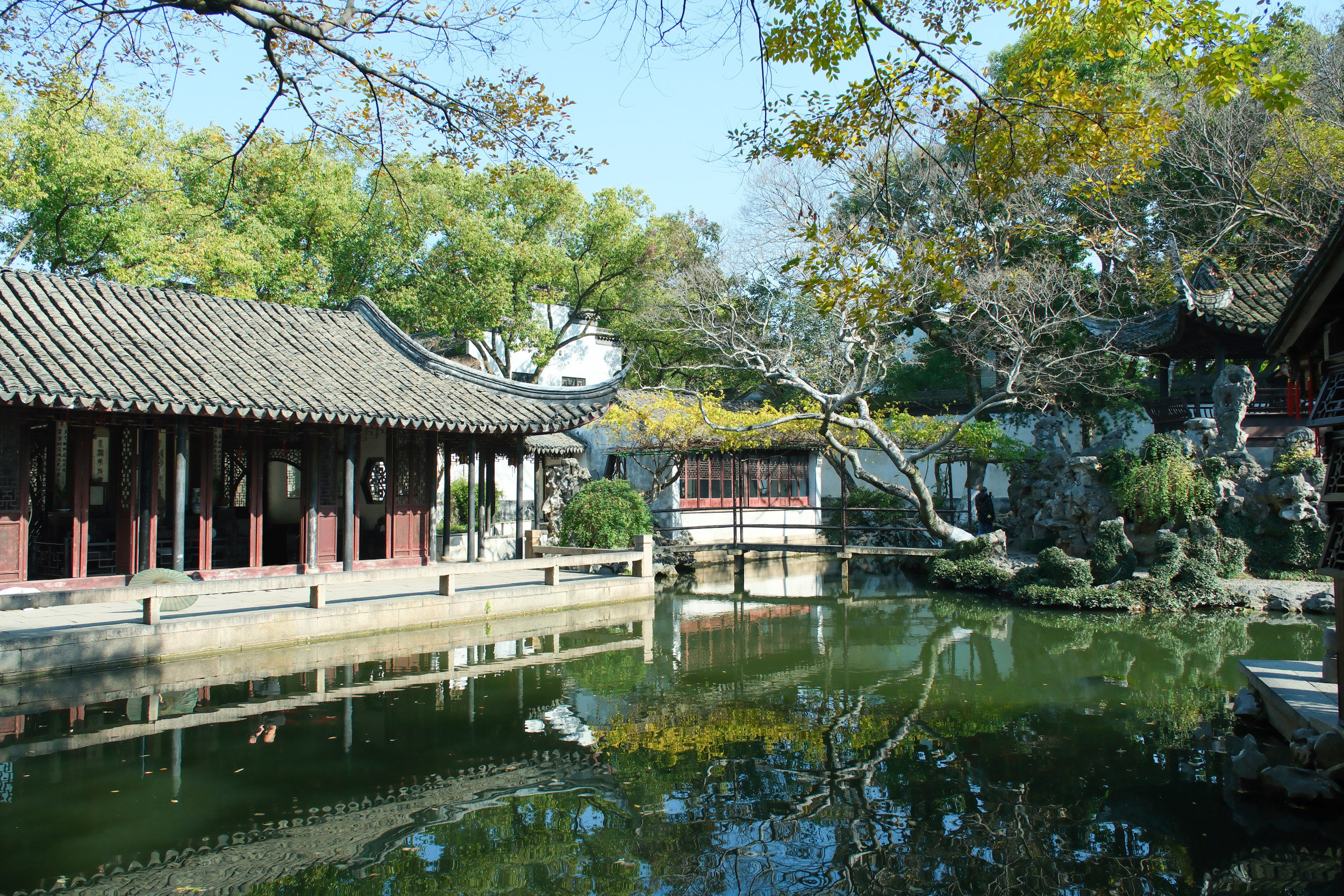
The pond, covered passages and pavilions in Tuisi Garden
2. Explore the Three Bridges — 三桥
Tongli’s Three Bridges are Taiping Bridge — 太平桥, Jili Bridge — 吉利桥, and Changqing Bridge — 长庆桥.
Their close arrangement makes this one of the town’s most recognisable areas. The local custom of walking across the bridges is associated with good wishes on celebratory occasions, including weddings and birthdays.
Allow around 20 to 30 minutes to explore the area at a relaxed pace. Cross the bridges where permitted, look along the adjoining canals and step back to see how the bridges connect the streets.
Do not expect to witness a traditional celebration on every visit. The area is worthwhile for its setting even when no special activity is taking place.
It can become crowded, so avoid stopping on a bridge crest when others are trying to pass. A viewpoint from the adjoining canal bank may give you a clearer photograph and more time to look.

3. Step Inside Jiayin Hall — 嘉荫堂
Jiayin Hall introduces the domestic side of Tongli’s history. Rather than seeing only the exterior of a waterside home, you can examine how rooms, courtyards and decorative features form a residential sequence.
Allow 20 to 30 minutes if it is included in your ticket and open during your visit.
Look closely at carved details and the relationship between formal rooms and smaller spaces. A good guide can help explain imagery and household customs that might otherwise be easy to overlook.
4. Visit Chongben Hall — 崇本堂
Chongben Hall is another historic residence near the Three Bridges area. It provides an opportunity to compare a second household setting without adding a long transfer to your day.
Allow a similar 20 to 30 minutes, adjusted to your interest and the areas currently open. Pay attention to architectural details, the progression through the building and any visitor displays.
Current uses and exhibitions can change. Treat it as a historic architectural stop and check the on-site information for the interpretation available during your visit.
If you would rather spend more time walking beside the canals, choose one of the two halls. You do not need to visit every included attraction to have a worthwhile day.
5. Walk the Canal-Side Lanes
The canals are the thread connecting the visit. Leave at least an hour across the day for walking, stopping and looking beyond the principal attractions.
Follow publicly accessible lanes, cross a bridge when the route permits and compare the view from the opposite bank. A scene that feels crowded on one side may look quite different from another angle.
Look for everyday details: steps leading down towards the water, the relationship between front doors and lanes, and the way bridges shape movement through the town.
Some buildings are private homes. Keep to visitor routes and avoid entering doorways or photographing residents closely without permission.
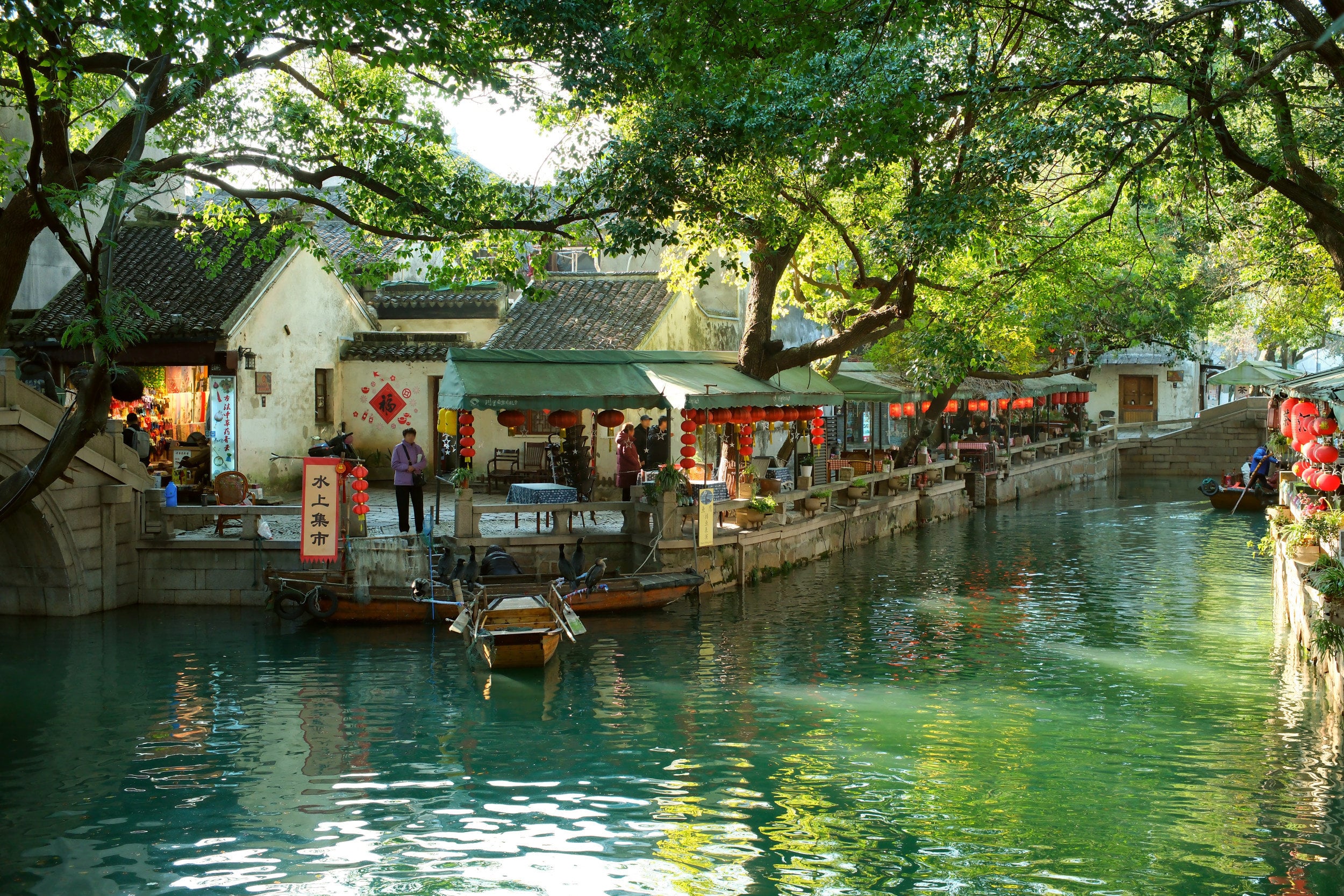
Traditional houses and a publicly accessible canal-side lane in Tongli
6. Browse Mingqing Street — 明清街
Mingqing Street is a useful place for a more commercial part of the visit: browsing shops, finding something to eat and seeing the town’s visitor-facing street life.
It can be lively, particularly at busy times. Spend as much or as little time here as suits you, then return to the canals if that is the part of Tongli you most enjoy.
Check prices before ordering or purchasing. There is no need to build the day around shopping, and a few small stops are usually enough.
7. Take a Canal Boat Trip
A boat ride offers a lower viewpoint of the bridges and waterside buildings. It can be a pleasant addition after walking, especially if you want a break without leaving the canal landscape.
Arrange it through an operating visitor pier or an authorised service. Before paying, confirm:
- The departure point and approximate duration.
- The route and where the ride finishes.
- Whether the price is per boat or per person.
- The permitted group size.
- The arrangements for children and anyone needing boarding assistance.
- Whether weather or water conditions may affect departure.
Do not assume the town’s sightseeing ticket includes a boat ride. Prices, routes and operating hours should be checked at the time of booking.
Keep an optional boat trip flexible within your itinerary. Queues or a temporary suspension should not force you to rush the garden or miss your return transport.
8. Consider an Additional Historic Site
If you have more time, use the current town map to choose another open historic site, such as Gengle Hall — 耕乐堂, or an attraction that matches your interests.
Check the location, opening hours and ticket inclusion before heading there. Additional sites make most sense on a full-day or overnight visit, when you have time to explore without watching the clock.
The nearby lakes, wetlands and wider Tongli area are separate itinerary choices. They should not be treated as extra stops that fit automatically into a short ancient-town walk.
A Comfortable First-Time Visiting Route
For most visitors, the best route balances one major garden, a small selection of interiors and enough time outdoors to enjoy the town.
Arrival → Tuisi Garden → canal walk → Three Bridges → Jiayin Hall or Chongben Hall → lunch → boat ride or further walking → departure
This is a suggested sequence, not a fixed one-way circuit. Your entrance, booked activities, opening hours and crowd conditions may make a different order more practical.
Stage 1: Arrive and Check Your Ticket — About 15 to 30 Minutes
Find the correct visitor entrance or ticket service point, complete any required checks and obtain the current map.
Confirm which attractions are included, when they close and whether your ticket has any re-entry or next-day conditions. Mark a convenient departure point so that you can return to it later.
Stage 2: Tuisi Garden — About 45 to 75 Minutes
Visit the garden early if it is your main priority. This leaves flexibility for the rest of the day and avoids relying on access close to last admission.
Take time to compare views rather than trying to identify every named feature.
Stage 3: Canal Walk and Three Bridges — About 45 to 60 Minutes
Walk towards the bridges using the visitor map. Pause beside the water and explore the immediate surroundings.
This stage is a good opportunity to slow down after the more concentrated garden visit.
Stage 4: One or Two Historic Halls — About 30 to 60 Minutes
Choose Jiayin Hall, Chongben Hall or both, depending on your interests and current access.
If your group is tiring, shorten this stage and take a break. Visiting fewer places carefully is a reasonable way to use the day.
Stage 5: Lunch and a Rest — About 45 to 60 Minutes
Choose somewhere with a clear menu and suitable seating. A canal view is pleasant, but comfort and food that suits your group matter more than securing a particular table.
Stage 6: Boat Ride or Further Walking — About 45 to 75 Minutes
Take an available boat ride, explore another open site or spend more time along the canals. Keep this part of the itinerary flexible.
Stage 7: Return to Your Transport Point
Allow time to walk out of the historic centre and find your pickup point, bus stop or connection back to the metro.
The allowances above support a visit of roughly four to six hours, depending on your choices. Add travel and waiting time separately.
Half Day, Full Day or Overnight?
| Visit style | What it suits | Main limitation |
|---|---|---|
| Short half day | Tuisi Garden, the Three Bridges and a selective canal walk | Little room for a leisurely meal, additional interiors or transport delays |
| Four- to six-hour visit | A balanced first visit with garden, halls, lunch and walking | An evening experience may require a later return |
| Full day | More architectural stops, a boat trip and longer breaks | Requires a realistic return plan, especially from Shanghai |
| Overnight stay | Evening canals and an early morning walk | Adds hotel logistics and may require separate attraction admission arrangements |
A half day is easier when you are already staying in Suzhou and use straightforward transport. From Shanghai, treat Tongli as a full-day outing even if the sightseeing itself occupies only part of the day.
Tickets: What You Need to Check
Understand the Different Parts of the Visit
Tongli combines town streets, ticketed visitor attractions and separately operated activities. The fact that a lane is accessible does not mean that Tuisi Garden or a historic residence is included without admission.
Likewise, admission to daytime sights does not automatically cover boats, performances or evening products.
Before buying, identify the experience you want: daytime cultural sightseeing, a canal walk, a boat ride, an evening garden visit or an overnight stay.
Daytime Sightseeing Tickets
A municipal visitor listing published in December 2025 gave RMB 100 as the standard ticket-price reference. Use that as a budgeting reference rather than a guaranteed quotation for your travel date.
Check the current price, ticket category and list of included attractions before payment. Advance-purchase offers may have their own booking deadlines and conditions.
Avoid buying a separate garden ticket before checking whether Tuisi Garden is already covered by your chosen sightseeing product.
Booking as an Overseas Visitor
Check that your chosen booking channel supports your identification document. If real-name details are required, use your own name and passport number accurately.
Carry the original passport and the confirmed booking information. Do not assume a photo of the passport will always replace the original document.
If an interface only displays a mainland Chinese identity-card field, ask the operator for the appropriate overseas-visitor purchase or collection procedure. Do not use someone else’s identity details.
A confirmed booking should clearly state the attraction, visit date, traveller information where required, and how to obtain or validate admission. Save those details somewhere easy to retrieve.
Validity, Re-entry and Overnight Stays
Ask specifically about ticket validity if you are staying overnight or leaving the sightseeing area during the day.
A hotel reservation does not automatically include attraction tickets. An accommodation package may include them, but its conditions should be stated clearly.
Do not assume a one-day ticket remains valid the next morning, that every attraction allows repeat admission, or that a screenshot alone proves re-entry rights.
Children and Concession Tickets
Check the current age, height, nationality and document conditions for any discount or free-entry category.
Temporary school-holiday promotions should not be treated as permanent rules. They may also exclude boats, performances and other optional activities.
Is Tongli Free to Enter in the Evening?
Do not build your itinerary around a universal “free after a certain time” claim. Access arrangements for town lanes and visitor checkpoints may differ from the admission rules for individual attractions.
Even when you can walk along some streets without a daytime ticket, the daytime interiors may be closed and a night garden experience may require a separate purchase.
An evening canal walk and a daytime sightseeing visit offer different experiences. Choose according to what you want to see.
Opening Hours and Evening Visits
A municipal visitor reference lists ordinary daytime sightseeing hours as 8:00 a.m. to 5:15 p.m. Check the current operating schedule, last admission and individual attraction hours for your actual date.
Do not arrive shortly before closing and expect to cover the garden and several halls. Most first-time visitors benefit from starting in the morning or arriving with a substantial part of the afternoon still available.
Tuisi Garden at Night
Tuisi Garden has offered a separate evening experience. A spring 2026 announcement listed an admission period of 5:30 p.m. to 8:45 p.m., closing at 9:00 p.m., with a RMB 50 ticket reference.
These are published programme details, not a guarantee for every date. Seasonal operation, special events and holiday schedules can differ. Confirm the current programme and ticket before planning around it.
If garden design is your main interest, daylight provides the clearest introduction. An evening visit can be an additional experience, with lighting changing the atmosphere and the views.
Evening Canal Walks
The town can feel different after many day visitors have departed. A meal, a slow walk and reflections beside the water may be enough for an enjoyable evening.
Do not expect every shop, restaurant, boat service or attraction to remain open late. Check your return transport before extending the day.
How to Get to Tongli from Suzhou
Option 1: Metro Line 4 and a Final Transfer
Take the appropriate branch of Suzhou Metro Line 4 towards Tongli — 同里, then arrange local transport from Tongli Station to the ancient town.
Check the train destination when boarding. Line 4 services and branches should be read on the current route map rather than assumed from the colour of the line alone.
Tongli Station and Tongli Ancient Town are different places. Use the station exit information and a current map to find an available onward connection.
Bus and local transit links have served the town, but routes can be diverted or temporarily suspended. Check the service running on your date. A taxi or ride-hailing transfer can be simpler if you have limited time or are unsure which connection is operating.
From central Suzhou, reserve roughly one and a half hours each way as an initial planning allowance, then adjust it to your hotel’s location and the live route estimate. This is a door-to-door allowance, not a fixed metro journey time.
Option 2: Taxi or Ride-Hailing Car
A direct car journey reduces transfers and can work well for families or small groups.
Set the destination as Tongli Ancient Town — 同里古镇, then confirm a specific accessible entrance or visitor parking area. Selecting only “Tongli” may direct the driver to a different place in the wider town.
Travel time depends on your starting point, traffic and holiday controls. Use a live estimate and allow a margin.
For the return, agree on a pickup point outside the pedestrian lanes. Save the location on your phone so that everyone in your group knows where to meet.
Option 3: Private Transfer or Guided Visit
A prearranged visit is useful if you want help with admission, interpretation and transport in one day.
Confirm what is included: tickets, guide language, boat rides, meals, pickup location, vehicle arrangements and time in the town should all be clear.
Ask how much time is available for walking independently and taking breaks. The value of a Tongli visit comes partly from being able to explore at your own pace.
From Suzhou Railway Station
Suzhou Railway Station connects with Metro Line 4. Check the current train service towards Tongli and allow for the final transfer after leaving the metro.
If you arrive at another railway station, calculate the whole onward journey before choosing your train. Railway station names that include “Suzhou” refer to different locations and can lead to substantially different transfers.
How to Visit Tongli from Shanghai
Train to Suzhou, Then Local Transport
Take a suitable train to Suzhou and continue to Tongli by metro and a final transfer, taxi or a prearranged car.
When comparing trains, look at the arrival station and total journey to Tongli. The fastest rail journey does not always produce the simplest door-to-door trip.
Include time for railway procedures, getting out of the station, local transport and admission. Book a return train that leaves room for delays and an unhurried departure from the town.
Direct Road Transfer
A direct transfer from your Shanghai hotel can simplify the day, particularly for families and groups. Traffic around Shanghai and the water-town area can make journey times variable.
Confirm the pickup time, sightseeing duration, return arrangement and inclusions before booking. A direct transfer is most useful when it gives you enough time in Tongli to justify the travel.
Should You Combine Tongli with Suzhou City in One Day?
It is possible to choose a very selective combination, especially with private transport. For most first-time visitors using public transport, however, a major Suzhou garden plus Tongli can make the day feel rushed.
Choose one main focus, or stay in Suzhou overnight. That gives you more room for meals, weather changes and the small discoveries that make a water-town visit enjoyable.
Food and Tea in Tongli
Leave room for a proper meal rather than eating only while moving between attractions. A lunch or tea break is part of a relaxed visit.
Noodles, Wontons and Simple Meals
Noodles or wontons can suit a lighter lunch. Check the toppings and broth ingredients if you have dietary requirements, and use a translated menu where necessary.
A menu photograph can help you order, but confirm the portion and price before payment.
Local-Style Dishes
Fish, vegetables and dishes associated with the wider Jiangnan region appear on local menus. Ask what is available that day and whether the quoted price is for a portion, a whole fish or a weight-based order.
For a group, ordering a small number of dishes first can make it easier to judge portions. Freshwater fish may contain small bones, so choose carefully for children.
Cakes and Snacks
The Tongli area is associated with qianshi — 芡实, an aquatic seed used in local food. Look for qianshi cakes and other traditional-style pastries where available.
Check ingredients if you avoid nuts, sesame, dairy or particular fillings. Buy a small quantity first if you are unfamiliar with the texture or sweetness.
A Tea Break by the Canal
A waterside tea stop gives you time to watch the scene without having to keep walking.
Check whether the price is per person, pot or serving, and whether anything else is included. If music or a performance is advertised, confirm the schedule and any separate charge rather than assuming it accompanies every tea order.
Vegetarian and Other Dietary Needs
Vegetable dishes can contain meat stock, lard or small amounts of seafood. State your requirements clearly and check the preparation.
For strict dietary needs, plan a few workable meal options in advance. Bring a translated explanation of allergies or ingredients you must avoid.
Should You Stay Overnight in Tongli?
An overnight stay is appealing if you want early morning canal walks, evening photographs or a slower pace than a day trip permits.
It is less useful if your priority is central Suzhou sightseeing or an early train the following morning. Consider the transfer time before moving your accommodation.
Staying Inside the Historic Centre
A guesthouse or boutique hotel inside the old-town area puts the canals and lanes close at hand. The trade-off can be pedestrian access, stairs and less convenient luggage handling.
Before booking, confirm:
- The property accepts your passport and can complete guest registration.
- The nearest vehicle drop-off point and walking distance with luggage.
- Whether rooms require stairs and whether an accessible option is available.
- Air-conditioning or heating for your season.
- The room’s bathroom arrangements.
- Whether any sightseeing admission is included.
- Early departure and luggage-storage arrangements.
A canal-facing room may have a pleasant view, but ask about noise if it overlooks a busy lane or restaurant area.
Staying Outside the Historic Core
Accommodation outside the central lanes can make vehicle access and luggage handling easier. Check the actual walking route to the area you want to explore.
A property described as “in Tongli” may be in the wider town or lake area rather than beside the historic canals. Look at its map location before booking.
A Simple Overnight Plan
First day: arrive, leave luggage, visit daytime attractions, take a canal walk and have dinner. Add the night garden only if it is operating and you have arranged the correct ticket.
Second morning: take a short early walk, have breakfast and depart. If you want to revisit paid attractions, confirm ticket validity first.
The Best Time to Visit Tongli
Spring and Autumn
These seasons can offer comfortable conditions for walking. Rain is still possible, and weekends or major holidays can be busy.
Choose a weekday when practical and avoid assuming pleasant weather means quiet streets.
Summer
Heat and humidity make an early start and regular breaks worthwhile. Keep the most exposed walking stages shorter, carry water and leave room for a seated lunch or tea stop.
Boat services and outdoor activities can be affected by thunderstorms or other adverse conditions.
Winter
Winter can suit visitors who enjoy architectural details and a less flower-focused visit. Check heating when booking accommodation and allow for cold conditions beside the water.
Some seasonal evening activities may operate differently or be unavailable.
Weekdays and Holiday Periods
A weekday outside a major holiday generally gives you more flexibility. During peak periods, book accommodation and transport early and allow extra time for queues.
An early arrival helps you use the day well, but it does not guarantee an empty town.
Rainy Days
Light rain can add reflections and atmosphere. Stone paving and bridge steps can become slippery, so wear suitable shoes and slow down.
Covered spaces are useful for breaks, but they may fill quickly. Keep a boat ride optional rather than essential to your rainy-day plan.
Photography Tips
The Three Bridges provide a recognisable starting point, but spend time looking along less crowded canal stretches as well.
Try a combination of views:
- A wider scene showing a bridge, water and houses together.
- A closer architectural detail, such as a window or roof edge.
- A reflection taken from a safe position on the canal bank.
- A frame using an open doorway or passage without blocking access.
Early morning and later afternoon can offer appealing light, though weather and the orientation of each canal affect the result.
For evening photographs, stand on stable ground away from the water’s edge. A steady handheld position may be more practical than setting up equipment in a narrow lane.
Ask before photographing people closely. Do not enter private spaces or assume drone flying is permitted over the town and heritage sites.
Visiting with Children or Limited Mobility
Children need close supervision beside canals, on bridges and around boats. Build the day around a few clear experiences rather than a long list of interiors.
Looking for different bridge shapes, finding reflections and spotting boats can make a walk engaging without adding extra attractions.
For travellers with limited mobility, historic paving, bridge steps, thresholds and narrow passages can be significant. Ask about a suitable route before committing to a lengthy walking visit.
Boat boarding may be difficult even if the streets are manageable. Confirm assistance and boarding conditions separately.
A stroller or wheelchair does not guarantee access to every bridge or historic building. Reduce the route as needed and choose rest stops with convenient access.
Tongli or Zhouzhuang: Which Should You Choose?
Both are established Jiangnan water-town destinations, and both can be busy. Choose according to your interests and the whole journey from your accommodation.
| Your priority | Tongli may suit you because… |
|---|---|
| A garden as part of the water-town visit | Tuisi Garden gives the day a strong classical-garden focus |
| A Suzhou-based public-transport plan | Metro Line 4 reaches Tongli Station, with a final local transfer needed |
| Historic residences and canal walking | You can combine a small selection of halls with time along the waterways |
| An overnight stay | It offers accommodation options for an evening and early morning visit |
Zhouzhuang may appeal if its celebrated bridge scenes and particular heritage attractions are higher on your list. Compare current transport arrangements and the sights you most want to see.
For a first trip, one water town is usually enough. Visiting both on the same day uses time that could otherwise be spent enjoying one more carefully.
Common Mistakes to Avoid
- Confusing Tongli metro station with the ancient-town entrance.
- Choosing a rail arrival without checking the onward journey.
- Assuming a sightseeing ticket includes boats or evening activities.
- Relying on a fixed “free evening entry” rule for all attractions.
- Arriving late and expecting to see several daytime interiors.
- Booking an overnight stay without checking luggage access or passport registration.
- Treating every attraction on the map as a must-see.
- Leaving return transport planning until after dinner.
Frequently Asked Questions
How much time do you need in Tongli?
Allow four to six hours in the town for a balanced first visit. Add transport separately. A shorter visit can cover Tuisi Garden and a selective canal walk, while an overnight stay adds evening and early morning time.
Is Tongli a good day trip from Suzhou?
Yes. It works well when you give it a substantial part of the day and plan the transfer from the city. Avoid combining it with too many timed city attractions.
Can you visit Tongli from Shanghai in one day?
Yes, with a realistic full-day plan. Compare a train-plus-local-transfer journey with a direct road transfer and leave enough time for the return.
Does the metro go directly to the ancient town?
No. Line 4 reaches Tongli Station, from which you need an onward connection to the historic town. Check current local services or arrange a taxi transfer.
What is the main attraction in Tongli?
Tuisi Garden is the principal cultural priority for many visitors. The Three Bridges and canal-side streets are equally important to the wider water-town experience.
Is all of Tongli UNESCO-listed?
Tuisi Garden is a component of the Classical Gardens of Suzhou World Heritage property. This should not be presented as a World Heritage inscription for the entire ancient town.
Do you need a ticket just to walk around?
Street access and attraction admission are different questions. Check current entrance arrangements, and buy the appropriate ticket if you want to visit paid gardens or historic interiors.
Are boat rides included in the sightseeing ticket?
Do not assume so. Confirm boat prices, routes, group size and inclusions separately through the operating service.
Can you visit Tuisi Garden at night?
A separate night experience has been offered. Check operating dates, entry times and the required ticket for your visit; daytime admission should not be assumed to cover it.
Is Tongli suitable for children?
Yes, with close supervision near canals and bridges. Keep the route flexible, include breaks and check boat arrangements before purchasing an optional ride.
Is Tongli wheelchair accessible?
Access varies across historic lanes, bridges and buildings. Ask about a suitable route and boarding conditions if considering a boat trip. Do not assume complete step-free access.
Is it worth staying overnight?
Yes if you particularly want evening canals and an early morning walk. For a short city-focused Suzhou stay, a day trip may be more convenient.
Plan Your Tongli Visit
A satisfying Tongli day leaves space between the main sights. Visit Tuisi Garden carefully, explore the Three Bridges, choose a historic hall or two, and take time for the canals and a meal.
Start from a realistic transport plan and keep optional activities flexible. If an evening or early morning experience matters most, consider staying overnight and confirm admission arrangements before booking.
For help arranging a private Tongli visit, an English-speaking guide, family transport or a wider Shanghai–Suzhou–Hangzhou itinerary, plan your trip with Discover East China Tours using the button below.