
Understand Huangshan's regional and scenic-area transport, from railway arrivals to mountain shuttles and village journeys. Includes luggage, pickup points, public transport and departure-day planning.
Getting around Huangshan is easiest when you treat it as a region with several separate bases. The railway stations, Tunxi, Tangkou, Yellow Mountain and the ancient villages are connected by a mixture of road transport, designated scenic-area buses, cable cars and walking.
The most important distinction is between reaching the region and reaching your actual destination. A train to Huangshan North does not take you to Yellow Mountain’s cable cars. A transfer to Tangkou does not take you to a summit hotel. A bus to Hongcun does not necessarily stop beside your guesthouse.
For a first trip, choose accommodation and transport together. Stay near the mountain gateway before an early ascent, select a mountain hotel that fits your walking route, and arrange village journeys as complete trips with a return or onward connection.
This guide explains the main arrival points, how mountain transfers work, when public transport is practical, and when an arranged vehicle makes the trip easier. It also covers luggage, late arrivals and departure-day planning.
Huangshan Transport at a Glance
| Your journey | Useful starting choice | What to check |
|---|---|---|
| Railway station to Tunxi hotel | Scheduled local service, taxi or arranged transfer | Exact hotel and final walking distance |
| Huangshan North to Tangkou | Tourist road service or arranged transfer | Destination stop, arrival time and hotel connection |
| Huangshan West to a mountain gateway | Route-specific road transfer | Correct entrance and current service availability |
| Yixian East to Hongcun or Xidi | Local or tourist service, taxi or arranged transfer | Service timing and village entry point |
| Tangkou to a South Gate cable-car approach | Designated scenic-area transport | Pickup point, direction and ticket conditions |
| Cable-car upper station to a mountain hotel | Walking on the selected open route | Stairs, distance and hotel location |
| Tunxi or Tangkou to the villages | Verified scheduled service or arranged vehicle | Both outward and return or onward legs |
| Two villages with luggage | Arranged transport is often convenient | Waiting, luggage storage and final hotel |
| Mountain descent to a railway departure | Scenic transport plus a planned road transfer | Luggage collection and a generous station buffer |
This is a planning guide, not a live timetable. Services, stops and fares can change, especially around holidays and seasonal operating adjustments.
Understand the Main Areas First
Tunxi: The Urban Base
Tunxi is Huangshan City’s main urban centre. It is useful for restaurants, Old Street, riverside walks and conventional city accommodation.
Local buses, taxis and arranged transfers can help with urban journeys. For a hotel near a walking street, ask where a vehicle can stop and how far you will need to carry luggage.
Tunxi is a comfortable base for culture-focused travel, but it is separate from the mountain gateway. A mountain day includes a regional road journey before the scenic-area stages.
Tangkou: The South-Side Gateway
Tangkou is the practical gateway town for many Yellow Mountain visits using the South Gate.
It contains hotels and transport facilities, but they are not all at one point. A property advertised as being near the South Gate may still need a local transfer to the particular boarding location on your ticket.
Ask the hotel where you start the scenic transport process, how you get there and where you return after descent.
Yellow Mountain: A Separate Transport System
Inside the mountain visit, you move by the appropriate designated shuttle, cable car or trail, and then walk between upper areas.
Mountain hotels are reached on foot after the relevant transport. They are not accessible by an ordinary station-to-hotel taxi journey.
Hongcun, Xidi and Other Villages
Hongcun and Xidi are in Yi County and are separate from the mountain scenic area. Other heritage areas, including Chengkan, Tangmo and places around Shexian, are spread across the wider region.
Choose a manageable geographical cluster. “Ancient village” describes an experience, not a group of places within walking distance of each other.
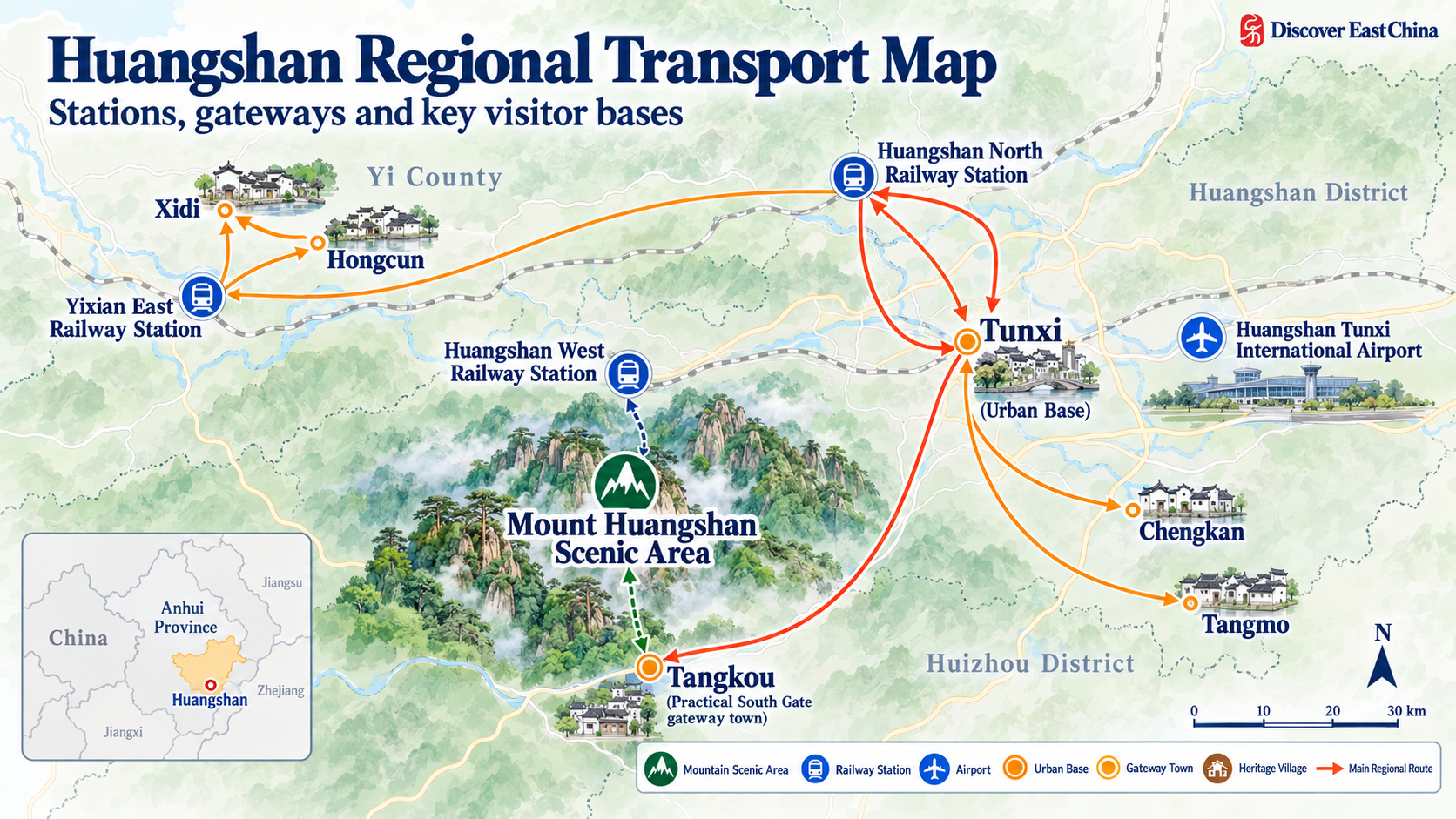
Map showing Huangshan stations, Tunxi, Tangkou, Hongcun and Xidi
Choosing an Arrival Station
Huangshan North Railway Station
Huangshan North, often shown as Huangshanbei, is a common starting point for a first regional trip. Road connections serve important visitor areas, with individual routes and timetables that need checking.
For most visitors, the next destination is one of three things: a Tunxi hotel, Tangkou for the mountain, or a village such as Hongcun or Xidi.
Choose that next destination before arrival. It determines which transport ticket, taxi instruction or pickup arrangement you need.
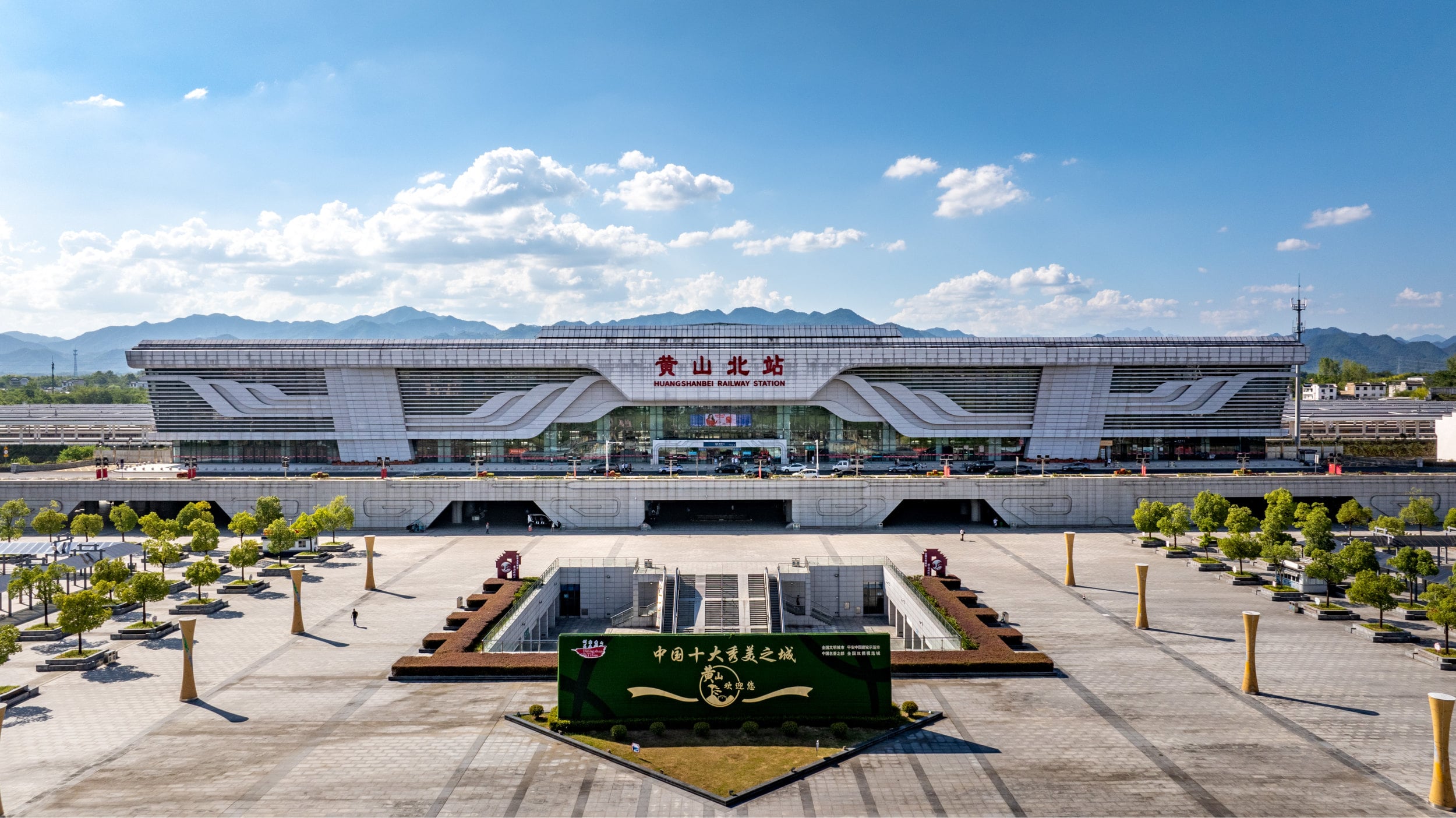
Exterior of Huangshan North Railway Station
Huangshan West Railway Station
Huangshan West, often shown as Huangshanxi, is a different station. It can be useful for a north-side mountain itinerary or travel in the northern part of the region.
It should not be treated as another name for Huangshan North. Confirm the exact gateway and local connection, particularly if your hotel is in Tangkou or your next stop is a village.
The most convenient station can differ between arrival and departure if you enter and leave the mountain on different sides.
Yixian East Railway Station
Yixian East is worth comparing for a village-focused itinerary. Local and tourist connections have served Hongcun and Xidi, but check the current service, wait and final access to the attraction or hotel.
A geographically suitable station is helpful only if the train and onward journey work on your travel date.
Other Stations and City-Wide Search Results
You may encounter other station names when planning a specific regional route. Check the actual issued arrival point rather than relying on an app heading labelled simply “Huangshan.”
Give your driver the station name and train number. A pickup booked at Huangshan North cannot automatically be used at Huangshan West.
Arriving by Air
Huangshan Tunxi International Airport is another regional arrival point. It is associated with the urban side of the destination, while Tangkou and the mountain require a separate road journey.
Use the designated taxi arrangements or a confirmed pickup, and provide the full hotel address. If arriving late, verify that the planned transport will be available after baggage collection.
An airport transfer described as going to “Huangshan” should specify whether it ends at a Tunxi hotel, Tangkou, a village or a particular gateway. It does not take you directly to a summit room.
Common Road Journeys: How to Plan Them
| Route | Practical approach | Main complication |
|---|---|---|
| Huangshan North → Tunxi | Match a local service or vehicle to the hotel’s actual location | The city stop and hotel may differ |
| Huangshan North → Tangkou | Compare current tourist road transport with a pickup | Confirm the gateway stop and hotel connection |
| Huangshan North → Hongcun or Xidi | Confirm a service that actually stops at the selected village, or arrange a vehicle | Different services may have different intermediate stops |
| Huangshan West → North Gate area | Check route-specific road transport | Mountain entrance reservation and local transport must agree |
| Yixian East → Hongcun or Xidi | Check current local connections or arrange the final transfer | Waiting time and luggage access |
| Tunxi → Tangkou | Use a verified tourist service or arranged road journey | Early mountain start and departure point |
| Tunxi → Hongcun or Xidi | Confirm both legs before leaving | Multiple approved pickup points may be used by different services |
| Tangkou → Hongcun or Xidi | Check current direct or connecting services; consider an arranged transfer | Do not assume frequent village-bound departures after descent |
| Hongcun ↔ Xidi | Check local options or arrange a vehicle | A short road leg can still involve a wait or change |
| Village → railway station | Work backwards from the train and include a station buffer | Final hotel luggage collection may add another stop |
Ask your provider for a journey-specific estimate when setting the day’s schedule. Add station exit, waiting, stops and the final walk to the property.
Road travel to a destination is only the first layer of the mountain journey. For the villages, arrival at a bus stop is also not necessarily arrival at your guesthouse.
Public Buses and Tourist Road Services
When They Work Well
Scheduled transport is useful for a straightforward trip with a known destination, manageable bags and a timetable that fits.
It can be a good choice when you are travelling from a station to a major gateway or making one village visit without changing hotels that day.
Regional services include ordinary local buses, tourist routes and bookable services using specified pickup points. They can have different stops and booking processes even when they serve similar destinations.
What to Confirm Before Buying
Check:
- Exact origin and boarding address.
- Full destination and any intermediate stops.
- Travel date and departure time.
- Whether a reservation is needed.
- Luggage arrangements.
- Where the service ends relative to your hotel.
- Last return or onward departure.
A service heading such as “Tunxi–Hongcun” is not enough to establish that it departs beside Old Street. Some services use a passenger terminal, while others use approved city pickup points.
How to Find Current Information
Local transport information and bookings may be available through services such as the Huangshan tourism official platform, Huangshan Changyun and regional travel-query tools. Some routes also appear through Didi’s station-bus function.
The available interface and supported booking steps vary. If you cannot complete a booking with your overseas phone, payment method or document, ask the transport service, hotel or organiser for help.
Use current information for the specific route. A timetable published for a past public holiday may include extra departures that do not operate on your date.
When Public Transport Becomes Less Convenient
Public services can be awkward when you want to visit several villages, carry luggage between hotels, arrive after the last departure or make a tightly timed connection.
In these cases, compare the whole travel block with an arranged transfer. Waiting and luggage handling can matter more than the fare difference.
Taxis, Ride-Hailing and Arranged Transfers
Taxis and Ride-Hailing
These can be convenient for city journeys and some point-to-point regional trips. Use the designated taxi area or the app’s actual pickup location, and confirm the destination before setting off.
Availability is not identical across Tunxi, gateway towns and small villages. Being able to get a car outward does not guarantee an equally easy return later.
For a longer trip, check how the fare is calculated, whether road charges are included and where the vehicle can stop. Keep the hotel’s Chinese address and contact available.
Arranged Point-to-Point Transfers
An arranged pickup is useful after a late arrival, for a family with luggage, or when a specific hotel-to-station connection matters.
Confirm the meeting point, included waiting, train or flight delay arrangements, vehicle capacity and destination. Count bags as well as passengers when discussing the vehicle.
A Vehicle for a Village Day
A driver for a multi-stop day can simplify a route such as:
Tunxi hotel → Xidi → Hongcun → Tangkou hotel.
Ask whether the price includes waiting, all stops, luggage kept in the vehicle and the final drop-off. A simple transfer quote may not cover a day of sightseeing.
A driver and a guide provide different services. If you want interpretation inside the villages, request that explicitly rather than assuming it is included with transport.
Rental Cars and Self-Driving
If considering self-driving, confirm driving-document eligibility, rental requirements, insurance and local conditions before booking. Do not assume an overseas licence alone will be accepted.
For a short first visit, an arranged vehicle can avoid the need to manage parking, document arrangements and mountain-side logistics yourself.
South Gate Mountain Transfers: The Full Sequence
The most common misunderstanding is that “arriving at the South Gate” means arriving beside the upper mountain scenery.
For a cable-car-assisted visit, the sequence is broadly:
Regional arrival → Tangkou or designated transfer point → scenic-area bus → lower cable-car area → cable car → upper walking route.
For an overnight, add the walk to your specific hotel. After descent, you reverse the appropriate transport stages before meeting a regional driver or collecting luggage.
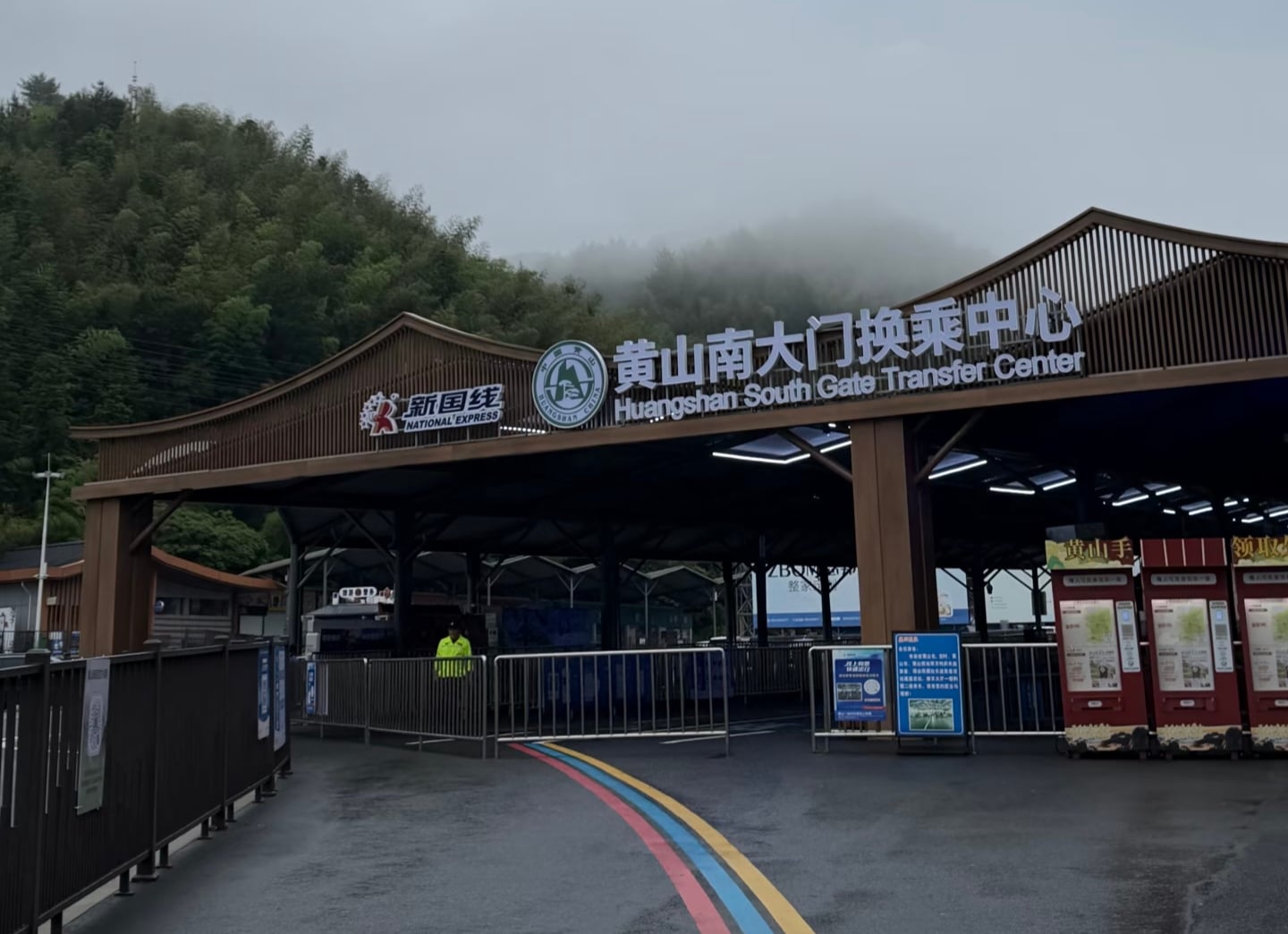
Scenic-area bus boarding area in Tangkou
Tangkou's Boarding Points Are Not All the Same
Zhaixi Xinguoxian and South Gate-related transfer locations may appear in hotel advice, tickets and map searches. Use the exact boarding point on your booked service.
Some tickets are valid from a specified centre and should not be assumed usable at another stop simply because both are described as being near the South Gate.
Before leaving the hotel, show the booking to staff and ask which pickup point you need and how to reach it.
Yungu Direction
Choose the Yungu direction for a route using the Yungu cable car or the associated walking approach. Follow the current ticket and staff instructions for the scenic transport stop.
After the cable car, you still need to walk between upper viewpoints and accommodation. The bus does not take you to North Sea or a summit hotel.
Yuping Direction
Choose the appropriate front-mountain direction for a Yuping cable-car route. Transport information may distinguish the Taohuafeng cable-car access area from the Ciguangge walking trailhead.
These are not interchangeable instructions. Ciguangge is also used broadly in route descriptions, so confirm the actual stop for your selected cable car rather than relying on the name alone.
Tell staff whether you intend to use the cable car or start on foot. The wrong drop-off can create unnecessary walking and confusion.
Walking Up from Below
The Yungu and Ciguangge walking approaches are substantial hikes and can be affected by maintenance or weather closures.
A bus to a trailhead is not a shorter substitute for a cable-car ticket. If you plan to walk up, check the open route and the time and effort required before setting the day’s itinerary.
What a Private Driver Can and Cannot Cover
Your regional driver can bring you to the agreed gateway or transfer point and meet you afterwards. The ordinary road transfer does not replace designated mountain transport or the walk to a hotel.
When a tour includes “mountain transfers,” ask which road, shuttle and cable-car stages are covered, and which remain separate purchases.
North Gate and Other Mountain Approaches
The North Gate is associated with the Taiping-side approach. It can suit an itinerary built around arrival from Huangshan West or other northern locations, with the road connection confirmed.
It is a separate plan from beginning in Tangkou. Confirm entrance reservation, local transport, cable-car operation and upper route together.
Other entrances or newly promoted approaches may appear in travel information. Use them only when current access and the complete journey have been verified. An announced project or development plan does not establish an operating transport service.
For a first-time trip, do not change the entrance independently after the hotel and route are booked. The approach affects where you start walking and how you handle bags.
Cable Cars and Transport on the Mountain
| Service | Role in your route | Important distinction |
|---|---|---|
| Yungu cable car | Access to the Yungu-side upper mountain | Does not remove upper-route walking |
| Yuping cable car | Access to the Yuping side and its walking connections | A different lower approach and upper destination from Yungu |
| Taiping cable car | North-side approach | Requires its own road and entrance planning |
| West Sea Grand Canyon sightseeing railway | A separate service within a canyon itinerary | Not an arrival transfer from a railway station or gateway |
The canyon railway is often described informally as a small train, but it is not part of the national high-speed rail system.
Mountain admission, scenic buses, cable cars and the canyon railway may be separate purchases. Review the actual ticket inclusions and current operation.
Hotel location also matters. A map can make an upper station and hotel look close, while the path between them contains stairs and repeated climbs.
Cable cars reduce the lower ascent; they do not turn every upper route into an easy or step-free visit.
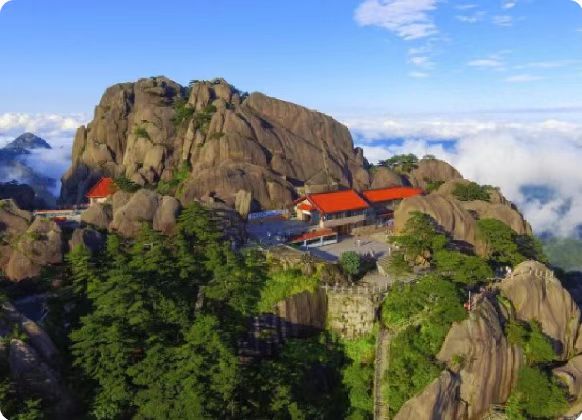
Yungu cable car serving Yellow Mountain
Changing Ascent and Descent Directions
Entering via Yungu and descending via Yuping can be sensible for a route crossing different upper areas. Both can be incorporated into a South Gate-based trip, but the exact return transport and pickup still need arranging.
Entering on the north side and leaving on the south side requires more deliberate planning. Your luggage, car and driver do not move automatically with you.
Before confirming a cross-mountain route, agree on:
- Where the main suitcase stays.
- Where you finish the scenic transport after descent.
- Whether luggage is transferred to another hotel or pickup point.
- When and where the driver meets you.
- Which station or hotel you travel to afterwards.
Tell your provider immediately if weather or fatigue changes the descent direction. “Meet us after the mountain” is not a precise pickup arrangement.
Getting to Hongcun and Xidi
From Huangshan North
Check tourist road services and the actual stops, or arrange a transfer to the selected village. If your first day ends in Tangkou, confirm that onward leg as well.
Luggage can make a station-to-village combination more complicated than a hotel-based day trip. Agree on storage or vehicle waiting before arrival.
From Yixian East
Yixian East can be useful for a village-first trip, with local connections serving the Yi County area. Compare the actual service, waiting time and final access with your other arrival options.
Do not select it solely from geographical proximity if the available train or onward timetable does not fit.
From Tunxi
Both scheduled and arranged options can be appropriate. Confirm the city’s boarding address and the last return service.
If visiting two villages, check the middle journey explicitly. The outward and return buses do not necessarily create a convenient connection between the villages.
From Tangkou
Village travel is a regional road journey after mountain logistics are complete. Current services may be useful, but the timing needs checking, particularly after descent.
Do not count a late bus as available until you have verified its date and departure point. An arranged vehicle can be more practical when a final hotel change is involved.
Village Bus Stops and Guesthouses
A bus may stop at a visitor entrance, passenger terminal or other designated point. Your accommodation can be inside walking lanes or at another edge of the village.
Ask the guesthouse where to get off, whether admission is required before reaching it, and whether anyone helps with the final luggage transfer.
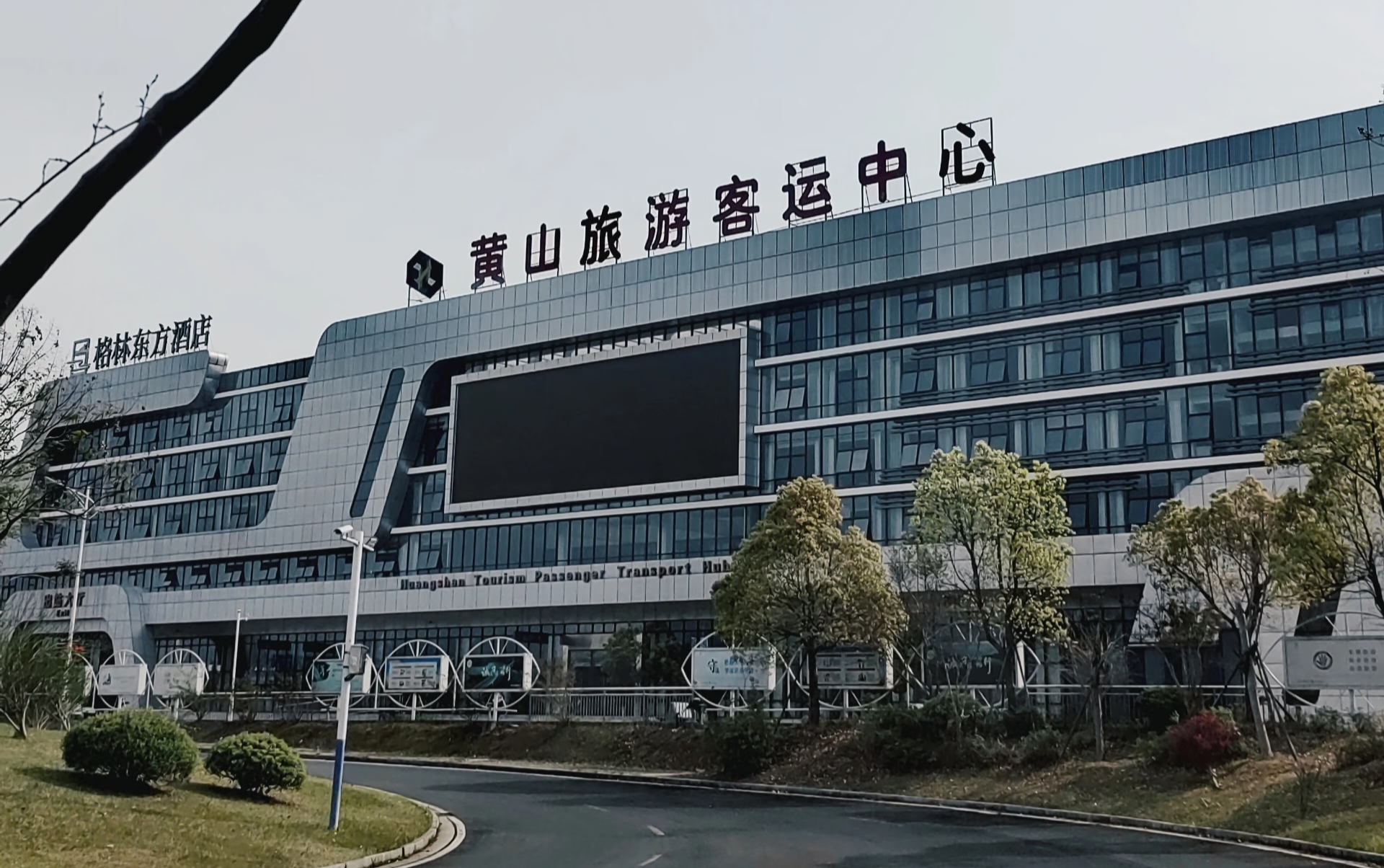
Visitor transport stop near Hongcun
Combining Villages and Other Cultural Stops
For one village, public transport may work well. For several villages or a workshop outside a town centre, a pre-arranged vehicle can reduce uncertainty.
Choose stops by location and interest. Hongcun and Xidi can form one village-focused day; other areas such as Chengkan, Tangmo or Shexian need their own routing assessment.
Do not combine every heritage place into a single day simply because they belong to the same Huangshan region.
For a tea or craft experience, request the exact venue address. A workshop marketed as being “near Huangshan” may require a separate countryside journey.
If ending at a different hotel, include that drop-off in the plan from the beginning. This can save a return journey to your old base.
Walking, Cycling and Local Journeys
Walking is useful in Tunxi’s selected street and riverside areas, inside villages and on the mountain’s permitted paths. These are separate walking zones, not a continuous walking route between major destinations.
Village lanes can include uneven paving, thresholds and stairs. Ask about accessibility and luggage access rather than assuming a pedestrian area is easy for every traveller.
Cycling can suit selected local countryside outings, but it is not the default transport for station transfers or mountain entry. Check the specific route, road conditions and where bicycles are permitted.
For a hotel away from the main visitor area, a short taxi or arranged local pickup may be the simplest final connection.
Luggage: Arrange It Before the Mountain
Storing Bags in Tangkou
Ask your hotel whether it will store your main bag during a mountain overnight. Agree on collection time and whether you are returning to the same property.
The usual arrangement works best when you leave and return through the same gateway area.
Sending Bags to the Next Base
If descending elsewhere or continuing directly to a village, ask whether a luggage transfer can be arranged. Confirm the recipient, identification and handover details.
Do not assume a driver will move your bags unless this is included in the booking.
Storage at Stations or Transfer Centres
Services may be available at particular facilities, but check opening hours, accepted bags, collection requirements and what happens if you return late.
An unattended bag or a last-minute informal arrangement is not a substitute for confirmed storage.
What to Carry
Keep your original travel document, valuables and necessary personal items with you. For the mountain, use a light backpack with weather protection, water and the essentials for the route or overnight.
A wheeled suitcase should stay below. The cable car does not eliminate the stairs you encounter afterwards.
Overseas Visitors: Booking and Communication
Many local services use Chinese-language booking tools, station names and pickup instructions. Save the relevant names and ask your hotel to confirm details if the interface is unclear.
Check whether an overseas phone number, passport and payment method are supported before relying on a particular booking route. Bring the document required by your reservation and retain confirmations offline.
Do not repeatedly submit an uncertain order. First check its status or ask for help so you avoid duplicate purchases.
Useful Names and Phrases
| English | Chinese to show staff or a driver |
|---|---|
| Huangshan North Railway Station | 黄山北站 |
| Huangshan West Railway Station | 黄山西站 |
| Yixian East Railway Station | 黟县东站 |
| Huangshan Tunxi International Airport | 黄山屯溪国际机场 |
| Tangkou | 汤口 |
| Tunxi Old Street | 屯溪老街 |
| Hongcun / Xidi | 宏村 / 西递 |
| Yungu cable car / Yuping cable car / Taiping cable car | 云谷索道 / 玉屏索道 / 太平索道 |
| Which boarding point should I use for this ticket? | 这张票应该在哪个乘车点上车? |
| I want to take the cable car, not walk up. | 我想乘索道上山,不是步行上山。 |
| Where is the last return bus, and when does it leave? | 末班返程车在哪里乘坐?几点发车? |
| Please take me to this hotel’s vehicle drop-off point. | 请送我到这家酒店车辆可以到达的下客点。 |
Use the full booking and hotel address alongside these phrases. A translation helps communication, but staff still need the particular service and destination.
Late Arrivals, Early Starts and Weather Changes
Late Train or Flight Arrival
Confirm the onward service before paying for the arrival journey. If the last scheduled connection will not fit, arrange a pickup or stay at a suitable arrival-side hotel.
Do not assume the availability of a late train means the mountain gateway buses operate equally late.
Early Mountain Entry
Stay near the correct gateway, check breakfast and hotel pickup arrangements, and match them to the current reservation and operating times.
Staying in Tunxi requires another road leg before the mountain process, which can make an early start more demanding.
Weather or Maintenance Changes
Cable cars, trails and canyon services can be affected by weather or maintenance. Check operating notices before entry and follow staff instructions.
If the descent route changes, update the luggage and road pickup arrangements. If a mountain visit cannot proceed, assess village or indoor alternatives against local conditions and booking terms.
Leaving Huangshan after a Mountain Day
Work backwards from the train or flight, including every stage:
Final viewpoint → walking to descent station → queue → cable car → scenic bus → luggage → regional road transfer → departure formalities.
Choose a realistic final walking route and a generous buffer. A driver waiting at the bottom cannot remove a cable-car queue or the remaining scenic transport.
An evening train can work for a planned itinerary. An extra local night is better if the connection requires constant rushing or if the group wants a proper meal and recovery time.
For a flight, include the actual check-in deadline. If the next journey involves an international flight from another city, consider an overnight near that departure city rather than stacking several tight connections.
Sample Transport Plans
Mountain First, Then a Village
Day 1: Arrival station → Tangkou hotel.
Days 2–3: Hotel → designated scenic transport → mountain overnight → planned descent → luggage collection → next hotel.
Final day: Village visit → departure station, with enough time for the road journey and boarding.
This works best when the luggage and descent direction are settled in advance.
Village on Arrival, Then the Mountain
Arrival day: Station → one village → Tangkou hotel.
Mountain days: Scenic transport and walking route → descent → Tangkou for bags → departure station or local overnight.
An arranged vehicle can simplify the first day’s luggage and waiting. Public transport can also work if both regional legs are confirmed.
Culture-Focused Stay without Mountain Hiking
Arrival: Station or airport → Tunxi or village accommodation.
Sightseeing: Select one village or cultural cluster each day, using scheduled transport or an arranged vehicle.
Departure: Hotel → exact departure station or airport.
This avoids mountain transport while still requiring careful regional road planning.
Common Transport Mistakes
- Booking a pickup only to “Huangshan.” Specify station, hotel, village or gateway.
- Treating South Gate, the transfer centre and a cable-car station as one place. Read the service’s actual boarding and drop-off instructions.
- Taking the wrong front-mountain approach. Distinguish cable-car access from the walking trailhead.
- Planning the outward village journey but forgetting the return. Confirm both before leaving.
- Changing descent direction without moving the luggage plan. Bags and vehicles need a separate arrangement.
- Using an old holiday timetable. Extra services may not operate on ordinary dates.
- Assuming an advertised transport project is already running. Check current passenger service, not construction publicity.
- Counting only the road journey to catch a train. Add all mountain, luggage and station stages.
Frequently Asked Questions
Is Huangshan North Station at Yellow Mountain?
No. It is a regional railway arrival point. You need a road transfer to the selected gateway and the appropriate scenic transport and walking for the mountain.
Is Huangshan West the same station as Huangshan North?
No. They are separate stations serving different regional routes. Check the issued ticket and arrange transport for that exact arrival point.
Which station is best for Hongcun or Xidi?
Compare Huangshan North and Yixian East according to the available train and current local connection. The best choice is the one that works for the complete journey, not simply the closest point on a map.
Can a taxi take me straight to a mountain hotel?
No ordinary road transfer reaches an upper mountain hotel. You need the appropriate scenic transport, cable car or trail and further walking.
Do I need a scenic bus if I have a private driver?
For the usual mountain access arrangements, follow the designated scenic transport requirements. A regional driver brings you to an agreed gateway or transfer point rather than replacing the internal journey.
Are the Yungu and Yuping cable cars at the same place?
No. They use different approaches and reach different upper areas. Choose the direction that fits your reserved entrance, walking route and hotel.
Is Ciguangge the right stop for the Yuping cable car?
Front-mountain descriptions can use the name broadly, but transport information distinguishes the walking trailhead from cable-car access. Show staff your ticket and confirm the actual stop for the cable car.
Can I visit Hongcun and Xidi using public transport?
It can be possible with current local services, but check the village-to-village leg and final return or onward journey. An arranged vehicle may be simpler with luggage or limited time.
Can I get a car back from a small village whenever I want?
Do not assume on-demand availability. Confirm a return service, arrange a pickup or discuss transport with the accommodation before going.
Where should I leave my suitcase for a mountain overnight?
A confirmed gateway-hotel storage arrangement is often practical. If descending elsewhere, arrange luggage transfer or collection explicitly before ascent.
Can I catch a train after coming down the mountain?
Yes with a suitably timed departure and a generous buffer through walking, queues, scenic transport, luggage collection and road travel. Stay another night if that chain would be rushed.
Do I need a private vehicle for the entire Huangshan trip?
Not necessarily. Scheduled transport can work for simple point-to-point journeys. An arranged vehicle is most useful for multi-stop days, luggage between bases, late arrivals or precise connections.
Build Transport around Your Huangshan Route
The easiest Huangshan trip connects each stage clearly: the exact arrival point, the right overnight base, the mountain entrance and descent plan, and a confirmed journey to the next destination.
Discover East China Tours can help coordinate station or airport pickups, village transport, accommodation and mountain logistics as part of a private or wider East China itinerary. Share your dates, group size, luggage and walking preferences so the transport supports the experience you want.
Our approach keeps shopping voluntary, with no forced shopping stops, and reserves sightseeing time for your chosen places.
Start planning your Huangshan journey using the button below.