
Plan a manageable Huangshan Mountain visit with guidance on entrances, reservations, cable cars, hiking routes, steps and changing mountain weather.
Quick answer: Choose your Huangshan entrance, ascent and descent plan before booking. Cable cars reduce elevation gain, but paths between viewpoints and hotels still involve substantial steps.
For most first-time visitors, a South Gate visit from Tangkou is the simplest starting point. Use cable cars to reduce the long ascent and descent, then spend your energy walking between selected viewpoints. A full day can give you a rewarding introduction; a night on the mountain gives more time and the possibility of sunrise. Neither arrangement removes the steps, and neither guarantees clear views.
This guide explains how to plan the mountain itself: which tickets you need, how to enter, where the cable cars take you, and how to choose between a shorter visit, a crossing route and an overnight stay.
Huangshan Mountain at a Glance
| Planning question | Practical answer |
|---|---|
| Where is the mountain entrance? | There are several gateways. Tangkou serves the South Gate; other gates have different road approaches and mountain connections. |
| Is Huangshan city the mountain? | No. Tunxi, the main urban area, and the mountain scenic area are separate destinations. |
| Best starting point for most first visits | Tangkou, with a confirmed South Gate reservation and the appropriate access route. |
| How much time should I allow? | A full day for a selected mountain route, or two days with an upper-mountain overnight for a broader visit. |
| Can I avoid all hiking by taking cable cars? | No. Upper stations, hotels and viewpoints are linked by mountain paths with steps. |
| Do tickets cover everything? | Admission, gateway transport, cable cars and the West Sea Canyon funicular are separate components unless a package explicitly includes them. |
| Can I see sunrise from a day visit? | Do not assume normal morning transport reaches an upper viewpoint before dawn. A mountain overnight is the more practical arrangement. |
| Biggest planning mistake | Adding too many peaks and detours without allowing for steps, queues, weather and the final descent. |
Understand the Mountain Before Choosing an Entrance
Huangshan, Tangkou and Tunxi Are Different Places
“Huangshan” can mean the mountain scenic area or the wider city. A hotel advertised as being in Huangshan may be in Tunxi, near a railway station, in Tangkou or inside the upper mountain. These locations lead to very different mornings.
Tangkou is the southern gateway town below the scenic area. From there, a typical South Gate visit continues by authorised scenic transport to the selected cableway or walking approach. Tunxi offers urban hotels, restaurants and Old Street, but adds a road transfer before the mountain access process.
Huangshan North railway station is another separate location. A train arriving there has not delivered you to a mountain ticket gate. Check the station name, onward transport and expected arrival at your actual hotel or entrance.
“Front Mountain” and “Back Mountain” Describe Routes
You will often see advice to go up the “back mountain” and down the “front mountain”. In the usual South Gate context, this refers to the Yungu side and the Yuping side respectively. Both can be reached through the southern access arrangements; “back mountain” does not automatically mean entering through the North Gate.
The Yungu side gives access towards the Beginning-to-Believe Peak and Beihai area. The Yuping side serves the Jade Screen area and the famous Welcoming Pine. Between them are connecting paths, climbs and descents. Taking one cable car up and the other down creates a mountain crossing, rather than a flat sightseeing circuit.
Other Gates Need Their Own Plan
The North Gate, with the Taiping Cableway, can suit a northern approach or a route focused on the Xihai and Paiyun side. Returning to a vehicle parked at another gate requires a separate road arrangement.
The East Gate and Donghai Cableway opened in June 2026, adding an eastern access option. They should be planned using the current official route map and ticket arrangements. The opening arrangements did not provide a walking ascent between the eastern gateway and the upper cableway station: cableway availability is therefore central to this choice. Confirm the current access position before booking.
The West Gate is another distinct approach, with route availability and physical demands to check separately. It is not the default alternative for a visitor staying in Tangkou.
An entrance is useful when it matches your arrival direction, walking plan and exit logistics. A different gate does not automatically produce a shorter or quieter day.

Tickets: What You Actually Need to Book
Scenic-Area Admission
Huangshan uses real-name reservations tied to the visitor, date, entry period and entrance direction. Book through the Huangshan Tourism Official Platform, available through WeChat and Alipay mini programmes, or have a legitimate travel provider arrange the appropriate reservation in your own details.
Official notices recommend reserving at least a day ahead. For a holiday or a fixed mountain overnight, organise the booking as soon as the relevant sales window permits. Do not arrive assuming that an unreserved ticket will be available at a counter.
The booking window, capacity and available time slots can change. A payment attempt, pending order or wait-list position is not a confirmed reservation. Check that the order has succeeded.
Shuttle and Cableway Tickets
Admission gives access to the scenic area under its conditions. It does not automatically pay for every transport service.
| Component | What to check |
|---|---|
| Scenic admission | Correct date, visitor identity, entry period and entrance direction. |
| Scenic shuttle | The approach and return journey needed for your gate and route. |
| Ascent cableway | Correct cableway, direction and date. |
| Descent cableway | The actual exit cableway, which may differ from the ascent. |
| West Sea Canyon funicular | A separate service if your canyon route uses it. |
| Mountain hotel | Room category, occupancy, meals and cancellation terms; admission is not automatically included. |
| Restricted peak reservation | Any additional access reservation required for the chosen peak. |
A bundle may combine some components, but read the itemised inclusions. Two cableway journeys do not necessarily mean a return ticket on the same line. Check that your purchase matches the route rather than buying first and adapting the walking afterwards.
Prices, Discounts and Re-entry
Admission and transport prices depend on the current published policy, season and any applicable promotion. Budget for the whole journey: admission, both cableway legs, required scenic transport, food, and any optional canyon service or accommodation.
Check discounts individually. Age, height, student status, nationality or another qualifying condition may be treated differently for admission and transport. An old foreign-visitor promotion or a domestic student offer should not be assumed to apply to your passport and travel date. Free admission may still require a reservation.
For a second entry after leaving the scenic area, confirm the current ticket-validity and re-entry procedure. Do not treat a multi-day admission arrangement as unlimited transport or automatic entry at any time and gate. A continuous mountain overnight is also different from descending and entering again the next morning.
Overseas Visitors and Passport Bookings
Use the same passport details throughout the booking and carry the original passport. Check spelling, passport number and the document type selected, including for children.
Passport visitors may need staff-assisted verification rather than the domestic identity-card gate. Keep the successful order information accessible, and ask where foreign-passport verification takes place. A phone screenshot is useful for finding the order, but does not replace the original identity document.
If the platform does not accept your document or payment method, resolve this with official customer support or your booking provider before travelling. Do not substitute another person’s identity or assume your hotel reservation secures entry.
The South Gate Arrival and Entry Process
The practical sequence for a Tangkou-based visit is:
- Confirm the day’s route and operating notices. Check the entrance reservation, cableways, weather and any closures before leaving the hotel.
- Store large luggage. Use a confirmed hotel or other storage arrangement and check its collection hours.
- Reach the appropriate scenic transport boarding point. Follow your hotel or provider’s precise directions; Tangkou is spread out, and accommodation is not always beside the main transfer centre.
- Board for the correct approach. Yungu and Yuping are different directions. Tell staff which cableway or walking entrance you need.
- Complete identity and ticket checks. Follow the order of checks used for that route, allowing extra time for passport verification.
- Join the cableway queue or authorised walking approach. Use this last below-mountain opportunity to check the descent arrangements.
- Follow the selected upper-mountain route. Keep track of progress towards your planned exit, rather than adding stops until the afternoon is nearly over.
Checks and queue layouts can vary between gateways. A reservation period should not be interpreted casually as “leave my hotel sometime during this hour”. Confirm where and when you must present yourself, allowing for transport beforehand.
If delayed, contact the platform or booking provider and follow the current change procedure. Do not assume staff can admit you whenever you arrive, especially on a capacity-controlled day.
Scenic Transport: Why the Shuttle Matters
For the normal South Gate routes, your private vehicle or taxi does not simply drive to an upper cableway station or mountain hotel. The authorised scenic transport system connects the gateway area with the mountain approaches.
The Yungu branch serves the Cloud Valley approach. The Yuping cableway approach is associated with the Taohuafeng boarding area, while Ciguang Pavilion is the walking-ascent reference point. Some transport notices or tickets use broader area names, so specify whether you intend to take the cableway or walk. Follow any local connecting shuttle arrangements currently in operation.
On your return, leaving the cableway is only part of the descent. You still need transport back towards Tangkou, luggage collection and any onward road journey.
Confirm the last useful service for each component. The scenic area’s closing time, walking-entry cutoff, cableway hours and shuttle hours are not interchangeable. Holiday notices often publish special hours; those times should not be carried into an ordinary weekday or another season.
An early start helps, but avoid committing to a fixed “first bus” from an old travel article. Use the current operating notice and instructions for your booked date.
Which Cable Car Should You Use?
| Service | Route role | Who it may suit |
|---|---|---|
| Yungu Cableway | South Gate ascent or descent serving the Beginning-to-Believe Peak and Beihai side of the upper mountain. | First visits, a shorter Beihai-focused route, or one end of a mountain crossing. |
| Yuping Cableway | South Gate ascent or descent for the Jade Screen and Welcoming Pine area. | Visitors prioritising Welcoming Pine, or the other end of a crossing route. |
| Taiping Cableway | North Gate access towards the Xihai and Paiyun side. | Travellers approaching from the north with appropriate road and exit arrangements. |
| Donghai Cableway | East Gate access to the eastern mountain, introduced in 2026. | Visitors whose transport and current route plan fit the eastern gateway. |
| West Sea Canyon sightseeing funicular | A separate rail-based incline service between the canyon floor and the upper Tianhai side. | A planned canyon descent with mechanical ascent, when the route and service are open. |
The West Sea Canyon service, sometimes called the canyon “little train”, is not another gateway cable car. It helps overcome one particular height difference; it does not eliminate the stairs leading into the canyon or the walking after its upper station.
Choose cableways around your walking route and departure requirements. Travelling up one side and down another can work well, but only if your group can complete the connecting path in time.
Choose a Route You Can Finish Comfortably
The allowances below are planning estimates for the mountain visit, including typical transport processes, walking and breaks. They are not published journey times. Busy queues, slow walking, weather or closures can make a route considerably longer. Road travel from Tunxi, a station or a village is additional.
| Route type | Suggested allowance | Physical character | Best fit |
|---|---|---|---|
| Focused same-cableway return | Around 5–7 hours from the gateway process back to the gateway | Shorter overall, with steps and optional climbs still present | Limited stamina, families or visitors choosing a few views. |
| Yungu–Yuping mountain crossing | Around 7–9 hours; keep the whole day free | Sustained walking, repeated climbs and descents | Active visitors wanting a broader first visit. |
| Two days with a mountain overnight | Two mountain days with a flexible first afternoon and second-day descent | Walking spread across two days, plus an overnight backpack | Sunrise interest, photography and a less hurried wider route. |
| Canyon-focused extension | Several additional hours, depending on depth, connections and queues | Significant descent and exposed mountain steps | Fit walkers with time and confirmed access. |
| Walking ascent instead of a cableway | Several additional hours and substantial extra effort | Long continuous climbing before upper sightseeing | Experienced walkers deliberately prioritising the ascent. |
A shorter itinerary is shorter because you visit fewer places. It is not a promise of accessible paths or an absence of steps.
Route 1: Yungu Up and Down, With Selected Beihai Views
For a first visit with a moderate walking budget, take the Yungu Cableway and build a return route around the Beginning-to-Believe Peak and Beihai area. Select viewpoints according to the day’s conditions and the group’s pace, then return towards the same upper station.
This arrangement keeps your exit predictable and avoids committing to a crossing. You can turn back when the walking becomes tiring without needing to reach an opposite-side cableway.
It still requires route judgement. Climbing every side viewpoint, extending towards Paiyun and then retracing your steps can create a long day. Choose one main area, a lunch or rest stop, and a definite turnaround point.
Welcoming Pine is on the other side of the mountain and should not be squeezed into this shorter plan. If it is your main priority, choose the Yuping option instead.
Route 2: Yuping Up and Down for Welcoming Pine
Use the Yuping Cableway and walk towards the Jade Screen area and Welcoming Pine, returning by the same line. This can suit visitors who want that iconic scene without a complete mountain crossing.
There are steps between the upper station and the viewing area, and busy periods can slow progress. Allow for rest and queues rather than treating the pine as an immediate stop beside the cabin exit.
Do not add Tiandu Peak simply because it appears close on a map. The peak is a separate, demanding undertaking with its own current access requirements.
Route 3: Yungu Up, Cross the Mountain, Yuping Down
A broad first-visit route begins on the Yungu side, takes in selected Beginning-to-Believe Peak and Beihai views, and continues through the central mountain towards Tianhai and the Jade Screen area before descending by Yuping.
The precise connector should be chosen from the current official map. A route incorporating Bright Summit differs from one taking other connecting paths; optional viewpoints and detours change the effort. Decide which stops matter before setting off.
Allow most of the day. For a standard first crossing, omit the full West Sea Canyon descent and a major summit climb. Combining those additions with the crossing can turn a satisfying walk into a race for the cableway.
The reverse direction is also possible. Neither direction is all downhill, and neither is universally easier for every walker. Accommodation location, operating hours, group pace and the points you most want to see should determine the choice.
Route 4: Two Days With an Upper-Mountain Overnight
On day one, ascend with a route matched to your hotel’s location and explore the nearby mountain area. Reach the hotel with enough time to check in, rest and ask about any suitable sunset or dawn walk.
On day two, make sunrise optional according to weather and local advice, then continue towards the descent cableway through selected sights. Keep the return schedule realistic if you have a train or a long road journey afterwards.
Beihai or Xihai-side accommodation and Tianhai-side accommodation support different sequences. Do not book a hotel first and assume that every viewpoint lies conveniently around it. Ask for the walking approach from the ascent station and the route to the next day’s exit.
An overnight spreads the walking and gives access to the mountain outside the usual day-visitor window. Its trade-offs include a heavier backpack, higher accommodation costs, fewer food choices and exposure to whatever weather develops. Book a confirmed room; an unplanned outdoor night is not a sensible fallback.
West Sea Canyon: A Separate Route Decision
The West Sea Canyon adds a different landscape of deep gullies, rock walls and paths descending below the main upper ridge. Its appeal comes with additional time and effort.
Looking from the Paiyun-side upper viewpoints is different from descending into the canyon. A brief upper visit can suit a broader itinerary; a descent through the permitted canyon route towards the funicular requires a much larger commitment.
If you plan to walk down and take the funicular up towards Tianhai, confirm all three elements: the open walking sections, the funicular’s operation and your onward route. A mechanical ascent does not make the descent gentle on the knees.
Do not enter late on the assumption that the train will solve any timing problem. There may be queues, a closing time and substantial walking beyond the upper station. Seasonal maintenance or bad weather can close sections. Keep a route on the upper paths available as an alternative.
For a first-time day visitor, choose between a broad mountain crossing and a substantial canyon exploration unless your fitness, available hours and conditions clearly support both.
Tiandu Peak, Lotus Peak and Optional Climbs
A named peak appearing on a map does not mean that its summit path is open. Huangshan uses conservation closures, seasonal maintenance and weather restrictions. Check each major climb individually.
Tiandu Peak has used a separate real-name reservation system and limited access. A scenic-area ticket alone should not be treated as permission to climb it. Its steep, exposed route deserves its own time and fitness assessment, particularly for visitors uneasy with heights.
Lotus Peak is subject to its own closure and rotation arrangements. Do not build an essential itinerary around an old photograph or an undated route description. Other viewpoints may also have local restrictions.
For most visitors, the surrounding mountain landscape is already rewarding. Add a major peak only when it is open, your group is comfortable with the route, and the remaining descent can still be completed with a margin.
Steps, Fitness and Walking Pace
Cable Cars Save the Long Ascent, Not All Effort
Huangshan’s upper paths repeatedly climb and descend. Short map distances can involve staircases, narrow stretches and a slow flow of people. Steps can be uneven or slippery, and long descents can be more uncomfortable for knees than climbs.
Think in terms of hours on steps rather than kilometres alone. A single number for “how many steps Huangshan has” is not useful for planning your actual route: cableway choice, connectors and optional climbs all change the total.
If you are unsure of your stamina, choose a same-cableway return and keep extra viewpoints optional. A group should plan around its slowest comfortable walker, including on the final descent.
Families, Older Visitors and Mobility Needs
Age alone does not determine suitability. Ask whether each person can manage repeated stairs, several hours outdoors and a return journey after becoming tired.
For children, choose a small number of views, allow snacks and breaks, and supervise closely beside steep drops and crowded steps. A stroller is not a useful transport solution for the usual upper-mountain routes. A child carrier also adds weight and balance demands to an adult’s walk.
Visitors with significant mobility limitations should seek precise route advice before booking. A cableway being usable does not establish a step-free route from its upper station to the sights, toilets or hotel. Do not describe a standard itinerary as wheelchair accessible without verifying its full path.
Walking Up or Down From the Lower Mountain
Walking the ascent is an option for experienced walkers when the relevant path is open. It is a substantial hike before the upper sightseeing begins, not simply a way to remove one item from the budget.
Walking down also adds time and repeated impact on the legs. Do not make it an automatic backup for missing the last cable car: fatigue, darkness, weather and path closures may make that unsafe or impractical.
Check the walking-entry cutoff separately from general opening hours. Start a deliberate hiking route early, carry appropriate supplies, and reduce upper-mountain sightseeing to match the effort already spent.
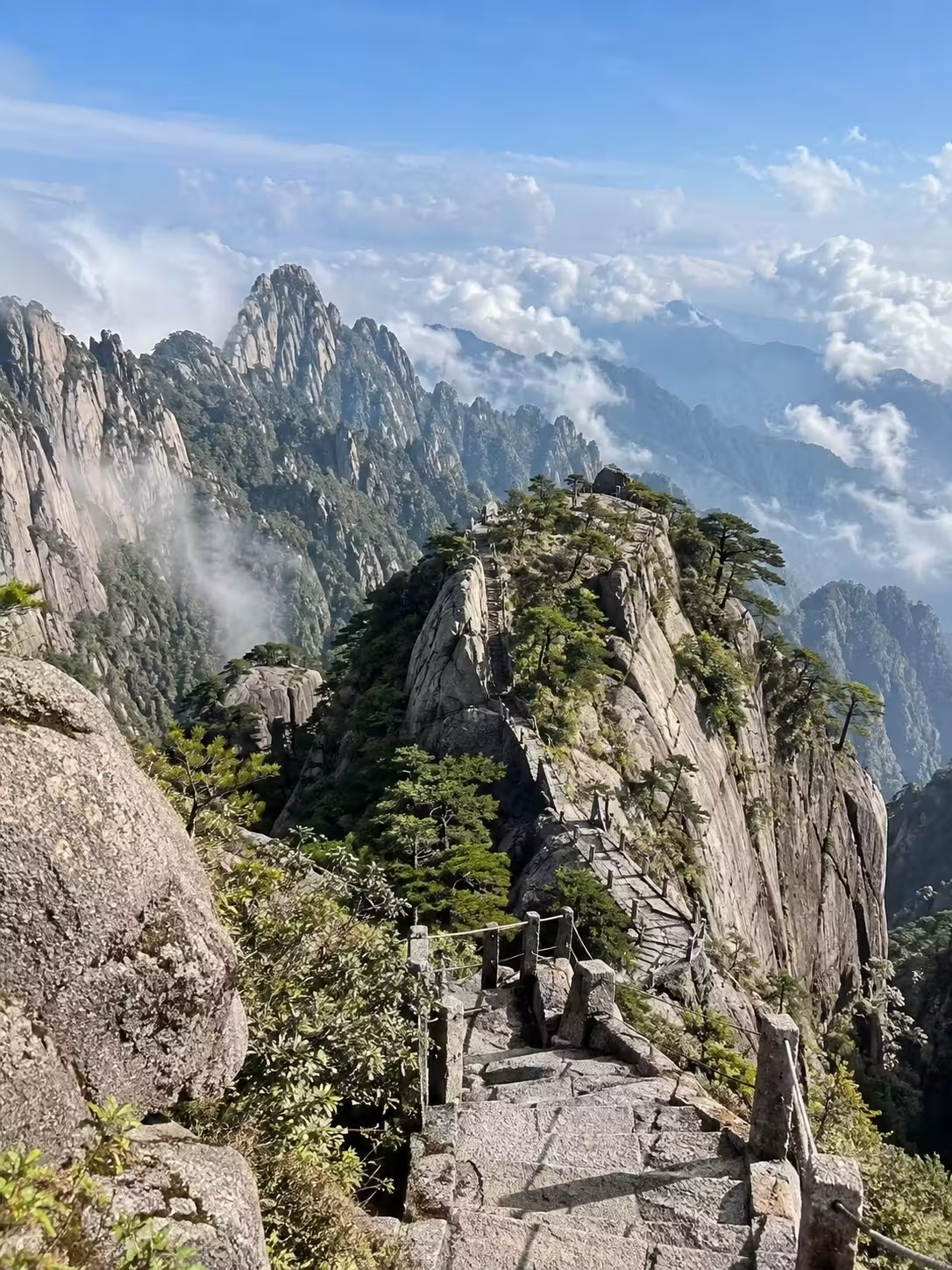
Plan around the slowest comfortable walker and allow time for rests.
Weather and Seasonal Preparation
Use the Mountain Forecast
Tunxi’s forecast is not an adequate guide to conditions on the upper mountain. Higher ground can be colder, windier and less visible. Look at the Huangshan scenic-area forecast, warnings and operational notices close to the visit.
Cloud can reveal and hide the peaks repeatedly. A grey start does not guarantee a wasted day, but it also does not promise a sea of clouds later. Give yourself time at a viewpoint when conditions permit, without delaying the descent beyond a safe margin.
Rain, Thunderstorms and Strong Wind
Wear footwear with reliable grip and carry a waterproof layer. A poncho can be useful, but loose material needs care around wind and crowded paths. An umbrella is awkward where you need a handrail or where the path is exposed.
Rain alone does not always stop a visit. Thunderstorms, strong winds or other severe conditions can affect cableways and close paths. Follow staff instructions immediately and use designated shelter. Do not continue towards an exposed summit to preserve a planned photograph.
Weather disruption may change the day’s route or prevent a planned service. Check ticket and accommodation terms beforehand; poor visibility by itself does not create an automatic refund entitlement.
Spring and Autumn
Spring can bring cool rain and changing visibility. Autumn often appeals to walkers, but a pleasant temperature in Tangkou can still mean a cold stop on a windy upper ridge.
Bring layers that work while moving and while standing still. If staying overnight, pack for dawn conditions rather than only the previous afternoon’s walk.
Summer
Even when the upper mountain feels cooler than the city, climbing in humid weather can be tiring. Carry drinking water, use sun protection and rest before exhaustion sets in. Afternoon weather deserves attention; a demanding optional climb is a poor addition when storms are developing.
Winter
Winter can offer striking snow and frost, together with ice, cold and reduced route options. Some areas close for maintenance, and open paths may require special precautions.
Use suitable footwear and any traction equipment recommended for the actual conditions. Gloves and warm layers matter when holding railings or waiting for transport. Seek route-specific advice if you are unfamiliar with icy mountain walking. A summer itinerary should not be reused unchanged.
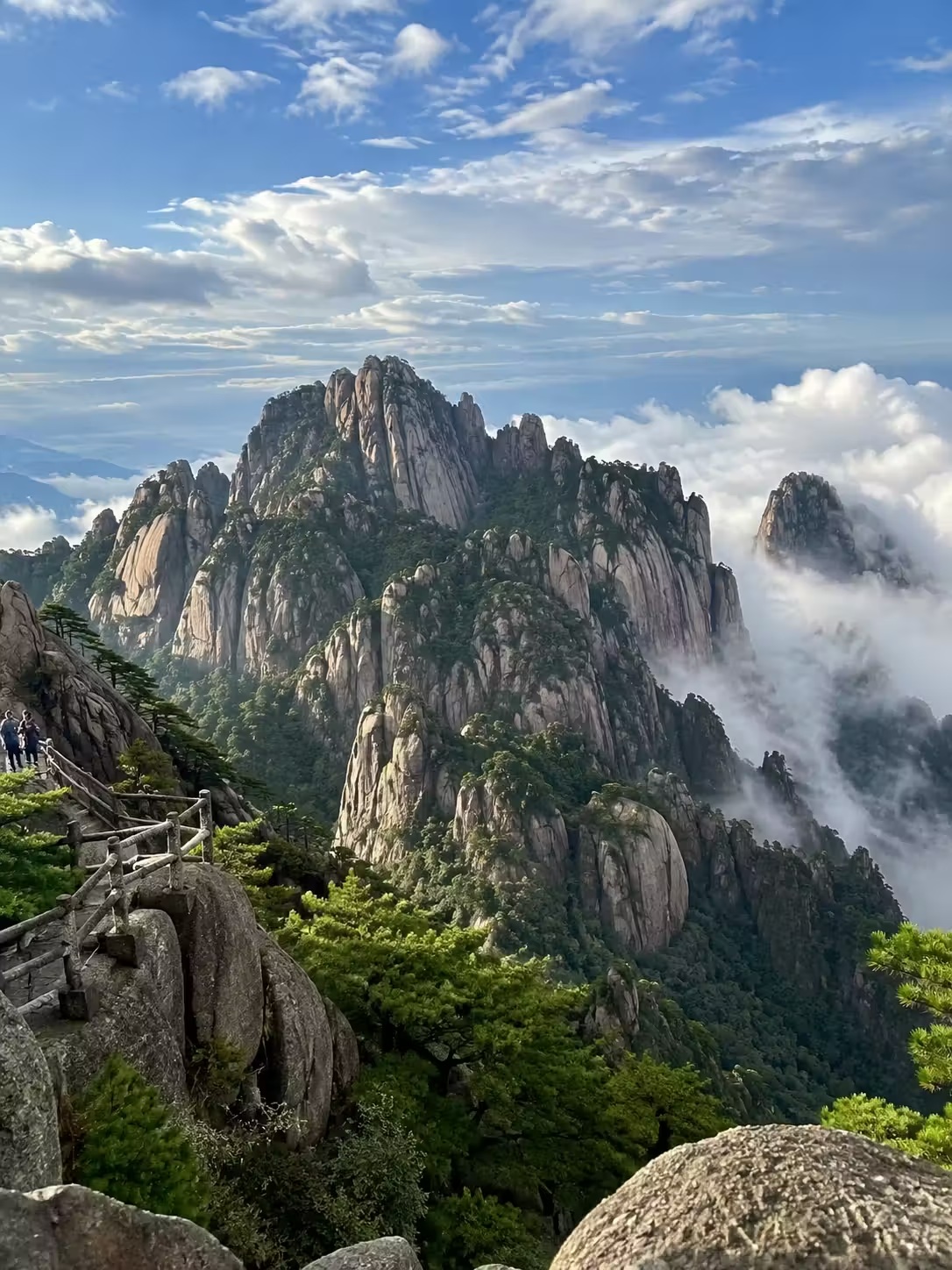
Mountain weather can change quickly; clear views and cloud scenes are not guaranteed.
What to Carry
Pack a small backpack that leaves both hands free. For a day visit, bring:
- The original passport or other identity document used for the reservation, plus accessible order details.
- A charged phone and power bank, with the current route map saved for reference.
- Drinking water and compact snacks, allowing for your route and conditions.
- Comfortable walking shoes with grip, a waterproof layer and an extra warm layer.
- Sun protection and any personal medication you normally need.
- A small bag for rubbish and basic personal essentials.
A walking pole may help some visitors, especially on descents, but use it considerately on narrow paths. Avoid bringing a suitcase onto the mountain. For an overnight, add only the clothes and toiletries needed, and check what the hotel actually supplies.
Arrange luggage storage before ascent. Confirm whether storage is available, whether valuables are excluded, and when you can collect the bag after returning.
Food, Toilets and Rest Stops
Food and refreshments are available in established service and hotel areas, but prices and opening times reflect the mountain location. Carry enough water and snacks that your route does not depend on an unverified kiosk.
Plan lunch and a proper rest near a known service area. Check the walking needed to reach it, and do not assume a hotel restaurant will offer every menu or meal period to non-residents.
For dietary restrictions, communicate the requirement clearly before ordering. Vegetarian food may still contain meat stock or other animal ingredients; allergies require specific ingredient and preparation checks. A translated note is useful, especially where staff English is limited.
Use toilets when you reach a service area rather than expecting facilities at every viewpoint. With children or a slower group, place the rest stop before the longest connector, not only at the end of it.
Crowds, Holidays and the Final Descent
Public holidays and popular weekends can bring queues for transport, busy stairs and slower progress through viewpoints. Timed admission manages entry but does not remove all queues later in the day.
Keep the route simple on a crowded date. Allow for passport checks, shuttle boarding and both cableway queues. An early reservation is useful only if you can reach the correct verification point in time.
Before starting an optional detour, ask how much walking remains to the descent station and what time you need to arrive there. Build a margin before the operating cutoff, rather than aiming for its final minute.
If catching a train afterwards, work backwards through the full chain: upper-mountain walking, cableway queue and descent, scenic transport, luggage collection, road transfer, and railway security and boarding. A late train may be workable with a conservative route; a tight afternoon departure can make the whole visit rushed.
Stay below the mountain the night before an early train. Likewise, do not plan a late railway arrival followed by a last-minute ascent to a mountain hotel without confirmed access hours and enough daylight for the approach.
A Practical Pre-Visit Checklist
A few days before travelling, confirm your hotel location, entrance direction, route and departure needs. Once tickets are available, check the successful orders against every visitor’s identity and the intended cableways.
The evening before, review weather, closures and operating hours; arrange breakfast, luggage storage and the ride to the boarding point. Decide which sights are essential and which can be omitted.
At the upper station, check the route again and agree on rest and turnaround points. During the day, adapt to the actual pace. Reducing the itinerary early is much easier than discovering late that the next cableway is still a long walk away.
Frequently Asked Questions
Is Huangshan Mountain the Same as Huangshan City?
No. Huangshan Mountain refers to the mountain scenic area, while Huangshan city includes a wider area with separate urban districts and villages. Check exact hotel, station and entrance locations.
Which Entrance Is Best for a First Visit?
The South Gate through Tangkou is a practical choice for many first-time visitors using Yungu or Yuping. Other gates can work when they fit your arrival direction and route.
Do I Need to Reserve in Advance?
Yes. Follow the current real-name, date, time-period and entrance-direction reservation requirements. Official notices recommend booking at least a day ahead; availability depends on the sales window and capacity.
Can Foreign Visitors Book With a Passport?
Passport-based admission is available. Confirm the booking process for your document, carry the original passport and allow for staff-assisted verification where required.
Does Admission Include the Cable Cars?
Not automatically. Check admission, scenic transport and each cableway journey separately, along with any canyon service or package inclusions.
Can a Taxi Take Me to My Mountain Hotel?
No. An upper-mountain stay involves the appropriate access service and mountain walking. A hotel in Tangkou is below the mountain.
Which Is Better, Yungu or Yuping?
Yungu suits access towards Beginning-to-Believe Peak and Beihai; Yuping suits Jade Screen and Welcoming Pine. Choose according to your walking route, rather than assuming one is universally best.
Can I Use Different Cable Cars Up and Down?
Yes, with a suitable connecting route and the correct tickets. Allow enough time and stamina for the crossing, and confirm onward transport from the exit.
Can I Visit Without Much Walking?
You can reduce walking with cable cars and a focused return route, but usual upper-mountain sightseeing still involves steps. Ask for specific advice if you have mobility limitations.
Is One Day Enough?
One full day can be enough for selected views or a well-paced crossing. An overnight gives more time, but neither option requires visiting every peak and canyon.
Do I Need to Stay on the Mountain for Sunrise?
An upper-mountain overnight is the more practical arrangement for dawn access. Choose a hotel with a suitable nearby viewpoint and remember that weather can obscure sunrise.
Should I Include West Sea Canyon on My First Visit?
Include it if the route is open and you have sufficient time and fitness. A substantial canyon descent is best treated as a main experience, rather than a quick addition.
Are Tiandu Peak and Lotus Peak Always Open?
No. Check current conservation, maintenance and weather closures. Tiandu Peak may also require its own reservation; general admission does not automatically cover that access.
Can I Visit When It Rains?
Sometimes, with appropriate equipment and an adjusted route. Severe weather can close paths or suspend transport. Follow warnings and staff instructions rather than the original itinerary.
Should I Bring My Suitcase?
A small backpack is more practical. Arrange confirmed storage below the mountain and check collection hours before ascending.
Can I Catch a High-Speed Train After the Visit?
Potentially, with a late enough departure and a generous buffer for the whole descent and transfer. Use the exact station on your ticket and avoid relying on the final cableway service.
Plan Your Huangshan Mountain Visit With Our Local Team
Share your travel dates, arrival and departure details, group ages, walking confidence and main priorities with our local team. Tell us whether you prefer a shorter mountain visit, a full crossing, sunrise or a canyon-focused walk.
We can help shape a realistic route and clarify the relevant reservations, transfers and accommodation arrangements, with enough time for breaks and the final descent.
Plan the next part of your journey
For a guided journey, compare 8-Day Shanghai, Suzhou, Hangzhou & Huangshan Tour and ask which arrangements fit your dates and interests.
Sources and planning notes
Source pages checked on 5 November 2026. Suggested visit lengths and route choices are our editorial planning advice. Check live booking systems for your travel date.
See our destination trip planner to place this visit within your East China journey.
Prepared for: Discover East China Tours
Last updated: 8 October 2026