
Plan two mountain days around one upper-mountain night, with hotel-based routes, sunrise options, luggage advice and flexible plans for rain or fog.
Two days on Huangshan Mountain give you something a day visit cannot easily offer: time to settle into the landscape. You can walk through pine-covered ridges, pause when the clouds begin to move, and spend a night above the gateway towns before continuing towards your descent.
The key is to plan the overnight stay as part of the route. Your hotel determines how far you walk on the first day, which dawn viewpoints are practical, and how much mountain remains between breakfast and the descent cableway. A hotel near Beihai creates a different itinerary from one in Tianhai, even if both are described as being “on the mountain”.
For most first-time visitors comfortable with repeated steps, a useful starting plan is to ascend by Yungu Cableway, spend one night in an upper-mountain hotel and descend by Yuping Cableway after visiting the Jade Screen area and Welcoming Pine. Keep the West Sea Canyon and major summit climbs optional. Sunrise is an opportunity provided by the overnight stay, rather than a guaranteed event around which every other decision must revolve.
This itinerary covers two days inside the mountain scenic area, with one night on the upper mountain. Arrival in Huangshan, ancient villages and city sightseeing need their own time outside it.
Is a Mountain Overnight Right for You?
An upper-mountain night is particularly worthwhile if you want more time for walking and photography, dislike fitting a crossing into one busy day, or would like the possibility of dawn views. It also means carrying an overnight backpack, paying mountain accommodation prices and accepting whatever weather develops during your stay.
Cable cars reduce the long ascent and descent, but they do not remove the staircases between viewpoints, hotel areas and upper stations. Two days spread that effort; they do not turn the mountain into a gentle promenade.
| Your priority | A suitable approach |
|---|---|
| A balanced first mountain visit | Yungu ascent, one upper-mountain night and Yuping descent, with selected sights. |
| An easier first afternoon | Stay around Beihai or the Xihai/Paiyun side and leave the longer crossing until day two. |
| A shorter second day | Progress towards Tianhai on day one, then descend towards Yuping on day two. |
| Photography and changing cloud | Keep spare time near the hotel rather than filling both days with continuous walking. |
| Less walking overall | Choose a focused stay and return by a suitable nearby cableway, accepting fewer areas. |
| West Sea Canyon exploration | Make it a main route decision and remove other demanding additions. |
| A strict early train departure | Finish the mountain visit the previous day and sleep below the mountain. |
If long stair descents, exposure or carrying a backpack are major concerns, seek route-specific advice before booking. A shorter day visit or another destination may fit better than an overnight with a demanding hotel approach.
What “Two Days on the Mountain” Means
Allow a proper first mountain day and a second day with enough time to descend. Arriving in the wider Huangshan area at lunchtime does not leave the same opportunities as starting from Tangkou in the morning.
Tangkou, below the South Gate, is a practical place to sleep the night before this itinerary. Tunxi and Huangshan North railway station are separate locations requiring road travel before the scenic access process. An arrival night below the mountain therefore makes the two-day plan easier to manage, even though it is additional to the mountain overnight.
After your second day’s descent, you still need the scenic shuttle, luggage collection and any transfer to a station, town or village. Leave the evening flexible where possible. Do not schedule a full ancient-village visit simply because the cableway ride itself is short.
A comfortable wider arrangement is an arrival night in Tangkou, the following night on the upper mountain, and an optional night in Tunxi or a village after descending. The right final night depends on your onward route.
Choose the Hotel Area Before Finalising the Walk
Beihai and the Lion Peak Area
A Beihai-side stay works well after a Yungu ascent and selected visits around Beginning-to-Believe Peak. It gives you time to explore this part of the mountain without having to push all the way towards Tianhai before check-in.
Depending on the exact property, open paths and local advice, dawn options may include viewpoints around Qingliang Terrace or the Lion Peak area. They are not all equally close to every Beihai hotel. Ask about the real walking route, including steps and the return for breakfast.
The trade-off is the next day: a Yuping descent still requires a substantial crossing through the central mountain. This arrangement suits walkers who want a gentler first afternoon and can keep day two largely free.
Hotel names and branding change. Check the current property listing and map location rather than relying on an old description of “Beihai Hotel” or “Shilin”.
Xihai and the Paiyun Area
The Xihai/Paiyun side can suit visitors interested in the western landscape and the upper edge of the West Sea Canyon. Paiyun Hotel is one example of accommodation associated with this area; confirm the actual property and room you are booking.
From a Yungu ascent, reaching this area requires walking beyond the first eastern viewpoints. It can still provide a useful first-day base without committing to the full canyon descent.
Sunset or dawn walks must be selected locally. Danxia Peak is associated with this part of the mountain, but an optional climb there is extra walking, not an included view from every room. Paiyun Pavilion and other viewing locations have different orientations and approaches.
If continuing to Yuping on day two, plan the central crossing carefully. Adding the complete canyon route that morning can greatly increase the time needed before descent.
Tianhai and the Baiyun Area
Tianhai accommodation, including Baiyun Hotel, places the overnight farther through the mountain. It can work well for a route that covers the Beihai side on day one and continues towards the Jade Screen area on day two.
Bright Summit and Aoyu Peak are relevant viewing areas to discuss with the hotel. Both still involve walking from the property, and the appropriate dawn choice depends on the exact route, conditions and access.
This arrangement usually asks more of the first day and leaves less of the main crossing for the second. It is useful when you prefer a less pressured departure day, provided you can reach the hotel comfortably before evening.
“Central location” does not mean a flat walk from every cableway. Ask for realistic approach advice from your chosen ascent station.

Other Mountain Locations
A stay around Jade Screen, Bright Summit or another upper-mountain area can support a different sequence, including a reversed itinerary. Check the actual ascent, room location and onward walk rather than treating every mountain hotel as interchangeable.
North Gate access by Taiping Cableway may suit a Xihai-side plan. The East Gate and Donghai Cableway, introduced in 2026, provide another approach whose connections and access arrangements need checking separately. Neither is a direct substitute for the South Gate plan below without adjusting road transport, reservations and exit logistics.
| Overnight area | First-day emphasis | Second-day implication | Main question before booking |
|---|---|---|---|
| Beihai/Lion Peak | Yungu ascent and nearby eastern/northern views | More of the crossing remains before a Yuping descent | Can the group manage the next day’s sustained walking? |
| Xihai/Paiyun | Western upper viewpoints after the approach walk | Choose between a direct central crossing and a much longer canyon route | Is canyon exploration essential or optional? |
| Tianhai/Baiyun | Progress across the mountain towards the central area | A more direct continuation towards Jade Screen and Yuping | Can you reach the hotel with time and energy to spare on day one? |
| Another upper-mountain area | A route tailored to the actual property | Descent depends on its position and open connectors | Does the complete route work from the booked room location? |
Recommended Plan A: Tianhai Overnight, With More Walking on Day One
This is a useful first-visit arrangement for walkers who want to cover more ground on the first day and retain a manageable second-day descent. It uses Yungu for ascent and Yuping for descent, with a Tianhai-area hotel.
The sequence below is an itinerary framework. Select the exact open connectors using the current official map and local advice. Walking estimates are editorial allowances for an unhurried group, not published service times or a promise that every visitor will finish within them.
Day One Morning: Enter, Ascend and Explore Selected Beihai Views
Start from Tangkou after breakfast, with large luggage already stored and the correct admission and transport arrangements confirmed. Use the authorised scenic transport to the Yungu approach, complete identity checks and take the cableway up.
Allow time for boarding and queues. The beginning of the walking day is when you reach the upper station, not when you leave your hotel below the mountain.
Walk towards selected viewpoints around Beginning-to-Believe Peak and Beihai. Take breaks early, particularly if you are adjusting to steps while carrying an overnight bag. Choose a small number of side viewpoints rather than automatically climbing every marked spur.
Day One Midday: Lunch and the Central Connection
Stop for food and a proper rest in an established service area. Check your actual progress against the remaining hotel approach before making any additional detour.
Continue towards the central mountain and Tianhai using the agreed open route. Depending on the chosen connector, Bright Summit may be included before reaching the hotel, or visited separately from the hotel later. Do not add both a long western diversion and every central viewpoint without reassessing the afternoon.
For this plan, allow roughly four to six hours of upper-mountain walking, sightseeing and rests from the ascent station to the hotel. A broader western detour can require more. This estimate excludes gateway transport and cableway queues and assumes ordinary open-path conditions.
Day One Afternoon: Reach the Hotel Before Chasing Sunset
Aim to check in while there is still comfortable daylight for the approach. Dry off if necessary, refill water, check dinner arrangements and ask about the next morning’s conditions.
If you have time, energy and suitable weather, consider a nearby sunset walk recommended by the hotel. If the approach took longer than expected, resting is the better preparation for day two.
Do not walk to a distant sunset point because a photograph online looks attractive. Check the return path, closing restrictions and whether the viewpoint is appropriate for the conditions. Carry a light if your confirmed return will be after dusk.
Day Two Dawn: A Local Sunrise Attempt
Choose the dawn viewpoint with the hotel the evening before, then reassess when you wake. Bright Summit or another locally suitable point may be practical from a Tianhai stay, but the exact walk and conditions matter more than the landmark’s fame.
Return to the hotel for breakfast and collect your belongings unless a different arrangement has been confirmed. This return is part of the morning’s walking budget.
If sunrise is obscured, avoid losing more time by heading immediately to a distant second viewpoint. Enjoy any changing light locally, then continue with the day’s planned descent.
Day Two Morning and Early Afternoon: Jade Screen and Yuping Descent
After breakfast and check-out, follow the open route towards the Aoyu and Jade Screen areas, including Welcoming Pine where the planned path allows. There are climbs and descents along this continuation; “heading down towards Yuping” does not mean a continuous downhill path.
Allow roughly three to five hours for the upper-mountain continuation, selected sightseeing and breaks before reaching the descent station. The exact hotel, chosen connectors, crowds and group pace change this allowance. Cableway queues and the below-mountain journey are additional.
Use Yuping Cableway to descend, then the required scenic transport back towards Tangkou. Collect stored luggage and continue to your next destination with a generous buffer.
| Stage | Keep in the plan | Leave optional |
|---|---|---|
| Day one morning | Yungu ascent and selected Beginning-to-Believe Peak/Beihai sights | Extra viewpoint climbs |
| Day one afternoon | Open central connection and hotel arrival | A longer western diversion |
| First evening | Dinner, rest and dawn briefing | Sunset walk |
| Day two dawn | A weather-dependent local attempt | A second distant viewpoint |
| Day two daytime | Breakfast, check-out, Jade Screen continuation and Yuping descent | A major peak climb |
Plan B: Beihai or Xihai Overnight, With a Longer Second Day
Choose this arrangement when you want more time around the first day’s viewpoints and are comfortable leaving the main crossing until the next morning.
Day One: Ascend and Stay Within the Hotel's Part of the Mountain
Ascend by Yungu and visit selected sights towards Beihai. For a Beihai stay, settle into the area and use the afternoon for a few nearby walks. For a Xihai/Paiyun stay, continue west along the appropriate open paths and keep that hotel approach as the day’s main extension.
A Beihai-focused first day might allow around two to four hours of upper walking, sightseeing and rests before check-in. Progressing farther towards a Xihai/Paiyun property may take around three to five hours or more with detours. These are approximate planning allowances, excluding the ascent process.
You do not need to descend into the canyon simply because the hotel is near its upper edge. Enjoying the western viewpoints and returning to a comfortable room can be a complete afternoon.
Day Two: Local Dawn, Then the Central Crossing
Choose a dawn point appropriate to the exact hotel, return for breakfast and check out. Continue across the central mountain towards Tianhai and the Jade Screen area before descending by Yuping.
Reserve roughly five to seven hours for upper-mountain walking, chosen viewpoints and breaks on this second day, with additional time for the descent cableway and gateway transport. A full canyon descent would change the itinerary substantially and should be planned separately.
This version is less suitable for a tight afternoon train. If the second morning becomes slow or the weather disrupts the crossing, a return towards another suitable cableway may be more sensible, provided that the open route, tickets and onward transport can be adjusted.
A different descent is a planned alternative, not a shortcut to invent late in the day.
A Shorter Two-Day Option
You can spend a night on the mountain without crossing it completely. A Yungu ascent, a Beihai-area stay, nearby walks and a Yungu return can suit visitors who want time in the landscape with less total walking.
It offers the chance to revisit a viewpoint as conditions change and avoids committing to the opposite-side exit. The trade-off is missing the Jade Screen and Welcoming Pine area unless you extend the route substantially.
This can be a good choice for a slower family visit or photography-focused stay. It still needs a manageable hotel approach and a realistic dawn walk. Do not describe it as step-free or assume that any Beihai property is immediately beside the upper station.
Should You Include West Sea Canyon?
Treat the West Sea Canyon as a main experience if it is important to you. Viewing the canyon from the upper edge and walking down into it are different commitments.
A full permitted descent towards the canyon floor, followed by the sightseeing funicular up towards Tianhai, involves significant stairs and additional time. The funicular solves one height difference; it does not remove the walking before or after it.
For a fit group staying in Tianhai, it may be possible to incorporate this route on day one while dropping other sights. For a Xihai-side stay, a day-two canyon route is possible only when access, operating hours and the remaining descent plan support it. Either version needs more than a casual addition to the sample itinerary.
Confirm the open walking sections and funicular operation before committing. Keep an upper-path alternative, and do not descend late relying on the final service. Wet steps, queues and seasonal closures can change the decision.
For a balanced first visit, an upper canyon viewpoint is often enough. You can still have a rewarding two days without reaching the canyon floor.
Major Summit Climbs Are Separate Choices
Tiandu Peak and Lotus Peak have their own access, conservation and seasonal arrangements. A mountain overnight does not make them automatically available or suitable.
Tiandu Peak has used an additional real-name reservation system. Confirm the current requirement and recognise its steep, exposed terrain. If a major climb is essential, design the two-day route around it and remove other demanding sections.
Do not attempt to combine a full canyon walk, every main viewpoint and a major peak solely because you have two calendar days. Your available walking hours also include hotel access, dawn walks, meals, queues and the final descent.
Sunrise: Plan the Walk, Not Just the Alarm
Choose a Viewpoint Near Your Actual Hotel
A sunrise plan begins with four questions: which viewpoint is appropriate, how long the approach takes for your group, whether the route is open, and what the forecast suggests.
Ask the hotel for the route from your actual building or room area. A property may cover several buildings, and a quoted “nearby” viewpoint can still require climbing in darkness. Confirm whether any staff briefing, wake-up call or accompanied walk is provided; do not assume it is included.
The most famous sunrise point is not necessarily the best choice if it requires a long return before breakfast and check-out.
Use the Date's Sunrise Time
Sunrise changes through the year. Work backwards from the predicted time, allowing for dressing, the walking approach, slower movement in darkness and arrival before the light develops.
Ask how early visitors are currently advised to reach the viewpoint. Do not rely on a universal departure time or an online instruction to leave every hotel at the same hour.
Carry a head torch or another reliable light, wear grippy shoes and take a warm layer. Waiting on an exposed viewpoint can feel much colder than walking up to it. Prepare your bag the evening before to reduce disturbance in shared accommodation.
Decide When to Skip It
If there is dangerous weather, ice beyond your capabilities, a closed route or a strong local warning, skip the walk. Thick fog may also make a longer dawn outing less worthwhile, even when walking remains permitted.
Missing visible sunrise does not make the overnight pointless. You still gain a quieter evening, time for rest and another opportunity to see the mountain after breakfast.
A sea of clouds is also weather-dependent. Rain followed by clearing can produce beautiful conditions, but it is not a reliable forecast formula or a promised result.
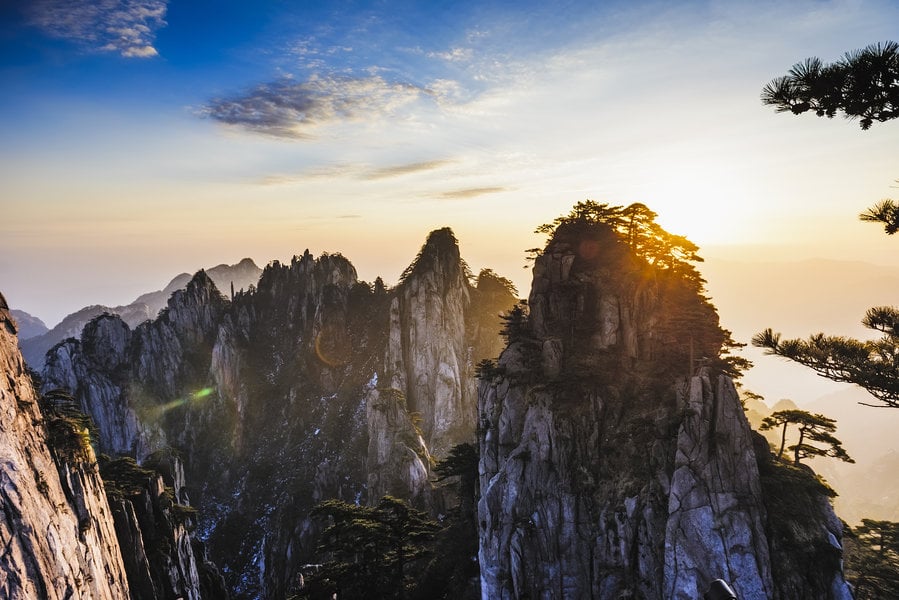
Sunrise visibility depends on weather; choose a safe viewpoint near the actual hotel.
Booking the Night and the Ascent Together
Confirm a room before planning to remain on the upper mountain. Check whether the rate is for a private room, a bed in shared accommodation or a particular family category. Confirm permitted occupancy, bathroom arrangements, meals and cancellation terms.
Then match the room to admission, ascent and descent. Huangshan Mountain uses real-name, timed and entrance-direction reservations through the official tourism platform. Book the correct visitor information and carry the original passport or other document used for the order.
Admission, scenic shuttles, cableway journeys, the canyon funicular and the hotel are separate costs unless the booked package specifies otherwise. An overnight room is not an admission reservation, and an admission ticket is not a room guarantee.
Remaining inside for the night is different from descending and re-entering the next day. If you plan to leave the scenic area between mountain days, confirm the current re-entry conditions and the reservations needed for the second entry.
Check operating notices for both days. Hotel availability does not mean you can arrive on the final cableway and still complete a long approach safely before dark.
Pack for One Night, Store the Rest
Use a comfortable backpack that you can carry on repeated stairs. A suitcase is impractical for the usual upper-mountain paths, even when cableways form part of the journey.
Before ascent, arrange confirmed storage for larger luggage below the mountain. Check where it will be kept, whether there is a charge, collection hours and any restrictions on valuables. If your ascent and descent gateways differ, a luggage transfer needs to be arranged explicitly.
| Carry on the mountain | Check before leaving larger luggage |
|---|---|
| Original passport and booking information | Admission and hotel documents are accessible. |
| Walking shoes, waterproof layer and warm clothing | Clothing suits the mountain forecast and dawn wait. |
| A dry change of essential clothes and socks | You can stay comfortable if the first day’s clothes become wet. |
| Water and compact snacks | Refills and meals are not dependent on an unverified stop. |
| Personal medication and basic toiletries | Necessary items remain with you. |
| Phone, power bank and reliable light | Charging needs and the dawn walk are covered. |
| A waterproof bag or liner for essentials | Documents and electronics are protected in rain. |
Check whether the hotel supplies towels, toiletries, drinking water, warm outerwear or other useful items. Do not assume that an old mention of loan coats describes the current service, sizes or availability.
Keep your bag modest. Carrying an elaborate camera kit, several clothing changes and unnecessary supplies can make every staircase harder. If considering porter assistance, confirm the actual service, cost and responsibility in advance.
Dinner, Breakfast and Check-out
Find out the hotel’s dinner and breakfast hours before planning evening and dawn walks. Check whether meals are included, whether a reservation is needed and whether dietary requirements can be accommodated.
Mountain food choices are more limited than in Tunxi or Tangkou. Communicate vegetarian needs, allergies and other requirements clearly, ideally with a translated note. Do not assume a vegetable dish is free of meat stock or animal ingredients.
For sunrise, the most straightforward sequence is usually a local dawn walk, breakfast at the hotel, packing and check-out. If a proposed route does not return past the hotel, arrange baggage and breakfast separately rather than leaving belongings behind without a collection plan.
Confirm check-out time and any permitted temporary storage. A hotel holding your backpack can simplify a nearby walk, but returning to retrieve it may create extra distance. Do not leave the bag there if your onward route leads away from the property.
Sleep matters. A tiring approach followed by a late evening and a very early alarm can make the second day’s descent harder, especially for children or slower walkers.
Adjusting the Two Days for Rain and Fog
Rain With Paths Open
Reduce optional climbs, wear appropriate waterproof clothing and slow down on slippery steps. Keep the hotel approach and descent as the priorities. A full canyon descent or steep exposed spur may be less appropriate even if the main route remains open.
On day one, reach the hotel earlier and use it as a base for a brief nearby walk if conditions improve. On day two, reassess the route after breakfast and allow extra time for wet surfaces.
Fog With Changing Visibility
When conditions are safe, give a nearby viewpoint some time. Small changes in cloud can reveal the landscape without requiring a long move to another area.
Avoid walking from one distant viewpoint to another solely in search of an opening. In dense fog, a longer route may add effort without improving visibility. Pine trees, rock forms and the atmosphere of the paths can still make a shorter visit worthwhile.
Severe Weather or Transport Suspension
Follow official warnings, closures and staff instructions. Cableways or routes may suspend operation, and a normal connector may no longer be usable.
If you are already on the mountain, contact the hotel or scenic-area staff for current advice. Inform your onward transport provider if plans are disrupted. Do not treat walking down in darkness or taking an unofficial path as the automatic answer to a stopped cableway.
Before ascent, serious warnings may justify changing the visit. Review ticket and hotel terms and ask the relevant provider about the applicable options. A poor forecast or limited visibility alone does not establish an automatic refund.
| What happens | Sensible adjustment |
|---|---|
| Day one is wet and slower than expected | Omit detours and prioritise reaching the hotel. |
| Sunset is hidden | Rest, dry equipment and confirm the morning plan. |
| Dawn is foggy but safe | Make a short local attempt or stay in; continue after breakfast. |
| Weather clears on day two | Enjoy views along the agreed route before considering extra walking. |
| A canyon or peak closes | Use a confirmed open alternative and revise tickets where necessary. |
| Transport is suspended | Follow staff advice and update onward arrangements. |
Protect the Second-Day Descent
Before leaving the hotel, check the walking route, descent cableway hours and onward transport. Work backwards from the time you need to be at the upper station, allowing a margin before the operating cutoff.
A dawn walk adds effort before the main day begins. Build in a seated break and lunch or snacks rather than expecting the group to continue without stopping until Tangkou.
After the cableway, allow for the scenic shuttle, collecting stored luggage and the road transfer. Huangshan North station is not beside the South Gate. Use the exact station on your ticket, and include railway security and boarding time in the calculation.
A late enough train can fit an appropriately conservative route. An early or tight departure is better served by completing the mountain visit the previous day. Avoid using the last cableway departure as the foundation of a rail connection.
Frequently Asked Questions
Is Two Days Better Than One on Huangshan Mountain?
Two days give more time and the option of dawn access. They are worthwhile if you can manage the walking and want a mountain overnight; a focused day visit can still suit a shorter trip.
Does This Itinerary Include Tunxi or Ancient Villages?
No. It covers two mountain days and one upper-mountain night. Allow separate time for arrival, city sightseeing or village visits.
Should I Sleep in Tangkou Before the First Day?
It is a practical choice for an early South Gate start. Starting from Tunxi or a station is possible, but adds road travel before the ascent process.
Which Cableways Work for a First Two-Day Visit?
Yungu up and Yuping down is a useful starting arrangement for a broad visit. The final choice should match your hotel, open paths, stamina and transport needs.
Which Hotel Area Leaves Less Walking for Day Two?
A Tianhai-area stay can place more of the crossing on day one and simplify the continuation towards Yuping. The exact property and route still matter.
Is a Beihai Stay an Easier Option?
It can make the first afternoon shorter after a Yungu ascent. If you descend by Yuping the next day, a substantial crossing remains.
Can I Take a Cable Car Directly to the Hotel?
Do not assume so. Upper-mountain hotels usually require walking from the station, with steps along the approach. Confirm the actual path before booking.
Does a Mountain Hotel Guarantee Sunrise?
No. Weather and viewpoint access determine what you see. Confirm a practical dawn route rather than relying on a room description or promotional photograph.
What Time Should I Leave for Sunrise?
Use the sunrise time for your date and the walking advice for your hotel. Allow for preparation, slower movement in darkness and arrival before the main light develops.
Can I Skip Sunrise and Still Enjoy the Overnight?
Yes. Rest, quieter evening time and another mountain day can make the stay worthwhile even without visible sunrise.
Should I Include the Full West Sea Canyon?
Only if it is open and fits your time and fitness. Treat it as a main activity and remove other demanding additions; confirm the funicular and onward route.
Should I Take a Suitcase Up?
A compact overnight backpack is much more practical. Arrange confirmed luggage storage below the mountain and check collection arrangements.
Are Meals Included With the Hotel?
Only if the booked rate says so. Check dinner and breakfast times, dietary requirements and whether a dawn outing affects your meal plan.
What If It Rains or Becomes Foggy?
Shorten optional walks and prioritise the hotel approach or descent. Use local advice and official warnings to decide whether a dawn walk or longer route is suitable.
Can Families Follow the Two-Day Plan?
Some can, with a suitable hotel approach, shorter routes and breaks. Plan around each child’s stair-walking ability and the adults’ carrying demands; cableways do not remove all steps.
Can I Catch a Train After Descending on Day Two?
Potentially, with a conservative route and a late enough departure. Allow for walking, cableway queues, scenic transport, luggage collection, road travel and station procedures.
Plan Your Two Days on Huangshan Mountain
Tell our local team your travel dates, arrival and departure details, walking confidence, group ages and preferred room arrangement. Let us know whether sunrise, photography, the canyon or a slower pace matters most.
We can help match the hotel to a practical ascent and descent route, clarify the relevant bookings and luggage arrangements, and leave room to adapt when the weather changes.
Prepared for: Discover East China Tours
Last updated: 8 October 2026