
Choose between Tunxi Old Street and Liyang, or combine selected streets, local food and a riverfront walk for an easy arrival afternoon or final evening.
Tunxi Old Street and Liyang make a useful introduction to the urban side of the Huangshan area. You can look at historic shopfronts, try regional food, browse local products and finish with a short walk beside the river. The visit can be substantial enough to feel worthwhile without demanding another early start or a full sightseeing day.
For a first visit, begin with Tunxi Old Street if traditional commercial streets and regional shopping are your main interests. Choose Liyang if you primarily want dinner, a café and a relaxed evening atmosphere. With three to four hours, including a meal, you can combine selected sections of both through the Zhenhai Bridge area. With less time or tired legs, one district is enough.
These streets are especially useful on an arrival afternoon or the evening before departure. Keep the route close to your hotel, leave luggage behind and build the walk around food and rest rather than trying to cover every shop and side lane.
The Area at a Glance
| Planning question | Practical answer |
|---|---|
| Where are the streets? | In Tunxi, the main urban area of the wider Huangshan city. They are separate from Huangshan Mountain and Tangkou. |
| How do they connect? | The Old Street, nearby riverfront areas and Liyang can be linked through the Zhenhai Bridge area, following the current public pedestrian route. |
| Which should I choose first? | Old Street for historic commercial character and regional products; Liyang for a dining-and-café-led visit. |
| How much time for one district? | Around 1–2 hours for a selected walk and brief stop; add time for a full meal or museum. |
| How much time for both? | Around 3–4 hours with a meal and breaks, using selected sections rather than every lane. |
| Is daytime different from evening? | Yes. Museums and detailed building observation suit daytime; lighting, dinner and a short river walk suit evening. |
| Is a performance essential? | No. Confirm any event separately; the streets work as an independent walk without one. |
| Does arriving at Huangshan North mean I am already here? | No. The station requires a separate transfer to the Tunxi street area or your hotel. |
All suggested durations are editorial planning allowances, not official opening hours. Transport, queues, shop visits and your walking pace will affect the total.
Understand the Places and Their Names
Tunxi Old Street
Tunxi Old Street, or Tunxi Laojie, is a historic commercial street with a main axis and connecting lanes. It is known for Huizhou-style buildings, regional goods and a continuing commercial role.
The core historic section is roughly 800 metres long within a longer street of about 1.3 kilometres. That does not mean your complete visit is only an 800-metre walk: side lanes, restaurants, the riverfront and returning to the hotel add distance.
A visit is best approached through a selected stretch of the main street, a few details and one or two meaningful stops. You do not need to inspect every souvenir shop to enjoy the setting.
Liyang and Liyang in Lane
Liyang is commonly shown on signs and booking platforms as Liyang in Lane, Liyang IN Lane or Liyang in Xiang. These names refer to the visitor district associated with the historic Liyang area.
It combines retained historic buildings with contemporary dining, retail and leisure spaces. Expect an adapted urban visitor district, with older architecture alongside newer commercial uses.
For practical planning, use the exact map pin for your restaurant, hotel or meeting point. A general instruction to “meet in Liyang” may not be precise enough across its different lanes and riverfront sections.
The Riverfront and Zhenhai Bridge
Zhenhai Bridge, often called the old bridge locally, helps connect the two sides of this part of Tunxi. Nearby riverside sections, including the area marketed as Tunxi River Street, can fit into the walk between Old Street and Liyang.
Treat the riverfront as a connector and a place to pause, rather than automatically adding a third full district tour. Follow the current public route and any temporary restrictions, particularly during maintenance or severe weather.
The bridge and river views add variety after browsing shops. They also make the journey feel different from simply walking back along the same shopping street.
Tunxi Old Street or Liyang: Which Fits Your Visit?
| Your priority | Start with | Why it fits |
|---|---|---|
| Historic commercial streets | Tunxi Old Street | A clear introduction to the street’s traditional trading character and architecture. |
| Regional tea, food gifts or writing materials | Tunxi Old Street | A useful place to browse relevant shops and compare products. |
| A museum stop | Tunxi Old Street in daytime | Tunxi District Museum is located on the street, subject to current opening arrangements. |
| Dinner and a café | Either, with the actual venue checked | Both offer choices; select by menu, location and comfort rather than the district name alone. |
| A contemporary evening setting | Liyang | Historic surroundings combined with leisure and dining uses. |
| A short arrival-night outing | The district nearest the hotel or chosen restaurant | Reduces travel, luggage complications and unnecessary walking. |
| A fuller first evening | Selected Old Street walk, bridge connection and Liyang | Adds different settings without needing a long sightseeing programme. |
| Quiet rest | A specific café, restaurant or hotel | Neither district guarantees a quiet seat or low noise. |
The differences are useful planning tendencies, not strict divisions. You can eat well around Old Street, find older architecture in Liyang and browse shops in both.
What to Notice on Tunxi Old Street
Historic Shopfronts and the Commercial Street Pattern
Look at the relationship between the main street and its side lanes. Shop signs, rooflines, upper-storey timber features and the frontage of buildings give the street its character.
Pause where you can look without blocking the flow of people. Compare two or three façades rather than trying to photograph the entire street from one position.
The appearance of a building does not establish that every room behind it is open to visitors. Shops, homes, guesthouses and cultural venues have different access arrangements.
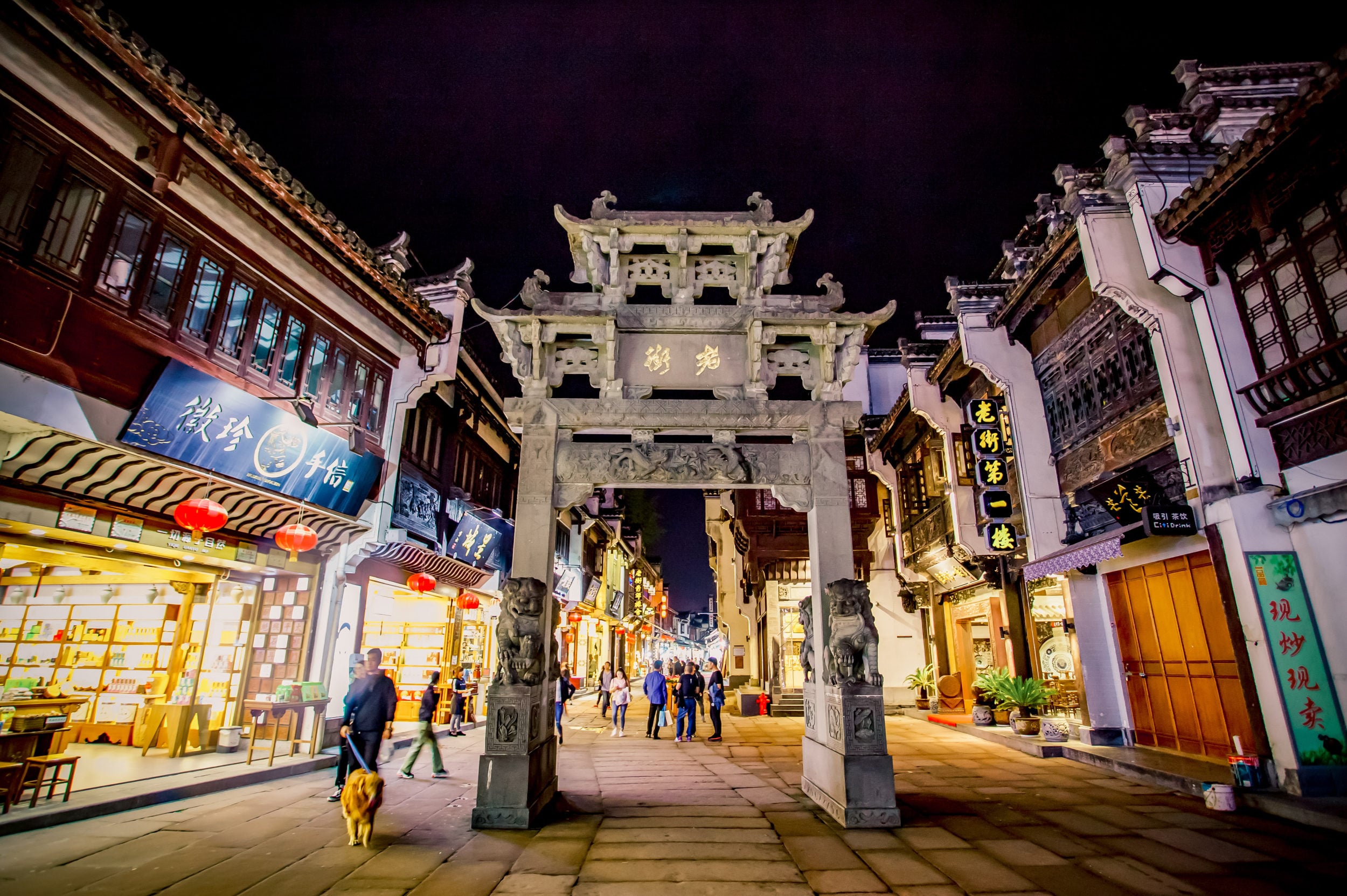
Historic shopfronts and Huizhou-style façades along Tunxi Old Street
Huizhou Culture in Everyday Objects
Tea, calligraphy materials, regional snacks and craft-related goods provide ways to connect the walk with the wider area’s culture. Ask what an item is used for and where it was made, rather than relying on a heritage label alone.
A demonstration can be interesting, but it may be part of a retail setting. Decide whether you want to watch, buy or arrange a proper hands-on session. Those are different choices.
Tunxi District Museum
Tunxi District Museum is located at 168 Old Street and can add context to a daytime visit. Its collections include material associated with regional art, inkstones, carving and furniture.
Check the day’s opening arrangements before making it a fixed stop. It has published separate morning and afternoon sessions and a Monday closure, so arriving at lunchtime or after dinner may not provide access.
This is a different institution from the larger Anhui China Huizhou Culture Museum elsewhere in Tunxi. The latter requires its own journey and time allowance. Do not use the names interchangeably when booking a vehicle or planning a short walk.
A Few Side Lanes
A selected public side lane can give another perspective on the street. Keep the route simple, particularly on an arrival day, and turn back when a passage is private or restricted.
You do not need a complete loop through every lane. A main-street walk and a short detour can provide enough architectural interest before a meal.
What to Do in Liyang
Walk Through the Historic-Contemporary Mix
Liyang’s interest includes how older buildings sit within a contemporary leisure setting. Notice the contrast between historic structures and newer dining or retail spaces as you move through the public lanes.
Allow time to stop where something interests you, but do not assume every old-looking building is a museum. A café or shop may occupy an adapted heritage space with limited visitor access.
Choose a Comfortable Meal or Café Stop
Liyang can be a useful place to settle into a seat after travelling or a day outdoors. Choose a venue around the actual menu, price, seating and location.
If a quiet conversation is the priority, check the setting before ordering. A table near a bar, stage or busy main passage may not be restful, even if the district is marketed as a place for slow travel.
Add a Short Evening Walk
After dinner, choose a small loop through selected lanes or a permitted riverfront section. Lighting and reflections can make the area enjoyable without a scheduled performance.
If an event is operating, decide whether it improves your evening. You can enjoy a short public programme when convenient, but do not build an arrival-night itinerary around an unverified show time.

Daytime and Evening Are Different Visits
Daytime: Buildings, Museums and Deliberate Shopping
Daylight makes it easier to examine façades and architectural details. It is also the appropriate window for a museum or another cultural venue with daytime hours.
A daytime walk can be quieter at some points, but shops and cafés do not all open at the same time. An early stroll may work for the streets while offering fewer food or shopping choices.
If you want to compare tea or choose a particular craft item, leave enough time to ask questions and check the product. Avoid making a purchase decision hurriedly just before a train transfer.
Evening: Dinner, Lighting and a Shorter Walk
An evening visit is best built around one meal and a manageable route. You can browse selected shops and enjoy the public streets, but museums and some specialist venues may have closed.
Shopfront lighting and the river can provide different photographic opportunities from the daytime buildings. The exact atmosphere depends on the date, weather and operating businesses.
Do not interpret public-street access as every restaurant, shop or attraction remaining open all night. Check the actual venue if you are arriving late.
| Good daytime priorities | Good evening priorities |
|---|---|
| A selected architectural walk | Dinner at a suitable restaurant |
| Tunxi District Museum when open | A short Old Street or Liyang walk |
| A confirmed craft or cultural venue | Bridge and river views where access is suitable |
| Comparing products without rushing | A café or drink stop that fits your group |
| An early lunch and rest | A verified event only if convenient |
A Combined Route for a First Visit
A useful sequence is:
Selected Tunxi Old Street walk → optional daytime museum or brief shopping stop → riverfront and Zhenhai Bridge area → selected Liyang lanes → dinner or a café → return to the hotel.
Reverse the direction if your hotel or restaurant is on the Liyang side. This is a flexible sequence, not a requirement to walk the full length of every street.
| Part of the visit | Suggested allowance | How to keep it relaxed |
|---|---|---|
| Old Street | 45–75 minutes | Choose a stretch and a few stops rather than every shop. |
| Optional daytime cultural stop | 30–60 minutes | Confirm opening and shorten other elements if needed. |
| Bridge and connecting riverfront | 20–40 minutes | Use a direct public route with time for a view. |
| Liyang | 30–60 minutes | Explore selected lanes near the chosen venue. |
| Meal or longer seated break | 45–75 minutes or more | Give it its own time instead of eating while rushing. |
For both districts with a meal, around three to four hours is a sensible starting allowance if you keep cultural and shopping stops limited. Adding a substantial museum visit, workshop or long meal extends the plan.
The bridge crossing itself is only part of the connection. Reaching it, finding the next lane and stopping for photographs can make the transfer between districts longer than expected.
Three Easy Ways to Fit the Streets Into Your Trip
Plan 1: A Late-Afternoon Arrival and Easy Dinner
Transfer to the hotel first, check in and leave your luggage. If you still have energy, choose the nearer district for a forty-five-to-sixty-minute walk before dinner.
After eating, decide whether a short river or lane walk appeals. Keep the second district optional. Travelling, checking in and finding a restaurant already use part of the evening.
If the train or flight arrives late, go directly to a confirmed dinner option or the hotel. There is no need to complete the full combined route that night.
Plan 2: A Fuller Arrival Afternoon and Evening
If you arrive with several useful hours available, begin with Old Street and a daytime cultural stop if open. Pause for a drink, then continue through the bridge area towards Liyang for dinner.
This provides a more varied introduction while keeping the evening unhurried. Confirm the restaurant and return arrangement rather than choosing a remote final stop after becoming tired.
Check the actual time you reach Tunxi, not merely the train’s arrival time at Huangshan North. The station transfer, hotel check-in and luggage arrangements affect what remains of the afternoon.
Plan 3: The Evening Before Departure
Keep the outing near the hotel and use it for a good meal, a short walk and any final small purchases. Pack beforehand where practical, and confirm the next morning’s transfer.
Avoid adding a late performance, long cruise or extensive shopping if it compromises sleep or creates uncertainty before an early departure. The street visit works well because you can shorten it easily.
If staying near Huangshan North station rather than central Tunxi, include the separate road journey both ways. A station hotel does not mean Old Street is a short walk away.
A Departure-Morning Walk: When It Works
A brief morning walk can be pleasant if you are staying nearby and your departure is late enough. Confirm luggage storage, collection time and the onward vehicle before setting off.
Early public-street access may precede shop and restaurant opening. Plan for the walk itself and a confirmed breakfast option, rather than assuming a complete shopping programme at first light.
Do not add the second district merely because there is an hour left on the clock. Work backwards from the railway station or airport procedures, the road transfer and luggage collection.
For an early train, breakfast and a straightforward hotel departure are usually the better plan. The previous evening can provide the street experience without a rushed final morning.
What to Eat: Snacks and a Proper Meal
Huangshan Shaobing
These small baked pastries are a familiar regional snack. A common version uses preserved vegetables and pork, so a pastry should not be assumed vegetarian from its appearance.
Try a small amount first if offered, ask about the filling and check the packaging if buying gifts. A fresh snack and a boxed product may have different storage instructions and shelf lives.
Hairy Tofu
Huizhou mao doufu, often translated as hairy tofu, is a fermented tofu speciality. It is commonly cooked before serving, with accompaniments such as chilli sauce.
Its flavour and texture are distinctive. Ask for sauce separately if you want to control the heat, and choose a vendor whose preparation and serving arrangements you are comfortable with.
Fermented Mandarin Fish
Chou gui yu is a regional fish dish known for its fermented aroma. It is a restaurant choice rather than a necessary stop on every snack walk.
Confirm the portion and total price before ordering, especially if sold by weight. Preparation can include pork or meat-based ingredients, so pescatarian diners should ask specifically.
Simpler Food and Family Meals
Noodles, rice, eggs and vegetable dishes may provide more familiar options, depending on the restaurant. A few shared dishes can be more comfortable for a tired group than a long sequence of unfamiliar snacks.
Choose one regional speciality alongside food the group already likes. For children, ask about chilli and bones, allow a seated meal and carry water rather than relying on constant street purchases.
| Useful request | Chinese note to show staff |
|---|---|
| Please do not add chilli. | 请不要放辣椒。 |
| Please put the sauce on the side. | 请把酱料另外放。 |
| Does this contain pork or meat stock? | 这个有猪肉或肉汤吗? |
| Please confirm the total price before cooking. | 请在制作前确认总价。 |
| Can we have a smaller portion? | 可以做小份吗? |
For allergies or strict dietary requirements, explain the actual restriction and check ingredients and preparation. A translated note supports communication but does not guarantee separate equipment or freedom from cross-contact.
Where to Eat and Rest
Both districts and nearby urban streets offer dining choices. The best location for your evening is the one with a suitable menu, comfortable seating and a practical return to the hotel.
For a short arrival outing, choose the restaurant first and build the walk around it. For a fuller afternoon, decide on a general dinner area and leave room to stop early if the group becomes tired.
A queue can indicate popularity, but it also uses your available time. Decide whether the restaurant matters enough to wait, and keep an alternative nearby.
Check menus before sitting down, including the unit used for fish, tea or other items. Confirm service charges or minimum spending where applicable. Do not assume a venue with a historic façade has the menu, price or atmosphere you expect.
Build in a seated break after roughly forty-five to sixty minutes of browsing if that suits your group. This is a useful pacing suggestion, not a rule. A short walk, meal and brief final stroll can be a complete visit.
Shopping: Buy With a Clear Purpose
Tea
The wider Huangshan region is associated with well-known teas such as Huangshan Maofeng and Taiping Houkui. A street location or decorative package does not establish a product’s origin or quality.
Ask for the tea name, origin, harvest information where relevant, weight and total price. Compare like-for-like quantities, and decide whether you want an everyday tea or a more expensive gift before beginning a tasting.
A tasting does not require a purchase. Check whether any session is chargeable before participating.
Ink, Inkstones and Writing Materials
Huizhou ink, She inkstones and related writing materials can be interesting purchases for someone who will use or appreciate them. Ask what the item is made from, where it comes from and whether it is intended for use or display.
Quality and price vary. Buy within a budget you understand, and avoid treating an expensive object as an investment based only on a shop explanation.
Inkstones can be heavy, while some packaged items are fragile. Consider luggage weight, protective wrapping and how the item will travel.
Food Gifts and Small Craft Items
For packaged food, check ingredients, expiry date and storage conditions. Confirm your destination’s import rules before taking meat-containing snacks, plant products or other restricted items abroad.
For a craft item, distinguish a handmade product from a factory-made souvenir. Ask about the maker and material if those details matter, and inspect the item before it is packed.
Keep purchases modest if another train journey or a mountain overnight remains ahead. Extra bags can complicate luggage storage and transfers.
Keep Browsing Optional
You can enjoy the streets without buying anything. A practical route includes a few shops that interest you and leaves the rest for another time.
For a guided visit, agree that shopping is optional and clarify whether any demonstration includes a sales element. A cultural explanation and a retail stop should be described accurately.
Craft Sessions, Events and River Cruises
The street areas have hosted craft-related experiences and public programmes. These can be worthwhile additions when the actual activity, date and venue are confirmed.
Ask what you will make, how long it takes, whether language support is available and what the fee includes. A retail demonstration is different from a hosted lesson, and an activity promoted for a previous holiday may not run on an ordinary evening.
River sightseeing services have also operated in the area. If considering a cruise, confirm the current boarding point, departure, duration, ticket conditions and weather arrangements. It is an optional booked activity, not part of an ordinary free street walk.
For a first arrival evening, walking and dinner are usually enough. Add a cruise or performance when it is a genuine priority and the extra commitment fits your energy and transport arrangements.
Walking, Families and Mobility Needs
These urban districts allow a more flexible pace than a mountain route. You can choose a short section, stop for food and return to the hotel before becoming tired.
Historic paving, thresholds, crowded passages and bridge approaches still require attention. A mapped distance does not establish step-free access or easy stroller movement.
For families, give the walk a few simple interests: a shopfront detail, a river view and a snack or meal the children want. Avoid turning the evening into a continuous shopping circuit.
Keep children close beside river edges and in busy lanes. Check the seating, toilet and return-transport needs before a long restaurant wait.
For significant mobility limitations, verify the exact drop-off, route, venue entrance and toilets. A shorter visit to one district with an accessible restaurant can be more suitable than a bridge-linked walk through both.
After Huangshan Mountain, allow tired knees and legs to recover. A meal near the hotel and a brief street section may provide a better evening than another extended walk.
Rain, Heat and Busy Evenings
In rain, shorten the outdoor route and use a confirmed café or restaurant as the main stop. Wear shoes with grip and take care on paving and bridge surfaces. Close umbrellas when entering crowded interiors and avoid blocking narrow lanes.
Severe weather can affect riverfront access and booked services. Follow local warnings and current restrictions rather than continuing along a waterside route simply because it appears in an itinerary.
During hot weather, consider a later walk, but remember that evening can still be humid. Carry water and plan a comfortable seated break.
Holidays and popular weekends can be busy. Allow extra time for food and pickup, and keep the walk easy to shorten. An open public street does not mean every venue has unlimited capacity.
Lighting, markets and performances vary by date. Plan the evening around what is confirmed, while leaving enough interest in the independent walk if an event is changed or cancelled.
Transport and Hotel Location
Huangshan North railway station is separate from central Tunxi. Arrange the road or public-transport connection to your hotel or the street area, and check the exact destination before boarding.
Public services have linked the station with Tunxi Old Street and Liyang. Check current routes, stops, service hours and any final walking section rather than copying a holiday timetable into your travel plan.
For a taxi or ride-hailing pickup, choose a permitted, recognisable point near the district. The vehicle may not reach the doorway of a pedestrian-lane hotel or restaurant. Keep the Chinese venue name and address available.
At a busy departure time, allow time to reach the pickup point and for the road journey. Confirm the next morning’s transport before going out if you have an early train or flight.
A hotel near one of these districts can simplify the evening, but location within a busy lane may bring noise or luggage-access trade-offs. A room slightly farther away may offer easier vehicle access. Compare the actual property and walking approach.
Staying in Tunxi is useful for urban dining and services. It does not remove the separate journey to Tangkou, Huangshan Mountain or the Yi County villages.
Combine the Streets With the Wider Trip
Before Huangshan Mountain
Use an arrival afternoon for a selected street walk and dinner, then decide whether to stay in Tunxi or continue to Tangkou according to the next morning’s mountain plan.
If an early South Gate start matters, a Tangkou overnight may be more convenient. Do not let a long city evening create an unnecessarily rushed mountain morning.
After a Mountain Overnight
Complete the descent and transfer to the hotel before planning the evening. Shower, rest and have a proper meal, then add a short walk if you feel like it.
Keep the museum and a comprehensive shopping route for another daytime window. The evening works as recovery precisely because it can be shortened.
After Hongcun or Xidi
Tunxi offers a change of scale after village lanes and historic interiors. Use the city evening for food, a river view and a little independent browsing rather than repeating another long architectural tour.
If you have already walked extensively that day, choose one district. Both will still be available on a future visit or a genuinely free morning.
Frequently Asked Questions
Are Tunxi Old Street and Liyang the Same Place?
No. They are separate, nearby districts that can be combined through the Zhenhai Bridge area and current public pedestrian routes.
Which Should I Visit First?
Start with Old Street for historic commercial character and regional products. Start with Liyang if dinner, a café or its actual proximity to your hotel is the main priority.
Can I Visit Both in One Evening?
Yes, with selected walks and enough time for a meal. Around three to four hours is a useful starting allowance; shorten the route if you arrive late or feel tired.
Do I Need to Visit Both?
No. One district, a meal and a short walk can be a complete arrival-night outing.
Is Daytime or Evening Better?
Daytime suits architectural details, museums and deliberate shopping. Evening suits dinner, lighting and a shorter street or river walk.
Do the Public Streets Require a Single Attraction Ticket?
They are generally explored as open urban visitor districts. Check any museum, cruise, performance or paid activity separately, along with temporary access restrictions.
Is Tunxi District Museum Open in the Evening?
Do not plan it as an evening attraction. Check its current daytime sessions and closure days before visiting.
Is It the Same as Anhui China Huizhou Culture Museum?
No. They are separate museums at different locations. Use the exact name and address when planning a short visit or vehicle journey.
What Regional Food Can I Try?
Consider Huangshan shaobing, hairy tofu or fermented mandarin fish if the flavours appeal, alongside simpler dishes. Check ingredients, portion size and price.
Are the Snacks Vegetarian?
Not necessarily. Common pastries may contain pork, and vegetable or fish dishes can use meat ingredients. Ask about your actual dietary restriction.
What Is Worth Buying?
Tea, writing materials, food gifts or a small craft item may suit you. Check origin, quality, weight, ingredients and total price rather than buying on a heritage label alone.
Are Performances and Craft Sessions Available Every Night?
Do not assume so. Confirm the current date, venue, booking needs and language support for any specific programme.
Is the Area Suitable for Children?
Yes, with a short route, seated meal and close supervision around river edges and busy lanes. Plan around the family’s energy after travelling.
Can I Walk Here Before My Train Departs?
If you have enough time and a confirmed luggage and transfer plan. For an early train, use the previous evening for sightseeing and keep the morning straightforward.
Is Huangshan North Station Beside Old Street?
No. Allow a separate transfer and station procedures. A train arrival time is not the time you will reach the street or your hotel.
What If It Rains?
Shorten the outdoor walk and centre the visit on a confirmed meal or café. Wear grippy shoes and follow severe-weather warnings or riverfront restrictions.
Plan Your Tunxi Arrival or Final Evening
Tell our local team your arrival and departure details, hotel location and preferred pace. Let us know whether you want regional food, a daytime cultural stop, a short evening walk or help connecting the city stay with Huangshan Mountain and the villages.
We can help keep the outing realistic, with a suitable meal stop, clear transport arrangements and enough time to rest.
Prepared for: Discover East China Tours
Last updated: 8 October 2026