
Understand how Taoyangli, the imperial kiln site and the museum fit together, then plan reservations, area admission and a daytime or evening visit.
Taoyangli is one of the most useful places to begin understanding Jingdezhen. Here, porcelain history is connected to a real production site, a museum of excavated objects and the streets of the old city around them.
The experience is more rewarding when you visit these parts together. The Imperial Kiln Museum helps explain the objects and craftsmanship; the kiln site shows where imperial production took place; and the surrounding lanes put that industry into an urban setting.
The main planning complication is admission. A reservation for the Imperial Kiln Museum and admission to the surrounding Taoyangli visitor area are separate arrangements. A free museum reservation should not be interpreted as free access to every part of the wider district.
For a first visit, plan a substantial half-day rather than a short photography stop. If evening atmosphere matters to you, consider a late-afternoon visit that leaves time for the museum and historic area before continuing into the evening, after checking the actual access and opening arrangements for your date.
Taoyangli, the Imperial Kiln Site and the Museum: How They Fit Together
The three names describe related places, rather than three unrelated attractions across the city.
| Name | Chinese name | What it means for your visit |
|---|---|---|
| Taoyangli Historical and Cultural District | 陶阳里历史文化旅游区 | The wider historic visitor district, including lanes, heritage buildings and the imperial kiln area |
| Imperial Kiln Site | 御窑厂遗址 | The archaeological and historical production site within the area |
| Jingdezhen Imperial Kiln Museum | 景德镇御窑博物馆 | The museum associated with the site, displaying and interpreting imperial kiln artefacts |
| Jingdezhen Imperial Kiln Institute | 景德镇御窑博物院 | The institution name you may see on official notices and the museum’s WeChat account |
Think of the visit as district, production site and museum. Each answers a different question: what was the neighbourhood like, where was porcelain made, and what can the surviving objects tell us?
It is not the China Ceramics Museum
The Jingdezhen China Ceramics Museum (景德镇中国陶瓷博物馆) is a separate destination elsewhere in the city. It has its own booking and opening arrangements.
Do not use a reservation for that museum when planning the Imperial Kiln Museum, and do not assume a taxi request for “the ceramics museum” is precise enough.
Save the full Chinese name of the place you intend to visit. This is especially useful when discussing the route with your hotel or a driver.
Taoyangli is not Taoxichuan
Taoxichuan is a different cultural and creative district. It is a useful companion visit for contemporary ceramics and industrial heritage, but it is not another entrance to Taoyangli.
Taoyang New Village is also a separate place. Similar names in hotel listings and travel searches should not replace checking the actual location.
Why the Imperial Kiln Area Matters
Jingdezhen’s imperial kilns produced porcelain for the court during the Ming and Qing periods. The site connects the city’s reputation for fine porcelain with the materials, labour and production systems behind it.
This is not simply a display of finished decorative objects. Archaeology reveals evidence of making, selecting, rejecting and repairing our understanding of those objects.
Broken pieces are particularly important. Excavated fragments can be studied, matched and reconstructed, giving researchers evidence that an intact object alone may not provide.
For a visitor, that changes the way you look at a display case. A vessel with visible joins is not necessarily less interesting than an apparently perfect piece: the reconstruction can reveal how knowledge has been recovered from the production site.
You do not need specialist ceramic knowledge to enjoy the visit. A few questions make a useful starting point:
- What was this object intended for?
- How was it shaped, decorated and fired?
- What evidence comes from excavation rather than later collecting?
- What does a fragment reveal about the production process?
- How does the object connect with the kiln site outside?
What to See in the Imperial Kiln Museum
The museum is worth visiting for its collections and interpretation as well as its architecture. Give the displays real time before moving on to the photo stops.
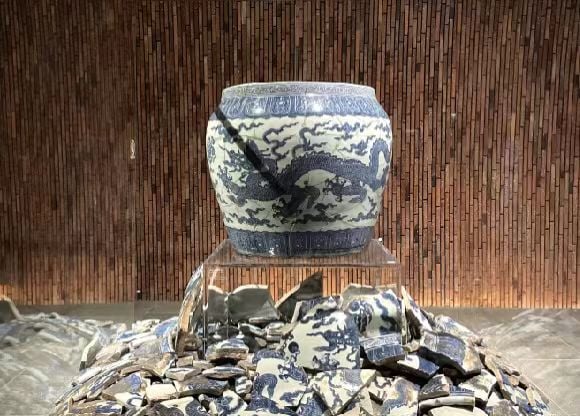
Reconstructed objects help connect surviving fragments with porcelain production.
Excavated porcelain and reconstructed objects
Look for objects that show the relationship between fragments and a reconstructed form. Follow the labels to understand the period, technique and evidence behind the interpretation.
Instead of trying to remember every dynasty or object name, choose a few examples to study closely. Compare shape, decoration and the traces of reconstruction.
Production rather than only appearance
Pay attention to explanations of manufacture and selection. A finished bowl or vase can look effortless, while the display may reveal a demanding sequence of skilled work.
The most useful visit connects the objects with the site. If a label refers to an excavation location or manufacturing evidence, make a note to relate that information to the outdoor visit afterwards.
Changing exhibitions
The exhibition programme can change. Do not build a trip around a photograph of one famous object without confirming whether it will be on display during your visit.
A temporary exhibition may have different access conditions or occupy a different space from the regular museum route. Check the current programme if a particular exhibition is a priority.
The museum building
Designed by Studio Zhu-Pei, the museum uses brick vaults inspired by kiln forms. New and reused kiln bricks connect the contemporary building with Jingdezhen’s material traditions.
The building is a modern museum, not a surviving Ming or Qing kiln. Its architectural references help tell the story, but it should not be mistaken for the original production structure.
Notice how the curved forms, brick surfaces, openings and courtyards frame light and views. The architecture can enrich the visit without becoming its only purpose.
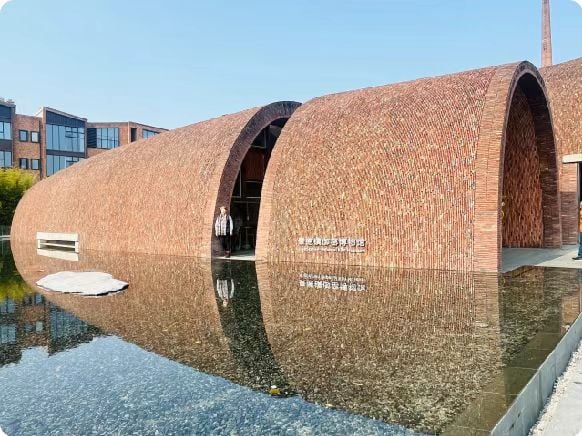
The contemporary museum draws on kiln forms and local brick traditions.
What to See Around the Imperial Kiln Site
The site provides a different kind of evidence from the museum cases. It helps you imagine a working production area and the historic setting of the objects you have just seen.
Depending on the current visitor route, you may encounter archaeological displays, kiln-related remains and historic landmarks associated with the wider imperial kiln area.
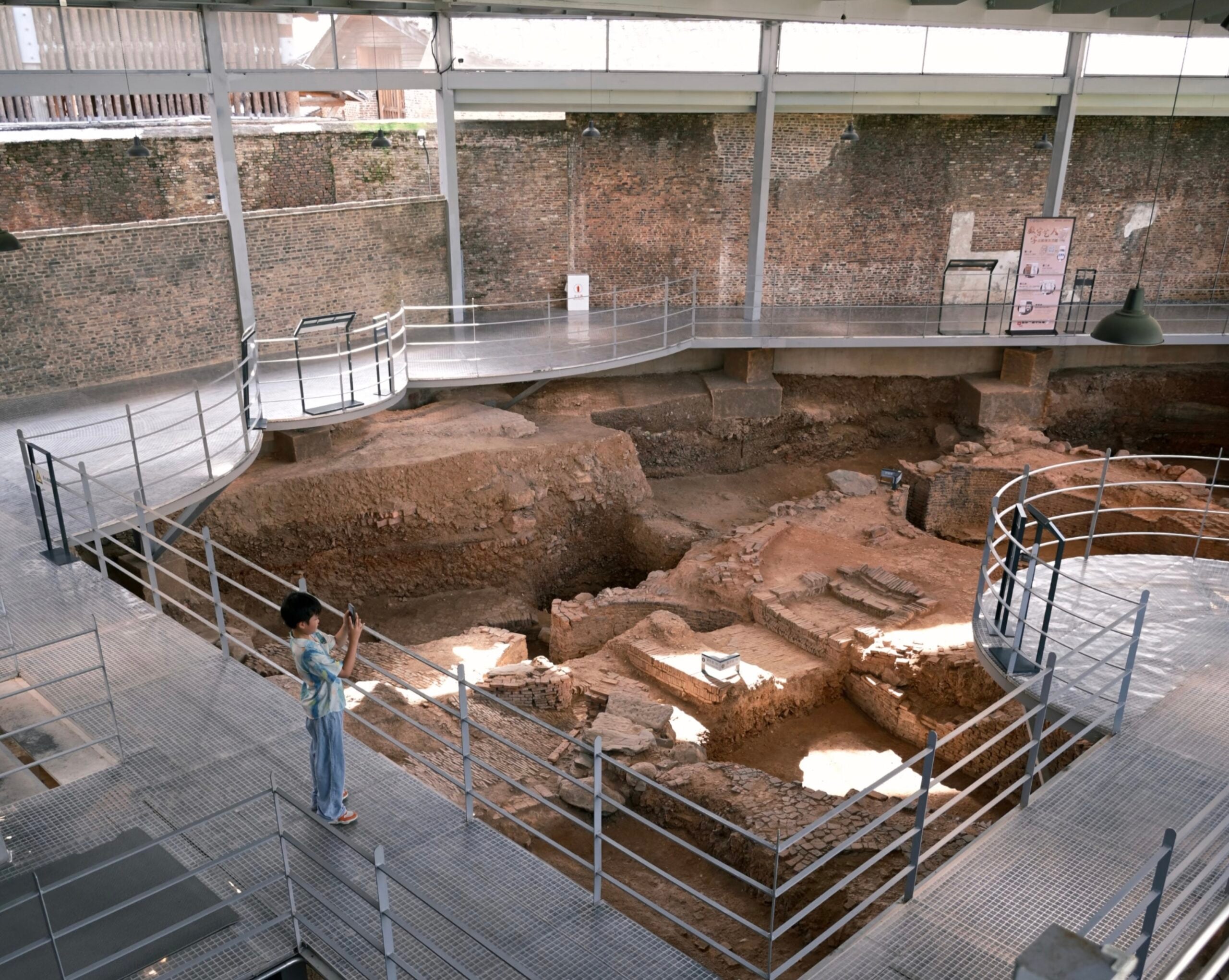
Use the current visitor map and labels to identify kiln-site remains.
Longzhu Pavilion (龙珠阁) is a recognisable landmark to look for on the visitor map. Its access and any associated exhibition arrangements should be checked on arrival rather than assumed from an exterior photograph.
Use the current map and interpretation boards to understand which remains you are seeing. Visible structures and restored elements are not all necessarily the same age or part of the same phase of production.
Stay on the designated routes. Some spaces may be closed for conservation, research or maintenance, and an older suggested walking route may not reflect current access.
Exploring Taoyangli's Historic Streets
The streets and lanes help connect porcelain production with daily life. Alongside the principal heritage sites, the district includes older buildings, adapted spaces and visitor businesses.
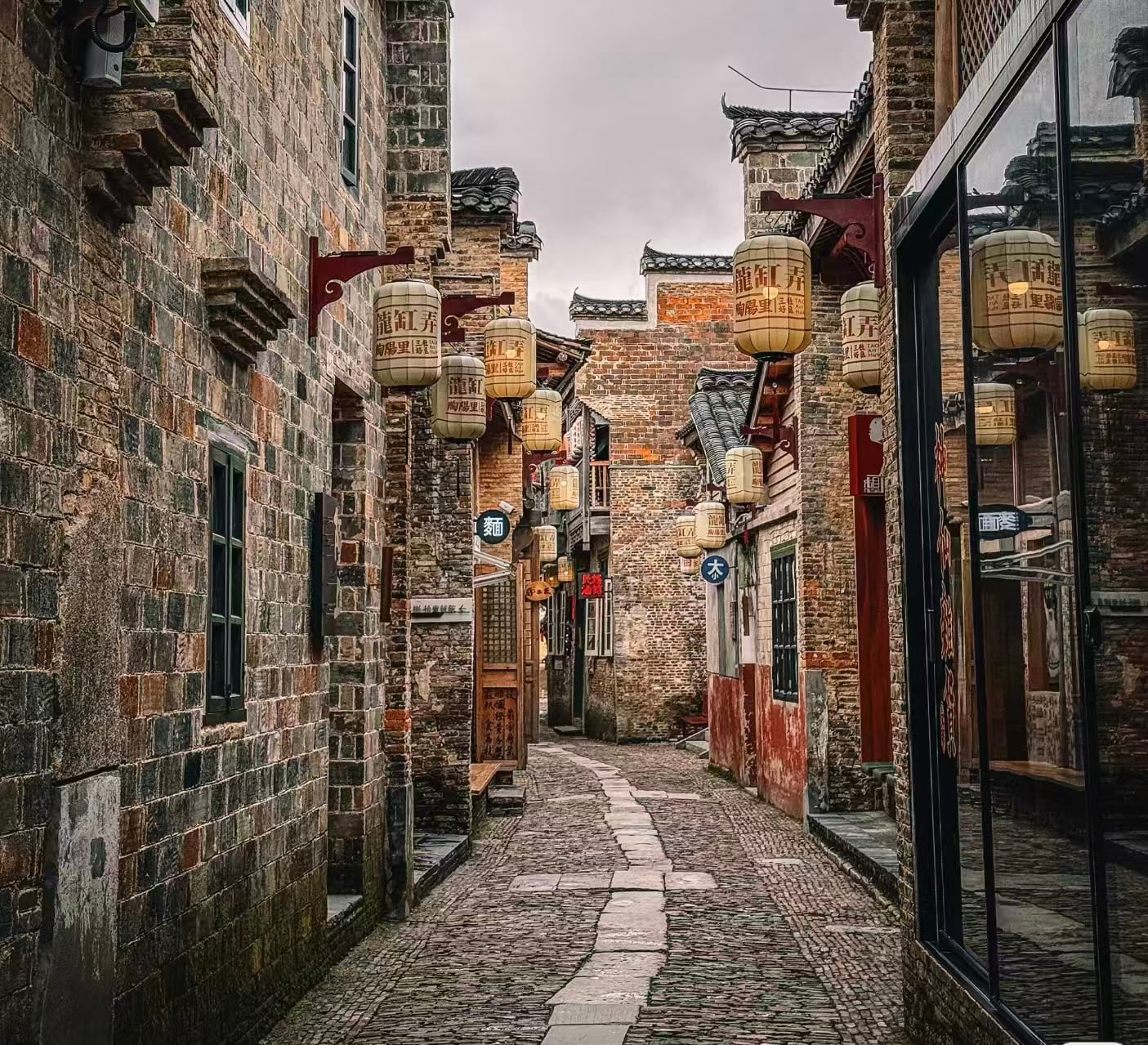
Allow time for the historic lanes as well as the museum.
Allow time to notice the materials and scale of the lanes, rather than moving directly from the ticket gate to the museum and back out again.
What makes the walk worthwhile?
Look at brickwork, doorways, street layouts and the relationship between small buildings and larger heritage structures. These details can make the area’s industrial and neighbourhood history easier to imagine.
Some spaces now contain shops, cafés, exhibitions or activities. That mix is part of the present-day district, but a shopfront is not automatically a historic workshop or a museum exhibit.
If you want a hands-on experience, confirm the provider, session and location separately. Seeing a pottery business during a walk does not establish that a class is available immediately or in English.
Leave room for a pause
A short break makes the visit easier, particularly after a museum session. Choose a café, meal or rest stop that fits the route rather than adding another distant destination in the middle of the visit.
Keep commercial purchases separate from the museum story. A contemporary souvenir can be enjoyable without being an antique or an object made using the exact process described in the exhibition.
Tickets and Reservations: Understand the Separate Checks
Admission is the detail most likely to cause confusion, so settle it before travelling to the area.
The Imperial Kiln Museum is promoted as a free, reservation-based museum. However, it lies within the Taoyangli visitor district, where scenic-area admission is normally required for the managed entry route, unless a valid exemption or other applicable arrangement covers you.
The free museum reservation therefore does not necessarily make the complete visit free.
| Part of the visit | What to arrange or check |
|---|---|
| Surrounding city streets | Whether your intended route is outside or inside a managed visitor boundary |
| Taoyangli scenic-area access | The current ticket, validity, entry gate and any applicable exemption |
| Imperial Kiln Museum | A successful reservation for the correct museum and visit date or session |
| Individual venues or temporary exhibitions | Any separate admission, capacity or opening conditions |
| A performance, guided service or workshop | A separate booking or a clearly described package inclusion |
Museum reservation and district ticket are different records
Check that you have both the required area admission and the museum reservation. A payment receipt for Taoyangli should not be assumed to reserve an interior museum session automatically.
Likewise, a museum confirmation should not be assumed to cover the scenic-area gate. Read the live booking instructions and any included-entry statement.
Package products can combine services, but the wording must explain what is actually included. A guided product, district ticket and museum booking assistance are not necessarily the same thing.
Check the price when booking
Use the current official ticket listing rather than an old screenshot. Discounts, promotions, age-based eligibility and package prices can differ.
If you believe an exemption applies, ask which identity document is accepted and whether a separate reservation is still required. A free or discounted district ticket does not automatically remove the museum’s capacity controls.
The wider old city and the managed visitor area do not have to use identical access arrangements. Check the visitor boundary for the route you want to take.
A walk through nearby public streets is not necessarily equivalent to entering the kiln site or the museum. Conversely, one paid gate should not lead you to assume that every surrounding city street requires a ticket.
How to Reserve the Imperial Kiln Museum
Use the official Changyou Jingdezhen (畅游景德镇) WeChat mini programme or the booking route provided through the Jingdezhen Imperial Kiln Institute (景德镇御窑博物院) official account.
The available dates and interface can change. Follow the current official calendar rather than assuming a booking window quoted in an older travel post still applies.
A practical booking sequence
- Open the official booking channel.
- Select 景德镇御窑博物馆, checking that it is not the China Ceramics Museum.
- Read the current opening notice and available dates or sessions.
- Add each visitor using the accepted identity-document type.
- Review the Taoyangli admission instructions and arrange the required district ticket separately where applicable.
- Complete the museum reservation and confirm that it has succeeded.
- Save the reservation details and any ticket confirmations where you can find them easily.
Do not treat an unfinished form or a payment screen as proof of a successful booking. Look for the completed reservation record or confirmation code.
Overseas visitors and passports
The museum’s published visitor instructions include passports among accepted booking documents for visitors from outside mainland China.
Use the correct document type and enter details consistently with the passport you will carry. If the interface does not present an obvious passport option or rejects your information, contact official visitor assistance rather than entering a made-up Chinese identity number.
Bring the original identity document used for the booking. Save the museum confirmation separately from your hotel booking or Taoyangli ticket so that each can be shown at the relevant check.
Can you reserve on arrival?
Official notices have offered on-site reservation routes, but availability still depends on the day’s arrangements and remaining capacity.
For a time-limited visit, advance booking is the more reliable plan. Do not assume that arriving at the gate guarantees an immediate museum slot.
If you cannot complete the online process, ask about the official assistance route before travelling, particularly during busy holidays.
Opening Hours: Museum, Streets and Night Visits
The museum’s published regular schedule is Tuesday to Sunday, 9:00–22:00, with last admission at 21:30, and a Monday closure except where holiday arrangements apply.
Treat that as the published baseline, then check the notice and reservation calendar for your actual visit date. Holiday openings can shift the closure day, and temporary changes may apply.
An evening opening time should not be treated as a guarantee that every exhibition room, site feature or nearby venue remains accessible until the same hour. Confirm the interior exhibition access you want, not just the broad museum or scenic-area closing time.
Keep these schedules distinct:
- The museum’s admission and exhibition arrangements.
- The Taoyangli scenic-area gate and ticket validity.
- Access to specific historic buildings or site displays.
- Shop, café and restaurant opening times.
- Performances or other date-specific evening programmes.
If the collection is your main interest, allow a generous museum session earlier in the visit. Do not arrive close to the last-entry time and expect an unhurried study of the displays.
Recommended Visiting Order
There is no need to follow a rigid route regardless of your reservation. The booked museum session and current visitor map should determine the final sequence.
The most useful default route
A short orientation walk → museum → accessible kiln-site displays → historic lanes → optional evening walk.
Start with enough of the surroundings to understand where you are. Then visit the museum while you are fresh, use its information to interpret the site and finish with a more relaxed neighbourhood walk.
| Stage | Suggested planning allowance | Purpose |
|---|---|---|
| Arrival and orientation | 20–30 minutes, plus any queue | Find the correct gate, complete entry checks and understand the visitor map |
| Imperial Kiln Museum | About 1–2 hours | Read the displays and connect objects with production history |
| Kiln-site displays and landmarks | About 45–60 minutes | Relate the museum story to the historic location |
| Lanes, a break and browsing | About 45–90 minutes | Experience the wider district at an easier pace |
These are suggested allowances, not guaranteed queue or walking times. A specialist visit, a busy day or a family break may require longer.
If your museum reservation is later
Use the earlier part of the visit for a manageable street walk and site orientation. Stay within easy reach of the museum and arrive with enough time for its own checks.
Avoid booking a workshop that might overrun immediately before your museum session.
If you only have two hours
Prioritise the museum and a short contextual walk. Choose a few exhibits to study and one accessible site viewpoint rather than attempting the entire district.
A two-hour stop can introduce the area, but it leaves limited room for queues, a meal and an evening visit.
Daytime or Evening: Which Should You Choose?
Choose according to your purpose rather than assuming one time is universally better.
| Visit style | Best for | What to plan |
|---|---|---|
| Morning or early daytime | Collection study, heritage interpretation and a clear view of site details | Confirm the museum session and leave time for the outdoor route |
| Late afternoon into evening | A combination of history, changing light and evening atmosphere | Complete the priority interior visit first; check remaining site access |
| Evening-only visit | Architecture, selected night activity and a relaxed walk where open | Verify actual interior access; do not treat it as a full substitute for the history visit |
Daytime advantages
Daylight helps you see brickwork, site boundaries and street details clearly. It can also make orientation easier on a first visit.
If you want to read museum labels carefully and spend time understanding the archaeological setting, an earlier session provides a useful margin before any evening restrictions or activities.
Evening advantages
Changing light and illumination can give the building and streets a different atmosphere. An evening walk can be enjoyable after the main history visit, especially if your hotel is nearby.
Check which spaces are open and the conditions of your ticket. A lively surrounding street does not establish that an exhibition room remains available.
The strongest combination for many first visits
Visit the museum and priority site areas first, then continue with dinner or a walk into the evening. This preserves the historical experience while leaving room for atmosphere and photographs.
If you leave the managed area for dinner, confirm re-entry conditions before exiting. Do not assume one ticket permits unlimited returns.
Three Practical Visit Plans
Plan 1: History-focused half-day
- Arrive with your museum reservation and district-admission arrangement ready.
- Take a short orientation walk rather than beginning with a long shopping stop.
- Spend the main session in the museum.
- Continue to the accessible site displays and a historic lane route.
- Finish with a meal or café break nearby.
This is a useful choice for a first visit or for travellers who want to understand the imperial kiln story without making photography the main event.
Plan 2: Late afternoon and evening
- Book a museum session that leaves comfortable time for the exhibitions.
- Complete the collection visit first.
- Explore the remaining accessible site route and lanes in daylight.
- Take a break, then continue into the evening where access allows.
- Use a confirmed exit and pickup point for the return to your hotel.
Do not postpone the museum until after dinner without checking the specific evening access arrangements.
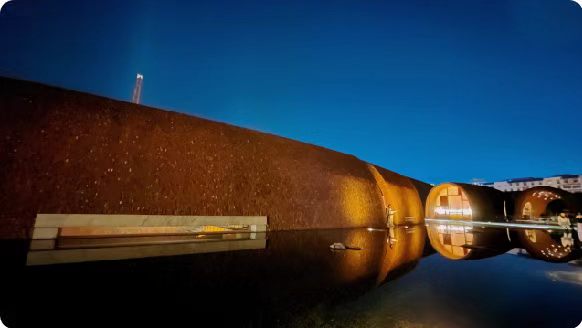
Complete priority interior visits before extending the walk into the evening.
Plan 3: A shorter family visit
- Choose a manageable museum session and a few exhibits with a clear story.
- Add one short site or street walk.
- Build in a break and finish before everyone is tired.
- Save further lanes or another ceramics district for a separate session.
For children, comparing a fragment with a reconstructed object can be more engaging than trying to read every label.
Getting There and Returning to Your Hotel
Ask for the Taoyangli entrance that fits your ticket and route, rather than only dropping a pin on the museum building.
The museum lies within the historic visitor area, so a car may not be able to deliver you directly to its door. Confirm the vehicle drop-off and the walk from there.
For a taxi or ride-hailing journey, save 陶阳里历史文化旅游区 and 景德镇御窑博物馆. If a driver or hotel needs clarification, show both the destination and your booking details.
Staying near Taoyangli can make an extended history visit or evening return simpler. From Taoxichuan or another part of the city, plan a separate transfer rather than assuming the districts form one short pedestrian route.
Public and tourist transport may offer useful connections, but check the current stop and operating time. A daytime bus route should not be assumed available for a late return.
During busy periods, follow current pickup instructions and temporary traffic arrangements. Save the return pickup point before beginning an evening visit, and leave luggage at your hotel where storage is available.
Guides, Language and Photography
Do you need a guide?
A guide can help connect the fragments, finished forms and production site, especially if you are interested in ceramic history or want detailed interpretation in English.
Confirm the language, duration, meeting point and what admission is included. Ask whether the provider is permitted to deliver the intended guided interpretation inside the museum; outside district guiding and authorised museum interpretation are not automatically the same service.
Do not assume that a guide can secure an unavailable reservation or bypass capacity controls.
For an independent visit, ask about available museum interpretation and language support. Download useful information beforehand if you want to avoid relying on mobile access throughout the visit.
Photography
The architecture is photogenic, but take time to understand the displays and site as well as making photographs.
Follow current signs in exhibition spaces. The museum’s published rules restrict flash and support-type photography equipment in galleries, and commercial shooting requires appropriate permission.
Keep doorways and narrow passages clear. Do not climb heritage structures, move barriers or enter closed spaces to obtain a photograph.
For brick vaults and courtyard views, look for a position where the forms are clear without blocking others. Evening photography can require patience because the light and visitor movement change.
Families, Accessibility and Weather
The visit combines indoor displays with outdoor walking. Choose comfortable footwear and check the forecast before planning an extended lane route.
On a hot or rainy day, make the museum session the anchor and shorten outdoor sections as needed. Indoor admission still depends on your booking; rain does not create an automatic walk-in slot.
Historic streets can involve uneven surfaces, while individual buildings may have steps or different access arrangements. If lift or step-free access matters, ask the visitor service about the actual museum and outdoor route in advance.
For a stroller, confirm the accessible entrance and how to move between levels. For reduced mobility, plan the vehicle approach and assistance as well as the exhibition visit.
Keep meals and drinks to the permitted areas and follow gallery rules. A break before entering can make a family museum session easier.
What to Combine with Taoyangli
Taoxichuan
This is a useful contrast: imperial production history at Taoyangli, followed by contemporary creative activity in a different district.
Allow a transfer and a break between them. If Taoyangli already occupies a long afternoon and evening, visit Taoxichuan on another day rather than rushing both.
Jingdezhen China Ceramics Museum
The China Ceramics Museum provides a separate museum experience and should be booked independently. Compare the opening notices for both institutions before deciding their order.
For visitors who want to study both carefully, separate sessions can be more rewarding than two long museum visits without a rest.
A pottery workshop
A confirmed workshop can connect historical observation with a contemporary making experience. Check its location and session length before adding it to the day.
Workshops in Taoxichuan, Sanbao or elsewhere are not necessarily nearby. Avoid adding one immediately before a time-sensitive museum reservation.
Common Planning Mistakes
- Confusing the Imperial Kiln Museum with the China Ceramics Museum.
- Assuming a free museum reservation includes Taoyangli scenic-area admission.
- Assuming a paid district ticket automatically reserves the museum.
- Treating a broad evening opening time as the schedule for every exhibition and venue.
- Following an old booking window instead of the current official calendar.
- Expecting a taxi to stop directly at the museum entrance.
- Spending all the visit on architectural photos and missing the collections.
- Leaving for dinner without checking ticket re-entry conditions.
- Adding a distant workshop or another district without allowing transfer time.
Frequently Asked Questions
Are Taoyangli and the Imperial Kiln Museum the same attraction?
Taoyangli is the wider historic district. The imperial kiln site and museum are related components within the area, with different roles and access checks.
Is the Imperial Kiln Museum free?
The museum is promoted as free and reservation-based. However, access through the surrounding managed Taoyangli visitor area normally requires the applicable district admission, unless an exemption or another valid arrangement applies.
Do I need both a ticket and a reservation?
Check both arrangements: admission to the managed Taoyangli area and a successful Imperial Kiln Museum reservation. Do not assume either confirmation automatically covers the other.
Which official channel should I use?
Use Changyou Jingdezhen, 畅游景德镇, or the booking route provided by the Imperial Kiln Institute’s official WeChat account, 景德镇御窑博物院.
Can I book with a foreign passport?
Published museum instructions include passports among accepted documents. Select the appropriate document type, use your actual details and carry the original passport used for the reservation.
Can I reserve at the museum?
On-site reservation arrangements have been offered, but admission depends on current procedures and capacity. Advance confirmation is preferable for a time-limited visit.
How long should I allow?
Plan a substantial half-day for the museum, site context and historic streets. A shorter stop can work if you deliberately prioritise, while a specialist visit or an evening extension needs more time.
Should I visit during the day or at night?
Daytime is a useful choice for heritage details and a relaxed collection visit. An evening extension adds atmosphere. Confirm actual interior access before choosing an evening-only plan.
Is the museum open on Mondays?
The published regular arrangement includes a Monday closure, with holiday exceptions and possible shifted closure days. Check the official notice for the specific date.
Can I leave and come back later?
Check the conditions of the exact ticket and reservation. Do not assume unlimited re-entry, especially if you plan to leave the managed area for dinner.
Is the museum building an original kiln?
No. It is a contemporary museum whose design draws on kiln forms and local brick traditions. The historic kiln site is the related archaeological setting.
Can I visit Taoxichuan on the same day?
Yes, if your bookings, transfer time and energy allow. For an unhurried visit, avoid making a long Taoyangli session and two separate evening plans compete for the same hours.
Understand Jingdezhen Through Its Objects and Streets
Taoyangli is most rewarding when the museum and historic setting reinforce each other. Read the objects, look at the production site and leave time for the surrounding lanes.
Arrange the museum reservation and area admission before travel, then choose a visiting sequence that fits the available session and your preferred pace. A well-planned half-day can provide a strong foundation for the rest of a Jingdezhen itinerary.
Discover East China Tours can help you combine Jingdezhen’s porcelain history, creative districts and local experiences in a practical route. Share your travel dates, interests and any language or mobility needs when enquiring.