
Compare wheel throwing, hand building and ceramic painting in Jingdezhen. Choose a session for your experience level and confirm language support, fees, finishing, firing and delivery before booking.
A pottery workshop can make a Jingdezhen visit more personal. After seeing porcelain in a museum, you can feel how clay responds to pressure, try a brush on a curved surface or begin to understand why a simple bowl requires so much control.
The most useful experience depends on what you want to do. Wheel throwing provides a first encounter with shaping clay on a rotating wheel. Hand building offers freedom to make a small form at a slower pace. Painting lets you concentrate on decoration without first producing the vessel itself.
Choose the technique and teaching arrangement first, then confirm what happens to the work after the class. The session fee, finishing, firing and international delivery are not automatically one package.
This guide compares the main options for beginners, children and ceramic enthusiasts, explains what to ask about language and class length, and helps you organise firing, collection or shipping before booking.
Start with the Experience You Want
A visitor can have several different aims: enjoy a relaxed family activity, learn a specific technique, make a personal keepsake or spend time with a skilled practitioner. A workshop that suits one aim may be less useful for another.
Ask yourself whether the main interest is forming, decorating or understanding a process. Decide how much of the work you want to do independently and whether the finished object is essential to the experience.
If your trip lasts only two days, the best session may be one clear activity with a later delivery arrangement. If ceramics is the main reason for travelling, a longer course can provide time to practise and revisit work at another stage.
Avoid choosing solely by the photograph of a perfect finished piece. Ask what a first-time participant actually does and how much the instructor completes.
Workshop Types at a Glance
| Experience | What you mainly do | A good fit for | Key point to confirm |
|---|---|---|---|
| Wheel throwing | Shape clay on a rotating wheel with instruction | Visitors curious about forming; beginners happy to practise | Individual wheel time, assistance and who trims or finishes the work |
| Hand building or pinching | Form clay using hands and suitable tools | Beginners, families and visitors wanting a flexible small project | Project limits, joining guidance and later finishing |
| Slab or coil building | Construct a form from prepared sheets or coils | Participants interested in structure or a particular design | Whether the session allows enough time for the proposed project |
| Painting a prepared form | Decorate a supplied piece | Drawing interests, many family groups and visitors preferring less forming | What surface is supplied and whether firing is needed |
| Blue-and-white painting | Learn a specific ceramic decoration approach | Visitors interested in Jingdezhen’s painting traditions | Technique, practice time, firing and how colours will develop |
| Glazing or surface work | Apply or investigate a finish on suitable prepared work | Visitors interested in material and surface effects | Available methods, required preparation and later firing |
| Specialist or multi-day course | Develop a focused skill over repeated sessions | Experienced makers or travellers prioritising ceramics | Instructor specialism, equipment, course level and the full schedule |
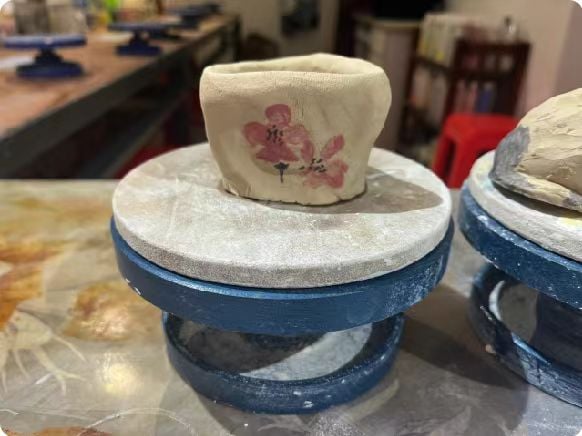
Choose a manageable hand-built project that fits the session.
The labels describe approaches, not universal packages. Different studios can offer very different sessions under the same name.
Wheel Throwing: A Memorable First Encounter with Clay
What the session can involve
A wheel-throwing introduction normally includes a demonstration and guided practice. You may work on centring the clay, opening a form and developing the wall into a simple shape.
A first session is about learning how the material responds. A small bowl or another straightforward form may be a more realistic goal than an elaborate teapot or a large, thin-walled vase.
Porcelain can be demanding to handle. Ask which clay body is used rather than assuming every visitor session uses the same material as the finished porcelain you saw in a museum.
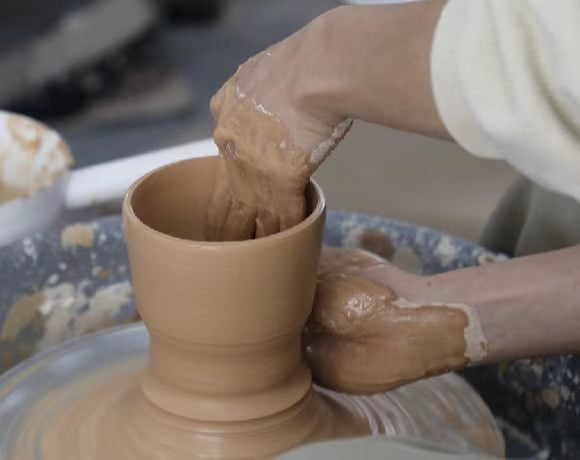
A wheel-throwing introduction combines demonstration with guided practice.
Who it suits
Choose wheel throwing if you enjoy learning through movement and do not mind an imperfect first result. It can suit beginners when teaching time and instructor support are sufficient.
The experience may involve sitting close to the wheel, leaning forward and using both hands. If this position or the equipment presents a difficulty, discuss it with the studio before booking.
Questions that improve the booking
Ask whether each participant has a wheel or takes turns, how much actual practice time is included and how many people one instructor supports.
Find out whether the instructor helps only when needed or takes over substantial parts of the piece. Neither approach is necessarily wrong, but you should know whether you are booking a supported keepsake activity or a more independent lesson.
What happens after throwing?
A newly thrown form usually needs further handling before it becomes a finished object. Trimming, adding parts, drying, glazing and firing may happen after your session.
Confirm which stages are included and who performs them. Do not assume you will paint the piece you have just thrown immediately afterwards; the body may not yet be ready for that stage.
Hand Building: A Flexible Option for Beginners and Families
A slower, more adjustable pace
Hand building includes methods such as pinching, coiling and working with slabs. It can offer a clear introduction to clay without needing to learn wheel coordination at the same time.
A small dish, simple cup or modest decorative form can make a manageable beginner project. The instructor should help you choose a design that can be completed within the session and remain suitable for drying and firing.
Why it can work well with children
Hand building allows different participants to work at different speeds. A child can concentrate on a simple form or texture while an adult attempts a more detailed version.
It still requires guidance. Very thick sections, thin attachments or poorly joined parts can create problems later. A useful family class helps participants adapt their ideas rather than accepting any design without explanation.
Freedom has practical limits
Ask what kinds of projects are appropriate, whether the studio provides a template and how much modification is allowed.
If you arrive with an ambitious idea, share it beforehand. A design that looks easy in a photograph may require several stages, more experience or a different method.
A simple piece that you understand and largely make yourself can be more satisfying than an elaborate object completed mainly by the teacher.
Ceramic Painting: Focus on the Surface
A prepared form changes the experience
Painting a supplied cup, plate or other form lets you spend the session on decoration. You are not making the vessel from raw clay unless the course explicitly includes that work.
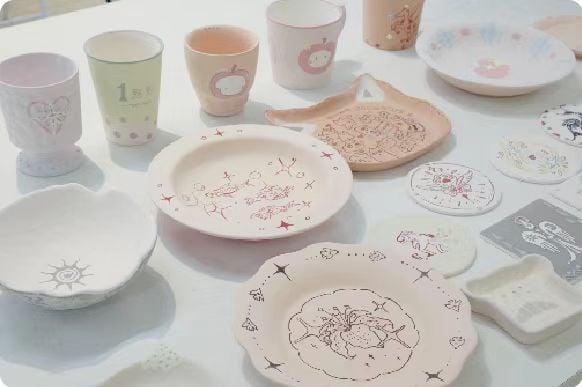
A prepared form lets participants focus on decoration.
This can be a good choice for visitors who enjoy drawing, prefer a seated activity or want a family project without a wheel-based lesson.
Ask to see the available forms before choosing the package. Shape, size and surface affect the design you can make.
Confirm what “painting” means
The session may use an unfired or partially fired body, an already glazed object or another prepared surface. Different decoration methods need different materials and firing arrangements.
Underglaze decoration and overglaze decoration are not interchangeable. Under-glaze work relates to a later glaze firing, while overglaze decoration on an already glazed surface can require another firing to fix the ceramic decoration.
Some souvenir-painting activities may use a finish that does not follow a traditional ceramic firing process. Ask what you are using and what the finished object is intended for.
Blue-and-white painting
A blue-and-white session can introduce brushwork associated with Jingdezhen porcelain. It may include practice before painting the supplied form.
Ask whether the lesson teaches basic control and design or primarily provides time to copy a prepared pattern. Both can be enjoyable, but they offer different amounts of instruction.
The colour before firing may not look exactly like the finished result. Ask the instructor to explain the material and show examples appropriate to the session rather than promising an identical colour from a photograph.
Everyday use or decoration?
If you want to drink from the finished cup or serve food on a plate, ask the studio whether the completed materials and firing are intended for that use and what care is recommended.
Do not assume any painted object is suitable for food, a dishwasher or a microwave. A workshop keepsake may be intended as a decorative piece.
Glazing, Specialist Techniques and Longer Courses
Glazing is not simply choosing a colour
A surface-work session can be interesting if you want to understand how material, application and firing relate. It needs appropriate prepared pieces and a clear explanation of the process.
Ask whether participants apply glaze, select from test samples or observe a demonstration. Those are different levels of involvement.
Results can vary with the material and firing. A sample is useful guidance but should not be treated as a guarantee that your piece will look identical.
Experienced participants need a specific brief
If you already make ceramics, describe your experience, usual materials and the technique you want to learn. Include a few photographs if they help explain your level.
Ask about the instructor’s relevant practice, available tools, studio time and what can be taught within the booking. A general beginner experience may not provide the depth you want.
Examples of a focused request include improving a particular thrown form, investigating a decoration method or learning a specific hand-building approach. Choose one achievable objective rather than several unrelated advanced techniques in a short session.
Multi-day visits still need a firing plan
A longer course can allow more stages and practice, but several days in Jingdezhen do not automatically guarantee that every piece will be fired before you leave.
Discuss the course sequence, what work will be ready at each stage and what remains for the studio afterwards. Confirm studio access, materials, firing allowances and shipping separately where necessary.
A residency, open studio arrangement and taught course are different bookings. Make sure you know which you are choosing.
What Suits Different Travellers?
Complete beginners
Choose one main technique, enough teaching support and a realistic small project. Wheel throwing suits curiosity about shaping; hand building suits a flexible pace; painting suits an interest in decoration.
A shorter experience can still be worthwhile if you understand its limits. Avoid a package promising several techniques with very little individual practice time.
Children and family groups
Provide the children’s ages and any relevant needs before booking. Ask the studio which methods and tools are appropriate, how supervision works and whether the group can participate together.
Hand building or painting can offer a manageable starting point for many children. Wheel throwing may also work when the equipment, support and project fit the child; there is no universal age threshold that replaces the provider’s assessment.
Clarify whether accompanying adults pay as participants, observers or supervisors. If several ages are involved, ask whether different projects can run in the same session.
Couples and friends
Choose a shared goal or let each person select a compatible activity. Ask whether “shared class” means sharing an instructor, a wheel or the complete project.
If one person has experience and the other does not, tell the provider. A suitable session can offer different levels of guidance without leaving either participant waiting for long periods.
Ceramic enthusiasts
Choose the instructor and learning objective as carefully as the location. Ask what the session teaches that you could not get from a standard introductory activity at home.
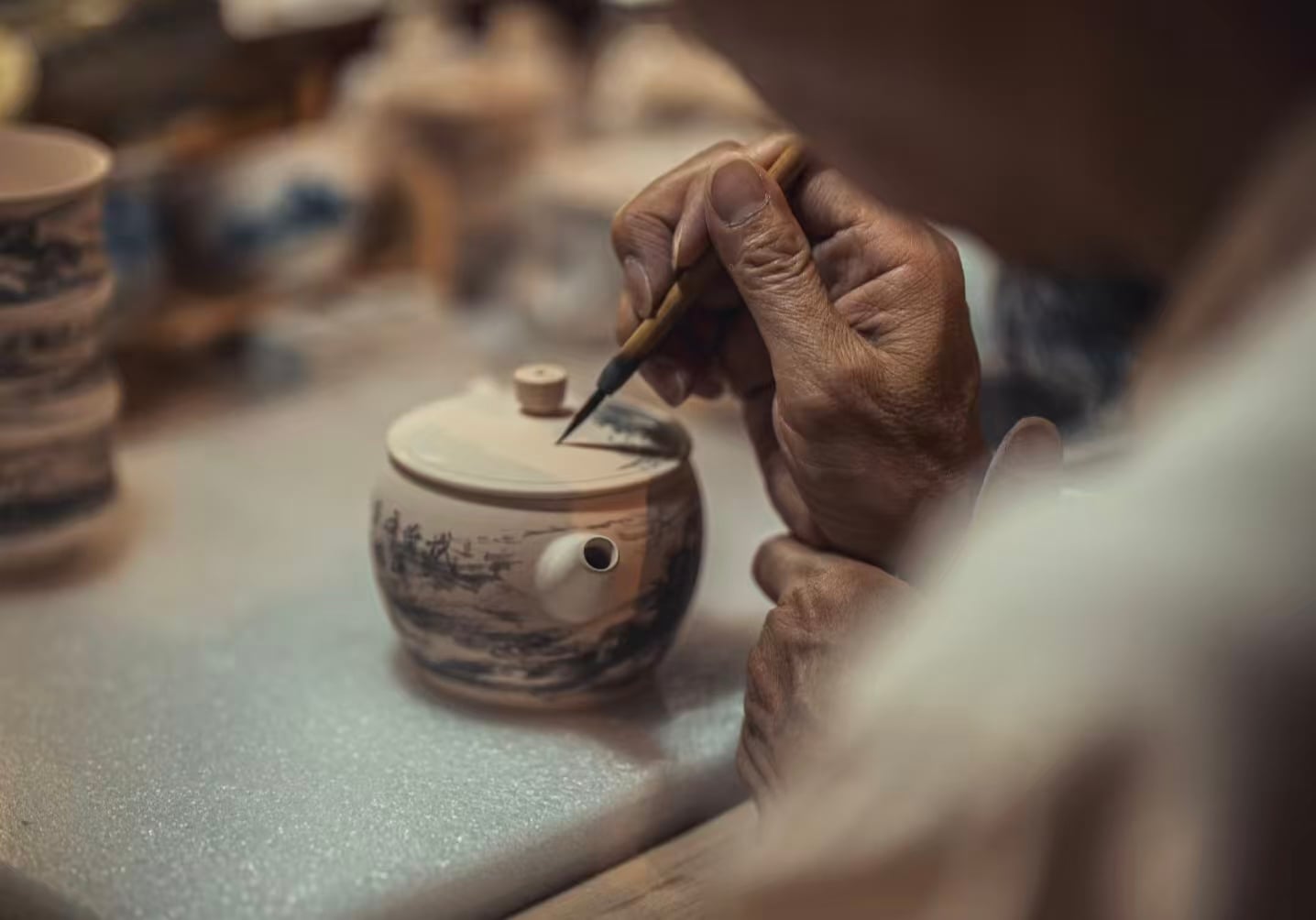
Confirm the teaching approach and support for your chosen technique.
A specialist demonstration, guided studio visit or technical course may suit you better than a package centred on a decorative keepsake.
Older travellers or people with access needs
A seated class can be comfortable, but the seat, work height and required posture still matter. Ask about entrance steps, bathrooms, table height and breaks.
If access or equipment adaptation is essential, obtain specific confirmation. Do not infer suitability from a photo of a spacious studio or a general claim that all ages are welcome.
Language Support: Ask What Happens During the Lesson
“English available” can mean several things: a staff member can answer booking messages, the instructor teaches in English, an interpreter attends throughout or translation is provided only at selected moments.
Confirm the actual arrangement. For an introductory activity, a demonstration and basic translated instructions may be enough for some visitors. For technical questions or an advanced course, continuous interpretation can be much more useful.
Three questions to ask
- Will the instructor teach in English, or will another person interpret?
- Will that support remain for the whole practical session?
- Can the person explain the ceramic terminology relevant to our chosen technique?
Ask whether language support is included in the quoted fee. A private guide accompanying you to the studio is not automatically included in the workshop price or qualified to interpret a specialist lesson.
A translation app can assist with simple questions, but it can be awkward while your hands are wet or covered in clay. Settle the important instructions and later delivery details clearly before starting.
How Long Should You Book?
Duration should match the objective. A brief introduction, a focused lesson and a full-day course serve different purposes.
| Format | A sensible objective | What to examine in the offer |
|---|---|---|
| Short introductory session | Try one simple process or decorate a prepared form | Time actually spent making, rather than waiting or retail browsing |
| Focused session of a few hours | Demonstration, practice and one manageable project | Teacher attention, equipment access and finishing arrangements |
| Half-day or full-day programme | More practice or linked activities with breaks | Whether the time includes travel, meals and observation |
| Multi-day course | Build a specific skill and return to work at suitable stages | Teaching hours, independent studio time and later firing |
These are planning categories, not guaranteed local course lengths. Ask the provider for the actual schedule.
Do not judge by total advertised hours alone
A three-hour booking may include demonstrations, taking turns, making, cleanup and administrative arrangements. Another may provide more individual working time but fewer techniques.
Ask for a simple breakdown and the group size. More time is useful when it creates practice or understanding, not merely a longer wait.
Keep the rest of the day manageable
For a two-day city visit, a focused workshop can occupy one principal block. Combine it with a meal and a lighter outing rather than several major museum visits immediately afterwards.
Avoid a tight train departure after the session. You may need time to clean up, confirm the pieces and arrange delivery before leaving the studio.
Compare the Full Cost
The lowest headline price may cover only the activity. A more expensive booking may include teaching, materials, later finishing and firing, but you still need to verify the details.
Ask for an itemised written quote. Do not assume an advertised “free experience” includes keeping, finishing or delivering a piece.
| Cost item | What to ask |
|---|---|
| Teaching | Private or shared? How many people does the instructor support? |
| Language support | Included throughout, available separately or not provided? |
| Materials and tools | Which body, colours, forms and tools are included? |
| Equipment | Individual wheel or shared turns? Any additional studio charge? |
| Pieces | How many pieces or what maximum size or weight is included? |
| Finishing | Who trims, adds parts, glazes or completes the object? |
| Firing | Which required firings are included, and are there limits? |
| Packing | Is protective packaging included? |
| Delivery | Local collection, domestic delivery or international shipping? |
| Additional charges | Extra pieces, upgrades, storage, insurance or destination charges? |
| Cancellation | What happens if you change plans or the session cannot operate? |
Compare the total for the experience you actually want. A beginner family session and a specialist private course are not like-for-like products.
Firing: The Most Important Follow-Up Question
The class is not the end of the process
Wet work needs suitable drying and later processing. Depending on the object and technique, the studio may need to trim, glaze and complete more than one firing.
Ask for an estimated completion period and whether it depends on a kiln batch or another production stage. Treat this as an estimate unless the provider can clearly commit to a particular date.
Do not expect immediate firing simply because you are leaving the city. Rushing a piece to suit a train booking is not a substitute for an appropriate process.
Who makes the final decisions?
Agree on the intended finish before leaving. If the studio will choose a glaze or adjust the form later, ask what discretion it has and what preferences you can record.
Photograph the work and the agreed finish options where permitted. A simple record can reduce confusion when the finished piece looks different from the wet form or unfired decoration.
The result can change
Drying and firing can change size, colour and appearance. Cracks, distortion or other unsuccessful results are possible; the provider’s policy should explain how it handles them.
Ask whether a failed piece leads to a refund, another making opportunity, a replacement or no compensation. None of those outcomes should be assumed without agreement.
A replacement made by someone else may be a pleasant object but is different from receiving your own work. Decide what matters most to you before booking.
Collection, Domestic Delivery or International Shipping?
Collection before leaving Jingdezhen
Use collection only when the studio confirms a realistic completion and pickup arrangement. Check whether the piece will be cooled, inspected and packed, not merely fired.
Avoid scheduling collection immediately before an essential departure. If work is delayed, you need an alternative that does not jeopardise the rest of the trip.
Delivery to another hotel in China
This may work when you remain in China long enough and the studio can provide a reliable estimate. Confirm that the receiving hotel agrees to accept the parcel, with the correct guest name and booking dates.
Leave time in reserve. A parcel arriving after checkout creates another forwarding task and may not be easily recovered.
Do not use a short hotel stay as the only delivery solution when firing completion is uncertain. Agree on what happens if dispatch misses the window.
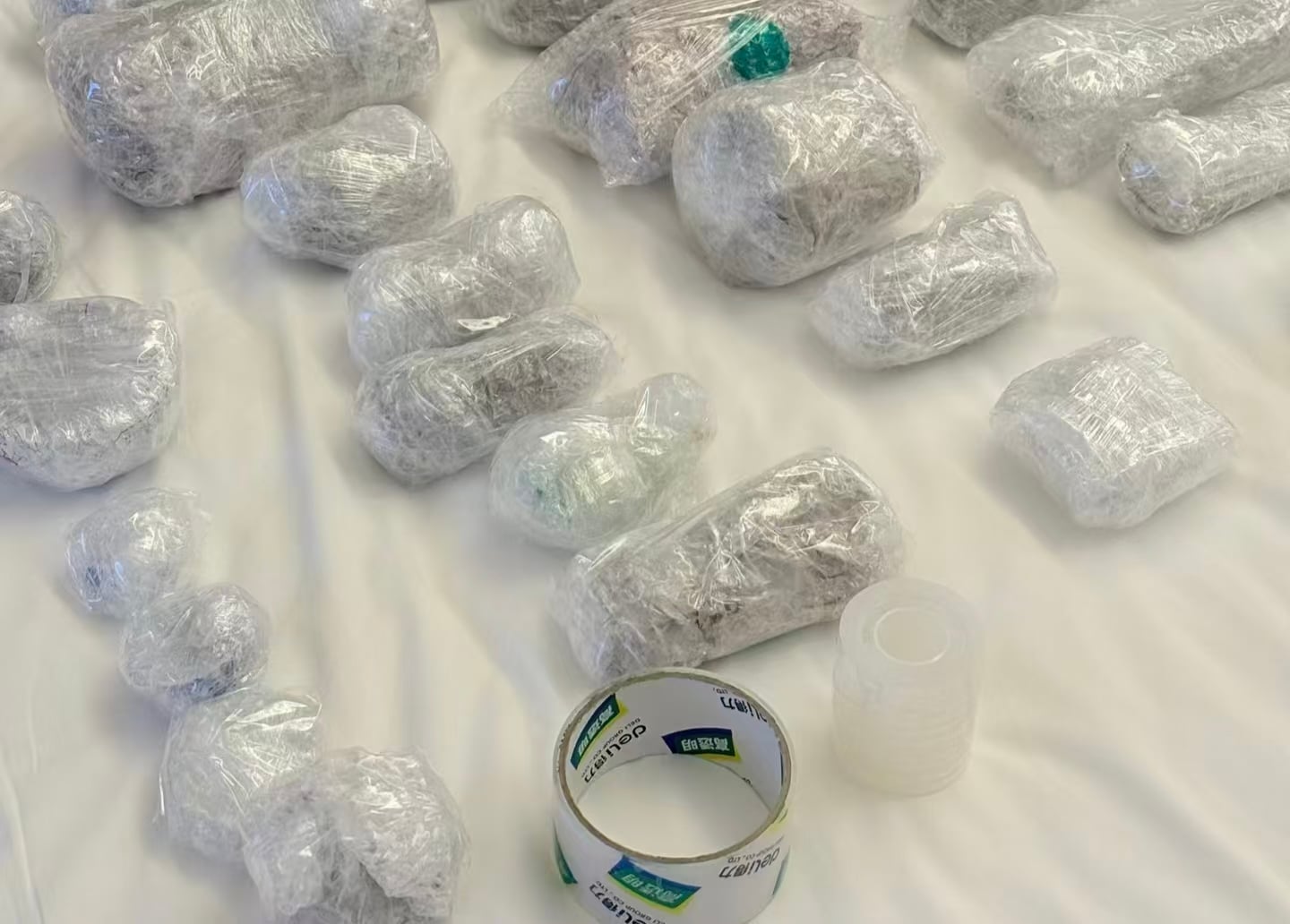
Agree on packing and delivery responsibility before leaving the studio.
International shipping
Confirm that the studio or its delivery partner can ship to your country and postcode. Ask who books the shipment and who becomes your contact after departure.
Domestic shipping included in a package does not automatically include an overseas destination. A studio saying it can “help arrange shipping” may mean introducing you to another company rather than taking responsibility for delivery.
Ask for the carrier or service, estimated dispatch, tracking, packing, insurance or damage terms and the total charges known at booking. Find out which costs may be calculated later once the finished work is packed.
Customs and destination charges
Import taxes, handling or other destination requirements depend on the shipment and destination. Confirm who is responsible and check current requirements where relevant.
Ask the sender to use an accurate description and value. Do not request a false declaration to reduce charges.
No provider should be assumed to guarantee customs clearance or a precise international arrival date without a clearly stated service.
What happens if something is damaged?
Establish responsibility for packing, transport claims and communication. Ask what evidence is required and whether compensation covers shipping, the workshop fee or only a declared item value.
Keep booking records and shipment details. When it arrives, follow the provider’s inspection instructions and record any problem promptly within its stated reporting period.
If the provider cannot explain delivery responsibility, decide whether the learning experience is still worth booking without depending on a successfully delivered keepsake.
Before Leaving the Studio
Confirm the number of pieces being retained and how each belongs to its maker. Ask for an order number or another clear identification method.
Record the finish instructions, what the studio still needs to do, the estimated completion period and the chosen delivery arrangement. Take permitted photographs of the work.
Give the correct recipient name, address, postcode, country and contact information. Check the agreed communication channel for someone travelling overseas.
Keep a written record of charges already paid and any costs to be confirmed later. Agree when the studio will update you and whom to contact if that update does not arrive.
A clear handover is more useful than a general promise that the piece will be sent eventually.
Where to Look for a Workshop in Jingdezhen
Visitors can investigate studios and education programmes in creative areas such as Taoxichuan, Sanbao and the Sculpture Porcelain Factory surroundings, as well as providers elsewhere in the city.
Choose the actual studio and course rather than the area’s reputation alone. A creative-district address does not establish teaching quality, English support or international delivery.
Taoxichuan can fit a workshop followed by exhibitions or dinner. A Sanbao booking may involve a different journey and can work well when paired with a specific creative-area visit. The exact location determines the practical plan.
Confirm the Chinese studio name, address and map pin, particularly if the provider has several teaching sites. A retail shop, gallery and classroom may be separate places.
Reviews and photographs can help you identify questions, but obtain current answers from the provider. Look for clear communication about teaching and completion rather than only attractive images of finished work.
A Booking Message You Can Use
Hello, we would like to book a ceramic workshop in Jingdezhen on [date]. We are [number] participants, including children aged [ages]. Our experience level is [beginner/intermediate/experienced], and we are interested in [wheel throwing/hand building/painting/specific technique].
We have approximately [available time] and leave Jingdezhen on [date]. Please confirm the teaching language, group size, equipment access and what each person will do independently. Please provide the total price and list what is included for materials, finishing, glazing, firing and the number or size of pieces.
We would like [collection/delivery to a China hotel/international shipping to country and postcode]. Please confirm the estimated completion, packing, delivery charges and responsibility if a piece fails during firing or is damaged in transit. Please also send the exact studio name, location and cancellation terms.
Add any access needs or dietary arrangements for a longer programme. Ask for answers to the essential points before making a non-refundable booking.
Preparing for the Session
Wear comfortable clothes that can tolerate a little clay or splashing. Ask whether the studio supplies an apron. Keep valuable or bulky personal items away from the working area.
For wheel throwing, ask about clothing and positioning that suit the equipment. Tie back long hair where needed and follow the instructor’s advice on tools and workspace conduct.
Do not handle powders, glaze materials or equipment without instruction. Keep food and drinks in the permitted area and use the studio’s cleanup method rather than disturbing dried material.
Bring your design idea if it helps, but remain open to a simpler version that fits the method and time. The most enjoyable first project is often one you can understand and complete with appropriate support.
Common Mistakes to Avoid
- Booking by a finished-piece photograph without checking participant involvement.
- Assuming every session uses porcelain rather than another clay body.
- Expecting to throw, trim, paint and fire the same new piece in one brief visit.
- Interpreting English booking messages as full English teaching.
- Comparing prices without checking firing, finishing and shipping.
- Booking several techniques with very little practice time for each.
- Assuming children of every age can use the same equipment.
- Expecting a fired piece before departure without a confirmed timeline.
- Sending work to a hotel without an adequate delivery window.
- Leaving without clear identification, finish instructions and contact details.
Frequently Asked Questions
Which workshop is best for a complete beginner?
Choose one well-supported technique. Wheel throwing suits curiosity about shaping, hand building offers a flexible pace and painting lets you focus on decoration. Teacher attention and a realistic project matter more than the label alone.
Is hand building easier than wheel throwing?
It can provide a more adjustable first session because you do not need to learn wheel coordination at the same time. Good construction still requires instruction and an appropriate project.
Which activity suits children?
Hand building or painting can suit many families. Wheel throwing can also work with suitable equipment and support. Provide the child’s age and confirm the studio’s requirements before booking.
Can adults and children attend together?
Ask whether the provider can support different projects and ages in one session, and whether accompanying adults are participants or supervisors for pricing purposes.
Can we make something useful, such as a cup?
Possibly, with a suitable method and project. Confirm intended food use, materials, finishing and firing; do not assume every workshop keepsake is functional tableware.
Do we need artistic talent for painting?
No advanced drawing skill is needed for a suitable introductory session. Ask whether templates, brush practice or design guidance are available.
Is blue-and-white painting the same as ordinary souvenir painting?
Not necessarily. Confirm the materials, prepared surface, technique and firing. Different sessions can use the same general painting description while offering different processes.
How much time should we allow?
Choose the duration around the objective and actual practice time. A focused session of a few hours can suit a first visit; a specific technical goal may need a longer course.
Is English teaching widely guaranteed?
No. Confirm the instructor or interpreter arrangement, how long support remains and whether it is included in the price.
Does the workshop price include firing?
It depends on the package. Ask about all required firings, finishing, piece limits and additional charges in writing.
Can we take our work home on the day?
Wet work usually needs later processing. Some activities use prepared forms with different completion arrangements, so ask about the actual project rather than expecting same-day collection.
How long does firing take?
Completion depends on drying, finishing and the studio’s firing schedule, not only time inside a kiln. Ask for a realistic overall estimate and a fallback delivery plan.
Can a studio send work overseas?
Some can arrange it, but confirm your destination, costs, dispatch, tracking, packing and damage responsibility. Do not assume included domestic delivery covers an overseas address.
What if the piece cracks or fails?
The studio’s policy determines the outcome. Clarify compensation, replacement or other arrangements before booking and remember that firing results cannot always be guaranteed.
Can we book a workshop on our departure day?
It can work if there is adequate time and later delivery is agreed. Avoid a tight onward connection and complete the handover before leaving.
Is a specialist course worthwhile for experienced makers?
It can be when the teacher and technique match a clear goal. Share your level and desired outcome, and verify that the course provides the depth and facilities you need.
Choose a Workshop for the Learning and the Complete Journey
A good ceramic experience gives you useful instruction, time to participate and a clear understanding of what happens next. The finished object can be a meaningful reminder, but its firing and delivery need the same care as the class booking.
Discover East China Tours can help you consider a suitable hands-on session within a Jingdezhen itinerary. Tell us your interests, experience level, children’s ages, language needs and departure date so the teaching arrangement, completion and delivery requirements can be discussed before booking.