
Plan a slower family visit to Jingdezhen with focused museum time, suitable pottery activities and realistic meals, breaks and transfers. Learn what to confirm for children and overseas passports.
Jingdezhen can be an enjoyable family destination when the trip gives children something to notice, something to try and enough time to rest. Porcelain museums introduce shapes, colours and stories; a suitable workshop lets children discover how differently clay behaves from a finished cup or bowl.
The most useful adjustment is to reduce the number of transitions. Choose one main experience each day, keep the next stop optional and make lunch and rest part of the route. A short museum visit and a satisfying afternoon can be more memorable than completing every gallery and creative district.
Plan around the youngest traveller’s needs, then give older children and adults a few choices within that rhythm. Workshop suitability depends on the actual activity, instructor and child, rather than an attraction’s family-friendly label.
This guide explains how to pace museum visits, choose ceramic activities, arrange meals and breaks, and adapt Jingdezhen’s main areas for a family trip. It offers a slower itinerary rather than a checklist of children’s attractions.
Is Jingdezhen a Good Choice for a Family Trip?
It can suit families who enjoy making things, looking closely at objects and exploring places at a modest pace. The connection between seeing and doing is particularly useful: a child can notice a painted animal in a museum, then choose an animal theme for an appropriate studio project.
Not every child will enjoy long collections-based visits. That does not prevent a rewarding trip. Choose a smaller museum focus, a suitable activity and a comfortable place to eat, rather than expecting enthusiasm for every ceramic display.
The city is also more than one compact sightseeing area. Museums, the imperial kiln district and creative clusters require separate transfers. With children, those journeys and waiting periods need as much attention as the attractions themselves.
A successful family visit does not require ceramic shopping. Architecture, exhibitions and making can provide enough interest without asking children to move through a long sequence of fragile displays.
Choose a Pace That Fits Your Family
The age bands below are starting points for planning, not workshop admission rules or developmental requirements. Your child’s interests, stamina and comfort with tools matter more than the table.
| Traveller | A useful starting approach | What to confirm |
|---|---|---|
| Babies and toddlers | Short cultural stops around feeding and sleep; adults can take turns looking | Changing facilities, quiet rest options, pushchair access and workshop spectator rules |
| Preschool children | A few visually engaging objects and a short, closely supervised activity if suitable | Provider age limits, materials, tools and the adult’s role |
| Primary-school-age children | A focused museum visit and a defined making project | Teaching style, assistance, breaks and realistic project size |
| Older children and teenagers | More choice in the subject, technique or exhibition | Programme difficulty, individual feedback and enough independent decision-making |
| Families with mixed ages | One shared highlight with optional shorter or longer versions | Whether siblings can join different projects or wait comfortably |
A teenager may prefer a brief museum visit, while a younger child may enjoy looking carefully at several displays. Use the table to begin a conversation, not to assign every person the same behaviour.
Keep one main commitment per day
A timed museum entry or workshop appointment can anchor the day. Build lunch, travel and rest around it, then decide whether another short activity still fits.
If a workshop is the main reason for the visit, protect that appointment rather than arriving after a tiring morning of sightseeing. If the museum is the priority, give it the best part of the child’s day and make later browsing optional.
Leave a real afternoon rest window
For families who need naps or quiet time, a hotel break can be more useful than moving between cafés. Choose a base that makes returning practical.
Older children may not need sleep, but they can still benefit from time without instructions, queues or displays. A slower trip should include periods when nobody needs to complete an activity.
Museums: Choose a Small Focus
Jingdezhen China Ceramics Museum
The Jingdezhen China Ceramics Museum — 景德镇中国陶瓷博物馆 — provides a broad collection-based introduction. For children, begin with recognisable forms, an interesting colour or a decorative detail rather than a complete chronology.
Choose a few objects and use simple questions:
- What do you think this was used for?
- Which part would be hardest to make?
- Can you find an animal, plant or repeated pattern?
- Which shape would you choose for a cup at home?
There is no need to turn every answer into a lesson. Let the child choose an object they like and give them time to look.
For a younger child, roughly 45–75 minutes of focused gallery time can be a useful initial target. A child with more interest may enjoy 90 minutes or longer. Add entry procedures, toilets and breaks separately; these are pacing suggestions, not required visit lengths.
Imperial Kiln Museum and Taoyangli
The Imperial Kiln Museum — 景德镇御窑博物馆 — can introduce fragments, reconstructed objects and the idea that making porcelain involves choices and unsuccessful attempts as well as finished pieces.
A simple connection works well: a broken or imperfect piece can still tell a story. Avoid suggesting that the child must produce a flawless object in the workshop later.
The surrounding Taoyangli area — 陶阳里 — allows a change from galleries to a heritage setting. Select a manageable public route and stop before walking becomes a task everyone wants to finish.
Museum access and the wider area’s ticketing or re-entry arrangements need checking separately. Do not assume that a ticket allows a convenient return after the child’s rest period.
Do you need both museums?
Not necessarily. For a young family on a short trip, one main museum may be enough. Choose the broad collection museum for variety of objects, or the imperial kiln visit for a closer relationship with the historical setting.
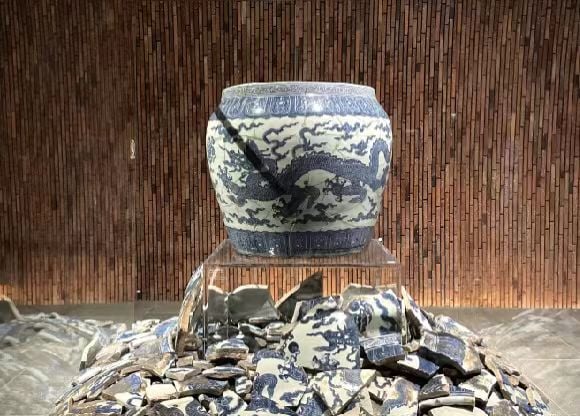
Choose a few displays that interest the children rather than trying to see every gallery.
Families with interested older children can visit both on different days. Two substantial museums on the same day can be tiring when combined with transfers and meals.
Leave some of the city’s story for another visit if that keeps this trip enjoyable.
Museum Booking with Children and Overseas Passports
Confirm the booking and entry procedure for every family member. Do not assume that children enter without registration because an attraction offers free admission or an age-based ticket concession.
For overseas families, establish how passports are handled for both adults and children. The museum’s official reservation notice specifies physical Chinese identity-card verification; it does not by itself establish the foreign-passport procedure. Confirm that process directly with the museum for both adults and children before fixing this visit.
Ask the venue for the permitted booking and verification process before making the journey. Use the official route it specifies; paying someone who claims they can bypass a reservation is not a substitute for valid admission.
Check opening days, your entry slot and any holiday changes. The China Ceramics Museum normally closes on Mondays, but the current notice takes precedence.
Arrive with the required documents and enough time for security. Keep large luggage at the hotel where possible so entry does not become another difficult part of the family day.
Make Museum Time More Enjoyable
Give children one small choice
Let a child choose a colour to look for, select a favourite vessel or decide which of two displays to see next. A small choice can give them a role without turning the whole route over to chance.
For older children, ask which technique they would like to understand better. Their question can inform a later workshop or guide discussion.
Use a guide who adapts the explanation
If arranging a guide, ask whether they can explain ceramic history to children in a language the family understands. An adult-focused commentary may be too long even when the subject is interesting.
Tell the guide the children’s ages and interests. Agree that explanations will be brief, with pauses for looking and questions.
A guided visit does not need to cover every historical period to be worthwhile.
Finish while interest remains
If attention has faded, shorten the remaining galleries and leave the chosen highlight intact. Avoid promising another room will be the last and then extending the visit repeatedly.
Food and drinks belong in permitted areas, not beside collections. Ask where you can take a break and whether leaving affects re-entry.
If two adults want different amounts of museum time, taking turns can work where the venue and family arrangements allow. Agree the meeting point before separating.
Choosing a Pottery Workshop for Children
A workshop should match the child and the actual teaching arrangements. The most advertised activity is not automatically the best option for your family.
| Activity | What children do | Why it may suit a family | Questions to ask |
|---|---|---|---|
| Hand building | Shape clay using a suitable method, such as pinching or joining simple forms | Offers flexibility in the project and pace | Age guidance, tools, project size and adult assistance |
| Wheel throwing | Work with clay on a rotating wheel under instruction | Provides a distinctive sensory and practical experience | Seating, reach, instructor help and individual wheel time |
| Decorating a prepared piece | Add approved colours or patterns to a suitable form | Can appeal to children who enjoy drawing more than shaping | Materials, surface, firing and collection arrangements |
| Short demonstration followed by a small activity | Watch a process, then try a limited task | Can suit a shorter attention span if carefully designed | Total duration, waiting time and what participation includes |
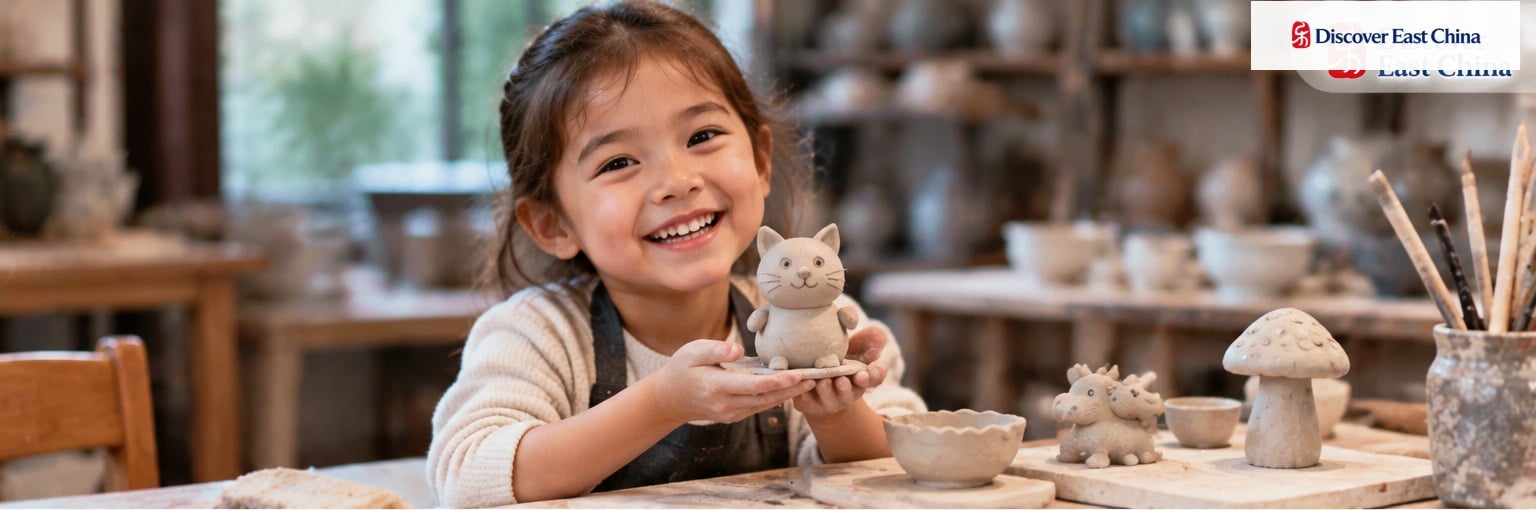
Choose a small project that suits the child and the actual teaching arrangements.
Hand building can be a useful first enquiry for children who want control over a small project. Wheel throwing can also be rewarding, but it requires a suitable setup and patient assistance.
Painting a prepared form may look simpler, yet it still needs appropriate materials and a clear finishing process. Do not assume it produces a ready-to-pack object at the end of the session.
Ask about the real time at the activity
A booking described as an hour may include a briefing, waiting for equipment and staff completing part of the piece. Ask how much time each child receives and whether the family works together or in turns.
For the itinerary, allow about one-and-a-half to two-and-a-half hours for an introductory workshop block, including arrival, instruction, cleanup and finishing discussions. The actual activity can be shorter or longer; agree it with the provider.
Younger children may do better with a short session and a modest project. A full afternoon of making should be a deliberate choice, not the default.
Give each child a realistic project
Ask the instructor to suggest something achievable during the session. A small bowl, simple form or limited decoration can provide more satisfaction than a complicated object requiring most of the adult’s intervention.
Let children make some choices while following the teacher’s advice. The value is in trying the process, not comparing their piece with a professional display.
For siblings, different projects may be more appropriate than requiring both to make the same thing. Confirm whether the instructor can support that arrangement.
What to Confirm before Booking a Family Workshop
Ages, supervision and access
Give the provider the children’s actual ages. Ask whether an adult must sit beside each child, whether babies or non-participating siblings may enter and whether spectators pay a fee.
Confirm toilet and handwashing access, seating and a place to put bags or a pushchair. A working studio may have limited visitor facilities.
Ask about the tools and materials used in the particular class. Children should follow staff instructions around equipment and remain outside restricted production areas.
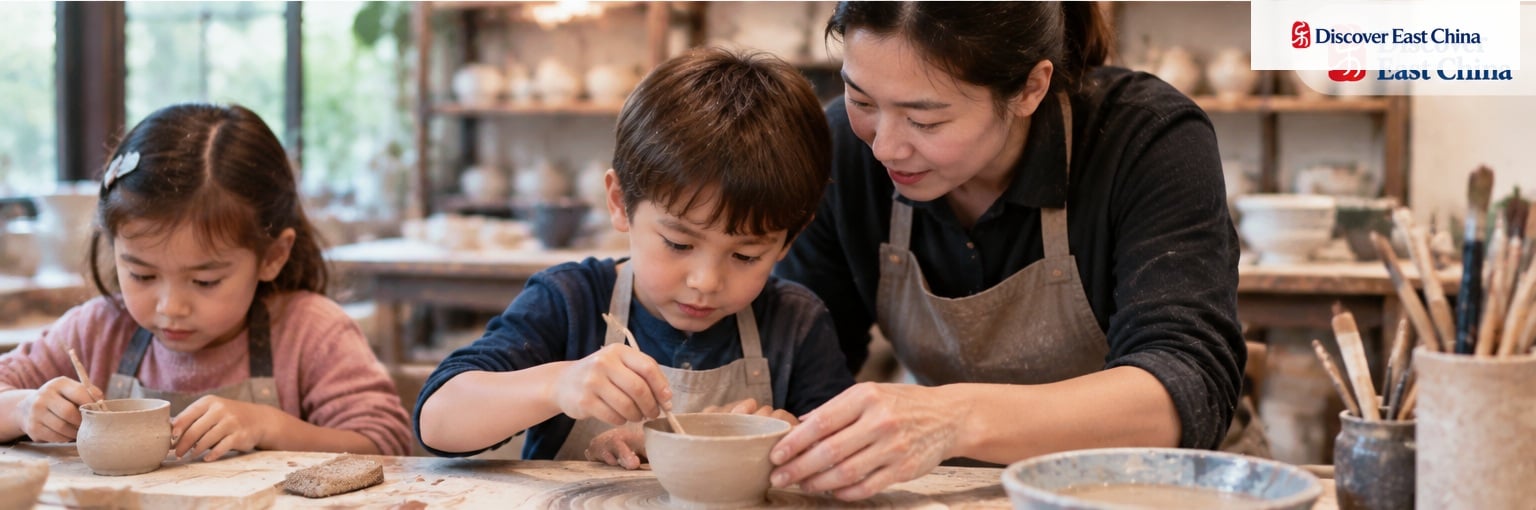
Confirm supervision, seating, reach and individual assistance before booking.
Language and teaching style
Confirm the language of instruction with the actual provider. Demonstrations can help, but they do not replace clear explanations of equipment, project choices and finishing arrangements.
Tell the instructor if a child dislikes messy textures, becomes tired quickly or needs a quieter setting. Ask whether the activity can be adapted rather than expecting the child to manage an unsuitable session.
A family session should have enough assistance for everyone. A small group alone does not establish that the teacher can support different ages comfortably.
Price and what is included
Request a clear total covering participants, instruction, materials and any finishing included. Ask separately about extra pieces, parent participation, packing and delivery.
Confirm cancellation and rescheduling terms, particularly if the session anchors the trip. An appointment with a suitable programme is more dependable than arriving at a studio and hoping for a walk-in children’s class.
What Happens to the Piece Afterwards?
Freshly shaped clay generally needs further work before it becomes a finished ceramic object. Drying, trimming, glazing and firing may continue after your family has left Jingdezhen.
Ask exactly which stages happen during the session and which are completed by staff. Confirm the finish, estimated completion and collection or shipping arrangements.
International delivery must be checked specifically, including destination, packing, charges and damage procedures. Domestic shipping does not automatically cover an overseas address.
Set expectations with children before the class
Explain that making and receiving the finished piece may happen on different days. Take a photograph of the work, with permission, so the child has something to remember immediately.
Ask how the studio handles cracking or firing failure. Avoid guaranteeing a perfect finished object when the provider cannot make that promise.
If taking something home immediately is essential, ask for an activity with a confirmed same-day result. Do not infer that from a colourful example in a booking photograph.
Buying a separate ready-made souvenir is optional. It need not become a requirement for completing the family outing.
Taoxichuan, Sanbao and Other Creative Areas
Taoxichuan: a short, purposeful visit
Taoxichuan — 陶溪川 — can work for a family through its former-factory setting, selected exhibitions, public spaces and dining options. Choose a manageable section rather than expecting children to browse every shop.
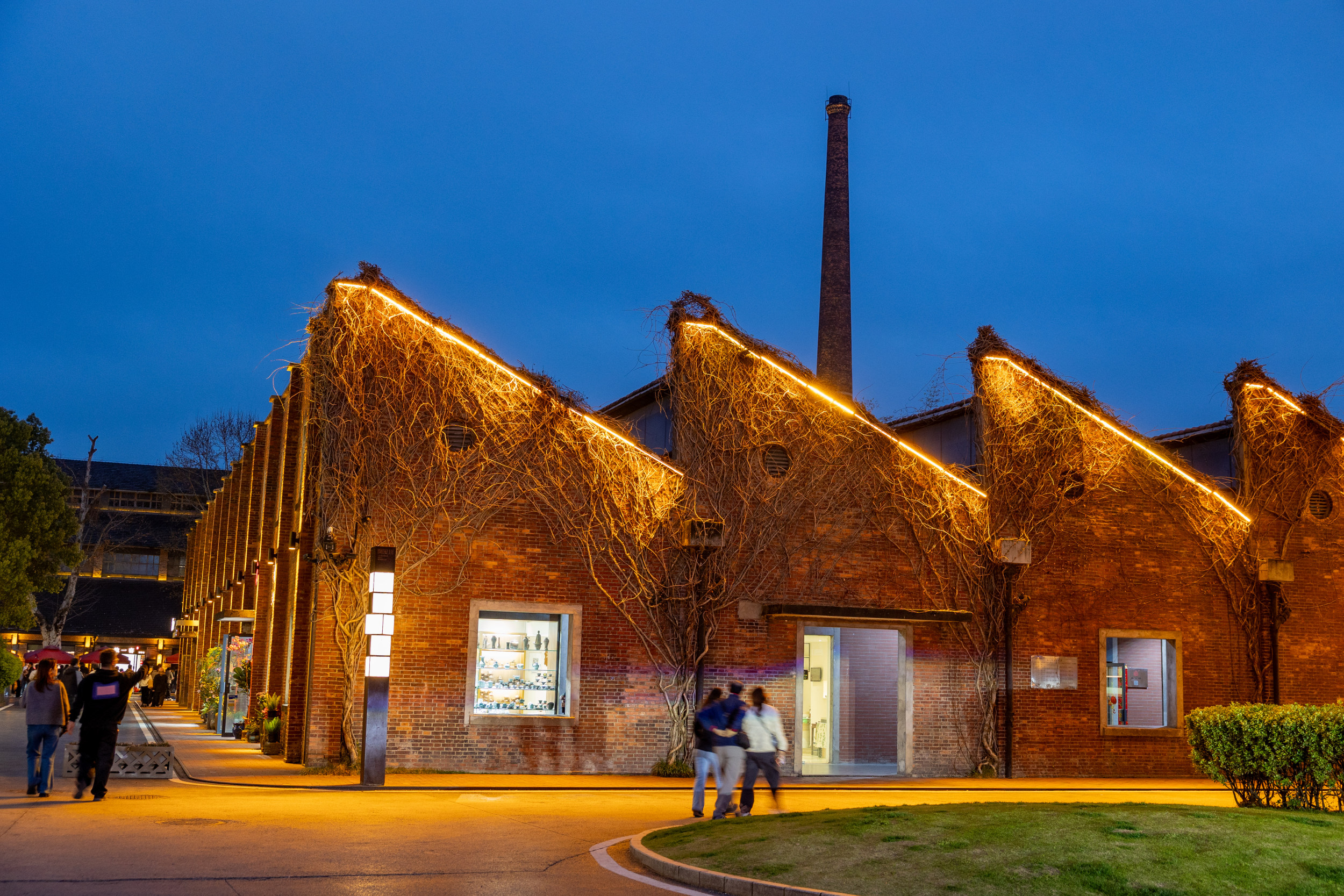
Keep the Taoxichuan outing short and purposeful, with a seated break.
Give the outing a simple focus: notice building shapes, compare a few ceramic designs or visit one open exhibition. Add a seated break and stop when the family has had enough.
An evening market is a bonus if confirmed. It is not necessary for a worthwhile visit, and its timing may conflict with bedtime or the following morning’s activity.
Sanbao: choose a destination, not open-ended wandering
Sanbao — 三宝 — contains scattered studios and other destinations in a valley setting. For a family, a confirmed workshop or venue, lunch and a short local walk can be easier than moving between many unplanned stops.
Save the exact address and arrange return transport. Check whether the immediate route is suitable for a pushchair or a child who cannot walk far.
Do not combine a substantial Sanbao session with a full Taoxichuan programme simply because both involve ceramics.
Shopping and fragile displays
Limit browsing to a few shops that interest the adults and children. Explain that displayed pieces are for looking at unless the seller invites handling.
Keep pushchairs and bags clear of narrow displays. If one adult wants to examine fragile work, another can supervise the children where practical.
A small number of enjoyable stops usually works better than a long shopping route justified as cultural sightseeing.
A Slower Two-Day Family Itinerary
This is a flexible sequence, not a promise of opening hours or fixed appointment times. Swap the days around confirmed museum and workshop access. For the general city route, see the core two-day Jingdezhen itinerary, then shorten visits and protect the family rest windows below.
| Day | Main experience | Meal and rest | Optional addition |
|---|---|---|---|
| Day 1 | One selected museum with a short, child-friendly focus | Lunch followed by hotel rest or quiet time | A manageable nearby heritage walk |
| Day 2 | One suitable prebooked pottery activity | Lunch and a substantial break | A short Taoxichuan visit and early dinner |
Day 1 morning: one museum
Start when the family is comfortably ready and your entry slot allows. Use a short list of objects or questions instead of a gallery-completion target.
Allow the visit to end earlier if necessary. A child who remembers one interesting shape has still gained something from the morning.
Day 1 midday: lunch and rest
Choose lunch along the route back to the hotel or the afternoon area. Keep the meal predictable enough that hungry children do not face a long detour or complicated ordering process.
Return for sleep or quiet time where needed. If the hotel is inconvenient, choose a genuine seated break and shorten the rest of the day; a café is not automatically an equivalent replacement for a nap.
Day 1 afternoon: a short historical walk
If the family wants another outing, use an accessible section near the imperial kiln area or another confirmed historical stop. Keep this to roughly 45–90 minutes as an initial allowance.
If the morning already centred on the Imperial Kiln Museum, continue nearby only if it feels comfortable. Avoid adding the broad ceramics museum solely because the adult itinerary includes it.
Have dinner near the hotel and leave the evening optional.
Day 2 morning: make something
Arrive at the booked studio with time for the toilet and a short orientation. Let the teacher explain the realistic project, and avoid pressure to produce a professional-looking result.
Before leaving, complete the finishing and delivery discussion while children wash their hands or take a supervised break. Keep the booking record and photographs together.
Day 2 afternoon: rest first, then decide
After lunch, take the break the family needs. A short Taoxichuan visit can follow if there is enough energy, with one focus and an agreed dinner location.
Skip the optional outing if the workshop has already provided a satisfying day. The itinerary is complete without an evening market.
What to Do with One Day or a Third Day
One full day
Choose a short museum visit and one suitable activity only if their confirmed times and locations work comfortably. Protect lunch and a rest interval between them.
For a child who particularly wants to make something, the workshop can be the day’s sole main experience, followed by a short creative-area walk. There is no obligation to add a museum to justify visiting Jingdezhen.
A third city day
Use it to spread the experiences out. Visit the second museum, choose a different short cultural stop or spend longer in a creative area that everyone enjoyed.
Do not automatically book a second similar workshop. Another session is worthwhile when the child wants it and the provider offers a clearly different, suitable project.
A countryside day
Yaoli can add village scenery, but the return drive and lunch make it a substantial outing. For a family, the ancient town and a meal may be enough; keep any forest or heritage addition optional.
Hanxi may suit families interested in tea landscapes and rural art, provided current access and walking demands are suitable. Neither outing guarantees an organised children’s programme.
Choose a rural day when the journey is part of what the family wants, not as a compulsory extension. A shorter city day can be the more comfortable choice.

A manageable village walk and lunch can be enough for a family day in Yaoli.
Meals: Keep Local Food Flexible
Arrange a dependable lunch
Choose a seated restaurant near your route before the morning activity ends. Ask about current opening hours, waiting time and the dishes it can prepare for the children.
A family meal can combine familiar rice, noodles or suitable vegetables with one regional dish. Availability and preparation vary, so ask the kitchen rather than relying on a fixed list.
Local rice-based dishes can include alkaline rice cake — 碱水粑 — and rice-wrapper dumplings — 饺子粑. Check seasoning, fillings and texture; a rice-based dish can still contain meat, chilli or other ingredients your child avoids.
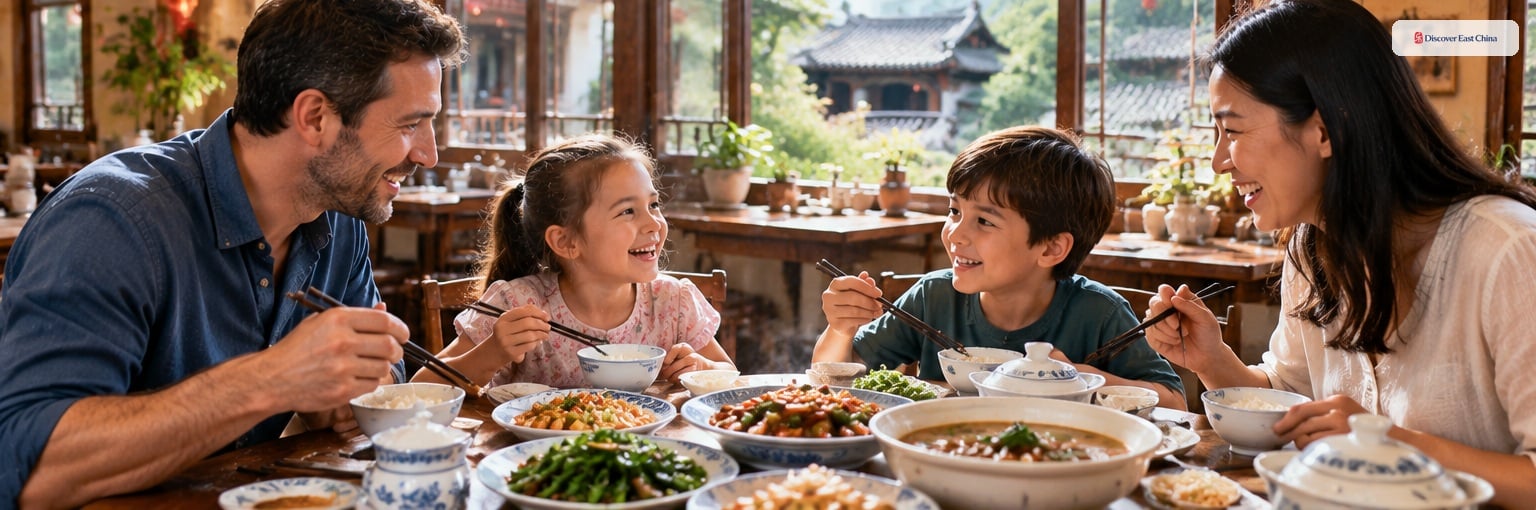
Plan a dependable lunch and ask the restaurant about ingredients and seasoning.
Ask clearly about chilli
Request no chilli when that is what you mean, rather than relying on “a little spicy”. Ask whether chilli oil or sauce is already part of the preparation.
Useful phrases include:
| What you need | Chinese phrase |
|---|---|
| Please do not add chilli | 请不要放辣椒 |
| Is there chilli in this dish? | 这道菜里有辣椒吗? |
| Please serve the sauce separately | 请把酱汁单独放 |
| Do you have plain rice? | 有白米饭吗? |
| Is there a high chair for a child? | 有儿童餐椅吗? |
These phrases help start the conversation; they do not guarantee a restaurant can adapt a dish. Choose another suitable option when its base preparation cannot be changed.
Dietary requirements and allergies
For vegetarian meals, clarify meat stock, cooking fat and sauces as well as the visible ingredients. For allergies, explain the specific allergen and ask about both ingredients and preparation.
A translation app can help with a short written message. If a restaurant cannot confirm a necessary requirement, use a meal option you can establish more reliably.
Communicate important dietary needs to the guide and accommodation before arrival. This makes meal planning easier than trying to solve every issue at a busy counter.
Snacks and drinks
Carry drinking water and a familiar snack suitable for the child. Use them to support the schedule, while keeping food out of galleries and work areas where it is not permitted.
Confirm where eating is allowed. Wash hands after the workshop before a snack or lunch, using the studio’s facilities.
Street snacks can add interest when suitable, but a seated meal is often easier for a tired child. Do not make dinner depend entirely on a market operating that evening.
Rest, Toilets and Pushchairs
Plan a toilet stop before a timed entry or class. Ask the venue about family toilets, changing facilities and handwashing rather than assuming they exist in every creative studio.
For pushchairs, check the actual entrance and route. A public square may be easy to cross while a historic interior, staircase or uneven lane remains difficult.
Ask about lifts, storage and any restrictions. Bring the arrangement that works for your child and family; there is no single pushchair solution for all Jingdezhen visits.
A mapped walking distance does not describe paving, steps, shade or places to sit. With children, choose routes that make it easy to stop or return to the pickup point.
If the family has specific accessibility needs, obtain venue-level information before booking. Do not infer complete access from a photograph of one flat section.
Hotel Base and Family Transfers
Choose a base for daily routines
A hotel near Taoyangli can suit historical visits and nearby meals. A Taoxichuan-area base can suit creative visits and a convenient dinner return.
Check the actual address, room layout, beds and access. A family label or a destination name in the hotel title does not establish that the property fits your needs.
Ask about breakfast, quiet rooms, lifts, any cot or extra-bed request and acceptance of your passports. Confirm facilities directly rather than assuming every room type has the same arrangements.
Use direct transfers between clusters
Taxis, ride-hailing or an arranged car can reduce walking between separate attractions. Save the exact venue name and entrance to avoid an unnecessary search with tired children.
If child seating is needed, arrange it explicitly before travel. Do not assume an ordinary taxi or spontaneous ride-hailing booking supplies the required seat.
For a countryside outing, secure the return and any local connections. An available outward vehicle does not guarantee another car will be nearby when you finish.
Departure and luggage
Confirm storage with the hotel and leave large bags out of the museum and studio route where possible. Carry the documents needed for entry and the children’s essentials in a manageable day bag.
Use the exact station on your ticket. Jingdezhen North Railway Station — 景德镇北站 — and Jingdezhen Railway Station — 景德镇站 — are different destinations.
Leave room for luggage collection, the transfer and boarding procedures. The final family activity should have a comfortable stopping point, not depend on completing every optional visit.
Rainy Days and Tired Days
Keep a confirmed indoor activity if it still suits the family and travel conditions permit. Shorten exposed walks and use direct transfers between buildings.
A rainy creative-district visit still involves outdoor movement. Choose a specific open exhibition and a seated meal rather than wandering to find something available.
A workshop can be a good indoor focus, but it needs booking and a suitable programme. Rain does not turn a working studio into a walk-in childcare activity.
On a tired day, reduce the plan to one enjoyable stop and an easy meal. Keep the next day’s main booking intact by ending earlier, especially if sleep has been disrupted.
If the original activity is unavailable, select a realistic confirmed alternative. A family trip should not depend on an improvised attraction being open at exactly the right moment.
What to Carry for a Family Day
Bring only what supports the route, while leaving large luggage at the hotel:
- Required identity documents and booking information for each family member.
- Drinking water and an appropriate familiar snack.
- Suitable clothes for a workshop, with a change if useful.
- Weather protection and comfortable shoes.
- Essential feeding, changing or personal-care items for the child.
- A short written dietary message where needed.
- Saved venue addresses, map pins and transport contacts.
Ask whether the studio supplies aprons. Comfortable washable clothing is more useful than assuming an apron will protect everything.
Avoid bringing so much equipment that every transfer becomes difficult. Choose the day’s activity and transport around the essentials the family actually needs.
Common Planning Mistakes
- Using an adult museum schedule without reducing gallery time.
- Booking two major cultural visits and a workshop on the same day.
- Choosing wheel throwing solely because it is the most familiar activity.
- Assuming one provider’s age rule applies to every studio.
- Forgetting that children’s admission and passport procedures also need confirmation.
- Expecting a freshly made piece to be ready for immediate collection.
- Leaving lunch until after a long transfer or an extended class.
- Treating a market as a dependable substitute for dinner.
- Assuming pushchair access throughout a historic or creative area.
- Replacing a needed rest with another sightseeing stop.
Frequently Asked Questions
Is Jingdezhen suitable for young children?
It can be with short visits, regular breaks and an appropriate activity. A toddler’s trip may centre more on comfortable family routines than on completing museums or classes.
How long should children spend in a museum?
Begin with a short, focused visit and adjust to interest. Around 45–75 minutes can be a useful initial gallery allowance for younger children; entry and breaks are additional.
Should we visit both main museums?
Only if the family wants to. One can be enough for a short stay; interested older children may enjoy both on separate days.
What is the best pottery activity for a child?
Choose by the child’s interests and the provider’s programme. Hand building, assisted wheel throwing and decorating a prepared piece have different demands.
What is the minimum age for a workshop?
There is no single rule to apply across providers. Confirm the actual class’s age guidance, supervision and equipment before booking.
Can a parent and child make something together?
Possibly. Ask whether joint participation is allowed, how assistance works and whether the adult needs a separate booking.
Can siblings of different ages join the same session?
Check with the provider. Different projects and assistance levels may be needed, and not every class can accommodate them.
Can we book an English-language family class?
Confirm the teaching language with the actual instructor. English booking support does not guarantee English instruction.
Will the piece be ready to take home after the class?
Not necessarily. Ask about drying, finishing, firing and delivery for the chosen activity. Set expectations with children before the session.
Is Taoxichuan enjoyable without shopping?
Yes, with a short architecture walk, an open exhibition or selected public spaces and a meal. Buying ceramics can remain optional.
Are night markets essential for a family visit?
No. Check current dates and decide whether the timing suits sleep and the following day. The core itinerary works without a market.
Can we use a pushchair everywhere?
Check each entrance and route. Historic lanes, interiors and studio layouts can present different obstacles.
What should we order for children?
Choose dishes whose ingredients and seasoning the restaurant can confirm. Familiar rice or noodles alongside one local choice can make the meal easier.
Is Yaoli a good family day trip?
It can be if the group is comfortable with the return journey. Keep the village walk manageable, arrange lunch and make extra stops optional.
What if our child needs a nap?
Choose a hotel and daily route that support returning for rest. Shorten optional sightseeing rather than removing the sleep window.
Is two days enough for a family visit?
Two full days can cover one museum, a pottery activity and a short creative-area visit at a slower pace. A third day helps spread experiences out or add a carefully chosen excursion.
Plan a Family Visit around Enjoyable Moments
Give the children a few objects to notice, a suitable project to attempt and time to enjoy the result. Keep the adults’ interests in the route too, while making meals, rest and transport part of the plan from the beginning.
Discover East China Tours can help check museum arrangements, appropriate ceramic activities and a comfortable family route. Tell us your children’s ages, interests, rest needs, teaching-language preferences and any dietary or access requirements, so the practical arrangements can be considered before booking.