
Choose a Wukang–Anfu or Fuxing Park–Sinan walk, with historic streets, cafés, local life and practical advice on breaks, transport and access.
Shanghai’s former French Concession is best explored as a collection of neighbourhoods rather than a single attraction. Tree-lined streets connect historic apartment buildings, garden houses, lane communities, cafés and everyday shops. Some corners are busy with visitors; others belong mainly to the routines of residents going to work, buying food or walking home.
A rewarding walk gives these different settings time to register. Look beyond the best-known photograph of Wukang Building, choose a few architectural details to examine and stop somewhere comfortable for coffee or a meal. The point is to understand how Shanghai’s older residential streets continue to function, not to collect every fashionable address in one afternoon.
This guide explains the area’s scope, offers two shorter routes and a longer connection, and shows how to balance history, cafés and local life. It also covers practical transport, breaks, dining and choices for families or travellers who prefer less walking.
What Does “Former French Concession” Mean in Shanghai?
The name refers to a historical area associated with French-administered concession arrangements during Shanghai’s treaty-port era. It is not a present-day administrative district, a gated heritage compound or a neighbourhood with one entrance.
Its boundaries changed over time. Modern travel descriptions often use the name broadly for leafy historic streets in central Shanghai, particularly across parts of Xuhui and Huangpu. The Hengshan Road–Fuxing Road Historical and Cultural Area, often shortened to Hengfu, is a useful modern heritage reference, but it should not be treated as a boundary map identical to the former concession at every period.
For a visitor, the most useful approach is to choose a cluster of streets. Wukang Road and Anfu Road form a popular western starting point. Sinan Road and Fuxing Park provide another focus farther east. Streets between them can create a longer walk, but they are not all just around the corner from each other.
| Walking area | Main appeal | Best use in an itinerary |
|---|---|---|
| Wukang Road and Anfu Road | Historic residences, a landmark apartment building, cafés and boutiques | A first short walk or a relaxed half-day |
| Wulumuqi Middle Road and nearby streets | Neighbourhood shops, food businesses and residential detail | An extension that adds everyday life to the western route |
| Fuxing Middle Road and selected connecting streets | A broader architectural and cultural context | A deliberate connection between western and eastern clusters |
| Sinan Road and Sinan Mansions | Garden-house architecture, adaptive reuse and historical associations | A focused architecture walk with a meal or cultural stop |
| Fuxing Park | Landscape history and contemporary public life | A gentle beginning, finish or extended break |
| Xintiandi | Redeveloped shikumen-based commercial streets and dining | A separate optional extension rather than a substitute for the whole area |
| Tianzifang | Small commercial lanes and browsing | Another optional visit with its own walking and crowd considerations |
Choose the cluster first. Then arrange transport to its actual starting point rather than entering “French Concession” as a vague destination.
Which Route Should You Choose?
The routes below are suggested frameworks. Distances and time allowances are approximate and depend on detours, starting points, crossings and how long you spend in venues. Check the final route on a current map before setting out.
| Route | Suggested scope | Planning allowance | Who it suits |
|---|---|---|---|
| Western short route | Wukang Building → Wukang Road → Anfu Road, with an optional Wulumuqi section | About 2–3 hours including a café break | First-time visitors interested in streets, architecture and cafés |
| Eastern short route | Fuxing Park → selected Sinan streets → Sinan Mansions | About 2–3 hours, longer with a museum or meal | Travellers who want park life and a focused heritage setting |
| Longer cross-area walk | Western route → Wulumuqi Middle Road → Fuxing Middle Road → Sinan area | Allow most of a day with meals and pauses | Confident walkers who want to see neighbourhood transitions |
| Reduced-walking version | One landmark, a short street section and a seated break | About 60–90 minutes, adjusted to your pace | Families, arrival-day visitors and those avoiding long walks |
The western and eastern short routes can be enjoyed on different days. Combining them is a choice, not a requirement.
For the longer version, plan for several kilometres of walking, potentially around 5–7 kilometres once approaches and detours are included. Do not treat this as a measured fixed route: the café, park entrance and optional buildings you choose can change the total substantially.
Route 1: Wukang Building, Wukang Road and Anfu Road
Begin at Wukang Building
Start near the junction of Wukang Road and Huaihai Middle Road. Wukang Building, also called Wukang Mansion and formerly known as the Normandie Apartments, is the area’s most recognisable landmark.
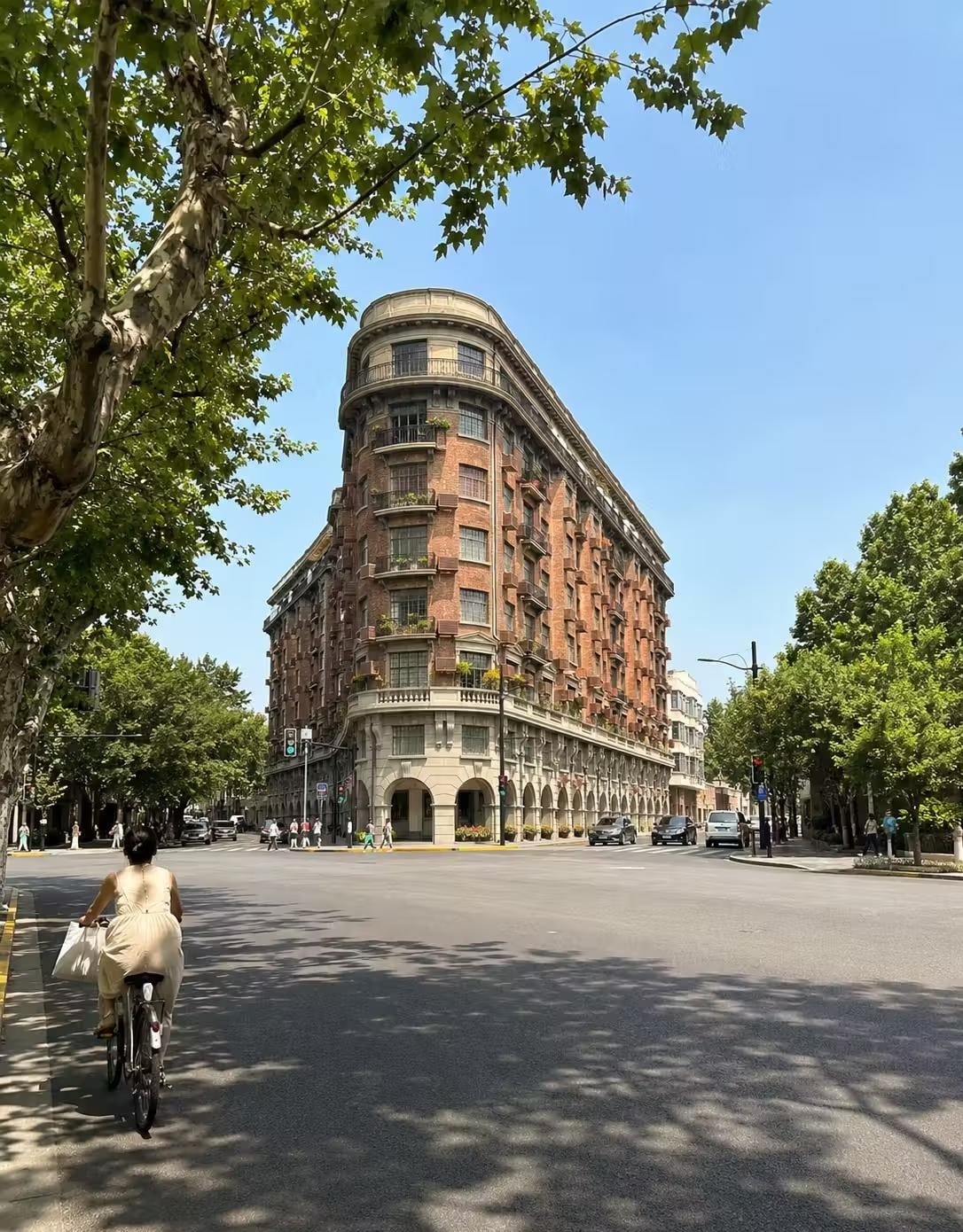
View Wukang Building from the public pavement.
Designed by László Hudec and completed in 1924, the building responds to its corner site with a narrow, ship-like profile. Look beyond the pointed end: the ground-floor arcade, repeated windows and long elevation help explain how the building accommodates both the street and residential life above it.
The Shanghai tourism authority’s Wukang Road guide confirms the building’s architect, date and residential status.
It remains a residential building. Base your visit on the exterior and public pavement rather than assuming the entrance or upper floors are open for sightseeing.
This junction can be crowded. Use pedestrian crossings, stay clear of traffic and take photographs from a position that leaves space for others. There is no need to stand in the roadway to reproduce a particular image.
Walk North Along Wukang Road
Continue along Wukang Road at a measured pace. The street offers different types of housing, from apartment buildings to houses behind gardens and walls. Its value lies in the variety rather than one uniform “French” style.
Look at roof shapes, chimneys, balconies, gates and the relationship between a house and its plot. Some buildings can be understood from the pavement; others reveal only glimpses through a boundary. A partial view is still part of the residential character.
Ba Jin’s former residence at No. 113 Wukang Road connects the street to modern Chinese literary history. If visiting the interior is important, confirm the current opening and reservation arrangements. Do not assume a heritage plaque means that a building is open that day.
Choose a handful of buildings for closer attention. Repeatedly stopping at every address can make a modest walk feel like a long catalogue without improving understanding.
Turn Towards Anfu Road
At the Wukang Road–Anfu Road connection, move east along Anfu Road. The atmosphere becomes more commercial, with cafés, bakeries, shops and restaurants contributing to the street’s popularity.

This is an appropriate place to pause. Browse if the shops interest you, but retain time for the street itself: building frontages, residential entrances and the relationship between a small business and the pavement outside it.
Anfu Road is not always quiet. Weekends and popular opening periods can bring queues and concentrated foot traffic. If you want a calmer break, consider a venue on a nearby street rather than waiting solely because one café has become a photo destination.
Finish Here or Add Wulumuqi Middle Road
You can end the walk after Anfu Road with lunch or coffee. For more neighbourhood texture, continue towards Wulumuqi Middle Road and explore an appropriate short section.
Food shops, small businesses and residential entrances provide a different perspective from landmark photography. Walk with attention to the people using the street rather than searching only for another attraction.
If you continue south towards the Fuxing Road area, decide whether this is a short extension or the start of the longer route. Make the decision before you become tired, and leave time for a meal.
What This Route Gives You
The western route introduces three useful themes: a prominent apartment building, a residential heritage street and a contemporary café-and-shop corridor. Adding a modest Wulumuqi section brings in more everyday activity.
It can fill a relaxed half-day without a museum or a major shopping stop. If you have only an hour, shorten the street section and keep one comfortable break rather than trying to rush the full sequence.
Route 2: Fuxing Park, Sinan Road and Garden-House Architecture
Begin with Fuxing Park
Fuxing Park offers a different starting point from a busy landmark junction. Opened in 1909 and historically known as the French Park, it combines a designed landscape with the ordinary life of a city park.
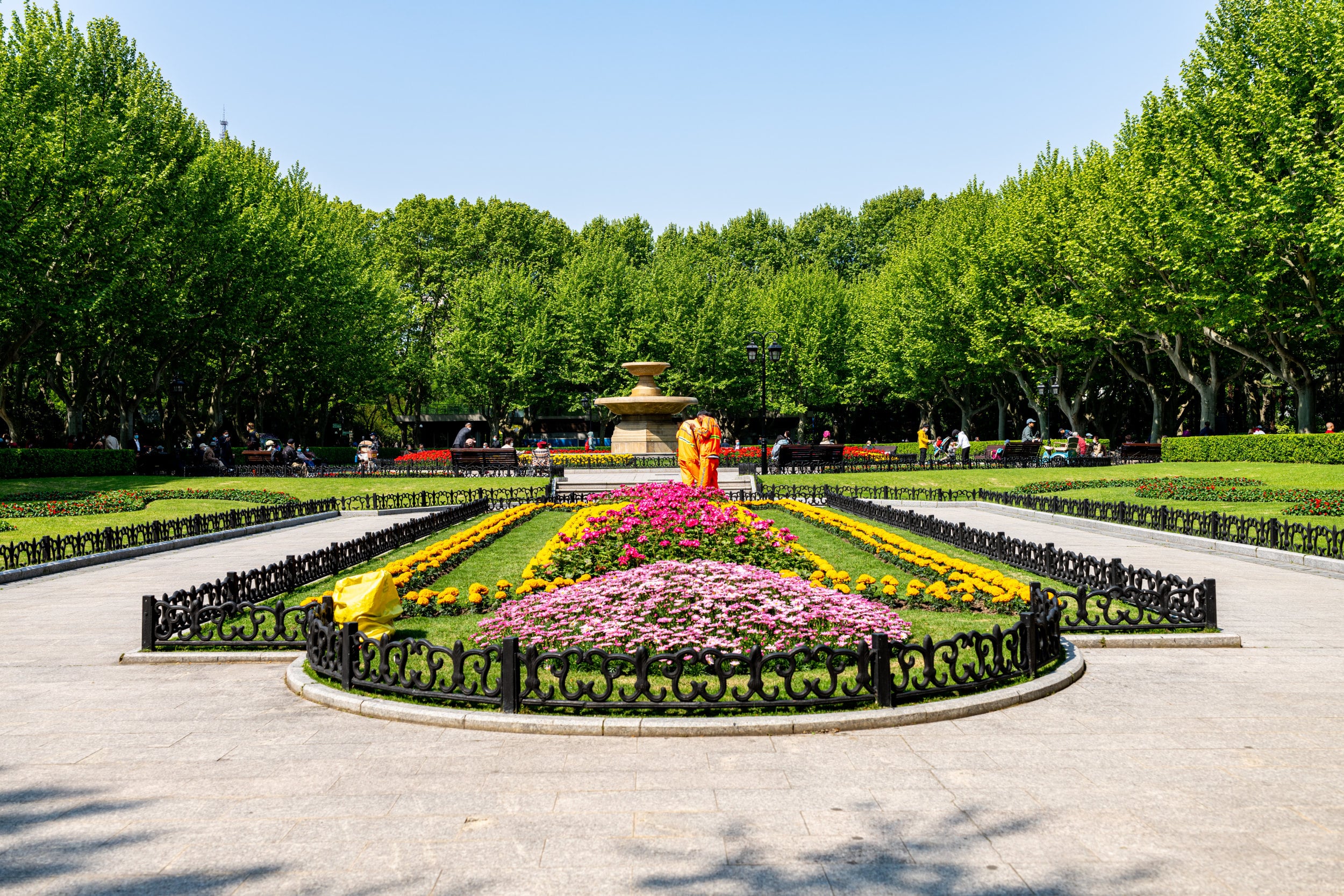
Fuxing Park adds landscape and public life to the eastern walk.
Notice both: formal elements in the layout and people using the space today. On some visits you may see exercise, conversation, games or music, but these are daily activities rather than guaranteed visitor performances.
For the park’s background and visitor information, see the Shanghai municipal Fuxing Park guide.
Choose a park entrance that fits your approach and intended exit. Do not assume that entering at one side gives an immediate connection to the next street on your route.
A park pause can be a useful part of a family itinerary. It also gives architecture-focused travellers context: the neighbourhood is not just a collection of houses, but a set of shared spaces and routines.
Continue Towards Sinan Road
Use the surrounding streets to connect with Sinan Road, planning the exact park exit and crossing on your map. The area offers garden-house architecture, smaller streets and buildings associated with cultural and political history.
Look at the space around the buildings as well as the façades. Setbacks, garden walls, entrances and rooflines tell you how this type of residential environment differs from a dense lane or a large apartment block.
Sinan Road’s former name, Rue Massenet, reflects one part of its historical setting. Its residents and uses, however, were more diverse than the term “French” suggests. A good interpretation should include Chinese history and the wider international population of Shanghai.
Explore the Sinan Mansions Setting
Sinan Mansions brings together historic garden houses and present-day hospitality, commercial and other uses. The buildings offer a useful place to discuss reuse: how a former residential setting becomes a visitor destination while retaining parts of its architectural character.
Walk the spaces open to visitors and distinguish them from hotel, residential or business areas. Public access to the complex does not mean access to every room, garden or building.
If an exhibition, bookshop, restaurant or cultural event is your main reason for coming, check it separately. Venue availability and programmes change; a photograph of a previous event does not establish a regular schedule.
Add One Historical Interior, If It Fits
The former residence of Sun Yat-sen on Xiangshan Road and the Zhou Enlai-related site on Sinan Road are possible subjects to investigate for a history-focused visit. Their exact visitor arrangements should shape the itinerary if you want to enter.
Select one meaningful visit and give it enough time. Two interiors, a full park walk, several cafés and a long extension can turn a manageable route into a rushed day.
An exterior-focused version is still worthwhile. The streets, house layouts and park provide a coherent experience without depending on admission to a particular property.
Finish with a Meal or a Short Extension
End around the Sinan area or move towards a convenient nearby commercial street for food and onward transport. Xintiandi can be an optional continuation if you still want more walking and dining choices.
Tianzifang lies in another direction and has its own compact, potentially busy lane experience. Choose one extension according to your interest rather than treating both as compulsory additions.
The Longer Shanghai Former French Concession Walk
A longer visit can connect the two clusters through Wulumuqi Middle Road and Fuxing Middle Road. It is most useful for travellers who enjoy watching the city change gradually between landmarks.
Begin with the western route. After Anfu Road, use Wulumuqi Middle Road to move towards the Fuxing Road corridor, then continue east along Fuxing Middle Road towards the Sinan area. Select any side-street detours on a current map before walking.
The connecting section is part of the day, not a negligible transfer. It includes working streets, traffic crossings and stretches where the appeal is cumulative rather than concentrated at one famous building.
Give the Connection a Purpose
Choose two or three things to notice: a change in housing type, a cultural institution, the design of a gate or how shops occupy the ground floor of an older building.
The broader Hengfu area has musical and artistic associations, including institutions around the Fenyang Road area. If that interests you, make a specific short detour or confirmed venue visit. Do not assume institutional buildings admit casual visitors.
For a general walking day, it is enough to compare streets and buildings as you go. You do not need to add an attraction at every junction.
Divide the Day into Three Parts
A practical structure is a western morning walk, lunch around the central connecting area and an eastern afternoon visit. Include a seated pause before the park or Sinan section if necessary.
Finish after the eastern cluster. Adding both Xintiandi and Tianzifang, followed by the Bund at night, can undo the relaxed pace that makes this walk appealing.
Use Transport When It Improves the Day
There is no requirement to walk every metre between the clusters. A taxi or a suitable metro journey can replace the connecting section when it is hot, wet or no longer enjoyable.
You will still have two meaningful neighbourhood walks. Keep the full connection for a day when walking through the intervening streets is itself part of your interest.
Architecture: What to Look For
“French Concession” Does Not Mean All the Buildings Are French
The name describes a historical administrative context. The built environment includes different architectural influences, housing types and periods, shaped by a diverse population.
A street can contain a garden house, a lane entrance and a later apartment building within a short distance. Comparing them gives you a better understanding than assigning one style to the entire neighbourhood.
Garden Houses
Look for the relationship between house, garden and boundary. A detached house with a setback uses space differently from a building directly on the pavement.
Roof shapes, chimneys and windows can suggest particular influences, but do not assume that every attractive house has the same history or original use. A guide can help connect design to the people and circumstances associated with a specific address.
Apartments and Street Frontages
Apartment buildings reveal how residential density could increase within an established street pattern. Wukang Building is a striking example, but less famous buildings can also show balconies, stair arrangements and the separation between commercial and domestic space.
Notice where the pedestrian has shelter, where the doorway sits and how the building responds to a corner. These details connect architecture to practical urban life.
Lane Housing and Shikumen
Lane neighbourhoods introduce another residential form. Shikumen, often translated as stone-gate housing, is part of Shanghai’s wider architectural history and is not confined to this area.
A redeveloped commercial lane, such as parts of Xintiandi, and a lived-in residential lane provide different experiences. Do not assume one is an unchanged example of the other.
You can appreciate an entrance from a public street without entering a private compound. Look for signs and respect the distinction between a visitor-accessible passage and residents’ shared space.
Street Trees and Everyday Infrastructure
The plane-tree canopy is an important part of the walking atmosphere, but the streets also depend on crossings, deliveries, parking and small shops. These ordinary elements explain how a historic neighbourhood continues to work.
Trees do not make every street fully shaded. Seasonal leaf cover, the time of day and the pavement you use affect comfort. Include a real break rather than relying on the image of an entirely cool, leafy route.
History Without Reducing the Area to Nostalgia
Shanghai’s treaty-port development involved trade, migration and foreign-administered areas with separate systems. The former French Concession belongs to that history, including unequal political arrangements as well as architectural and cultural exchange.
The neighbourhood was never occupied only by French residents. Chinese residents, writers, political figures, businesspeople and other international communities contributed to its development and daily life.
The area also has a history beyond the concession period. Buildings have changed use, residents have changed and businesses continue to open and close. A café in an old house is one contemporary layer, not proof that the whole neighbourhood has remained untouched.
For a guided walk, ask for these connections rather than only celebrity anecdotes or building dates. A few well-explained addresses can link architecture to literature, politics and everyday urban change.
Cafés: Choose a Good Break, Not Just a Popular Photograph
Coffee can be part of the experience rather than an interruption to it. A seated stop lets you review what you have seen and notice the street at a different pace.
Anfu Road and nearby streets offer plenty of opportunities to look for cafés and bakeries. The Sinan area provides another setting. Individual businesses and formats change, so choose according to current availability and what you need from the stop.
| Your priority | What to check before choosing |
|---|---|
| A comfortable rest | Actual seating, table availability and whether the venue is mainly takeaway |
| A quiet conversation | Music, queues and indoor layout rather than social-media popularity |
| Watching the street | The outlook from the specific seating area |
| A family break | Space, suitable drinks, food and practical toilet arrangements |
| A substantial lunch | A proper meal menu rather than pastries alone |
| Access without stairs | Entrance threshold, seating floor and toilet access |
| A visit inside a historic building | Which rooms are open and whether a purchase or reservation is required |
If a queue is long, decide whether the café itself is a priority. Waiting for a particular drink may be enjoyable for an enthusiast, but it should not use all the time reserved for the neighbourhood.
Do not assume outdoor seating is available or comfortable in every season. A shaded table, an indoor seat and a photogenic façade meet different needs.
Local Life: How to Observe Respectfully
The area remains lived in. Residential entrances, food shopping, deliveries and people moving through the streets are part of what makes the visit interesting.
Observe without turning every routine into a performance for your camera. Ask before photographing someone closely, do not block a doorway and avoid looking through private windows.
A building’s historical significance does not make its residents’ spaces public. Keep to areas clearly open to visitors, and do not follow another person through a gate simply because the entrance is momentarily unlocked.
If you want more everyday activity, include a suitable section of Wulumuqi Middle Road or a quieter connecting street. If you want boutiques and café browsing, spend more time around Anfu Road. Both are contemporary Shanghai, but they have different rhythms.
In Fuxing Park, give people room for exercise, conversation or games. You can enjoy the atmosphere without expecting a scheduled activity or interrupting someone’s morning.
Meals, Snacks and a Comfortable Pace
Plan Lunch Before You Need It
For a short route, choose a meal near the finish. For the longer walk, identify a central lunch area before departure so you do not continue hungry simply to reach the next landmark.
A bakery stop can be a pleasant snack but may not replace lunch for the group. Check whether a venue offers the kind of food you want, particularly when travelling with children or someone who needs a predictable meal.
Mix Neighbourhood Food with Café Stops
The walk does not have to revolve entirely around coffee. Local food businesses, casual restaurants and more formal dining can each fit, depending on your interest and budget.
Use one meal to sit properly, then keep snacks optional. If trying several foods is a priority, shorten the architecture route so the day has enough time for both.
Explain Dietary Needs Clearly
Do not assume a vegetable dish is vegetarian or that a café can meet every allergy requirement. Ask about ingredients, stocks, sauces and preparation where relevant.
For a serious allergy, use a clear written explanation in Chinese and confirm what the kitchen can accommodate. Select the restaurant for that suitability rather than only its location on a fashionable street.
Avoid a Rigid Series of Reservations
One meal reservation or a confirmed interior visit can anchor the day. Several timed bookings can make an otherwise flexible walk feel hurried.
Allow for slower crossings, a longer conversation or an unexpectedly full venue. Keep at least one section easy to shorten.
Getting to the Right Starting Point
Use the exact landmark, street or venue name when arranging transport. The broader former French Concession covers too much ground for a precise drop-off instruction.
| Walking focus | Metro stations to consider when checking your route |
|---|---|
| Wukang Road and the western cluster | Shanghai Library or Jiaotong University, according to the chosen start |
| Anfu Road and central-western streets | Changshu Road, with an approach walk |
| Fuxing Middle Road and central connections | South Shaanxi Road, depending on the section |
| Sinan Road and Fuxing Park area | Huaihai Middle Road, South Shaanxi Road or Xintiandi, according to the entrance and route |
| Tianzifang extension | Dapuqiao, with a separate neighbourhood approach |
A station is not necessarily beside the landmark. Check the current line, exit and street route before travel, and allow time for the approach.
For access needs, confirm lifts and the final walk rather than relying only on a station name. On departure, choose the station or collection point near your actual finish; there is no need to return to the morning’s starting place.
A taxi can be useful for moving between clusters or ending a longer route. Give a legal, practical collection address rather than expecting a vehicle to stop beside a congested photo spot.
Daytime, Evening and Seasonal Choices
Morning
Morning can work well for architecture and park life. Some cafés and shops may not yet be operating, so confirm a venue if breakfast or early coffee is essential.
A morning Fuxing Park visit has a different character from an afternoon café walk. Choose it for the park and surrounding streets rather than expecting the same commercial atmosphere throughout the day.
Afternoon
Afternoon offers a useful combination of walking, open businesses and a meal or coffee break. Popular western streets may be busy, particularly on weekends.
In hot weather, shorten exposed sections and take an indoor pause. Tree cover helps but does not remove summer heat or humidity.
Evening
Evening suits dinner and a shorter street walk. Architecture becomes harder to inspect, and museum or former-residence access may no longer be available.
Do the history-focused section before dark, then let the evening centre on a meal and the neighbourhood atmosphere. Do not turn a residential street into a late-night sightseeing venue by assuming every building or business remains open.
Rain and Cooler Weather
Rain can make the streets atmospheric, but pavements, thresholds and crossings may be slippery. Replace part of a long route with a confirmed indoor visit or a seated break.
In cooler months, choose a café with reliable indoor seating and dress for the time spent outside. In any season, check weather before committing to a whole-day connection.
Families and Travellers Who Prefer Less Walking
Choose one cluster and give the day a simple structure: a landmark or park, a short walk, a meal and an optional final stop.
For children, architectural observation can become a manageable task. Look for an unusual roof, compare two gates or draw the shape of Wukang Building during a break. A park visit may provide more variety than a long sequence of house exteriors.
For older travellers, assess standing, crossings and resting opportunities as well as distance. A busy pavement with no convenient seat can be more tiring than the map suggests.
Pushchairs and wheelchairs require attention to pavement width, kerbs, entrance thresholds and stairs inside venues. Public street walking does not establish step-free access to every café or heritage property.
Avoid depending on finding an empty bench at exactly the right moment. A planned venue with suitable seating can make the route much easier to manage.
Photography and Street Etiquette
Wukang Building is a strong starting subject, but the neighbourhood offers more than one recognisable frame. Photograph a roofline, a doorway, the relationship between trees and buildings, or the changing scale of the street.
Use a position that leaves the pavement usable. Do not stand in a cycle or vehicle route, rearrange residents’ belongings or hold up a queue for an extended portrait session.
A camera pointed at a historic building can still include private windows or people at home. Frame thoughtfully, and ask before close portraits.
For café photographs, follow the venue’s rules and keep other customers’ comfort in mind. A small interior is not a dedicated photo studio.
The best light depends on street direction, weather and tree cover. Keep expectations flexible rather than building the day around a promise that one address will have perfect light at a fixed hour.
How to Combine the Walk with Other Shanghai Areas
The Bund
The Bund offers a useful contrast: monumental commercial waterfront buildings versus residential streets and garden houses. Visit one neighbourhood cluster during the day, take a proper break and use transport for an evening Bund visit if energy allows.
Do not assume the connection is a brief walk. A full cross-area route followed by a complete Bund walk can produce a much longer day than intended.
Huaihai Road
Huaihai Road’s commercial setting connects naturally with parts of the area. It can provide a meal, shopping or onward transport without adding a completely separate sightseeing excursion.
Choose a particular section. The road is long, and walking it extensively is another activity rather than a small detour.
Xintiandi
Xintiandi works most naturally with the eastern cluster. Its redeveloped shikumen-based setting and dining options provide a useful comparison with more residential streets.
Do not describe it as an unchanged historic neighbourhood. Compare how heritage forms are used commercially today, and decide whether browsing and dining there match your interests.
Tianzifang
Tianzifang can suit visitors who enjoy compact lanes, shops and browsing. It may feel crowded, so it is not automatically the gentlest extension after a long walk.
Combine it with a shorter eastern route if it is a priority. There is no need to add it to the western walk, the full connection and Xintiandi in the same day.
Museums and Specialist Interests
A literary residence, historical site, gallery or music-related visit can give the walk a deeper focus. Confirm access and choose the route around the appointment.
For an enthusiast, one substantial interior visit may be more rewarding than completing every street in the suggested longer route.
Suggested Half-Day and Full-Day Arrangements
A Relaxed Western Half-Day
Start at Wukang Building, walk north along Wukang Road and turn towards Anfu Road. Take a seated coffee break, then add a short Wulumuqi section if the group still wants more.
Finish with lunch or a convenient departure. Keep one interior optional unless you have a confirmed reservation that matters to the visit.
An Eastern Half-Day with History and Park Life
Begin in Fuxing Park, use the appropriate exit to connect with the Sinan area and explore the garden-house setting. Add one confirmed historical or cultural visit if desired.
Finish with a meal. Xintiandi is an optional continuation, not a required final stop.
A Full Walking Day
Explore the western cluster in the morning, have lunch along the central connection and continue towards Sinan Road and Fuxing Park in the afternoon.
Use a taxi or metro transfer for the middle section if conditions or energy change. Finish with dinner nearby rather than automatically travelling to another major sightseeing area.
A Short Walk and an Evening Elsewhere
Choose one western or eastern short route, include a proper meal and return to your hotel or another comfortable place for a break. Later, visit the Bund or join a separately planned evening activity.
This arrangement can be easier than walking continuously from morning into the evening, especially after recent travel.
Frequently Asked Questions
1. Where is Shanghai’s former French Concession?
The historical name covers a broad part of central Shanghai rather than one current district. Visitors commonly focus on clusters around Wukang and Anfu roads in the west, and Sinan Road and Fuxing Park farther east.
2. Is there an entrance ticket for the area?
There is no general ticket for walking the public streets. Individual museums, former residences, exhibitions and hospitality venues have their own access arrangements and possible charges.
3. What is the best route for a first visit?
The Wukang Building–Wukang Road–Anfu Road sequence is a useful introduction. Add a short Wulumuqi section if you want more everyday neighbourhood activity and have enough time.
4. How long should I allow for a short walk?
Around 2–3 hours can accommodate a considered visit and a café break in one cluster. Shorten it for a quick introduction or extend it for lunch and a confirmed interior visit.
5. Can I see the whole area in half a day?
Not meaningfully. The area is extensive and its appeal depends on time spent noticing streets and buildings. Choose one cluster rather than treating a half-day as a complete survey.
6. Are Wukang Road and Sinan Road close enough to combine on foot?
They can be connected by a longer walking itinerary, but the journey is a substantial part of the day. Use transport between them if you mainly want the two focused visits.
7. Can I enter Wukang Building?
Treat it as an exterior landmark on this route. It remains residential, and its entrance and upper floors should not be assumed to be public sightseeing spaces.
8. Are all the buildings French in style?
No. The historical administrative name does not identify a single architectural style. The area includes varied influences, periods and residential forms.
9. Which café should I choose?
Choose according to seating, food, access and atmosphere on the day. A fashionable takeaway shop may not provide the comfortable break your itinerary needs.
10. Is Anfu Road quiet?
Not reliably. Its cafés and shops attract visitors, and busy periods can bring queues and crowded pavements. Nearby streets may offer a more suitable place to pause.
11. What is the best way to see local life?
Walk a manageable residential or neighbourhood-shopping section, observe respectfully and allow time in a public park. Do not enter private lanes or expect residents to perform for visitors.
12. Is Fuxing Park worth including?
Yes, if you enjoy landscape history and contemporary public life. It also adds variety to an architecture walk, though particular exercise or music activities are not guaranteed.
13. Is the walk suitable for children or older travellers?
A short cluster with planned seating and meals can work well. Assess crowds, crossings, pavement conditions and venue access, and avoid making the long connection compulsory.
14. Can I do this walk in the rain?
A shorter version with a confirmed indoor stop can be worthwhile. Take care on wet surfaces and replace the long connection with transport if it no longer feels comfortable.
15. Do I need a guide?
You can enjoy the public streets independently. A knowledgeable guide adds value when you want to connect particular buildings with literature, political history, architecture or the area’s changing social life.
16. What should I combine with the walk?
Huaihai Road fits several sections, while Xintiandi works naturally with the eastern cluster. The Bund provides a contrasting evening experience when you leave time for a transfer and a break.
Plan a Walk That Leaves Room for Shanghai
The former French Concession is most rewarding when the day has a clear focus and room to pause. Choose one cluster, understand a few buildings and enjoy the contemporary life around them. Add a longer connection only when the walking itself interests you.
A coffee, a local meal, a park pause and a well-explained street can create a complete visit without a crowded list of addresses.
To discuss a Shanghai itinerary combining historic neighbourhoods, architecture and local food, send a trip enquiry to Discover East China Tours. Include your preferred walking distance, interests, language needs and any practical access or dietary requirements.
Prepared for Discover East China Tours. Reviewed: 13 October 2026.