
Choose museums by theme and location, distinguish Shanghai Museum’s two venues, and plan admission, gallery time and a practical rainy-day outing.
Shanghai’s museums offer very different ways to understand the city and China. You can explore ancient ceramics and bronzes, follow Shanghai’s urban history, see an international art exhibition or spend a family day with natural history and science.
The most useful choice starts with your interests, not a list of famous names. One museum visited with attention usually makes a better half-day than several rushed stops. Location also matters: museums with similar names may be on opposite sides of the Huangpu River, and an institution’s branches do not necessarily show the same collections.
This guide helps you choose a theme, identify the correct venue, organise admission and combine a museum with nearby sightseeing. It also explains how to make a workable rainy-day plan without assuming that every indoor attraction accepts walk-in visitors.
Which Shanghai Museum Is Right for You?
Use the following as a starting shortlist. The suggested choices reflect different interests; they are not a ranking of museum quality.
| Your main interest | A useful starting choice | Why choose it? | Main planning consideration |
|---|---|---|---|
| Ancient Chinese art and craftsmanship | Shanghai Museum East | Collections of bronzes, ceramics, painting, calligraphy and other historic arts | Choose a few galleries rather than trying to cover the whole building |
| Shanghai’s own history | Shanghai History Museum | A city-focused story that gives context to streets and buildings | It is a separate institution from Shanghai Museum |
| A particular major international antiquities exhibition | Shanghai Museum on People’s Square | A destination for its current exhibition programme | Check the exhibition first; do not assume the East museum’s collections are here |
| International art with a Lujiazui outing | Museum of Art Pudong | Exhibition-led art viewing beside the Pudong riverfront | Check the current programme and ticket conditions |
| Contemporary art and industrial architecture | Power Station of Art | Contemporary exhibitions in a former power station | The current exhibitions should drive your decision |
| Modern and contemporary art with a West Bund visit | West Bund Museum | An art-focused outing on the Xuhui waterfront | Confirm the exhibition and the specific ticket required |
| Modern Chinese art | China Art Museum, Shanghai | Chinese art in the former Expo China Pavilion | Check which galleries and special displays are available |
| Animals, fossils and the natural world | Shanghai Natural History Museum | A visually varied nature-focused visit | Tickets and any extra activities need advance attention |
| Hands-on science and technology | Shanghai Science and Technology Museum | A science-focused family outing | Main admission and particular experiences can have separate requirements |
| Space and astronomy | Shanghai Astronomy Museum | A dedicated astronomy destination | Its Lingang location needs a substantial travel allowance |
| How the city is organised and developed | Shanghai Urban Planning Exhibition Center | An urban-planning perspective in the People’s Square area | Check its own closure day and admission arrangements |
For a first Shanghai visit, choose one museum that adds something to your wider itinerary. If the day already focuses on historic streets, a city-history visit can deepen the experience. If you have spent several days on architecture and heritage, science or contemporary art may provide welcome variety.
Identify the Correct Museum Before Booking
Save the full name, Chinese name and street address. A search result for “Shanghai museum” is too broad to use as a taxi destination or ticket instruction.
| Venue | Chinese name | Address to check against your booking |
|---|---|---|
| Shanghai Museum on People’s Square | 上海博物馆人民广场馆 | 201 Renmin Avenue, Huangpu |
| Shanghai Museum East | 上海博物馆东馆 | 1952 Century Avenue, Pudong |
| Shanghai History Museum | 上海市历史博物馆 | 325 West Nanjing Road, Huangpu |
| Museum of Art Pudong | 浦东美术馆 | 2777 Binjiang Avenue, Pudong |
| Power Station of Art | 上海当代艺术博物馆 | 678 Miaojiang Road, Huangpu |
| West Bund Museum | 西岸美术馆 | 2600 Longteng Avenue, Xuhui |
| China Art Museum, Shanghai | 中华艺术宫 | 205 Shangnan Road, Pudong |
| Shanghai Natural History Museum | 上海自然博物馆 | 510 West Beijing Road, Jing’an |
| Shanghai Science and Technology Museum | 上海科技馆 | 2000 Century Avenue, Pudong |
| Shanghai Astronomy Museum | 上海天文馆 | 380 Lingang Avenue, Pudong |
| Shanghai Urban Planning Exhibition Center | 上海城市规划展示馆 | 100 Renmin Avenue, Huangpu |
These addresses identify the venues, not necessarily the public entrance. A museum may use different entrances for individuals, groups or accessible admission. Check the entrance instructions after choosing the venue.
Shanghai Museum Is Not Shanghai History Museum
Shanghai Museum is particularly useful for historic Chinese art and objects. Shanghai History Museum is the more direct choice for understanding Shanghai itself.
Both have a connection to the People’s Square area, which makes the names easy to confuse. Check the institution and address rather than relying on “the museum near People’s Square”.
The Two Shanghai Museum Sites Are Not Interchangeable
Shanghai Museum East is in Pudong. The People’s Square museum is in Puxi. They belong to the same institution, but their exhibition arrangements differ.
Important current distinction, checked on 13 October 2026 against the museum’s People’s Square visitor guidance: during On Top of the World Tree: Ancient Civilizations of the Americas, scheduled from 9 July 2026 to 14 November 2027, the People’s Square museum is devoted to that exhibition, with other exhibitions not on display there. Visitors need paid exhibition admission. For the museum’s permanent Chinese-art collections, plan around the East venue.
This is a dated arrangement, not a permanent rule about the People’s Square building. Recheck it when planning a later visit.
Pudong Art Names Need Care
Museum of Art Pudong is beside the Lujiazui riverfront. China Art Museum is in the former Expo China Pavilion farther south. Shanghai Museum East is a different museum again.
West Bund Museum is on the Xuhui waterfront in Puxi. It is not the historic Bund promenade, and its name does not mean that it is a short continuation of a central Bund walk.
Natural History, Science and Astronomy Are Separate Visits
Shanghai Natural History Museum, Shanghai Science and Technology Museum and Shanghai Astronomy Museum have institutional links, but different buildings, themes and locations. A shared ticketing platform does not make one booking valid for all three.
The Astronomy Museum’s Pudong address is in Lingang, well beyond central Lujiazui. Do not group them together simply because both are in Pudong.
History and Ancient Chinese Art
Shanghai Museum East: Choose a Few Collections
For visitors interested in ancient Chinese art, Shanghai Museum East is a strong starting point. Its galleries cover subjects including bronzes, ceramics, sculpture, jade, calligraphy and painting.

Choose two or three themes before arrival. Ceramics can be especially rewarding if your wider East China journey includes Jingdezhen. Bronzes offer a different way to consider shape, decoration and ceremonial use. Painting and calligraphy benefit from slower looking and explanation.
Rather than attempting to read every label, select a few objects in each gallery. Compare their materials, shapes and purposes. Ask what the object tells you about the people who made or used it.
A focused first visit might take around 2–3 hours inside. A deeper visit with several collections, a special exhibition and breaks can take half a day or longer. Add arrival and security time separately.
The East museum’s official visitor guidance currently admits individual visitors without a general-entry reservation. Bring an original valid identity document and use the B1 East Gate near Dingxiang Road for individual admission. General admission does not remove separate booking requirements for interactive spaces such as the Curio-City and Digital Gallery, or ticketing for a paid special exhibition.
The East museum’s published regular hours are 10:00–18:00, with last entry at 17:00 and Tuesday closure except national holidays. Confirm the travel-date notice, particularly around holidays.
Shanghai Museum on People’s Square: Choose It for the Actual Exhibition
The People’s Square building has a convenient central location, but convenience should not determine the subject you expect to see.
Under the current Americas-exhibition arrangement, choose it because that exhibition interests you. It should not be used as an automatic substitute when the East museum is closed or too far from your hotel.
Check the current ticket category, visit date, entry deadline and any evening-session arrangements. Standard daytime opening information and a special night session are not interchangeable.
Allow enough time to understand the exhibition’s sequence rather than fitting it into a brief gap before another booking. A substantial exhibition may need around 2–3 hours or longer according to your reading pace and interest.
Shanghai History Museum: Understand the City You Are Visiting
Shanghai History Museum is useful when you want the city’s own story rather than a broad survey of Chinese art. Its displays use historical objects and documents to explore Shanghai’s development.
Use the visit to connect your street sightseeing with the past. Look for changes in commerce, industry and everyday life, then consider how they relate to the buildings and neighbourhoods you have seen.
A selective visit of around 1.5–2.5 hours can fit well before lunch or a short People’s Square-area walk. Readers who want a fuller visit should allow more time.
Current guidance lists free admission without an individual reservation, with regular Monday closure. Confirm any special exhibition or group arrangements separately.
Art Museums: Choose the Exhibition as Well as the Building
Art museums are particularly sensitive to exhibition changes. A well-known building may host a programme that strongly interests one visitor and does little for another.
Before buying a ticket, read the exhibition description, look at representative works and check the dates. Establish whether your ticket covers all galleries or only particular exhibitions.
Museum of Art Pudong: Art and a Riverfront Setting
Museum of Art Pudong suits an exhibition-led visit combined with Lujiazui. It is located on Binjiang Avenue opposite the historic Bund frontage.
Choose it when the current artists, works or exhibition themes appeal to you. The riverfront setting is a useful addition, but it should not be the only reason to pay for an exhibition you do not want to see.
Allow around 2–3 hours for a selective exhibition visit, with longer for several exhibitions or detailed viewing. A meal and a short waterfront walk can make a comfortable half-day if the weather permits.
The museum’s published opening hours are 10:00–21:00, with last admission at 20:00. Its current Chinese visitor page, checked on 13 October 2026, says routine visit reservations have been removed: visitors may enter with a ticket. During attendance peaks, temporary capacity controls and timed reservations may apply. The English page still carries an appointment instruction, so follow the latest date-specific notice and ticket conditions before relying on an evening slot.
Power Station of Art: Contemporary Work in an Industrial Building
Power Station of Art occupies a former power station beside the Huangpu River and is associated with the Shanghai Biennale. Its architecture and exhibitions offer a different experience from historic-object galleries.
Choose it for an interest in contemporary art, installation, design or the current exhibition themes. Do not assume that the Biennale is always running or that every published collection work will be on view.
Large installations, film and sound works can require time beyond a quick walk around a room. Read the introduction first, then decide which sections deserve attention.
Allow around 1.5–3 hours for a selected programme. Check the charging arrangements for the exhibitions you want; neither “public museum” nor an old free-exhibition announcement establishes that every current show is free.
West Bund Museum: Make It an Art-Focused Outing
West Bund Museum is on Longteng Avenue in Xuhui. Its exhibition programme includes modern and contemporary art, with Centre Pompidou collaborations among its projects.
Choose the current programme first, then build a modest waterfront extension around it. Do not promise a particular artist or collection display based on a past exhibition.
A focused visit may take around 1.5–2.5 hours. Add time for a tour, several galleries or a café break. Tours can require a separate reservation and a valid exhibition ticket; confirm language and availability.
Its own visitor page lists regular Tuesday-to-Sunday opening from 11:00–18:00, with last entry at 17:00. Check current notices rather than copying a different deadline from a general city directory.
China Art Museum, Shanghai: Modern Chinese Art
China Art Museum is housed in the former China Pavilion of the 2010 World Expo. It offers a modern Chinese-art focus and a distinctive architectural setting.
It is a separate choice from Shanghai Museum East’s historic-object collections and Museum of Art Pudong’s exhibition programme. Match the available galleries to your interest in Chinese painting and the development of modern art.
Choose a few gallery sections for a visit of around 1.5–3 hours. General collection admission is listed as free, but confirm any special display, activity or exhibition charge and the current admission process.
The building’s size does not mean every gallery is available on every date. Check the current floor guide before planning a route around a particular work or multimedia attraction.
Natural History, Science and Astronomy
Shanghai Natural History Museum: Nature and Visual Variety
Shanghai Natural History Museum is a useful choice for visitors interested in fossils, animals and the natural world. Its Jing’an location makes it a more central option than the Astronomy Museum.
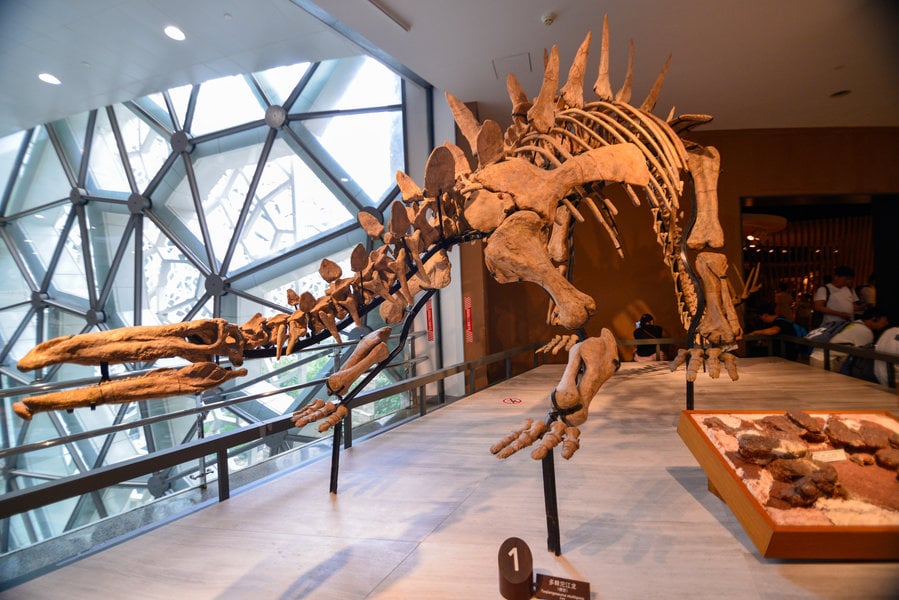
Select a few subjects and plan a break during a family visit.
For children, choose a few subjects they already enjoy, then add one unfamiliar section. A dinosaur-focused visit does not need to become an attempt to complete every floor.
Allow around 2–3 hours for a selective family visit, or longer for deeper exploration. Include a break before attention and energy decline.
Check admission availability through the official ticketing route before setting off. Films, educational activities and interactive sessions may have their own conditions. A general museum ticket should not be assumed to include every extra programme.
Shanghai Science and Technology Museum: A Substantial Family Visit
Shanghai Science and Technology Museum is at 2000 Century Avenue in Pudong. It reopened in 2026 following a major renovation, so older advice describing the whole museum as closed is no longer an adequate planning guide.
Choose it for science and technology interests and interactive exploration. Review the renewed gallery programme rather than using an old floor-by-floor itinerary.
Allow at least a substantial half-day if the family wants several areas. Interaction, queues and films can make the visit longer than a simple gallery walk.
The museum’s 2026 admission notice uses real-name online reservations with limited daily availability. Visitors eligible for free admission still need reservations. Particular theatre and experience tickets can be separate from the main admission ticket.
Check the current booking window, accepted documents and experience rules. A seasonal discount or trial-opening arrangement should not be treated as permanent.
Shanghai Astronomy Museum: Choose It as a Destination
Shanghai Astronomy Museum is in Lingang. It suits visitors with a clear interest in space, the universe and astronomical exploration who are willing to devote significant time to the journey.
Plan it as the principal activity of the day. A dedicated visit of around 3–4 hours inside can be a starting allowance, with travel, meals and any booked programme added separately.
Check the ticket and any dome-theatre, interactive or educational reservations before committing to the transfer. Main entry does not necessarily secure a place in a specific programme.
It can be worthwhile in rain if admission is confirmed and travel conditions are suitable. It is a poor last-minute replacement when you have only a short central-Shanghai afternoon available. Outdoor observation activities also depend on conditions.
Another Useful Theme: Shanghai’s Urban Planning
Shanghai Urban Planning Exhibition Center, also called the Urban Planning Exhibition Hall, is in the People’s Square area. Choose it if you are interested in how Shanghai is organised and how its development is presented.
It provides a different perspective from the History Museum: urban structure and planning rather than the same historical narrative. Use it to think about the relationship between districts, transport and the places on your itinerary.
A selected visit of around 1–2 hours may fit a central half-day. Confirm the current displays, admission process and closure day. Municipal visitor guidance lists Wednesday closure, illustrating why “all museums close on Monday” is unreliable.
How Much Time Should You Allocate?
Separate gallery time from the full outing. Entry checks, a station approach, lockers, toilets, lunch and the next transfer all add time.
| Visit style | Useful initial allowance inside | How to keep it manageable |
|---|---|---|
| A selected city-history or planning visit | Around 1–2.5 hours | Follow one theme and leave optional galleries for later |
| A focused ancient-art visit | Around 2–3 hours | Choose two or three collections |
| An exhibition-led art visit | Around 1.5–3 hours | Read the exhibition outline before entering |
| A natural-history family visit | Around 2–3 hours | Plan a few highlights and a break |
| A broad science visit | Half a day or longer | Separate essential experiences from optional ones |
| A dedicated astronomy visit | Around 3–4 hours or more | Add the substantial Lingang journey separately |
These are suggested allowances, not guaranteed completion times. A particular exhibition, tour, queue or child’s pace may change them.
The final admission time is a deadline for entering, not a recommended arrival time for a full visit. Arriving just before last entry may leave too little time for the galleries you want.
Reservations and Admission: A Practical Workflow
Check the Venue and Exhibition
Read the current official visitor page and the exhibition announcement. Confirm the venue, address, dates, closure day, opening hours and last admission.
An announcement for a public holiday may temporarily replace the usual weekly schedule. An exhibition page from a previous year does not establish current access.
Identify Each Required Booking
General admission, a paid special exhibition, a guided tour, a film and an interactive session can be separate products. Work out which you need before paying.
Free admission can still require a reservation. Conversely, one venue may accept individuals without reservations while retaining bookings for groups or particular activities.
Use the Appropriate Official or Authorised Route
Follow the museum’s current instruction. Some venues use an official WeChat mini-program; others identify additional authorised options for international visitors.
For example, Shanghai Museum’s current People’s Square guidance identifies Trip.com as a ticket-booking option for overseas visitors under its exhibition arrangement. This does not establish Trip.com as the booking route for every museum or every Shanghai Museum activity.
Avoid paying an intermediary solely because an outdated article claims that ordinary admission is impossible to obtain yourself. If a private guide is offered, establish who provides the service and what the museum permits.
Check International-Visitor Details
Confirm that the booking system accepts your identity document. Enter the traveller’s name and document number as instructed, and bring the original document required for verification.
Save the confirmation and booking instructions. A screenshot may help locate an order, but it should not replace a live code or identification when the venue requires those.
If online booking fails because of document or phone-number fields, contact the museum or ask your organiser to clarify the approved process. Do not assume that a ticket can be purchased at the door on a sold-out day.
Include Every Traveller
Check children’s reservations, free-ticket eligibility and concession evidence. A child travelling with a paying adult may still need an individual booking.
For groups, read the venue’s actual group policy. Institutional group rules and thresholds can differ from individual admission; booking several individual tickets is not automatically the approved route for an organised group visit.
Confirm Practical Access
Check bag restrictions, lockers, lifts, accessible entrances, pushchairs and seating. Large suitcases may be inconvenient or restricted, so leave luggage at the hotel where possible.
Ask about English labels, audio guides and tours when interpretation matters. Available languages, gallery coverage, charges and schedules may differ. Do not assume every exhibit has full English interpretation or that an English tour is available on demand.
Museum and Neighbourhood Combinations
Choose a geographical cluster, then add a meal and one optional outdoor section. “Same side of the river” is not enough to make two venues a convenient pair.
People’s Square: City Context and a Central Walk
Visit Shanghai History Museum or the Urban Planning Exhibition Center, have lunch nearby and make a modest People’s Square or Nanjing Road extension if conditions allow.
Choose the People’s Square Shanghai Museum separately if its current special exhibition is your priority. Do not turn a central location into an obligation to visit all three venues.
Museum of Art Pudong and Lujiazui
Visit the selected exhibitions, take a seated break and add a short Pudong waterfront walk. This pairing provides art and a view across to the Bund.
An observation deck is optional. Combining a large art visit, a tower, extensive waterfront walking and an evening river crossing can make the day much longer than intended.
Shanghai Museum East and a Pudong Afternoon
Spend the main part of the visit on selected collections, then have lunch or return to the hotel. Lujiazui can be a later addition reached by transport, rather than treated as immediately outside the museum.
The Science and Technology Museum is in the broader same area, but two substantial museums can overwhelm a half-day. Choose one for most visitors; pair them only when both themes are priorities and enough time is available.
Natural History and a Short Central Outing
Make the Natural History Museum the anchor, then add a meal and a limited nearby outdoor section if the weather improves. Save another major indoor attraction for a different day.
West Bund Museum and Xuhui Riverside
Choose an exhibition visit and a short waterfront section, with lunch or a café break. In heavy rain, retain the museum and shorten or remove the outdoor element.
Power Station of Art is another river-related option, but it is not the same waterfront stop. Use a deliberate transfer plan if both exhibitions interest you.
Astronomy Museum and Lingang
Keep the day centred on Lingang. Do not add a fixed central-Shanghai afternoon booking that depends on an optimistic journey back. Any outdoor extension should remain optional and weather-dependent.
Rainy-Day Planning
Museums work well in rain when the theme, admission and travel plan fit. They are less useful when the only plan is to arrive at a popular ticketed venue and hope for entry.
Secure the Indoor Anchor First
Check tickets before changing your route. Rain can increase demand for indoor activities, particularly at family venues and popular exhibitions.
Choose one confirmed museum near a practical transport connection. Keep a second option in mind, but check its availability and closure day too.
Make Outdoor Sections Optional
Use a museum, lunch and a hotel return as the basic structure. Add a short neighbourhood walk only if conditions improve.
A waterfront museum does not make the waterfront sheltered. Allow for the walk from the station or drop-off, and carry rain protection for bags and electronics.
Avoid Replacing Walking with Continuous Gallery Standing
A rainy-day museum visit can still be tiring. Plan a break and use a selective route, especially with children or older travellers.
Check whether food is available inside and whether you can leave and re-enter. Do not assume a nearby restaurant is accessible without a wet outdoor walk or that re-entry is included.
Severe Weather Changes the Decision
During severe weather or an official warning, check transport and venue notices before travelling. An indoor destination does not remove the risks or disruption of reaching it. A local meal and hotel-based rest may be the more practical adjustment.
Families, Older Travellers and Different Interests
For children, choose by interest rather than assuming that only science museums are suitable. An animal-shaped bronze, a ceramic vessel or an unusual artwork can be engaging when the visit is short and the explanation is clear.
Begin with one subject, make time to sit and stop before the visit becomes a struggle. Check age limits, teaching language and whether a workshop needs advance booking. A hands-on gallery is not necessarily a scheduled class.
For older travellers, consider standing time, floor changes and the route from transport to the entrance. Confirm lifts and seating rather than assuming every large museum is easy to navigate.
For wheelchair users, check the entire route, including the entrance, ticket desk, galleries, toilets and any nearby meal venue. Ask about the relevant exhibition specifically if installations or temporary layouts affect access.
When the group has different interests, choose a common starting section and agree on a meeting place for a break. A small amount of independent viewing can work better than making everyone follow the most enthusiastic visitor through every gallery.
Frequently Asked Questions
1. Which museum should I choose for a first Shanghai visit?
Choose Shanghai History Museum for city context, Shanghai Museum East for ancient Chinese art, or a science or art venue that matches your interests. There is no single best choice for every traveller.
2. Is Shanghai Museum the same as Shanghai History Museum?
No. They are separate institutions with different collections and addresses. Save the full name and venue before booking or arranging transport.
3. Should I visit Shanghai Museum East or People’s Square?
Choose East for the permanent Chinese-art collections under the current arrangement. Choose People’s Square for its current Americas exhibition if that subject interests you. Recheck the programme for your date.
4. Do all Shanghai museums require reservations?
No. Requirements differ by venue, exhibition and activity. Some admit individual visitors without a general reservation; others require booked tickets, including for free-entry visitors.
5. Does a free museum need a booking?
It may. Free admission describes the price, not necessarily the entry process. Check the venue’s current rule and include eligible children where required.
6. Can international visitors use a passport?
Many venues provide an identity-document route, but check accepted documents and booking fields with the selected museum. Bring the original document required by its instructions.
7. Are all museums closed on Monday?
No. Shanghai Museum East normally closes on Tuesday, while the Urban Planning Exhibition Center has a different published closure day. Holiday arrangements can also change the usual schedule.
8. How long should I spend in a museum?
Around 2–3 hours is a useful starting point for many selected visits. Large science venues or detailed collection visits can take longer. Add travel, admission and meal time separately.
9. Can I visit two museums in half a day?
Only selectively, with compatible locations and realistic admission timing. For most visitors, one museum and a meal provide a more comfortable half-day.
10. Which museum works best with Lujiazui?
Museum of Art Pudong has a convenient riverfront relationship to Lujiazui. Shanghai Museum East is also in Pudong, but needs a separate connection rather than being treated as the same stop.
11. Are Museum of Art Pudong and China Art Museum the same?
No. Museum of Art Pudong is at the Lujiazui riverfront; China Art Museum is in the former Expo China Pavilion. Their programmes and admissions differ.
12. Is Shanghai Science and Technology Museum still closed for renovation?
It reopened in 2026. Use current visitor and ticketing information rather than older closure notices or pre-renovation gallery plans.
13. Is the Astronomy Museum near central Pudong?
It is in Lingang, far beyond the central Lujiazui area. Treat it as a dedicated outing and allow substantial travel time.
14. Can I decide on a museum only when rain starts?
You can check available options then, but do not assume popular venues will have tickets. Keep a confirmed indoor plan and a practical alternative.
15. Will there be English interpretation?
Provision varies. Confirm English labels, audio guides or a guided service for the galleries you want. A museum’s English website does not guarantee an English tour on arrival.
16. Are films and workshops included in admission?
Not necessarily. They may require separate tickets or reservations and have age, language or timing conditions. Check the particular activity before promising it to the group.
Plan a Museum Visit Around Your Interests
Choose the subject, confirm the venue and secure the required admission. Then leave room for a meal, a break and a manageable connection to the rest of your Shanghai day.
For a tailored itinerary, tell Discover East China Tours your preferred themes, dates, hotel area, children’s ages and any access needs. Those details help combine museums with the city’s streets and waterfronts at a suitable pace.
Prepared for Discover East China Tours. Updated: 13 October 2026.