
Compare five Jiangnan water towns by experience, transport and overnight value, with practical advice on choosing one and avoiding repetitive stops.
Wuzhen, Nanxun, Xitang, Tongli and Zhouzhuang all offer some version of the Jiangnan water-town landscape: canals, bridges, historic buildings and streets where a walk becomes more enjoyable when you slow down. Their differences matter, but so does the experience you have already included elsewhere in your trip.
For most first-time multi-city travellers, one well-chosen water town is enough. Choose the place that fits your route and the type of visit you want, then give it time. Adding several towns often repeats the same walking, boat and souvenir-shopping pattern while taking hours away from Shanghai, Hangzhou or Suzhou.
Wuzhen is a strong starting choice when you want an organised overnight experience, especially an afternoon, evening and morning in Xizha. Nanxun is worth considering for historic residences and architectural variety. Tongli suits a Suzhou-based visit combining canals with a classical garden. Zhouzhuang appeals when its recognised bridge scenes and historic houses are specifically what you want to see. Xitang offers a different emphasis on waterside covered corridors and lanes.
There is no single winner for every itinerary. The practical question is which town adds the most to your particular journey.
The Five Towns at a Glance
The assessments below are planning recommendations, not official rankings. Crowds, access, prices and atmosphere depend on the date and the exact route you choose.
| Town | Strong reason to choose it | Visit format to consider first | Main planning trade-off |
|---|---|---|---|
| Wuzhen | A canal-focused overnight stay, especially Xizha’s evening-to-morning experience | One night, or a focused day trip | An overnight adds a hotel move; reaching Wuzhen still involves a road approach |
| Nanxun | Historic residences, garden and library settings, and architectural variety | A substantial daytime visit; overnight if you want a slower stay | Select the interiors you care about and verify their separate access arrangements |
| Xitang | Covered waterside corridors, lanes and a street-focused visit | Daytime through evening, with an overnight if the setting appeals | Hotel location and evening activity can affect noise and the return journey |
| Tongli | Canals and Tuisi Garden within a Suzhou-based route | A day trip from Suzhou | The metro station and old-town entrance are different places; include the final transfer |
| Zhouzhuang | Familiar bridge views and historic house visits | A focused day trip, or a deliberate overnight | Protect time for the chosen sights and organise the full road or public-transport journey |
Every town can support more than one format. A day trip may be the right choice even in a town known for overnight visits, and an overnight may be worthwhile in a place commonly visited for the day.
Start with the Experience You Want
Before choosing a town, identify the reason you want a water-town visit.
Canal scenery and a boat ride: all five can be candidates, subject to available services. Transport convenience and a comfortable walking route should carry considerable weight.
An evening and early morning beside the canals: evaluate accommodation and access first. Wuzhen Xizha is a useful benchmark, while the other towns may also fit if their property and route arrangements work for you.
Architecture and historic interiors: compare Nanxun’s residences with the house and museum options in the other towns. Choose the subject you want to understand rather than the greatest number of buildings.
A garden within a water-town visit: Tongli’s Tuisi Garden gives this choice a clear focus.
A particular photographed landmark: Zhouzhuang’s Double Bridges or Xitang’s covered corridors may provide a specific reason to go.
A cultural activity: reserve the actual workshop, demonstration or performance first. A town’s general craft reputation does not guarantee an available session on your date.
If your answer is simply “we want to see a water town,” choose the most convenient appealing option and enjoy it properly. You do not need to prove that it is the best of all five.
Wuzhen: Choose It for a Deliberate Overnight Experience
What makes it distinctive in a travel plan
Wuzhen’s main visitor choice is between Dongzha, the East Scenic Area, and Xizha, the West Scenic Area. Dongzha can provide a daytime route through museums, craft-related displays and historic streets. Xizha supports a longer canal visit, dining and accommodation within the scenic-area setting.
For this comparison, Wuzhen’s strongest role is an overnight focused on Xizha. Arrive with useful afternoon time, explore, have dinner and walk again after dark. The following morning can be a shorter outing near your room.
That gives the town a different place in the holiday from a quick canal excursion. It works particularly well when you want time for meals, photography or a room break between walks.
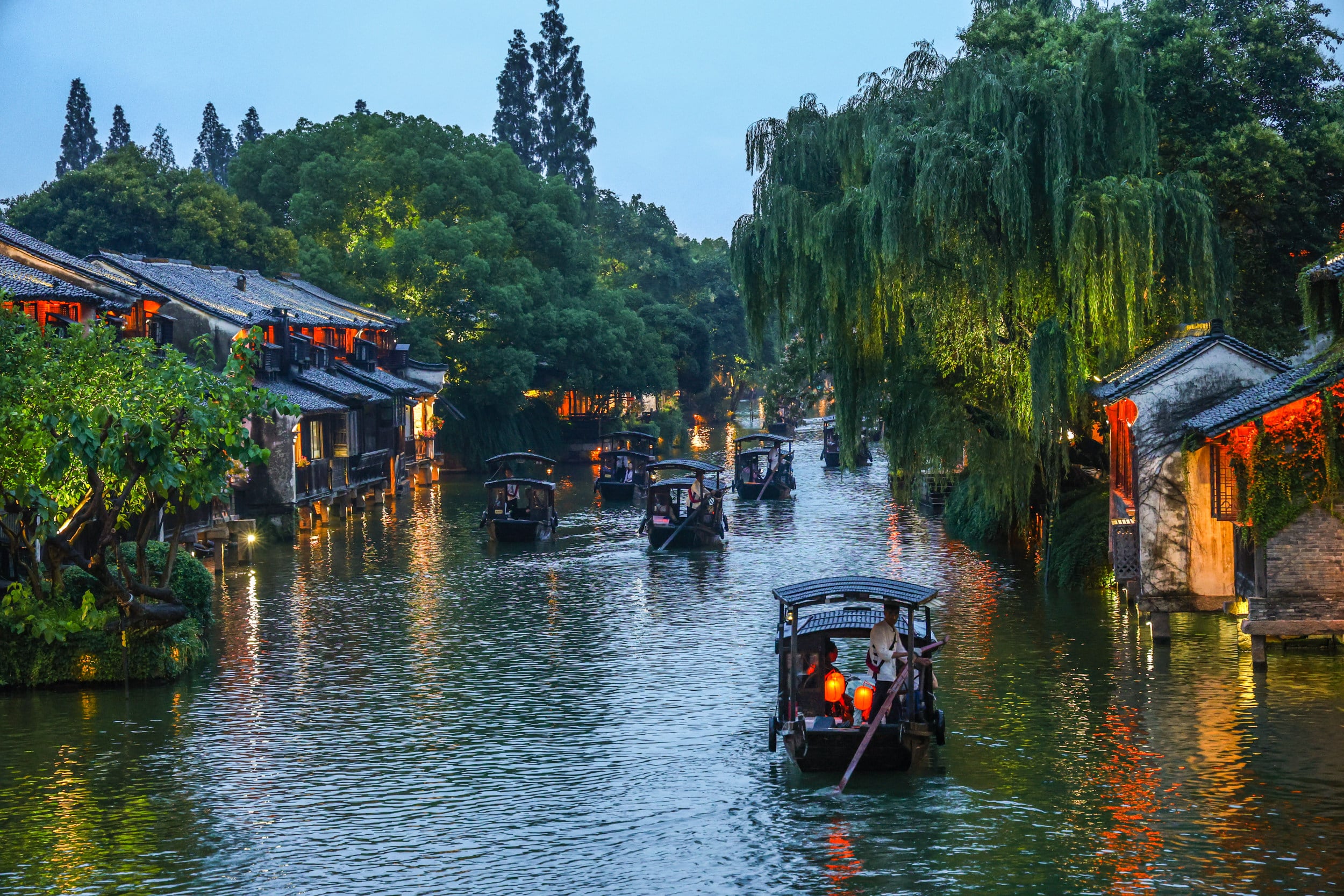
An afternoon, evening and morning in Xizha can make the overnight worthwhile.
When Wuzhen is the right choice
Choose Wuzhen when you want the water town to be a main experience rather than an additional stop between city attractions. It is also worth evaluating between Shanghai and Hangzhou, or within a Suzhou–Wuzhen–Hangzhou route, if the actual transfers support it.
For families, the benefit is a visit divided into shorter outings. Confirm room layout, walking distance, luggage arrangements and access rather than assuming every inside property offers the same convenience.
When another choice may suit you better
If you have only a short window and your hotel is in Suzhou, a Tongli or Zhouzhuang visit may fit the day more naturally. If historic residences are the central interest, compare Nanxun before deciding.
Wuzhen is less compelling as an overnight if you arrive very late and leave before breakfast. You would add accommodation logistics while missing much of the evening-to-morning benefit.
It is a managed visitor destination with shops, restaurants and other tourists. Choose it for the experience it offers, with realistic expectations about busy dates.
Nanxun: Choose It for Residences and Architectural Variety
What makes it worth considering
Nanxun offers a useful architectural focus alongside its canals. Historic residences, Little Lotus Garden and Jiaye Library help give a visit a subject beyond waterfront photographs. Some buildings reflect a mixture of Chinese and Western influences.
A good route can alternate an interior or garden setting with a canal walk. This suits visitors who enjoy understanding how people lived, built and displayed wealth rather than spending the whole visit beside the water.
When Nanxun is the right choice
Choose Nanxun if historic architecture is a priority and the journey works from your base or onward route. It can also provide a more distinct second water-town visit when your first was mainly an overnight canal experience.
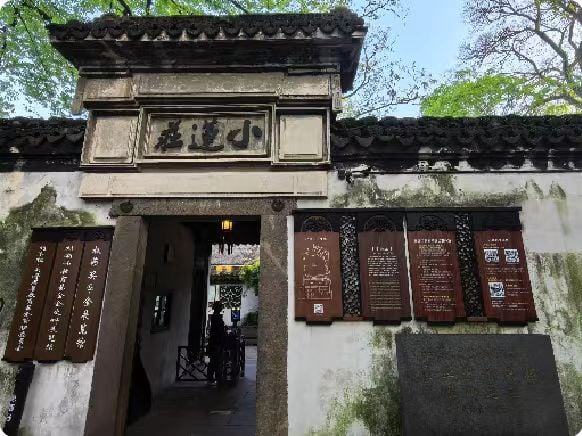
Choose Nanxun for selected historic interiors and architectural variety.
Rail access deserves a current check. Huzhou Nanxun Railway Station, part of the Shanghai–Suzhou–Huzhou line opened in December 2024, has improved the town’s regional connections; older advice describing Nanxun through previous approaches may no longer represent your best option. Compare live services to that station and the final road journey to the town.
What to be careful about
Do not choose Nanxun on a promise that it is always quiet or has little tourism. It is a well-known destination and can receive substantial visitor numbers.
Different parts of the town and individual interiors may have different access or charging arrangements. A statement about free public streets does not establish free entry to every residence, garden, activity or boat.
If you want a slow visit, select a few interiors and retain time between them. A rushed sequence of buildings can lose the architectural interest that made you choose Nanxun.
Xitang: Choose It for Covered Corridors and Street-Level Exploring
What makes it different
Xitang is especially associated with its roofed waterside corridors, bridges and lanes. That creates a recognisable walking setting and a clear reason to choose it over another canal town.
A visit can be built around the paths and canal edges rather than several major interiors. The covered sections provide a different spatial experience, but they do not make the whole town sheltered or step-free.
When Xitang is the right choice
Choose Xitang when the corridor-and-lane landscape is what appeals to you and the full journey from your base is practical. It can suit an afternoon and evening visit if the return arrangements support that timing.
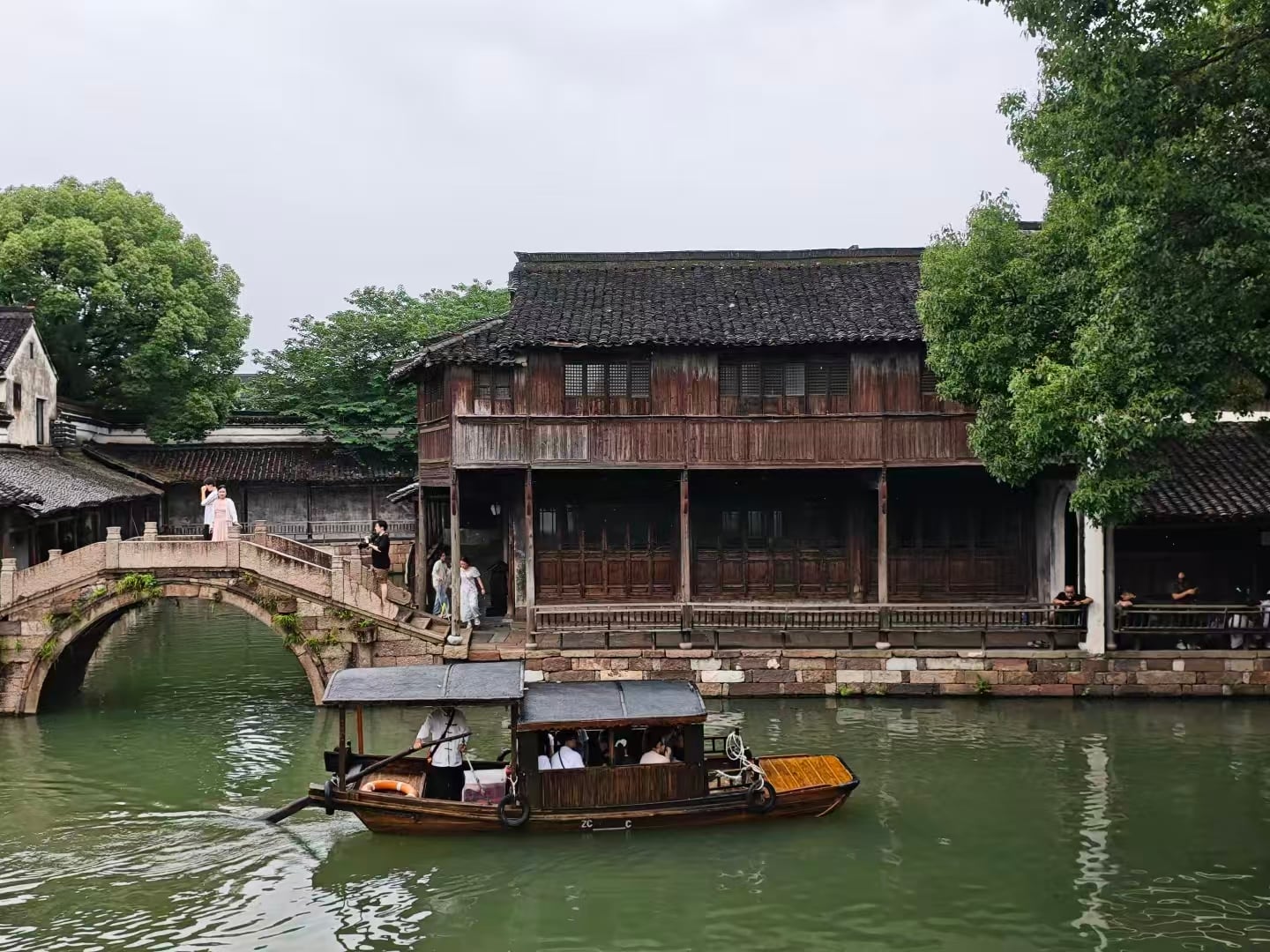
Xitang’s covered corridors are a reason to choose its street-level experience.
An overnight is an option when you want to linger, but choose the property carefully. Confirm the room’s surroundings and the route back after dinner.
What to be careful about
Evening activity can vary considerably between streets. Do not assume a canal-side room will be quiet, or that staying in an old-town area means avoiding lively venues.
If you are a light sleeper or travelling with young children, ask about nearby evening businesses, room orientation and recent noise feedback.
The covered corridors are a worthwhile distinguishing feature, but they are not a reason to add Xitang automatically after Wuzhen. Decide whether the specific walking setting adds enough to justify another journey.
Tongli: Choose It for a Suzhou-Based Canal-and-Garden Visit
What gives the visit a clear focus
Tongli combines a water-town walk with Tuisi Garden, also known as the Retreat and Reflection Garden. The garden is a component of the UNESCO-listed Classical Gardens of Suzhou; that status applies to the designated garden property, not to the entire town as one World Heritage listing.
This gives Tongli a useful structure: a garden visit, canal-side streets, a seated break and an optional boat where available.
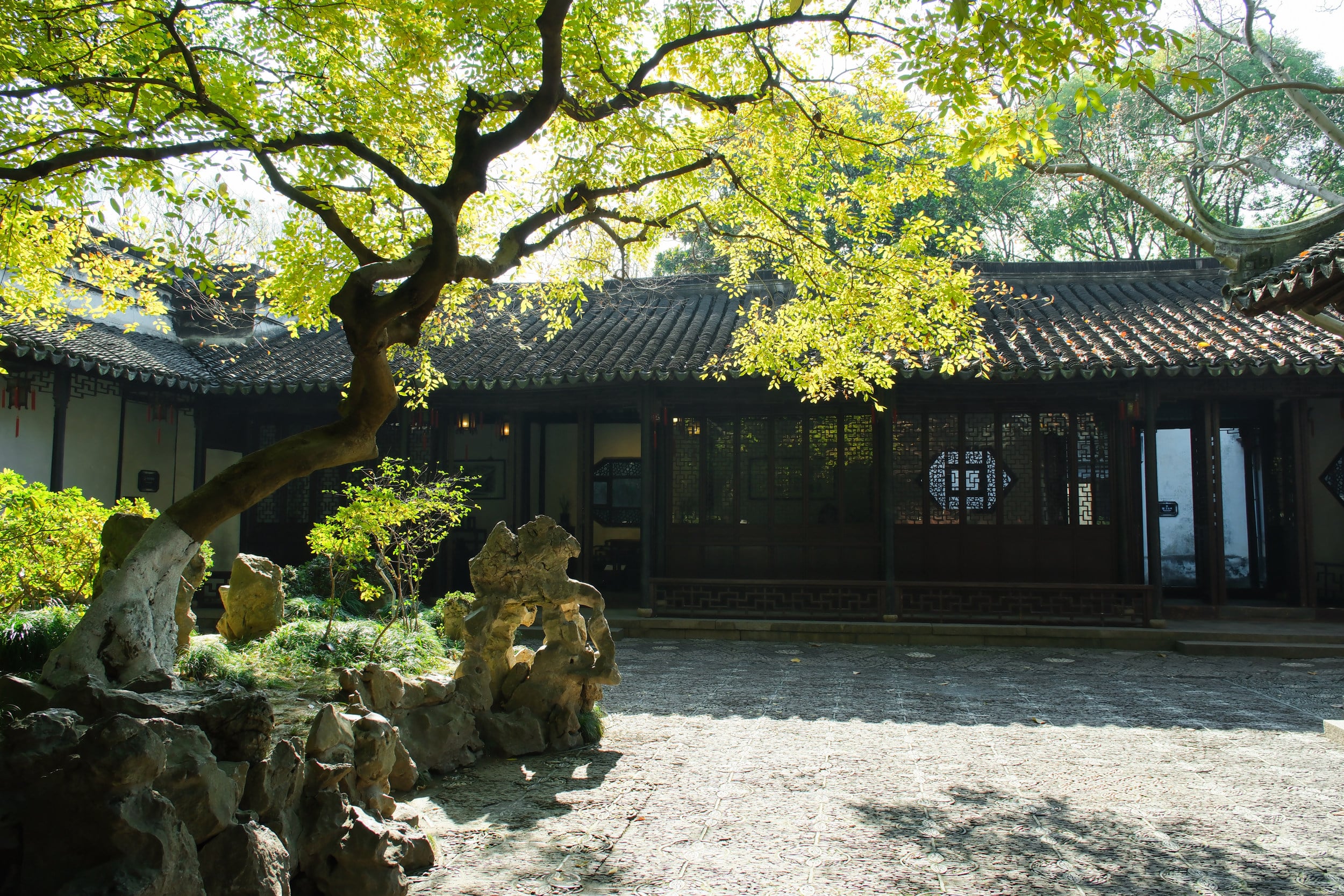
A classical-garden courtyard offers a different setting from the canal-side streets.
When Tongli is the right choice
Tongli is a sensible first candidate for travellers already staying in Suzhou who want a water-town outing without moving accommodation.
The Tongli local government’s transport guidance describes a Line 4 arrival followed by a local connection. Check current local services for your visit. Metro Line 4 can form part of the approach, but Tongli metro station is not the old-town entrance. Include the final local transfer, plus the journey from your hotel to the metro. Compare that complete route with a direct road option.
Choose Tongli because its garden-and-canal combination interests you, and make the day manageable rather than adding more towns afterwards.
What to be careful about
If your Suzhou itinerary already contains several classical gardens, consider whether another garden is welcome variety or repetition. You can focus Tongli more on the canals, but still ask what it adds beyond your existing historic-neighbourhood walks.
Do not use a general reputation for a gentler atmosphere as a guarantee of low crowds. Time of day, holidays and visitor movements matter.
An overnight is possible, but a convenient day trip may better preserve the rhythm of a short Suzhou stay.
Zhouzhuang: Choose It for Specific Bridge Views and Historic Houses
What makes the visit recognisable
Zhouzhuang offers well-known canal and bridge scenes, particularly the Double Bridges, together with historic house visits such as the Shen and Zhang residences.
It is a good choice when those landmarks are a specific interest. A walking route can connect them with a meal and an optional boat, rather than spending the whole visit looking for one postcard angle.
When Zhouzhuang is the right choice
Choose Zhouzhuang if its familiar water-town imagery is part of what you want to experience, or if its houses and bridges form a useful day trip from your actual base.
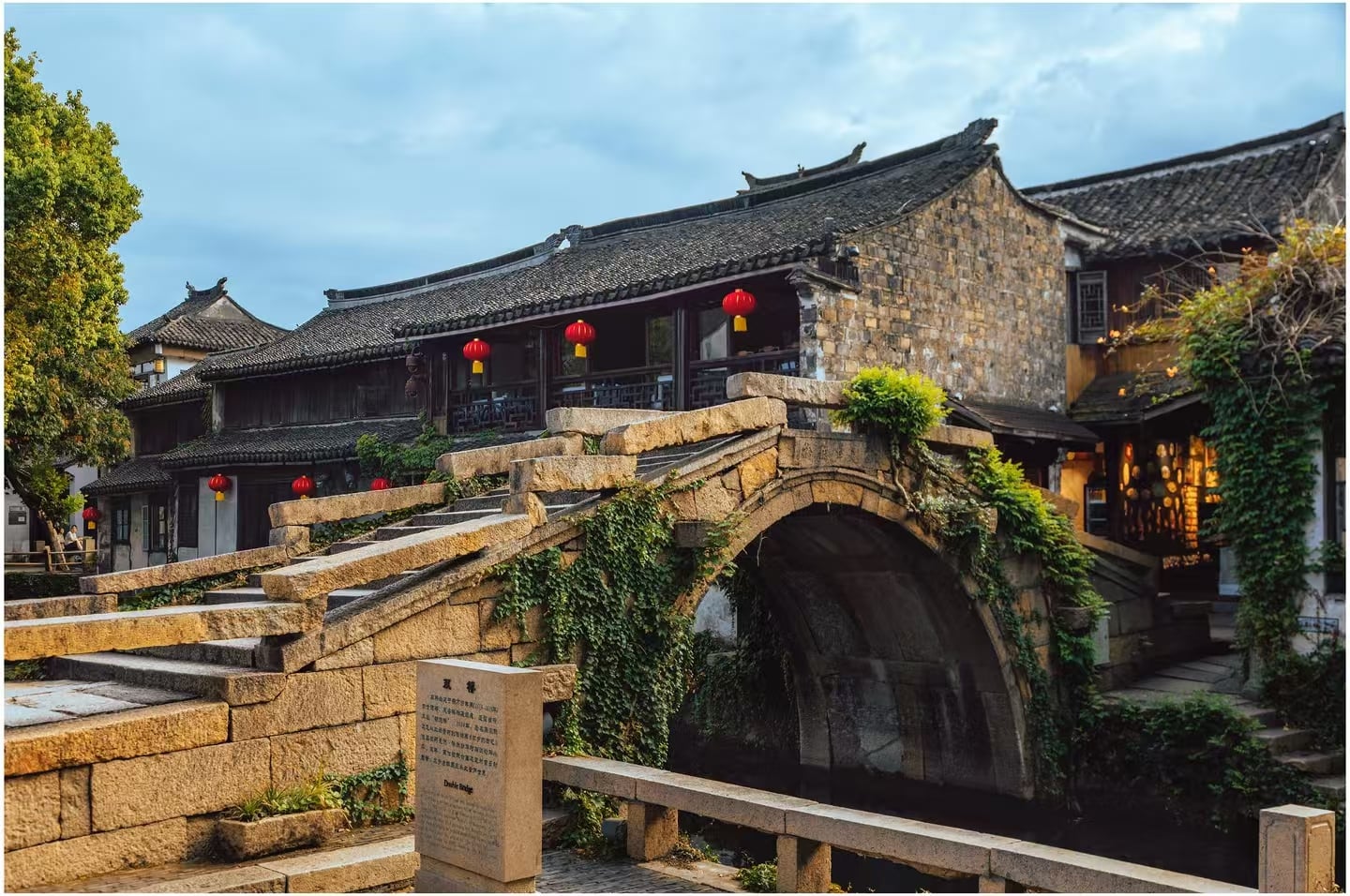
Choose Zhouzhuang when its bridge scenes and historic houses interest you.
It lies within Kunshan’s administrative area, rather than central Suzhou. Plan the real arrival point and complete journey, whether travelling from Suzhou or Shanghai.
What to be careful about
Popular viewpoints can attract groups. Give yourself room to move on and return if practical instead of making one photograph determine the pace of the day.
Do not assume a high-speed train reaching Kunshan finishes the journey. A road connection remains, and the most suitable station or approach depends on the service and your hotel.
A Zhouzhuang overnight can be worthwhile for a slower visit. It should be chosen for that experience, not simply added after a Tongli day trip because both towns appear on the itinerary list.
Compare Them by What Matters to Your Trip
| Your priority | Towns to evaluate first | What should decide the booking |
|---|---|---|
| One planned water-town overnight | Wuzhen, then any alternative whose setting appeals | Afternoon arrival, evening experience, room convenience and morning time |
| Historic residences and architectural interpretation | Nanxun; Zhouzhuang if its houses interest you | The particular interiors, their availability and a manageable route |
| A classical garden with canals | Tongli | Whether Tuisi Garden adds something to your existing Suzhou garden visits |
| Covered waterside walkways | Xitang | The route, weather expectations and evening return or room location |
| Familiar bridge photographs | Zhouzhuang | Enough time around the specific landmarks and realistic crowd expectations |
| A day trip while keeping a Suzhou hotel | Tongli or Zhouzhuang | Complete hotel-to-entrance transport and the sights you prefer |
| A through-stop between cities | Wuzhen or Nanxun where the actual route fits | Luggage, check-in, live connections and onward arrival time |
| A family craft activity | The town with a confirmed suitable session | Teaching, age suitability, language, materials and timing |
| The lowest overall effort | Whichever appealing option best fits the existing base | Total travelling, walking and hotel changes |
These are shortlists, not exclusions. Use them to narrow the research rather than rank every town numerically.
How Your Starting City Changes the Choice
If you are staying in Shanghai
Begin by deciding whether you want a day trip or one night away. Both require the complete journey from your actual hotel, not just an intercity train time.
For a day trip, compare the outward and return arrangements for the towns that appeal most. Zhouzhuang and Xitang are candidates to evaluate, while Wuzhen and Nanxun can also work where connections and time support them.
If continuing to Hangzhou, compare a deliberate Wuzhen or Nanxun stop with keeping Shanghai as the base and making an excursion. Neither town is automatically an effortless stop simply because it appears between cities on a map.
If you are staying in Hangzhou
Wuzhen is a useful first comparison when an overnight canal experience is a priority. Nanxun deserves consideration if architecture interests you and the live connections work.
A day trip can preserve your hotel and leave the main bags behind. An overnight can improve the evening-to-morning experience, but check whether you would be paying for an unused Hangzhou room or adding an unnecessary return.
There is usually little reason to travel much farther solely to collect another similar water-town visit when a closer appealing option meets your interests.
If you are staying in Suzhou
Evaluate Tongli and Zhouzhuang first for a city-based excursion. Choose between the garden-and-canal emphasis and the specific bridge-and-house emphasis.
Then ask whether Suzhou itself already provides enough canal atmosphere through Pingjiang Road, Shantang Street and your other walks. A separate water town can still add value, but it is optional.
If the next city is Hangzhou and a water-town overnight is important, compare a planned Wuzhen or Nanxun stop using the actual hotel-to-hotel journey and bag arrangements.
If your route already includes several cities
Choose the water town at the itinerary level before booking it as an attraction. Count hotel bases, departure mornings and luggage handling.
A town can be a good destination and still be the wrong addition to a crowded route. The objective is a comfortable holiday with distinct experiences.
Transport: Compare the Entire Journey
A travel comparison should include:
- Hotel to the correct station, terminal or pickup point.
- Required waiting, security or boarding margin.
- Intercity travel.
- The last local journey to the scenic-area entrance.
- Admission or accommodation registration.
- The complete evening return or next-day onward journey.
Repeat this for each shortlisted town with your actual dates. A fast train with an inconvenient final connection can be less useful than a direct road journey. A cheaper route with several changes can consume more sightseeing time.
For Wuzhen, a common railway approach is Tongxiang followed by road transport, as shown in the scenic area’s transport overview. Its older bus details should be checked against current services rather than treated as a fixed timetable. For Nanxun, check Huzhou Nanxun services and the local connection rather than relying only on old Huzhou-based advice. For Tongli, distinguish the metro station from the town entrance. For Zhouzhuang and Xitang, confirm the arrival station or terminal and the remaining road section.
Station names are not scenic-area gates. Keep both the Chinese destination name and exact meeting point available to a driver or booking provider.
If night views matter, check return availability first. A town’s evening access does not guarantee a late coach, train connection or hotel shuttle.
Do You Need More Than One Water Town?
Usually, one is sufficient for a first trip that also includes Shanghai, Hangzhou and Suzhou.
The experiences most likely to repeat are a canal walk, several bridge photographs, a short boat ride, similar souvenir browsing and a traditional-style meal. Changing the town does not necessarily change that pattern.
A second town is worthwhile when you can state a distinct reason for it. Examples include Nanxun for an architecture-led visit after a Wuzhen overnight, or a specialist garden interest in Tongli after a different canal-focused outing.
Those pairings still need time and energy. A clear difference on paper does not make the transfers disappear.
Combinations to reconsider
Tongli and Zhouzhuang as consecutive checklist excursions: select the one whose garden, houses or bridge scenes interest you most unless you have a strong water-town focus.
Wuzhen and Xitang simply for two evenings by canals: possible, but compare the additional stay and transfer with spending longer at one base.
All five within a short East China trip: appropriate only for an unusually focused interest with enough time. Most first-time visitors gain more variety from cities, gardens, museums, tea areas or another distinct regional landscape.
Another water town after several Suzhou canal walks, with no specific new interest: consider extending a city experience or leaving the time unplanned.
How to Make a Second Visit Different
If you choose two towns, give them different roles.
For example, make one an overnight centred on an evening walk and morning breakfast. Make the other a daytime visit with two selected historic interiors and no boat if you have already enjoyed one.
Or choose one for a confirmed textile activity and the other for architecture with a guide. Keep shopping optional in both so that the same retail sequence does not dominate the visits.
You do not need the same activities in every town. Repeating a boat ride, every museum and every snack can make distinctive places feel more similar than they are.
Retain enough space between visits to appreciate the difference. Two hurried water-town circuits on the same day often emphasise the shared imagery rather than the individual stories.
Day Trip or Overnight: Apply the Same Test to Every Town
A day trip is attractive when it keeps a useful hotel base, leaves luggage behind and provides enough sightseeing time after travel. It is especially suitable when your interests are mainly daytime sights.
An overnight is attractive when you want the local evening and morning, need a room break or have a workable through-route between cities.
Evaluate the accommodation rather than assuming the town name guarantees the experience. Check room location, access after dinner, noise, steps, family occupancy and the relationship between the room and planned walks.
For Wuzhen, distinguish inside-Xizha rooms from outside accommodation. In the other towns, similarly establish whether the property is in the area you want to explore or requires another journey.
A night in a road-side hotel with limited town time is different from a deliberate water-town stay. Neither is inherently wrong, but they serve different needs.
Crowds, Commercial Activity and Expectations
All five towns receive tourists and have businesses serving them. Broad labels such as “authentic,” “commercial” and “quiet” often conceal the details that actually affect your visit.
Ask more concrete questions. Is the route dominated by shopping? Which interiors can you visit? Is there a place to sit? Does your room face evening activity? Can you choose a quieter time or shorten the busiest section?
A historic building can coexist with a modern business. A professionally managed scenic area can provide a rewarding cultural visit. A smaller lane can still be crowded on a holiday.
For a calmer experience, choose the date and time carefully, reserve what matters and retain flexibility. Do not base the whole booking on another traveller’s impression from a different season.
Families and Travellers Who Prefer a Gentler Pace
For a family, convenience can outweigh a small difference in scenery. A simple arrival, suitable meal, manageable loop and reliable return make the visit more enjoyable.
Choose a town with a route that fits your group, then reduce optional stops. For children, a visual craft display or suitable booked activity can provide more engagement than several consecutive house interiors.
For parents or other travellers who prefer less walking, compare total effort. Station transfers, late returns and repeated hotel changes can cause more fatigue than the canal walk itself.
An overnight may help by dividing the visit, but it can also add stairs, check-in and luggage handling. Confirm the actual property and arrival arrangements.
Bridges, thresholds and narrow streets affect accessibility across the towns. Ask about the specific route, toilets, seating and boat boarding rather than relying on the general description of a destination.
Budget: Compare a Similar Experience
Avoid comparing a short public-transport day trip in one town with a waterfront overnight and several activities in another. Use the same party size, dates and visit format.
Include accommodation if applicable, transport, admission not already included, separate interiors or activities, meals and the onward journey. Add any cost of keeping your previous hotel room.
Check the exact ticket structure. Access to public streets, historic interiors and experiences may be handled differently. A claim that an area is free does not establish the total cost of the visit you want.
Accommodation packages can include benefits, but verify their guest counts, dates and redemption. Do not apply one hotel’s offer to the whole town.
The best-value choice is the one that gives you an enjoyable visit at a sensible total cost and effort. A lower ticket price alone does not decide that.
Example Choices for Common East China Routes
| Route or travel style | Sensible approach | What to avoid |
|---|---|---|
| Short Shanghai stay | Choose one feasible day trip if the water-town interest is strong | Losing most of two city days to similar excursions |
| Shanghai and Hangzhou with a planned extra night | Compare Wuzhen and Nanxun as deliberate stops | Assuming the map proves a convenient through-route |
| Shanghai, Suzhou and Hangzhou in five or six days | Choose one water town or omit it if the cities fill the time | Adding several excursions and another hotel automatically |
| A longer Suzhou base | Choose Tongli or Zhouzhuang for one focused outing | Visiting both solely because they are nearby regional names |
| Family route with several existing hotel bases | Prefer an excursion or extend an existing stay where comfortable | Creating another base just to fill one unallocated night |
| Architecture-focused trip | Evaluate Nanxun and specific houses in other towns | Treating every canal route as equally relevant |
| Dedicated water-town interest with ample time | Choose two with deliberately different themes | Repeating the same activities at both |
These examples are itinerary patterns, not packaged tours or guaranteed connections. Resolve them against actual transport and the group’s pace.
A Five-Step Way to Choose
- Define the priority. Decide whether you want canals, an overnight, architecture, a garden, a craft session or a specific landmark.
- Check what is already included. List Suzhou gardens and canal walks, other old towns and planned cultural activities.
- Shortlist two candidates. Use the comparison table rather than researching all five in equal depth.
- Compare complete logistics. Include hotel location, entry, transport, bags and the return or onward journey.
- Choose one and give it time. Add a second only when its purpose is distinct and the wider itinerary remains comfortable.
If two towns appeal equally, the easier complete journey is a sound deciding factor.
Frequently Asked Questions
Which water town is best for a first visit?
There is no universal best. Wuzhen is a strong candidate for a planned overnight, Tongli for a Suzhou-based garden-and-canal day, Nanxun for architecture, Zhouzhuang for its specific bridge and house sights, and Xitang for covered corridors and lanes.
Should I choose Wuzhen or Nanxun?
Choose Wuzhen when the Xizha overnight experience is the main aim. Choose Nanxun when residences and architectural variety interest you more. Compare the complete route and accommodation rather than assuming one is always quieter or cheaper.
Should I choose Wuzhen or Xitang?
Compare Wuzhen’s planned scenic-area overnight with Xitang’s corridor-and-lane setting. For either overnight, check the exact room location, evening access and noise conditions.
Should I choose Tongli or Zhouzhuang from Suzhou?
Tongli gives the garden-and-canal combination, while Zhouzhuang offers recognised bridge scenes and historic houses. Choose the sights you prefer, then compare the hotel-to-entrance journey.
Is Nanxun still difficult to reach?
Do not rely on older transport advice. Huzhou Nanxun Railway Station provides another approach, but you still need to check actual trains and the final connection for your date.
Does the metro go directly to Tongli's old-town gate?
No. Tongli metro station and the historic area are separate points. Include the local transfer and waiting in your travel plan.
Which town is least commercial?
That label is too broad to make a reliable booking decision. All have visitor businesses. Compare the actual route, cultural stops, retail emphasis and conditions on your dates.
Which town is quietest?
No town can guarantee quiet. Date, time, event programmes and the street or hotel location matter. Choose those details rather than relying on a general reputation.
Is one water town enough?
Usually yes for a first multi-city East China trip. One comfortable visit can provide the canal experience without repeating several travel days.
Can I see two water towns in one day?
It may be logistically possible, but it often creates two shortened visits and another transfer. Unless you have a specific reason, give one town more time.
Do I need a separate water town if I visit Suzhou?
No. Suzhou’s historic neighbourhoods already provide canals and streets. A separate town is worthwhile if its particular sights or overnight setting add something you want.
When is a second water town worthwhile?
When you have enough time and a distinct purpose, such as an architecture-led Nanxun visit after a Wuzhen overnight. Give the visits different activities rather than repeating the same circuit.
Plan Your East China Route with Discover East China Tours
The right water town is the one that adds a clear experience to your holiday without making the route unnecessarily tiring. Tell us your existing city plans, available nights and whether canals, architecture, gardens or an overnight setting matter most.
Discover East China Tours can help choose a suitable water-town visit within a Shanghai, Hangzhou, Suzhou or wider East China itinerary, with time for meals, cultural stops and comfortable transfers.
Prepared for Discover East China Tours. Updated 14 October 2026.