
The questions visitors ask most about China are often the ones they feel awkward asking: whether to tip, what the toilets are like, how to order when the menu is a QR code. None of it is difficult once you know the local habit, and East China's cities are forgiving of visitors who get things slightly wrong.
This guide covers the practical details and the basic manners that make daily life in Shanghai, Hangzhou and the smaller towns easier.
Quick Answer
| Question | Short answer |
|---|---|
| Do I tip? | No. Tipping is not expected in restaurants, taxis or hotels. |
| Toilets? | Public toilets are common and free; many have both squat and sitting cubicles. Carry tissues. |
| Plugs and voltage? | 220 V. Sockets take flat two-pin (Type A) and three-pin angled (Type I) plugs. |
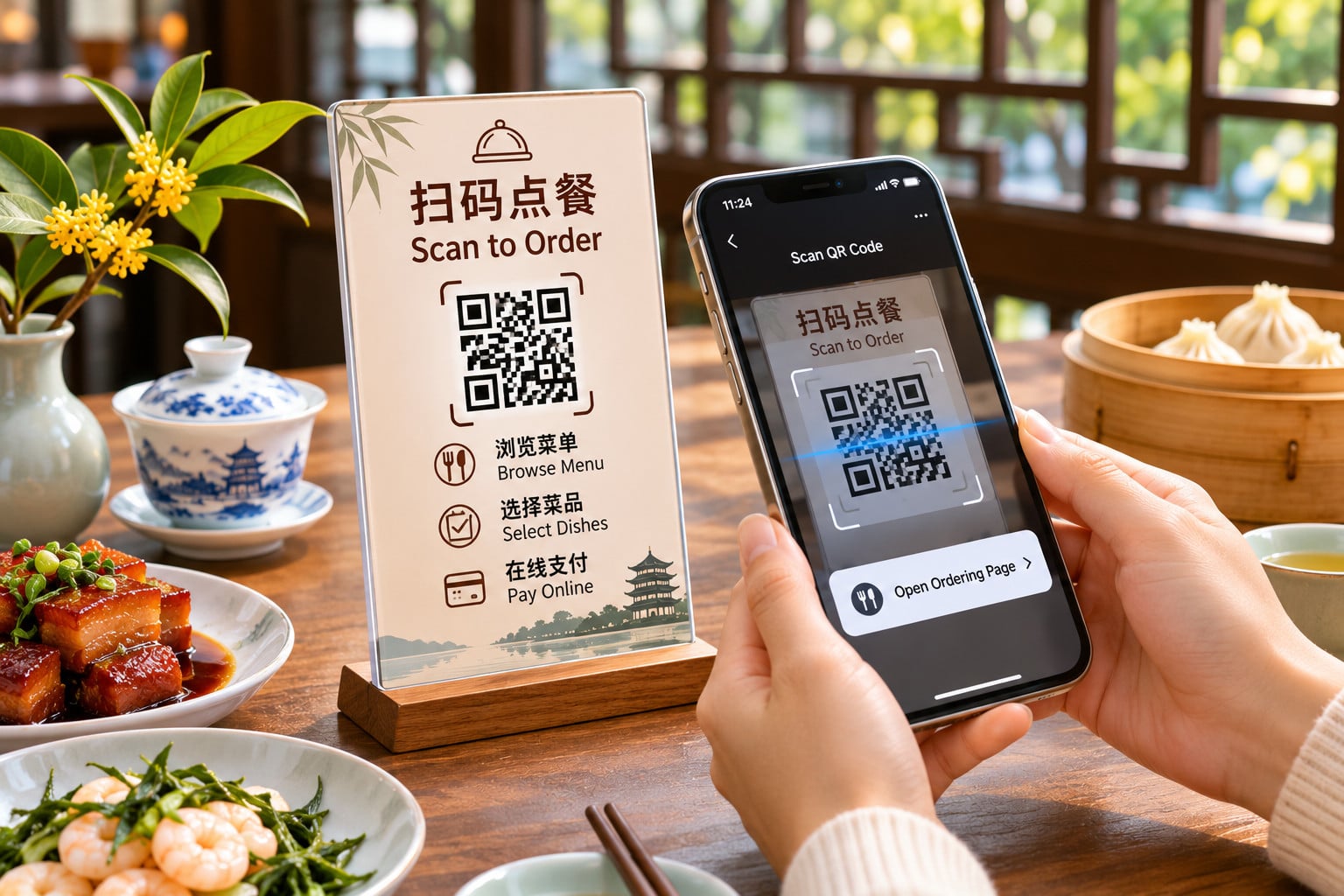
| How do I order food? | Often by scanning a QR code on the table. Ask for a paper menu if the code needs a Chinese number. |
| Can I drink the tap water? | No. Bottled and boiled water are everywhere. |
| Is it rude to…? | Pointing with chopsticks, sticking them upright in rice, and photographing people without asking are the main things to avoid. |
Money Manners
Tipping is not part of the culture. Restaurant staff, taxi drivers, hotel porters and hairdressers do not expect a tip, and some will try to return it. Tour guides and drivers on private tours are the one group where a tip is appreciated, though still optional.
Prices are fixed in shops, supermarkets and restaurants. Bargaining is normal only at markets and small souvenir stalls, where a friendly offer well below the first price is expected.
Receipts: ask for a fapiao (official receipt) if you need one for insurance or expenses; a payment-app record is usually enough otherwise.
Toilets
Public toilets are plentiful in cities, scenic areas, metro stations and shopping malls, and they are free. Standards in Shanghai and Hangzhou are generally good. Two habits help:
- Carry tissues and hand sanitiser. Paper is often provided only at the entrance or not at all.
- Expect both styles. Most public toilets have squat cubicles and at least one sitting cubicle, usually marked. Hotels, malls and airports have Western toilets throughout.
Put used paper in the bin provided where a sign asks you to; older plumbing cannot take it.
Power, Plugs and Phones
China uses 220 V at 50 Hz. Sockets accept two flat pins (the same as North American Type A plugs) and three flat angled pins (Type I, as in Australia). A simple adapter covers both; phone and laptop chargers handle the voltage. Hotels usually have USB sockets by the bed. Carry a power bank: your phone is your wallet, map and ticket.
Eating Out
QR-code menus. Many restaurants have no paper menu. Scan the code on the table with WeChat or Alipay, order and pay in the app. Some codes ask you to follow the restaurant's account or enter a Chinese phone number; if that blocks you, ask staff for a paper menu or point at dishes on the wall or at other tables. Camera translation apps handle the Chinese.
Sharing. Dishes are placed in the centre and shared. Order one or two dishes per person plus rice, and expect everything to arrive as it is ready rather than in courses.
Chopsticks. Use the serving chopsticks or spoons provided for shared dishes where they are offered. Do not stand chopsticks upright in a bowl of rice, do not point with them, and rest them on the holder or across the bowl.
Tea and water. Hot tea or hot water is poured as a matter of course. Cold water and ice are not standard; ask if you want them.
Paying. One person usually pays for the table and others settle up afterwards. Splitting the bill at the till is unusual but restaurants in tourist areas will manage it.
Dietary needs. Vegetarian and allergy requests are understood in cities but are best written in Chinese. Our guides can prepare a card for you.
Getting Along
Greetings. A nod and "nǐ hǎo" (hello) is enough. Handshakes are common in business; hugs are not. "Xièxie" (thank you) goes a long way.
Queues. Queuing is normal at stations, attractions and counters, and queue-jumping is frowned on. Metro platforms have marked waiting lines; let passengers off first.
Volume and space. Restaurants and markets are lively and loud. Personal space in crowds is smaller than many visitors are used to; it is not rudeness.
Photography. Scenery, food and buildings are fine. Ask before photographing people up close, especially in villages and religious sites, and respect "no photography" signs in temples and museums. Do not photograph military or police facilities.
Temples. Dress modestly, speak quietly, and follow the direction of other visitors around altars. Incense is offered at the designated burners, not inside halls.
Smoking. Indoor smoking is banned in public places. Shanghai is extending restrictions to outdoor areas at major landmarks such as the Bund and Nanjing Road. Use marked smoking areas.
Politics and sensitive topics. Most locals are warm and curious about visitors. Keep conversation to travel, food and family unless you know someone well.
Older travellers and children are treated with particular courtesy. Priority seats on the metro are respected, and staff will often go out of their way to help a family.
Shopping and Markets
- Markets open early and quiet down after lunch; night markets run late.
- Take a photo of the price on the tag before bargaining, and keep offers friendly.
- For ceramics in Jingdezhen or tea in Hangzhou, ask for proper packing; shops are used to shipping or wrapping for flights.
- Foreign visitors can claim a departure tax refund on larger purchases at participating shops; our departure tax refund guide explains the rules.
Language
Outside hotels and major attractions, English is limited. What works:
- A translation app with offline Chinese and camera mode
- Addresses and dish names saved in Chinese characters
- A few phrases: nǐ hǎo (hello), xièxie (thank you), duōshǎo qián (how much), bú yào (no, thank you), mǎidān (the bill)
Locals are patient with visitors who try, and younger people in Shanghai and Hangzhou often speak some English.
Frequently Asked Questions
Do you tip in China?
No. It is not expected in restaurants, taxis or hotels. Tipping a private guide or driver is optional and appreciated.
Are toilets in China squat toilets?
Many public toilets have squat cubicles, but most also have a sitting cubicle, and hotels and malls have Western toilets. Carry your own tissues.
What plug adapter do I need for China?
China's sockets accept flat two-pin (Type A) and three-pin angled (Type I) plugs at 220 V. A universal adapter works.
Scan it with WeChat or Alipay. If it asks for a Chinese phone number, ask staff for a paper menu or point at dishes. Camera translation helps.
Is it rude to leave food on the plate?
No. Ordering generously and leaving a little is normal at shared meals.
Can I take photos inside temples?
Usually in the courtyards, often not inside the halls. Follow the signs and avoid photographing worshippers.
Travel With a Local Guide
Small customs are easier to pick up with someone beside you who can explain them. Our guides handle ordering, bargaining and the odd awkward moment, and they enjoy explaining why things are done the way they are. Start on our Plan My Trip page.
Prepared by: Discover East China Tours
Last updated: 11 November 2026
Customs vary by place and situation. When in doubt, watch what locals do and ask.