
Compare China’s 30-day visa-free entry, 240-hour transit for 57 nationalities, and 24-hour transit. Check passport, route and port rules for East China.
Travelling to Shanghai, Hangzhou, Suzhou or Nanjing? Check your passport, travel dates and route before booking. China offers up to 30 days of visa-free entry for certain ordinary passport holders, and separate 24-hour and 240-hour visa-free transit policies for qualifying onward journeys.
Quick Answer
| Option | Who can use it? | Key condition |
|---|---|---|
| Up to 30 days without a visa | Eligible ordinary passport holders visiting for an approved purpose, including tourism | No third-country itinerary required. Check your passport’s policy and expiry date. |
| 240-hour visa-free transit | Ordinary passport holders from 57 eligible countries | Confirmed onward travel to a third country or region, a designated entry port and travel within permitted areas. |
| 24-hour visa-free transit | Eligible international transit passengers at open ports | Confirmed onward travel within 24 hours. Obtain a temporary entry permit before leaving the restricted port area. |
Option 1: 30-Day Visa-Free Entry
China’s unilateral waiver allows ordinary passport holders from 50 countries to stay for up to 30 days for tourism, business, visits to family or friends, exchanges or transit. Eligible visitors can use a round-trip itinerary. Border inspection authorities make the admission decision. See the Chinese embassy’s current rules.
Which countries are covered?
Examples include Australia, Canada, France, Germany, Japan, New Zealand, South Korea and the United Kingdom. Check the official country list and expiry dates. Separate bilateral visa-exemption agreements may apply to travellers with passports such as those of Singapore, Thailand and Malaysia. Check the terms for your nationality.
United States citizens
U.S. ordinary passport holders are outside the mainland unilateral 30-day waiver list. For a visit to East China, check whether your route qualifies for 240-hour transit. For a same-country round trip, arrange a tourist visa unless another exemption applies.
What to carry
For 30-day visa-free entry, bring an ordinary passport valid for your intended stay and keep your accommodation and return or onward booking details available as evidence of your trip purpose. For 240-hour transit, follow the separate passport and onward ticket requirements below.

Travelling in 2027? Read This First
The Chinese embassy’s published schedule lists 31 December 2026 for 48 countries, including Canada and the UK. Russia’s waiver runs through 31 December 2027, and Brunei has no announced expiry. Check the latest notice from the Chinese embassy or consulate for your passport and arrival date, especially for trips around New Year. Check the official expiry schedule.
Option 2: 240-Hour Visa-Free Transit
The National Immigration Administration lists 57 eligible nationalities and 65 designated entry ports across 24 provincial-level regions. Kyrgyzstan and Vietnam joined on 20 August 2026. Indonesia joined on 12 June 2025. See the official eligibility list, the August 2026 announcement and the Indonesia announcement.
The key conditions
- Hold an eligible ordinary passport with at least three months of validity remaining and meet the entry requirements of your onward destination.
- Have a confirmed onward ticket with a fixed departure date and seat to a third country or region within the permitted stay. If your itinerary has connections, check the last country or region before mainland China and the first one after it.
- Apply at a designated entry port, complete the arrival paperwork and cooperate with border checks. Plan your departure and every stop against the official port and permitted-area table.
Route examples: New York → Shanghai → Tokyo and London → Hangzhou → Hong Kong meet the third-destination condition if the other requirements are met. Los Angeles → Shanghai → Los Angeles does not meet that condition.
How the 240 hours are counted
The 240 hours start at midnight at the beginning of the day after entry. For example, if you enter on 1 May, the clock starts at 00:00 on 2 May. Follow the departure deadline given by border inspection and leave time for delays. See the official entry conditions.
What a 10-day East China trip can look like
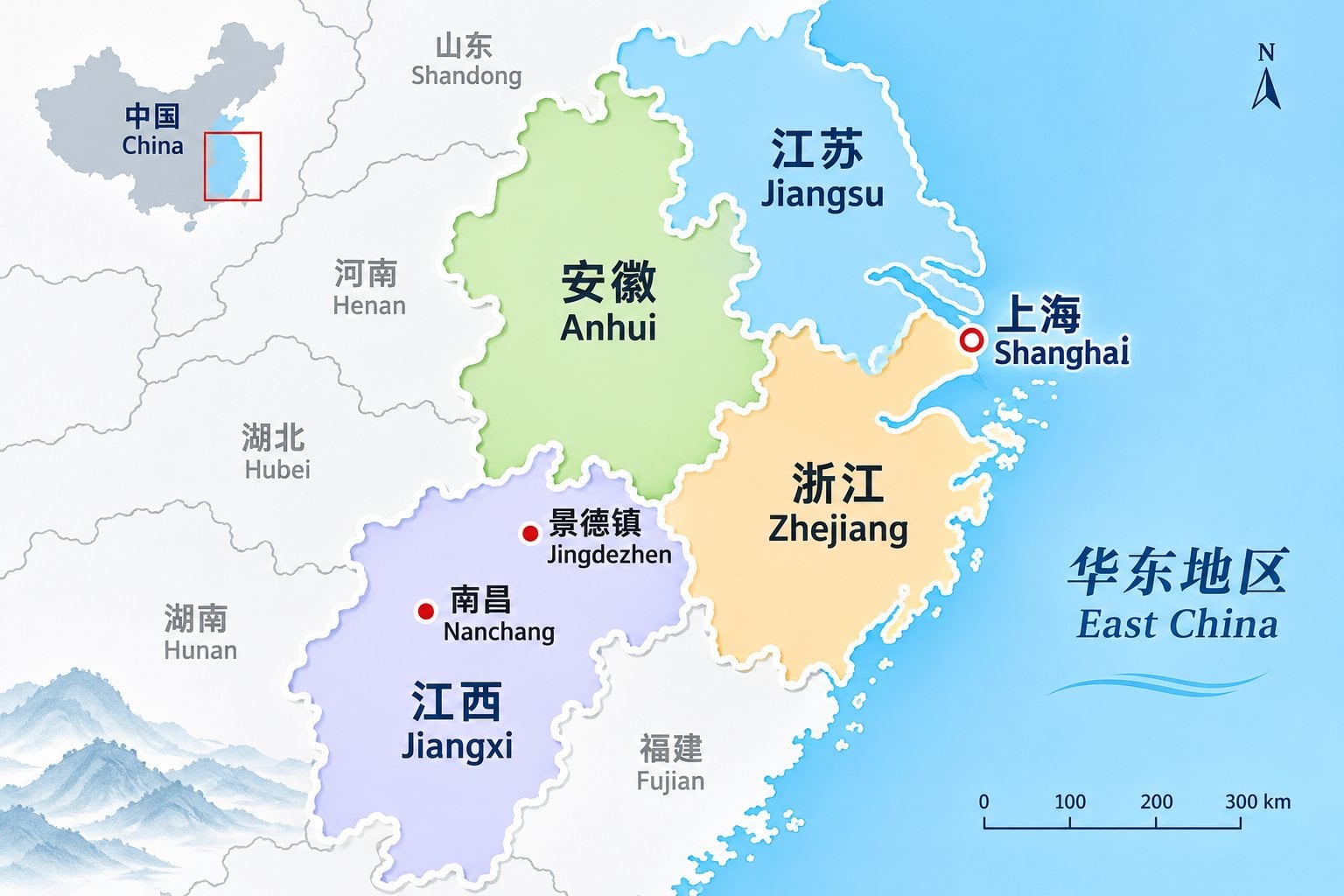
East China entry points include Shanghai Pudong (PVG), Shanghai Hongqiao (SHA), Hangzhou Xiaoshan (HGH) and Nanjing Lukou (NKG). Within the designated areas, an eligible traveller can combine Shanghai with Suzhou, Wuzhen and Hangzhou. Check all stops, transfers and departure arrangements against the official port and stay-area table.
See our Shanghai transit guide for itinerary planning.
Which Option Should I Use?
Start with any visa waiver that applies to your passport and travel purpose. For an international connection of up to 24 hours, China’s short transit policy applies at open ports with valid travel documents and confirmed onward travel to a third country or region. Obtain a temporary entry permit from border inspection before leaving the restricted area, including when a transfer requires entry. Check the official 24-hour transit rules.
Hainan’s separate 30-day waiver currently covers 61 nationalities and limits stays under that policy to Hainan Province. For a trip to Shanghai or Hangzhou you need a separate basis for entry. Check the Hainan policy.
If no exemption covers your passport, route, purpose and planned stay, apply for the appropriate visa before departure. For tourism, this is generally an L visa.
After You Arrive
Accommodation registration
Hotels register foreign guests at check-in. For a stay outside a hotel, you or your host must register within 24 hours of arrival at the accommodation. Keep your address and booking confirmation handy for border checks. See Article 39 of China’s Exit and Entry Administration Law.
Carry your passport
You will need your passport to check in at hotels, buy and board trains, and enter many museums and temples that use real-name reservations.
Frequently Asked Questions
Who qualifies for China’s 240-hour visa-free transit in 2026?
Ordinary passport holders from 57 eligible countries can apply at 65 designated entry ports when travelling on to a third country or region. They must meet the passport, confirmed onward ticket and permitted-area requirements.
Does a round-trip flight to Shanghai qualify for 240-hour visa-free transit?
A same-country round trip such as the United States to Shanghai and back to the United States does not qualify. The first country or region after mainland China must differ from the last one before it. A separate visa waiver can still cover eligible round-trip travellers.
Can I visit Hangzhou, Suzhou or Nanjing after entering Shanghai on 240-hour transit?
Yes, these cities are in the designated stay areas. Check that your full route stays within the permitted areas and that your departure arrangements qualify.
How does 24-hour transit differ from 240-hour transit?
The 24-hour policy covers eligible onward connections at open ports. You need a temporary entry permit to leave the restricted port area. The 240-hour policy is limited to eligible nationalities and designated entry ports and permits travel within specified areas.
Does Hainan’s 30-day visa-free policy cover Shanghai or Hangzhou?
Hainan’s separate 30-day waiver is limited to Hainan Province. Travel to Shanghai or Hangzhou requires a separate basis for entry.
When should I apply for a Chinese tourist visa?
Apply for an L visa before departure if you are travelling for tourism and no visa exemption covers your passport, itinerary and planned length of stay.
Plan Your Trip With Us
For help choosing an East China itinerary, share your dates and route on our Plan My Trip page. Confirm your passport’s entry rules with the Chinese embassy or consulate or the National Immigration Administration before travel.
Last updated: 18 November 2026