26Oct
+8619705475100
[email protected]

Choose the setting that suits the time you have. Gongqing Forest Park invites a longer outing in the north-east of the city. Longhua brings a religious and historical setting in Xuhui, while Yu Garden places seasonal details within a classical garden in the old town. Wukang Road and Anfu Road make a more flexible street walk, with cafés and everyday neighbourhood life along the way.
Gongqing Forest Park, in Yangpu district, is the choice for visitors who want trees and open space to shape the outing. Rather than hurrying to collect a particular row of red leaves, follow the paths at a comfortable pace and look for contrasts: bright foliage above darker water, scattered leaves on the ground and reflected branches along the banks.
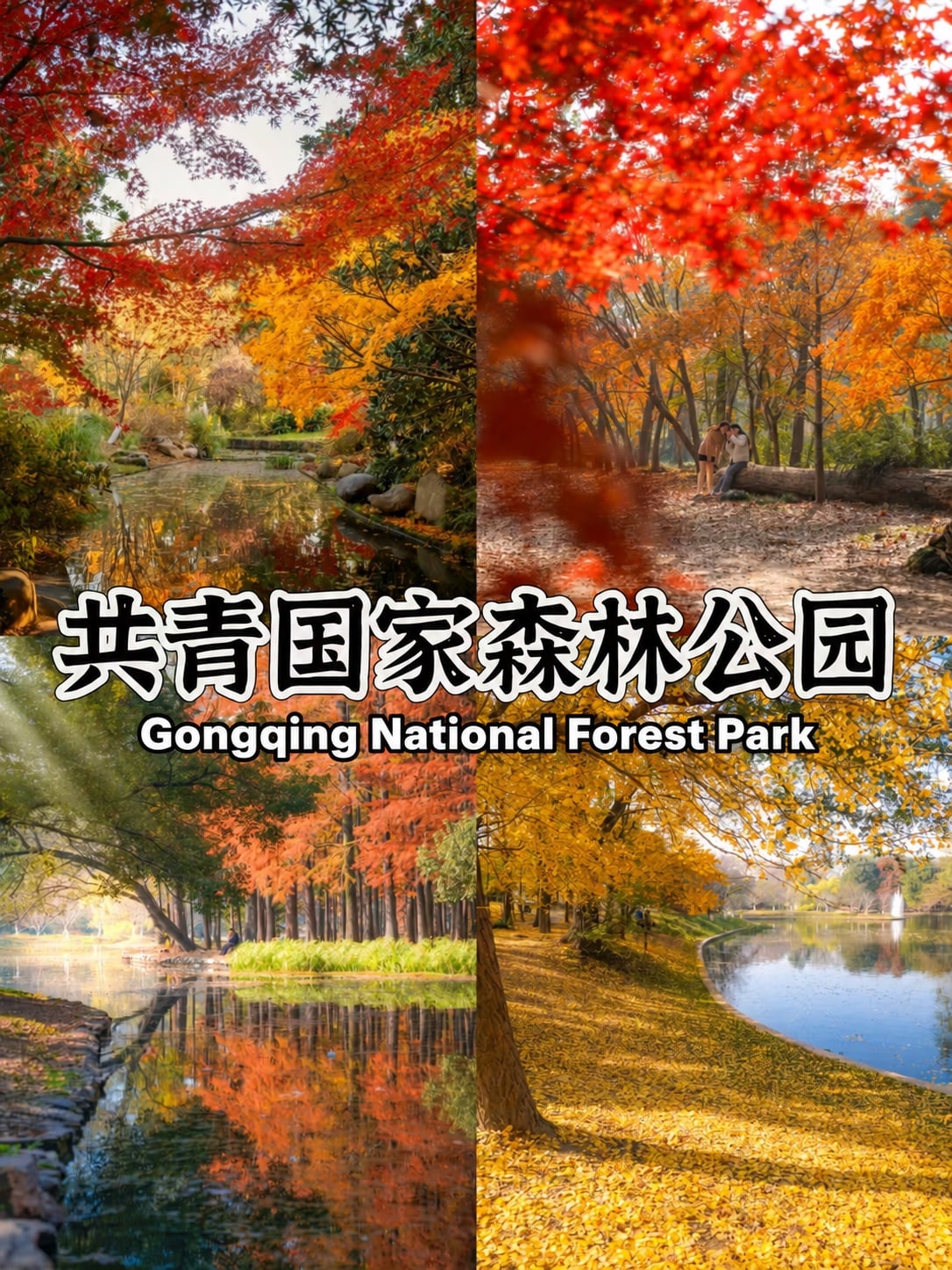
Allow a generous part of the day here if woodland scenery is your priority. A picnic or a simple rest can make the visit feel less hurried. Wear shoes suited to a longer walk and carry an extra layer for shaded or waterside paths. Use the current park map and entrance notices when you arrive, rather than assuming one gate will always be quieter.
The city’s visitor information lists general park admission as free, but check current arrangements before travelling and budget separately for any optional activities. Plan transport to the entrance you actually intend to use; this is a dedicated park outing rather than a short detour between central sights.
Longhua Temple offers a different rhythm. This is a Buddhist place of worship as well as part of one of Shanghai’s historic neighbourhoods. Autumn interest comes from the relationship between the trees, the roofs and the spaces around the buildings, rather than from the size of a woodland display.
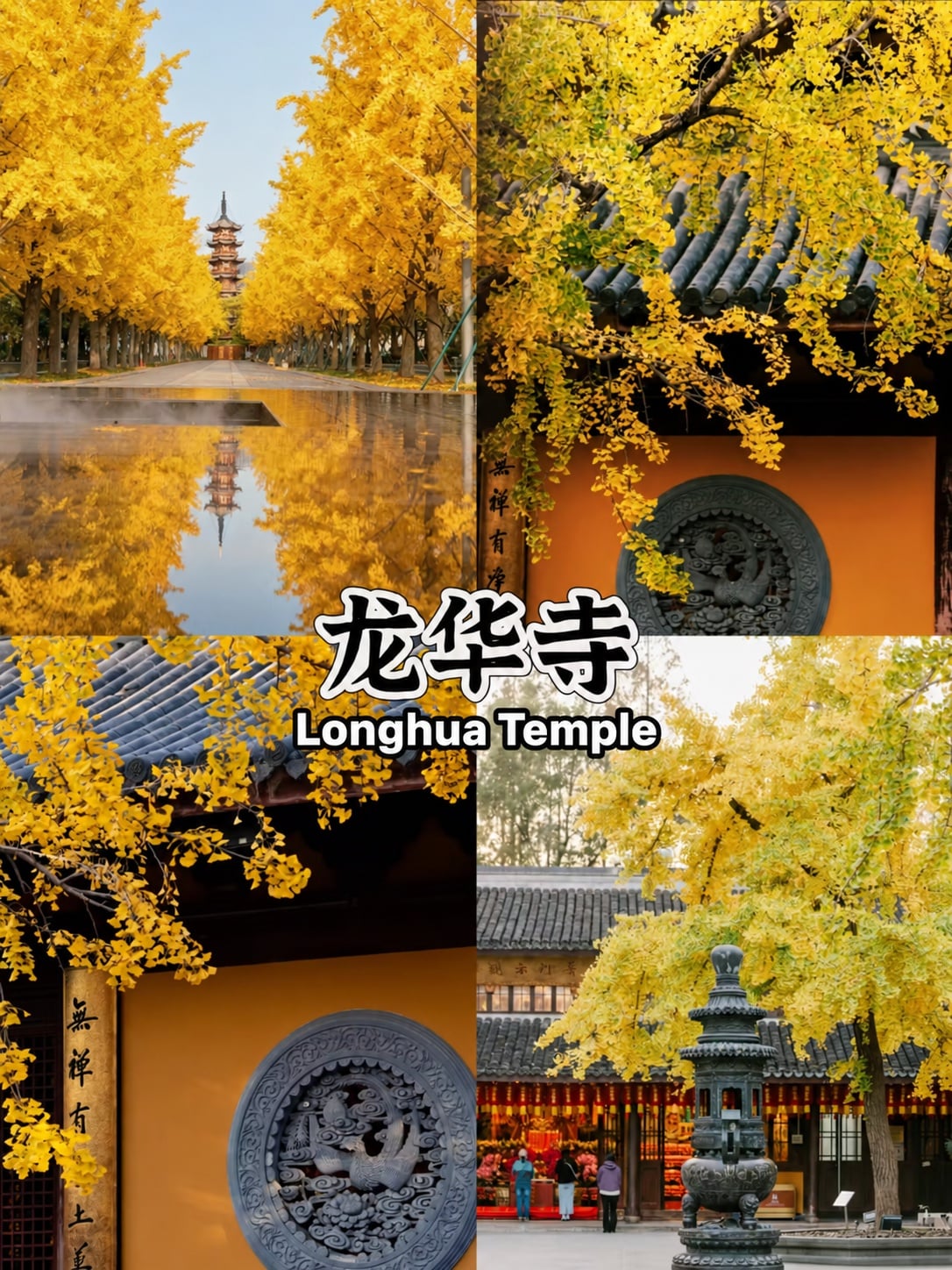
Take time to look at a single branch against an eave or the way light changes across a courtyard. The Longhua Pagoda stands near the temple and adds another architectural point of interest in the area. Follow the access arrangements on the day and enjoy the exterior without assuming that the pagoda can be entered.
Keep voices low, leave worshippers room and follow photography notices inside the temple. If a vegetarian meal is part of the plan, confirm the dining arrangements when you arrive. Check the temple’s current opening hours and admission information instead of relying on an old ticket price or a promise that arriving before a certain hour will avoid everyone.
Yu Garden suits visitors who enjoy looking slowly. Rockeries, corridors, walls and tiled roofs create smaller scenes, with seasonal leaves adding colour to the architecture. A view can change after just a few steps: an open scene becomes a framed glimpse, or a branch stands out against a pale wall.
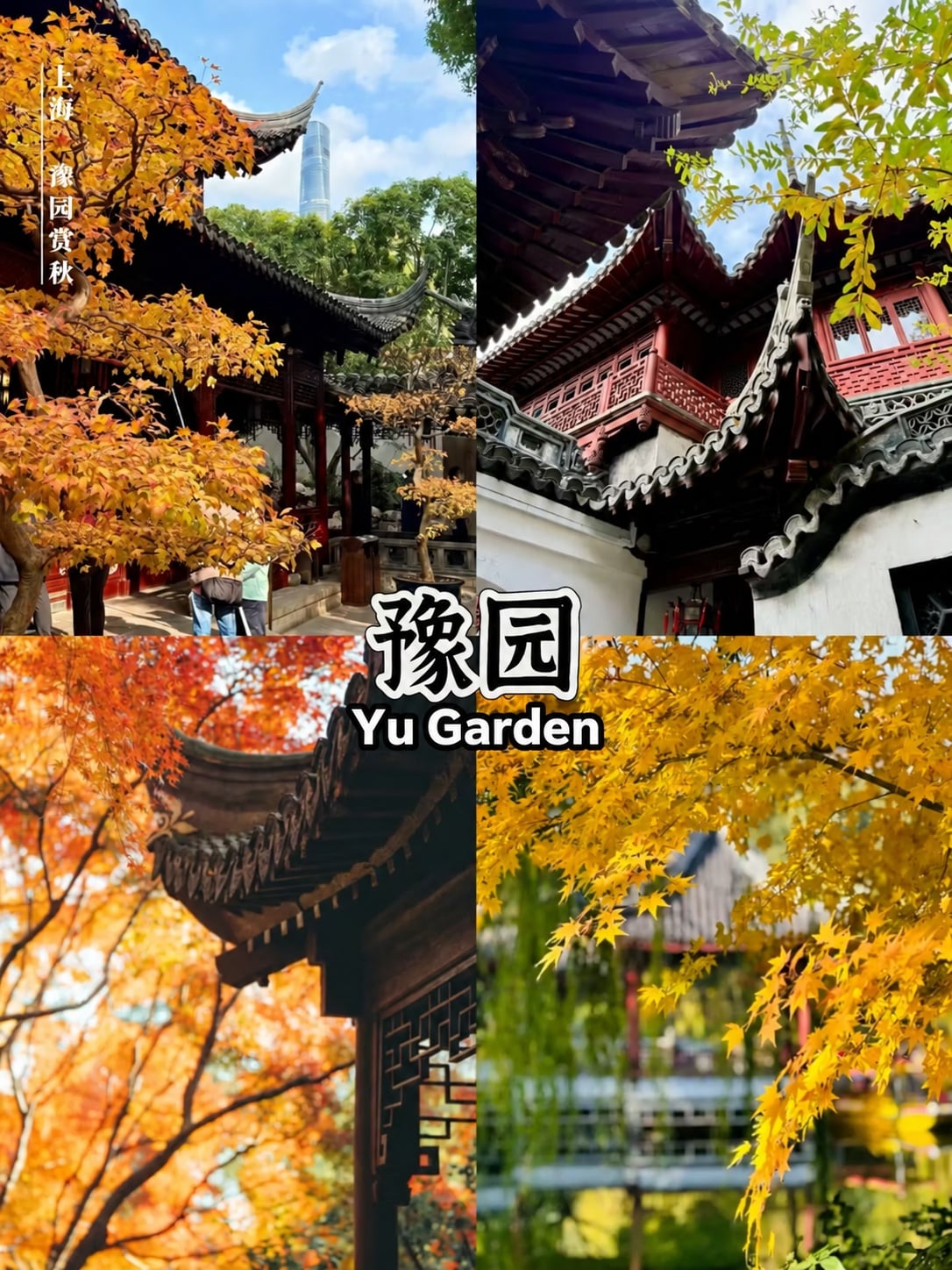
Keep the ticketed classical garden distinct from the surrounding Yuyuan shopping streets and the area around the zigzag bridge and Huxinting Teahouse. They can be combined in one outing, but they are not all the same attraction or subject to the same entry arrangements.
Check the garden’s official opening calendar and current ticket information for your date. Leave enough time inside to pause between the more popular viewpoints, then continue into the surrounding old-town streets for food or browsing. An early visit may suit your plans, but the gate opening time matters more than a fixed instruction to arrive before nine.
For an outing that can be shortened or extended as you go, choose Wukang Road and Anfu Road. Plane trees, older residential façades and street-corner cafés create a different kind of autumn scene from a park or garden. The interest lies as much in the changing light and street life as in the leaves.
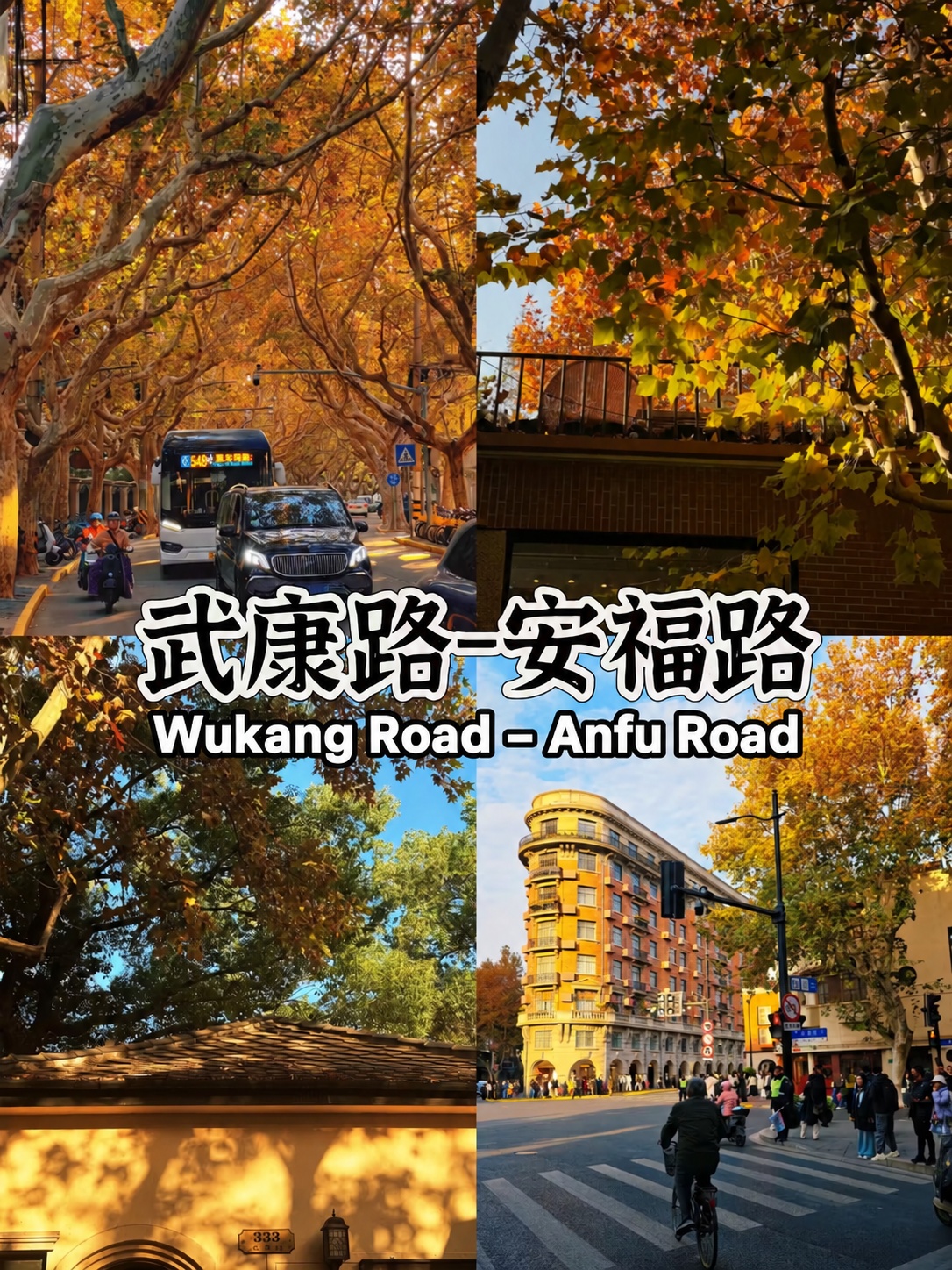
The Wukang Building is a natural landmark to include, but give yourself room to wander beyond the busiest corner. Continue along the streets at walking pace and stop somewhere that catches your eye. A café break lets the walk become part of the day rather than an uninterrupted search for the next photograph.
These are working streets and residential neighbourhoods. Keep entrances clear, stay on the pavement for photographs and respect private lanes and courtyards. Weekdays can be a practical choice if your schedule is flexible, though a particular time of day cannot guarantee an empty street.
October and November can be pleasant months for an autumn outing, but the brightest foliage does not follow one calendar across Shanghai. Different trees change at different times, and some displays continue into early winter. The city’s visitor guidance places much of its ginkgo viewing in late November and December, later than many short social-media itineraries suggest.
Check recent photographs and local updates near your travel date, then choose the outing that best fits the conditions. A windy spell may change the canopy quickly; overcast light can still suit close views of leaves and architecture. Carry a light layer, keep the plan flexible and let one or two places provide the day’s focus. The strongest memory may be a reflection, a quiet courtyard or a short stretch of pavement glowing beneath the trees.