
Explore Jingdezhen's traditional porcelain-making displays and historical kiln types. Follow a practical route, understand the production sequence and check demonstrations, performances and special firing events before visiting.
Jingdezhen’s Ancient Kiln Folk Customs Exhibition Area offers a practical way to connect porcelain objects with the work behind them. Rather than only looking at finished bowls, bottles and painted surfaces, you can explore traditional kiln forms, workshop interpretation and the skills involved in making porcelain.
For a first-time visitor, the most rewarding approach is to follow the production story. Look at how a form is made and refined, how its surface is prepared and decorated, and why the kiln is part of the craft rather than simply a building at the end of the route.
Allow a relaxed half-day, prioritise the workshop and kiln sections, and check demonstrations before fixing the order of your visit. A short craft demonstration, a scheduled performance and a special kiln-opening event are different experiences with different arrangements.
This guide explains what to see, how to understand the making process, how to build a useful route and which travellers are most likely to enjoy the visit.
What Is the Ancient Kiln Folk Customs Museum?
English names for the site vary. You may see Ancient Kiln Folk Customs Museum, Ancient Kiln Folk Customs Exhibition Area, Ancient Kiln Folk Customs Expo Area or simply the Ancient Kiln.
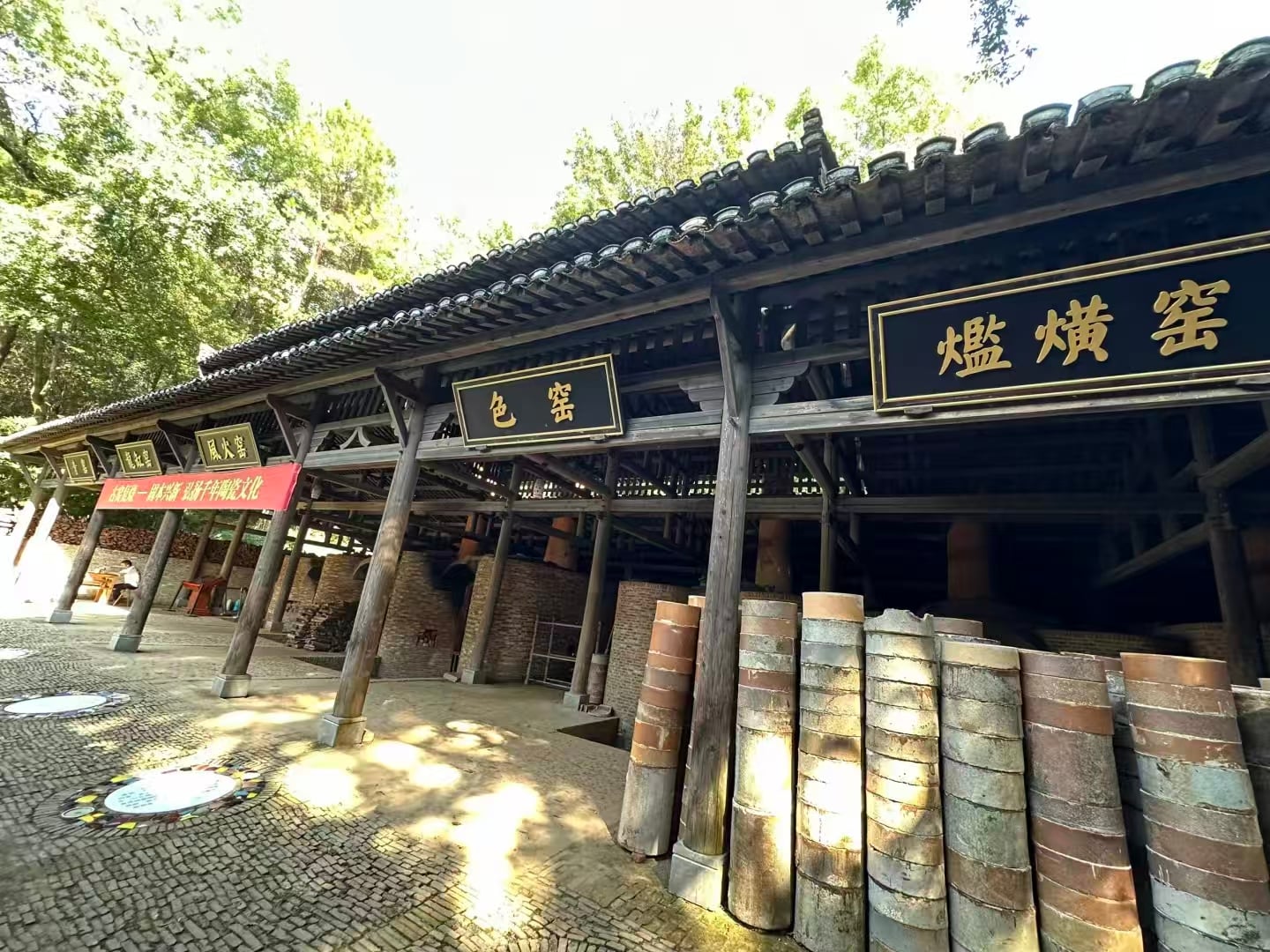
Compare kiln forms and read the interpretation for each display.
For navigation and booking, use the Chinese name 古窑民俗博览区. It refers to a wider visitor site in Jingdezhen, rather than only one indoor museum building.
The area combines traditional kiln interpretation, porcelain-making displays and ceramic folk-culture content. Its setting includes historic buildings and reconstructed kiln forms, with opportunities to understand the relationship between skills, tools, structures and the organisation of production.
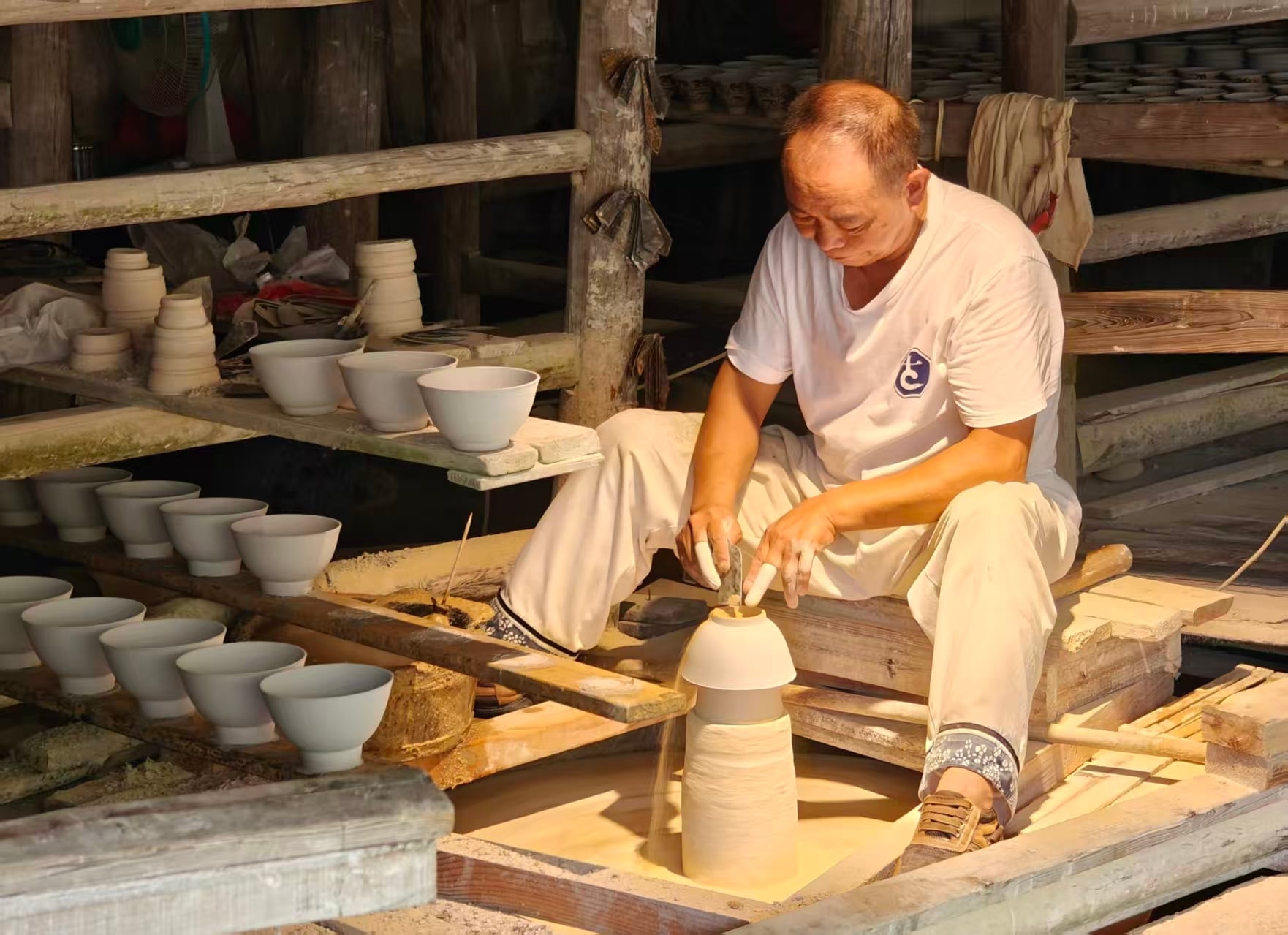
Watch selected craft demonstrations to understand the work behind porcelain.
It is separate from the Imperial Kiln Museum and the Taoyangli historic area. It is also different from the Folk Kiln Museum associated with the Hutian site. Similar English names can make these destinations easy to confuse, so save the correct Chinese name and map pin.
Why visit it?
Choose the Ancient Kiln if you want to understand how porcelain was made, not only how finished objects look. A workshop display can make the shape of a museum vessel easier to understand. A kiln can explain why loading, fuel, heat and specialist knowledge mattered to the final result.
The visit is particularly useful alongside one collection-based museum. You can see objects in a gallery and then explore the work needed to produce them, or use the making demonstrations as an introduction before looking more closely at finished pieces elsewhere.
The Main Experiences at a Glance
| Part of the visit | What to focus on | What to confirm |
|---|---|---|
| Traditional workshop interpretation | The task being performed, tools and changes to the clay body | Which demonstrations are active on your date |
| Historical kiln displays | Kiln shape, loading arrangements and the relationship with the kiln house | Which areas are open and whether entry is permitted |
| Ceramic folk-culture displays | The people, customs and organisation around production | Current exhibition access and interpretation |
| Illustrated production interpretation | How individual tasks connect into a wider sequence | Location on the current visitor map |
| Porcelain music or another performance | A cultural addition to the making-focused visit | Time, venue, duration and weather arrangements |
| Special firing or kiln-opening event | A particular stage of a firing cycle | Exact event date and visitor conditions |
| A separately arranged hands-on activity | Trying an appropriate process yourself | Booking, fees, age limits, language and firing or delivery |
The central visit is still worthwhile without every activity. Choose the production and kiln sections first, then add a performance or hands-on session that fits your interests.
How Much Time Should You Allow?
A focused visit: around two to three hours
As a planning allowance, this can cover selected workshop displays, a few important kiln stops and a short folk-culture section. It requires a clear focus and depends on the demonstrations and walking route available that day.
If you have limited time, skip optional retail browsing and avoid waiting a long time for a performance that is not central to your visit.
A relaxed visit: around half a day
A half-day allows more time to watch rather than simply pass through. It provides room for a demonstration, kiln comparisons, a seated break and a cultural display or performance where available.
For most first-time visitors, this is a useful starting point. It also makes it easier to adapt the route when the day’s activity schedule differs from your expectation.
A specialist or activity-focused visit
Allow longer if you want detailed guiding, a booked workshop or a specific firing-related event. Those should be planned around their actual duration and location.
These time ranges are itinerary suggestions, not official visit durations. Include the journey to the site, entry procedures and onward transport in your wider day plan.
Understand the Porcelain-Making Process Before You Walk
Porcelain production is a sequence of linked decisions. The form you see in a museum depends on preparing the material, shaping it, allowing it to reach the right condition, refining it and managing its surface and firing.
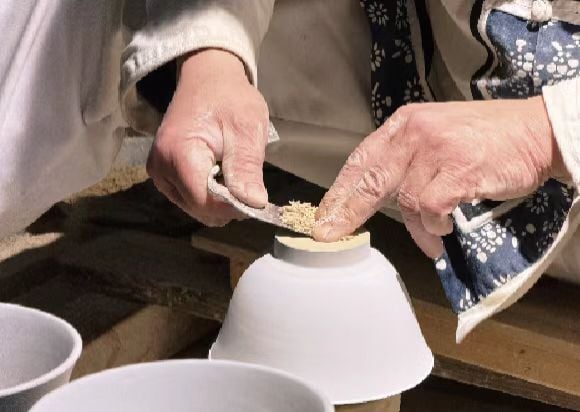
Refining a formed body helps control its foot, profile and wall thickness.
Descriptions of Jingdezhen’s many traditional tasks emphasise how specialised the work can be. You do not need to count every operation during a visit. A short demonstration shows one part of the process, not the complete transformation from raw material to finished porcelain.
A simple viewing framework
| Stage | What it contributes | A useful question while watching |
|---|---|---|
| Material preparation | A workable porcelain body | What condition must the material reach before forming? |
| Forming | The initial shape | Which movement changes the wall, height or profile? |
| Drying and refining | A controlled, more precise form | Why must the piece be at the right stage before trimming? |
| Decoration and glazing | The intended surface and visual effect | Is the decoration below or above the glaze? |
| Loading and protection | Positioning work for firing | How is the object supported or protected? |
| Firing and cooling | The transformation into ceramic material | What must be controlled, and why can the result vary? |
| Inspection and finishing | Deciding whether the result meets its intended use | What would make a piece acceptable or unsuccessful? |
This is a simplified explanation. Particular objects and techniques can use different sequences and more than one firing. Do not treat it as a universal recipe for every piece of Jingdezhen porcelain.
Watch the Workshop Displays Closely
Forming: look beyond the quick transformation
Wheel throwing can be visually striking because a lump of prepared clay becomes a recognisable vessel shape. Watch how the maker controls the material rather than concentrating only on the speed of the result.
Look at hand position, pressure and the relationship between the base and the growing wall. A form that appears simple may require careful consistency.
Wheel throwing is only one way to form ceramics. Other methods can include mould-related work, building or assembling parts. Use the display’s explanation to identify what is being shown instead of assuming every object starts on the wheel.
Refining: an important second stage
A roughly formed piece may still need considerable work. Trimming or refining can change the foot, wall thickness and profile.
The condition of the body matters. Work performed while the material is too wet or too dry will not behave in the same way. Ask how the maker knows when a piece is ready for the task being demonstrated.
This is a useful moment to connect making with finished objects. A balanced base or a thin, regular wall may reflect work that is less obvious than the first dramatic shaping movement.
Decoration: identify the technique
Do not assume that every painted piece receives its colour at the same stage. In an underglaze process, decoration is applied before the glaze firing that covers it. Overglaze decoration involves a different relationship to an already glazed surface and can require a further firing.
Ask which technique is being demonstrated and where it belongs in that particular object’s sequence. The colour visible before firing may not fully represent the finished effect.
A painting demonstration can also reveal repetition, spacing and brush control. You do not need specialist terminology to notice how carefully a border or pattern is arranged around a curved form.
Glazing: more than a final coating
Glaze contributes to the object’s surface, appearance and behaviour. Application needs to suit the form and the intended effect.
Look for how the maker handles the piece and controls coverage. Do not touch work in progress or assume a glaze preparation is safe to handle because it resembles paint.
The relevant lesson is how surface choices connect with forming and firing. A decorated body, glaze and kiln conditions work together rather than operate as unrelated steps.
Traditional Kilns: What Should You Look For?
The site presents kiln forms associated with different periods, including the Song-style dragon kiln, Yuan-style mantou kiln, Ming-style gourd kiln and Qing-period town kiln, or zhenyao. It also presents forms associated with imperial production.
Some kiln displays are reconstructions used to interpret historical types. They should not all be described as untouched structures surviving from the dynasty in their name. Read the interpretation for each kiln and distinguish a historical building, restored fabric and a reconstructed demonstration form.
You do not need to memorise a sequence of names. Compare the structure, how it would be loaded and the way fuel and heat relate to its shape.
Dragon kiln: notice the overall form
Look at the extended form associated with the dragon-kiln display and use the interpretation to understand its relationship with the site and firing arrangement.
The useful question is how the kiln’s shape serves production. A kiln is designed around the work being fired and the control of heat, not only around an exterior appearance.
Mantou and gourd kiln displays: compare shapes
The rounded mantou form and the named gourd form provide opportunities to compare different kiln designs. Look at openings, chambers and the movement of work into the firing space where those features can be viewed.
Ask how each design was used and what the display represents. Avoid treating the sequence as a simple claim that every later kiln replaced every earlier type everywhere.
Town kiln: connect the kiln and the workplace
At the town-kiln section, consider the kiln together with its surrounding building and working arrangements. Loading, protecting work and managing the firing all require space and organisation beyond the firing chamber itself.
Where interpretation explains different kiln positions, notice that work is not simply placed anywhere. The intended result depends partly on understanding the firing environment.
Kiln furniture and protective containers
Supports and protective containers are part of the production story. A saggar, or 匣钵, is a refractory container used in relevant firing practices to protect the work inside.
Look for explanations of how these materials relate to loading and the kiln environment. Ask whether the example belongs to the specific process being shown; not every contemporary firing uses the same arrangement.
Firing Is a Process, Not a Short Performance
A kiln firing involves preparation, loading, heating, cooling and unloading. It cannot generally be understood as a brief show beginning and ending within an ordinary sightseeing stop.
A firing-related event may show only one stage. A kiln-opening ceremony is not the same as watching the entire firing, and an announced lighting or firing activity may have different visitor conditions.
Do not expect every kiln to be burning
A site presenting working traditions does not mean every kiln is active during every visitor hour. Kiln displays can still explain design and production even when no firing is taking place.
If an active event is important to your trip, verify the exact date, stage, location, access and expected viewing duration before booking around it.
Stay within visitor areas
Follow staff directions around working equipment, heat and demonstration spaces. A kiln mouth or workshop doorway is not automatically a place visitors may enter.
Take photographs from a permitted position and keep paths clear. Ask permission before filming a craftsperson closely or recording a lengthy demonstration.
Ceramic Folk Culture: Look at the People Around the Objects
The folk-culture sections add the social setting of production. They help connect craft skills with the working community, customs and institutions around porcelain making.
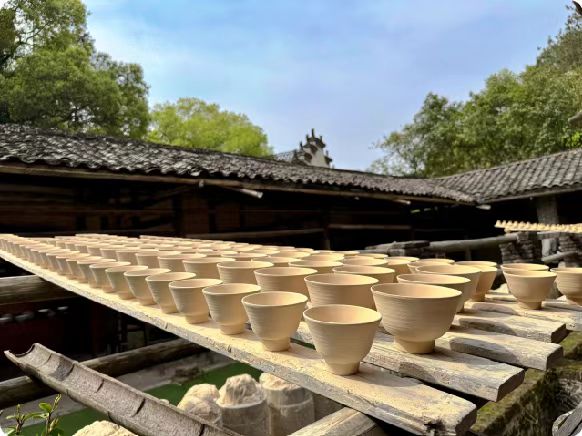
Folk-culture displays add the social setting of porcelain production.
Rather than treating these sections as decoration after the kilns, ask how the city supported specialised work. Who performed different tasks? What did a workshop need besides clay? How did production relate to daily life and trade?
Illustrated process displays can help link individual demonstrations into a broader sequence. They are particularly useful when you have seen a task without catching a full verbal explanation.
Choose the displays that add context to your main visit. You do not need to read every panel if your group is already tired.
A Practical Visiting Route
The following is a suggested order of themes, not a verified turn-by-turn route. Use the current visitor map and staff advice to connect the open sections.
1. Check the day's information at arrival
Confirm the operating workshop displays, any scheduled performance and the areas open to visitors. Ask where the main toilets and rest stops are located.
If a demonstration or performance occurs at a specific time, decide whether it matters enough to shape the route. Do not spend the whole visit waiting for an optional activity.
2. Begin with the making displays
Watch a forming or refining task, then use the interpretation to connect it with decoration and glazing. Choose a few tasks that help you understand the sequence.
If the workshops are busy, allow time for another visitor group to move on where practical. Watching carefully from a good position is more useful than trying to photograph over several people.
3. Move to the kiln section
Compare selected kiln forms and the loading or protection materials described. Return mentally to the object you saw being made: what happens to it here?
Choose a few strong comparisons rather than trying to give every kiln equal time.
4. Add folk-culture interpretation
Use the displays to connect the work with the people and organisation around it. This also gives the visit variety after technical demonstrations and outdoor walking.
5. Include a performance or rest if it fits
A confirmed porcelain-music performance can be a pleasant addition. Alternatively, take a seated break and review what you have seen.
6. Finish selectively
Browse any optional retail area only if the group wants to. Keep shopping separate from the cultural purpose of the visit and leave enough time to reach the exit and onward transport.
Demonstrations, Performances and Special Events
Workshop demonstrations
Ask which activities are operating that day and whether there are scheduled breaks. A general description of the site does not establish that every process will be visible during your particular visit.
Be flexible about the order. It can be sensible to watch an active demonstration first and read about a different stage later.
Porcelain music
The site’s cultural offering has included music played using ceramic instruments. Treat it as a scheduled performance to confirm rather than an activity guaranteed whenever you reach the stage.
Ask for the current time, location, approximate duration and arrangements in poor weather. Decide whether to include it based on your interests and the rest of the visit.
Firing and kiln opening
Look for a dated announcement with the year clearly shown. Confirm that the event is at the Ancient Kiln site, because Jingdezhen’s other kiln areas can also host firing-related activities.
Ask what visitors will actually see and whether the regular ticket is sufficient. If your trip depends on the event, confirm again shortly before travelling.
Hands-on experiences
A demonstration does not automatically permit visitor participation. For a hands-on activity, establish the provider, process, fee, session length and whether advance booking is required.
Check the child’s age suitability or any language needs. Ask about drying, glazing, firing and later collection or shipping. A newly formed piece may not be ready to travel home immediately.
When Should You Visit?
Arrive with time for the making-focused route
A morning or early-afternoon arrival can be useful because it leaves room to adjust around demonstrations. Choose the actual arrival time after checking the opening and activity schedule.
Do not rely on a site’s final admission time as an ideal arrival time. Entering late may leave too little time for the sections you want to understand.
Weather affects the visit
The route includes movement between spaces, so rain or heat can change the comfortable pace. Carry suitable footwear and rain protection, and use indoor interpretation or a seated break when needed.
In warm conditions, keep outdoor sections manageable and carry water. In wet weather, shorten the route where surfaces or steps become uncomfortable.
Holidays and events
Allow more time for entry, movement and viewing during busy periods. Book essential arrangements early where possible and avoid adding another major museum immediately afterwards.
A special event can enrich the visit, but it may also bring queues or changed circulation. Read the current visitor notice rather than assuming an ordinary-day route applies.
Who Is the Ancient Kiln Best For?
First-time visitors curious about making
The site can give you a practical framework for the rest of Jingdezhen. Watching even a few tasks makes finished objects easier to appreciate.
A short explanation before the visit helps. You do not need prior ceramics knowledge to notice control, repetition and the relationship between a shape and its intended use.
History and technology enthusiasts
Kiln forms and production interpretation offer a different focus from decorative objects in cases. Choose guiding that can explain the relationship between the structures, processes and relevant periods.
Avoid assuming every question can be answered by looking at a building alone. Interpretation is useful when comparing restored or reconstructed examples.
Families with children
Making demonstrations can hold attention through movement and visible change. Give children a simple focus: how a shape grows, what trimming removes or why a piece needs protection in the kiln.
Keep the visit short enough to remain enjoyable. A demonstration, selected kiln stops and a break may work better than a complete circuit.
Ceramic artists and experienced makers
A practitioner may want more detailed explanation or a specialist visit. Arrange this in advance where possible rather than expecting an ordinary demonstration to become a technical consultation.
Choose a specific interest and allow time for it. The site is not a substitute for a studio programme or unrestricted access to working equipment.
Older travellers and people with access requirements
A manageable route with seated breaks can suit travellers who prefer a slower pace. Confirm the distance and surfaces between the selected stops.
Ask about steps, toilets and access into the relevant buildings. Do not assume that a general description of easy walking establishes a continuously step-free route.
If particular facilities are essential, obtain specific confirmation before booking.
When Another Jingdezhen Visit May Be a Better Fit
If your priority is a broad chronological collection of finished ceramics, choose China Ceramics Museum. If imperial archaeology and reconstructed excavated objects are central, choose Imperial Kiln Museum.
If contemporary art is the main interest, investigate the current Taoxichuan exhibition programme. If making something yourself is essential, book a suitable workshop rather than relying on observation at the Ancient Kiln.
These choices can complement the site, but they do not all need to fit into one day. Select the combination that answers your main questions.
Combine the Visit Without Repeating the Same Theme
Ancient Kiln and China Ceramics Museum
This pairs production interpretation with a broad collection. Give each a different purpose: understand making at the Ancient Kiln, then compare completed forms and decoration in the museum.
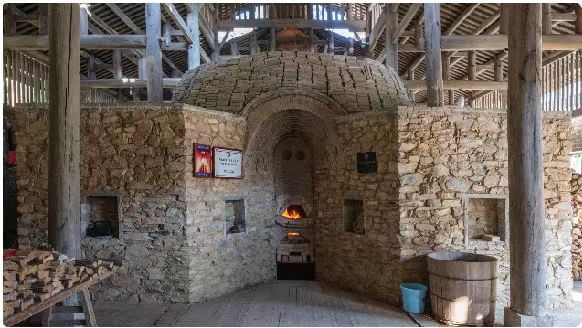
Consider the kiln together with its surrounding workplace.
For a short trip, place them in separate parts of the day with a meal and break, or on different days. Confirm museum reservations independently.
Ancient Kiln and Imperial Kiln Museum
This pairing works for a strong interest in production and archaeology. One helps explain processes and kiln types; the other uses site evidence and reconstructed material to explore imperial production.
Without those interests, the combination may feel too concentrated on one subject. Leave room for the surrounding city or a creative-district outing.
Ancient Kiln and Taoxichuan
A making-focused morning followed by a relaxed creative-district visit can provide variety. Have lunch and a rest before the second outing.
Check any Taoxichuan exhibition or market separately. Do not assume a late arrival will allow both gallery viewing and an evening event.
Getting There and Handling Luggage
Use 古窑民俗博览区 and verify the correct visitor entrance on the map. A taxi, ride-hailing car or arranged transfer can be practical from a city hotel or another attraction.
Journey times depend on the starting point and traffic. Avoid a fixed travel-time assumption when connecting with a booked train or activity.
If using public transport, check the current stop, route and return service. Older visitor posts may use outdated directions.
Leave large luggage at the hotel where agreed. If you need site storage, ask in advance about size limits, availability and collection conditions rather than assuming all suitcases can be accepted.
For a family transfer, confirm vehicle capacity for people, bags, a stroller or mobility aid. Agree on an identifiable pickup point before the visit ends.
Tickets, Guiding and Overseas-Visitor Preparation
Check current admission prices, booking channels, last entry and what the ticket includes. Workshops, special events or guiding may be separate.
If a discount appears relevant, confirm eligibility and the documents accepted for overseas visitors. Do not assume a domestic senior, student or disability policy applies in the same way to every foreign-issued document.
Carry the original passport used for booking and retain the confirmation. If the booking form does not support your document, ask the authorised provider or site for the permitted procedure before travelling.
If you want an English explanation, arrange it explicitly. A site offering demonstrations does not automatically offer continuous English narration at each stop.
A useful guide should connect the stages rather than only name the kilns. Confirm the language, duration, scope and whether admission is included or booked separately.
What to Bring
- Familiar walking shoes with grip.
- A small day bag and drinking water.
- Layers or sun protection suited to the forecast.
- A rain jacket or compact umbrella when needed.
- A charged phone and saved Chinese destination name.
- Passport and booking confirmation.
- Any personal items needed during a half-day outing.
Keep equipment light enough to watch comfortably. Ask before taking close photographs of craftspeople, and follow restrictions around displays and working spaces.
Common Mistakes to Avoid
- Confusing the Ancient Kiln with the Imperial Kiln Museum or Hutian Folk Kiln Museum.
- Expecting every displayed kiln to be an untouched original from its named dynasty.
- Expecting every kiln to be firing during an ordinary visit.
- Treating forming, decoration and firing as one quick demonstration.
- Assuming all porcelain follows the same sequence or one firing.
- Planning around an old performance or kiln-opening timetable.
- Assuming a demonstration includes a hands-on workshop.
- Arriving near closing and expecting a complete half-day programme.
- Adding several other substantial museums without time for meals or transfers.
- Turning an educational visit into compulsory shopping.
Frequently Asked Questions
What is the site's Chinese name?
Use 古窑民俗博览区 for navigation and booking. English names vary, so verify the Chinese name and map location.
Is it one indoor museum?
No. It is a wider visitor site combining kiln interpretation, workshop displays and ceramic folk-culture content. Plan for walking between sections.
How long should we spend there?
Around two to three hours can provide a focused visit. A relaxed half-day allows more time for demonstrations, kiln comparisons and breaks. Add time for any separately booked activity.
What is the main reason to visit?
It helps connect finished porcelain with making processes, traditional kiln designs and the people around production.
Are all the kilns original historical structures?
No. The site includes reconstructed historical kiln types as well as historical building content. Read the interpretation for each example rather than assuming all have the same status.
Will we see active porcelain making?
The site features traditional craft displays, but confirm which demonstrations operate on your date and at your arrival time.
Will we see a kiln firing or opening?
Only plan around one after verifying a specific announcement. Firing and kiln opening are different stages, and neither should be assumed to occur during every ordinary visit.
Can children make pottery?
Check a suitable hands-on activity separately, including age limits, supervision, booking and fees. Watching a demonstration does not automatically include participation.
Can we take a newly made piece home immediately?
Not necessarily. Drying and firing may happen after the session. Confirm completion, collection and shipping arrangements before booking.
Is porcelain music included every day?
Check the current performance schedule, venue and ticket conditions. Do not rely on an older timetable or assume the performance occurs whenever you arrive.
Is English guiding available?
Arrange and confirm the language in advance. Demonstrations and some interpretation do not establish that a full English-guided service is available without booking.
Is the site suitable for older travellers?
It can be with a limited route and rest breaks. Check the actual walking distance, surfaces and building access against the individual’s needs.
Is it wheelchair accessible?
Obtain route-specific information, including entry to the selected buildings and toilets. Do not assume the entire site is continuously step-free.
Can we combine it with China Ceramics Museum?
Yes, when reservations and pacing are practical. The Ancient Kiln explains production, while the museum provides a broader view of finished objects. Include a substantial break between them.
Is it worth visiting if we already have a workshop booked?
It can add kiln and historical-production context that a short workshop may not cover. Choose it for that additional perspective rather than expecting another identical hands-on session.
Plan a Making-Focused Jingdezhen Visit
The Ancient Kiln is most rewarding when you leave with a clearer connection between a porcelain object and the skills, materials and firing decisions behind it.
Discover East China Tours can help you combine the visit with a complementary museum, historic streets or a suitable workshop. Share your dates, interests, language needs and walking requirements so demonstrations, admission and the day’s pace can be checked before travelling.