
Compare Huangshan’s seasons and prepare for mountain weather, rain, fog, sunrise stays and holiday crowds with practical clothing and packing advice.
For many first-time visitors, April to May and October to early November are useful starting points when choosing dates for Huangshan. They can offer appealing walking conditions and work well with a wider trip to the ancient villages and Tunxi. Avoid major holiday periods where possible, and remember that a favourable season is not a guarantee of clear mountain views.
Huangshan Mountain has its own weather. A warm afternoon in Tunxi can be followed by a cold, windy stop on an upper ridge, while cloud may hide and reveal the peaks several times during a walk. Planning around the mountain forecast, open routes and your group’s comfort matters more than finding a supposedly perfect month.
Summer can suit flexible travellers who accept rain and humidity. Winter appeals to visitors interested in snow, frost and a different mountain atmosphere, but it brings ice, colder conditions and seasonal route restrictions. There is no single best season for every visitor: the right choice depends on what you want to see and how much weather uncertainty you can accommodate.
The Seasonal Comparison
| Season | What may appeal | Main planning trade-off | Packing emphasis |
|---|---|---|---|
| Spring: March–May | Fresh vegetation, changing mountain light and a wider village trip | Rain, cool upper-mountain conditions and possible early-season restrictions | Waterproof layer, adjustable insulation and grippy walking shoes. |
| Summer: June–August | Green scenery, long daylight and a mountain visit within the school-holiday period | Humidity, heavy rain, thunderstorms and popular travel dates | Breathable walking clothes, rain protection, water and a spare dry layer. |
| Autumn: September–November | A useful walking season, clear-day photography opportunities and regional rural scenery | National Day crowds, weather transitions and colder dawns | Layers, wind protection and warmer clothing for an overnight. |
| Winter: December–February | Snow or frost when conditions provide them, and a distinctive mountain landscape | Ice, cold, shorter useful daylight and closed sections | Warm layers, gloves, appropriate footwear and condition-specific traction equipment. |
These are broad seasonal tendencies. They are not forecasts, fixed closure calendars or promises of scenery. Weather in a particular year can differ substantially from what a seasonal photograph suggests.
Choose Dates Around Your Main Priority
| Your priority | A useful starting choice | What to check before committing |
|---|---|---|
| A balanced first mountain visit | Spring or autumn outside major holidays | The route, mountain forecast and hotel approach. |
| Comfortable walking with fewer schedule pressures | A non-holiday weekday and a moderate itinerary | Weekday demand, available services and the group’s stair-walking ability. |
| Sunrise photography | A suitable upper-mountain overnight, in any season you can manage | The actual dawn forecast, viewpoint access and nearby hotel location. |
| Snow or frost | Winter, with flexible expectations | Actual conditions, ice, warnings and open paths. |
| A full canyon or major-peak route | A date when the exact route is confirmed open | Maintenance, additional reservations, weather and operating hours. |
| Mountain plus ancient villages | Spring or autumn as an initial option | Separate weather and transport needs for each destination. |
| Travel during school holidays | Summer or a confirmed holiday window | Capacity, accommodation, storms and a shorter flexible route. |
| Lower-pressure travel | Dates outside the main holiday peaks | Actual prices and demand; there is no automatic quiet-season guarantee. |
The recommendations above are planning judgements. A route that fits your fitness and available time will usually make a greater difference to the trip than choosing between two neighbouring months.
Mountain Weather and City Weather Are Different
Tunxi: An Urban Base Below the Mountain
Tunxi is the main urban area of the wider Huangshan city. Its weather is relevant to Old Street, Liyang, city hotels and urban transfers. It does not describe the conditions you will encounter on the upper mountain.
A weather app showing “Huangshan” may be reporting the city or another local forecast point. Check the location before deciding what to wear or whether a mountain route is suitable.
Tangkou: The Southern Gateway
Tangkou lies below Huangshan Mountain’s South Gate. Its conditions help you prepare for the shuttle and ascent process, but they still do not establish the temperature, wind or visibility at your upper viewpoint.
You may begin the day comfortable in a light layer and need more clothing after ascending or while waiting outdoors. Keep the extra layer accessible rather than packed beneath everything else.
The Upper Mountain
Elevation, terrain, exposure and cloud create different conditions on the mountain. A sheltered section can feel comfortable while an exposed viewpoint nearby feels much colder and windier.
Walking generates heat; standing still for sunrise, photography or a queue does not. Pack for both activities, particularly on an overnight trip.
Do not rely on a universal rule that the summit is always a fixed number of degrees colder than the city. Use the actual mountain forecast and account for wind and wet clothing as well as the temperature.
Hongcun and Xidi
The ancient villages have their own lower-altitude visiting conditions and walking surfaces. A village afternoon and a mountain dawn may need very different clothing within the same trip.
Pack a practical city-and-village outfit, then add the layers and equipment required for the mountain. There is no need to wear the heaviest mountain clothing throughout a warm urban day.
Spring: Fresh Scenery With Rain and Cool Upper Paths
March
March is a transition rather than a reliable start to every route. Conditions may still be cold on the mountain, and some areas can remain in winter maintenance or reopen according to assessment.
Do not build a March itinerary around a canyon or peak without checking the current announcement. A seasonal photograph of flowers below the mountain does not mean the upper paths have the same conditions.
A shorter route, flexible expectations and suitable warm clothing can make sense when the forecast and operations support the visit.
April and May
These are useful first-visit options when you want to combine mountain walking with regional culture. Vegetation and flowering scenery can add interest, although timing varies by elevation and the year.
Rain remains part of the season. Plan a waterproof layer and keep optional climbs adjustable. A dry city morning does not remove the possibility of wet upper paths later.
Qingming and Labour Day periods can bring substantial demand. If you want a spring trip with less pressure, compare the actual holiday dates and consider a weekday outside them.
Spring Packing
Use layers that can be removed while climbing and added during a stop. A waterproof outer layer, a warm mid-layer and comfortable long trousers provide a practical starting point, adjusted to the forecast.
For a mountain overnight, carry dry essentials and enough warmth for dawn. Wet walking clothes should not be the only clothing available for a long morning wait.

Summer: Green Landscapes, Humidity and Rain Decisions
June
Early summer deserves particular attention to rain forecasts and warnings. The wider region can experience prolonged wet periods, and the mountain’s paths and transport need to be assessed against current conditions.
A flexible date can be useful, but only if reservations and accommodation terms allow a change. Do not assume you can swap the mountain day and village day after booking without checking availability and cancellation conditions.
If heavy rain or severe-weather warnings are expected, seek current route advice before ascending. A long canyon descent or exposed optional climb is not a sensible default in deteriorating conditions.
July and August
The upper mountain may feel cooler than Tunxi, but climbing in humid weather can still be tiring. A cableway-assisted visit remains a walking day with steps, queues and periods outdoors.
Start with a manageable route, carry water and take breaks before the group becomes exhausted. Watch the forecast for thunderstorms and be willing to remove optional sections.
School holidays also affect demand. A longer daylight period does not mean you can visit every sight or descend whenever you choose: cableways, walking-entry points and shuttles have their own service hours.
Summer Packing
Choose breathable walking clothes, sun protection and reliable rainwear. Bring a dry layer for an overnight or a cooler upper-mountain stop, even if the city forecast is hot.
Keep water accessible and replenish it at confirmed service points. Avoid adding unnecessary backpack weight, but do not depend on an unverified kiosk for essential drinks or food.
Autumn: A Useful Walking Season With Holiday and Cold-Dawn Trade-offs
September
September can bridge summer conditions and cooler weather. Do not expect every date to feel like late autumn; humidity, rain and storms can still influence the trip.
Check the mountain forecast and the actual holiday calendar. Mid-Autumn Festival moves between dates, and its travel impact should be assessed for the relevant year.
October
October is an appealing starting choice for many walkers, but the National Day holiday in early October can create very busy travel conditions. A date later in the month may fit better if you have flexibility, though weekends and popular dates can still attract crowds.
Use the actual operating notice, not the holiday’s extended hours, for an ordinary visit. Reserve accommodation and admission within their applicable booking windows, and allow time for queues.
An autumn mountain morning may be cold even after a pleasant afternoon below. Pack for sunrise and wind exposure if you plan to stay overnight.
November
November can suit visitors who prefer a cooler walking environment and can manage colder starts. Shortening daylight and the approach of winter make route timing increasingly important.
Autumn colour in the wider region varies by place and year. A celebrated rural foliage scene near a village should not be assumed to occur across every mountain path or on a fixed date.
Check forthcoming maintenance and any route changes for your actual visit. Do not assume a path remains open until a calendar date taken from a previous year.
Autumn Packing
Carry a warm layer and wind-resistant outer protection, with rainwear available. For a dawn outing, add suitable gloves or other extra warmth according to the forecast.
Use the same footwear principles as in other seasons: comfort, grip and suitability for repeated steps. A pleasant temperature does not make the terrain less demanding.
Winter: Snow and Frost With a Different Route Plan
Winter can produce some of Huangshan Mountain’s most striking scenes. Snow on rock and pine branches or frost against a clear sky can make the familiar landscape look very different.
Those conditions are not guaranteed. There may be cold days without snow, fog that obscures the landscape or weather severe enough to disrupt the visit.
Expect Seasonal Restrictions
Some mountain sections close for winter maintenance, including routes that may be central to a summer itinerary. The West Sea Canyon and major peaks have had seasonal restrictions, with reopening announced after assessment.
Check the current year and exact route. A past reopening in March does not establish the next year’s reopening date, and a winter ticket does not promise access to every area.
Ice Changes the Walking
Stone steps and shaded sections can become icy. Choose a route matched to your experience, use footwear and traction equipment appropriate to current advice, and move carefully.
Simple traction equipment does not make every steep or exposed path suitable. Ask about the actual route if you are unfamiliar with winter walking, and be prepared to shorten or postpone it.
Pack for Waiting and the Return
Warm layers, gloves, head protection and a suitable outer layer matter, particularly for dawn and transport queues. Keep clothing dry and carry spare essential items for an overnight.
Batteries may perform less well in cold conditions, so prepare your phone and lighting needs accordingly. Do not use a summer’s long sightseeing plan unchanged when the available daylight and services are more restricted.
Is Winter Right for a First Visit?
It can be, with suitable preparation, local advice and a flexible route. It is less suitable if you want extensive access with minimal weather complications or are uncomfortable on icy steps.
For a first visit focused on a broad walking route, spring or autumn is often an easier starting choice. For visitors who particularly value winter scenery and accept the trade-offs, the season can be worthwhile.
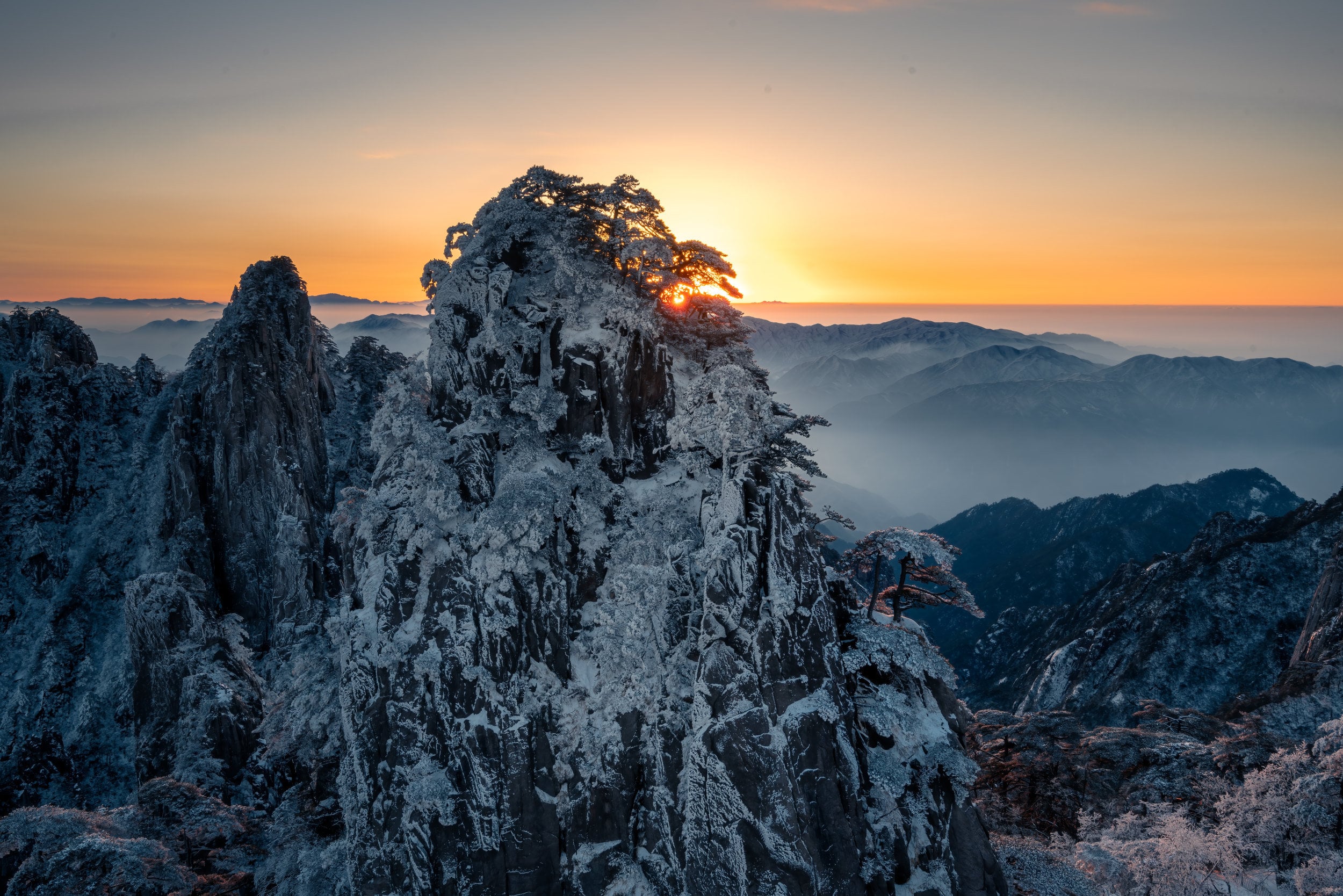
Snow or frost on pine branches and rocks on Huangshan Mountain; conditions vary by date and are not guaranteed.
Rain, Fog and a Sea of Clouds Are Different Experiences
Rain Does Not Automatically Ruin the Visit
Light rain with open paths can still permit a rewarding shorter walk. Pine trees, rock details and the atmosphere of the paths may remain interesting when long views are limited.
The practical costs are slower walking, wet surfaces and less comfortable photography stops. Keep the descent and hotel approach as priorities, and reduce optional detours.
Fog Can Hide the Entire View
A mountain viewpoint inside dense cloud may offer almost no distant visibility. Waiting briefly can be worthwhile when conditions are changing and it is safe, but there may be no opening during your visit.
Do not spend the day walking between distant viewpoints solely to find clear weather. A longer route can add effort without improving the view, and may compromise the descent timing.
A Sea of Clouds Needs the Right Conditions
A sea of clouds is different from standing within fog. For the classic view, your position and the cloud layer need to allow peaks or ridges to appear above or through it.
Clearing after rain or snow can provide favourable conditions, but the result depends on more than recent rainfall. Rain can also be followed by persistent cloud, poor visibility or unsafe weather.
No season, hotel or tour can guarantee a sea of clouds. Treat it as a possible highlight and choose an itinerary that remains worthwhile without it.
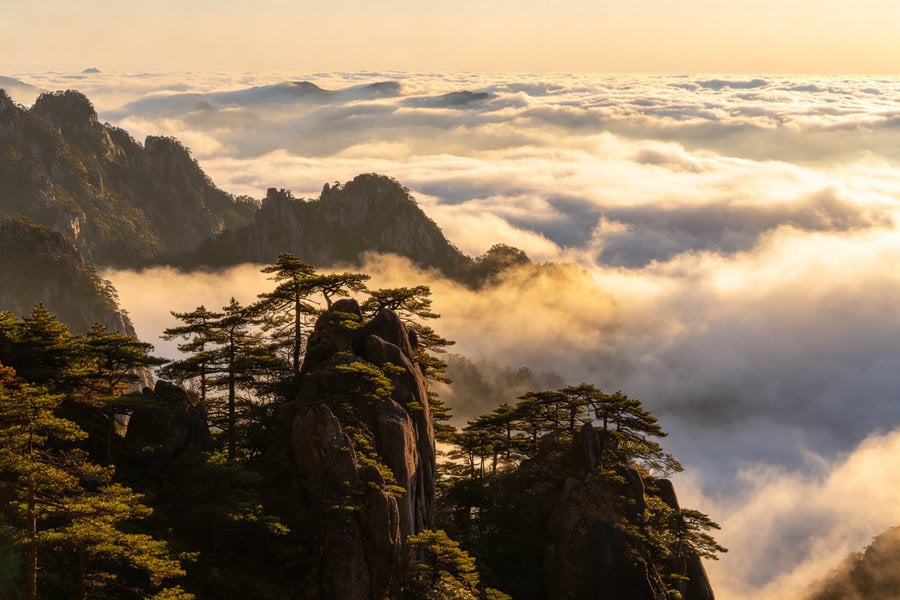
Huangshan Mountain peaks visible above a layer of clouds; conditions vary by date and are not guaranteed.
Sunrise and Sunset: Choose Access and Weather Together
An upper-mountain overnight is the more practical way to reach a dawn viewpoint. Normal morning transport from below should not be assumed to deliver you to the upper mountain before sunrise.
Choose a hotel around a suitable nearby viewpoint and the rest of the route. Ask about the actual walking approach, open paths and any local guidance. A room described as scenic does not necessarily provide a sunrise view.
Use the sunrise time for the date, then allow for dressing, walking in darkness and arriving before the light develops. There is no single departure time suitable for every hotel and season.
Carry reliable lighting and clothing for standing still. If the route is closed or local advice warns against the walk, skip it. An overnight can still offer a slower visit and another morning on the mountain.
For sunset, protect the return to the hotel or the final descent. Do not extend a day visit to a late viewpoint without a confirmed way to finish safely within the operating arrangements.
What to Wear: A Simple Layering Plan
Think in three functions rather than one bulky outfit:
- A walking layer that feels comfortable while moving and can handle the conditions.
- A warm layer to add when temperatures fall or you stop.
- An outer layer appropriate for rain and wind.
The exact thickness depends on the mountain forecast, season and whether you will remain overnight. An extra lightweight layer can be more useful than a heavy coat that is awkward to carry and too warm during climbing.
Avoid relying on one outfit for a wet first day and a cold dawn. For an overnight, pack a dry change of essential clothing and protect it inside the bag.
Check any hotel loan-clothing service before depending on it. Availability, size and the actual item are not established by an old review mentioning free coats.
Footwear and Walking Equipment
Shoes for Repeated Steps
Wear comfortable shoes with reliable grip that you have already used for walking. Consider the actual surfaces and weather rather than choosing a shoe only for its appearance or label.
Huangshan Mountain has repeated climbs and descents. Cableways reduce the lower ascent and descent, but do not remove the steps between upper stations, hotels and sights.
For winter, check condition-specific footwear and traction advice. For wet weather, grip and keeping your feet reasonably comfortable are particularly important.
Rain Protection
A waterproof jacket or suitable poncho can help. Choose something manageable in wind and crowded paths, and protect documents and electronics separately.
An umbrella can be awkward on narrow or exposed stairs, especially when you need a handrail or walking pole. It may be more practical for a village or urban street than for the main mountain route.
Walking Poles and Lighting
A pole may help some walkers on long descents, but it requires considerate use in crowded passages. It does not replace choosing a route you can complete.
Carry a head torch or other reliable light for a confirmed dawn outing. Do not make a phone battery your only lighting plan if it must also support tickets, communication and navigation.
A Comfortable Backpack
Use a small backpack that leaves your hands free. Arrange storage for larger luggage below the mountain, checking collection time and any transfer between different gateways.
Avoid a suitcase on the usual upper paths. A cableway journey does not remove the need to carry belongings over steps to the hotel.
Packing Checklist by Trip Type
| Item or preparation | Mountain day visit | Upper-mountain overnight | Winter or ice conditions |
|---|---|---|---|
| Original booking identity document | Essential | Essential | Essential |
| Accessible ticket and route details | Essential | Include hotel and both days’ arrangements | Include current open-route advice |
| Grippy walking shoes | Essential | Essential | Check suitability for the actual conditions |
| Rain and wind protection | Pack for the forecast | Keep available across both days | Combine with suitable insulation |
| Extra warmth | For exposed stops as needed | Prepare for dawn and evening | Increase according to the mountain forecast |
| Water and snacks | Match the route and confirmed service points | Include the hotel approach and dawn needs | Keep the plan practical in cold weather |
| Phone and power bank | Useful for the whole journey | Prepare charging for both days | Account for cold-weather battery performance |
| Reliable light | Needed if a planned route involves darkness | Important for dawn | Important for any confirmed dark-hour walk |
| Dry essential clothes | Useful if wet weather is expected | Strongly recommended | Protect against wet and cold conditions |
| Condition-specific traction | Usually unnecessary in ordinary ice-free conditions | Check if ice is possible | Obtain current advice and know how to use it |
| Personal medication | Carry what you normally need | Keep it with you overnight | Keep it accessible throughout |
Match the bag to the route. Essential preparation matters more than carrying equipment for every imaginable situation. Ask about actual hotel supplies and service points before adding weight.
Peak Seasons and Public Holidays
Weather Popularity and Holiday Demand Are Different
Spring and autumn can be attractive walking seasons, but demand also follows public holidays, school holidays, weekends and specific travel dates. A less favourable-weather month is not automatically quiet or inexpensive.
Check the official holiday calendar for the travel year. Spring Festival, Qingming, Labour Day, Dragon Boat Festival, Mid-Autumn Festival and National Day can affect transport, accommodation and visitor numbers. Dates and adjusted workdays should not be carried over from a previous year.
National Day travel in early October deserves particular attention because it overlaps an appealing season. If flexibility allows, compare dates outside the official break rather than assuming the first week of October will provide a relaxed autumn visit.
Book the Components That Control the Route
For a mountain overnight, confirm the room location and category, then match admission and transport arrangements to it. Real-name entrance reservations include a date, entry period and direction; they need to agree with the visitor’s identity and intended approach.
Official notices recommend reserving admission at least a day ahead, while actual sales windows and capacity determine what you can book. On a popular date, organise the trip early and complete each reservation when available.
A hotel booking does not automatically provide admission, and a confirmed entrance reservation does not remove cableway queues. Check package inclusions rather than assuming every component is covered.
Keep Holiday Routes Simpler
Allow more time for verification, shuttle boarding, cableway queues and slower movement on narrow paths. Choose essential sights and leave optional sections removable.
A full canyon descent, major peak climb and broad mountain crossing may compete for the same day even in good weather. On a busy date, a more modest route is often the more rewarding plan.
Check holiday operating notices for the actual date. Longer service hours published for one period are not normal year-round hours, and walking-entry cutoffs can differ from general opening times.
Protect the Train Connection
Crowds and weather can affect the descent before the road transfer even begins. Include upper walking, the cableway, scenic transport, luggage collection and the station journey in the departure calculation.
Use a late enough train with a conservative route, or descend the previous day and stay below the mountain before an early departure. Do not build the connection around catching the final cableway.
Make the Itinerary Flexible Before Travelling
A flexible itinerary is most useful when the booking terms support it. Check changes and cancellation conditions for the room, admission, transport and any activity separately.
If you have several regional days, it may be possible to place the mountain on the more suitable forecast day and visit a village or Tunxi at another time. Confirm availability and supplier arrangements before making that swap.
A village visit still involves outdoor walking, and a city museum has its own hours and access rules. Neither is an automatic all-weather replacement for a mountain closure.
| Situation | A useful adjustment |
|---|---|
| Rain with main paths open | Shorten optional walks and protect the hotel approach or descent. |
| Dense fog but safe walking | Focus on nearby views and details rather than adding distant detours. |
| A dawn forecast offers little visibility | Consider a short local attempt or rest, following local advice. |
| A canyon or peak closes | Use a confirmed open route; revise relevant tickets if needed. |
| Severe-weather warnings before ascent | Seek current official advice and review permitted changes. |
| Transport is suspended while you are on the mountain | Follow scenic-area and hotel guidance and update onward arrangements. |
Poor visibility alone does not establish a refund entitlement. Make the plan around the published conditions of each booking and the actual operating decision.
What to Check as the Date Approaches
When choosing the season, decide your route priorities and tolerance for weather uncertainty. When booking, match the hotel, entrance and descent to a route your group can manage.
A few days before travel, review the mountain forecast, warnings and open-path notices. Check whether the forecast location is the upper mountain or a city point, and adjust the clothing accordingly.
The evening before ascent, confirm both the access arrangements and the return plan. Pack layers where you can reach them, store larger luggage and agree which optional sights can be dropped.
At the gateway and on the mountain, use current staff advice and notices. The latest conditions should guide the route, even if an earlier forecast looked favourable.
Frequently Asked Questions
What Is the Best Month for a First Visit?
April–May and October to early November are useful starting choices for many visitors, outside major holidays. The actual forecast, open route and your walking needs should determine the final plan.
Is Huangshan Mountain's Weather the Same as Tunxi's?
No. The upper mountain has different exposure, temperature and visibility. Check the scenic-area mountain forecast rather than relying only on the city.
Can I Visit in Summer?
Yes, with a manageable route and attention to rain, humidity, storms and demand. Cooler upper air does not remove the effort of climbing steps.
Is Winter Worthwhile?
It can be for visitors who want winter scenery and accept ice, cold and route restrictions. Snow and frost are possible rather than guaranteed.
Are All Routes Open Throughout the Year?
No. Maintenance, conservation and weather can close sections. Check the canyon, major peaks and your actual connectors separately.
Does Rain Mean the Visit Is Wasted?
Not necessarily. A shorter safe route can still be enjoyable, but long views may be limited and walking slower. Severe-weather warnings require a different decision.
Does Rain Guarantee a Sea of Clouds Afterwards?
No. Clearing after rain can be favourable, but cloud layers and visibility depend on several conditions. Persistent fog is also possible.
Which Season Guarantees Clear Views?
None. Choose a season that fits your interests and preparation, then use the close-to-date forecast and current advice.
Should I Stay on the Mountain for Sunrise?
An upper-mountain overnight is the more practical arrangement for dawn access. Choose a nearby suitable viewpoint and remember that weather can obscure sunrise.
What Should I Wear for a Dawn Walk?
Prepare for standing still in the actual mountain conditions, with warmth, weather protection and grippy shoes. Carry reliable lighting and check route access.
Do I Need Heavy Boots for Every Visit?
Not necessarily. Footwear should be comfortable, grippy and suitable for the terrain and forecast. Winter ice needs separate advice and preparation.
Is an Umbrella Enough for the Mountain?
It can be awkward on exposed or narrow steps. Suitable rainwear and separate protection for documents and electronics are more practical for many mountain routes.
What Should I Pack for One Night?
Carry layers, dry essentials, identity and booking information, lighting, power, water, snacks and personal medication in a manageable backpack. Confirm hotel supplies and store large luggage below.
How Should I Plan Around Public Holidays?
Check the current year’s dates, reserve the required components within their sales windows and allow more time for queues. Keep optional routes easy to remove.
Can I Swap the Mountain Day With a Village Day?
Sometimes, if reservations, accommodation and transport permit it. Confirm the terms and availability rather than assuming the change is automatic.
Can I Catch a Train After a Weather-Affected Visit?
Only with a realistic descent and transfer margin. An early train is better handled by descending the previous day and staying below the mountain.
Plan Your Huangshan Trip Around the Season
Tell our local team your possible travel dates, walking confidence, group ages and priorities. Let us know whether you want a mountain overnight, sunrise opportunities, winter scenery or a wider trip with Hongcun, Xidi and Tunxi.
We can help match the season to a practical route, suitable clothing preparation and realistic booking arrangements, with room to adapt when conditions change.
Prepared for: Discover East China Tours
Last updated: 8 October 2026