
Compare Shanghai’s seasons, holiday crowds and weather plans, with practical advice on walking, indoor alternatives and packing.
For a first Shanghai visit with plenty of walking, spring and autumn are usually the most comfortable starting choices. April and May, or later October and November, are worth comparing if you can avoid the main public-holiday periods. They give you a good basis for neighbourhood walks, parks and the riverfront without making summer heat or winter wind the centre of the plan.
There is no month that guarantees clear skies, quiet attractions and ideal temperatures. Spring can be wet, September can still feel summery and a pleasant autumn day can turn into a chilly evening beside the Huangpu River. Summer and winter can also work well if you choose the right pace and mix indoor and outdoor experiences.
The best time depends on what you want to do. A museum-focused city break is more adaptable than several full days of outdoor sightseeing. A family Disney visit needs a different rhythm from a short architectural walk. Choose your season, check the holiday calendar, then pack for the actual forecast rather than the month name alone.

Spring and autumn are useful starting choices for a Shanghai trip with plenty of walking.
The Quick Answer: Choose for Your Travel Style
| What matters most | Periods to compare first | What to allow for |
|---|---|---|
| Comfortable city walking | Spring and autumn, especially April–May and later October–November | Rain, changing temperatures and the holiday calendar |
| Parks, flowers and seasonal photographs | Spring | Bloom timing varies by plant, location and year |
| A quieter museum-and-food stay | Dates outside major holidays, with winter also worth considering | Venue calendars, evening cold and individual event demand |
| Travelling during school holidays | The available school-break dates rather than an assumed ideal month | Heat or cold, crowds and the need for a slower itinerary |
| Disneyland as a main priority | A date that fits the group, with milder weather preferable where possible | Admission demand, outdoor queues and weather-related operational changes |
| A broader Shanghai–Suzhou–Hangzhou trip | Spring or autumn as an initial comparison | Separate forecasts and bookings for each destination |
These are editorial planning preferences rather than a ranking that fits everyone. If your dates are fixed, adapt the programme instead of trying to reproduce an itinerary designed for another season.
Shanghai's Seasons at a Glance
Shanghai has a humid subtropical monsoon climate with four recognisable seasons, as described in the official Shanghai seasonal overview. The practical differences are how long you want to stay outdoors, how much rain protection you need and whether a long walking day still feels comfortable.
| Season | General weather pattern | Good planning emphasis | Packing emphasis |
|---|---|---|---|
| Spring, March–May | Increasing warmth, variable days and possible drizzle | Walks and parks, with indoor alternatives nearby | Layers, a light outer layer and rain protection |
| Summer, June–August | Heat, humidity and periods of heavy rain or thunderstorms | Short outdoor periods and a proper midday break | Breathable clothes, sun protection and quick-drying items |
| Autumn, September–November | A gradual move from lingering warmth to cooler conditions | Flexible outdoor days and an extra layer after dark | Light layers at first, warmer clothing later |
| Winter, December–February | Cold, damp conditions and wind; snow is not a dependable feature | Short outdoor visits combined with museums and meals | An insulating outer layer, warm accessories and suitable shoes |
The boundaries are approximate. A date in September does not guarantee autumn weather, and an early March visit can still need a warm coat. Check both daytime and evening conditions for the actual days you will be there.
This guide does not present a monthly temperature chart as a forecast. Weather summaries, individual years and climate-normal datasets describe different things. Your packing decision should use the current forecast close to departure.
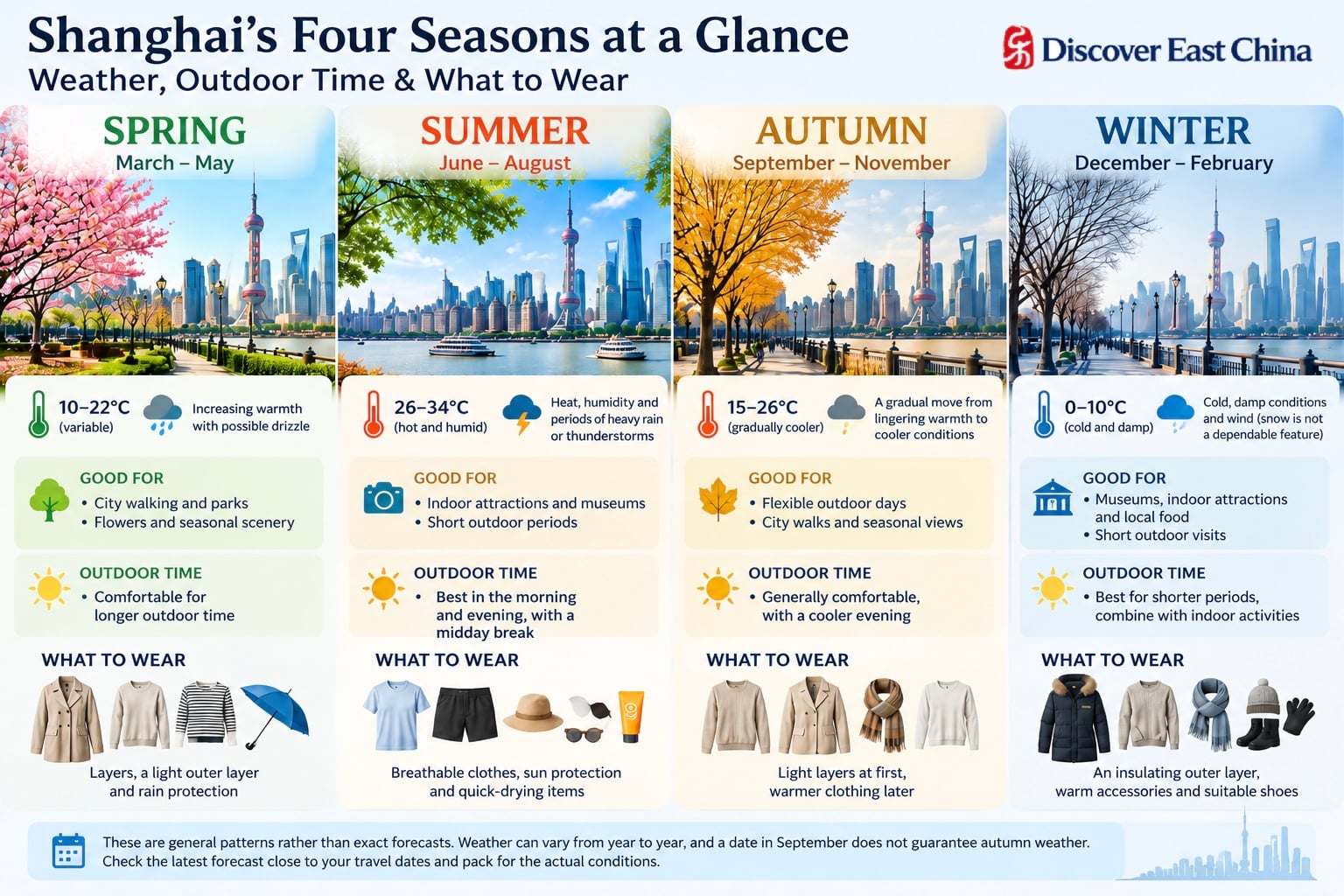
Use the season to shape the plan, then use the actual forecast to decide what to wear.
Spring: A Strong Choice for Walking, with Layers and Flexibility
Spring suits travellers who want Shanghai’s parks, neighbourhoods and riverfront to be a substantial part of the visit. A walk can be the main experience rather than the hurried interval between air-conditioned buildings.
March is an early-season choice: compare the forecast carefully and bring enough warmth for mornings and evenings. April and May can offer a useful balance for outdoor plans, but wet periods and warmer spells are still possible.
How to Plan a Spring Day
Choose one walking area in the morning, lunch nearby and either a park or an indoor visit later. Keep the route adaptable. If the day turns wet, replace part of the outdoor programme rather than adding a museum on top of it.
For blossom viewing, check current park announcements and recent conditions. Different species flower at different times, and a photograph from a previous year is not a guarantee of the same scene during your visit. Avoid booking the whole trip around an exact bloom date unless you accept that uncertainty.
What to Pack in Spring
Bring comfortable walking shoes, clothing you can layer and a light jacket or rain-resistant outer layer. A warmer layer is useful for the beginning of spring or for evenings. A compact umbrella can help in ordinary rain; it is not an adequate plan for severe wind or thunderstorms.
Choose pieces that work together. A long walking day is easier when you can remove a layer and carry it comfortably rather than wearing one heavy outfit intended for every condition.
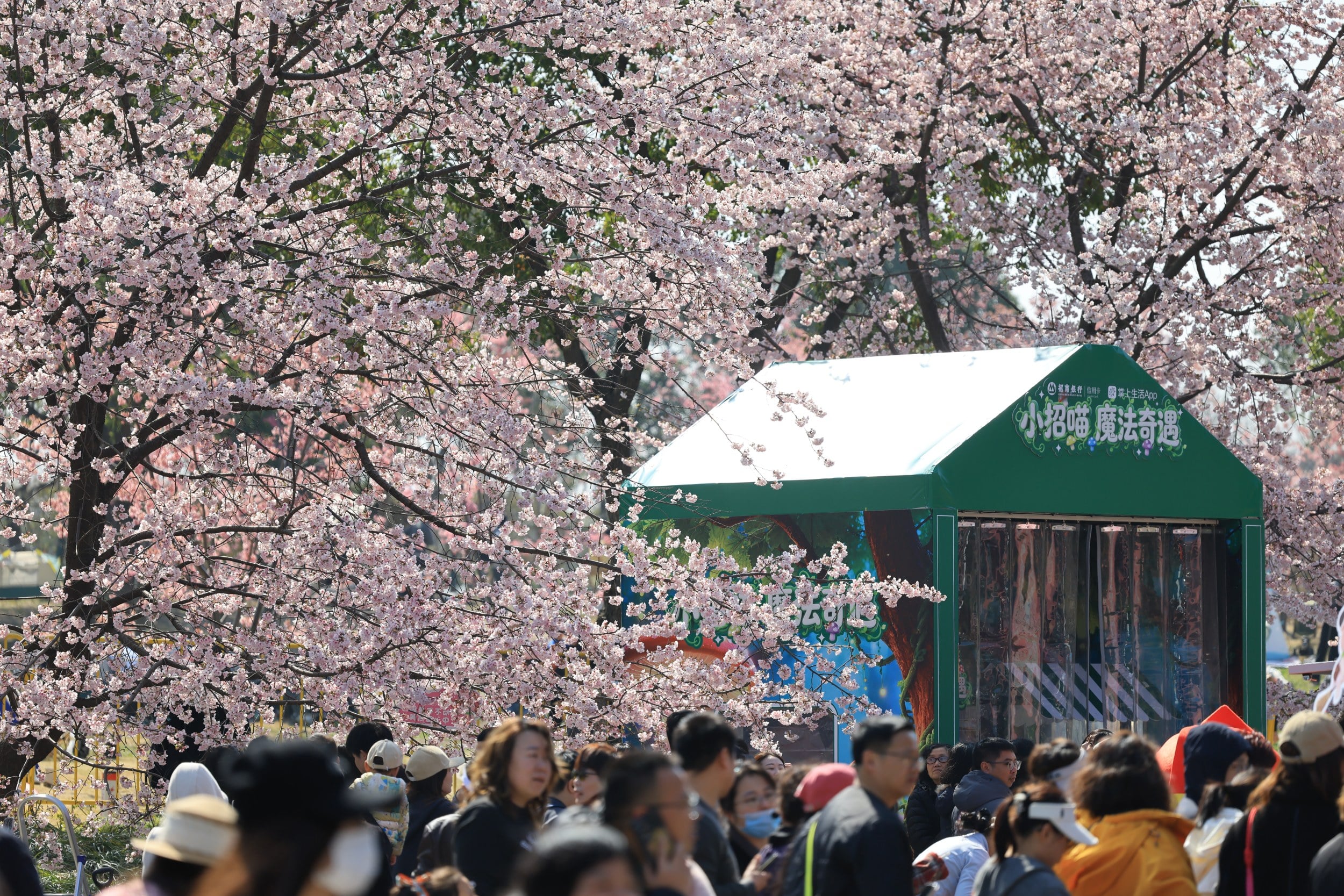
Check current bloom information rather than relying on an exact flowering date from a previous year.
Early Summer and the Plum-Rain Period
Shanghai’s plum-rain period generally falls around June and early July, but it does not follow an identical timetable each year. It can bring persistent cloud, repeated rainfall and high humidity rather than a single predictable shower each afternoon.
The Shanghai Meteorological Service explanation of plum rain distinguishes a declared seasonal onset from a spell of ordinary rain. The dates and character vary. An official announcement that one year’s plum-rain period has ended is not a schedule for the following year. Rain is also possible outside this period, so do not treat another month as rain-free.
How to Plan During Wet Periods
Keep a flexible city base and select an indoor option near the day’s area. A museum visit, an unhurried meal and a short walk in a dry interval can form a worthwhile day without crossing Shanghai several times.
For a water-town or garden excursion, consider the surfaces and return journey as well as the scenery. Bridge steps and historic paving can be slippery, while boat services depend on the actual weather and operator. If the outing is mostly outdoors, decide whether changing the day or simplifying the route would improve the experience.
Avoid making a forecasted dry hour carry too much responsibility. It should not be the only opportunity to reach a distant attraction, take a boat and return before a fixed booking.
What to Pack for Humid Rain
Bring quick-drying clothes, spare socks, shoes with suitable grip and rain protection that is practical in warm conditions. A protective pouch or bag cover can help keep documents and electronics dry. Allow clothing to dry before repacking it for the next journey.
A bulky, poorly ventilated waterproof can be uncomfortable in humidity. Choose a rain layer that suits your activities, and use indoor breaks rather than trying to remain outdoors for the entire wet day.
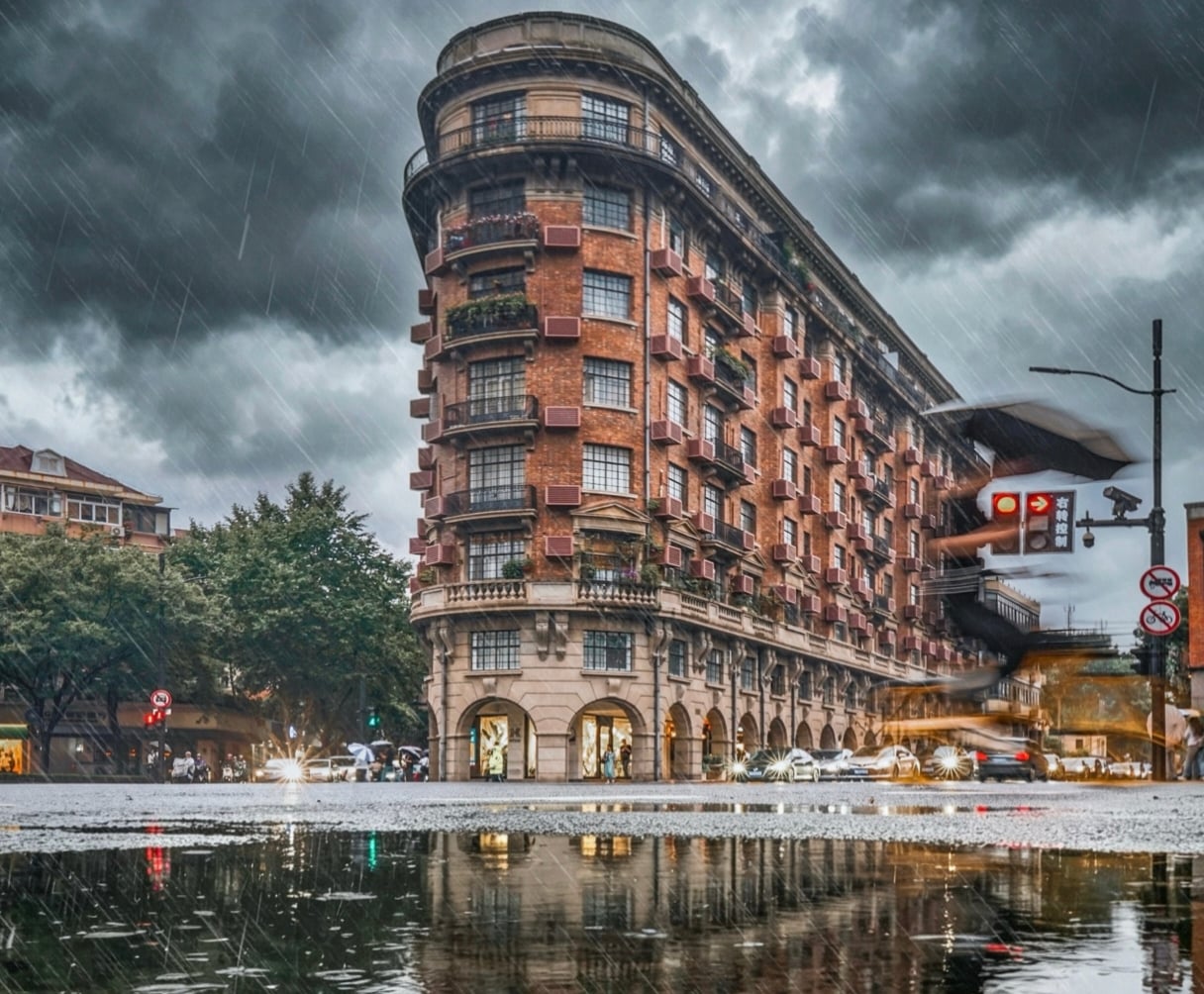
Keep a nearby indoor alternative and allow extra care on wet surfaces.
High Summer: Change the Rhythm of the Day
July and August are the main high-summer planning concern. Temperatures can exceed 35°C, and humidity can make a walking-heavy itinerary demanding. Shade, transport and a seated break should be planned rather than left to chance.
Summer is not a reason to abandon Shanghai. It is a reason to reduce the outdoor load. Museums, cultural visits and meals can provide structure, with a shorter outdoor experience at a suitable time.
A More Comfortable Summer Pattern
Start with one manageable outdoor visit if the forecast allows. Break for an indoor activity or return to the hotel during the hotter part of the day. Consider another short outing later, but do not assume the evening will be cool enough for an extended walk.
Avoid a schedule that combines the Bund, old-city streets, several kilometres of neighbourhood walking and a long outdoor queue. Choose the most important experience and remove the rest if conditions are uncomfortable.
For families and travellers who need regular rest, keep meals, water and a practical return route close to the main activity. A direct taxi can reduce walking between stations and entrances, though traffic and pick-up points still need checking.
Summer at Shanghai Disneyland
A park day can involve substantial outdoor time even when many attractions are indoors. Choose a few priorities, identify meal and rest options and follow the current resort notices. Heat can affect outdoor entertainment as well as your willingness to queue.
Do not treat an indoor ride as proof that the surrounding queue, approach and entire day are protected from weather. Check permitted items before packing a large bag or equipment for the visit.
What to Pack in Summer
Choose breathable clothing, a sun hat, sunglasses and sun protection appropriate to you. Bring a refillable water bottle where permitted, quick-drying spare clothing and a light layer for indoor air conditioning if you find it uncomfortable.
Carry only what the day needs. A heavy backpack adds effort during hot conditions. Rain protection still matters, and spare socks can be more useful than another sightseeing accessory.
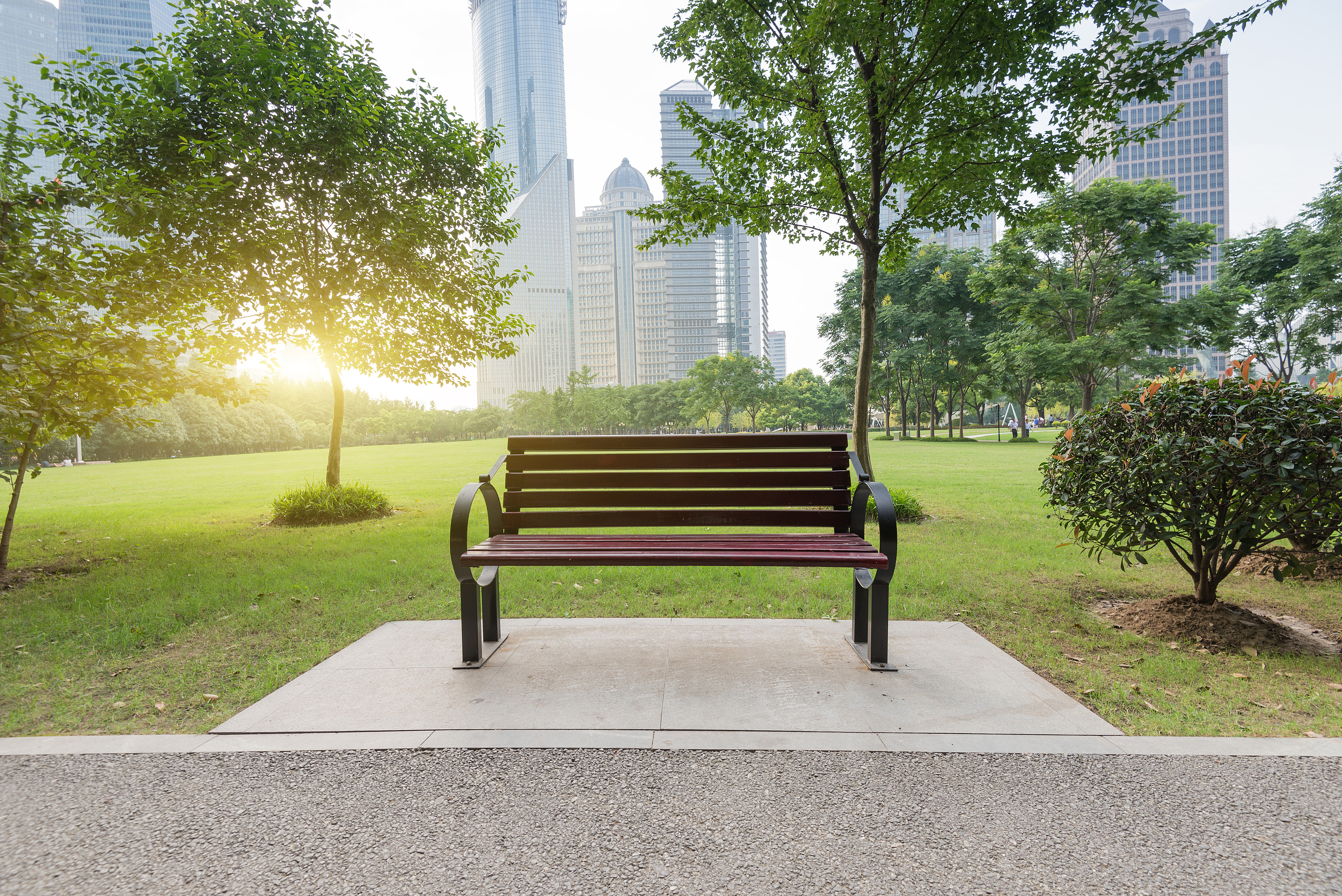
Keep summer outdoor periods short and choose places where a proper break is practical.
Autumn: Good Walking Potential, but Not One Uniform Season
Autumn is a useful choice for a city trip with time outdoors. Later October and November often make a sensible initial comparison for visitors prioritising walking, provided the holiday calendar and actual forecast fit the plan.
September can retain heat and humidity. Weather systems affecting the region can also bring heavy rain and wind in late summer and early autumn. Do not book early September on the assumption that summer conditions have ended.
As autumn progresses, prepare for a greater difference between comfortable daytime activity and an evening outside. A riverfront dinner or night-view walk may need another layer even when lunch felt warm.
How to Plan an Autumn Day
Use the favourable outdoor conditions when they occur, but keep an indoor substitute. A neighbourhood walk, a focused museum visit and an early evening skyline view can work when the route is compact and the temperature suits you.
Do not chase every seasonal photograph across different districts. Choose one park or street area for foliage, then allow time for lunch and rest. Leaf colour varies with the year and location, and some autumn scenes appear later than visitors expect.
What to Pack in Autumn
Start with layers rather than one outfit intended for the entire season. Earlier visits may need lighter clothing with rain protection; later visits may need a warmer jacket and additional evening layers. Check the wind as well as the temperature if your plans include the Bund or a boat.
Pack comfortable shoes that work on wet paving. A clear autumn forecast is a reason to adjust the day, not a reason to leave all rain protection at home.
Winter: A Museum-and-Food Visit with Shorter Outdoor Stops
Shanghai winter can feel cold and damp, particularly when wind affects exposed places. Snow is not something to rely on for a winter holiday. The more dependable attraction is the city’s mix of indoor culture, neighbourhood meals and short outdoor views.
A winter visit can suit travellers who prefer a measured city break over long outdoor days. It is not automatically quiet or inexpensive: major holidays, exhibitions and other demand can still affect availability.
How to Plan a Winter Day
Choose one indoor experience as the main activity, with a short nearby outdoor stop if conditions are comfortable. A museum followed by lunch and a brief local walk can be enough. Move a longer riverfront plan to the most suitable part of the day rather than insisting on a late finish.
Check your accommodation’s heating and room arrangements, especially if you are sensitive to cold. Choose transport that avoids unnecessary standing outdoors or a long final walk after dark.
What to Pack in Winter
Bring an insulating coat or jacket, layers beneath it and accessories such as a scarf, gloves and a hat if you need them. Choose shoes and socks suitable for cold, wet conditions. A wind-resistant outer layer can be useful for exposed viewpoints.
Remember the indoor part of the day. Layers you can remove are easier to manage than a single very warm outfit when moving between streets, restaurants, transport and galleries.

Combine short winter outdoor visits with indoor culture and unhurried meals.
Ordinary Rain and Severe Weather Need Different Plans
A drizzle or moderate shower may call for an umbrella, shorter walks and a nearby indoor stop. Thunderstorms, severe wind, heavy rain warnings or a typhoon-related disruption need a different decision: follow official instructions and check whether the journey or attraction should be postponed.
Do not regard a stronger raincoat as the solution to every weather condition. Avoid making exposed riverfronts, bridges or long outdoor routes the day’s objective when severe conditions affect the area. Check live weather warnings for Shanghai and transport notices before leaving, including the return route.
Build a Rain Plan in the Same Area
| Original plan | Practical adjustment | Check before substituting |
|---|---|---|
| Bund walk | Shorten it in ordinary rain or move to an indoor experience nearby | Forecast, warnings and the actual route to shelter |
| Neighbourhood walking | Choose a smaller route with a suitable meal or gallery stop | Opening hours, admission and whether the venue is genuinely nearby |
| Park visit | Replace with an available museum or a hotel rest period | Bookings, weekly closure and capacity |
| Water-town or garden excursion | Change the day or reduce the outdoor route | Steps, wet surfaces, boat operations and return transport |
| Shanghai Disneyland | Adapt to current operations or change only under the product’s terms | Official notices, attraction status and applicable ticket conditions |
| River cruise | Confirm operation or choose an alternative | The operator’s notice, pier access and cancellation rules |
An indoor venue is not guaranteed to be available when it rains. Other visitors may have the same idea. Keep an alternative that does not depend on securing a popular same-day reservation.
Shanghai Disneyland’s published weather and packing guidance allows for limited offerings or closure in severe conditions. A date-specific weather refund or rescheduling notice should not be treated as a permanent policy for every rainy day. Check your actual product and the current announcement.
Public Holidays Can Matter as Much as Weather
A mild-weather date can still be a demanding time to travel if it falls within a major holiday. Check the official annual holiday schedule before booking flights, hotels, trains and popular attractions.
The dates and lengths of several holiday breaks change from year to year. China also uses adjusted working days, so a Saturday or Sunday can be an official workday. Do not build the calendar by copying last year’s dates or assuming every weekday has lower demand.
| Period | Why it matters for planning | Useful response |
|---|---|---|
| Spring Festival | Intercity travel demand, family travel and business-specific opening changes | Book essential travel early and confirm restaurants and services individually |
| Qingming holiday | A short spring break can concentrate demand | Check the actual dates and reduce tightly linked bookings |
| Labour Day holiday | A popular travel period within otherwise attractive spring weather | Compare dates outside the official break where possible |
| Dragon Boat Festival | A short break that can overlap wet-season planning | Combine weather flexibility with transport and admission checks |
| Mid-Autumn Festival | Timing varies and can affect autumn availability | Use the annual calendar, not a fixed September assumption |
| National Day holiday | A major travel period around the start of October | Compare later October if flexibility is available |
| Summer school holidays | Family demand can coincide with heat | Allow rest and secure the experiences that genuinely need booking |
Travelling in a holiday period can still be worthwhile if it is your only option or if a particular celebration interests you. Plan fewer stops, confirm admission and give transport more time. Do not assume a named festival guarantees a particular show, lantern display or event every year.
Spring Festival also does not mean the whole city closes. Large visitor facilities and local businesses follow their own schedules. Confirm the places you will actually use rather than relying on a citywide claim.
Keep Holiday Advice Current
The official 2026 national holiday calendar was available when this guide was checked on 13 October 2026. For a future-year trip, use that year’s official announcement once issued. This guide deliberately avoids presenting a predicted future holiday break as confirmed.
Individual museum holiday hours and weekly closures can differ from normal arrangements. Check the venue’s own calendar rather than assuming the national holiday notice determines its opening times.
Match Indoor and Outdoor Experiences to the Conditions
The aim is to adjust the balance, not to replace every outdoor moment with a shopping centre.
When Conditions Are Comfortable
Give time to one neighbourhood, park or riverfront area and avoid excessive district changes. Pair the walk with a meal or a focused cultural stop. A good weather window is a chance to enjoy the place slowly, not a requirement to double the attraction list.
When It Is Hot or Wet
Make an indoor visit the anchor and keep any outdoor addition short. Choose the museum or gallery by its contents and location, not merely by whether it has a roof. Confirm reservations and special exhibitions before leaving.
Leave an interval for rest rather than scheduling several indoor venues consecutively. Museums still involve standing and walking. A meal, café break or hotel return can provide a different kind of recovery.
When It Is Cold or Windy
Reduce exposed walking and choose a direct return after the main visit. Keep warm layers available for the route from transport to the entrance. A heated interior does not make its access queue or nearby pavements comfortable.
For a Mixed-Age Group
Build the shared route around the person who needs the gentlest pace. Give more energetic travellers optional choices while preserving the common meal and meeting point. The day’s weather can change whether those optional walks are worthwhile.
A Packing List That Changes with the Forecast
Start with a small core, then add the layers and weather protection needed for your dates. Pack for the activities too: a museum day, a long park visit and a boat excursion expose you to different conditions.
| Item | Why it is useful | Adjustment by season or activity |
|---|---|---|
| Comfortable walking shoes | City visits involve pavements, entrances and station corridors | Choose grip and weather suitability; do not rely on new untested shoes |
| Light layers | Conditions differ between outside, transport and interiors | Add warmth for early spring, late autumn and winter |
| Rain protection | Wet weather is possible beyond the main rainy period | Choose a breathable option for warmer months |
| Spare socks and selected spare clothing | Wet or sweaty clothing can affect comfort | Increase the useful spares for humid periods or children |
| Sun hat and sunglasses | Useful for outdoor time | Prioritise them for warm-weather walking and queues |
| Sun protection appropriate to you | Supports outdoor plans | Keep it accessible rather than packed in the hotel luggage |
| Refillable water bottle | Useful during the day’s route where allowed | Check venue restrictions and available refill points |
| Small day bag | Keeps essentials close without a heavy load | Carry only what the actual outing needs |
| Protective document pouch | Helps with rain and travel organisation | Keep original documents available for venues requiring them |
| Suitable charging equipment | Maps and bookings depend on a usable phone | Confirm plug compatibility and current airline rules for power banks |
| Warm accessories | Useful for exposed cold-weather periods | Select a scarf, hat and gloves according to the forecast and your comfort |
If your trip includes domestic flights within China, check the current power-bank requirements before packing. Shanghai airports’ current passenger guidance prohibits power banks without a clear 3C mark and recalled models or batches on domestic flights. Do not assume an item accepted on the international arrival will meet every onward carrier’s rules.
For shoes, balance water resistance with comfort in humidity. A spare pair may be useful on a longer stay, but you do not need to carry both pairs during sightseeing. Keep the day bag manageable.
Original passports or other accepted documents may be required for booked attractions. A digital copy can help with reference but should not be assumed to replace an original where the venue requires it.
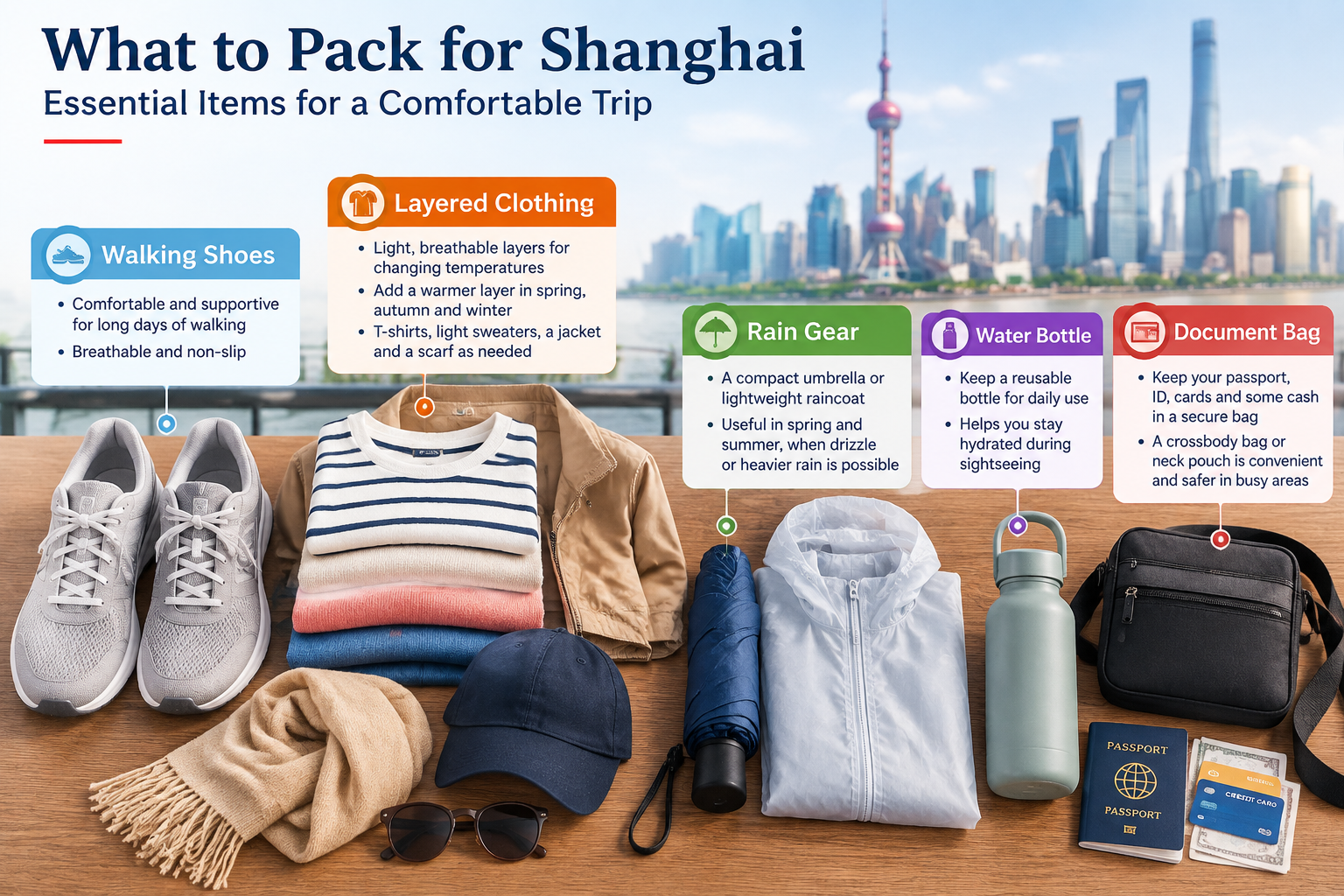
Pack a flexible core, then adjust the warm layers and weather protection to the actual forecast.
Travel Preparation Before Departure
At the Booking Stage
Compare dates with the official holiday calendar and identify any fixed priority, such as a Disney day, exhibition or regional excursion. Choose a hotel that allows a practical return when weather or energy makes a break desirable.
Review cancellation and change terms for transport, hotels and attractions. Flexibility can be valuable, but it must be part of the actual product. Do not assume that forecast rain gives an automatic refund.
Close to the Trip
Check the forecast for Shanghai and every other destination in your route. Suzhou, Hangzhou and a mountain or rural stop can require different clothing and arrangements; Shanghai’s forecast is not the forecast for all East China.
Use the forecast to adjust packing and the order of flexible activities. Keep booked admission requirements in mind rather than moving a museum visit to a day when it is closed or unavailable.
Each Morning
Look at the day’s weather and warnings, then confirm any affected boat, park or outdoor entertainment. Check the return route as well as the outward journey if heavy rain or strong wind is expected.
Carry the items that match that day. You may need a warm evening layer for a riverfront visit but not every item in the suitcase. Decide in advance which optional stop you will remove if conditions change.
How Long Should the Shanghai Stay Be?
Three full days can provide a useful first city visit, with one main experience each day and enough flexibility to swap an outdoor plan. Four or five full days make it easier to add Disney, an excursion or a lighter recovery day without forcing every visit into unsuitable conditions.
A longer stay does not guarantee better weather, but it provides more opportunities to change the sequence. On a short stay, choose attractions that still interest you if the outdoor plan needs reducing.
Do not count arrival and departure days as full sightseeing days automatically. A long flight, airport transfer or early departure may leave little practical time. Build the weather flexibility into the real available days.
Frequently Asked Questions
1. What is the best time to visit Shanghai for a first trip?
Spring and autumn are useful starting choices for walking-focused visits. Compare April–May and later October–November with the holiday calendar and actual forecast. No period guarantees dry weather or low crowds.
2. Is September already cool in Shanghai?
Not necessarily. It can retain summer-like conditions, and regional weather systems may affect travel. Check the actual dates rather than assuming the start of the month marks a clear seasonal change.
3. Is summer a bad time to visit?
It can work if the itinerary adapts to heat, humidity and rain. Keep outdoor periods shorter, use indoor experiences and protect rest time. A long walking programme is less suitable than a balanced city visit.
4. When is the plum-rain period?
It generally falls around June and early July, but its start, finish and intensity vary. Check the current year’s meteorological information rather than using last year’s dates as a timetable.
5. Does it rain all day throughout the rainy period?
Not necessarily. Conditions can vary between persistent rain, cloud, lighter showers and intervals without rain. Keep flexible plans and follow the short-range forecast rather than assuming every day will be identical.
6. Can we still walk around Shanghai in ordinary rain?
Often, with suitable protection and a shorter route, but check paving, shelter and comfort. Severe warnings require a different decision. Do not treat every wet day as either completely unusable or safe for any outdoor activity.
7. Which activities work best on a wet day?
Choose an available museum, gallery or other indoor experience near your route, plus a suitable meal or rest period. Confirm admission and opening hours before substituting a popular venue.
8. Should we avoid Shanghai because of typhoons?
Do not decide from the season label alone. Check forecasts and warnings for your dates and follow operational notices. Severe conditions can disrupt travel, so flexible bookings and a local backup plan are useful.
9. Is winter a good time for museums and food?
It can be, with shorter outdoor visits and warm layers. It is not automatically quiet or cheap, particularly around holidays or major exhibitions. Check the venues and travel dates individually.
10. Does Shanghai get dependable winter snow?
No. Do not plan a Shanghai winter visit around snow. Focus on the city experiences that interest you and prepare for cold, damp or windy conditions instead.
11. Which holidays should we check before booking?
Check the official annual schedule, especially Spring Festival, Labour Day and National Day, along with the shorter holiday breaks. Adjusted working days and changing festival dates can affect the calendar.
12. Does Shanghai close during Spring Festival?
The city does not have one universal closure pattern. Attractions, restaurants and other businesses have individual arrangements. Confirm the services you plan to use rather than assuming either everything closes or everything runs normally.
13. What should I wear for the Bund at night?
Check temperature and wind for the evening, then carry an appropriate extra layer. Conditions beside the river may feel different from a sheltered daytime street. Winter can require warm accessories as well as a coat.
14. Should I bring an umbrella in spring or autumn?
Rain protection is useful beyond the main wet period. Choose it for the forecast and your luggage needs. An umbrella is not a substitute for postponing an exposed outing during severe wind or storms.
15. What season is best for Shanghai Disneyland?
Milder conditions can make walking and queues more comfortable, but demand and your family’s dates also matter. Check the actual park day, admission and weather notices, and retain time for meals and rest.
16. What is the most useful packing approach?
Bring comfortable shoes and flexible layers, then add rain, sun or cold protection for the actual forecast. Pack for your chosen activities and keep the day bag light enough to carry comfortably.
Choose Dates That Fit the Experience You Want
A good Shanghai visit begins with the activities you value most, then matches the daily pace to the season. The holiday calendar, a flexible indoor option and the right clothing often matter more than selecting one supposedly perfect month.
Discover East China Tours can help shape a Shanghai stay or a wider East China itinerary around your dates, interests and preferred pace. Share any heat, walking, family or rest requirements when requesting a proposal. Confirm date-specific admission, transport and weather-change terms in the actual arrangements.
Prepared for Discover East China Tours. Updated 13 October 2026.