
Compare Jingdezhen's markets, studios and retail shops. Choose everyday ware, artist work or souvenirs by purpose and budget, then confirm packing, delivery and after-sales arrangements before paying.
Buying ceramics can be an enjoyable part of a Jingdezhen visit, whether you want one cup for everyday use, a small gift or a work by a particular maker. Markets, studios and retail shops offer different ways to browse, ask questions and arrange the purchase.
The most useful starting point is the purpose of the object. A drinking cup needs different questions from a decorative sculpture. A modest souvenir needs a different decision process from a substantial artist purchase. A large vase also needs a delivery plan before it needs a place in your itinerary.
Decide what you want to use or enjoy, set a total budget including transport, and confirm the seller’s details before paying. The area’s reputation, a signature or a persuasive story should begin a conversation rather than end your assessment.
This guide explains where to look, how to compare purchases and what to confirm about packing, carrying, shipping and after-sales support. Shopping remains optional: you can enjoy Jingdezhen’s ceramic culture through museums, workshops and conversations without buying anything.
What Are You Buying?
Before choosing a shopping area, identify the kind of purchase you want. This helps you avoid spending a whole afternoon comparing objects that serve different purposes.
| Purchase | Main priority | Questions that matter most |
|---|---|---|
| Everyday cup, bowl or plate | Comfortable, appropriate use | Intended food use, capacity, surface, care and replacement options |
| Tea ware | Suitability for how you make and serve tea | Handling, pouring, lid fit, capacity and care |
| A work by a named artist | The particular maker and object | Authorship, materials, date, edition or series and documentation |
| A decorative piece | Appearance, scale and display | Dimensions, stability, condition and packing |
| A modest souvenir | Personal meaning within a clear budget | Price, origin description, size and fragility |
| Gifts for several people | Suitability and manageable quantities | Consistency, individual packaging and total carried weight |
| A commissioned piece | An agreed design and completion process | Specification, deposit, lead time, changes and delivery responsibility |
These categories can overlap. A handmade cup may be both useful tableware and a named artist’s work. Decide which features justify the price for you.
Markets, Studios and Retail Shops: What Is Different?
Markets: variety and comparison
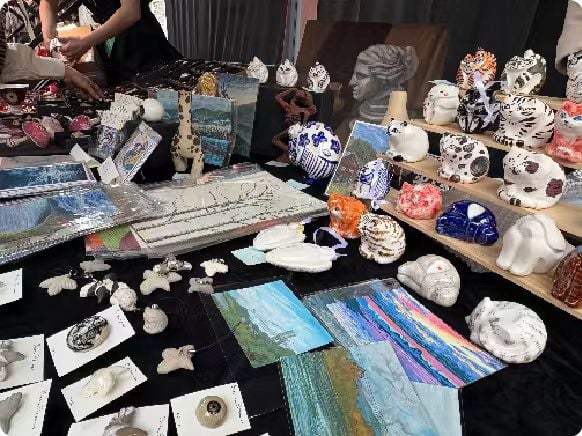
A market lets you see work from several sellers in one visit. It can be useful when you are developing a preference or want to compare forms, surfaces and prices.
Some stallholders are makers; others sell work produced by other people or businesses. Ask how the seller is connected to the object. A market setting does not establish that every piece is individually made by the person behind the stall.
Temporary stalls may have limited packing equipment, stock or after-sales arrangements. Obtain a dependable contact and written purchase record, especially if shipping will happen later.
Studios: a closer connection with the work
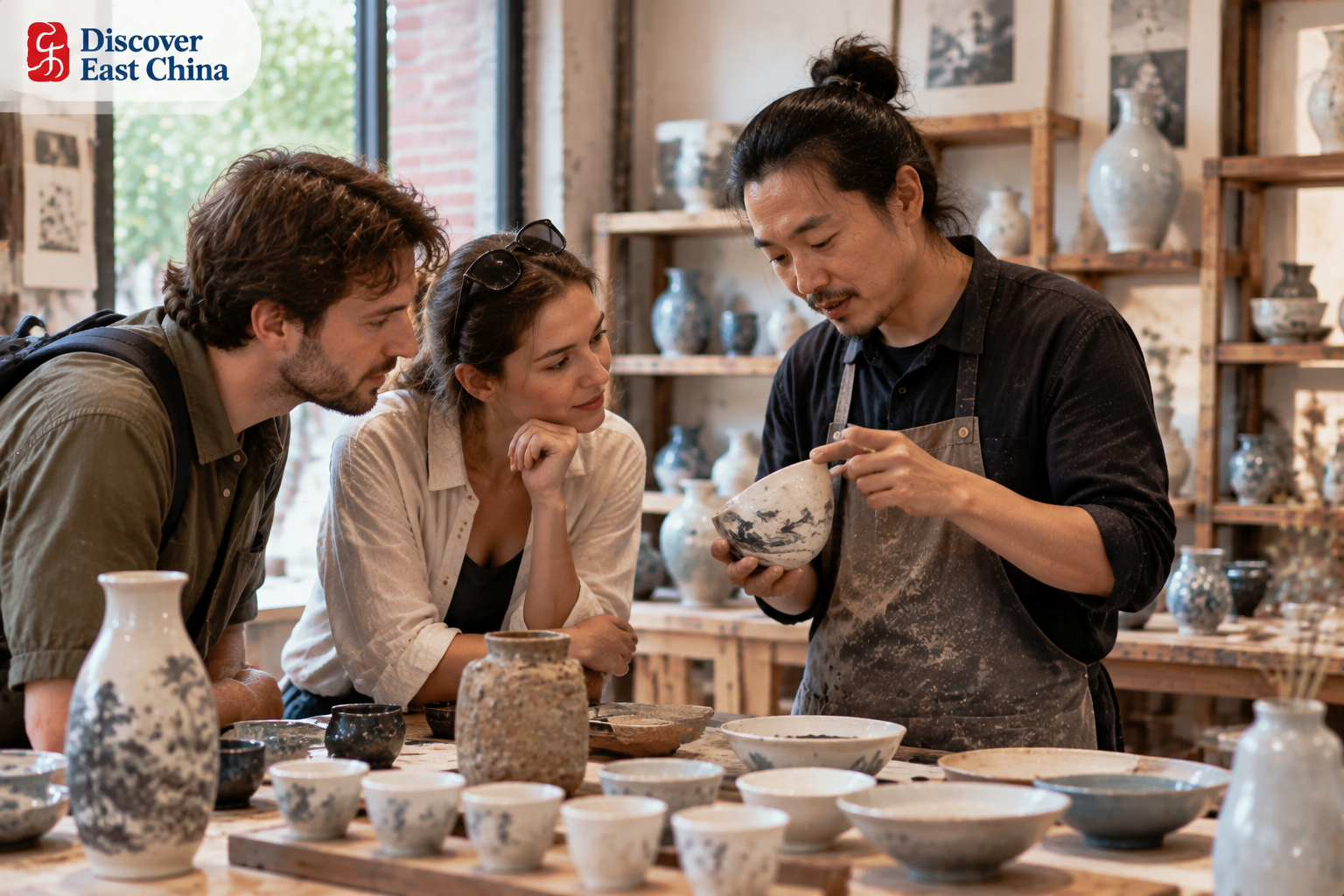
A studio visit can offer more detailed conversation about the maker’s practice, materials and production. It may also allow discussion of a commission or another piece from a series.
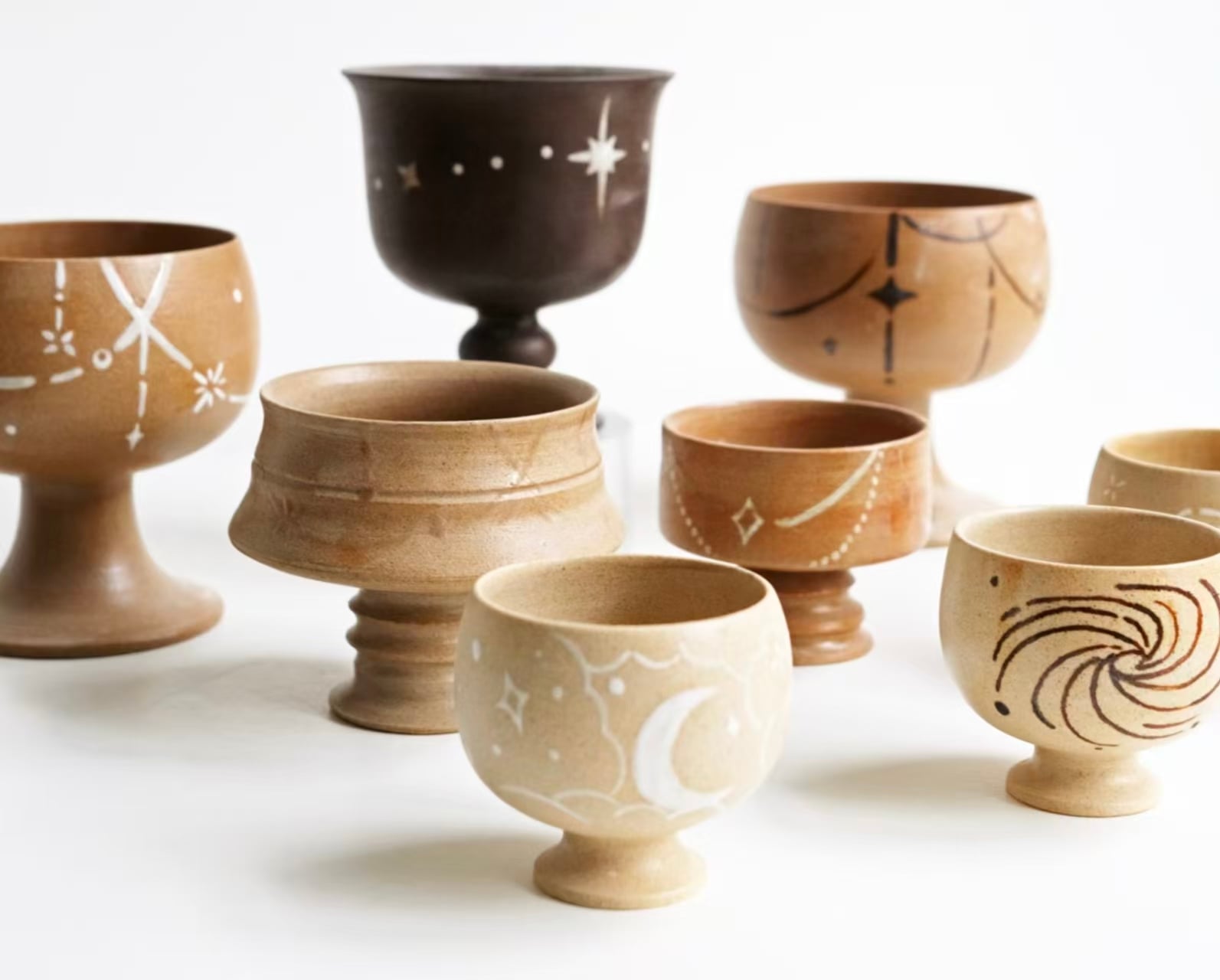
Not every studio is a walk-in shop. Arrange a visit where needed, explain your interests and ask whether the maker will be present. A working studio may have pieces that are unfinished, reserved or not for sale.
Give the maker space to work. Ask before photographing people, equipment or unpublished work, and do not expect a lengthy demonstration simply because you may purchase something.
Retail shops and galleries: a stable point of contact
A shop or gallery may provide a clearer retail process, a selected range, packaging and a continuing contact after you leave. It can represent several makers or sell a standard product range.
Ask whether the business is the producer, an authorised representative or another reseller. Confirm who handles returns, repairs or delivery claims.
A higher retail price may include services or representation, but it does not independently prove higher quality. Compare the object and the included arrangements rather than treating one selling format as universally better.
Where to Look in Jingdezhen
Taoxichuan
Taoxichuan combines a creative-district setting with permanent businesses and scheduled markets. It is useful if you want to combine browsing with an exhibition, architecture walk or dinner.
Choose the specific market or shop you intend to visit. Markets with related Taoxichuan names can use different venues, and special fairs may operate differently from a recurring programme.
Verify the date, year, location and hours through the current organiser announcement. Do not rely on an old weekend timetable or assume a market is operating simply because the district is open.
Sculpture Porcelain Factory area and PWS Creative Market
The Sculpture Porcelain Factory area is another place to investigate ceramic retail, studios and creative activity. The PWS Creative Market, associated with The Pottery Workshop, is a specific organised market to check rather than a name for every seller in the surrounding area.
The organiser currently lists the PWS Creative Market at its ShuangFengQiao location, with a shuttle from the Sculpture Factory location. Do not assume the market itself is beside the factory-area shops. Look up its current organiser information and confirm the visit date. An area’s permanent shops and a scheduled market need not share the same operating hours.
Use the actual venue name and map pin. Do not assume similarly translated market names refer to the same event.
Taoyang New Village night market
Taoyang New Village is a separate market destination that can fit a casual evening browse. It should not be confused with Taoyangli, the historic area associated with the Imperial Kiln Museum.
It can be useful to look at small gifts and everyday-sized objects, but examine individual sellers rather than assuming one fixed price level, quality or origin applies throughout the market.
Check the current market location and operation before travelling. Stall arrangements and surrounding traffic management can change.
Sanbao and individual studios
A studio-based visit in Sanbao or elsewhere may fit visitors with a particular artistic interest. Choose the maker or programme first and then plan the journey.
A creative-area reputation is not a guarantee of studio access, direct sales or a particular style. Confirm an appointment and whether the work you want to see is available.
Museum and heritage-area shops
A museum shop can be convenient for a themed gift or a product connected with the institution’s interpretation. Check what is an original artist work, a licensed product or a general souvenir.
Buying from a museum shop is not the same as buying an object from the museum collection. Ask about the product’s maker and intended use where relevant.
Choose One Shopping Area Before Adding More
For a short first visit, one market or retail area plus a specifically arranged studio visit is often enough. Several consecutive markets can consume the time you wanted for museums, meals and hands-on experiences.
If you are still discovering your preferences, use the first outing mainly to browse. Photograph an item and seller details with permission, then take time to decide.
Do not assume the same piece will remain available if you return. A one-off work may sell, while a standard product may be easier to find again. Ask honestly about availability without feeling obliged to reserve it.
If shopping is a major purpose of the trip, identify distinct aims for each outing: compare everyday ware in one area, meet a particular maker in another and arrange delivery separately. This is more useful than repeating similar stalls without a plan.
Set a Budget for the Complete Purchase
Your budget should cover the object, packing, delivery or additional baggage and any destination charges relevant to the shipment. A small purchase can become less economical if it needs expensive individual shipping.
Set an amount you are comfortable spending before browsing. If buying gifts, decide how many you need and a practical limit per item. Leave room for the things you most like rather than buying many small objects early and losing track of the total.
Compare like with like
Two cups can have different prices because they differ in materials, forming, decoration, firing, authorship, series size or retail services. Price alone does not tell you which factors apply.
Ask for an explanation and decide whether those differences matter to you. A useful everyday cup need not be a one-off artwork; a carefully chosen artist piece need not be evaluated as the cheapest drinking vessel.
Practical approaches at different budgets
| Budget approach | A useful aim | What to avoid |
|---|---|---|
| A small gift budget | One modest object with clear personal appeal | Adding many fragile pieces because each seems inexpensive |
| A considered everyday purchase | A cup or small set that suits your habits | Paying for a maker story while overlooking comfort and care |
| A design or artist purchase | A particular work you want to live with | Treating a signature as sufficient evidence of authorship |
| A larger commission | A clearly specified project with written terms | Paying a substantial deposit before design and delivery are agreed |
There is no dependable city-wide price band for every category. Compare current offers from the actual sellers, including the services you need.
Buying Everyday Cups, Bowls and Plates
Start with how you will use them
Think about the size you want, how the object feels and where it will be stored. A striking cup can still be uncomfortable in the hand, while a beautiful plate may not fit your cupboard or daily routine.
Ask permission before handling the item. Check the rim, foot, handle where present and how it sits on a flat surface. Examine the exact piece you will receive rather than only a display sample.
For a set, compare the pieces together. Handmade variation can be intentional, but you should know whether the differences suit you.
Confirm food-contact use
Ask whether the finished object is intended for food and drink and what evidence supports that use. A decorative bowl or cup-shaped sculpture is not automatically tableware.
Visual appearance, a glossy glaze, a high firing claim or a “lead-free” statement alone does not establish suitability for every use. Where food-contact performance matters, prefer traceable products and ask for relevant product information or testing that applies to the item or range.
If the intended use cannot be established, consider it for decoration instead. Do not try to settle uncertainty with an improvised home test.
Ask about care separately
Food use, dishwasher use and microwave use are different questions. Confirm the maker’s instructions for the particular product, including any metallic decoration or surface treatment.
Ask whether rapid temperature changes should be avoided and whether there are restrictions on prolonged liquid storage. Do not assume one general answer applies to every ceramic body or finish.
Keep the care information with the purchase record so the person receiving a gift understands it too.
Buying Tea Ware
Tea ware should match how you actually make tea. A vessel designed for a small-volume brewing routine may be less useful if you mainly drink a large mug at your desk.
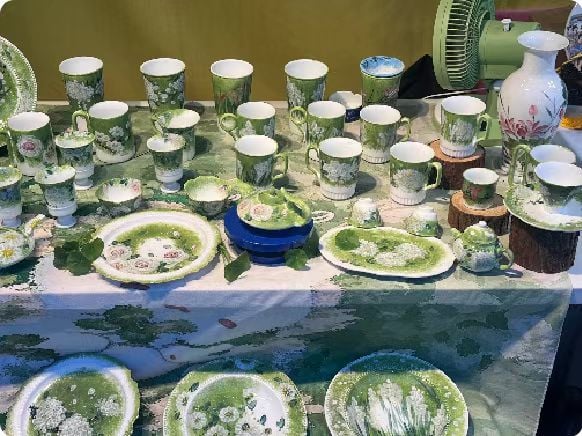
Ask about capacity, handling and intended brewing style. Where the seller permits it, examine lid fit, balance and the way the vessel is held. Ask the seller to demonstrate pouring if appropriate rather than testing with water without permission.
A teapot’s exterior decoration is only part of the decision. Consider weight, the handle, the lid and practical cleaning. For a gaiwan or another unfamiliar form, ask for a short handling explanation before buying it as an everyday item.
A display piece and a working tea vessel are different purposes. Choose the one that matches the way you expect to enjoy it.
Buying a Named Artist's Work
Establish the maker's connection
Ask who designed, formed, decorated and fired the work. Ceramic production can involve several specialists, and an artist may work with assistants or partner workshops.
Collaboration does not make an object unworthy of purchase. What matters is an accurate explanation of the work and the role attributed to the artist.
Ask whether the piece is unique, part of a series or an edition. If another similar work can be produced, clarify how it may differ from the one you are viewing.
Request useful documentation
For a substantial artist purchase, obtain the artist’s name, title or description, approximate date, materials or technique where known, dimensions and a clear invoice or receipt identifying the piece.
Ask who issued any certificate and what it confirms. A document is useful when it connects the seller, maker and specific work; a generic statement without that connection offers less clarity.
A signature or base mark can support identification, but it is not independent proof of authorship. Do not interpret a reign-style mark as evidence that a modern piece is old.
Choose for your own interest
Buy because the work matters to you and fits the space where you will display it. Ask about stability, display requirements and care.
Do not rely on a seller’s claim that a piece will rise in value. A tourist purchase does not become an investment simply because it is signed or described as limited.
If the purchase is substantial and authorship or attribution is uncertain, obtain appropriate independent advice before committing. A short market conversation is not an appraisal.
Buying Souvenirs and Gifts
A small souvenir can be a good purchase without carrying an elaborate story. Choose an object you like, understand what the seller claims about it and stay within the budget you set.
Consider weight and fragility as well as size. A small handle or thin projection may need more protective space than the main body suggests.
For several gifts, ask whether individual boxes are included and inspect the full quantity. Confirm whether every recipient needs care information or whether the item is purely decorative.
If local authorship matters, ask about the producer rather than assuming every souvenir sold in Jingdezhen was made there. A seller can offer a useful gift without being its maker, provided the description is accurate.
Leave enough room in your itinerary to pack purchases calmly. Buying several fragile objects shortly before a train departure makes checking and packaging harder.
Inspect the Piece Before Paying
Use good light and ask permission to handle the work. Look at the rim, base, handles, lid and any projecting parts. Check for chips, visible cracks, repairs or other conditions that affect your intended use.
Some surface effects or variations are deliberate. Ask the maker to explain them and decide whether you are comfortable with the result. Do not assume every irregularity is either a defect or a valued handmade feature.
For a lidded object, confirm that the actual lid belongs to the piece. For a set, count every component and check that the pieces packed are the ones you selected.
Avoid tapping, scratching or putting liquids into an object as a test without permission. A sound or appearance can contribute to an observation but does not reliably prove age, quality or food-contact suitability.
Condition and price should agree
If the piece has a disclosed flaw or repair, ask how it affects price, use and returns. Record the disclosure on the receipt or in the seller’s written message where practical.
A discounted item can still be a reasonable purchase if the condition suits its purpose. The important point is understanding what you are buying before it is wrapped.
Prices, Bargaining and Payment
Ask for the price in Chinese yuan and whether it is per piece, per set or for the exact object shown. Clarify any additional packing or delivery charge before comparing offers.
Some sellers have fixed prices; others may be open to discussion. Ask politely rather than assuming bargaining is expected everywhere. A studio or gallery selling a particular artist’s work may use a different approach from a market stall.
It is reasonable to decline and continue browsing. Avoid pressure to buy because a conversation has taken time or because the seller has already begun describing a discount.
Keep a purchase record
Confirm the accepted payment method and the business or person receiving it. Overseas visitors should ensure their chosen method works before relying on it for a substantial purchase.
Retain the payment record and an itemised receipt or written order confirmation. A mobile payment record alone may not explain what was purchased or which after-sales conditions apply.
For a deposit or later-delivery order, document the total, remaining balance and trigger for the next payment. Confirm how any agreed refund would be processed back to you.
Packaging: Ask Before the Purchase Is Final
The right packaging depends on the shape, weight and journey. A shop box that looks attractive may not be sufficient for a parcel shipment or repeated baggage handling.
Ask the seller to separate pieces and protect vulnerable parts such as handles, spouts, lids and thin projections. The object should not move freely inside its packaging or press directly against another ceramic piece.
For larger or more fragile purchases, ask whether the packing method is suitable for the intended carrier and whether professional packing is needed.
Record the packed contents
Photograph the object before wrapping and confirm the number of pieces being packed. Keep the receipt and seller contact separately from the box.
If a shipment will be prepared later, request a record linking the selected work to the order. This is especially useful for similar pieces or sets.
A “fragile” label is an instruction, not protection. Do not treat it as a replacement for suitable packing.
Carrying Ceramics Yourself
Think about the full journey
Your purchase may travel from the shop to a hotel, through several railway stations and hotels, then onto an international flight. Each stage adds handling.
Choose the amount you can carry comfortably. If your luggage is already full, shipping or a smaller purchase may be more practical than buying another bag without considering the whole route.
Cabin or checked baggage?
Cabin baggage can keep a small packed purchase under your control, but airline size, weight and security requirements still apply. Confirm the rules for your itinerary, including connections and different carriers.
Checked baggage involves different handling. Ask for suitable protective packing and consider how the box will be supported inside the bag. Do not assume surrounding clothing prevents movement or protects projecting parts.
Airline acceptance, liability and compensation for fragile contents vary. Check the current terms before depending on them for a high-value object.
On trains and local transfers
Keep fragile packages where you can manage them safely without obstructing aisles or doors. Make the luggage arrangement part of your transfer plan, especially when travelling with children or mobility equipment.
Avoid buying a quantity that makes boarding or changing hotels difficult. A single meaningful purchase can be more enjoyable than several boxes that dominate the rest of the trip.
Domestic Delivery During Your China Trip
Delivery to another hotel can be convenient when there is enough time and the seller can provide a suitable service.
Confirm that the receiving hotel agrees to accept the parcel. Use the correct guest name, booking dates, phone contact and delivery address. Ask how it will be stored until you arrive.
Allow time in reserve before checkout. A package arriving after your departure creates another forwarding task and may be difficult to retrieve.
Agree on an alternative if dispatch or delivery is delayed. Do not make a short hotel stay the only destination for an uncertain shipment.
Check whether the quoted delivery includes packing and what happens if the parcel is damaged. Domestic delivery does not automatically include international forwarding later.
International Shipping
Identify who is providing the service
A seller may arrange shipping directly, use a partner or simply introduce you to a forwarder. Ask who accepts the order, collects payment and handles problems after you leave.
Confirm service to your actual country and postcode. The fact that a shop has shipped somewhere overseas before does not establish coverage or conditions for your destination.
Obtain a complete written quote
Ask which parts of the cost are fixed and which will be calculated after packing. A large lightweight object can still occupy substantial parcel space, so the final dimensions may affect the quote.
Confirm packing, carrier or service, expected dispatch, tracking and any insurance or declared-value arrangement. An estimated journey time is different from a guaranteed delivery date.
Avoid organising an important gift around a tight arrival deadline without a suitable confirmed service.
Destination requirements
Import taxes, handling fees and clearance requirements depend on the item and destination. Establish who is responsible and check current official requirements where they affect the purchase.
The shipment description and value should be accurate. Do not request a false declaration or assume a seller’s generic “gift” label removes destination charges.
If an object is presented as an antique or cultural relic, treat export eligibility as a separate question requiring current official guidance before buying for overseas transport. A seller’s promise is not clearance documentation.
Insurance and damage arrangements
Ask whether ceramic breakage is covered, who files a claim and what evidence is needed. The word “insured” is not enough without knowing the covered value and exclusions.
Confirm whether the seller will replace, refund or help pursue a carrier claim if damage occurs. A one-off artwork may not have an equivalent replacement.
Keep written terms and contact information. Decide whether you are comfortable with the arrangement before paying for an item that cannot travel safely with you.
Commissions and Made-to-Order Purchases
A commission requires more detail than choosing an existing piece. Agree on dimensions, function, design, quantity and the acceptable range of handmade variation.
Use images or drawings where they help, but establish which features are required and which are references. Clarify whether you approve a design, a work-in-progress stage or only the finished result.
Confirm the deposit, balance, completion estimate, any changes that carry extra charges and what happens if the piece fails or the project is delayed.
Delivery and packing belong in the agreement from the start. Do not leave them as an unspecified service to solve after the maker has completed a large object.
If your trip is short, make sure communication can continue through a channel you will use after leaving China. Save the seller’s details and an agreed update schedule.
After-Sales Questions Before You Pay
| Topic | Confirm with the seller |
|---|---|
| Item identification | Which exact piece or set is being purchased? |
| Condition | Any disclosed flaws, repairs or intentional variations? |
| Use and care | Decorative or functional; any specific care restrictions? |
| Returns or exchanges | Whether offered, under what conditions and within what period? |
| Overseas practicality | Who pays return delivery and where must an item be returned? |
| Shipping damage | Who handles the claim and what evidence is required? |
| Replacement | Is another comparable item available, particularly for a set? |
| Communication | A working contact and expected response channel after departure |
Do not assume a return policy from another shop, platform or country applies to this purchase. Obtain the actual seller’s terms and assess whether they are practical for an overseas buyer.
A generous-sounding return offer may be less useful if sending the object back is difficult or expensive. Ask about the complete process rather than only the phrase “can return.”
A Message for a Seller
Hello, I am interested in [item or photograph]. Please confirm the maker or producer, materials, dimensions, price and whether it is intended for [everyday food use/tea/decorative display]. Please also confirm its condition and care instructions.
I will be travelling onward to [cities] and returning to [country] on [date]. Please quote suitable packing and [carrying/domestic delivery/international shipping to postcode]. Who will handle the shipment, tracking and any damage claim?
Please send an itemised receipt or order confirmation and explain the return, exchange and after-sales arrangements before payment.
For an artist work, add a request for documentation identifying the artist and specific piece. For a commission, add the agreed design, completion and payment stages.
A Practical Shopping Plan for a Short Visit
Before browsing
Decide whether you want useful ware, gifts or an artist piece. Set a total budget and consider luggage space. Choose one area that fits your route and check any market schedule.
During the first walk
Compare selectively. Ask about the objects you like and record the seller’s location with permission. Take a break before making a substantial decision.
Before paying
Inspect the exact piece, confirm its intended use and establish the maker or producer information relevant to your purchase. Agree on packing, transport and after-sales terms.
Before leaving Jingdezhen
Pack carried purchases calmly and keep documentation separately. For shipped work, confirm the order, address, dispatch plan and contact channel.
Give shopping a clear place in the itinerary rather than allowing it to displace every cultural activity. One well-chosen object can carry a stronger memory than a hurried collection of similar souvenirs.
Frequently Asked Questions
Where should first-time visitors buy ceramics in Jingdezhen?
Choose according to the purchase: a market for comparison, a studio for a particular maker or a shop for a defined range and retail service. Investigate the individual seller rather than assuming one district suits every buyer.
Is Taoxichuan always the best shopping area?
It can combine browsing with creative-district activities, but suitability depends on your interests and the current programme. Another market, shop or arranged studio may fit your purchase better.
Is Taoyang New Village the same as Taoyangli?
No. They are separate destinations. Verify the Chinese name and map location before arranging transport.
Do we need to visit several markets?
Not for a typical short first trip. One market and a specific studio or shop can be enough, particularly when shopping is only one part of the visit.
Are all market pieces handmade by the stallholder?
Do not assume that. Ask how the seller is connected to the work and which stages the named maker completed.
How do we know whether a piece is by a particular artist?
Ask for the connection between seller, artist and object, supported by useful documentation. A signature or certificate alone does not independently settle attribution.
Does a base mark prove age?
No. Modern pieces can use historical-style marks. An age or antique claim requires a different level of assessment from choosing a contemporary souvenir.
Can we bargain?
Some sellers may discuss price; others use fixed prices. Ask politely and confirm what is included rather than assuming bargaining applies everywhere.
Are handmade variations defects?
They can be intentional or they can affect use and value. Ask the maker to explain the specific feature and decide whether you accept the condition.
Can we use a decorative bowl for food?
Only use it for that purpose when its intended food use and relevant product information are established. Decorative appearance or a glazed surface does not prove suitability.
Are ceramic purchases dishwasher or microwave safe?
Check the instructions for the exact product. Food use, dishwasher use and microwave use are separate questions.
Should we carry purchases or ship them?
Compare size, weight, fragility, the remaining journey and total cost. A small properly packed item may be practical to carry; a large work may need a confirmed professional shipping arrangement.
Does international shipping include taxes and damage cover?
Not automatically. Confirm destination charges, insurance terms and who handles claims separately.
Can a seller send work to our next hotel in China?
Possibly, if the hotel accepts parcels and the delivery window is realistic. Agree on an alternative if the parcel is delayed.
What should we do if a delivered piece is damaged?
Follow the agreed reporting procedure promptly. Keep packaging and document the parcel and damage as required by the seller or carrier’s terms.
Must a cultural tour include shopping?
No. Museums, workshops and maker conversations can form a complete visit. Choose an itinerary where purchases remain your decision.
Shop at Your Own Pace
A useful ceramic purchase begins with a clear purpose and ends with an arrangement you understand. Take time to compare, ask specific questions and choose only the objects you want to use or live with.
Discover East China Tours can help you include optional markets, relevant studio visits and ceramic experiences within a Jingdezhen itinerary. Tell us your interests, budget approach and onward travel plans so browsing can fit comfortably alongside the city’s museums and creative life, without forced shopping.