
Compare Suzhou, Hangzhou and water towns by experience, complete journey and overnight value, then choose a focused excursion that adds variety to your Shanghai stay.
Shanghai is a useful starting point for exploring East China, but a nearby destination is not automatically a good day trip. The question is how much enjoyable time remains after reaching the station, boarding the train, travelling to the actual attraction and completing the return journey.
Suzhou is a strong choice for classical gardens and historic streets. Hangzhou offers a different landscape, with West Lake and the tea-growing hills beyond it. Zhujiajiao provides a water-town experience within Shanghai’s wider municipality, while Tongli and Wuzhen deserve consideration when their particular setting matches your interests. You do not need to visit all of them to understand the region.
Choose one destination for what it adds to your holiday. Then decide whether a focused day is enough or whether an overnight stay would let you enjoy the place properly. This guide compares the main options, explains the difference between travel time and the complete outing, and suggests combinations that avoid repeating similar experiences.
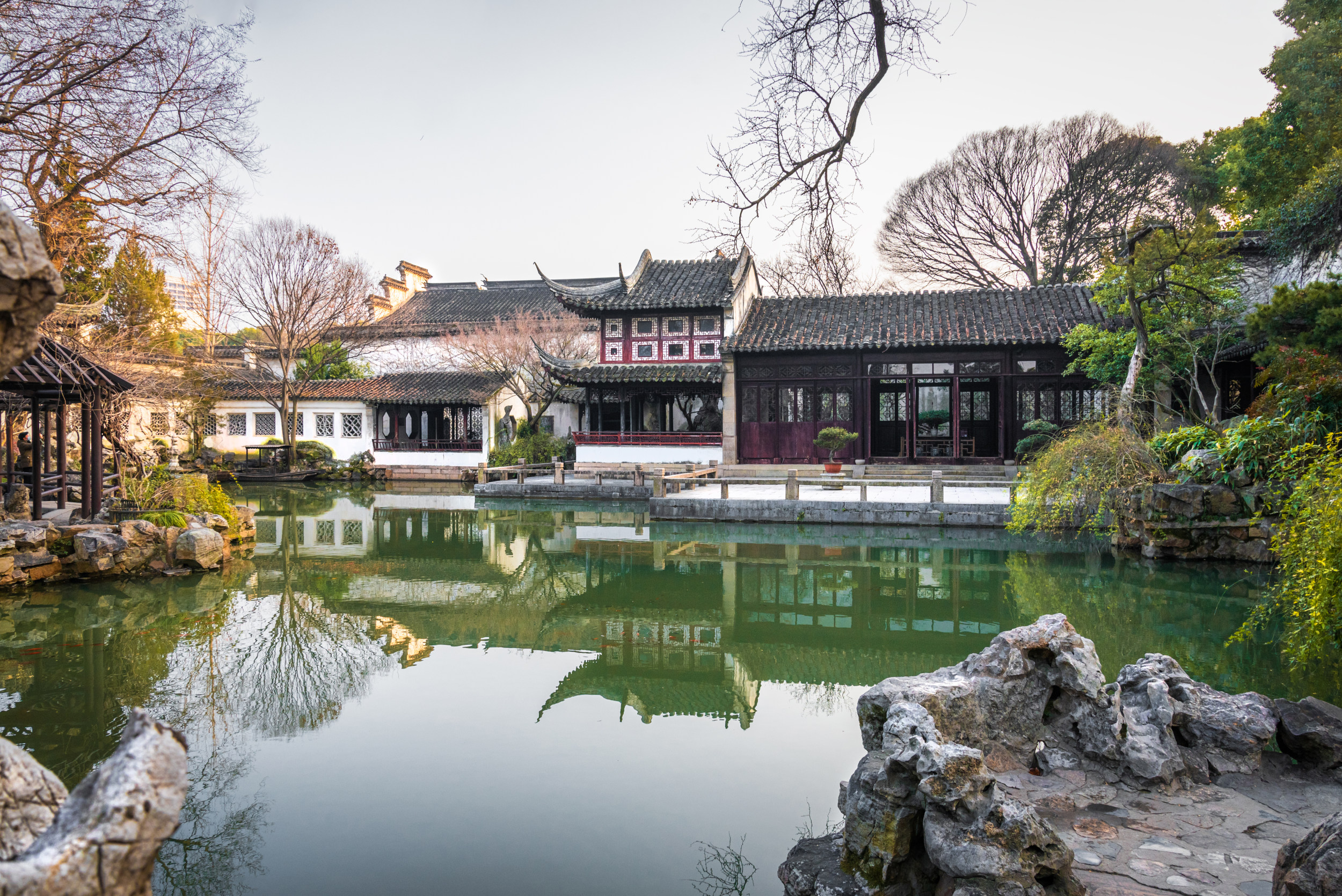
A well-chosen day trip adds a different experience to your Shanghai stay.
Choose by Experience Before Comparing Journey Times
The best excursion depends on what you want to see, what is already in your itinerary and how much travel you enjoy. A convenient destination can still be a poor choice if it repeats the previous day’s activities.
| Destination | Main reason to choose it | A sensible day-trip focus | When an overnight stay helps |
|---|---|---|---|
| Suzhou | Classical gardens, cultural collections and canal-side old streets | One garden and one nearby old-city area | You want several gardens, a museum and a less hurried evening |
| Hangzhou | West Lake scenery and a change from urban Shanghai | A selected lake area with one compatible addition | You want the lake, tea hills and temple time without rushing |
| Zhujiajiao | A manageable introduction to water-town streets and bridges | Canal walks, lunch and an optional boat ride | You specifically want an evening and a slower local stay |
| Tongli | A water town that fits a Suzhou-focused journey | The town itself, with a chosen cultural stop | You want early or late town time or are continuing through Suzhou |
| Wuzhen | A substantial canal-town visit, particularly Xizha after dark | One scenic zone with a clearly planned return | Night views and an unhurried morning are central to the trip |
| Nanxiang or Qibao | A shorter local outing without an intercity rail journey | Food, old streets and a selected local attraction | Usually unnecessary solely for a first local visit |
For a first Shanghai stay with one excursion day, start by comparing Suzhou and Hangzhou. Choose Suzhou for gardens and old-city culture, Hangzhou for a lake landscape. Choose Zhujiajiao if the water-town experience is the priority and you want to keep the excursion within the Shanghai transport network.
If Wuzhen is already part of your wider tour, another full water-town day may add less than Suzhou’s gardens or Hangzhou’s lake and tea culture. If you are interested in the differences between towns, however, two carefully chosen visits can be worthwhile. The issue is repetition without purpose, not a rule against visiting more than one.
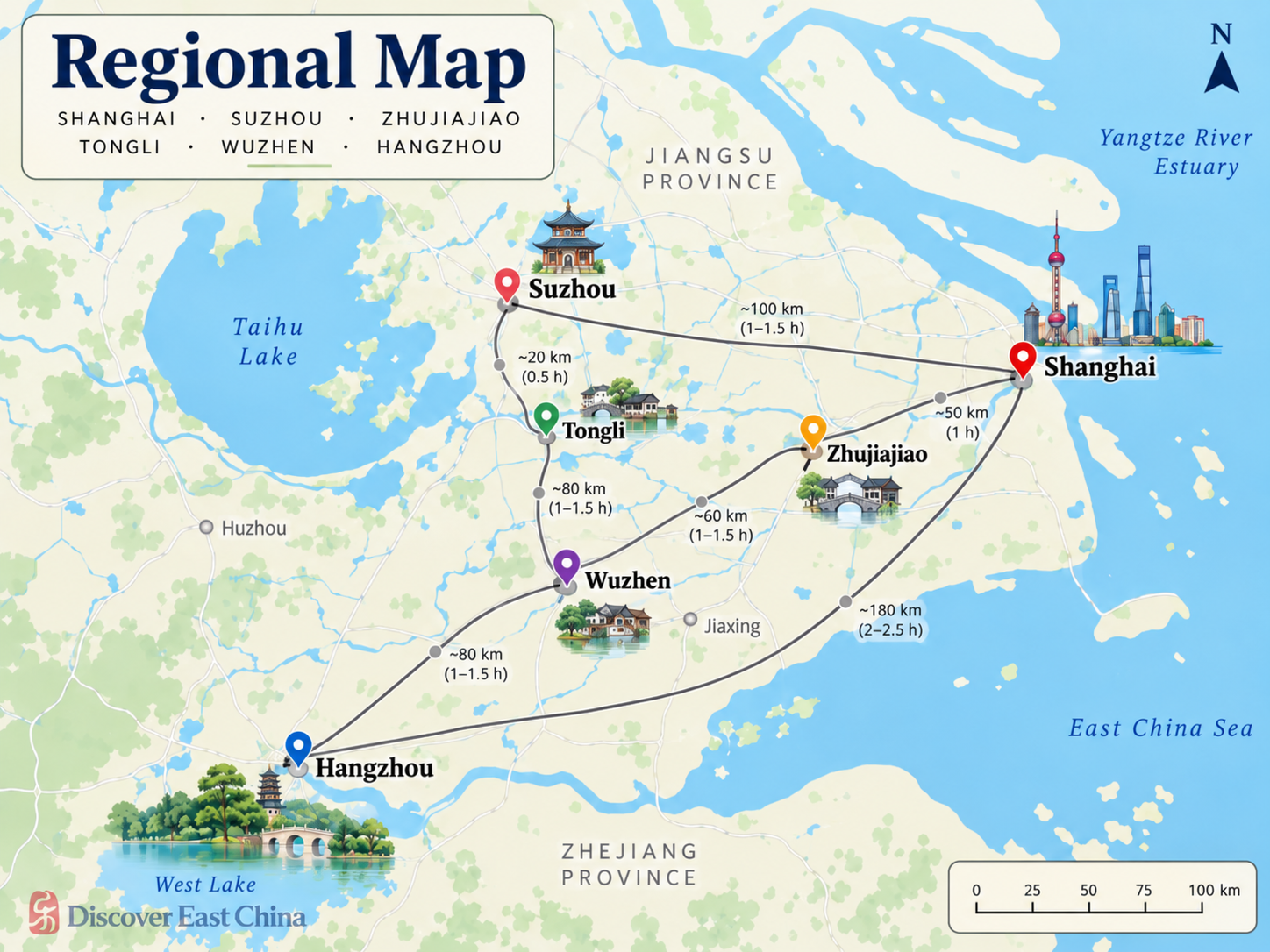
Schematic overview only. Confirm routes, journey times and current transport separately.
A Short Train Ride Is Only One Part of the Day
Train times describe the journey between named stations. Driving times usually describe a route between selected points under particular traffic conditions. Neither necessarily covers the journey from your hotel door to the place you want to visit.
For a rail excursion, count:
- Hotel to the correct Shanghai station.
- Time for finding the entrance, security, document checks and boarding.
- The booked train journey.
- Leaving the destination station and reaching the first attraction.
- Transfers between activities during the visit.
- The same sequence in reverse, including your final journey to the hotel.
For a road excursion, count traffic out of Shanghai, any comfort stop, the final approach, parking or permitted drop-off, and the walk to the entrance. A vehicle that reaches the town’s parking area has not necessarily reached your boat pier, museum gallery or hotel room.
An Illustrative Journey Breakdown
Imagine an excursion with a 40-minute train ride. If you allow 45 minutes to reach the Shanghai station, 35 minutes for station procedures and 40 minutes to reach the attraction after arrival, the outward journey takes about 2 hours 40 minutes. A similar return would use roughly 5 hours 20 minutes before sightseeing, lunch and local travel.
These figures are a hypothetical calculation, not a published timetable or a prediction for a particular city. They show why comparing destinations by the shortest train time alone can be misleading. Your hotel, station pair and first attraction determine the actual result.
Use Full-Journey Allowances for an Initial Plan
The following are broad editorial planning allowances for a central Shanghai hotel, ordinary conditions and a practical route. They are not measured journeys or current train schedules. Confirm the selected transport and revise them for your actual starting point. Public holidays, rush-hour traffic, public-bus waiting and mobility needs can extend them substantially.
| Destination | Initial allowance from hotel to first sightseeing area, one way | Initial allowance for outward and return travel combined | How much of the day to protect |
|---|---|---|---|
| Suzhou old-city visit | About 1.5–2.5 hours | About 3–5 hours | A full excursion day |
| Hangzhou West Lake visit | About 2–3 hours | About 4–6 hours | A full day with a focused route |
| Zhujiajiao | About 1.5–2.5 hours | About 3–5 hours | A substantial half-day or a relaxed full day, depending on your base |
| Tongli | About 2–3 hours | About 4–6 hours | A full town-focused day |
| Wuzhen | About 2.5–4 hours | About 5–8 hours | A long day, or consider one night |
These ranges are for screening options, not choosing a return departure. A direct vehicle, an outlying hotel or a favourable station connection can change the comparison. Rebuild the plan using your actual bookings before committing.
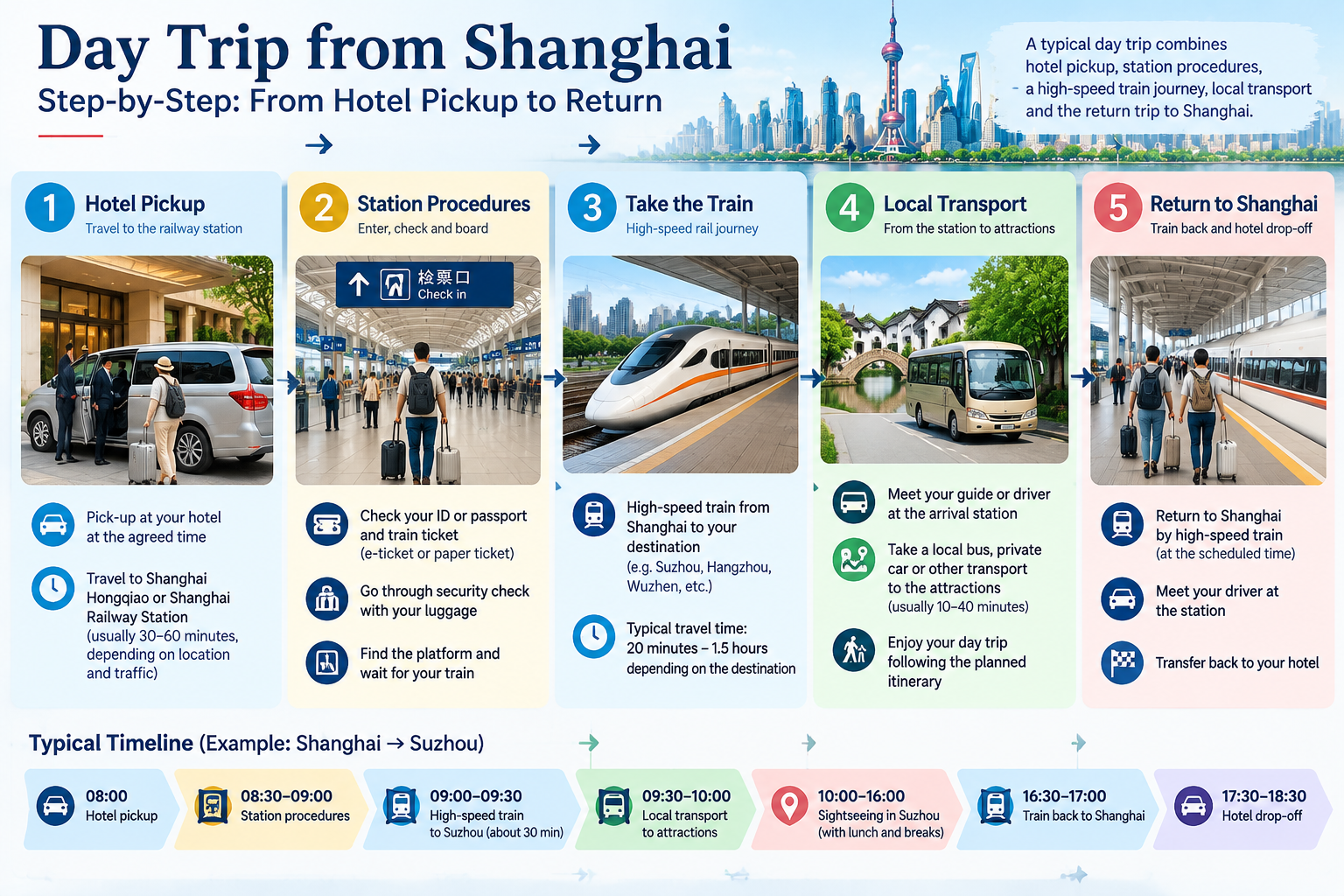
Compare the full journey, not only the time spent on the train.
Suzhou: The Strongest Choice for Gardens and Old-City Culture
Suzhou suits travellers who want a contrast with Shanghai’s modern skyline without making the day depend on a distant landscape. Its classical gardens are a central reason to visit. The Humble Administrator’s Garden and the Master of the Nets Garden are among the gardens recognised within Suzhou’s UNESCO-listed garden heritage.
For a first day trip, choose one garden and give it time. Look at how water, rocks, buildings and framed views work together rather than moving straight to the next entrance. A nearby canal-side street, lunch and a short cultural stop can complete the day.
A Realistic Suzhou Day
Travel to Suzhou in the morning, then reach the selected garden. Allow a focused visit without promising every corner. Have lunch and choose one old-city area, such as a manageable section of Pingjiang Road, for slower walking and a seated break. Return to the station with time for the booked departure.
You could choose Suzhou Museum instead of part of the garden-and-street plan if its collections or architecture interest you. The museum’s 2026 visitor notice published by Suzhou government identifies timed real-name reservations for the main museum at 204 Dongbei Street, while the West Museum at 399 Changjiang Road admits visitors without a general reservation. Bring the original passport or other accepted identity document required by the current booking instructions. They are different destinations, not interchangeable entrances. Confirm the chosen branch and live booking policy.
Avoid automatically combining two large gardens, the museum, Tiger Hill and several canal streets. That list involves more walking, admission procedures and local travel than the short Shanghai–Suzhou train segment suggests.
Choose the Right Suzhou Station
Suzhou Railway Station and Suzhou North Railway Station are different stations. Other services may use further stations in the wider city. Compare the train booking with the actual attraction route rather than accepting the first result containing the word Suzhou.
For an old-city visit, consider the total transfer from the station to your chosen entrance. A slightly longer train ride can still produce an easier day if it arrives at the more useful station. Match the return booking as carefully as the outward one.
When to Stay One Night
An overnight stay helps if you want a museum, more than one garden and time to explore after the daytime visits. It also works when Suzhou is the next stop on a longer journey rather than an excursion that must end back in Shanghai.
Choose a hotel for access to the parts of the city you will use. A canal-side address can be attractive, but historic properties differ in steps, luggage access and noise. Staying overnight gives more time; it does not remove the need to choose a coherent route.
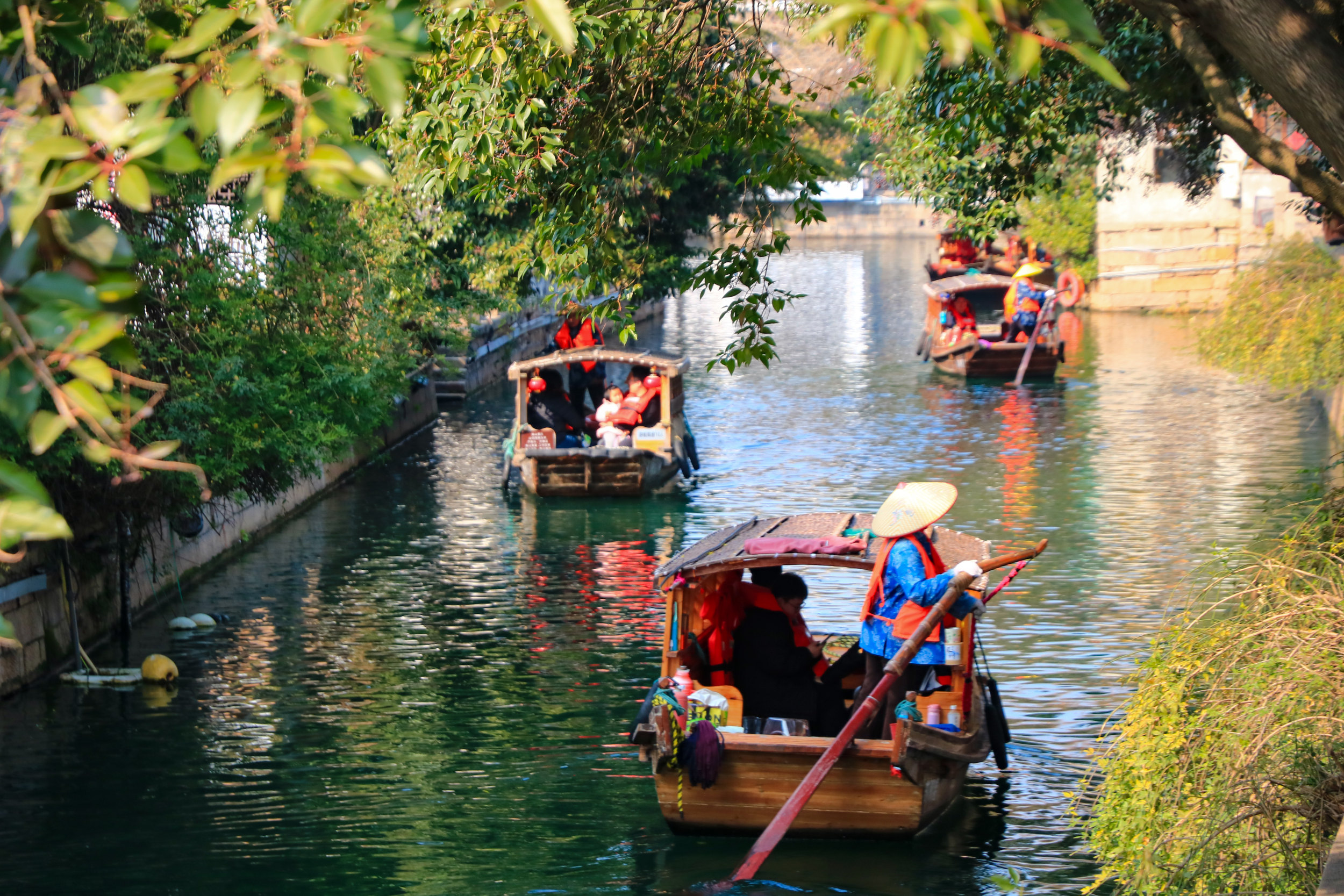
Pair one garden with a short old-city walk, rather than collecting several gardens in a single day.
Hangzhou: Worth the Journey for West Lake, with a Clear Focus
Hangzhou adds a different experience: a broad lake landscape, wooded hills and tea culture beyond the lake. West Lake is recognised by UNESCO as a cultural landscape. It is not a single viewpoint that can be completed between two other attractions.
Choose a selected shore, causeway or group of viewpoints for a day visit. You do not need to walk the full lake perimeter. Give yourself time to sit, enjoy the views and have lunch rather than trying to prove that you have covered the entire lake.
A Realistic Hangzhou Day
Arrive in Hangzhou, travel to your chosen West Lake area and spend the main part of the day there. A boat ride can be an optional addition if the service, weather and queue suit the plan. Otherwise, a focused walk and an unhurried meal can be enough.
If tea culture is the main priority, build a tea-focused day around a selected village or arranged experience and accept a shorter lake visit. Longjing’s tea-growing setting is distinct from central Shanghai, but reaching the hills involves another transfer. Tea picking and making activities depend on season and the specific provider; a tea-area visit does not guarantee participation in harvesting.
Lingyin is another substantial choice west of the lake. Confirm the current admission and reservation arrangements for the exact temple and scenic-area combination before booking. On a one-day excursion, treat it as a main anchor or substitute, rather than a compulsory addition after a full lake route and the tea hills.
Read the Arrival Station Carefully
Hangzhou East Railway Station, Hangzhou Railway Station and other stations in the wider area are not the same place. Hangzhou East is a major hub with onward urban transport; arrival there is not arrival at the lakeside.
Compare the local transfer to the selected part of West Lake before choosing the train. When a suitable service uses another station, it may fit your route better, but check its actual timetable and connections. Avoid planning the return around a station different from the one on your ticket.
When to Stay One Night
One night is often a better fit if you want West Lake, a tea-area experience and Lingyin, or if you value time beside the lake without a fixed evening return to Shanghai. Spread the interests over two days rather than making the first day a longer version of the same rushed route.
For a broader East China trip, continuing onward from Hangzhou can reduce backtracking. Compare that with the effort of checking out of your Shanghai hotel and carrying luggage. An overnight stay is useful when it improves the route, not simply because a destination has many attractions.
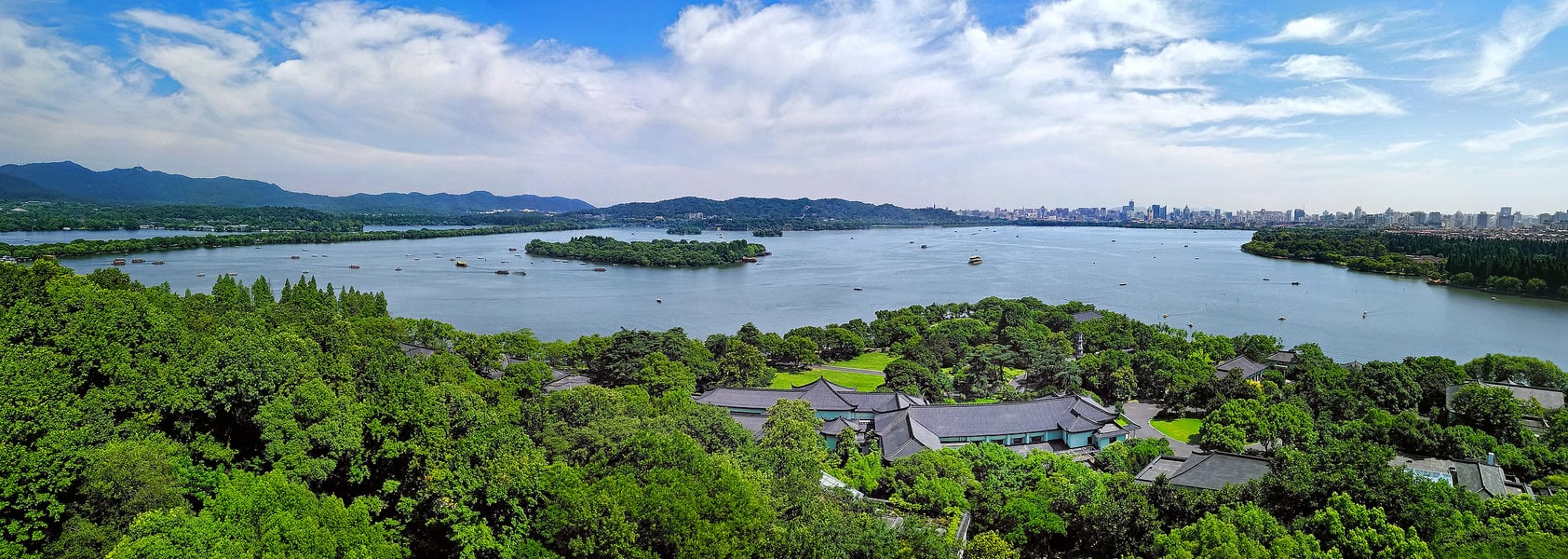
Choose a section of West Lake and enjoy it slowly; a day trip does not need a full lake circuit.
Zhujiajiao: A Practical First Water-Town Choice
Zhujiajiao is within Shanghai’s Qingpu district, but it still requires a meaningful outward and return journey from central hotels. It offers canal-side streets, bridges, food stops and optional boat rides without requiring an intercity train booking.
Metro Line 17 serves Zhujiajiao Station via Hongqiao Railway Station. The ancient town is not directly at the platform: the town’s official transport guidance describes a further walk or local connection. Count that final section in both directions, particularly with children, luggage or limited walking tolerance.
A direct vehicle may simplify the transfer, but it must use the permitted drop-off or parking area. Choose the arrival point for the part of the town you want, not merely the destination’s general name.
A Realistic Zhujiajiao Visit
Arrive, walk a selected canal route, pause for lunch and decide whether to add a boat ride or a specific garden or historic interior. Walking and boating give different perspectives; neither requires filling the day with every named bridge.
Confirm whether the boat is priced per vessel or per person, the route, boarding conditions and operating status. Individual attractions and combinations can have separate tickets even where you can walk through town streets without the same admission product.
Bridge steps, narrow streets and crowds affect the visit. Keep the plan short enough to enjoy the town rather than ending with an uncomfortable station walk. A modest-looking distance on a map can feel longer after several hours on foot.
Is a Night Necessary?
For a first water-town introduction, a day visit is usually enough. Stay overnight if you specifically want evening time, an unhurried morning or a particular accommodation experience. Check the property location and current evening activities rather than assuming a daytime attraction or an old event listing runs at night.
If your holiday already includes Wuzhen, ask whether Zhujiajiao adds something you want. Convenience alone may not justify repeating canal walks and boat photographs.
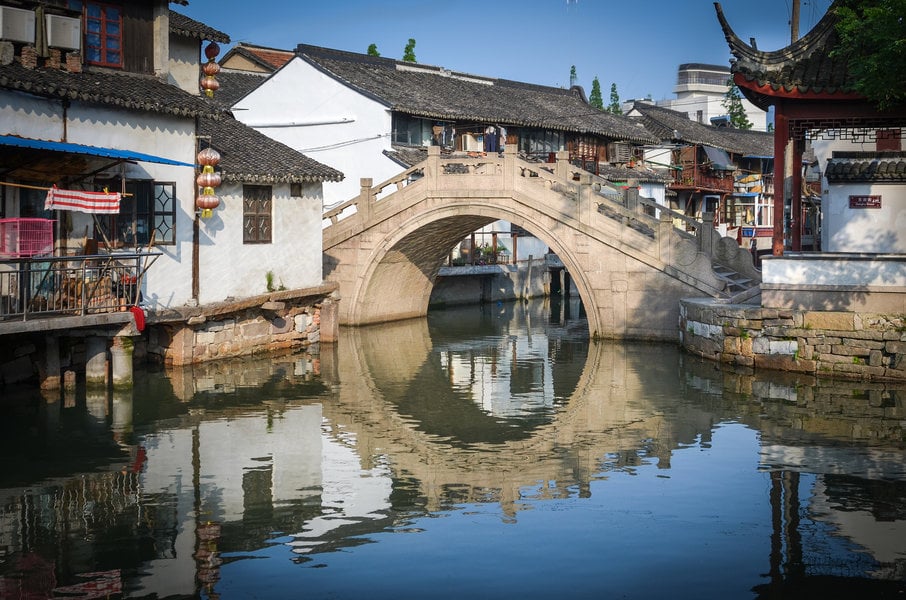
Zhujiajiao is a practical canal-town outing, but allow for the final transfer from the station.
Tongli: Choose It for the Town, or as Part of a Suzhou Stay
Tongli is in Suzhou’s Wujiang district, away from the central old-city garden cluster. It offers another water-town setting and can be a sensible choice if that is your main interest or if you are already staying in the wider Suzhou area.
Do not mistake Tongli Metro Station for the entrance to the old town. The journey requires a final local connection, and any rail route from Shanghai also needs time for the Suzhou-side transfer. A direct vehicle can simplify the sequence, but compare the actual journey rather than treating Tongli as a short extension of a central garden visit.
Keep a Tongli Day Focused
Spend the day on the town itself: selected streets, a cultural stop, lunch and an optional boat experience where suitable. The Retreat and Reflection Garden can provide a garden element, but check its admission and route separately.
A combined Suzhou-and-Tongli outing is possible with a deliberately reduced plan and suitable transport. It is not the right default if you want a substantial garden visit, a museum, a town walk and relaxed meals. Ask which stops will be shortened and how much local driving the combination introduces.
When an Overnight Stay Helps
An overnight can give more time in the town or form part of a two-day Suzhou-area visit. Decide whether staying in Tongli or central Suzhou better serves the following morning’s plan. Check the actual hotel location, road access and steps if you have luggage or mobility needs.
If you are already visiting another water town, choose Tongli for a specific reason, such as its fit with the route or a particular garden interest. Do not add it simply because it is another well-known name.
Wuzhen: Stronger as an Overnight When Night Views Matter
Wuzhen is an attractive option for travellers who want to give a water town more time. Its Dongzha and Xizha scenic areas are different parts of the destination, with their own entry and visiting arrangements. For a first visit focused on evening scenery, Xizha is the main area to investigate.
The railway leg from Shanghai is only part of reaching Wuzhen. The resort’s transport guidance routes rail travellers through Tongxiang and then onward by local road transport. Do not book a train expecting to step directly into the canal streets.
Some published transport guides are older than the current timetable. Check live trains and the current bus, coach or transfer service for your date, including where it ends. A coach arriving at the bus station and a vehicle arriving at the selected scenic entrance create different final journeys.
Can You Visit in One Day?
Yes, with a focused plan and realistic return transport. Choose one main scenic area rather than assuming both zones, a boat ride, several indoor attractions and evening views will all fit comfortably.
If night scenery is essential, work backwards from the return arrangements before buying the excursion. Check the actual time available after dark, the journey to the station or Shanghai, and whether the driver or coach remains available. A tour described as Wuzhen day trip does not automatically include the night experience.
Why One Night Often Adds More
An overnight lets you enjoy evening time without immediately starting the return journey. It also creates a second, less hurried period the following morning. That is a meaningful change in the experience, rather than just an extra hotel night.
Check whether the property is inside the selected scenic zone or outside it, and whether the booked rate includes admission or any re-entry arrangement. The official accommodation listings distinguish locations and packages; do not assume every Wuzhen hotel gives the same access. Confirm luggage handling, check-in and the route from the drop-off point.
If you stay overnight, remove another similar water-town visit from a short itinerary unless the contrast matters to you. A Shanghai–Wuzhen–Hangzhou journey can be worth comparing with two separate returns to Shanghai, but calculate the actual transfers and hotel changes rather than assuming the map makes it efficient.
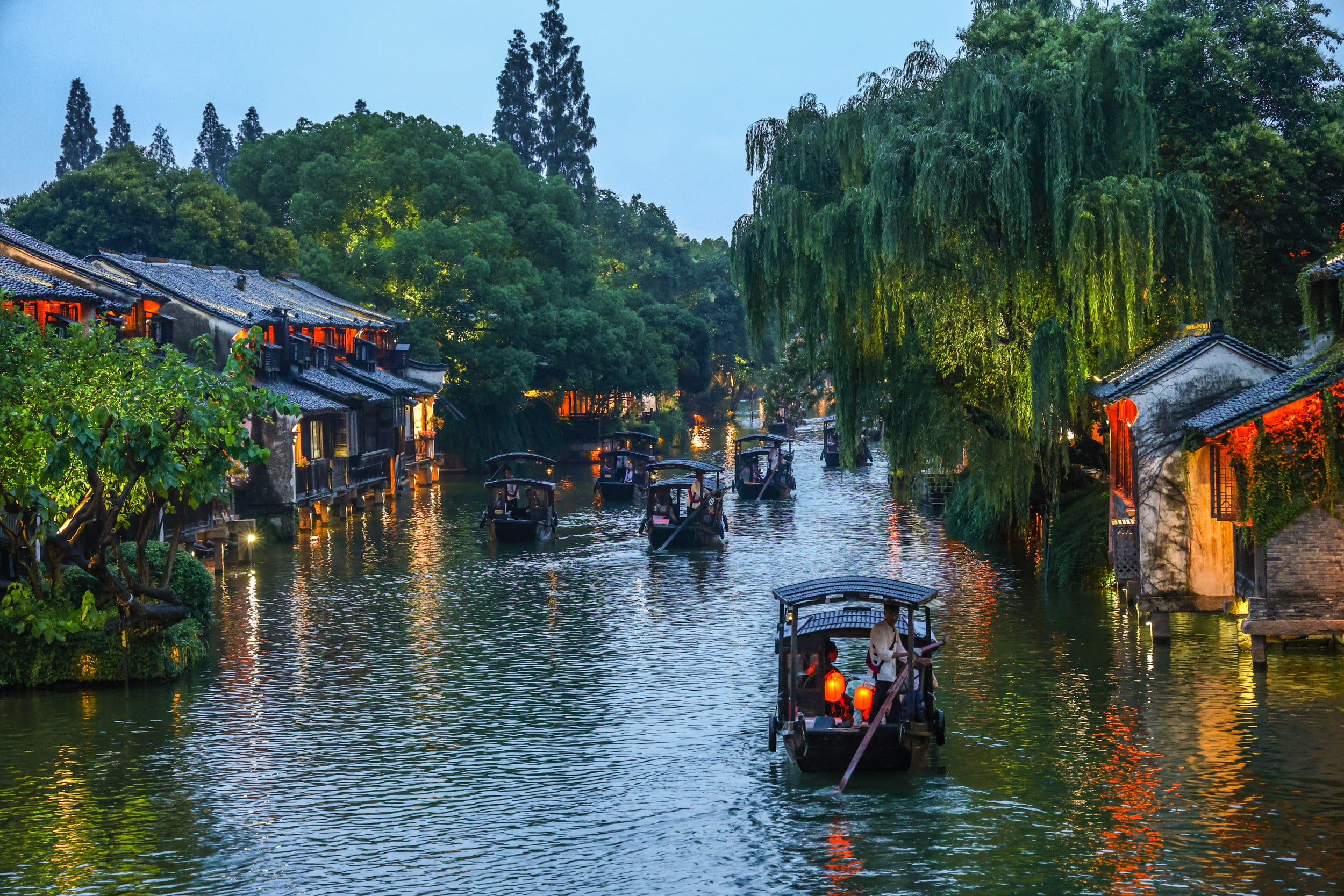
Stay one night if Wuzhen's evening atmosphere is a priority, rather than fitting it into a rushed return window.
Other Choices: Shorter Local Outings and Alternative Water Towns
Nanxiang and Qibao can suit travellers who want old streets and food without dedicating a full day to intercity travel. Nanxiang offers a garden-and-food direction, including Guyi Garden and soup-dumpling associations. Qibao provides a compact old-street and waterway setting in Minhang.
These are local Shanghai outings, not substitutes for every aspect of Suzhou’s gardens or a full Wuzhen stay. Their appeal is a smaller commitment. Depending on your hotel and chosen activities, keep them as a half-day-style plan rather than padding them with distant sights.
Xitang is another water-town candidate in the wider region. Consider it when a particular town atmosphere, accommodation choice or onward route interests you. Apply the same checks: identify the correct arrival point, calculate the local transfer, confirm admission and examine the evening return. A different town name alone does not guarantee a different experience.
For a short stay, it is reasonable to omit a regional excursion entirely. Shanghai’s museums, neighbourhoods and riverfront can fill several worthwhile days. A day trip should improve the holiday rather than create pressure to leave the city.
Day Return or One Night: A Practical Decision
Stay overnight when the extra time changes what you can enjoy, particularly an evening setting, two distinct sightseeing areas or a more comfortable start the next morning. Return the same day when the destination has a clear single focus and you prefer to keep your Shanghai base.
| Your priority | More useful choice | Why |
|---|---|---|
| One Suzhou garden and an old-city walk | Day return | A focused first visit can work without changing hotels |
| Several Suzhou gardens plus a museum | One night | The activities need more than a compressed afternoon |
| A selected West Lake area | Day return | Keep the Hangzhou route focused |
| West Lake, tea hills and Lingyin | One night, or simplify | These interests add local travel and distinct visits |
| A first canal-town introduction | Zhujiajiao day visit | It can meet the goal without an intercity rail booking |
| Wuzhen after dark and a relaxed morning | One night | Removes the immediate pressure of the late return |
| Keeping luggage and sleeping arrangements unchanged | Day return | One base can outweigh the appeal of another hotel |
| Continuing through East China | Compare an onward overnight route | It may reduce backtracking, depending on the actual transfers |
Account for checkout, luggage, storage and the next day’s departure when comparing costs and time. Keeping a Shanghai room while also booking another hotel changes the budget. Giving it up changes the luggage plan. Neither is automatically the better choice.
Avoid Repeating Similar Experiences
A balanced itinerary adds variety. Think in terms of experience types: a classical garden, an open lake landscape, a canal town, a city neighbourhood, a museum and a particular food or craft interest.
For one excursion, choose the clearest contrast with the rest of your Shanghai stay. For two, Suzhou and Hangzhou provide different emphases; a city visit and one water town can also work. Three water-town days may be worthwhile for an enthusiast, but most first-time visitors benefit from a wider mix.
Combinations That Often Make Sense
- Shanghai and Suzhou: city skyline and neighbourhood life, followed by a garden-focused day.
- Shanghai and Hangzhou: an urban stay followed by a selected lake landscape or tea-focused excursion.
- Shanghai, Suzhou and Hangzhou: two distinct regional directions, with enough days to avoid consecutive rushed departures.
- Shanghai and Wuzhen with one night: a city stay and a dedicated canal-town evening.
- Shanghai and one nearby water town: a simpler plan for travellers who want the water-town introduction without changing hotels.
Combinations to Examine More Carefully
Visiting Zhujiajiao, Tongli and Wuzhen on successive days can repeat canal walks, bridge photographs and boat rides. Adding a second large Suzhou garden immediately after the first may also feel repetitive if you are not interested in garden design.
The solution is to name the purpose of each visit. If you cannot explain what the second destination adds, remove it or use the day for rest. If the contrast is important, give each place enough time to make that difference visible.
Do not normally combine Suzhou and Hangzhou as a single Shanghai day return. The second city introduces another intercity leg and another local transfer, leaving less time in both. A multi-city transfer day is a different product from a relaxed day trip and should be described that way.
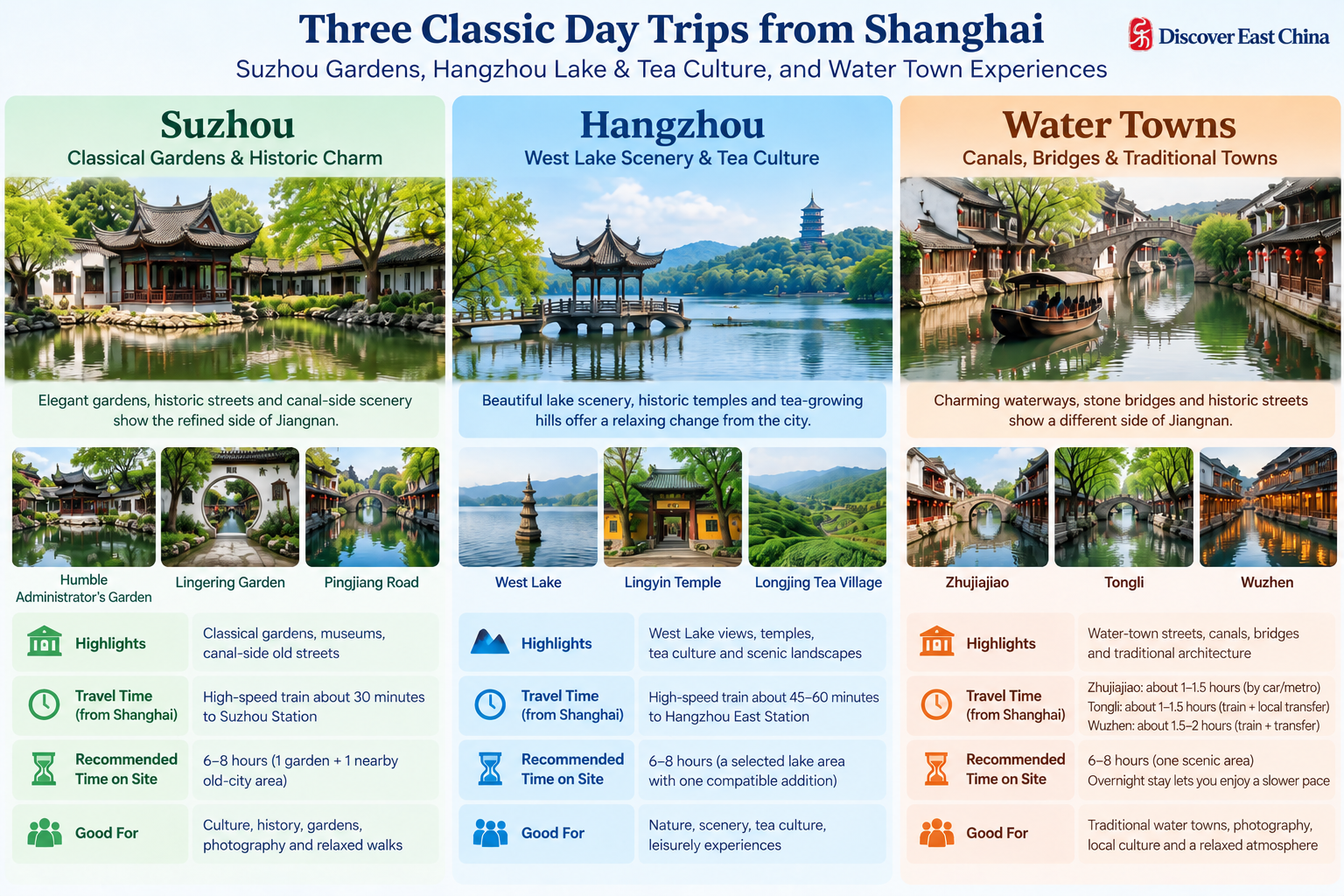
Choose what each destination adds: gardens, lake scenery and a water town create different emphases.
Transport and Booking Checks Before You Commit
Rail: Book the Complete Return Plan
Use the selected date and exact station pair to compare services. China Railway’s official 12306 service provides train booking and information; overseas travellers should use the appropriate passport details and carry the original valid document used for the booking.
Check both directions before fixing the sightseeing programme. A convenient outward train does not guarantee a suitable return seat. Leave enough time for the transfer from the final attraction, station entry and boarding. Do not assume a ticket for one departure allows travel on any later train.
If your travel date is not yet bookable, treat the route as provisional. Check the current release arrangements rather than promising a specific train months in advance. Booking through an agent also needs clarity on confirmation, service fees and change conditions.
Road Transport: Clarify Duration and Waiting
A private car can make water-town transfers simpler, particularly for a group. Confirm the vehicle, luggage capacity, child-seat or accessibility needs, and whether the driver waits or returns at a fixed time.
Ask whether tolls, parking, waiting, extra stops and overtime are included. If you want night views, confirm the actual late-return arrangement in writing. A direct vehicle reduces transfers but remains subject to traffic and permitted drop-off points.
Admission: Check the Specific Venue
Gardens, museum branches, temples, scenic zones and boats can have separate entry arrangements. A transport booking is not an attraction reservation unless the package explicitly says so.
Build around any scarce timed booking, then keep the remaining day flexible. If it is unavailable, choose a suitable alternative before buying tightly linked travel. Do not travel on the assumption that a guide can override the venue’s admission system.
Weather, Walking and Different Travel Needs
Garden paths and water-town bridges may have steps, uneven surfaces and limited space. A town described as walkable is not necessarily step-free. Check the actual route if travelling with a pushchair, wheelchair or walking aid.
Boat boarding is a separate access question. Ask about the chosen vessel, pier, seating and weather restrictions. A photograph of a calm canal does not establish safe or suitable boarding for your group.
On wet days, shorten outdoor routes and allow for slippery paving. A Suzhou museum can be an alternative only if admission is available; a water-town outing is not automatically an indoor rain solution. Hangzhou’s views and boat operations can also be affected by weather.
With children or travellers who need regular rest, prioritise a direct route, lunch and a predictable return. A destination that requires several transport changes may cost more energy than a longer direct drive. Avoid booking an early excursion immediately after a late-night Shanghai activity.
How Many Excursion Days Fit Your Shanghai Stay?
For three full days, consider two city days and one excursion. If Disney is already a priority, it competes for that same full-day space; you may prefer to keep regional travel for another visit.
For four or five full days, one excursion plus a flexible city day gives a comfortable balance. Two excursions can work when both add distinct experiences, but they need not be consecutive. Leave room for weather changes and rest.
For a longer East China journey, compare an overnight or multi-city route with repeated returns to Shanghai. Suzhou, Wuzhen and Hangzhou can each deserve more time, but the best order depends on where you begin, where you finish and how you travel between the actual hotels and attractions.
Arrival and departure days are not automatically full sightseeing days. Keep a long regional return away from a tightly timed international flight or other essential connection.
Frequently Asked Questions
1. What is the best first day trip from Shanghai?
Choose Suzhou for classical gardens and old-city culture, Hangzhou for West Lake scenery, or Zhujiajiao for a first water-town outing. The best option is the one that adds something different to your existing plan.
2. Are Suzhou and Hangzhou genuinely possible in a day?
Yes, as separate focused excursions with suitable transport. Count the station approaches and local transfers, and choose a limited sightseeing route. A short rail segment alone does not prove that every major attraction will fit.
3. Can we visit both cities in one day?
It is usually a poor choice for an enjoyable first visit. The extra intercity journey reduces time in each city. Choose one, or use an overnight route if you want both.
4. Why does the complete journey take longer than the advertised train time?
Because the train time excludes the hotel journey, station procedures and transfer from the arrival station to the attraction. The same stages apply on the return. Local journeys between sights add more time.
5. Which Suzhou station should we book?
Compare the exact services with the attraction route. Suzhou Railway Station and Suzhou North are different stations. Choose by the complete journey rather than the city name or shortest rail segment alone.
6. Does Hangzhou East put us beside West Lake?
No. You still need an urban transfer to the selected lake area. Other station options may suit some routes, but they need to be checked against the actual service and return plan.
7. Which water town is easiest to add to a Shanghai stay?
Zhujiajiao is a practical starting comparison because it is within Shanghai and served by Metro Line 17. It still needs a final local journey from the station. A direct vehicle may suit some travellers better.
8. Is Tongli just a quick stop after Suzhou's gardens?
Not automatically. It is outside the central old-city cluster and needs its own transfer. A combined day should reduce the number of other stops rather than simply adding Tongli to a full Suzhou schedule.
9. Is Wuzhen worth visiting for only one day?
It can be if you choose a focused zone and a practical return. If evening scenery is your main reason to go, one night often gives a better experience. Check what a day-tour product actually includes after dark.
10. Do we need to see both Dongzha and Xizha?
No. Choose the area that matches your interests and available time. Confirm the ticket and access arrangements for that choice instead of assuming every Wuzhen admission product covers both zones in the same way.
11. Should we visit more than one water town?
Only if the differences matter to you or the visits fit different parts of a longer trip. On a short stay, one water town plus a garden or lake destination often gives more variety.
12. Is a private car better than high-speed rail?
It depends on the destination, hotel and group. Rail can be useful for city excursions, while a direct vehicle can simplify water-town transfers. Compare complete time, changes, traffic exposure and cost.
13. Should we reserve the return train in advance?
Check and secure a suitable return when planning the excursion, particularly at busy times. A good outward service is not enough to complete the day. Leave a realistic transfer and boarding margin before departure.
14. What happens if it rains?
Shorten outdoor plans or choose an available indoor alternative. Wet historic paving and boat operations need particular attention. Check museum admission before treating it as a last-minute replacement.
15. Are these trips suitable for children and older travellers?
They can be with an appropriate pace and route. Confirm steps, walking distances, toilets, meals and transport support. A direct journey and fewer stops often matter more than the shortest advertised travel time.
16. When is staying overnight better than returning to Shanghai?
Stay when it enables an experience you value, such as Wuzhen at night, a broader Hangzhou visit or several Suzhou cultural stops. An overnight can also reduce backtracking on a longer route, but include luggage and hotel changes in the comparison.
Choose an Excursion That Adds to Your Holiday
The most useful day trip is not the one with the longest attraction list. It is the one that gives you enough time for the experience you came to enjoy and a return journey that still feels manageable.
Discover East China Tours can help compare a focused Shanghai day excursion with an overnight or wider East China route. Share your hotel area, travel dates, main interests and walking or transport requirements. Confirm admission, guiding, vehicle arrangements and any special assistance in the actual proposal before booking.
Prepared for Discover East China Tours. Updated: 13 October 2026.