
Explore Dongzha's historic streets, museums and craft displays with a practical walking sequence, boat options and flexible plans for adding Xizha.
Dongzha, the East Scenic Area of Wuzhen, suits travellers who want to look beyond the canal views. Its historic streets connect small museums, former residences and craft-related displays, allowing a visit to move between everyday objects, traditional skills and the buildings that once housed them.
A good first visit combines a manageable canal walk with a few well-chosen interiors. The Jiangnan Hundred Beds Museum, Hongyuantai Dye Workshop and Jiangnan Woodcarving Museum offer a useful starting group. Add Mao Dun’s Former Residence if literary history interests you, and make time for the streets between the sights rather than treating them only as connecting corridors.
Allow around three to four hours for a comfortable first visit with several stops and a break. This is an editorial planning recommendation, not an official minimum. A shorter introduction is possible, while a specialist interest, boat ride or scheduled performance can justify longer.
If combining Dongzha with Xizha, the clearest pattern is usually Dongzha during the earlier part of the day, followed by Xizha in the afternoon and evening. If your arrival is late or your group prefers a gentler pace, choose one area or spread the visits across an overnight stay.
Dongzha at a Glance
| Question | Practical answer |
|---|---|
| What is Dongzha? | Wuzhen’s East Scenic Area, with canal-side streets, traditional buildings, small museums and craft-related sights |
| What makes it worth visiting? | The combination of household objects, textile traditions, woodcarving and literary history within a water-town setting |
| How much time should you allow? | Around three to four hours for a relaxed first visit; adjust for selected interiors, queues and activities |
| Is walking enough? | Yes. Walking gives the best access to museums and street-level detail |
| Should you add a boat? | Optional, for a different canal perspective or a useful route segment where available |
| Can you combine it with Xizha? | Yes, with separate admission planning and time for the transfer |
| What is the best time of day? | Daytime, when the interiors and any scheduled demonstrations are available |
Dongzha is a visitor destination with managed sights and commercial activity. Its appeal does not depend on an expectation of empty streets or an untouched village without tourism.
Understand Dongzha Before Planning the Route
The classic visit follows the canal-side streets, with a sequence of interiors and courtyards along the way. You can adapt that sequence to your interests without walking every side lane or entering every display.
Orient yourself at the visitor centre, identify the selected sights on the current map and establish your final exit or meeting point. A boat landing, pedestrian exit and vehicle pickup may be in different places.
English place names vary between maps and platforms. Keep the Chinese names available when asking for directions.
| English name used in this guide | Chinese name |
|---|---|
| Dongzha / East Scenic Area | 东栅景区 |
| Caishen Bay | 财神湾 |
| Fengyuan Double Bridge | 逢源双桥 |
| Jiangnan Hundred Beds Museum | 江南百床馆 |
| Jiangnan Folk Customs Museum | 江南民俗馆 |
| Sanbai Wine Workshop | 三白酒作坊 / 三白酒坊 |
| Hongyuantai Dye Workshop | 宏源泰染坊 |
| Jiangnan Woodcarving Museum | 江南木雕馆 / 江南木雕陈列馆 |
| Yu Liuliang Coin Museum | 余榴梁钱币馆 |
| Mao Dun’s Former Residence | 茅盾故居 |
| Lizhi Academy | 立志书院 |
| Xiuzhen Taoist Temple | 修真观 |
| Hanlin Residence | 翰林第 |
| Shadow-puppet theatre | 皮影戏馆 |
| Huiyuan Pawnshop | 汇源当铺 |
| Xinhua Bridge Pier | 新华桥码头 |
Use this table for recognition rather than as a promise that every space or service will be open on your visit date.
How Much Time Should You Spend?
Around two hours: a selective introduction
Choose two or three priorities and keep the canal walk compact. The Hundred Beds Museum and dye workshop provide useful variety, with another stop selected according to your interests and the available route.
A two-hour plan works best when you are already in Wuzhen and have a clear arrival and departure arrangement. It is a limited sightseeing window, not the complete time required for an excursion from another city.
Avoid adding a boat queue or waiting for a performance unless it is your main reason for visiting.
Around three to four hours: a comfortable first visit
This allows several interiors, time to notice the streets and a proper break. You can include woodcarving or literary history without reducing the visit to a fast circuit.
If an optional boat or performance matters, build the route around its confirmed availability and reduce other stops as needed.
Half a day or longer: for a specific interest
A longer visit can suit travellers interested in architecture, traditional crafts or literature. It gives you time to read displays, compare objects and revisit a view under different light.
The extra time should have a purpose. You do not need to enter every museum just because the schedule allows it. If you are also visiting Xizha, protect enough afternoon time there rather than spending all your energy in Dongzha.
A Practical First-Time Walking Route
A useful sightseeing sequence is:
Visitor-centre orientation → Caishen Bay and Fengyuan Double Bridge → Hundred Beds Museum and optional folk-customs displays → Sanbai Wine Workshop and Hongyuantai Dye Workshop → selected woodcarving or coin displays → Mao Dun’s Former Residence and Lizhi Academy → Xiuzhen Temple area and other optional stops → arranged exit or onward transfer.
This is an interest-based sequence, not a turn-by-turn navigation map or an assertion of one-way circulation. Check current signs for crossings, access and temporary changes. Skip a closed or crowded stop without feeling obliged to retrace the whole route.
Stage 1: Arrival, canal orientation and the bridge setting
Suggested allocation: 20–30 minutes.
Start by resolving admission and finding your position on the map. Identify the first museum you want to visit, toilets and the return or onward meeting point.
The Caishen Bay and Fengyuan Double Bridge area provides an opening canal scene. Use it to observe how the buildings relate to the water and how bridges link the paths.
Take a few views, then move on. You will find more canal perspectives during the walk, so there is little reason to spend the opening stretch waiting at one crowded photo position.
If a performance is taking place nearby, ask about its duration before changing your route. A programme listed in an old guide is not confirmation that it operates today.
Stage 2: Household life through the museum displays
Suggested allocation: 35–55 minutes.
The Jiangnan Hundred Beds Museum is a strong first interior stop. Its historic beds allow you to look at furniture as part of household life, craftsmanship and social display.
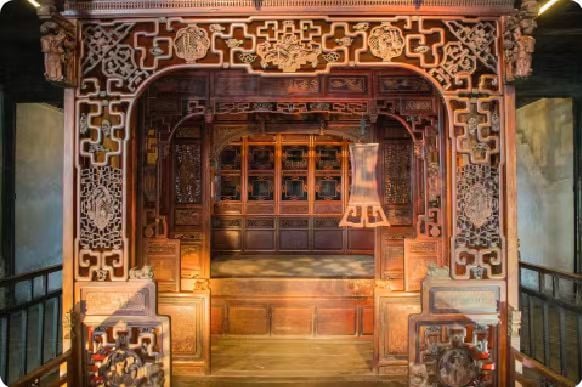
Carved beds introduce household life and decorative craftsmanship.
Select a few examples rather than inspecting every object with the same intensity. Compare a simpler structure with an elaborate one and look for differences in carving, enclosure and the way the bed occupies space.
If the Folk Customs Museum is open and fits the route, it adds another layer of local social history. Use the displays and labels to connect objects with customs, rather than relying on appearance alone.
This section is especially useful for travellers who enjoy tangible objects but may find a long text-heavy museum visit tiring.
Stage 3: Wine-making and blue-print textiles
Suggested allocation: 35–55 minutes.
Continue towards the Sanbai Wine Workshop and Hongyuantai Dye Workshop. Together, they introduce different forms of local production.
At the wine workshop, notice the relationship between the street-facing sales space and the production or interpretation area behind it. Ask which parts are available to visitors that day.
At the dye workshop, look beyond the fabric drying yard. Where interpretation is available, follow the stages of making patterned cloth and compare the tools with the finished material.
A display, a live demonstration and a hands-on session are different experiences. Do not expect every stage to be operating continuously or assume you can join a workshop without a separate arrangement.
Take a break around this point if the group needs one. Choose a seated venue rather than relying on a long pause in a narrow passage.
Stage 4: Woodcarving and an optional specialist collection
Suggested allocation: 25–45 minutes.
The Jiangnan Woodcarving Museum offers a useful continuation after the textile displays. It is housed in a historic residence, so look at the architectural setting as well as the exhibited pieces.
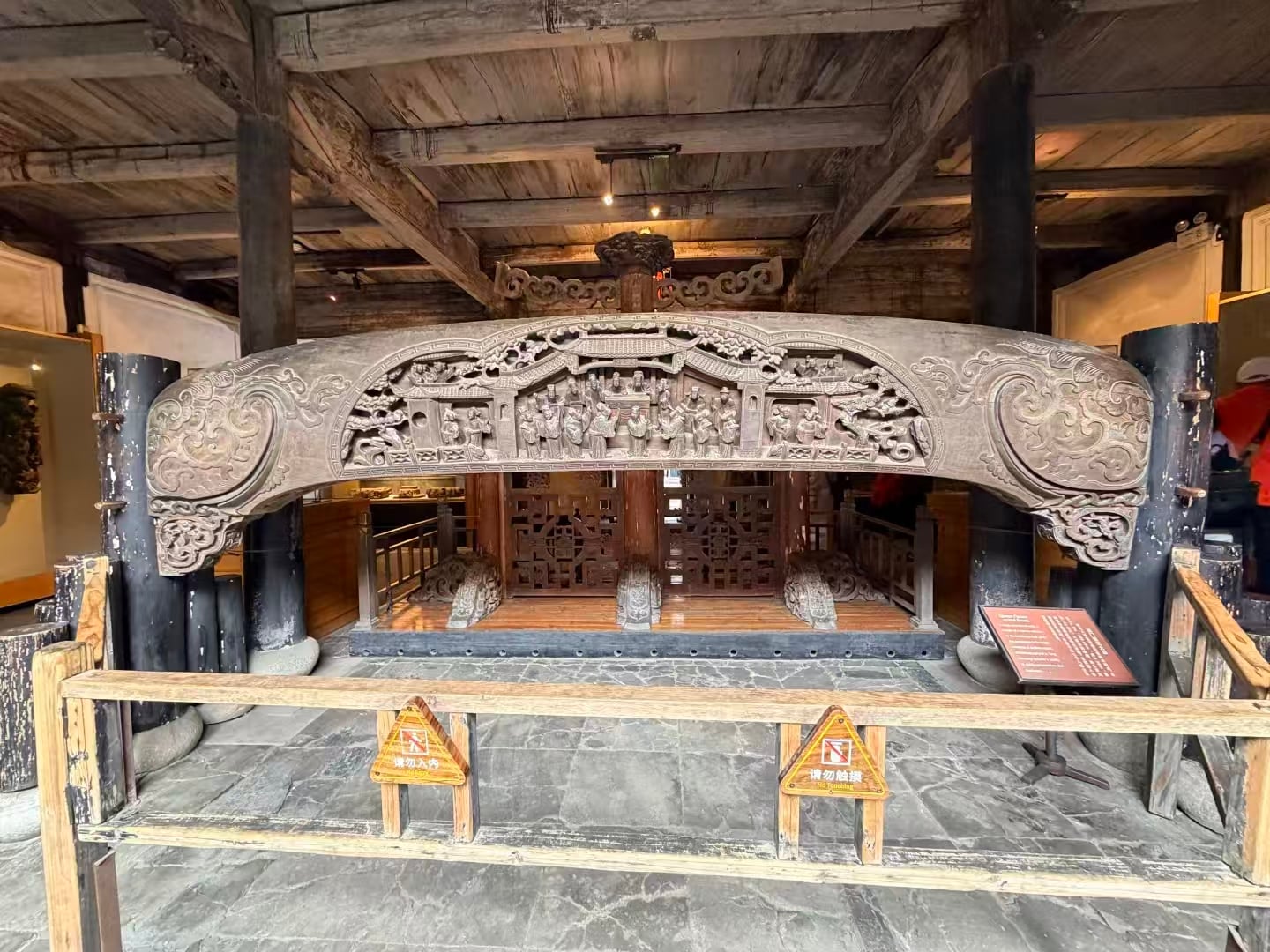
Inspect carved details and their architectural setting.
Choose a few carved details to examine closely. Compare how figures, plants or other motifs occupy a panel and how the depth of carving affects the appearance.
The Yu Liuliang Coin Museum is an optional addition for visitors interested in collecting, money or trade. If that topic does not appeal, use the time for a street walk or rest instead.
Small museums can become repetitive when treated as a compulsory series. Select the topic that changes the visit for you.
Stage 5: Mao Dun, education and a traditional residence
Suggested allocation: 30–50 minutes.
Mao Dun’s Former Residence connects the town with the life of the modern Chinese writer, also known as Shen Yanbing. Lizhi Academy, associated with the memorial setting, adds an educational dimension to this part of the visit.
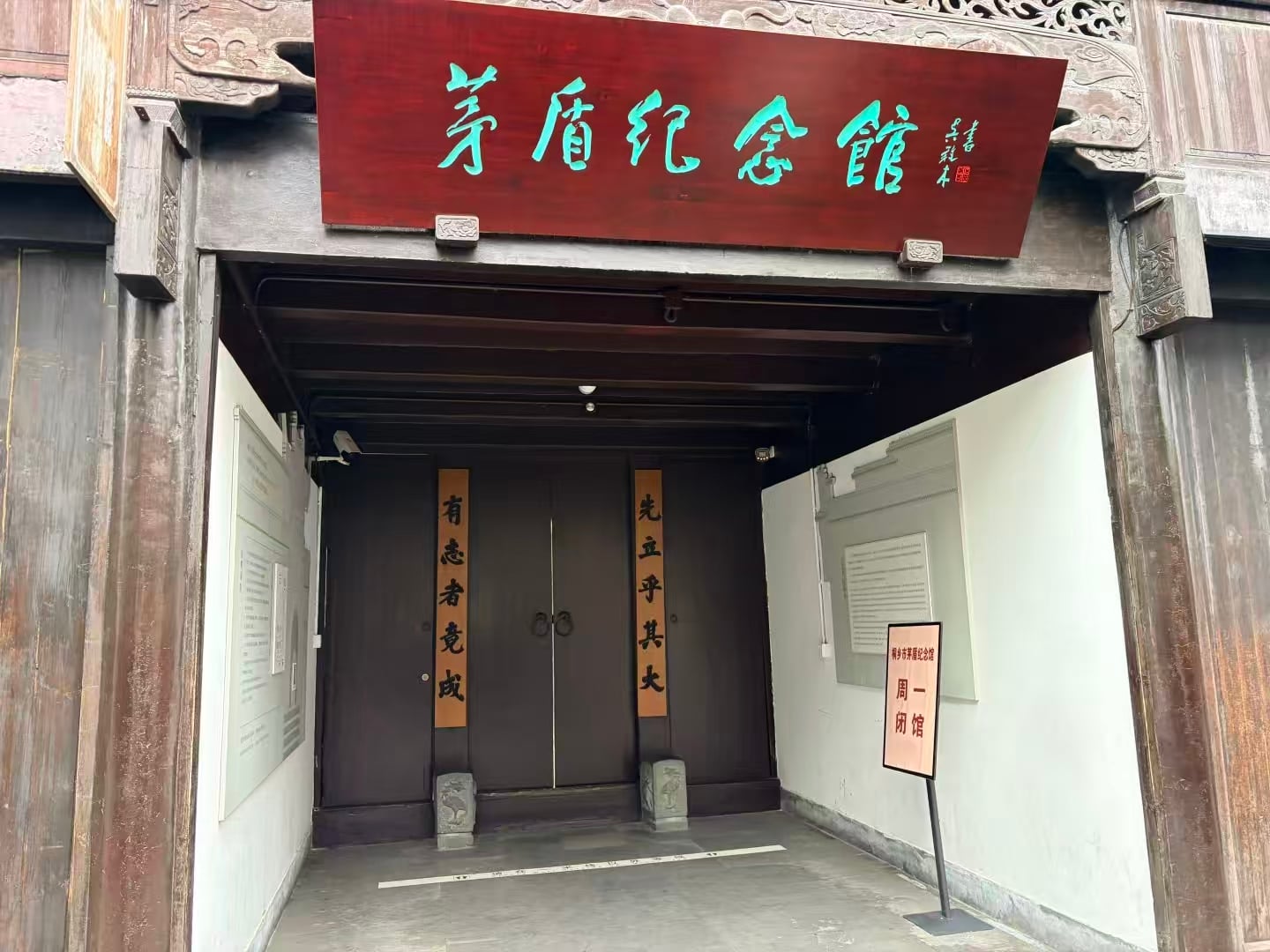
Mao Dun’s former home adds a literary stop to the route.
Even if you have not read Mao Dun, the residence can help you understand the relationship between a family home, study and courtyard. A brief introduction to the writer is more useful than trying to read every display without context.
Travellers with a literary interest may want longer here. For others, a focused visit to the building and a few key interpretive points can be enough.
Do not confuse this Dongzha residence with Mao Dun-related memorial spaces in Xizha. Check the actual place name when planning the route.
Stage 6: Temple surroundings, optional traditions and departure
Suggested allocation: 20–40 minutes.
Continue towards the Xiuzhen Temple area if it fits your route. Choose any additional stop according to current access and your remaining time.
Hanlin Residence can be of interest for its domestic architectural setting. A shadow-puppet programme may add a performance element if a current show is available. Huiyuan Pawnshop provides another possible stop for travellers curious about historic commercial life.
Treat these as choices. Do not arrive at the final section with a list of compulsory visits and no time left for the transfer.
Confirm the exit route and head towards your arranged meeting point with a margin. If continuing to Xizha, finish with enough energy for another walking area rather than using every available minute inside Dongzha.
The Main Museums: Which Ones Should You Choose?
| Sight | Best reason to include it | Suggested approach |
|---|---|---|
| Hundred Beds Museum | Furniture, domestic life and decorative craftsmanship | Compare a few contrasting beds rather than treating the visit as an inventory |
| Folk Customs Museum | Social customs and material culture | Use labels to connect objects with their purpose |
| Woodcarving Museum | Carved objects and the architectural setting | Inspect selected details and the building around them |
| Coin Museum | A specialist interest in collections, money or trade | Add it if the subject appeals; otherwise retain a rest break |
| Mao Dun’s Former Residence | Literary history and a family-home setting | Begin with a short introduction to the writer, then explore the residence |
For a balanced first visit, choose one domestic-life museum, one craft-focused sight and one architecture or literary stop. This gives variety without filling the day with consecutive interiors.
Museum is used here as a practical visitor description. These spaces vary in scale and interpretation; do not expect each one to function like a large city museum with extensive English labels.
Traditional Architecture: What to Notice Between Stops
Dongzha’s buildings deserve attention beyond their names. Look at the transition from a street entrance into a hall or courtyard, the arrangement of doors and windows, and the relationship between a building and the canal.
A public exhibition space allows you to see aspects of a traditional interior that are not visible from the street. Notice how rooms connect and how light reaches them. Where labels identify the history of a building or later alterations, use that information rather than assuming everything you see belongs to one period.
Look at the shops as spatial arrangements too. Some craft-related sights illustrate the connection between selling at the front and making or storing behind it.
Keep architectural observations simple. You do not need a specialist vocabulary to appreciate the difference between an enclosed courtyard, a canal-facing façade and a narrow entrance leading deeper into a property.
Respect closed doors and signs. A building that looks historic or photogenic is not automatically open to visitors.
Traditional Crafts: Watching, Learning and Taking Part
Blue-print cloth at Hongyuantai
The blue-and-white patterned textiles provide one of Dongzha’s clearest craft themes. Spend time with the interpretation of the process if available, then look at the finished cloth.
The drying yard can be attractive for photographs, but it is also part of the way the craft is presented. Avoid treating the visit solely as a portrait backdrop.
If you want to make something yourself, ask about current sessions, booking, duration, language support and whether the finished item is ready to take away that day.
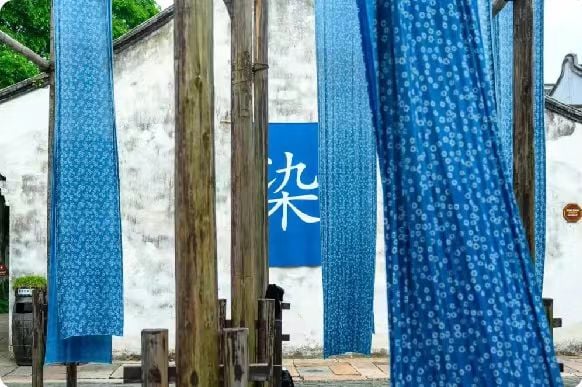
Look beyond the fabric display to the textile-making process.
Wine-making at Sanbai
The workshop introduces a local production tradition through its setting and displays. Confirm whether any demonstration or tasting is available and whether it has a separate charge.
You can visit without tasting or purchasing. If buying a bottle, consider luggage handling and the rules of your onward transport before committing to it.
Woodcarving as a craft and architectural detail
The woodcarving collection can help you notice similar decorative work elsewhere on the route. Look for how carving is used around entrances, furniture or other architectural elements where visible.
Do not infer that a carving demonstration or lesson is available simply because the museum displays finished work. Ask separately about any visitor activity.
Performance traditions
Shadow puppetry and boat-based traditional programmes appear in Dongzha visitor descriptions. Their current availability, location and schedule must be checked on the day or through the operator beforehand.
A performance can be a useful break from museum visits, but waiting for one may change the whole route. Choose the programme you most want to see, then leave the rest optional.
Walking or a Boat Ride?
Walking is the core of a Dongzha visit
Most of the interest described in this guide requires getting off the water and entering streets or buildings. Walking gives you control over which museums to visit, where to stop and how long to spend.
For a limited window, walking alone is often sufficient. A boat should add something you want rather than become another task on the checklist.
A boat changes the viewpoint
From the water, you can see waterfront façades, bridge arches and the canal’s relationship with the buildings. It is a different perspective on a place you have already explored on foot.
It may also replace a useful route segment, depending on where the service lands. It does not substitute for museum access or automatically return you to the exit you need.
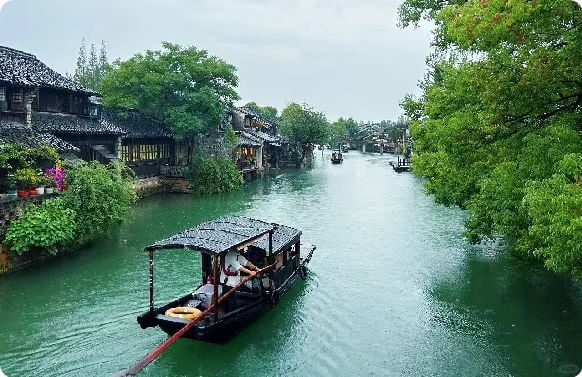
Check the boat landing point before adding a ride to your walk.
Check the operating route
Official visitor guidance has described Dongzha services involving Caishen Bay or a parking-area pier and Xinhua Bridge Pier. Use these names when asking about current routes; do not treat an older description as a guarantee of today’s operation.
Before buying, establish the boarding point, landing point, direction and whether the ticket is for a single journey or a return. Ask about the ride duration and waiting time.
Shared and private arrangements may be offered under different conditions. Confirm passenger capacity, how children count and whether your group can travel together. A shared departure may involve waiting or allocation by staff.
Two sensible walk-and-boat patterns
Walk first, then take a suitable boat: useful when museums are your main interest and the available boat returns you towards a practical endpoint.
Boat first, then walk from the landing: useful for an initial canal impression, provided the subsequent route reaches your selected interiors before they close.
In either case, keep a walking alternative. Weather, queues or operations may make the boat less convenient than expected.
A Dongzha boat operates within Dongzha’s visitor arrangements. Do not assume it is a transfer to Xizha or interchangeable with a Xizha boat ticket.
Admission and Entry for Overseas Visitors
Select a ticket for Dongzha or an appropriate combined product if both areas are in your plan. Read the date, entry conditions and redemption instructions before payment.
The official general admission listing reviewed for this guide displayed Dongzha hours of 07:00–18:00 in summer and 07:00–17:30 in winter. Confirm the schedule for your date and the operating hours of individual interiors. Boat and performance hours can differ.
Use a booking channel that supports your passport and payment method. If a form requires a mainland identity-card number or a phone verification you cannot complete, ask the operator or provider for the overseas-visitor process.
Carry original passports and order information. Follow the specific product’s instructions for direct entry, exchange or validation. A generic QR code is not proof that every booking bypasses a service counter.
Do not assume you can leave and re-enter. Ask about your actual ticket before exiting for lunch or another activity.
If staying at a hotel, check whether Dongzha admission is included for your party. Xizha guest benefits do not automatically establish Dongzha access. Likewise, admission does not confirm that every workshop or separately priced experience is included.
How to Combine Dongzha with Xizha
Option 1: Both areas in one day
Visit Dongzha during the earlier part of the day, with a selected museum-and-craft route. Have lunch, transfer to Xizha and use the afternoon for another canal walk and chosen sights.
Stay for the Xizha evening if your return transport permits it. This pattern gives each area a different role: Dongzha for interiors and craft interpretation, Xizha for a longer waterfront visit and night views.
It requires a substantial usable day in Wuzhen. A late arrival, long outward journey or early return can make the combination rushed.
Option 2: Dongzha first, then one night near or inside Xizha
Arrive early enough for Dongzha, handle luggage through a confirmed arrangement and complete a focused visit. Continue to your accommodation, rest and enjoy Xizha later in the day and evening.
The following morning can remain lighter, with a short walk and breakfast before departure.
This works only if the bag arrangements are clear. Do not drag large suitcases through the museum route on the assumption that every venue can store them.
Option 3: Xizha first, Dongzha on the next day
This suits travellers arriving in the afternoon. Give that day to Xizha and the evening, then visit Dongzha after check-out or later the following morning if admission validity and luggage storage support the plan.
Confirm the dates on any combined ticket. A product marketed for both areas does not necessarily allow any order across any two days.
Allow enough time for the onward journey after Dongzha. Do not add a second scenic area to a departure morning already dominated by a train connection.
Option 4: Choose one area
Choose Dongzha if its museums, crafts and literary sites are the main attraction and you have a daytime window. Choose Xizha if evening canals, a longer waterfront walk or an overnight setting are the stronger priorities.
Visiting one area well is a complete choice. There is no need to cover both for the trip to count.
Moving Between the Two Areas
Dongzha and Xizha have separate entrances. Include the journey between them rather than treating a combined ticket as a connected walking circuit.
Check current inter-area shuttle or local transport arrangements, including boarding points, service hours and any eligibility or charge. A shuttle described in an old guide may have changed.
A taxi or prearranged vehicle may suit a family, luggage transfer or a schedule with less flexibility. Confirm the meeting point and destination using the Chinese scenic-area names.
As an editorial scheduling allowance, leave around 45–60 minutes between finishing one visit and beginning the next. This includes reaching the meeting point, waiting, travelling and completing any entry step; it is not a claim that the road journey itself takes that long. Leave more space if you are also eating, checking into a hotel or transferring bags.
Do not schedule a Xizha activity immediately after your theoretical Dongzha exit time.
Meals, Rest Breaks and Family Visits
Plan a seated break around the middle of the route. Small display spaces can be interesting but do not all provide a place for a group to rest.
If combining both scenic areas, lunch between the visits helps create a clear break. Check admission and re-entry before leaving Dongzha to eat elsewhere.
For children, select visual subjects such as carved beds, patterned cloth and a short canal section. A confirmed performance may add variety, but several consecutive text-heavy stops can feel repetitive.
For older travellers or anyone who prefers less walking, reduce the number of interiors and crossings. A boat may offer a seated experience, but boarding, queues and the route after landing still need consideration.
Check specific accessibility requirements with the operator. Historic thresholds, steps and bridge approaches can matter even on a relatively compact route. Permission to bring a wheelchair or stroller does not establish access to every building or boat.
Travel with a light day bag where possible. Luggage storage, hotel transfer and intercity transport should be arranged separately from sightseeing.
Rain, Crowds and Photography
Rain can make a museum-focused visit appealing, but you still need to walk between buildings. Wear suitable shoes and allow a slower pace on wet stone and bridge steps. Confirm boat operations in unsuitable conditions.
On busy dates, choose one less interior rather than rushing the entire sequence. Look for a gap between groups, and pause somewhere that does not block a doorway.
For photographs, alternate wider canal views with details such as patterned fabric, carving or a courtyard entrance. Follow any indoor photography restrictions and avoid touching exhibits for a better composition.
Respect closed doors, private spaces and staff working areas. Ask permission before photographing people closely or entering a workshop area beyond the visitor route.
The craft displays are worth enjoying without purchasing anything. If buying, ask about material, maker, care instructions and packing, and choose items you actually want to take home.
Common Planning Mistakes
Giving Dongzha only the leftover time before Xizha. Reserve a useful daytime window for the interiors you want.
Entering every museum without a purpose. Select subjects that provide variety and fit your interests.
Treating the dye yard as the whole craft experience. Look at the process interpretation and distinguish it from a separately arranged handwork session.
Assuming performances run continuously. Check the current programme and let it guide the route only if it matters to you.
Buying a boat before checking its landing. A scenic ride can create an inconvenient final walk if the endpoint is wrong for your plan.
Applying Xizha hotel benefits to Dongzha. Verify admission to each area and the dates covered.
Confusing similarly themed sights. Mao Dun-related and textile sites appear in both areas; use exact names when arranging visits.
Leaving no time between scenic areas. Include the exit walk, meeting point, transfer and new entry process.
Frequently Asked Questions
How long do I need for Dongzha?
Around three to four hours is a useful planning allocation for several sights, canal walking and a break. A selective two-hour introduction can work, while deeper craft or literary interests may need longer.
Which sights should I choose on a first visit?
A balanced selection is the Hundred Beds Museum, Hongyuantai Dye Workshop and either the Woodcarving Museum or Mao Dun’s Former Residence. Add other stops according to time and interests.
Is Dongzha mainly a museum visit?
No. The streets and canals connect the interiors and are part of the experience. Alternate display spaces with walking and a rest rather than treating the route as a museum circuit alone.
Is Hongyuantai the same dye workshop as the one in Xizha?
No. Hongyuantai is the Dongzha site. Xizha has the Caomu Bense Dye Workshop. They share a textile theme but are separate places.
Can I join a craft workshop?
Possibly, where a current session is offered. Ask about booking, duration, charge and language support. Seeing a craft display does not automatically include a hands-on activity.
Do I need a boat ride?
No. Walking is enough for the principal museum-and-street route. Add a boat if you want the water-level perspective and the operating route fits your plan.
Can a Dongzha boat take me to Xizha?
Do not plan on that. Treat Dongzha sightseeing boats and the inter-area transfer as separate arrangements unless a specific current service explicitly provides otherwise.
Is Dongzha suitable for an evening visit?
Plan it primarily as a daytime visit within its current hours. Xizha is the more relevant choice for a conventional evening canal-view plan. Special programmes may have separate arrangements.
Can I visit both areas in one day?
Yes, with a sufficiently early arrival and suitable onward transport. Give Dongzha a focused daytime visit, allow lunch and transfer time, then visit Xizha in the afternoon and evening if your schedule permits.
Can I use a combined ticket on two different days?
Check the actual product. Do not infer two-day validity from a ticket that simply includes both areas.
Does my Xizha hotel include Dongzha admission?
Only if the confirmed package says so for the applicable guests and dates. A Xizha accommodation benefit alone does not answer the question.
Is Dongzha worthwhile if I already plan to visit Xizha?
Yes, if you want its museums, craft displays or literary history. If your interests are mainly canals and your time is short, one well-paced Xizha visit may be sufficient.
Plan Your Dongzha Visit with Discover East China Tours
Dongzha works best when the selected museums and crafts match your interests. Tell us whether you prefer traditional architecture, textiles, literary history or a broader Wuzhen visit, along with your starting city and available time.
Discover East China Tours can help combine Dongzha with Xizha, an overnight stay or a wider Shanghai, Hangzhou and Suzhou route, with walking and transfers planned around your group’s pace.