
Plan a slower Huangshan visit for children and older travellers, with realistic advice on steps, cable cars, hotel access, rest stops and regional alternatives.
Huangshan Mountain can be a rewarding part of a family or multigenerational trip, but a comfortable visit starts with realistic expectations. Cable cars remove much of the long climb from the lower slopes. They do not remove the stone steps, changes in level and walking between viewpoints on the mountain.
The right itinerary depends more on walking ability, confidence on stairs and preferred pace than on age alone. Some older travellers enjoy a substantial mountain walk; some younger visitors find repeated descents difficult. Children may cope well with steps but need more breaks, shorter explanations and a day that leaves room for meals and rest.
For a slower visit, choose a limited area, protect the return journey and treat additional viewpoints as optional. An overnight stay can spread the walking over two days, provided the hotel is in the right place. If the mountain does not suit your group, Huangshan’s villages, historic streets and cultural experiences offer a worthwhile alternative.
This guide explains how to judge the physical demands, what cable cars can and cannot do, and how to plan a mountain visit or a gentler regional itinerary.
Is Huangshan Mountain Right for Your Group?
Begin with what each person can comfortably do on an ordinary day. Walking around a city for several hours is useful preparation, but it is different from climbing and descending repeated flights of stone steps with a bag.
Discuss the person who needs the gentlest pace before choosing the route. Ask about stairs, balance, standing in queues, carrying belongings and coping with cool or wet conditions. For children, consider attention span and energy late in the day as well as their enthusiasm at the start.
| Your group’s situation | A sensible starting plan | What needs checking |
|---|---|---|
| Everyone is comfortable with repeated stairs, but prefers a relaxed day | Cable car up and down, with selected viewpoints in one area | Actual walking route, breaks and return timing |
| An older traveller walks independently but tires on long descents | A limited out-and-back route with an early turnaround | Descending steps on the chosen route and access to resting places |
| Children enjoy walking but lose interest on long sightseeing days | One mountain area, a proper meal and frequent short stops | Queue time, toilets and the number of optional detours |
| A toddler is likely to need carrying | Consider a regional day instead, or a very carefully assessed mountain visit | The adult’s ability to carry safely on steps and the practical return route |
| A traveller needs a wheelchair or cannot manage stairs independently | Seek a specific access assessment before booking the mountain | Every stage from vehicle to viewpoint, including transfers and assistance |
| The group wants a sunrise without a rushed first day | A suitably located mountain hotel and a short, optional sunrise walk | Hotel access, room arrangements and the route in darkness |
| Some want a longer hike and others do not | Separate, clearly organised activities or a shared shorter route | Supervision, communication and independent transport arrangements |
There is no universal minimum age or maximum age that makes a mountain visit appropriate. There is also no cable-car itinerary that should automatically be advertised as suitable for everyone.
If a traveller’s condition makes exertion or stairs uncertain, obtain individual advice before booking. Tell your organiser about practical limitations rather than relying on a description such as “quite fit” or “a senior-friendly tour”.
Understand the Steps and Physical Demands
The Upper Mountain Is a Walking Landscape
The upper mountain consists of connected paths, stairways, ridges and viewpoints. A route can rise, descend and rise again even when the start and finish appear close together on a map.
This makes distance alone a poor measure of difficulty. A short section with many steps may be more demanding than a longer walk on level ground. Crowds can also slow progress and make it harder to stop exactly where you want.
Ask for a description of the route in practical terms: the steepest section, the longest stretch without a convenient rest, and the walking required to return. A list of famous sights does not provide this information.
Descending Is Part of the Work
Cable cars help avoid the long descent to the lower slopes, but upper-mountain sightseeing can still involve substantial downhill walking. Each descent may be followed by a climb on the return journey.
When considering an out-and-back route, count the journey both ways. Reaching a viewpoint comfortably is only half the assessment. Think about whether everyone will still manage the return with tired legs, a wet path or a longer queue ahead.
Avoid telling a hesitant traveller that the remaining route is “only downhill”. For some people, descending steps is the more difficult part.
Assess Steps, Exposure and Balance Separately
A traveller can have good stamina but dislike narrow paths or exposed viewpoints. Another may be comfortable with heights but need handrails and a slow pace on steps.
Ask whether optional detours involve steeper stairways or a more exposed setting. Choose viewpoints that match the group’s confidence and skip a summit extension when the main path already provides a satisfying view.
A child who wants to move quickly should still stay with an adult, particularly around stairs, queues and viewpoints. Leave room for other visitors and stop for photographs where standing is comfortable.
Do Not Plan Around a Single Step Count
Exact step totals vary with the entrance, cable car, hotel, viewpoint detours and current path arrangements. A quoted number from another traveller may describe a very different day.
For planning, it is more useful to identify the actual walking sections and the points where you can shorten the visit. Treat published walking times as broad guidance unless they have been assessed for your group and the current conditions.
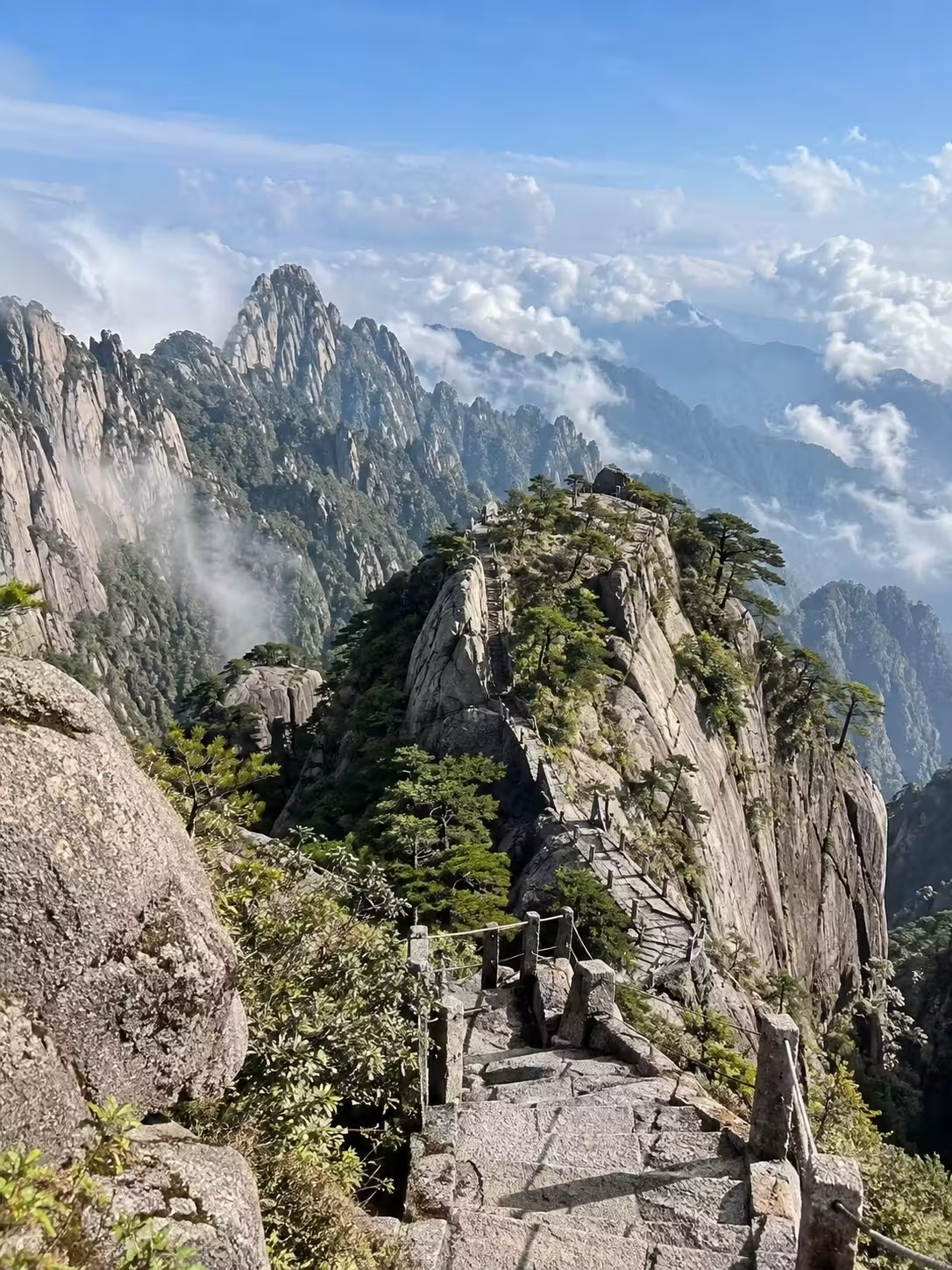
Upper-mountain sightseeing still involves steps and changes in level.
Cable Cars: Their Role and Their Limits
Cable cars are valuable tools for conserving energy. They connect particular lower and upper areas; they do not form a transport network that delivers visitors to every famous viewpoint or every hotel door.
The choice should follow your accommodation, entrance and sightseeing priorities. Avoid selecting a cable car simply because it is described as the easiest in an old itinerary.
| Service | Main planning role | Limitation for a slower visit |
|---|---|---|
| Yungu Cable Car — 云谷索道 | Access from the southern gateway towards the eastern upper-mountain area | Viewpoints and hotels beyond the station still require walking and steps |
| Yuping Cable Car — 玉屏索道 | Access towards the Yuping area and a visit focused on the Greeting Pine | The Greeting Pine is not at the station door; the connecting route still needs assessing |
| Taiping Cable Car — 太平索道 | Access from the northern side towards the western upper mountain | The northern gateway is a different ground-transport arrangement from Tangkou |
| Donghai Cable Car — 东海索道 | Access through the eastern gateway, opened in June 2026 | Confirm current connections and upper walking routes; a new entrance is not proof of an easier itinerary |
| West Sea Grand Canyon sightseeing funicular — 西海大峡谷观光缆车 | Connects the canyon floor with the Tianhai area | It does not eliminate the steps involved in a canyon walking itinerary |
The eastern gateway and Donghai Cable Car opened on 11 June 2026. Older guides may therefore omit this option. Check the current official arrangements when planning, especially if accommodation and transport have been chosen around a different entrance.
Using the Same Cable Car in Both Directions
For many slower-paced groups, an out-and-back visit is easier to control than a traverse between two cable cars. You can choose a modest sightseeing area and turn around when the group has had enough.
This is a planning advantage, not a promise of level walking. The route back may involve climbing steps you descended earlier. Confirm where the last comfortable turnaround should be and how long the return is likely to take at your pace.
Going Up One Cable Car and Down Another
A crossing route can reduce retracing and show more scenery, but it also commits you to reaching a different exit. The connection may include extensive steps and changes in elevation.
A familiar Yungu-up, Yuping-down itinerary should not automatically be labelled a family route or an easy route. It can be a full mountain walking day. The same applies to a crossing that uses the northern or eastern gateway: the whole route and the ground transport at both ends must be checked.
The Canyon Funicular Is Not a Shortcut to an Easy Canyon Day
A canyon itinerary can include a long descent before reaching the funicular, followed by further walking after the ride. The transport saves a particular climbing section; it does not make the complete outing gentle.
If your priority is minimising steps, leave the full West Sea Grand Canyon walk out of the initial plan. A shorter visit to an upper viewpoint may be possible, but assess its access and return separately.
Queues, Maintenance and Weather
A cable-car ride may be short while the process around it takes much longer. Include ticket checks, boarding queues, the approach to the station and any scenic-area transfer.
Operating hours and service availability can change with season, maintenance, weather and crowd management. Confirm the latest information close to your visit. If a service is suspended, do not assume that walking down is a suitable substitute for a child or a traveller with limited stamina.

Three More Manageable Mountain Arrangements
These are route frameworks to discuss with your guide or organiser. They are not guaranteed accessible routes or fixed walking-time promises. The final version should reflect current openings, the day’s conditions and your group’s abilities.
Option 1: A Limited Yungu Out-and-Back Visit
Use the southern gateway transfer arrangements for Yungu, take the cable car up and choose a small number of upper-mountain stops. Return by the same cable car.
Depending on walking ability, the plan might consider the Shixin Peak area or a modest extension towards Beihai. Neither should be included automatically: the additional steps and return distance must suit the group. It is reasonable to enjoy the scenery on the accessible portion of your chosen walk and turn back without reaching a named summit.
This framework suits travellers who want a mountain experience while retaining a clear return direction. Start with a short core route, then extend only if everyone remains comfortable and the return margin is generous.
Do not expand it gradually into a full circuit simply because each next stop sounds close. Several small additions can turn a controlled day into a tiring one.
Option 2: A Yuping and Greeting Pine Focus
If seeing the Greeting Pine is the main aim, consider a Yuping-based visit with the same cable car for ascent and descent.
Ask specifically about the walk from the upper station to the viewing area. There are steps, and the return also requires effort. This option is focused geographically, but it is not a station-only visit or a zero-step experience.
Allow time to rest and enjoy the main area. Avoid adding a major crossing towards Tianhai or the northern viewpoints merely to make the itinerary look more complete.
This arrangement can work for a group that is comfortable with the necessary stairs and values this particular landmark. If those stairs are unsuitable, choose a different experience rather than assuming that a private guide can remove them.
Option 3: One Upper Area with an Overnight Stay
Take a cable car up, walk to a suitably located hotel and explore a limited nearby area. On the second day, make any sunrise outing optional, have breakfast and return by the planned cable car.
The benefit is time: the group can pause, avoid compressing everything into one day and enjoy the mountain during different parts of the day. The benefit depends on the hotel access walk being manageable.
Choose a hotel in relation to the arrival station and your planned return, not only a photograph or a sunrise description. An attractive property across the mountain can create more walking than a day trip with a limited route.
Routes to Leave Out of a Slower-Pace Plan
A comfortable itinerary does not need every famous summit or a complete crossing of the mountain.
Keep demanding summit climbs, long canyon descents and extensive traverses out of the core plan for groups prioritising lower physical effort. Tian Du Peak and Lotus Peak, when available under current opening arrangements, should be treated as separate demanding objectives rather than routine additions.
Do not use an old route to assume that a peak is open. Access restrictions, reservation requirements and path closures need checking for the actual visit date.
| Proposed addition | Why it can change the day | A more controlled alternative |
|---|---|---|
| A long summit detour | Extra steps, exposure and return time | A suitable viewpoint on the main route |
| The full canyon descent | Substantial descent and a more committed exit plan | An assessed upper viewpoint or a different mountain area |
| A front-to-back crossing | More walking between separate cable-car exits | One area with the same ascent and descent service |
| A distant sunset stop | A late return, possibly in fading light | A nearer viewpoint or a relaxed hotel evening |
| An obligatory sunrise walk | Darkness, early waking and uncertain visibility | Optional sunrise followed by a normal breakfast |
| A mountain day followed by a distant village tour | Fatigue and tightly linked transport | A meal and rest, with the village on another day |
Deciding what to omit is one of the most effective ways to make a mountain day enjoyable.
Day Trip or Overnight Stay?
When a Day Trip Works Better
A day trip can be preferable when the group wants a limited mountain experience, comfortable lower-level accommodation and a simple luggage arrangement.
Staying in Tangkou before the visit can reduce the morning approach to the southern gateway compared with travelling from Tunxi. It does not remove the transfer, ticket checks or cable-car queues.
Plan the descent with enough time for the full journey back to your accommodation. Avoid treating the cable-car operating limit as the time to start walking towards the station. The return walk and queue need to happen before that deadline.
A day trip is often easier for families who need predictable meals, familiar bedtime routines or more space than a mountain room provides.
When a Mountain Overnight Is Worthwhile
An overnight stay can suit travellers who want a slower mountain rhythm and can manage the access walk with a small bag. It also offers the possibility of sunrise or sunset without repeating the entire lower-to-upper journey.
However, accommodation does not guarantee either view. Cloud, rain or fog may make the outlook limited, and a dawn walk can be uncomfortable in cold or wet conditions.
Do not book an overnight stay only because it is assumed to reduce walking. Ask for the total walking across both days, including the hotel approach and the return. A long first-day transfer between mountain areas can defeat the purpose.
Hotel Location Matters More Than a General “Mountain Hotel” Label
Beihai and western upper-mountain accommodation, Tianhai-area accommodation and Yuping-area accommodation serve different walking plans. None is a universal best choice for children or older guests.
Ask the hotel or organiser to describe the approach from your chosen cable car, including steps, likely walking time at a slow pace and any final climb. Confirm whether the room itself requires stairs and whether a lift serves the relevant part of the property.
For a multigenerational group, check room capacity, bed configuration, bathrooms, heating arrangements, dining options and meal times. Do not assume connecting rooms, lift access or a family room are available simply because the property welcomes families.
Where to Stay Below the Mountain
| Base | Main advantage | Trade-off to consider |
|---|---|---|
| Tangkou | Convenient for a southern-gateway mountain day | Less suitable as an automatic base for every village or cultural excursion |
| Tunxi | Meals, urban services, Old Street and Liyang visits | A longer morning transfer for a southern-gateway mountain visit |
| Hongcun, Xidi or nearby accommodation | A relaxed village-focused stay | Heritage accommodation can involve thresholds, stairs and carrying bags from a vehicle drop-off |
| A base near the northern or eastern gateway | Useful for a route genuinely using that side | Check the complete transport plan rather than copying a Tangkou itinerary |
| Mountain accommodation | Time in the upper landscape and optional dawn or evening views | Access walking, limited luggage convenience and weather dependence |
Ask about the exact distance from vehicle drop-off to the room. “In the village” or “near the mountain entrance” does not explain the practical access.
For a traveller who struggles with stairs, an accessible room in a modern property may be more useful than a historic room with atmospheric photographs. Confirm actual facilities rather than relying on general marketing terms.
A Comfortable Mountain Day: How to Pace It
Before Leaving the Hotel
Have breakfast, check the forecast and confirm the day’s route and services. Carry the correct identification and reservation details. Make sure everyone understands the main aim and the planned return direction.
Settle luggage storage before departure. Searching for a storage arrangement while the rest of the group waits adds unnecessary pressure to the morning.
On the Upper Mountain
Begin conservatively. Let the first walking section show how the group feels that day, then decide whether an optional extension makes sense.
Use regular short pauses rather than saving all rest for lunch. Stop before people are exhausted and choose a comfortable place that does not block the path. Keep the group together unless separate arrangements have been made deliberately.
A successful visit may consist of a few good viewpoints, a meal and an unhurried return. You do not need to increase the route to justify the cable-car fare.
Lunch and Toilets
Identify meal and toilet opportunities along the actual route. Do not assume that the next viewpoint has seating, refreshments or facilities.
If lunch depends on a particular hotel or restaurant, confirm access, serving times and whether non-resident visitors can dine. Carry simple snacks and water for the intervals between stops, but keep bag weight sensible.
For children, a proper break is often more useful than eating continuously while walking. For older travellers, somewhere to sit and warm up can help make the afternoon more comfortable.
The Return
Agree a turnaround time that includes the return walk, queues, cable-car descent and onward transfer. Follow current guidance from staff if weather or operations change.
If the group is slower than expected, remove a stop early. Waiting until everyone is tired and far from the exit leaves fewer useful choices.
Avoid a tightly timed train immediately after the mountain. A buffer should cover the whole descent and road journey, not just the cable-car ride.
Children: Practical Arrangements on the Mountain
Give the Day a Simple Shape
Tell children what the day involves: a transfer, a cable car, a walk, a meal and a return. Choose a few things to look for, such as unusual pine shapes or a rock formation, rather than asking them to follow a long sequence of sightseeing names.
Allow time to stop without turning every pause into another explanation. A family route should leave room for curiosity, snacks and a change of pace.
Pushchairs and Child Carriers
A pushchair is not a practical default for upper-mountain sightseeing routes with repeated steps. Even where a station can accommodate equipment, the route beyond it may not.
A carrier shifts the child’s weight to an adult; it does not reduce the adult’s effort or make difficult steps easier. Assess the route around the person carrying, including the descent and the possibility that another adult will need to take over.
If a toddler is likely to need prolonged carrying, a village, museum or short urban outing may give the whole family a more relaxed day.
Mixed Ages and Different Energy Levels
Older children may want more walking than grandparents or younger siblings. Decide beforehand whether the group will share a short route or split into separately supported activities.
Do not leave a child with someone who may be uncomfortable managing the return, and do not assume phone reception or a shared meeting point will solve all logistical problems. Each subgroup needs a responsible adult, clear transport arrangements and a realistic plan.
Older Travellers: Protect Comfort and Choice
Ask older guests what they want to see and what they would prefer to avoid. Do not make assumptions based on age, and do not encourage a longer route simply because others in the group are comfortable.
Practical comfort includes queueing, seating, toilets, temperature and the ability to stop. A short walking route can still feel difficult if it involves lengthy standing before and after it.
Use a familiar walking aid where appropriate to the person and the route. A trekking pole can help some visitors, but equipment does not replace an assessment of steps and balance. Ask about any support requirements before travel.
A private guide can adjust the pace, interpret the scenery and organise decisions around the group. The guide cannot eliminate steps, control the weather or guarantee immediate boarding during busy periods.
Wheelchairs and Limited Mobility: Check Every Stage
Cable-car access and mountain accessibility are separate questions. Assistance at a station does not establish an independently accessible route to a viewpoint, hotel or toilet.
Ask for confirmation of the complete journey: vehicle access, transfer boarding, station approach, cabin boarding, exit arrangements, path surfaces, steps and facilities at the intended destination.
Specially organised wheelchair visits and examples of staff assistance should not be treated as evidence that an ordinary sightseeing route is step-free. Do not assume lifting assistance, a porter or specialist support will be available on arrival.
If the necessary arrangements cannot be confirmed, build the trip around suitable lower-level experiences. Apply the same scrutiny to villages and museums: historic lanes and buildings can also contain steps and thresholds.
Luggage and What to Carry
Leave large suitcases below the mountain and carry only what you need. Confirm storage location, opening or collection times, fees and how you will retrieve the bags after descending.
If you enter and leave through different gateways, storing luggage at the arrival point can complicate the day. Agree a workable collection or transfer arrangement before departure. Do not assume a hotel offers luggage transport to the mountain or across the region.
For an overnight visit, check any luggage-handling service directly, including availability and delivery conditions. Keep essential items with you even if other bags are being moved separately.
A compact bag might include:
- Water and a few easy snacks.
- A waterproof outer layer and an extra warm layer suited to the forecast.
- Comfortable footwear with grip that you have already worn.
- Identification, reservation details and a charged phone.
- Personal medication and essential care items.
- A small amount of child-specific equipment or spare clothing.
- Sun protection when appropriate.
- A light source if a dawn or after-dark walk is genuinely planned.
Distribute weight sensibly. The adult supervising a child or supporting another traveller should not also carry all the group’s luggage.
Weather, Crowds and Changing the Plan
The upper mountain can feel much cooler and more exposed than Tunxi or the lower gateway. Use a mountain-specific forecast as well as the city forecast.
Rain affects grip, comfort and visibility. Fog can create an atmospheric landscape but may hide distant peaks. Cloud movement can change a view quickly, yet waiting longer does not guarantee improvement.
On a wet or uncertain day, reduce the number of stops and avoid adding a distant viewpoint in the hope of finding clear skies. If services or paths are restricted, follow the current arrangements and revise the itinerary.
Winter scenery can be beautiful, but snow, ice and cold can make steps more demanding. It should not be presented as a default easy season for children or older travellers. Assess conditions and available support for the actual visit.
Busy weekends and public holidays add queueing and congestion. If dates are flexible, a less crowded day may matter more to comfort than adding another attraction. Early starts can help with some logistics, but they must still allow enough sleep and a realistic pace for the group.
Keep a lower-level alternative ready. Changing the plan before travelling to the gateway is often more useful than reaching the mountain and hoping that conditions improve.
Enjoying Huangshan Without a Mountain Hike
A regional visit can focus on Huizhou architecture, village scenery, local food and traditional crafts. These experiences offer their own reasons to travel, rather than simply filling a cancelled mountain day.
Hongcun: Water, Architecture and a Short Village Walk
Choose a limited route linking a few main spaces and a small number of buildings. Leave time for a seated break and avoid trying to visit every interior.
For families, water and architectural details give children simple things to observe. For older travellers, check lane surfaces, thresholds and the walk from vehicle drop-off. Hongcun is a village experience, not a uniformly accessible pedestrian route.
Xidi: Historic Buildings at a Considered Pace
A focused guided walk can explain how houses and communal spaces relate to Huizhou life. Pick a few buildings that support the explanation rather than turning the day into a long list of halls.
Ask about steps into the particular interiors on your route. A shorter itinerary with a meal can work well, but it still needs assessing for the person with the lowest walking tolerance.
Tunxi Old Street and Liyang
Tunxi offers a flexible combination of historic streets, food, shops and cultural visits. Old Street and Liyang can be explored separately, or combined when the connecting walk suits the group.
Use one short section at a time, with a café or meal break. For an arrival or departure day, an urban outing is usually easier to shorten than a mountain visit with booked transport and a committed return route.
Evening visits should finish at a sensible time, with a clear journey back to the hotel. Check paving and lighting if anyone is less confident walking after dark.
Museums, Tea and Craft Experiences
A suitable museum, seated tea tasting or confirmed workshop can give the day a clear cultural focus. For children, choose a manageable hands-on task; for adults, prioritise a host who explains the material and process.
Confirm seating, toilets, access, language support and actual visitor arrangements. An open shop does not necessarily offer a structured class, and an advertised workshop may require advance booking.
Rural Scenery Without a Long Walk
A rural visit can be built around a short assessed path, a view and lunch. Check how close the vehicle can get, what the surface is like and whether there is somewhere comfortable to rest.
“Countryside” does not automatically mean easy walking. Tea gardens, riverside paths and historic settlements can involve slopes, mud or uneven ground. Choose the specific setting for its practical access as well as its scenery.
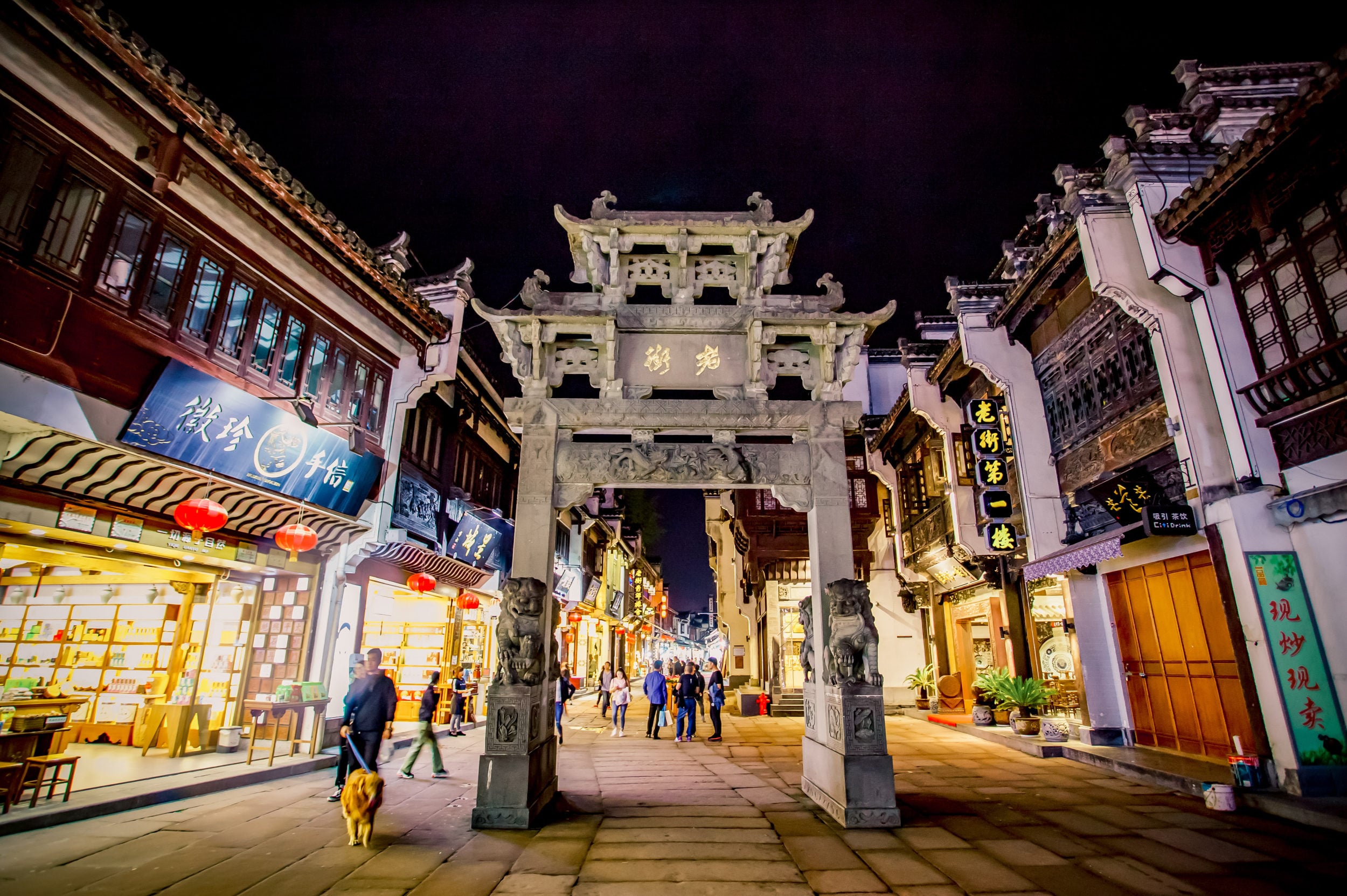
Tunxi offers flexible short outings, with paving and access checked for the group.
Sample Plans for Different Groups
A Family Mountain Day from Tangkou
Stay in Tangkou the previous night, have breakfast and use the planned southern-gateway transfer. Take the selected cable car and follow a limited out-and-back route.
Include rest and lunch, then return before the afternoon becomes rushed. Keep the evening for dinner and recovery. Do not add a distant village or a tightly timed train to make the day appear fuller.
Two Days on the Mountain at a Slower Pace
On the first day, ascend by cable car, walk to the confirmed hotel and explore only a nearby area. Rest before dinner and decide whether the next morning’s conditions justify a sunrise outing.
On the second day, keep dawn optional. Have breakfast, make a short additional walk only if appropriate, and descend by the planned service. Collect stored luggage and travel onwards with a comfortable buffer.
A Village and Culture Day for a Multigenerational Group
Choose Hongcun or Xidi for one focused visit. Arrange a proper lunch and, if convenient, a short cultural activity nearby or in your accommodation area.
Do not combine both villages automatically. One well-paced visit can provide enough architecture and local atmosphere while leaving everyone comfortable for dinner.
A Town-Based Day with Minimal Commitment
Begin with a museum or seated cultural session in Tunxi where suitable access is confirmed. Have lunch, rest at the hotel and choose a short Old Street or Liyang outing later.
This format allows the group to shorten or omit a section without losing the main experience. It is particularly useful after travel or a demanding previous day.
Questions to Ask Before Booking
A useful itinerary should answer practical questions, not simply state that it is “easy”. Ask:
- Which entrance and cable cars will we use?
- What walking is required after leaving the upper station?
- Where are the most demanding steps or exposed sections?
- Can we turn back early, and what does the return involve?
- Where can we sit, eat and use a toilet on this route?
- How does the hotel location affect walking across both days?
- What happens if the cable car, path or weather changes the plan?
- How will large luggage be stored and collected?
- What arrangements apply if the group separates?
- Which tickets and transport are included, and which are separate?
Scenic-area admission, cable cars, internal transport and the canyon funicular are distinct booking considerations. Do not assume that a concession or free admission covers every service.
For international visitors, confirm passport booking procedures and the documents needed for any child or senior concession. Check current eligibility rather than using an old age threshold or assuming that every published domestic policy applies identically to overseas guests.
Frequently Asked Questions
1. Is Huangshan Mountain suitable for older travellers?
It can be for travellers who are comfortable with the required stairs and walking. Choose according to individual ability and preferences, with a limited route and realistic return margin. Age alone is not enough to assess suitability.
2. Can children visit Huangshan Mountain?
Yes, when the route matches their ability and the adults can manage the practical demands. Plan breaks, meals and supervision, and consider a gentler regional outing for children likely to need prolonged carrying.
3. Does taking a cable car mean there is very little walking?
No. Cable cars remove particular long ascent or descent sections. Upper-mountain viewpoints, hotels and connections still involve walking and steps.
4. Which cable car is easiest for a family?
There is no universal answer. Choose the service that supports the shortest suitable complete route from your base. A Yungu out-and-back or a focused Yuping visit may be worth assessing, but both have walking beyond the station.
5. Is Yungu up and Yuping down a gentle route?
It is a crossing itinerary and can involve a substantial day of stairs and walking. Assess the full connection rather than assuming two cable-car rides make the route easy.
6. Is the Greeting Pine directly beside the cable-car station?
No. A Yuping-based visit still involves a connecting walk with steps. Ask whether that complete walk and the return suit your group.
7. Can we use the canyon funicular to avoid all the canyon steps?
It saves a particular climbing section, but a canyon walking itinerary can still involve a long descent and further walking. It is not a substitute for assessing the whole route.
8. Is a mountain overnight easier than a day trip?
It can spread the schedule, but only if the hotel access and two-day route are manageable. A distant hotel or an ambitious crossing can add more walking than a limited day visit.
9. Should we book a mountain hotel for sunrise?
Consider it if the hotel location and access suit the group. Sunrise depends on conditions, and the dawn walk should remain optional. An overnight stay should still feel worthwhile without a clear sunrise.
10. Can we bring a pushchair?
Do not rely on a pushchair for upper-mountain routes with repeated steps. Check any specific station arrangements separately; boarding access does not establish a pushchair-friendly sightseeing route.
11. Is Huangshan Mountain wheelchair accessible?
There is no general guarantee of a step-free sightseeing route. Request an assessment of every stage, including stations, paths, viewpoints and facilities. Special assistance must be confirmed rather than assumed.
12. Where should we leave suitcases?
Confirm storage below the mountain through your accommodation or another appropriate service. Check collection arrangements, particularly if you descend through a different gateway.
13. What should we do if the forecast is poor?
Review the route and service information, and keep a lower-level alternative available. A shorter mountain visit may suit some conditions; museums, cultural activities or a carefully chosen town outing may suit others.
14. Are Hongcun and Xidi easier alternatives?
They can support shorter, more flexible visits, but stone lanes, thresholds and steps still need consideration. Choose specific paths and buildings that suit your group.
15. Can we catch a train immediately after coming down?
Avoid a tight connection. Allow for the return walk, queues, cable-car descent, internal transfer, road journey and station arrival requirements. Staying another night may give a more comfortable schedule.
16. Can some of us hike while others enjoy the villages or town?
Yes, with separately workable arrangements. Confirm supervision, guides where needed, transport, luggage and meeting plans so neither group depends on the other finishing at an exact time.
Plan Around the People Travelling
A slower Huangshan visit works best when the route has a clear focus and the group can finish comfortably. Cable cars, carefully located accommodation and a limited sightseeing area can make the mountain more manageable, but the remaining stairs still deserve honest planning.
For some travellers, the best combination is a short mountain visit followed by a relaxed village or cultural day. For others, a regional itinerary without a mountain hike provides a more enjoyable trip.
To discuss a suitable route, send a trip enquiry to Discover East China Tours. Include the children’s ages, each traveller’s walking and stair comfort, preferred accommodation and any practical access needs. These details are more useful than asking for an “easy tour” without explaining what easy means for your group.
Prepared for Discover East China Tours. Updated: 9 October 2026.