
Compare metro, Maglev, the Airport Link Line, taxis and private pickups from Pudong and Hongqiao, with practical advice for late arrivals, families and airport changes.
Arriving in Shanghai is easier when you choose your transfer around three things: the airport on your ticket, your hotel’s exact address, and the luggage you need to move. The fastest train on the map is not always the easiest journey after a long flight, especially if it leaves you with another transfer and a difficult walk to your hotel.
Shanghai has two main passenger airports: Pudong International Airport (PVG) in the east and Hongqiao International Airport (SHA) in the west. Both have rail connections and road transfers, but their locations, terminals and useful routes are different.
For a daytime arrival with manageable luggage and a hotel near a suitable station, the metro is often a good choice. For a late arrival, a family with several bags, or a hotel that is awkward to reach from the metro, a taxi or a properly arranged private transfer can make the arrival much simpler.
This guide explains how to choose, what to prepare before landing, and how to handle transfers between the airports without confusing a train journey with a complete flight connection.
Pudong or Hongqiao: What Is the Difference?
Pudong is Shanghai’s main long-haul international gateway and also handles domestic flights. Hongqiao primarily handles domestic flights and some regional international services. Your airline and route determine your arrival airport; never assume that every international flight uses Pudong or that all domestic flights use Hongqiao.
| Airport | Location and role | Useful rail options | Main planning point |
|---|---|---|---|
| Pudong International Airport — PVG | Eastern Shanghai; major international gateway | Metro Line 2, Maglev to Longyang Road, Airport Link Line | A central Shanghai hotel usually involves a substantial journey after leaving the terminal |
| Hongqiao International Airport — SHA | Western Shanghai; mainly domestic and selected regional flights | Line 10 at Terminal 1; Lines 2 and 10 at Terminal 2; Airport Link Line at Terminal 2 | Confirm the terminal before choosing a rail route or arranging pickup |
Hongqiao Airport and Shanghai Hongqiao Railway Station are separate facilities within the wider transport hub. Arriving at the airport does not mean you are already at your high-speed train platform. Leave time for walking, station entry, security and finding the correct departure area.
Likewise, a hotel described as being in Pudong is not necessarily near Pudong Airport. Lujiazui, with its skyline and major hotels, is in Pudong but is a different part of the city from the airport.
Check the airport code, terminal and hotel branch
Before travel, save your flight details showing PVG or SHA, the terminal if available, and the full hotel address. Check the terminal again close to departure because arrangements can change.
For a hotel chain with several Shanghai branches, the brand name alone is insufficient. A driver needs the specific property and entrance. Save the hotel’s Chinese name, Chinese address and a map pin supplied or confirmed by the hotel.
Transport guidance checked on 11 October 2026 against Shanghai Airport’s rail information and the Shanghai municipal Airport Link Line guide. Recheck the service and direction before travelling.
Which Airport Transfer Should You Choose?
Choose the journey you can manage comfortably from arrivals to reception, including the final walk.
| Your situation | Good starting choice | What to check |
|---|---|---|
| Solo traveller or couple, daytime arrival, light luggage | Metro | A convenient station, workable service times and an accessible hotel walk |
| Hotel close to a suitable airport bus stop | Airport bus | The actual stop, departure schedule and onward journey |
| Several suitcases or a tired group | Taxi | Passenger and luggage capacity, queue length and payment |
| Family requiring a child seat or a larger vehicle | Prearranged transfer | Written confirmation of the seat, vehicle and baggage capacity |
| Late-night arrival | Taxi or prearranged transfer | Hotel reception hours and the driver’s waiting arrangements |
| Transfer between Pudong and Hongqiao Terminal 2 | Airport Link Line during operating hours | Terminal access, train availability and sufficient flight-connection time |
| Interested in trying the Maglev | Maglev plus onward metro or taxi | Whether the Longyang Road connection suits the hotel |
A simple decision rule: use rail when the whole route is straightforward; use a car when the difficult part is carrying bags, coordinating a group or reaching the hotel entrance.
What to Prepare Before You Land
Preparation matters more than memorising every fare or station name.
Save the following where you can access them without relying on airport Wi-Fi:
- Your hotel’s full Chinese name and address, plus its telephone number.
- A screenshot of the hotel location and its recommended entrance.
- Your airport code, flight number and terminal information.
- Your transfer booking and meeting instructions, if you have arranged a car.
- A payment backup in case your preferred app or bank card does not work.
- The hotel’s instructions for a late arrival, if relevant.
If you plan to use a Chinese payment or transport app, set it up before travelling where possible. Completing account verification, finding a transport code and resolving a card issue can be frustrating after an overnight flight.
Also think about connectivity. A transfer driver may contact you after landing, while a ride-hailing pickup can require messages or a call. Have a workable mobile-data arrangement or a clear plan for using Wi-Fi and contacting the operator.
For a private transfer, describe your bags accurately. “Four passengers” does not tell an operator that you also have four large suitcases, a stroller and cabin bags.
Pudong Airport to Your Hotel by Rail
Pudong offers three different rail choices. They serve different purposes, so compare the full route rather than choosing whichever sounds fastest.
Metro Line 2: A practical choice for central Shanghai
Line 2 is often the most straightforward budget option for hotels near its central-city stations. It connects the airport with parts of Pudong and the main east–west corridor through central Shanghai.
For accommodation around Lujiazui, People’s Square or Jing’an, start by checking whether Line 2 gets you close enough to the hotel without a difficult final walk. A hotel advertised as being “near the metro” may still involve several crossings, an inconvenient exit or a lengthy walk with suitcases.
Line 2’s principal advantage is simplicity when your destination fits the route. You can avoid changing transport solely to shorten the first section of the journey.
Its trade-off is the length of the ride from Pudong. A metro journey into central Shanghai is a meaningful part of your arrival day, and walking through the airport, buying or activating tickets, waiting for a train and reaching the hotel all add time.
Choose Line 2 if: you arrive during useful operating hours, can handle your luggage yourself and have a hotel near a convenient station.
Consider a car if: the hotel requires another interchange and a long walk, your bags are heavy, or the group is already exhausted.
Maglev: A fast first leg to Longyang Road
The Maglev connects Pudong Airport with Longyang Road. It does not take you directly to the Bund, People’s Square or your hotel.
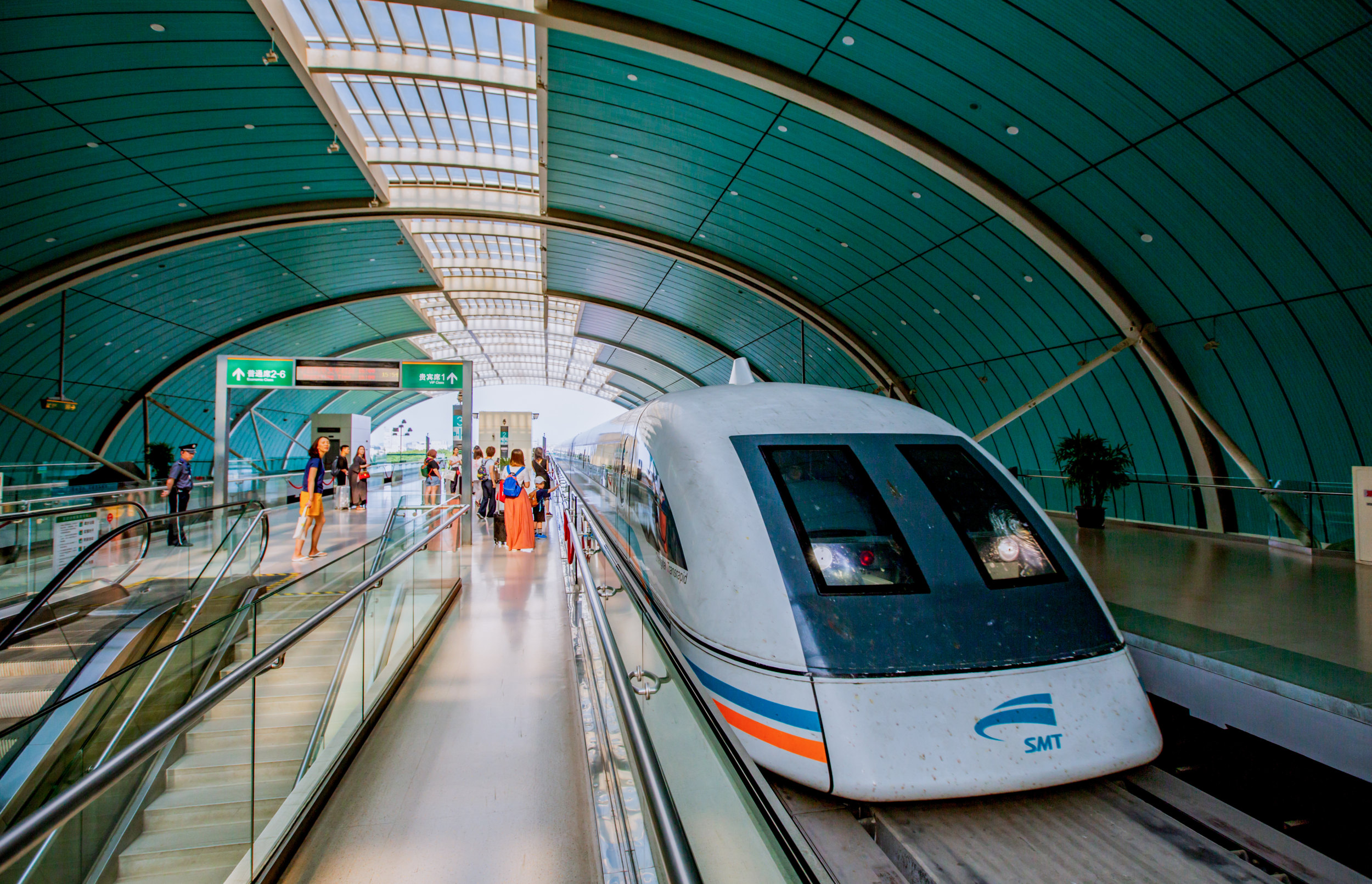
Longyang Road is an interchange point, rather than the end of the hotel journey.
After the Maglev, you still need an onward journey, usually by metro or taxi. Include the walking between transport areas, any ticket arrangements, waiting time and the final hotel approach when comparing options.
The Maglev can be worthwhile if you want the experience or your onward route from Longyang Road is convenient. However, changing transport with several bags may offset the benefit of a shorter first ride.
Treat it as one segment of your arrival route. Check its own timetable rather than assuming that it operates whenever Line 2 does.
Airport Link Line: Useful for Hongqiao and selected onward routes
The Airport Link Line connects Pudong Airport Terminal 1&2 with Hongqiao Airport Terminal 2, with an airport-to-airport train journey of approximately 40 minutes.
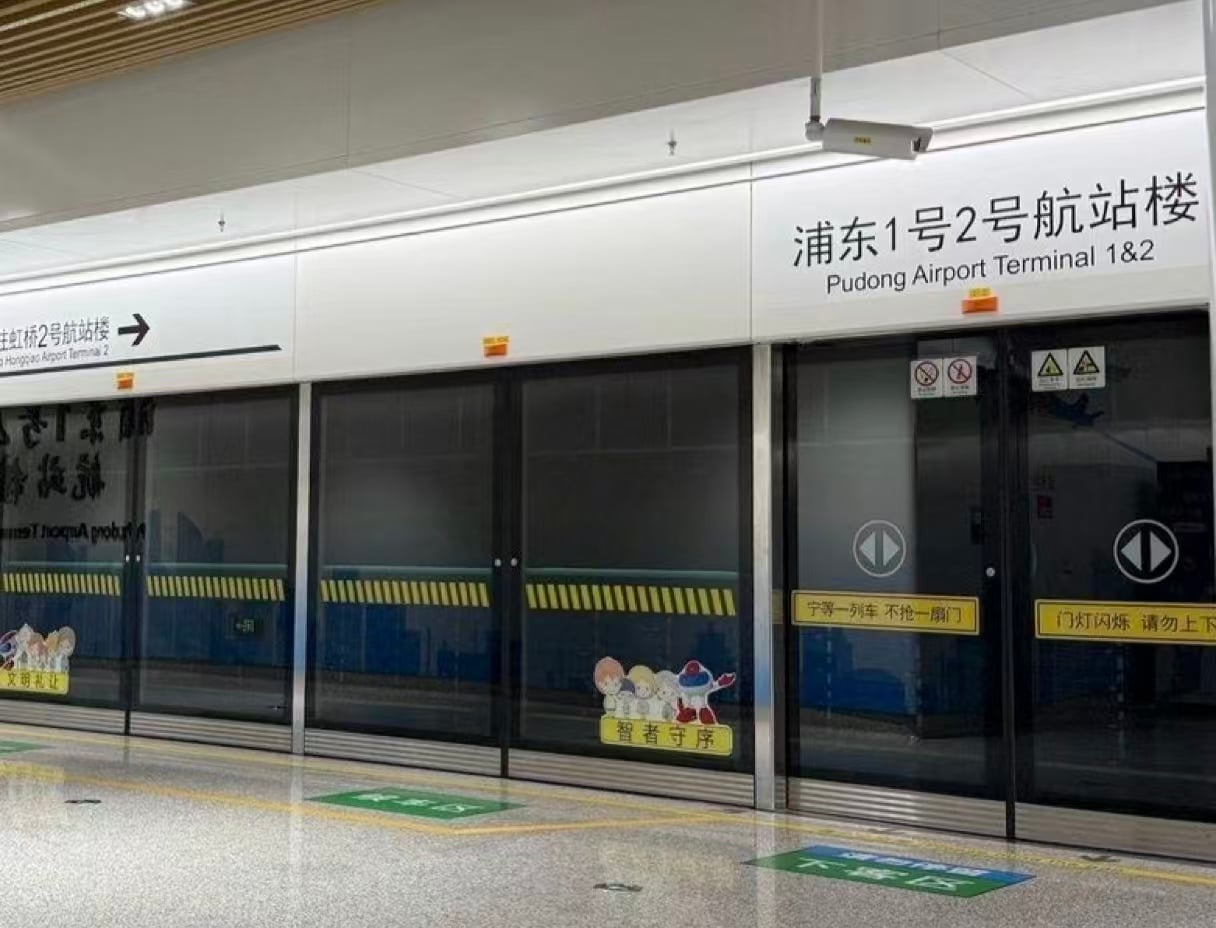
Allow time for walking, waiting and onward terminal access as well as the train ride.
This is particularly useful for passengers heading to the Hongqiao transport hub or transferring between airports during operating hours. It can also suit some hotels and onward journeys along its corridor.
It is not a direct rail service to every central sightseeing area. For a hotel near People’s Square or the Bund, compare the required interchange and final approach with an ordinary metro journey or a car transfer.
The station named Shanghai International Resort should not be treated as a promise of arrival at the Disneyland entrance or at your resort hotel. Check the onward connection to your actual destination.
The Airport Link Line has its own fare arrangements. Do not assume that an ordinary metro day pass includes the journey; check the conditions of the ticket or pass you intend to use.
Hongqiao Airport to Your Hotel by Rail
Hongqiao is closer to many western and central Shanghai destinations than Pudong, but the terminal still changes your options.
Arriving at Terminal 1
Terminal 1 is served by Metro Line 10. This can work well for a hotel near that line or for an onward interchange that is manageable with your luggage.
Do not follow instructions written for Terminal 2 without checking them. Line 2 and the Airport Link Line are not direct Terminal 1 boarding options. If you need them, include the journey to the appropriate terminal or interchange in your plan.
For a hotel in a historic neighbourhood, compare Line 10’s nearest useful station with the exact property location. A neighbourhood label is too broad to identify the easiest exit or shortest luggage route.
Arriving at Terminal 2
Terminal 2 is served by Metro Lines 2 and 10 and has access to the Airport Link Line.
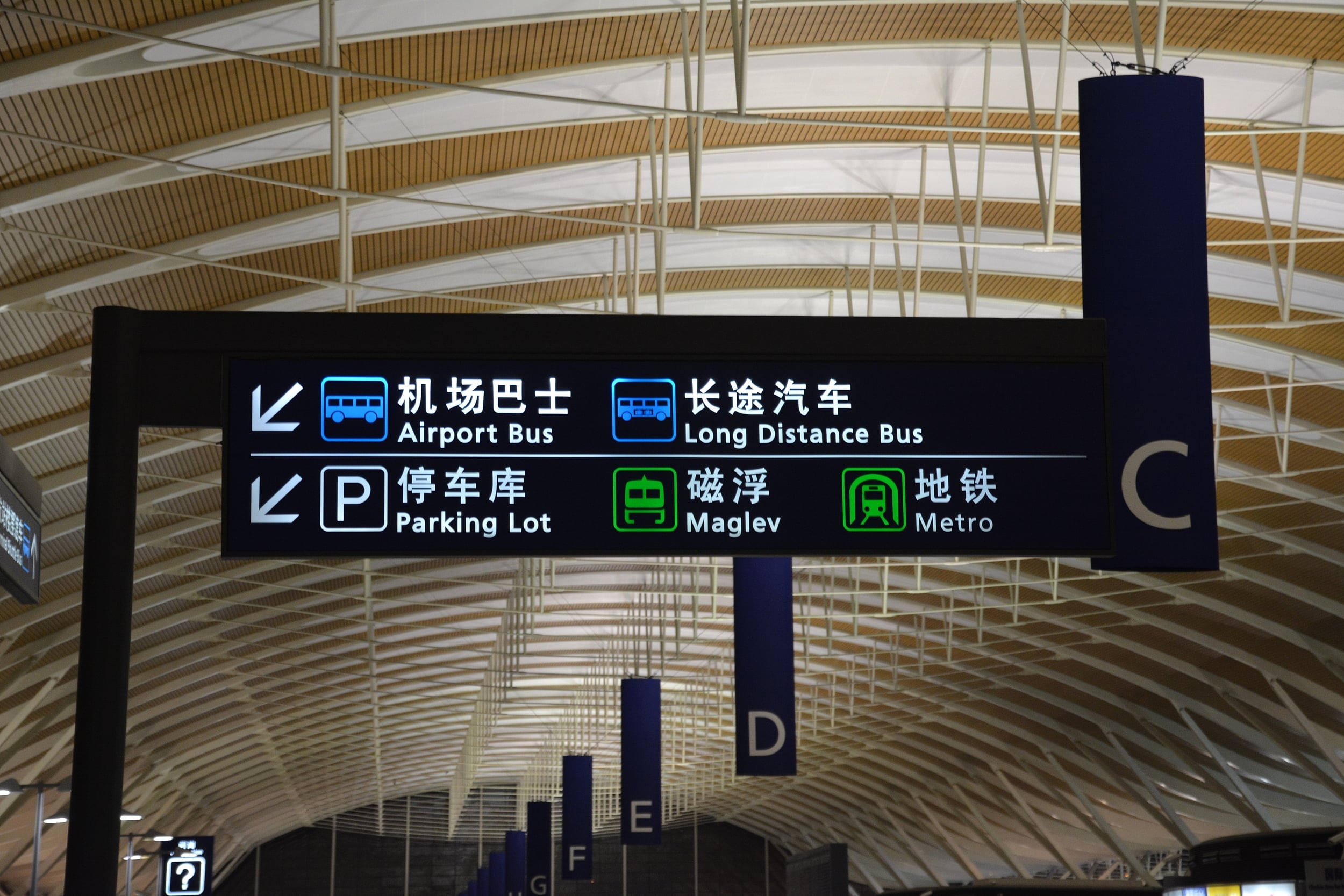
Follow signs for the specific rail service at Hongqiao Terminal 2.
Line 2 is a useful starting point for checking routes toward central areas such as Jing’an and People’s Square. Line 10 may suit other destinations or an onward connection better.
The Airport Link Line is most relevant when you are heading toward Pudong Airport or another destination along that corridor. It should not automatically replace the metro for a central-city hotel.
The Hongqiao hub is large. Follow signs for the specific service you want: airport terminal, metro, Airport Link Line, high-speed railway or taxi. They are connected parts of a wider complex, but they are not the same boarding point.
Match the Transfer to Your Hotel Area
Use the table below to choose what to investigate first. Confirm the actual route using your hotel’s map pin and arrival terminal. For the area comparison, see where to stay in Shanghai.
| Hotel area | Useful starting point from Pudong | Useful starting point from Hongqiao | Final approach to check |
|---|---|---|---|
| People’s Square | Line 2 or a direct car | Line 2 from T2; compare a T1 route separately | Station exit, crossings and hotel entrance |
| Jing’an and West Nanjing Road | Line 2 if the hotel fits the corridor | Line 2 from T2 or a car | Distance from the station to the specific property |
| Bund and riverside hotels | Metro plus a final walk or short taxi; direct car for heavy bags | Metro route suited to the hotel or a direct car | A riverside address may be farther from a station than expected |
| Lujiazui | Line 2 or a direct car | Line 2 from T2 or a direct car | Large blocks, elevated walkways and the correct hotel entrance |
| Historic neighbourhoods around Xuhui | Compare metro interchanges with a direct car | Check whether Line 10 suits the address | Luggage access to smaller streets and boutique properties |
| Hongqiao hub or exhibition-area hotels | Airport Link Line plus the actual final connection | Local metro, taxi or a confirmed hotel shuttle | Whether the hotel is genuinely walkable from the terminal |
| Disneyland and resort-area hotels | Compare road transfer with the complete rail route | Compare rail connections with a direct car | Resort stations, park gates and hotel entrances are different destinations |
For smaller hotels on lanes, ask whether a car can stop at reception. If it cannot, request the nearest vehicle-access point and directions for the remaining walk.
Buying Rail Tickets and Using Payment Apps
You do not need to master every local app to take a train from the airport.
Shanghai’s rail network supports several payment methods, including single-journey tickets, transport cards, activated transport QR codes and eligible contactless bank cards at supported gates.
For direct bank-card travel, look for Tap to Ride markings and accepted-card symbols. Eligible cards include major international networks, but an unsupported card or card setting can still prevent entry. If tapping fails, use the staffed service centre to arrange another payment method.
Buying a ticket with a bank card at a service centre is a separate process from tapping the card directly at a gate. Being able to do one does not guarantee that your card will work for the other.
Keep these practical points in mind:
- Use the same ticket, card or payment credential at entry and exit.
- A physical bank card and the version of that card in a phone wallet should not be treated as interchangeable during one journey.
- Activate a supported Shanghai transport QR code; an ordinary shopping-payment code is not automatically a train ticket.
- Check whether your ticket covers the metro, Maglev or Airport Link Line you plan to take.
- Ask staff how to use an unfamiliar ticket rather than assuming every ticket enters and exits in the same way.
Keep your phone charged if it holds both your transport code and hotel details. A power bank can be more useful on arrival than trying to optimise a small fare difference.
Taking an Official Airport Taxi
A taxi is often the easiest flexible option when you want to leave the airport without managing rail connections.
Follow the terminal signs to the official taxi queue. Use the designated boarding area and show the driver your hotel’s Chinese address and map location.
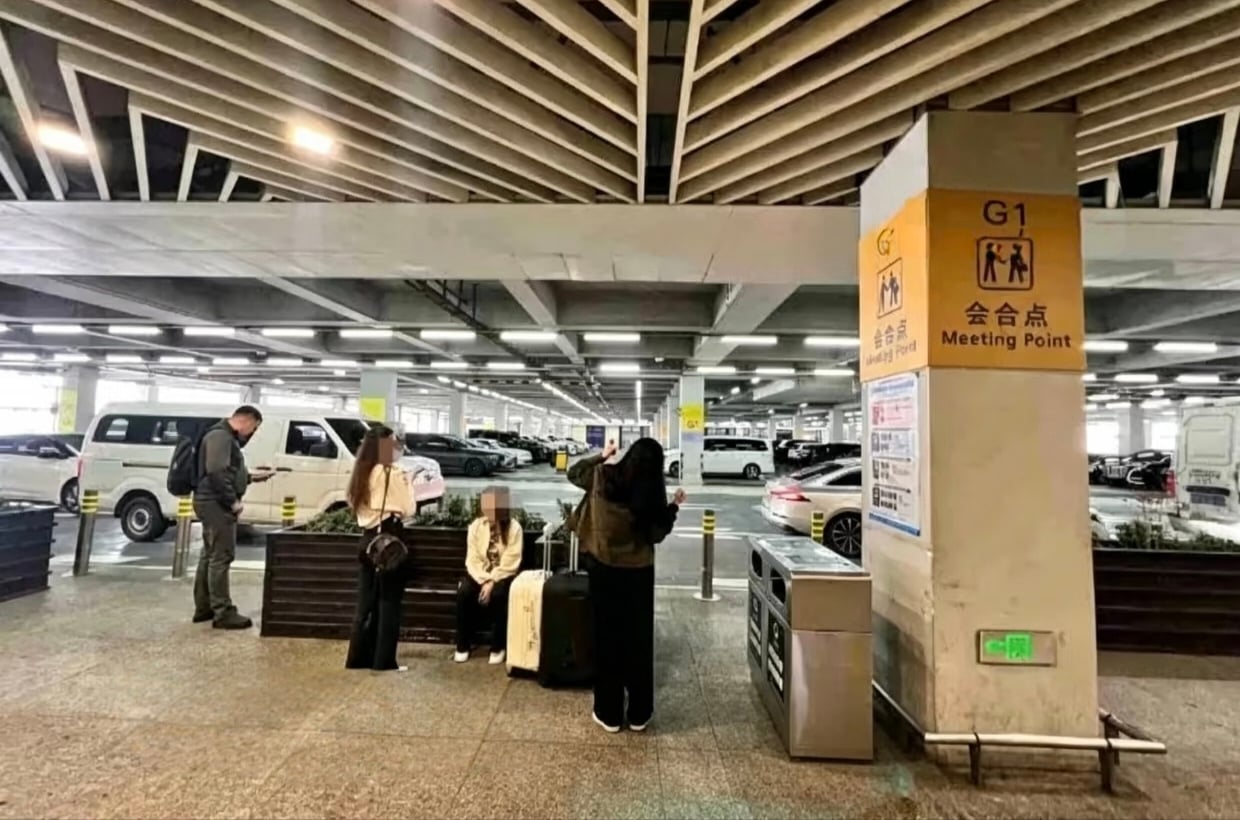
Use the designated official taxi queue and have your hotel address ready.
Airport taxi queues can take time, particularly after several flights arrive together. The benefit is a direct trip toward your accommodation without needing to book a pickup in advance.
What determines the taxi cost?
The cost depends on the airport, hotel location, distance, traffic and applicable fare conditions. Pudong-to-central-city trips generally involve a longer road journey than many transfers from Hongqiao, but the exact destination matters.
Do not treat a sample “airport to city centre” fare as a guaranteed price for your hotel. Two hotels marketed as central can be in different places, and time spent in traffic can affect the journey.
Before leaving the queue, make sure the vehicle fits your passengers and bags. A standard taxi may not suit several large suitcases, a stroller and a full group.
For a normal metered taxi, check that the meter is being used and ask for the receipt at the end. Keep it until you have checked that all bags, phones and other belongings have arrived with you.
Payment and communication
Do not rely solely on being able to pay with an overseas bank card in every taxi. Have a working payment app or another suitable backup, and clarify payment if you are unsure.
A Chinese address reduces the need to explain your destination verbally. You can also ask the hotel to provide a short message naming the property and entrance.
If the address leads to a large complex, show the hotel lobby or drop-off point rather than only the centre of the map pin.
Ride-Hailing: Convenient When You Can Manage the Pickup
Ride-hailing can provide a quoted journey and useful booking records, but airport pickup may require more coordination than joining the taxi queue.
The app may direct you to a particular parking area, level or pickup zone. That location can differ from the official taxi rank. Read the instructions before starting to walk, and check that the booking shows the correct airport terminal.
Before ordering, confirm that you can receive messages, identify the vehicle and contact the driver if needed. Choose a vehicle category that suits your bags as well as the passenger count.
If the pickup instructions are difficult to follow after a long flight, an official taxi or a prearranged meet-and-greet transfer may be easier.
Prearranged Airport Transfers
A private transfer is most useful when you want the details settled before landing: the vehicle, meeting point, baggage capacity and handling of delays.
It can be a sensible choice for families, groups, travellers with mobility needs or anyone arriving late who would prefer help coordinating the journey.
The value depends on the booking details. “Airport pickup included” is not enough information to assess the service.
Confirm these details in writing
| Booking detail | What to ask |
|---|---|
| Airport and terminal | Is the correct flight, airport code and terminal recorded? |
| Meeting point | Will the driver meet you in arrivals, or must you walk to a vehicle zone? |
| Flight delays | Is the flight monitored, and how is a delayed arrival handled? |
| Waiting allowance | When does waiting time start, and what happens if immigration or baggage collection takes longer? |
| Vehicle capacity | Does the quoted vehicle fit every passenger and the stated luggage? |
| Child seats | Is the requested seat suitable and explicitly confirmed? |
| Price | Are parking, tolls, late-night charges and any extra waiting included or separately charged? |
| Communication | How do you contact the operator if you cannot find the driver? |
| Assistance | Is luggage help, an English-speaking driver or additional support actually included? |
Do not assume that every driver speaks English or that a child seat is standard. If either matters to your group, have it confirmed as part of the booking.
Keep the operator’s contact details separate from the driver’s message thread. If the driver changes or the flight is disrupted, the operator should still be able to help.
Late-Night Arrivals: Plan Around Leaving the Terminal
Your flight’s scheduled landing time is not the time you will reach a train platform or a pickup area.
You still need to disembark, complete arrival procedures, collect checked luggage where applicable and walk to your transport. A flight landing before the last departure can still leave you too late to use it.
Check the timetable for the specific service and direction. The metro, Maglev and Airport Link Line have different operating schedules. A final departure from the airport also does not guarantee that a connecting train will still be available farther along your route.
When a car is the better plan
For a late arrival with children, heavy bags or an unfamiliar hotel location, arrange a car or plan to use the official taxi queue.
If booking a private transfer, make sure the waiting policy covers the actual arrival process. Confirm what happens if your flight lands after midnight or its arrival date changes locally.
Let the hotel know when you realistically expect to arrive. For a small property, obtain clear instructions for reception, access and late check-in before flying.
What about an overnight airport bus?
Pudong has an overnight airport bus service serving selected city stops and the Hongqiao hub. It can be useful when a stop fits your accommodation and the onward journey remains practical.
Check Shanghai Airport’s current ground-transport information and the departure arrangement, exact stop and final hotel connection at the airport. A stop in the right general district may still leave a difficult walk with bags.
Do not assume that a bus to the Hongqiao hub delivers you to your required airport terminal, and do not assume that the return direction uses the same service pattern.
Should you stay near the airport?
An airport-area hotel can be worthwhile after a very late arrival or before an early departure, especially if you have little useful sightseeing time between flights.
Confirm the actual terminal access and shuttle arrangements. “Near the airport” does not establish that a hotel is walkable, that the shuttle operates overnight, or that it collects passengers from both terminals.
For a multi-night sightseeing visit, compare that first-night convenience with the time you would spend travelling into the city on subsequent days.
Families, Mobility Needs and Large Luggage
The best transfer for a family is usually the one with the fewest difficult transitions.
With a stroller, several suitcases and tired children, the challenge may be moving through a station and reaching the hotel rather than the train ride itself. Consider how many adults can help carry bags while supervising children.
| Travelling with | Practical arrangement |
|---|---|
| One or two manageable bags | A simple rail route can work well |
| Several large suitcases | Check vehicle boot space or reconsider a route with multiple interchanges |
| A stroller and young children | Compare station access with a direct car; reserve a child seat if needed |
| Sports equipment or oversized items | Provide dimensions and request explicit transport acceptance |
| Reduced mobility | Confirm assistance, vehicle access and the hotel’s entrance arrangements |
| A group needing more than one vehicle | Agree on who travels together and how each vehicle receives the destination |
Do not choose a vehicle only by the number of advertised seats. Seats occupied by passengers cannot also be assumed available for luggage, and a larger vehicle may still have limited space when all seats are in use.
If using rail, check lift access and the final station exit in advance. The closest exit on a map may not be the easiest one with bags or a stroller.
Transferring Between Pudong and Hongqiao Airports
An airport change needs a separate plan from an ordinary hotel transfer.
First confirm that your onward flight really departs from the other airport. Then check whether you must enter Shanghai, collect baggage and check in again. Do not assume that luggage will move automatically between airports.
Airport Link Line during operating hours
The Airport Link Line is a useful rail option between Pudong Airport Terminal 1&2 and Hongqiao Airport Terminal 2, with approximately 40 minutes on the train.
That figure excludes arrival procedures, walking to the station, waiting for the train, reaching the departure terminal and completing check-in and security.
If your Hongqiao flight uses Terminal 1, add the separate terminal connection. A train arrival at Hongqiao Terminal 2 does not complete a transfer to a Terminal 1 flight.
Road transfer between airports
A taxi or private car can take you toward the required departure terminal and may be more practical with large bags, a group or a journey outside useful rail hours.
The trade-off is road traffic. Do not build a flight connection around the shortest driving estimate shown on a map. Ask the airline or transfer operator about the timing appropriate to your itinerary and allow additional margin for delays.
How much connection time should you allow?
There is no single safe total that works for every international arrival, baggage arrangement, terminal pair and onward flight.
Work through the whole sequence:
- Incoming flight arrival and possible delay.
- Disembarkation and required arrival procedures.
- Baggage collection and customs where applicable.
- Walking and waiting for the transfer.
- Travel to the other airport.
- Access to the correct departure terminal.
- Check-in, baggage acceptance and security before the airline’s deadlines.
Check that your travel documents permit the required landside transfer. For separate tickets, ask each airline about its conditions and understand what happens if you miss the onward flight; do not assume automatic protection or rebooking.
For a tight or uncertain itinerary, consider a later flight or an overnight stop instead of relying on a fast train to solve the entire connection.
Going from Your Hotel Back to the Airport
Plan the departure transfer when your flight details are settled, rather than leaving it until your final morning.
Confirm the airport code and terminal again. Work backwards from the airline’s required arrival, check-in and baggage deadlines, adding time for the hotel departure, road or rail journey, and terminal access.
For rail, check the first useful departure as well as any interchange. A timetable may look suitable until you include the journey from your hotel to the station.
For an early car pickup, agree on the exact lobby or street-access point. Have all bags ready before the driver arrives and allow time to check out.
If you are leaving from a hotel on a narrow lane, ask reception where vehicles can collect passengers. That small detail can prevent unnecessary coordination when you are trying to catch a flight.
Common Airport Transfer Mistakes
- Booking transport for “Shanghai Airport” without checking PVG or SHA.
- Treating Hongqiao Terminal 1 and Terminal 2 as the same rail boarding point.
- Assuming the Maglev reaches a central hotel without an onward journey.
- Choosing the Airport Link Line without checking whether its corridor suits the hotel.
- Comparing only the train ride or drive, while overlooking walks, queues and waiting.
- Using scheduled landing time to decide whether the last train is reachable.
- Booking a car without declaring large suitcases, a stroller or oversized equipment.
- Assuming a hotel shuttle, child seat or English-speaking driver is included.
- Planning an airport change around the approximate 40-minute rail journey alone.
Frequently Asked Questions
Which Shanghai airport is better for a central hotel?
Hongqiao is closer to many western and central destinations, while Pudong is the main long-haul gateway. For a specific trip, compare available flights and the complete journey to your hotel rather than selecting an airport solely by distance.
Is the metro a good option from Pudong?
Yes, particularly for a daytime arrival with manageable bags and accommodation near a useful station. Line 2 is a good starting point for checking many central-city routes.
Does the Maglev take me to the Bund?
No. It takes you to Longyang Road, where you need an onward metro or road journey. Include that connection when deciding whether it suits your arrival.
Can I take Line 2 directly from Hongqiao Terminal 1?
Terminal 1 is served by Line 10. Line 2 is available at Terminal 2, so a plan using it must include the appropriate connection.
Is the Airport Link Line the best way to every Shanghai hotel?
No. It is especially useful for the airport-to-airport corridor and selected onward destinations. A central hotel may be easier to reach by the ordinary metro or a direct car.
Can overseas visitors use bank cards for airport trains?
Eligible contactless bank cards can be used at supported rail gates, and staffed service centres offer ticket-purchase options. Check accepted symbols and have a backup if your card is unsupported or declined.
Should I book a private transfer before arriving?
It is worth considering for a family, larger group, special vehicle requirement or late arrival. Confirm the meeting point, luggage capacity, waiting policy and total price before booking.
What should I do if I land after the trains finish?
Use the official taxi queue or a prearranged transfer. At Pudong, an overnight bus may also work if its stop and final hotel connection are suitable. Confirm late check-in with your hotel.
Are child seats standard in airport taxis?
Do not assume one will be available. If you need a child seat, arrange a service that explicitly confirms a suitable seat in advance.
Can I transfer between Pudong and Hongqiao in 40 minutes?
Approximately 40 minutes describes the Airport Link Line train ride, not the full flight connection. Arrival procedures, baggage, walking, waiting, terminal access and departure formalities require additional time.
Is Hongqiao Airport the same place as Hongqiao Railway Station?
They are separate facilities within the wider hub. Allow time to reach the correct station entrance, complete security and find your high-speed train departure area.
Should I book a hotel near the airport for my first night?
It can make sense after a very late arrival or before an early onward departure. For sightseeing over several days, compare that convenience with the longer journeys from an airport-area hotel into the city.
Plan an Arrival That Fits Your Shanghai Trip
A smooth airport transfer starts with the right destination and a realistic route. Once you know the airport, terminal, hotel entrance and luggage needs, choosing between rail and a car becomes much easier.
If you are combining Shanghai with other East China destinations, plan the arrival transfer alongside your hotel location and onward travel. A useful connection to the Hongqiao hub may matter more than a short journey to a hotel you will leave the next morning.
Discover East China Tours can help you plan your Shanghai stay and assess suitable arrival arrangements for your itinerary. Share your flight details, hotel plans, passenger count and luggage requirements when enquiring.