
Explore Shanghai dishes, breakfast staples, noodles and snacks, with practical meal planning by sightseeing area, restaurant-selection tips and advice for family dining.
Eating well in Shanghai does not require a long list of famous restaurants or a journey across the city for every meal. A more satisfying first visit combines a neighbourhood breakfast, a simple noodle or dumpling lunch, and a sit-down dinner that introduces you to local cooking.
Shanghai’s food is much broader than soup dumplings. There are fragrant scallion noodles, crisp-bottomed pork buns, savoury breakfast dishes, delicate seafood and vegetables, and rich soy-braised dishes designed to share. The city also offers food from across China and around the world, making it easy to balance local discoveries with familiar meals.
The practical challenge is choosing what fits your day. A popular snack shop may be perfect for a quick stop but uncomfortable for a tired family. A riverside restaurant may offer a memorable view without specialising in Shanghai cuisine. A famous address from an old guide may no longer be the branch you should visit.
This guide explains what to try, how to organise meals around sightseeing, and how to choose restaurants that suit your appetite, budget and dietary needs.
What Is Shanghai Cuisine?
Traditional local cooking is often called benbang cai (本帮菜). Many familiar dishes use soy sauce, a touch of sweetness and methods such as braising, steaming or simmering. Pork, fish, shrimp, vegetables and seasonal ingredients all have a place on the table.
However, Shanghai food is not uniformly sweet or covered in dark sauce. A balanced meal can include a rich braise, a lighter vegetable dish and a clear soup. Dumplings and breakfast snacks are another part of the city’s food culture, rather than the whole definition of Shanghai cuisine.
It is also useful to distinguish between local food and food eaten locally. Sichuan hot pot, Cantonese dim sum and many other regional cuisines are widely enjoyed in Shanghai. They can be excellent choices, but they offer a different experience from a traditional Shanghai dinner.
For a short visit, aim to try a few foods you are curious about rather than turning meals into a checklist.
What to Eat on a First Visit
| Food | Chinese name | What to expect | Good place in your day |
|---|---|---|---|
| Soup dumplings | 小笼包 | Delicate steamed dumplings, usually with a savoury filling and hot soup inside | A light lunch or shared snack |
| Pan-fried pork buns | 生煎 | Pork buns with a browned base; dough and soupiness vary by style | Breakfast or a quick meal |
| Scallion oil noodles | 葱油拌面 | Noodles tossed with fragrant scallion oil and soy-based seasoning | An easy lunch or breakfast |
| Wontons | 馄饨 | Filled dumplings, often served in soup; fillings and sizes vary | A lighter meal |
| Red-braised pork belly | 红烧肉 | Tender pork belly in a rich, savoury-sweet sauce | A shared restaurant dinner |
| Sweet-and-sour spare ribs | 糖醋小排 | Small pork ribs with a sweet, tangy glaze | A shared dish, usually with bones |
| Shanghai-style “smoked” fish | 熏鱼 | Usually fried fish in a seasoned savoury-sweet sauce, rather than conventional smoked fish | A starter at a local dinner |
| Pork chop with rice cakes | 排骨年糕 | Pork chop served with chewy sliced rice cakes | A substantial casual lunch |
| Sticky rice roll | 粢饭团 | A filling rice breakfast roll with ingredients that vary by shop | Breakfast on a neighbourhood walk |
| Soy milk and fried dough | 豆浆、油条 | A classic breakfast pairing; soy milk may be sweet, plain or savoury | A morning meal |
These names are useful menu references, not complete ingredient lists. If you avoid particular foods, ask about the filling, cooking oil, broth and sauce as well as the main ingredient.
Xiaolongbao and Shengjian: Two Different Experiences
Shanghai’s two best-known dumpling-style foods are worth trying, but they are not interchangeable.
Xiaolongbao: steamed soup dumplings
Xiaolongbao are commonly filled with pork, with crab-and-pork or other variations available at some restaurants. A steamer is usually intended as a portion, but the number and size of dumplings differ between shops.
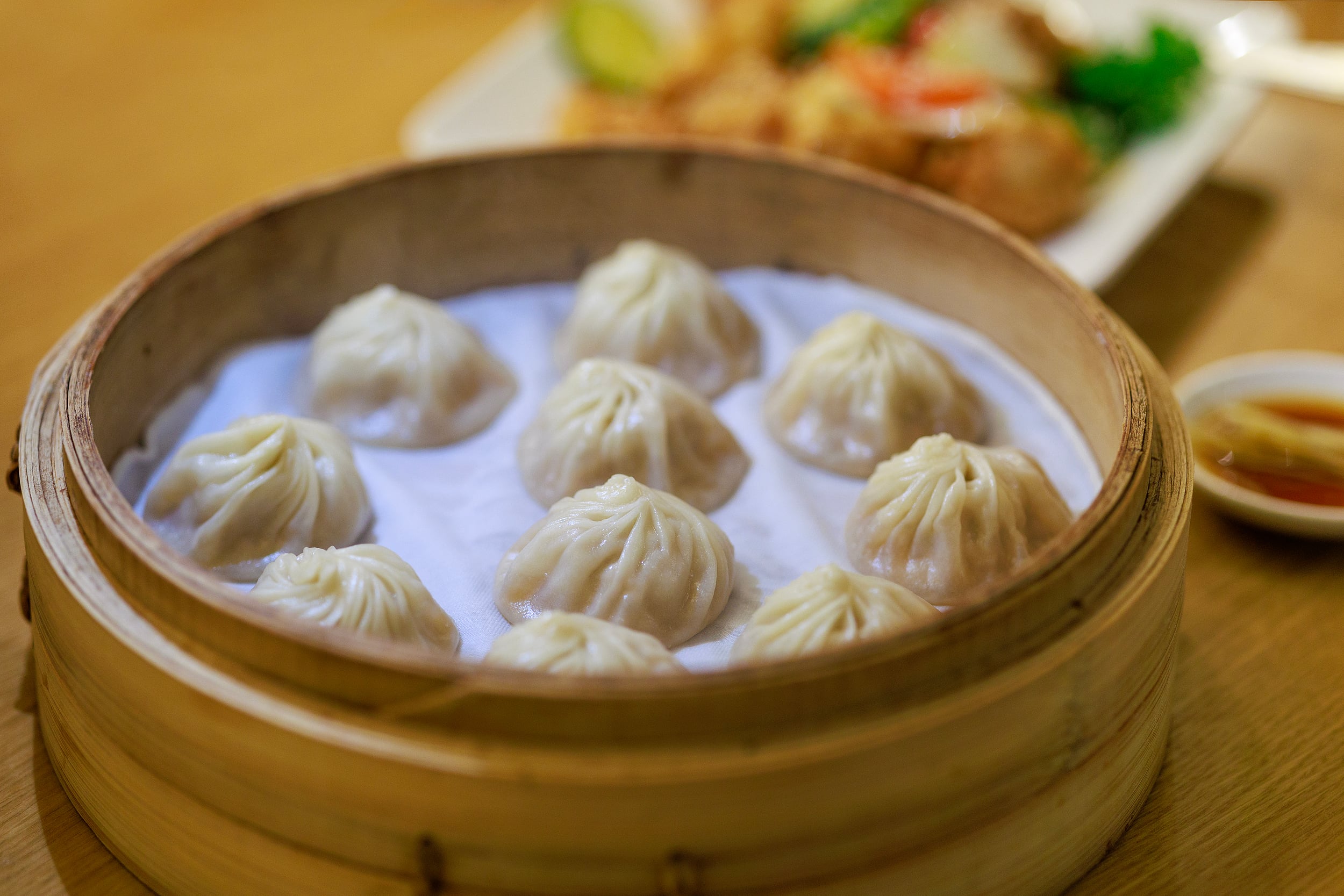
Xiaolongbao are steamed soup dumplings; fillings vary by restaurant.
Use a spoon to support the dumpling and open the wrapper carefully before tasting the soup. Let very hot dumplings cool a little; eating one whole immediately can be uncomfortable. Vinegar and ginger may be offered, and you can use them according to your preference.
For two people, a steamer with a second light item can make a useful lunch. If you want to compare fillings, start with a small order rather than filling the table before seeing the portions.
Crab dumplings are not automatically suitable for someone who avoids pork. Confirm the full filling, including whether the soup contains meat ingredients.
Shengjian: pan-fried buns
Shengjian have a crisp base and a thicker wrapper than xiaolongbao. Some versions contain plenty of soup; others emphasise bread-like dough and a less liquid filling.
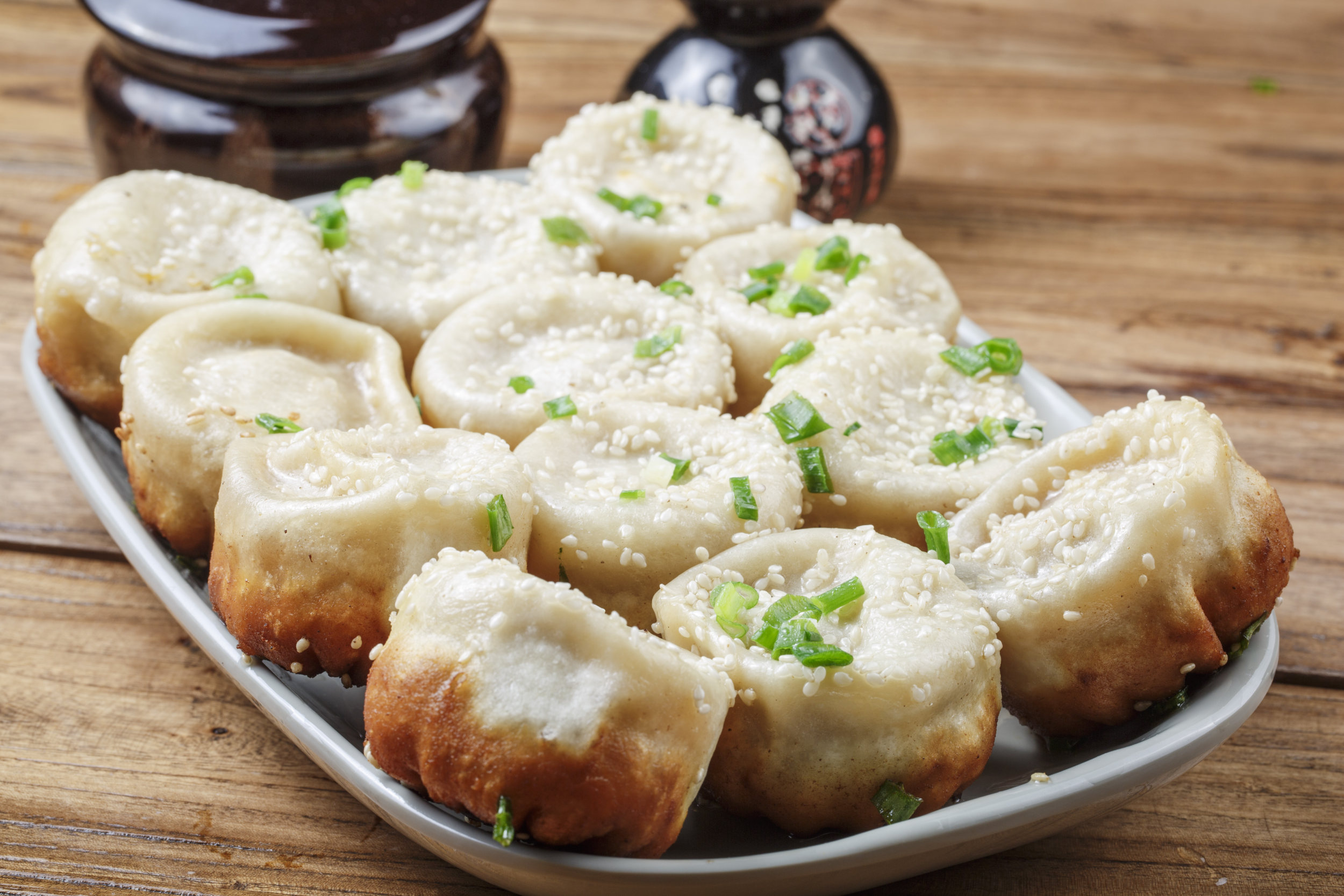
Shengjian have a crisp base and a thicker wrapper.
Check the serving unit before ordering. A menu may price a portion rather than one bun, and a few buns can be more filling than they look.
They work well as a breakfast or casual lunch, perhaps with a small soup. If you have a sit-down dinner planned later, sharing one portion is often enough for a tasting stop.
Shanghai Breakfast: Start Close to Your Hotel
A local breakfast is one of the easiest ways to experience everyday Shanghai. For neighbourhood planning, see where to stay in Shanghai. You do not need to cross the city to find it: ask your hotel about a nearby shop or check recent listings around your morning route.
Breakfast food is often associated with small neighbourhood businesses, although some established brands offer more seating and a broader menu.
The classic four breakfast staples
Shanghai’s familiar breakfast combination is often known as the Four Heavenly Kings or Four Warriors:
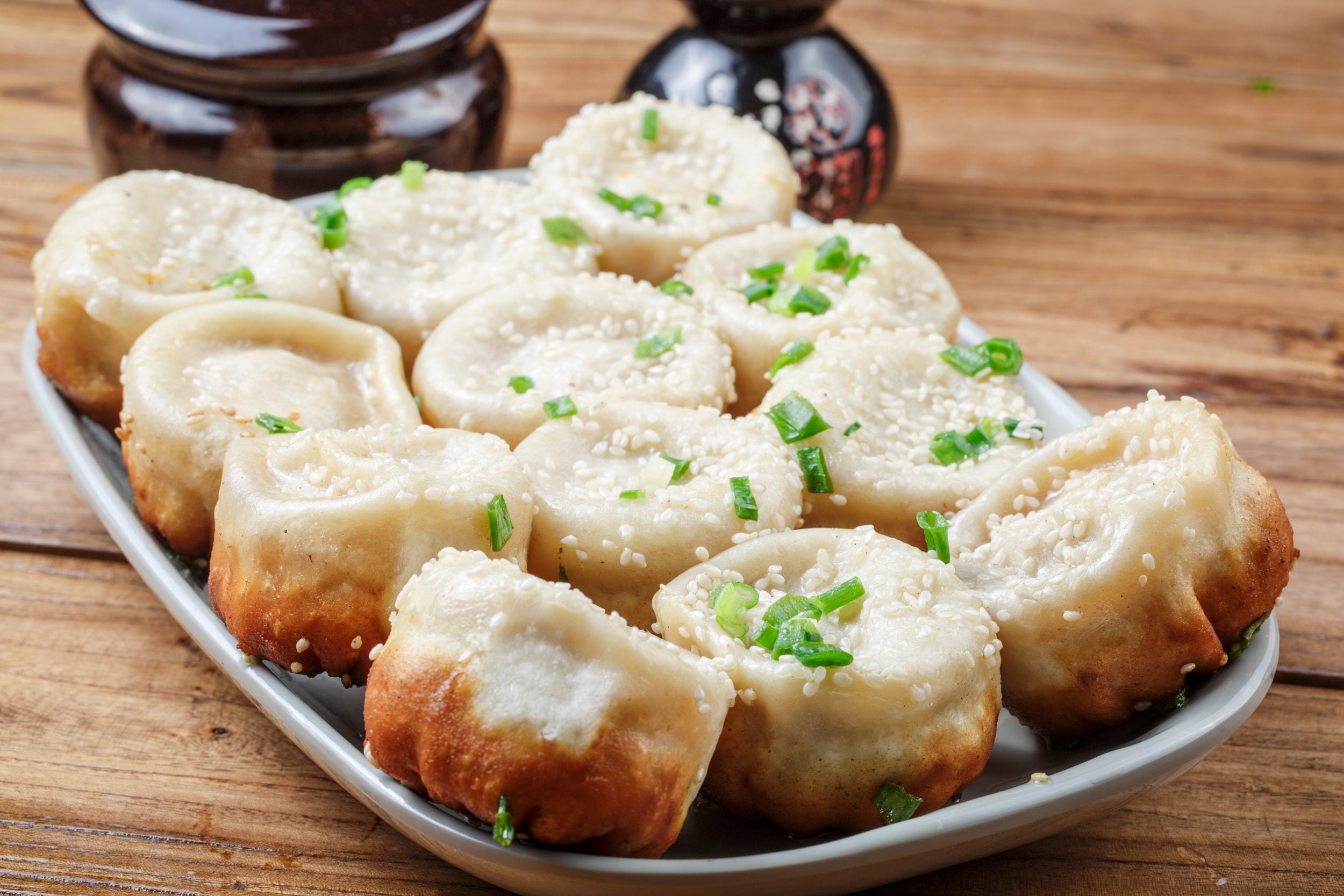
Choose a local breakfast combination to suit your appetite.
| Breakfast item | Chinese name | How to choose |
|---|---|---|
| Sesame flatbread | 大饼 | Ask whether it is sweet or savoury |
| Fried dough stick | 油条 | Often eaten with soy milk or used inside a rice roll |
| Sticky rice roll | 粢饭团 | Check the filling; common versions can include pickles, fried dough and meat ingredients |
| Soy milk | 豆浆 | Specify sweet, unsweetened or savoury where those options are offered |
You do not have to order all four. A rice roll and soy milk can be a substantial breakfast, while flatbread and a drink may suit a smaller appetite.
Sweet, plain and savoury soy milk
Soy milk is not always a sweet drink. A savoury version can contain seasonings and additions such as pickled vegetables, dried seafood or pieces of fried dough.
If you want a plain drink, ask for unsweetened soy milk (无糖豆浆) and confirm what is available. If you are vegetarian or avoid seafood, check a savoury version’s additions rather than judging it by the word “soy”.
Other useful breakfast choices
Wontons, noodles, steamed buns and congee can also work well, depending on the shop. For a family, a place with seats and a few different options may be more useful than a takeaway window with a famous queue.
Breakfast availability varies. A business known for morning food may sell out or change its menu later in the day. If a particular item matters to you, check the current opening time and go during its breakfast service.
A relaxed breakfast plan
Allow enough time to sit down, understand the menu and enjoy the meal before an appointment or train. Keep a simpler alternative near the hotel if the first shop is closed or crowded.
Coffee and a local breakfast do not need to come from the same place. You can try breakfast first and stop at a café during the walk that follows.
Noodles, Wontons and Casual Lunches
For a sightseeing day, a noodle shop can be an easier lunch stop than a large restaurant. You can usually choose an individual portion and get back to your route without organising a full shared meal.
Scallion oil noodles
Congyou banmian (葱油拌面) are mixed noodles with fragrant scallion oil and soy-based seasoning. Toss them so that the sauce coats the noodles rather than staying at the bottom of the bowl.
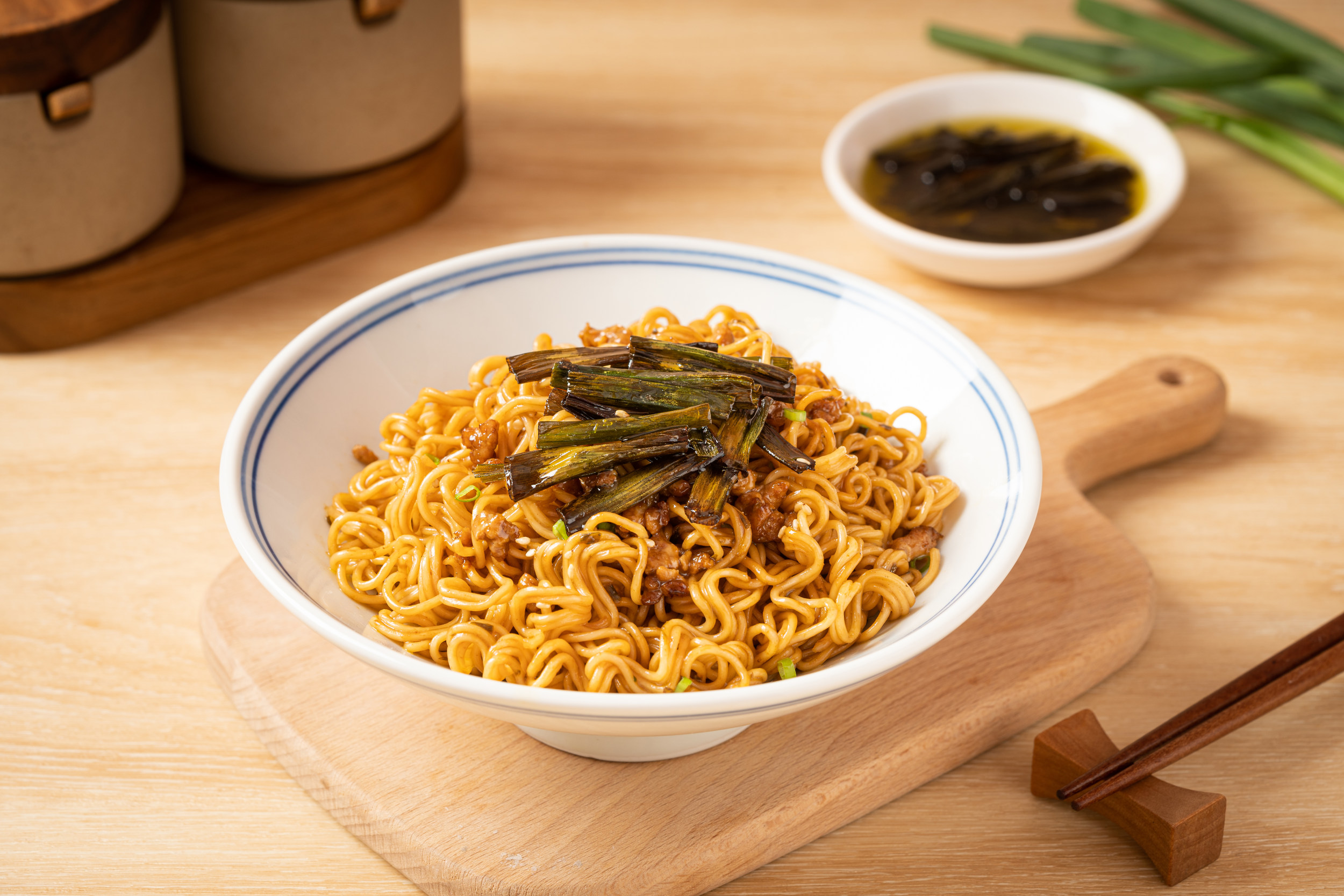
Scallion oil noodles make a convenient neighbourhood meal.
Some versions include dried shrimp, and optional toppings may add pork or other ingredients. A simple-looking bowl should therefore not be assumed vegetarian.
If you want a more substantial meal, ask what toppings are available and whether they are charged separately. You may prefer a plain bowl with a side dish instead of several heavy additions.
Soup noodles and toppings
Noodle menus may offer a basic bowl with a choice of toppings: pork chop, mushrooms, eel, seafood or other ingredients. Confirm whether a price covers the whole bowl or only the topping.
A topping that looks mild may come in a spicy sauce, while a vegetable topping can sit in a meat-based broth. Ask the questions that matter to your diet before ordering.
Wontons
Wontons can provide a lighter-feeling alternative to a rich dinner, but their fillings and broth vary. Pork, seafood and combinations of meat and vegetables are common possibilities.
Ask about the portion size and filling rather than assuming that an English menu’s “vegetable wonton” means a fully plant-based meal.
Pork chop and rice cakes
This is a useful choice when you want something more substantial than dumplings. The rice cakes are chewy rather than crisp crackers, and the sauce is part of the meal’s appeal.
For a child or smaller appetite, check whether one portion can be shared. Do not assume that every snack shop can modify a standard set.
A Sit-Down Shanghai Dinner
A local restaurant dinner gives you a broader view of Shanghai food than several dumpling stops alone.
Choose a meal with some contrast: one rich dish, a vegetable preparation, perhaps a soup or lighter protein, and rice as needed. You do not need to order every famous dish at once.
Red-braised pork belly
Hongshao rou is a useful introduction to Shanghai-style braising. It is made with pork belly, so the layers of fat are part of the dish rather than an accidental feature.
If your group prefers lean meat, choose another main dish rather than expecting the kitchen to transform pork belly into a lean preparation. Share a modest portion if you want to taste it without making the whole dinner especially rich.
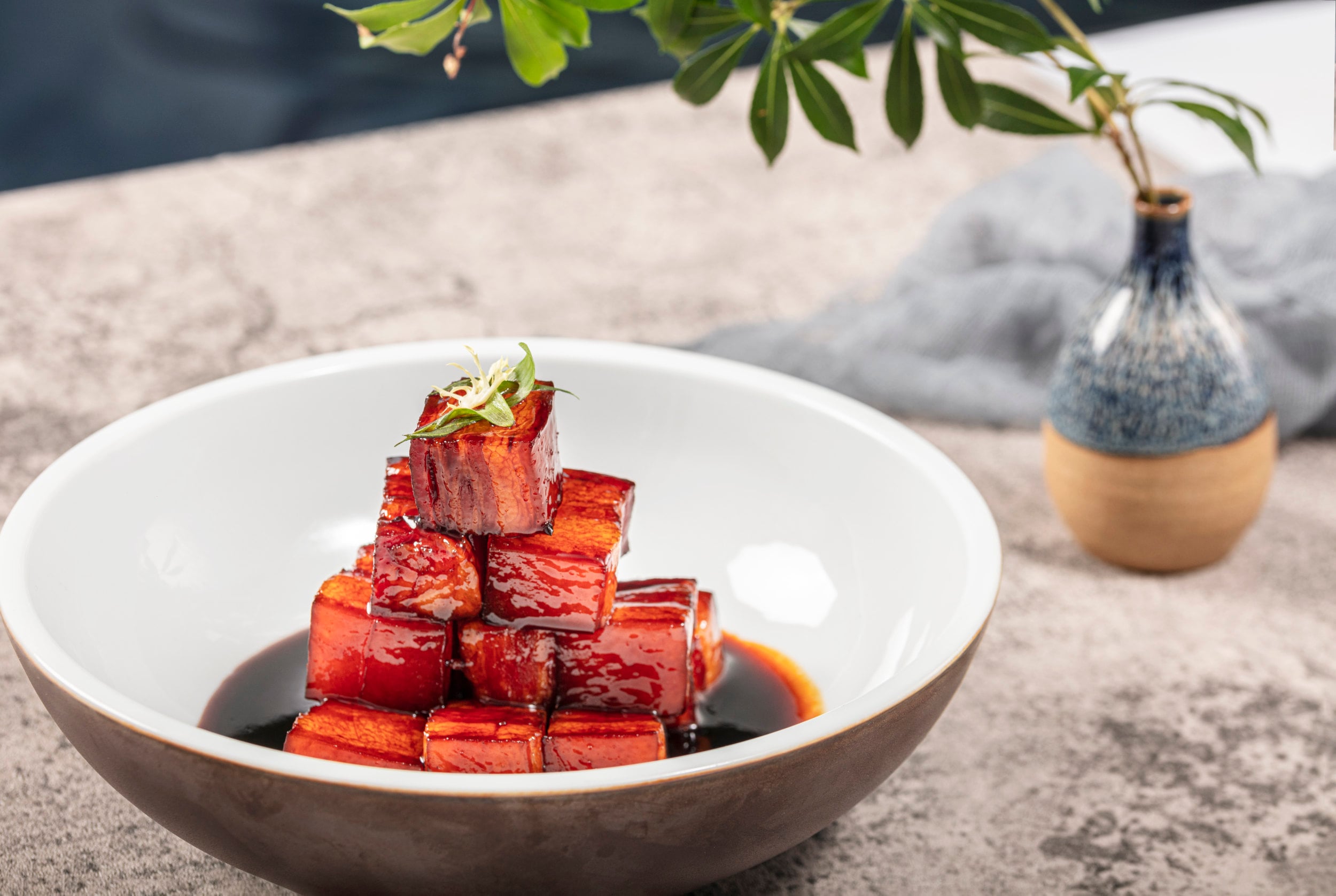
Balance a rich braise with vegetables and lighter shared dishes.
Fish, seafood and lighter dishes
Shanghai-style smoked fish is a distinctive starter, but the name can be misleading: it is commonly fried and dressed in a seasoned sauce. Expect a different texture from a smoked salmon plate.
Other fish or shrimp dishes can provide variety, although preparation, bones and shells differ. Ask staff to explain the dish if that will affect whether your family can enjoy it comfortably.
For seasonal crab, confirm the serving format and price before ordering. Whole crab requires more time and handling than a dumpling filling or another prepared crab dish.
Vegetables and soup
Ask what vegetables are in season or available that day. A vegetable dish can balance the meal, but its cooking ingredients still matter if you avoid meat or seafood.
A clear soup or simpler dish may make a better companion to a rich braise than ordering several more dishes with similar sauces.
A flexible order for two or a family
For two adults, start by asking whether two or three shared dishes with rice would be a sensible amount at that restaurant. Portion sizes vary considerably.
For a family, identify one or two dishes everyone can eat, then add something more adventurous for those who want it. Ask whether rice, soup and sides are individual portions or shared servings.
You can order more if needed. A table full of dishes that your group cannot finish is rarely a better experience.
Where to Eat: Organise Meals Around Sightseeing
Choose the area first, then the restaurant. Shanghai is large enough that a cross-city food detour can consume time you would rather spend exploring.
| Your sightseeing area | Practical meal approach | What to avoid |
|---|---|---|
| Yu Garden and the old city | A dumpling or snack stop, or a traditional restaurant lunch | Assuming every shop around a landmark specialises in local food |
| People’s Square and Huanghe Road | Breakfast, soup dumplings or a casual meal before or after nearby sights | Treating a long queue as essential to the experience |
| Nanjing East Road and the Bund | A local lunch near the shopping area; dinner before a riverside walk | Choosing only by the closest waterfront view |
| Jing’an and West Nanjing Road | A neighbourhood breakfast or noodles, followed by a comfortable dinner | Backtracking to the old city solely to find something labelled traditional |
| Huaihai Road, Sinan Road and historic streets | A noodle lunch, café break and local restaurant dinner | Assuming every café or stylish restaurant serves Shanghai cuisine |
| Lujiazui | A convenient lunch between attractions; a planned dinner near your final stop | Crossing the river several times only for meals |
Yu Garden and the old city
This area is convenient for trying dumplings or arranging a traditional restaurant meal alongside sightseeing. The surrounding commercial streets offer many food choices, but they vary in style, price and seating.
Decide whether you want a small tasting stop or a proper lunch. Several snacks can become a full meal without giving you a comfortable place to rest.
For a family, identify seating before ordering. If a popular shop is too crowded, a nearby restaurant with a clear menu can be a better use of the afternoon.
People's Square and Huanghe Road
This is a useful central area for adding dumplings or another casual meal to museum, shopping or neighbourhood plans.
Try to eat before you become very hungry, especially if you are considering a small place with limited seating. A short walk to an alternative can be more enjoyable than a long wait for one famous name.
Nanjing East Road and the Bund
You can eat near Nanjing East Road and continue to the Bund for a walk, rather than paying for a river view at every meal.
Restaurant locations need particular care here. In 2026, a group of time-honoured brands associated with the old Yunnan Road food street reopened in a new cluster around South Shanxi Road, Middle Fujian Road and Middle Jiangxi Road, near Nanjing Road.
Check the current branch before following an older guide to South Yunnan Road. A familiar brand name does not establish that it still operates at the old address.
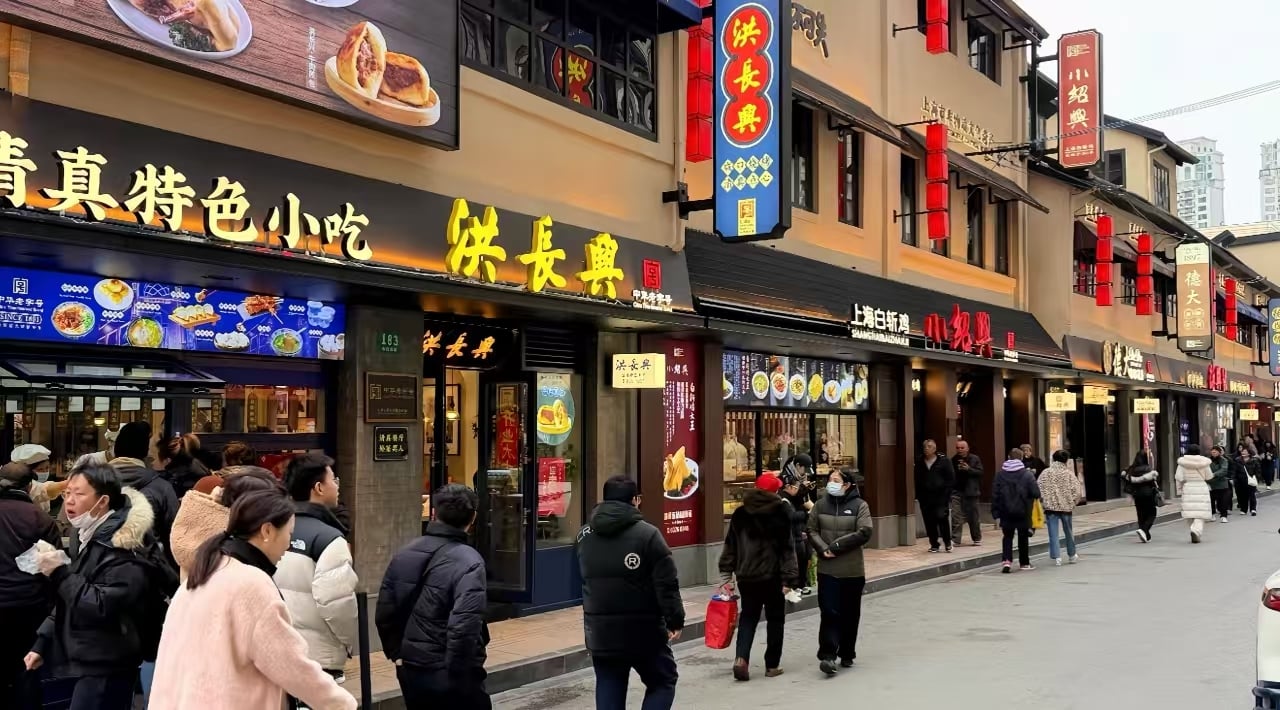
Check the current branch when exploring the relocated food cluster near Nanjing Road.
Location update checked on 12 October 2026 against Shanghai municipal information on the relocated food cluster.
If you want a view dinner, treat that as a separate choice. Check the cuisine, actual table view, reservation conditions and price level before booking.
Jing'an and West Nanjing Road
This area can suit visitors who prefer keeping meals close to their hotel or shopping route. A nearby breakfast shop and a convenient sit-down restaurant can be more useful than chasing a distant food street.
Shopping centres can provide practical options for families, including a range of cuisines and easier access to facilities. Read the restaurant’s cuisine category if you specifically want Shanghai food.
Huaihai Road and the historic neighbourhoods
Around Huaihai Road, Sinan Road and the surrounding historic streets, a simple lunch followed by a café break can fit a walking day well.
Smaller local restaurants may have limited tables, while other places focus on atmosphere and longer meals. Choose according to your schedule and comfort needs.
Avoid using “former French Concession” as if it identified one small dining district. Save the specific restaurant and street so that the meal fits the part you are actually exploring.
Lujiazui
If you are spending the day in Pudong, plan a meal there rather than assuming you must return across the river to eat well.
A lunch close to your attraction can preserve the afternoon, followed by a dinner near your hotel or evening destination. Check the walking route within large developments rather than judging only the distance between map pins.
Restaurant Names to Start Your Search
The following are examples to investigate, not a ranking or a promise that a particular branch will suit everyone. Confirm the current location, opening arrangements, menu and queue before visiting.
| Name to search | Chinese name | Why consider it | Where it can fit |
|---|---|---|---|
| Nanxiang Steam Bun Restaurant | 南翔馒头店 | A well-known name for xiaolongbao | A visit to the Yu Garden commercial area |
| Jia Jia Tang Bao | 佳佳汤包 | Soup dumplings; check the exact branch | People’s Square and Huanghe Road plans |
| Da Hu Chun | 大壶春 | Traditional pan-fried buns | A central-city snack stop; verify the current branch |
| Xian De Lai | 鲜得来 | Pork chop and rice cakes | A casual lunch; check its current location |
| Wei Xiang Zhai | 味香斋 | Sesame-paste noodles | A walk around Yandang Road and the Huaihai Road area |
| Longtang Wonton House | 弄堂小馄饨食府 | Wontons and scallion oil noodles | A meal around Weihai Road and nearby central areas |
| Yuan Yuan | 圆苑 | Shanghai-style restaurant dishes, including red-braised pork | A sit-down meal around the appropriate branch |
A recognised name can help you search, but the branch matters. Menus, service arrangements and the experience can differ within one brand.
Wei Xiang Zhai’s sesame-paste noodles can include peanut as well as sesame, as described in Shanghai municipal restaurant information. Do not infer the ingredient list from the English dish name alone.
For a traditional dinner, you can also search for restaurants explicitly identifying their cuisine as 本帮菜 or 上海菜, then assess their menu and practical fit using the criteria below.
How to Choose a Good Local Restaurant
“Local” should describe the food and dining context, not simply an absence of English signage.
A restaurant with a bilingual menu can serve serious Shanghai cooking, and a small room with plastic stools is not automatically better than a comfortable dining room.
Search for the dish you want to try. A restaurant with excellent reviews for hot pot may not be the right place for red-braised pork or a traditional Shanghai meal.
Use recent menu photographs to understand portions, prices and cuisine. Check whether the reviews refer to the same branch you are considering.
Read recent comments for practical details
Useful reviews explain waiting time, portion size, seating, booking arrangements and whether a dish sells out. A high score alone does not tell you whether the place fits a family lunch or a short sightseeing break.
Pay attention to recent changes. Old photographs and addresses can remain online after a move or renovation.
Compare comfort with the experience you want
For a quick bowl of noodles, a compact shop may be ideal. For a family dinner or guests who need an unhurried meal, seating, access and helpful communication may matter more.
Ask about reservations where appropriate. Do not assume that a famous small restaurant accepts them, or that every larger restaurant requires them.
Have an alternative nearby
Save a second restaurant in the same area. This prevents one closure or queue from disrupting the whole day.
If a meal is a major interest, it can justify a special trip. Otherwise, fit it into your route rather than turning every lunch into a separate excursion.
Ordering Without Fluent Chinese
You can manage many meals with a saved dish name, menu pictures and a translation app. Prepare the important questions before ordering.
Understand the ordering system
At a small shop, you may order and pay at a counter. At another restaurant, staff may take the order at the table or direct you to a QR menu.
If a QR system is difficult to use, ask for a menu or staff assistance. Do not assume every restaurant can support every overseas phone number, app setup or payment method.
Pointing at a photo can help, but confirm the filling, portion and price. A picture may show several dishes together or a larger serving than the item you selected.
Useful phrases to save
| What you want to say | Chinese |
|---|---|
| Do you have an English menu? | 有英文菜单吗? |
| Which dishes are Shanghai specialities? | 哪些是上海特色菜? |
| Is this one portion? | 这是一份吗? |
| How many pieces are in one portion? | 一份有几个? |
| No chilli, please. | 请不要放辣椒。 |
| Less spicy, please. | 请少辣。 |
| Unsweetened soy milk, please. | 请给我无糖豆浆。 |
| Does this contain pork? | 这个里面有猪肉吗? |
| Is this broth made with meat? | 这个汤是用肉熬的吗? |
| Can we have a spoon and fork? | 可以给我们勺子和叉子吗? |
| Could we have the bill? | 请结账。 |
These phrases support a conversation; they do not establish a complete allergy assessment or a guaranteed ingredient modification.
Ask about fixed recipes
Some dishes are prepared in advance or cooked in batches. A request for less sugar, no cooking wine or a different broth may not be possible even if staff want to help.
If a recipe cannot be adjusted, choose another dish instead of assuming the requested change has been made.
Dietary Preferences and Food Allergies
Shanghai offers many dining choices, but communication is important when you have requirements that go beyond choosing a dish from its name.
Vegetarian and vegan meals
A vegetable dish can include meat stock, lard, dried shrimp or other animal ingredients. Tofu and mushroom dishes also vary by recipe.
Explain whether you avoid meat, fish, seafood, eggs and dairy. For vegan meals, describe the ingredients you exclude rather than relying only on the word “vegetarian”.
A specialist vegetarian restaurant may make menu selection easier, but confirm that it meets your particular needs. Soy sauce, sauces and garnishes also need attention if other restrictions apply.
Avoiding pork, seafood or alcohol
Pork is common in dumplings, wontons, rice-roll additions and restaurant dishes. A crab filling may contain pork, and a noodle topping can conceal meat ingredients in its sauce or broth.
If you avoid alcohol, ask about cooking wine and wine-marinated dishes as well as drinks. Do not assume that cooking makes a dish suitable for your requirements.
For halal dining, look for a restaurant that can explain its ingredients and preparation according to your needs. Removing pork from an ordinary restaurant order does not by itself establish halal suitability.
Gluten-free requirements
Many dumpling wrappers and noodles use wheat, and soy-based seasonings can contain wheat. Rice-based foods are not automatically gluten-free once fillings and sauces are included.
If avoiding gluten is a strict requirement, discuss ingredients and preparation explicitly before choosing a meal.
Food allergies
Carry a clearly translated card naming the exact allergens and explaining that this is an allergy, not a preference. Show it before ordering, including when sauces, oils, garnishes or shared preparation equipment may be relevant.
Ask whether the kitchen can manage the requirement. A dish name, a removed topping or a friendly reassurance is not enough if staff cannot clarify the ingredients and preparation.
If the restaurant cannot confirm what you need, choose another option. For significant allergies, plan suitable restaurants ahead of the trip rather than relying only on spontaneous snack stops.
Family Meals and Different Appetites
A good family meal gives everyone something they can comfortably eat while leaving room for discovery.
Start with familiar textures or simpler dishes for children: plain rice, a suitable noodle dish or another confirmed option. Then share a small portion of a local speciality.
Check hot soup inside dumplings, bones in ribs or fish, and shells in seafood before serving children. A dish that is mild in flavour can still need careful handling.
For younger children, ask about highchairs before settling on a restaurant. Small shops may have little space for a stroller or limited toilet access.
If part of the group wants an adventurous meal and others prefer something familiar, choose a restaurant with a workable range or separate the tasting stop from the main meal. Everyone does not need to make the same food discovery at the same time.
Budget, Payment and Queues
Food spending varies considerably between a breakfast shop, a specialist snack restaurant, a shared dinner and a venue chosen for its setting.
Compare the actual order rather than assuming a type of food has a fixed price. Crab fillings, extra toppings, larger portions and premium ingredients can change the cost substantially.
For seafood or a special dish, clarify whether the menu price is per portion, per piece, by weight or part of a set. Check any minimum spend or reservation conditions before a special dinner.
Have a payment backup. Local apps can be useful, but do not assume every small shop takes an overseas bank card or that your preferred QR payment works everywhere.
Queues also have a cost in time. If a food stop is secondary to sightseeing, choose a nearby alternative when the wait becomes inconvenient. If tasting one particular dish is a main interest, schedule it deliberately and leave space around it.
A Simple Food Plan for Two Days in Shanghai
Use this as a pattern rather than a fixed restaurant itinerary. Adjust it to your hotel, reservations and sightseeing route.
| Meal | Day 1: old city and central riverfront | Day 2: historic neighbourhoods and another city area |
|---|---|---|
| Breakfast | A nearby breakfast shop: rice roll or flatbread with soy milk | Wontons, noodles or another simple local breakfast |
| Lunch | Xiaolongbao or a casual meal near the old-city route | Scallion oil noodles or a convenient noodle lunch |
| Afternoon | One small snack if hungry; leave room for dinner | Café break or a shared bun portion |
| Dinner | A Shanghai restaurant meal with a rich dish, vegetables and rice | A lighter local meal or another cuisine your group enjoys |
For a third day, you could add a particular restaurant or food neighbourhood that interests you. You do not need to repeat the same dumpling meal every day to have experienced Shanghai food.
Common Food-Planning Mistakes
- Treating soup dumplings as the whole of Shanghai cuisine.
- Crossing the city for every meal instead of eating near the day’s route.
- Following an old restaurant address without checking the current branch.
- Assuming a long queue is the only sign of good food.
- Ordering several filling snack portions before a planned dinner.
- Assuming vegetable dishes, crab dumplings or scallion noodles have obvious ingredients.
- Requesting recipe changes after the food has already been prepared.
- Choosing a tiny takeaway shop for a family that needs seating and a rest.
- Selecting a waterfront restaurant without checking its cuisine or actual view.
Frequently Asked Questions
What should I eat on my first visit to Shanghai?
Start with xiaolongbao or shengjian, scallion oil noodles, a local breakfast and a shared Shanghai dinner. Add other dishes according to your interests and appetite.
Is Shanghai food very sweet?
Some familiar dishes have a savoury-sweet sauce, but the cuisine is broader than that. Include vegetables, soup or lighter dishes alongside a rich braise.
Is Shanghai food spicy?
Many traditional local dishes are not chilli-led, but menus also include spicy dishes and cuisines from other regions. Ask about the individual preparation.
What is the difference between xiaolongbao and shengjian?
Xiaolongbao are steamed soup dumplings with a delicate wrapper. Shengjian are pan-fried buns with a browned base and a thicker wrapper, with soupiness varying by style.
Where should I go for breakfast?
Start close to your hotel or morning route. A neighbourhood shop with current opening information and suitable seating is often more practical than a famous place across the city.
Are scallion oil noodles vegetarian?
Not necessarily. Some versions include dried shrimp or other animal ingredients. Ask about the actual recipe and any toppings.
Can I find vegetarian or vegan food?
Yes, but explain your requirements clearly and check broth, oil, sauce and garnishes. A specialist restaurant can simplify the choice, while still requiring confirmation of your needs.
Can I order without speaking Chinese?
Saved dish names, pictures and a translation app can help. Ask staff for assistance if a QR menu is difficult, and confirm the portion, ingredients and price.
Do I need restaurant reservations?
It depends on the venue. Some small shops use queues, while a planned restaurant dinner may benefit from a reservation. Check the policy of the specific branch.
Is the old Yunnan Road food-street advice still reliable?
Check current locations. Some time-honoured brands moved to a new cluster near Nanjing Road in 2026, so older guides may send you to a former address.
Are famous restaurants always the best choice for families?
No. Seating, waiting time, access, facilities and a menu that suits the group can matter more than the name’s reputation.
Should I book a food experience?
It can be worthwhile if food is a major interest or you want help understanding menus and local cooking. Confirm the actual route, tastings, dietary handling and included costs before booking.
Make Food Part of Your Shanghai Journey
The most memorable meals often fit naturally into the day: breakfast near the hotel, noodles after a neighbourhood walk, or a local dinner before an evening by the river.
Give yourself room to try something unfamiliar while keeping the practical details comfortable. A few well-chosen meals can tell you more about the city than a long list of rushed tasting stops.
Discover East China Tours can help you plan Shanghai sightseeing with meal stops suited to your interests, route and family needs. Share your food preferences and any dietary requirements when discussing the itinerary.