
Learn how to distinguish Hongqiao, Shanghai Station and Shanghai South, reach the correct departure entrance, board with an overseas passport and connect from the airports.
Taking a train from Shanghai can be straightforward once you know exactly which station your ticket uses. The most important preparation is not memorising the railway network: it is checking the full departure station name before you book transport or leave your hotel.
Shanghai Hongqiao, Shanghai Railway Station and Shanghai South are different stations in different parts of the city. They are not interchangeable entrances to one central terminal, and a ticket for one does not let you board the same service at another.
For overseas visitors, the other essential preparation is having the original passport used for the booking, an issued ticket with clear journey details, and enough time to find the departure entrance, pass security and reach the boarding gate.
This guide explains how to recognise the stations, travel from your hotel, complete the station process and connect from Shanghai’s airports without building your journey around a mistaken station name.
The Three Stations at a Glance
| Station | Chinese name to save | General location | Metro connections | Main point to remember |
|---|---|---|---|---|
| Shanghai Hongqiao Railway Station | 上海虹桥站 | Western Shanghai, within the wider Hongqiao transport hub | Lines 2, 10 and 17 | A major high-speed rail hub, separate from Hongqiao Airport |
| Shanghai Railway Station, often shown simply as Shanghai | 上海站 | Central Shanghai, north of the main downtown sightseeing areas | Lines 1, 3 and 4 | “Shanghai” on a train ticket can identify this specific station |
| Shanghai South Railway Station, also shown as Shanghainan | 上海南站 | Southwestern Shanghai, in Xuhui | Lines 1, 3 and 15 | A separate station that also handles high-speed services |
Shanghai has other railway stations, including Shanghai Songjiang and Shanghai West. This guide focuses on the three names above, but a search result for the wider Shanghai area may show a departure elsewhere.
Always read the station attached to the individual train you select. The city entered in a search box is not necessarily the station printed in the final booking.
Station names and metro connections checked on 11 October 2026 against the Shanghai municipal railway station guide. Confirm the station on your issued booking and current access instructions before travelling.
How to Identify the Correct Station on Your Ticket
Your issued booking should identify the departure station, arrival station, travel date, train number, departure time and seat information.
Check these details together. A convenient departure time is not enough if the train leaves from a station that is difficult to reach from your hotel.
English names and booking labels
Different interfaces may use slightly different English forms:
- Shanghai Hongqiao or Shanghaihongqiao refers to 上海虹桥站.
- Shanghai, Shanghai Station or Shanghai Railway Station refers to 上海站 when used as the specific railway departure or arrival station.
- Shanghai South or Shanghainan refers to 上海南站.
If a confirmation is unclear, open the detailed itinerary or ask the booking provider to confirm the exact Chinese departure station. Do this before arranging a taxi.
An email headed “Shanghai to Hangzhou” may be describing the city pair. The station field inside that email is what determines where you need to go.
Check the return journey separately
Your return train may arrive at a different Shanghai station from the one you used on departure.
For a day trip, save both bookings and plan both hotel connections. This is particularly important if a driver is collecting you or your hotel has suggested a route based only on your outbound ticket.
Search results do not make stations interchangeable
Some booking tools combine several stations in one city search. This can help you compare schedules, but it also makes it easy to overlook a station change between results.
Before paying, review the full journey again. A slightly shorter train ride may be less useful if reaching its departure station takes longer, involves another hotel transfer or requires an earlier start.
Shanghai Hongqiao Railway Station
Hongqiao is a major high-speed railway hub and is often a useful departure point for travel within East China and farther afield. It is one of the stations you should expect to encounter when comparing trains for an itinerary involving destinations such as Suzhou, Hangzhou or Huangshan.
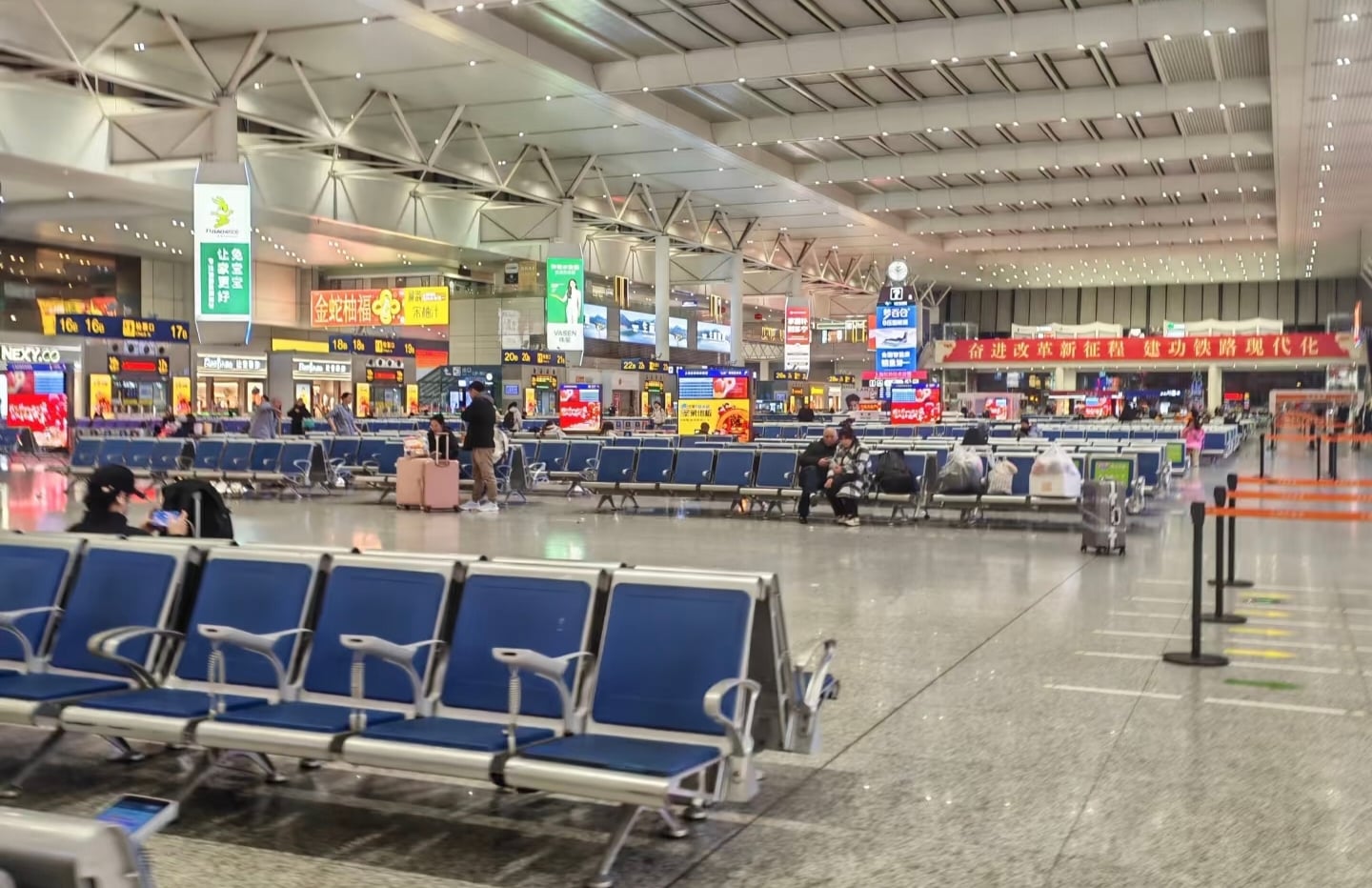
Follow railway departure signs at Shanghai Hongqiao Railway Station.
However, the destination alone does not determine the station. Confirm the individual train rather than assuming every service to a particular city departs from Hongqiao.
Getting there from your hotel
Metro Lines 2, 10 and 17 serve Hongqiao Railway Station. For many central hotels, Lines 2 or 10 are the useful routes to investigate first; Line 17 serves destinations farther west.
Check the direction of travel and the exact destination shown by your route planner. If you are using a service with branches, make sure the train you board follows the required branch.
Once you reach the metro station, you still need to follow signs to the railway departure facilities. The metro platform is not the high-speed train platform, and arriving at the metro stop is not the end of your transfer.
For a taxi or private car, show 上海虹桥站 and specify that you are departing by train. Ask for an appropriate railway departure entrance, rather than a general drop-off at the airport or an arrivals pickup zone.
Hongqiao Railway Station is not Hongqiao Airport
The airport and railway station belong to the wider Hongqiao hub, but they are separate facilities.
The names Hongqiao Airport Terminal 1, Hongqiao Airport Terminal 2, Hongqiao Railway Station and Hongqiao Road identify different places. Hongqiao Road is a city metro station, not the railway terminal.
If a map or taxi app displays several similar names, compare the Chinese destination with your booking before confirming it.
Allow for the size of the hub
Hongqiao can involve substantial walking and busy queues. A route that looks simple on the map may still take time inside the complex.
Families and travellers with several suitcases should avoid a schedule that requires rushing from the metro to security and then across the waiting area. Build your timing around reaching the appropriate departure entrance, not merely the edge of the hub.
Shanghai Railway Station
Shanghai Railway Station is the station whose specific booking name may appear simply as Shanghai. It is in a different part of the city from Hongqiao and Shanghai South.
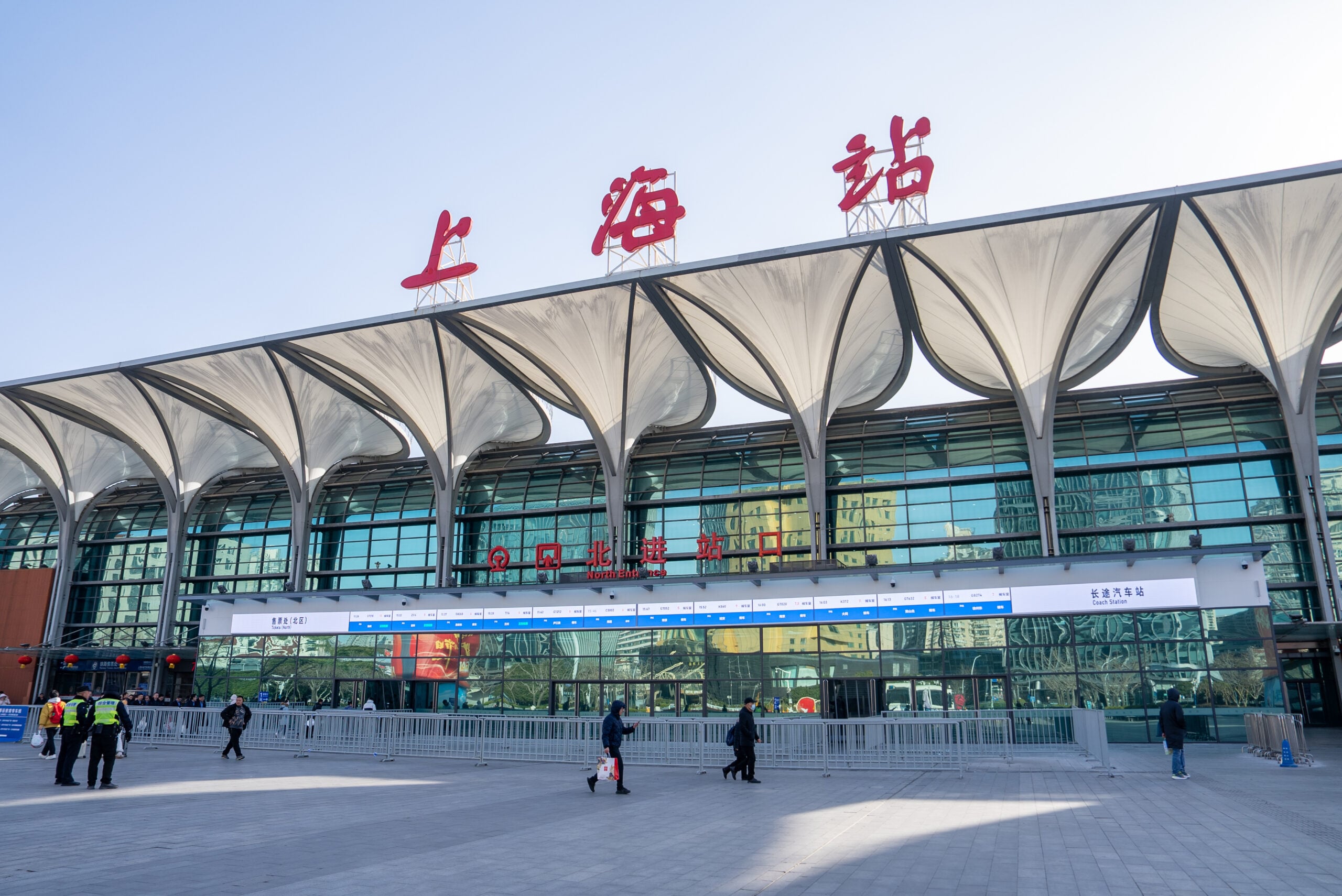
Shanghai Railway Station is a separate destination from Hongqiao.
Its relatively central position can be convenient for some hotels, but that does not mean it is the departure station for every train marketed as leaving Shanghai.
Getting there from your hotel
Metro Lines 1, 3 and 4 serve the station. For a hotel near People’s Square, Line 1 is a useful route to check first. Other hotels may be easier to reach via a different line or by road.
Check how your chosen metro route connects to the railway entrance. Different lines and exits can lead to different approaches, so do not assume that the nearest-looking exit provides the easiest route with bags.
For a taxi, save 上海站 and ask the hotel to help identify the suitable departure entrance. The station has different sides and access areas; a booking that merely names the station does not tell your driver which approach is most useful.
Be precise about “Shanghai Station”
If your booking says Shanghai, avoid replacing that name with Hongqiao because someone describes Hongqiao as the city’s main high-speed station.
A train’s category does not override its departure station. Read the issued itinerary and show it to hotel staff if their suggested route appears to lead somewhere else.
Shanghai South Railway Station
Shanghai South, or Shanghainan, is in southwestern Shanghai and is served by Metro Lines 1, 3 and 15.
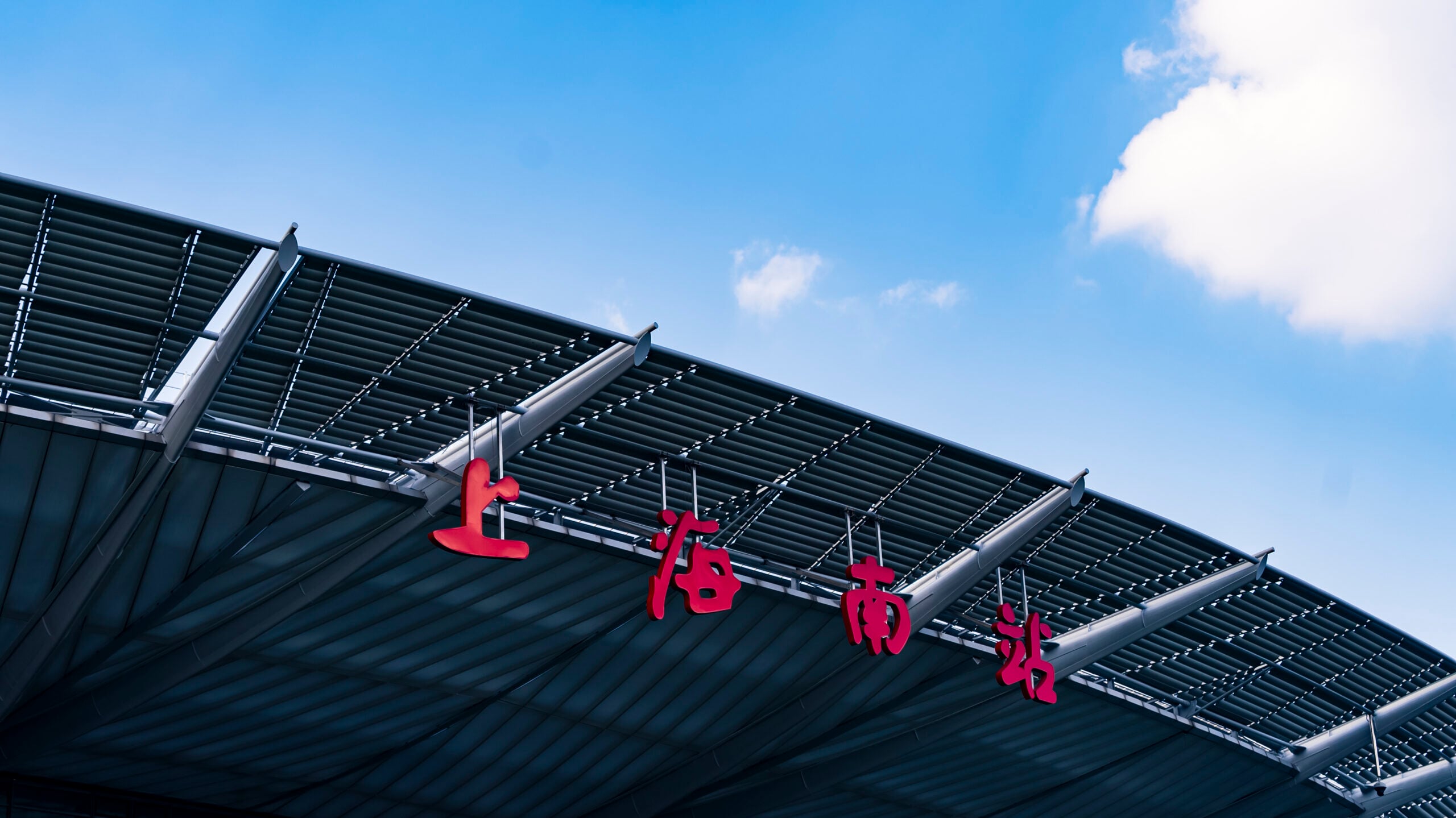
Shanghai South is a specific station, not another entrance to Shanghai Station.
It should not be dismissed as a station used only by older conventional trains. High-speed services began operating here in January 2025, so older advice that automatically directs all high-speed passengers to Hongqiao can be misleading.
Getting there from your hotel
Line 1 is a useful starting point for checking routes from hotels near its central and southern corridor. Lines 3 or 15 may suit other locations better.
For a car transfer, show 上海南站 and confirm the railway departure access point. Do not confuse it with Shanghai Railway Station or with a nearby long-distance bus facility.
If your hotel is in Xuhui or another southern area, Shanghai South may be convenient when the train you want actually departs there. If you are staying elsewhere, compare the hotel journey before selecting a service solely on its train duration.
South refers to a specific station
“South” is part of the station’s identity. It does not mean the southern entrance of Shanghai Railway Station.
Keep the complete English and Chinese names together in your saved itinerary. This is especially useful when asking a driver or hotel receptionist for help.
Hotel to Station: Metro, Taxi or Private Transfer?
The best option is the one that gets you to the correct departure entrance with manageable luggage and a comfortable margin.
| Situation | Practical starting choice | What to check |
|---|---|---|
| Hotel close to a direct metro line, light bags | Metro | Service hours, direction, station access and the final walk |
| Hotel requiring several interchanges | Compare metro with a taxi | Whether carrying bags through transfers is worthwhile |
| Family with suitcases and a stroller | Taxi or suitable prearranged vehicle | Passenger capacity, luggage space and child-seat needs |
| Early departure before a useful metro connection | Prearranged car or taxi | Pickup time and the correct departure entrance |
| Hotel on a narrow lane | Car plus a confirmed pickup point | Where a vehicle can actually stop |
| Traveller needing assistance | Planned transport and station support | Accessibility, assistance arrangements and extra time |
Using the metro
Plan from the hotel entrance, not just its nearest station name. Include walking to the metro, reaching the platform, waiting, any interchange and the walk into the railway station.
Check the earliest useful train for a morning departure. A line’s first train somewhere on the network does not establish when a train reaches your boarding station in the required direction.
With heavy bags, look for lift access and a workable exit. A route with one additional stop can sometimes be easier than one with a difficult interchange, but assess the actual journey before deciding.
Using a taxi or ride-hailing service
Road transport can simplify the luggage part of the journey, but it does not remove traffic or station queues.
Show the Chinese station name and your train details. In a ride-hailing app, check the destination pin carefully and select the railway departure area where the app offers a suitable choice.
For a private transfer, confirm the pickup location, vehicle capacity and what help is included. A driver delivering you to the station does not automatically include an escort through security or assistance at the boarding gate.
A useful hotel-area starting table
| Hotel area | Route to investigate first | Caution |
|---|---|---|
| People’s Square | Line 2 for Hongqiao; Line 1 for Shanghai Station or Shanghai South | Use the line appropriate to the station on your ticket |
| Jing’an or West Nanjing Road | Line 2 for Hongqiao; compare interchanges or a car for other stations | “Jing’an” covers a broad area; check the exact hotel |
| Lujiazui | Line 2 for Hongqiao; an interchange for other stations | Include the hotel-to-metro walk and cross-city journey |
| Historic neighbourhoods around Xuhui | Check whether Lines 1, 3 or 10 suit the chosen station | A neighbourhood name is not enough to determine the route |
| Bund and riverside hotels | Check the actual station walk, then the rail route; consider a car with heavy bags | Riverside properties may be some distance from the metro |
| Hongqiao-area hotels | Confirm a walk, local connection or hotel shuttle | “Hongqiao area” does not guarantee a short walk to the railway entrance |
These are starting points for planning, not directions for every hotel within each area. For the area comparison, see where to stay in Shanghai.
How Early Should You Reach the Railway Station?
For a first visit, a practical planning target is to reach the correct railway departure entrance about 60 minutes before departure. Consider a larger margin, such as 60–90 minutes, if you need ticketing help, have several bags, are travelling with children or expect holiday crowds.
These are planning recommendations, not official minimum connection times or boarding guarantees. Your circumstances may require more time.
Once familiar with the process, some travellers use a shorter margin. For a first journey in a large station, reducing waiting time is usually less valuable than avoiding uncertainty.
Do not aim to reach the gate at the train’s departure time. Boarding closes before departure, and the applicable cutoff is shown in the station’s arrangements. Follow the displayed time for your service.
Work backwards in this order:
- Train departure and boarding cutoff.
- Time to find and wait at the correct gate.
- Station entry, identity checks and security.
- Walking from the metro or vehicle drop-off.
- Hotel-to-station transport, including a delay margin.
- Hotel checkout, luggage collection and reaching your pickup point.
Before Travel: Tickets and Passport Details
Railway tickets use passenger identity information. Foreign visitors commonly book using a valid passport, and should carry the original passport used for the reservation.
Use China Railway’s official 12306 service or a booking provider whose support and terms you understand. The English 12306 interface can help overseas visitors search and purchase tickets, but account and identity checks should be completed before a time-sensitive journey.
An order request, payment attempt or waitlist entry is not the same as an issued ticket. Confirm that your booking has actually succeeded and that the journey and seat details are available.
Before leaving the hotel, check:
- Full departure and arrival station names.
- Local travel date and departure time.
- Train number.
- Passenger passport details.
- Carriage and seat, once assigned.
- Any outstanding verification or ticketing instruction.
If a passport has been replaced since booking, ask the railway or booking provider how to resolve the document mismatch before travelling. Do not assume the old document number will match automatically.
For the official e-ticket and boarding guidance, see China Railway’s passenger FAQ.
Save your issued itinerary offline. A screenshot helps you find the train and ask for assistance, but it is not a substitute for the required identity document.
Entering the Station and Boarding: Step by Step
The process is easier when you treat it as several stages rather than trying to walk directly from the street to the train.
1. Find the railway departure entrance
Follow signs for railway departures, station entry or the waiting hall. Airport check-in, the metro paid area and the railway arrivals exit serve different purposes.
If you are uncertain, show staff your train number and departure station before joining a long queue.
2. Complete the required identity check
Keep your passport accessible. At a compatible automatic reader, follow the instructions; if your document is not recognised, seek the staffed or manual inspection lane.
Manual inspection is a normal way to obtain help with an overseas passport. Do not repeatedly try a gate intended for a different document type when staff can direct you to the appropriate channel.
3. Pass security
Prepare to have luggage screened and follow staff instructions. Keep track of smaller belongings placed separately from your suitcase.
For a group, agree where to regroup immediately after screening. One person should not disappear into the waiting hall while someone else is still collecting a stroller or several bags.
4. Find your train on the departure board
Match the train number and departure time, then confirm the boarding gate or waiting area.
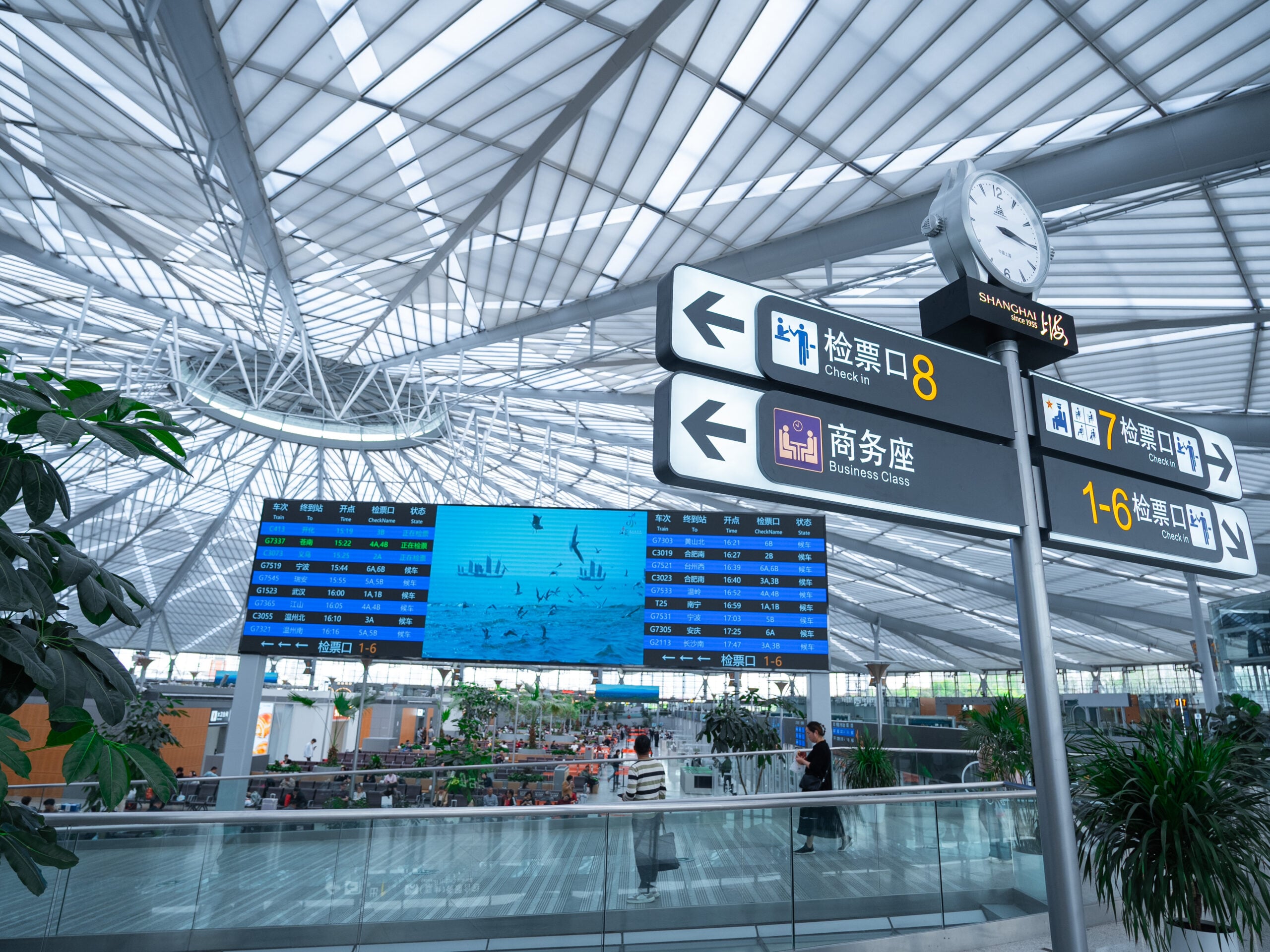
Match your train number and departure time on the current board.
Do not rely only on the destination shown on a screen: a service may display its final destination, while you are travelling to an intermediate stop. Your train number is the clearer reference.
Follow the current board if the gate differs from an earlier booking message, and ask staff if anything is unclear.
5. Wait near the correct gate
Once you have located the gate, you can use nearby facilities if time allows. Keep the boarding area within easy reach and return promptly when boarding begins.
Do not join a queue simply because it is moving. Check that it belongs to your train, especially when neighbouring gates are busy.
6. Pass the boarding check
Have the booking identity document ready again. Use the appropriate automatic or staffed channel as directed.
For a normal issued railway e-ticket, there is generally no need to collect a paper ticket simply to board. A printed itinerary is useful information, not an alternative boarding document.
7. Find your carriage and seat
Follow the platform signs and staff instructions. Check the carriage number before boarding and then locate the seat shown on your booking.
If you are unsure or short of time, ask platform staff rather than walking the full train length in the wrong direction. Once aboard, let others pass while you organise luggage.
8. Prepare for your own stop
Keep your arrival station name saved and listen for announcements. Start gathering belongings before your stop without blocking the aisle unnecessarily.
At the destination, follow exit signs and keep your passport accessible for any exit check. Only then begin the metro, taxi or pickup part of your onward journey.
Luggage, Children and Accessibility
You normally move your own luggage through the station and onto the train. Booking a seat does not mean that large bags will be collected from your hotel or checked through like airline baggage.
Pack so that each traveller can manage the required walks. A group with more bags than it can move comfortably should reconsider its luggage arrangement or ask about suitable assistance before departure.
Railways have baggage size, weight and restricted-item rules. Check the current rules with the railway for oversized luggage, sports equipment, tools or other unusual items; airline acceptance does not establish railway acceptance.
Keep valuables, travel documents and essential items in a small accessible bag. Place larger luggage only in the designated spaces without blocking doors or aisles.
Travelling with children
Arrange the correct child booking and any required declaration before travel. Do not assume that a child travelling without a separate seat can simply be omitted from the reservation process.
Check family seat assignments and keep everyone’s travel documents together. Leave time for toilets, snacks and the extra handling of a stroller.
Travellers who need help
If you need wheelchair access or station assistance, contact the railway or booking provider in advance about the available arrangements. Do not rely on arriving late and finding immediate support.
Plan the route through the station as well as the vehicle journey. A suitable car transfer can still leave a difficult final walk if the drop-off and assistance arrangements have not been confirmed.
Pudong Airport to a Railway Station
First read your train booking. Pudong-to-Hongqiao instructions are not suitable for a train that leaves from Shanghai Railway Station or Shanghai South.
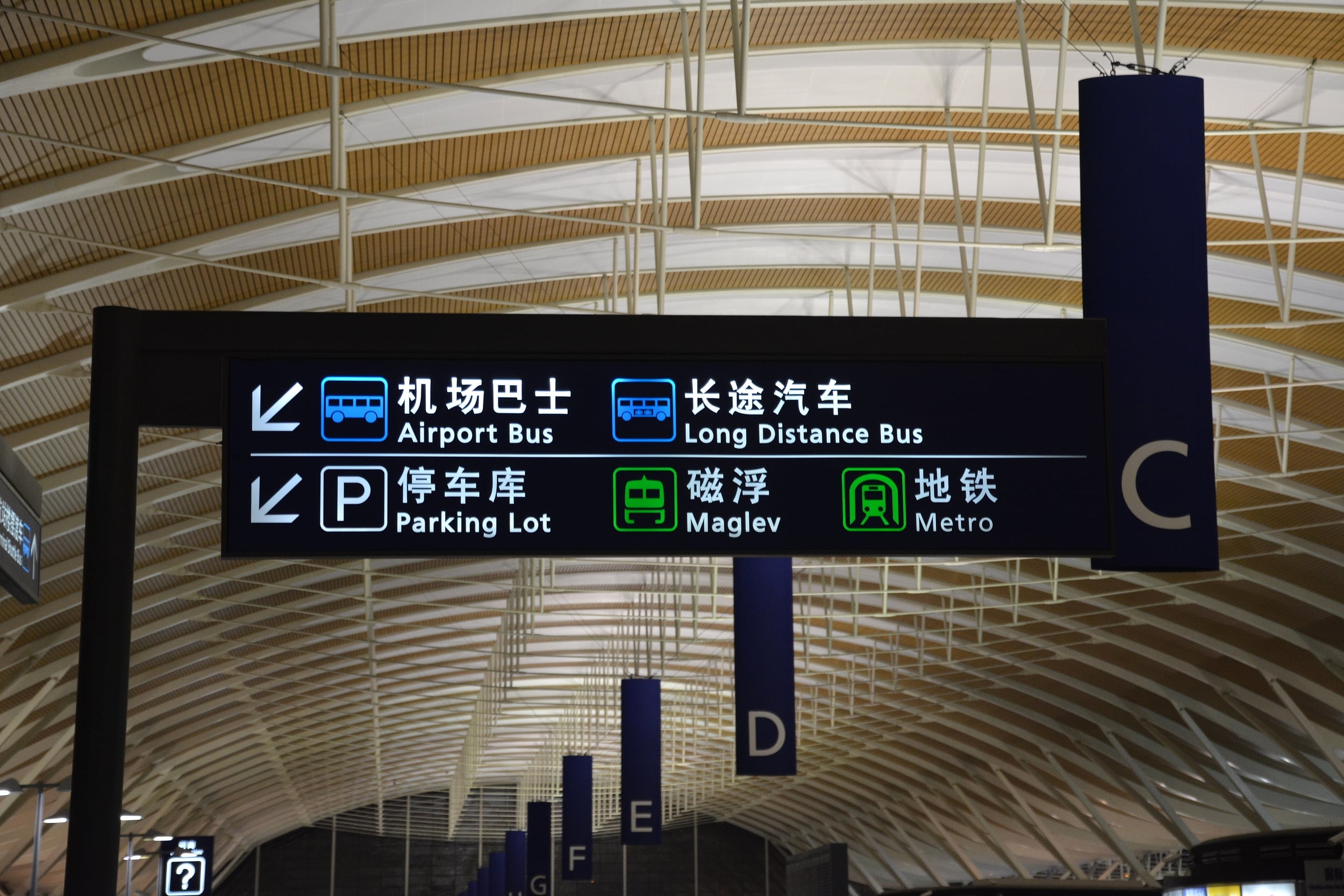
The airport train journey is only part of the connection to your railway departure.
To Shanghai Hongqiao Railway Station
The Airport Link Line is a useful rail option from Pudong Airport Terminal 1&2 to Hongqiao Airport Terminal 2, with approximately 40 minutes on the train between the airports.
After arriving, follow the connection to the railway departure facilities. The Airport Link Line arrival point is not your high-speed train boarding gate.
Include arrival formalities, baggage collection, airport walking, train waiting, the Hongqiao station connection, railway security and boarding time in the total plan.
Metro Line 2 is another route to investigate, while a taxi or private transfer may suit a group, heavy bags or travel outside useful rail hours. Compare the complete journey and current operating schedules.
To Shanghai Railway Station
Plan a route specifically to 上海站. One rail option to investigate is Line 2 from Pudong toward People’s Square, followed by Line 1 to Shanghai Railway Station.
A direct car can simplify the luggage handling but remains subject to traffic. Make sure the driver has the railway station name and suitable departure entrance.
To Shanghai South Railway Station
Plan specifically for 上海南站. Depending on the current connections and your arrival circumstances, compare a metro route with a direct car.
For example, a Line 2 journey to People’s Square followed by Line 1 is a route to assess, rather than a reason to assume it is the fastest option. Use a current route planner to compare walking, transfers and operating hours.
Do not default to Hongqiao solely because your onward train is a high-speed service.
Hongqiao Airport to a Railway Station
Hongqiao Airport can provide a convenient start for onward train travel, but the terminal and railway station both matter.
Terminal 2 to Hongqiao Railway Station
Follow the signs connecting the airport with the railway station. This is a transfer through a large hub, not an arrival directly at the train gate.
Allow for the walk with luggage and the separate railway entry and boarding process. Ask for help early if signs or access arrangements are unclear.
Terminal 1 to Hongqiao Railway Station
Terminal 1 requires a separate connection. Line 10 serves Terminal 1 and can be used to reach Hongqiao Railway Station when services are operating.
Do not apply a Terminal 2 walking plan to a Terminal 1 arrival. Check your flight terminal and the connection before booking a tightly timed train.
Hongqiao Airport to Shanghai Station or Shanghai South
These are cross-city transfers. Being at Hongqiao Airport does not put you near the departure gate of a train leaving from either of the other stations.
Compare a route from your actual terminal with a direct car. At Terminal 2, Line 2 provides a starting point for a journey toward People’s Square and an onward Line 1 connection. Terminal 1 is served by Line 10, so its initial route differs.
If you have not yet booked a train, compare departures from Hongqiao alongside other stations. A convenient hub connection can be valuable, provided the train’s arrival station and onward itinerary also fit your plans.
How to Plan a Flight-to-Train Connection
A flight arrival time is not a railway-ready time. You must first leave the aircraft and complete the required arrival process.
For an international arrival, consider document checks, immigration, baggage and customs as applicable. Check that your travel documents permit the landside journey required for your itinerary.
| Stage | Time to allow for |
|---|---|
| Flight arrival | Possible delay and disembarkation |
| Airport procedures | Required arrival checks and baggage collection |
| Airport transport access | Walking, buying or activating a ticket, and waiting |
| Transfer journey | Rail running time or road travel with traffic margin |
| Railway access | Walking to the correct departure entrance |
| Station process | Identity check, security, gate-finding and boarding before closure |
There is no universal safe connection time for all airports, terminals, passports, baggage arrangements and trains.
The approximately 40-minute Airport Link Line journey is only one part of the calculation. It should never be used as the full margin between a flight and a train.
For separate flight and railway bookings, understand the ticket-change conditions and what support is available if the flight is late. Do not assume that the railway booking is automatically protected by your airline ticket.
If the onward train is the last practical service of the day, consider a later travel date or an overnight stay instead of relying on an unusually quick airport arrival process.
What If You Go to the Wrong Station or Miss Your Train?
First identify whether there is still enough time to reach the correct station and complete boarding. Ask station staff or your booking provider for help with the actual itinerary.
Do not board a different train simply because it goes toward the same city. Reserved tickets apply to the booked service and journey unless properly changed.
If a new booking or ticket change is necessary, check availability and the applicable conditions immediately. Fees and permitted changes depend on timing and ticket circumstances; a missed train does not guarantee a free replacement seat.
If you booked through an agency or travel platform, use its support channel for issues within that booking. Keep the order details and train number available.
Before taking the replacement journey, check its departure and arrival stations again. Solving the first problem can introduce another station change.
Common Station Mix-Ups to Avoid
| Mistake | Better habit |
|---|---|
| Searching “Shanghai” and assuming every result uses the same station | Read the station field for each train |
| Going to Hongqiao for any high-speed departure | Follow the issued booking, including Shanghai South where applicable |
| Confusing Hongqiao Airport with Hongqiao Railway Station | Save the Chinese railway station name |
| Selecting Hongqiao Road in a map app | Check that the destination is the railway terminal |
| Treating Shanghai South as a southern entrance of Shanghai Station | Keep the full name 上海南站 |
| Assuming the return train arrives where the outbound train departed | Check both bookings independently |
| Counting only the metro or Airport Link Line ride | Add walking, queues, security and boarding |
| Leaving the passport in hotel luggage storage | Carry the original booking document |
| Treating a waitlist request as a confirmed seat | Verify that the ticket has been issued |
| Arriving at departure time | Be at the boarding gate before its displayed cutoff |
Frequently Asked Questions
Which Shanghai railway station should I use?
Use the station shown on your issued ticket. If you have not booked, compare schedules together with the hotel-to-station journey and your destination’s arrival station.
Is Shanghai Railway Station the same as Shanghai Hongqiao?
No. Shanghai Railway Station, 上海站, and Shanghai Hongqiao Railway Station, 上海虹桥站, are separate stations in different locations.
Do all high-speed trains leave from Hongqiao?
No. Do not choose a station based only on the train category. Shanghai South also operates high-speed services, and the station on your booking is the deciding detail.
Does “Shanghai” on my railway booking mean the whole city?
In a specific departure or arrival station field, it can identify Shanghai Railway Station. A wider city search may include multiple stations, so check the individual train details.
Do foreign visitors need to collect paper tickets?
For a normal issued railway e-ticket, paper collection is generally unnecessary for boarding. Carry the original passport used for booking and follow the station’s document-check instructions.
What if the automatic gate does not read my passport?
Ask staff for the manual or staffed inspection channel. Keep your passport and journey details ready.
How early should I arrive?
For a first visit, plan to reach the correct railway departure entrance around an hour before departure, with more time for busy periods, ticketing issues or additional assistance. This is practical advice, not an official minimum.
Can I walk from Hongqiao Airport to the railway station?
Terminal 2 has a signed connection through the hub, but you still need time for walking and railway procedures. Terminal 1 requires a separate connection and should not be treated as the same walking transfer.
Does the Airport Link Line take me to my high-speed train gate?
No. From Pudong it reaches Hongqiao Airport Terminal 2, after which you must make the railway connection and complete the station process.
Can I take a later train with the same ticket if I miss mine?
Do not assume that you can. Ask about a permitted ticket change or new booking, subject to available seats and applicable conditions.
Should I book an onward train immediately after an international flight?
Avoid relying on a very tight connection. Include flight delays, arrival procedures, transport and railway boarding, and understand the conditions for changing the train ticket.
What should I show a taxi driver?
Show the full Chinese railway station name and request a suitable departure entrance. Your train details can help hotel staff confirm the destination before you leave.
Plan Your Shanghai Train Journey as Part of the Whole Trip
The station is one part of a journey that begins at your hotel or airport and ends at your next accommodation or sightseeing destination.
Choose a train by the complete route, keep the station names clear and leave enough time for the steps inside the terminal. Those habits make travel much easier than trying to recover a few minutes by rushing.
Discover East China Tours can help you plan Shanghai alongside destinations such as Suzhou, Hangzhou and Huangshan, with station choices and transfers considered as part of the itinerary. Share your hotel location, flight details, intended travel dates and luggage needs when enquiring.