
Plan Shanghai around your children’s ages and interests, with one main activity each day, protected meal and rest breaks, and a dedicated Disney day if wanted.
Shanghai can be a rewarding family destination without a packed sightseeing schedule. Children can watch boats on the Huangpu River, meet dinosaurs in a museum, explore a leafy park and choose a favourite Disney experience. Parents can still enjoy the city’s architecture, food and neighbourhoods, provided the day leaves room for meals, toilets and rest.
The most useful starting point is your child’s rhythm. A toddler who sleeps after lunch needs a different Shanghai itinerary from a teenager who wants roller coasters and skyline photographs. Choose one main experience each day, add a nearby optional stop and make the journey back to your hotel straightforward. Seeing fewer places can give the whole family more time to enjoy them.
This guide explains how to choose experiences by age and interest, organise a slower city stay, decide whether to include Shanghai Disneyland and adapt when it rains. Suggested visit lengths are planning estimates, not admission limits. Venue arrangements can change; check your travel date before making a booking.
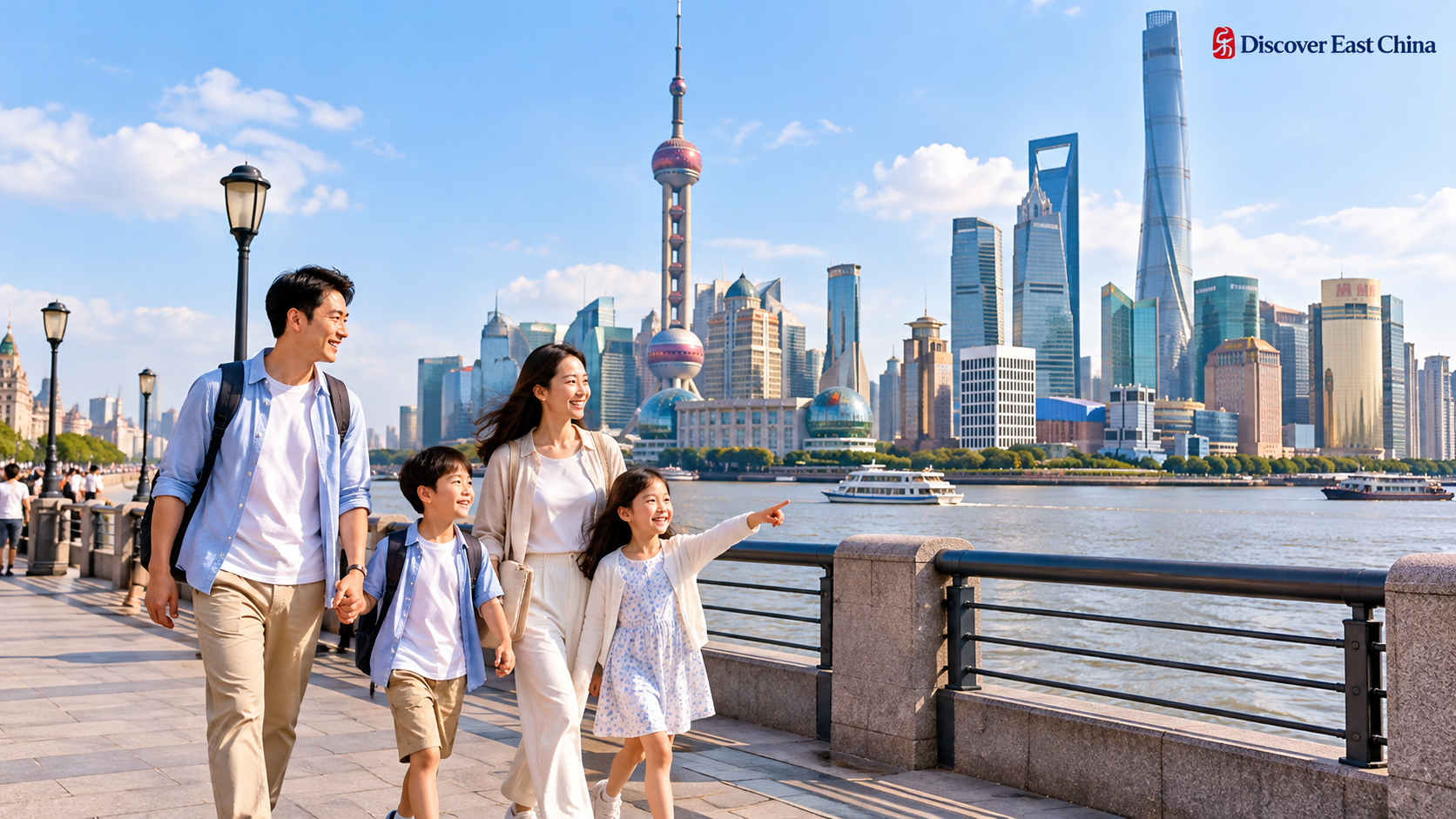
Short riverside walks leave time to enjoy Shanghai's skyline without filling the whole day.
Start with Age, Interests and Energy
Age helps narrow the options, but interest, walking tolerance and sensitivity to noise matter just as much. A child who loves animals may enjoy a museum more than a famous tower. Another may prefer a short riverfront walk followed by an unhurried lunch.
Use these age groups as a starting point rather than a checklist.
| Age group | Experiences to consider | A practical pace | Main planning consideration |
|---|---|---|---|
| Babies and toddlers, roughly 0–3 | Parks, short neighbourhood walks, riverside views and simple meals | One short outing before a rest, with another only if everyone feels comfortable | Feeding, naps, changing facilities and step-free access |
| Younger children, roughly 4–6 | Dinosaur displays, playful observation tasks, gardens and selected Disney attractions | One main visit with breaks; keep the afternoon flexible | Walking distance, toilet access, queues and frightening scenes |
| Primary-school children, roughly 7–11 | Natural history, hands-on science, boats, skyline views and age-appropriate cultural activities | A focused morning activity and a lighter afternoon | Interest, activity eligibility and avoiding too many booked sessions |
| Teenagers, roughly 12–17 | Science, architecture, photography, food, art and thrill rides | One substantial experience plus time for their own choices | Autonomy, budget and a balance between family and individual interests |
Before booking, ask each child to choose one thing they most want to do. Then choose one experience that the adults care about. Build the visit around those priorities instead of asking everyone to agree to a long list of landmarks.
For siblings with different interests, create a shared core and a small optional branch. One adult might take an older child into an extra gallery while another finds a quiet break with a younger sibling. Agree where and when to meet, and do not assume every attraction offers a formal rider-switch or supervised childcare service.
Choose Experiences That Fit Your Family
The Bund: A Short Walk with a Big View
The Bund works well when you treat it as a short experience rather than a long march. Look at the river traffic, compare the buildings across the water and let children pick the most unusual shape in the skyline. You do not need to walk the entire waterfront to appreciate it.
Allow around 30–60 minutes for a first visit, including pauses. Go longer only if the weather and the children make that appealing. Choose a manageable section and identify your next meal or return transport before you start.
Keep children close beside the river and in crowded areas. An early evening visit can be enjoyable, but a late finish is optional. If the family has already had a demanding day, the skyline can wait until another afternoon.
A river cruise may appeal to children who enjoy boats, but it adds a boarding time, queues and a fixed period on board. Check the actual operator’s departure point, duration, child-ticket rules and accessibility. Do not promise a cruise and a late-night waterfront walk on the same day unless your family is comfortable with both.
Shanghai Natural History Museum: Follow a Question, Not Every Gallery
Shanghai Natural History Museum is a strong candidate for children interested in dinosaurs, animals and the natural world. It is at 510 West Beijing Road in Jing’an, within Jing’an Sculpture Park, rather than at the main science museum site in Pudong. Natural History Museum Station on Metro Line 13 is a useful arrival point.
Choose a question before entering: which animal has the strangest shape, how do fossils help explain the past, or what makes a habitat different from another? A focused 1.5–3-hour visit can be more satisfying than trying to see everything.
Use the museum’s official visitor information and booking channel, and register every visitor as required, including children entitled to free admission. Overseas visitors should prepare their original passports and make sure booking details match. Some films, learning sessions and exploration activities have separate reservations or eligibility conditions; an entrance ticket does not guarantee participation.
Check the live calendar for opening days. Official pages reviewed for this guide did not agree on the weekly closure, so a fixed weekday is deliberately not prescribed here. Keep food and open drinks out of exhibition areas and make the meal break outside the galleries.
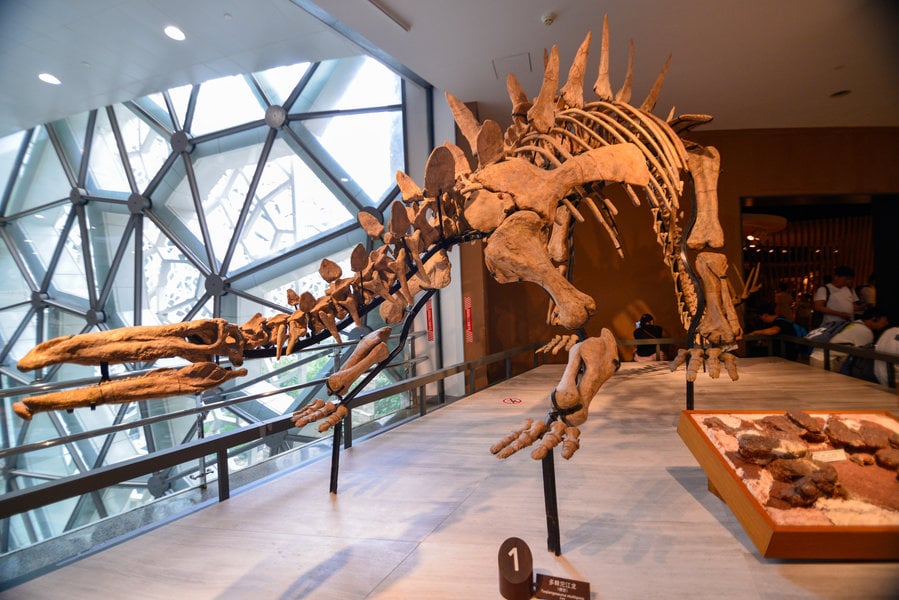
Choose a few displays that match your child's interests rather than trying to cover every gallery.
Shanghai Science and Technology Museum: Give Hands-on Visits Their Own Time
The main Shanghai Science and Technology Museum is at 2000 Century Avenue in Pudong. It is a different venue from the natural history museum. The renovated main museum reopened in 2026; January pressure-test visits preceded public ticket sales in February. Older descriptions of an ongoing closure are unsuitable for planning this visit.
Consider it for children who like experimenting, machines or scientific questions. Choose the themes that interest your family and allow a substantial half-day, with the option to stay longer. Hands-on exhibits can involve waiting and do not necessarily suit every age equally.
The museum’s 2026 admission notice requires real-name online reservations, including for free-entry visitors. Films and selected theatre experiences have separate tickets. Check the current arrangements for your date. If your child depends on English explanations, ask about available language support before reserving a taught activity. Do not schedule this museum and the natural history museum on the same day simply because their names sound related.
Shanghai Museum: Make Culture Concrete
An art and history museum can work for families when the visit has a clear focus. Look for a dragon on a bronze vessel, compare the shapes of ceramic objects or choose a favourite piece of furniture. A short observation game gives children something to do without turning the visit into an examination.
Distinguish the two main Shanghai Museum locations. The People’s Square building is at 201 Ren Min Da Dao in central Puxi. Shanghai Museum East is at 1952 Century Avenue in Pudong. Check which location holds the collection or exhibition you want before arranging transport.
At the time of checking, Museum East did not require general admission reservations for individual visitors, but selected interactive areas still required bookings. Children under 12 needed an adult throughout their visit. Under the current People’s Square visitor guidance, the Americas exhibition runs from 9 July 2026 to 14 November 2027, with no other exhibitions shown at that branch during this period. Choose Museum East for the permanent Chinese-art collections. Check the chosen branch’s current admission notice rather than assuming a single policy applies everywhere.
For a first family visit, choose one or two galleries and allow around 60–90 minutes. Children who enjoy the collections can stay longer; those who do not should have a clear finish rather than another compulsory floor.
Parks and Neighbourhood Walks: Leave Room for Ordinary Enjoyment
Parks provide a useful change of pace after a museum or a travel day. Century Park in Pudong offers a large green setting; central options include Fuxing Park and the outdoor surroundings of Jing’an Sculpture Park. Choose by proximity to your hotel or main activity rather than ranking parks as attractions to collect.
A park visit can simply mean a walk, a drink and watching everyday city life. Check individual playgrounds, rides or other facilities before promising them: access to a park does not guarantee that every activity is open or free. Keep children within sight around lakes, paths and cycle traffic.
For neighbourhood exploration, keep the route short. Leafy streets around the former French Concession can suit families who enjoy architecture and café stops, but pavements vary and junctions need attention. Do not combine a neighbourhood walk with several distant shopping districts just to fill an afternoon.
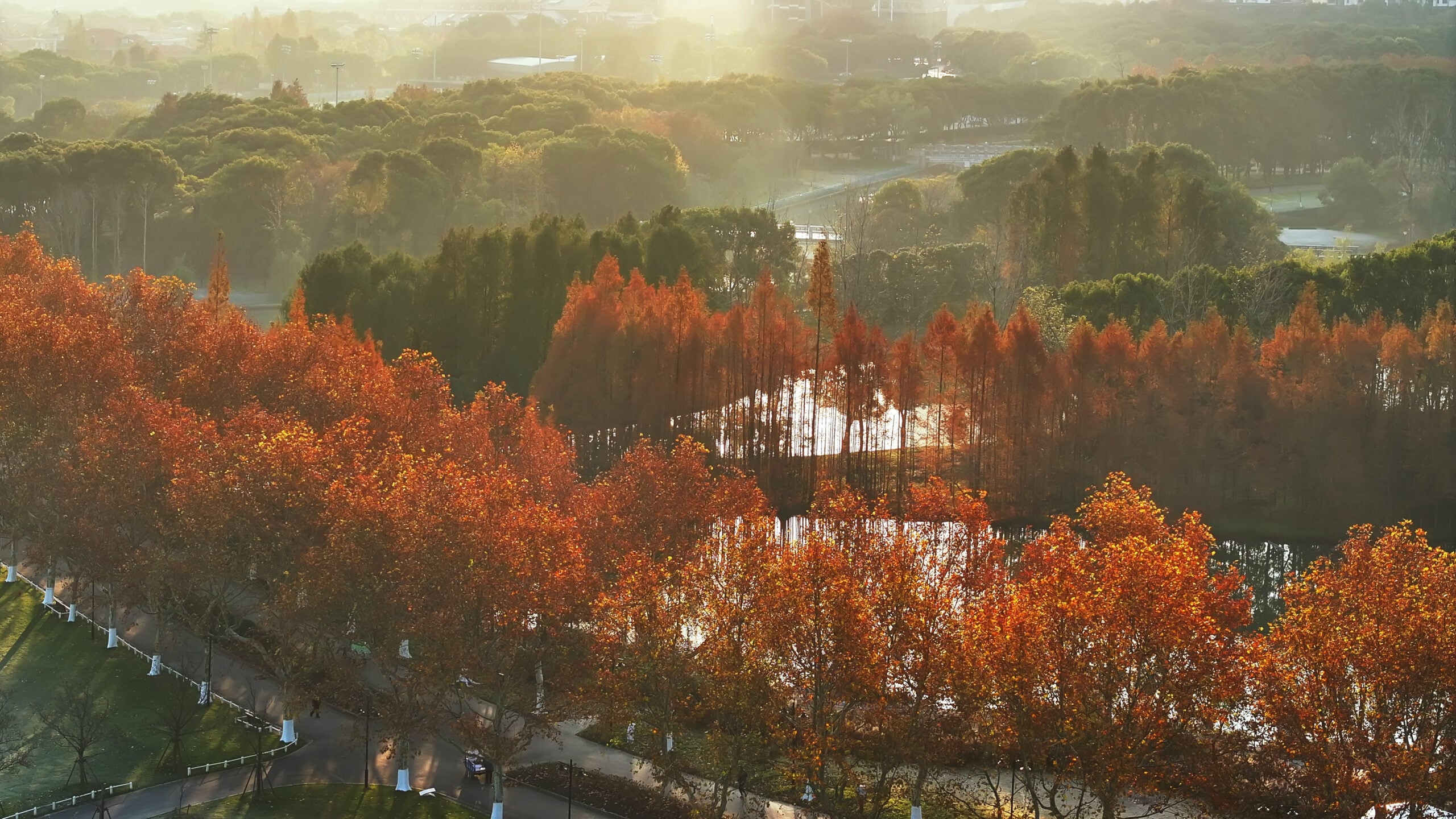
A nearby park can be the afternoon activity, rather than a pause between more attractions.
Yu Garden and the Old City: A Short Cultural Stop
Yu Garden can appeal to children who enjoy bridges, rock formations and small discoveries. The surrounding bazaar offers a different experience, with shops and food outlets. Treat the garden and commercial streets as separate parts of the outing; walking through the bazaar is not the same as entering the garden.
This area can be busy. Narrow passages, thresholds and uneven surfaces may make a pushchair less convenient than on a broad riverside path. Keep the visit short if crowds build, and arrange lunch away from the busiest pinch points if your children need a quieter setting.
It is reasonable to choose the old city instead of a museum, rather than adding it after a long museum morning. For toddlers or children who find crowds difficult, a nearby park may be the better choice that day.
Space Enthusiasts: Treat Lingang as a Separate Excursion
Shanghai Astronomy Museum is in the Lingang area, away from the central sightseeing clusters. It may justify its own day for a child with a strong interest in space. Check current entrance and film bookings, then calculate the full return journey from your hotel.
It is not a convenient filler between central Shanghai sights. On a short family stay, choose it instead of another major day, rather than adding it to an already full schedule. A faraway indoor attraction is also a weak last-minute rain backup when you have neither a booking nor a transport plan.
Keep Each City Day in One Area
The main way to reduce fatigue is to avoid repeated journeys across Shanghai. The Huangpu River separates Puxi and Pudong, and attractions within either side can still be far apart. A route that looks simple as a list of names may involve station corridors, changes, traffic and walks to entrances.
Use these clusters as planning aids, not instructions to visit every place listed.
| Area | Choose one main experience | Optional lighter addition | Avoid adding automatically |
|---|---|---|---|
| Jing’an and nearby central Puxi | Natural history museum | A short sculpture-park walk or nearby meal | A second large museum across the river |
| People’s Square and the Bund | A focused museum visit or waterfront walk | Lunch, then a short second stop if energy allows | A long shopping walk followed by another district |
| Former French Concession streets | A short neighbourhood route | Fuxing Park or a café break | A distant attraction after the children are tired |
| Pudong around Century Avenue and Huamu | Museum East or the main science museum | A park visit where the entrance and transfer are convenient | Both museums, a tower and a late cruise |
| Disney Resort | Shanghai Disneyland | Rest and dinner within a practical resort plan | Central-city sightseeing on the same day |
Even within a cluster, check actual walking distances. Museum East and Century Park can form a sensible area-based day, but the selected park gate and your family’s stamina determine whether to walk or take a short ride.
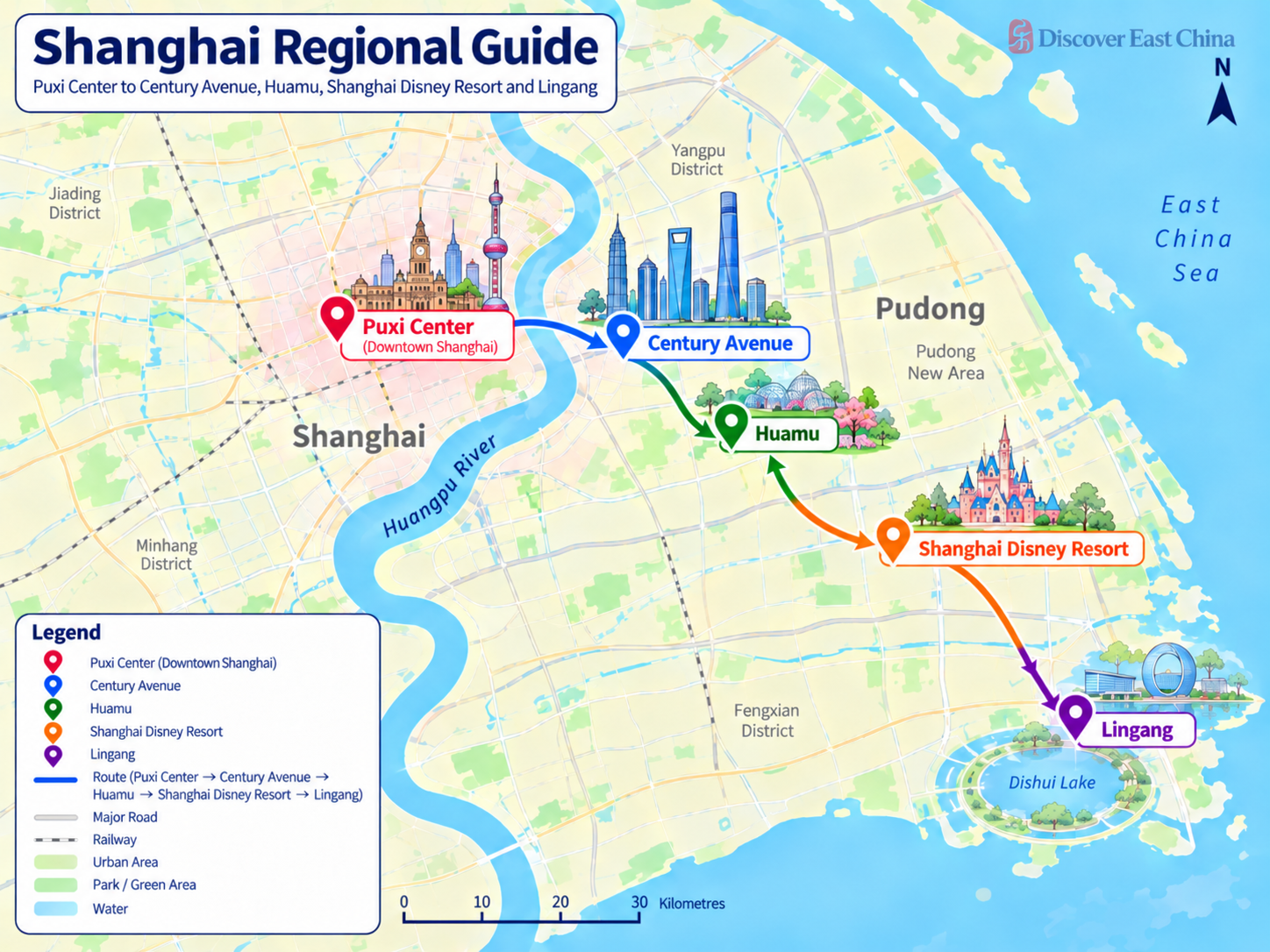
Group nearby experiences together; Disney Resort and Lingang need separate journey planning.
Protect Lunch and Afternoon Rest
A slower itinerary works only if rest has a real place in the day. Write it into the plan before adding a second attraction.
For children who nap, choose a hotel that makes returning after the morning outing practical. A quiet room, familiar feeding routine and enough time to settle can be more useful than a centrally located landmark view. A pushchair nap may work for some children, but it should not be the only plan if they sleep poorly in busy surroundings.
For children who no longer nap, use the same period for a calm break: lunch, reading, drawing or a quiet hotel interval. A crowded shopping centre and another queue do not necessarily provide rest just because they are indoors.
A useful city-day rhythm is:
- Breakfast without rushing and leave for one preselected activity.
- Spend the morning on that activity, including a toilet and drink break.
- Eat lunch before everyone becomes very hungry.
- Return to the hotel or take a genuine quiet interval.
- Decide whether to take a short local outing or finish sightseeing for the day.
- Have an accessible dinner and keep bedtime reasonably predictable.
The afternoon stop is optional. Removing it is a successful adjustment when the morning has already been enjoyable.
Eating in Shanghai with Children
Plan meals close to the day’s route. A famous restaurant across town can be less appealing than a suitable meal near the museum exit, especially when children are hungry.
Shanghai offers opportunities to try noodles, dumplings, rice dishes and steamed foods, alongside international options. Order a mixture of familiar food and one new dish. Ask about spice, bones and preparation rather than assuming every dish suits a child. Soup dumplings can contain very hot liquid; let them cool and help younger children eat them carefully.
For allergies, carry a clear written explanation in Chinese naming the ingredient and the seriousness of the reaction. Ask about sauces, stocks, shared equipment and cross-contact. If staff cannot confirm what you need, choose another option rather than treating the absence of an ingredient on the menu as reassurance.
Before committing to a sit-down meal, check whether there is a high chair, space for your pushchair and a toilet you can use. These facilities are not universal. Carry appropriate snacks for gaps between meals, while respecting each venue’s food restrictions.
At Shanghai Disneyland, plan where to eat before joining another long queue. Dining bookings, meal packages and dietary assistance depend on the specific outlet or product. Food that needs heating, strong-smelling food and other restricted items are subject to the park’s rules; check the current permitted-food policy before packing.
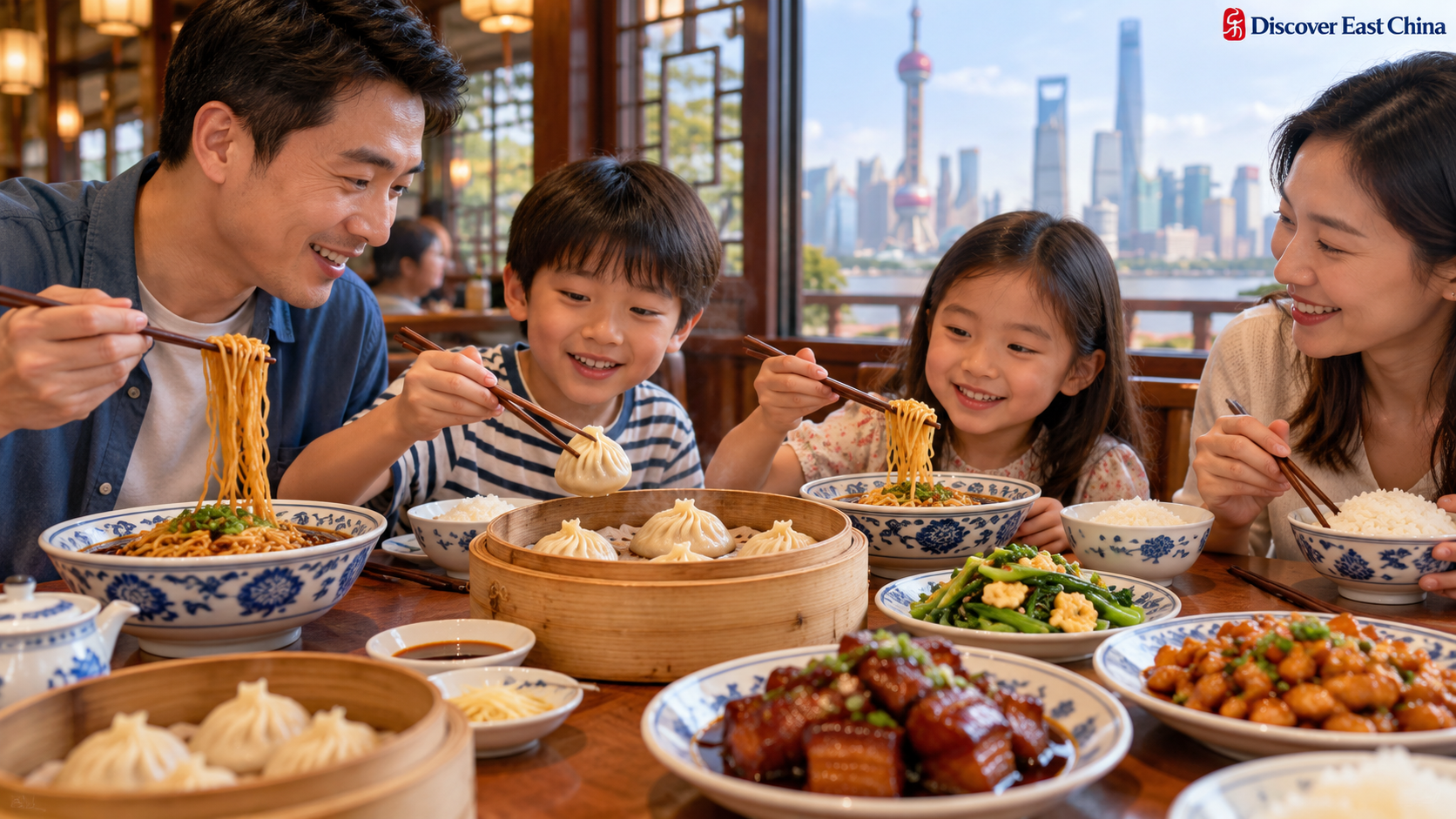
Combine familiar dishes with something new, and keep meal stops close to the day's route.
Choose Transport for the Whole Journey
Metro: Useful When the Route Is Simple
The Shanghai Metro can be a practical choice when the hotel and attraction are near stations and the journey involves few changes. Include walking inside stations, lift access and the distance from the exit to the actual entrance in your decision.
Allow time to find lifts with a pushchair. Do not assume the nearest exit is step-free, and avoid using an escalator with an occupied pushchair. Busy periods can make boarding harder for a family; travel outside the busiest commuting times where practical.
Stay together through ticket gates and agree what an older child should do if separated. Child-fare eligibility is operator-specific: do not apply Disney’s age categories to public transport or museum tickets.
Taxis and Private Transfers: Useful for a Direct Return
A taxi can simplify the tired journey home, but traffic, pick-up points and vehicle capacity still matter. Keep your hotel and destination addresses in Chinese and check that luggage and a folded pushchair will fit.
If your child needs a safety seat, arrange a suitable vehicle and confirm the seat type and installation in advance. Do not assume a street taxi or standard app booking supplies one. A booked family transfer can be worth considering for airport journeys or Disney days when the direct route solves a specific need.
Walking: Keep the Last Part Manageable
The tiring part is often the walk after the main transport journey. Check how far the station, taxi drop-off or parking area is from the entrance. Cross roads at designated crossings, keep children close around turning vehicles and allow extra time for unfamiliar junctions.
Use a lightweight pushchair if it suits your child, but prepare to fold it where required. Historic sites and older streets may have steps or narrow sections. Step-free transport does not guarantee a step-free visit from start to finish.
Where to Stay for a Slower Shanghai Visit
Choose the hotel around your actual itinerary. The easiest option for most city-focused families is one base near the experiences they will use most, with convenient meals and a straightforward transport connection.
| Base | When it makes sense | What to check |
|---|---|---|
| Central Puxi, including People’s Square or Jing’an | Most days focus on central museums, neighbourhoods and the Bund | Actual room size, road noise, station access and the midday return journey |
| Pudong near your chosen museum or park area | Your family prefers science, Museum East and park time | Distance to the specific entrance, meal options and journeys back to Puxi |
| Disney Resort or a suitable nearby hotel | Disney is a major priority and early or late transport would be tiring | Confirmed transport, family occupancy, breakfast timing and cancellation terms |
Check bed configuration and the hotel’s rules for the exact number and ages of guests. A room described as a family room may not provide the sleeping arrangement you expect. Confirm cots, extra beds, connecting rooms and any charges directly.
A hotel change can help when you have enough nights and a strong Disney priority. It also takes time to pack, move luggage and check in. For a short stay, one base may be simpler; for a longer stay, a city stay followed by a short resort stay can reduce repeated commuting. Neither option is automatically best.
How Much Time Should Shanghai Disneyland Get?
Shanghai Disneyland should have its own day. It involves more walking, queuing and fixed commitments than a short city outing, even when your family chooses only a few attractions.
For a three-full-day Shanghai stay, a sensible balance is two city days and one Disney day if Disney is a shared priority. Without that interest, keep all three days for the city and enjoy the extra flexibility. With four or five full days, a Disney day is easier to fit alongside rest. A second park day is an optional choice for enthusiastic families, not a requirement.
If you have only two full days, adding Disney means giving up a substantial share of city exploration. That can be the right decision for your children, but make it deliberately. Do not try to recover the lost sightseeing by adding the Bund after a full theme-park day.
Buy the Right Product and Check Each Child's Eligibility
Shanghai Disneyland’s official ticket information defines child pricing as ages 3–11 inclusive on the visit date, with free park admission for children under 3. Prepare the required original identity documents and follow the booking product’s real-name and reservation instructions. Free admission does not remove identity or entry requirements.
Ticket category and ride eligibility are different. Measure your children before choosing priorities or buying attraction-related extras. The current official listings for Zootopia: Hot Pursuit and Pirates of the Caribbean Battle for the Sunken Treasure both specify a minimum height of 81 cm. Both can involve dark scenes or drops; meeting the height rule does not mean a child will enjoy the experience.
Check every chosen attraction’s current height, health and accompaniment requirements in the official app. Under current park rules, children under 7 must ride with someone aged 16 or above. Do not promise an attraction on the basis of a family-friendly label alone.
Build a Disney Day Around a Few Priorities
Choose two or three must-do experiences and add alternatives nearby. A younger child may prefer gentle attractions and character encounters; an older child may care about thrill rides. Entertainment schedules and character availability vary, so check the day rather than building the plan around a guaranteed meeting.
Book ordinary park admission separately from decisions about paid access unless your chosen product explicitly bundles them. Disney Premier Access is an additional purchase for specified experiences; it does not remove walking, every queue or eligibility requirements. Buy it only where it solves a priority for your family.
Plan a seated lunch, a quieter interval and a decision point for leaving. Find Baby Care Center/Lost Children and other guest-service locations in the official app, and check their facilities for your needs. A service centre is not supervised childcare or a guaranteed sleeping room.
Own pushchairs must meet all park rules: no more than 110 cm long by 85 cm wide including fully deployed attachments; designed and used for children aged 11 or below or 1.4 metres tall or below on the visit date; and pushed from behind. Check the full conditions before bringing one. Rental arrangements are separate, and you should verify availability and usage limits. Avoid arriving with large wheeled luggage: review the prohibited-items rules and arrange hotel storage in advance.
Metro Line 11 serves Disney Resort Station. Check the return service for your date and allow time to walk back after the park. A nearby hotel can make an early departure easier, but admission, transport and other benefits must be confirmed in the actual booking package.
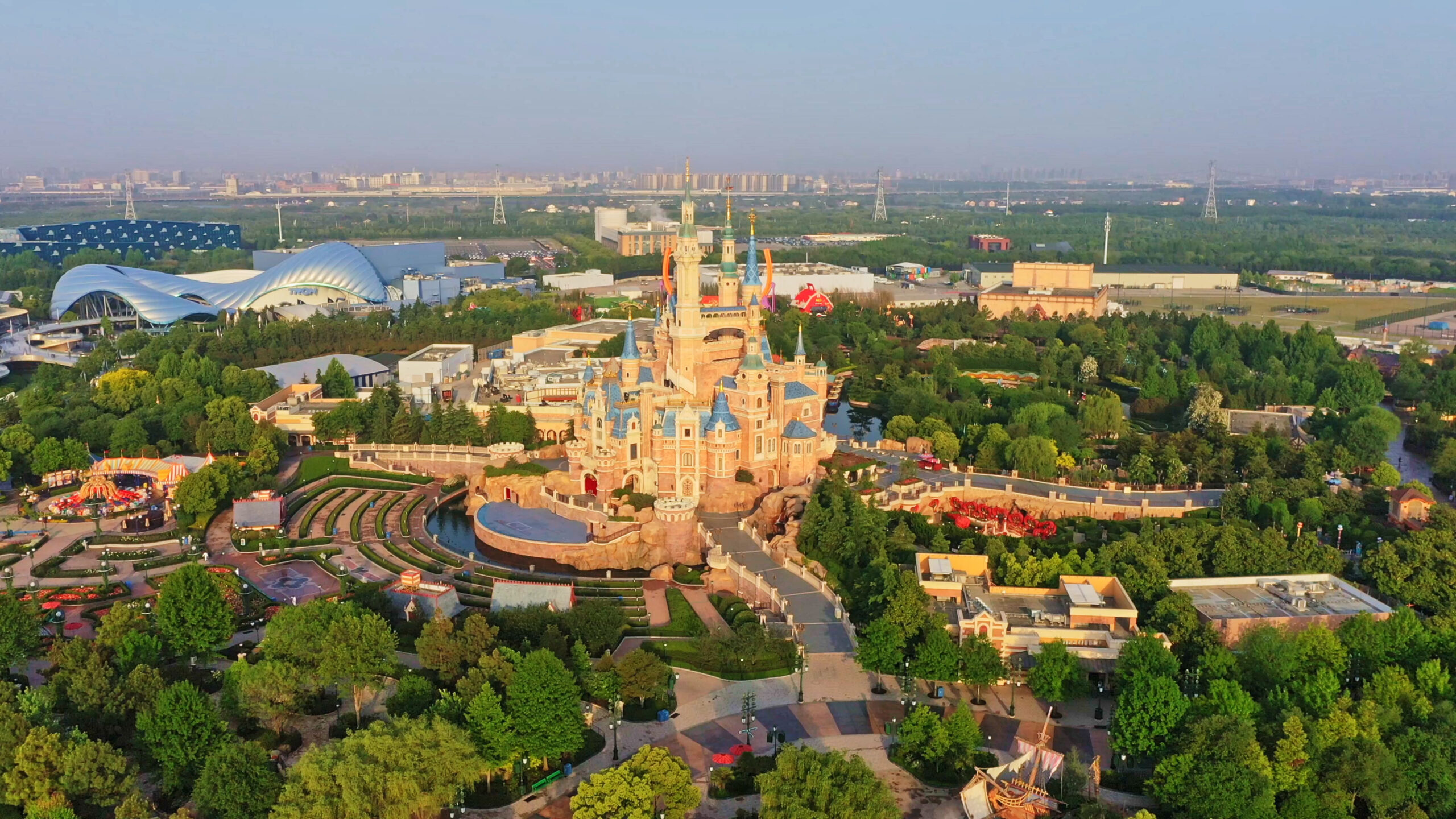
Give Shanghai Disneyland its own day, with a few priorities and room for meals and rest.
A Slower Three-Day Shanghai City Itinerary
This itinerary assumes three full sightseeing days, a hotel that makes the chosen routes practical and no Disney day. Arrival and departure days need separate allowances. Rearrange museum days around live opening calendars and bookings.
Day 1: Settle In and Enjoy the River
Start with a short Bund visit rather than a demanding museum schedule. Watch the river traffic, take a few photographs and finish while children are still enjoying it. Have lunch within a manageable journey of the hotel.
Keep the early afternoon for rest. If everyone feels refreshed, take a short walk near your accommodation or choose a park that is easy to reach. An early dinner is enough of an evening plan. If you arrive in Shanghai that morning, reduce the day further and prioritise settling in.
Day 2: Natural History and a Quiet Afternoon
Use a confirmed morning booking for Shanghai Natural History Museum. Select a few displays and leave time to sit, drink and use the toilets. Reserve a separate activity only if it clearly fits your child’s age, interests and available energy.
Eat lunch outside the galleries, then return for rest. A brief walk in the museum’s outdoor surroundings is an alternative if it fits your routine, rather than an additional obligation. Finish with dinner near the hotel instead of another journey across the river.
Day 3: Choose Culture or Neighbourhood Life
Choose either a focused Shanghai Museum visit at the appropriate branch, a short old-city outing, or a leafy neighbourhood walk. These are alternatives, not three consecutive activities.
For a Pudong museum choice, keep the rest of the day in that area and consider a short park visit only if practical. For a Puxi choice, stay with nearby meals and local wandering. Leave the final afternoon partly open for a favourite place, souvenir shopping or packing without a rush.
| Day | Main experience | Protected break | Optional addition |
|---|---|---|---|
| 1 | Short Bund visit | Lunch and hotel rest | A local walk or nearby park |
| 2 | Natural history museum | Lunch and a quiet afternoon interval | Brief outdoor time near the museum |
| 3 | One museum, old-city or neighbourhood choice | Lunch and rest | A nearby park or an unhurried final meal |
For science-focused children, replace Day 3’s main activity with Shanghai Science and Technology Museum. Allow it more time and remove the optional afternoon stop if needed. Do not simply add it to the existing plan.
A Four-Day Plan Including Shanghai Disneyland
With four full days, combine two focused city days, one Disney day and one flexible day. The flexible day absorbs recovery, weather changes or a favourite experience without requiring another long journey.
| Day | Suggested plan | How to keep it manageable |
|---|---|---|
| 1 | Bund and a short local outing | Keep the first day light and finish early |
| 2 | Natural history, science or a focused art-and-history museum visit | Choose one major venue, with lunch and rest |
| 3 | Shanghai Disneyland | Use a few priorities, planned breaks and a realistic exit time |
| 4 | Late start, nearby park or neighbourhood time | Leave space for recovery and avoid a fixed early excursion |
If a particular Disney date or museum booking requires a different sequence, swap the days. Try to retain a lighter day after the park. For three full days, remove the flexible fourth day and simplify the two city days rather than squeezing its contents into them.
Two Disney days can work on a longer trip if the park is the family’s main interest. Keep the remaining Shanghai days gentle and consider whether a resort-area stay reduces travel enough to justify a hotel move.
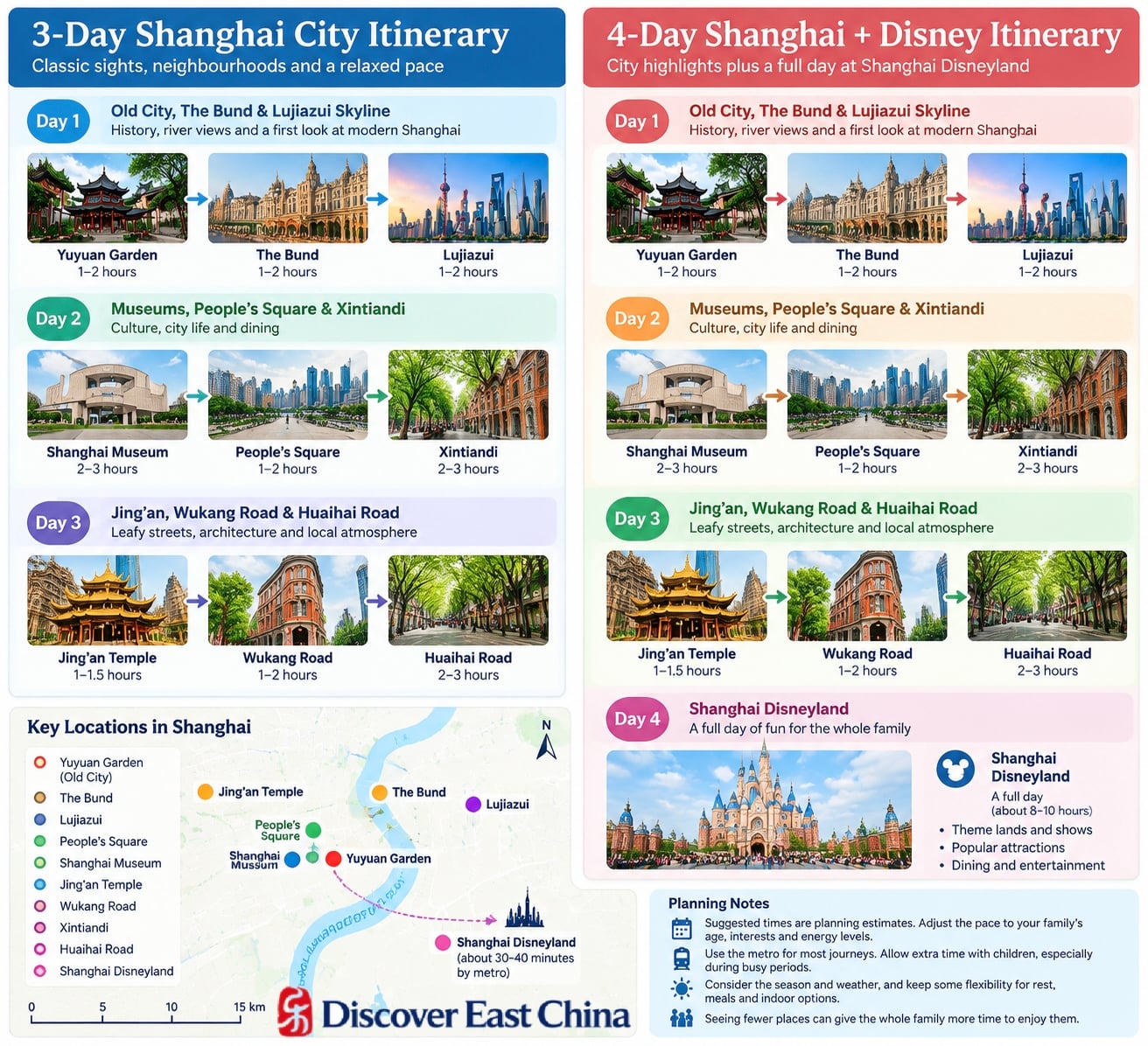
Add Disney as a dedicated day and retain time for recovery when the length of your stay allows it.
Rainy-Day Alternatives That Keep the Day Simple
Choose the rain backup before leaving the hotel. The best replacement is usually an indoor activity near your base or within the day’s existing area. A reservation-dependent museum may be unavailable on the day, so keep a second option that does not rely on obtaining a scarce ticket.
| Original plan | Possible replacement | What to check |
|---|---|---|
| Bund or outdoor neighbourhood walk | A short visit to an available central museum, or an indoor meal and quiet hotel time | Opening calendar, admission and transport |
| Park time in Pudong | Museum East or a science visit, if admission is available | Correct venue, any separate activity bookings and enough energy |
| Old-city wandering | A shorter outing with a nearby indoor meal, or postpone it | Crowds, slippery surfaces and the distance to shelter |
| Shanghai Disneyland | Adapt the booked park day or consider a date change only under the ticket’s terms | Weather notices, attraction status and change conditions |
| A long excursion | Stay local and use an indoor activity or a rest day | Whether cancelling or changing existing bookings carries a cost |
Do not assume indoor venues will be quiet when it rains. Other families may have the same idea. A short visit to an available gallery can be better than travelling to a popular venue and discovering that entry is full.
For persistent rain, carry compact rain protection, dry socks and a spare layer for children. Wet shoes can make the return trip uncomfortable even after an enjoyable indoor visit. Avoid turning a shopping centre into an all-day substitute if children need movement and rest in different forms.
In severe weather, follow official transport and venue notices. Outdoor rides, entertainment, river services and park facilities can change or stop operating. An indoor attraction within a larger site is not a guarantee that the whole planned day will proceed normally.
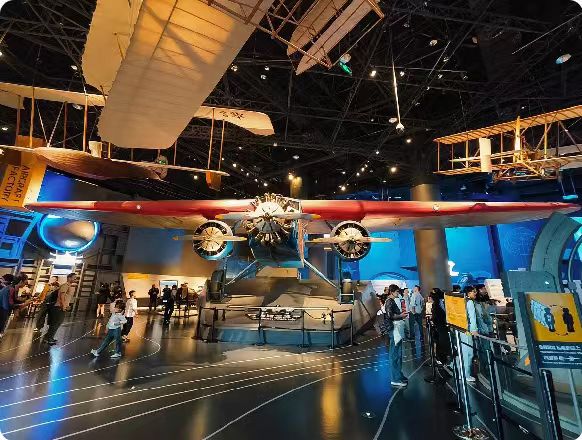
Choose an available indoor experience near your route rather than crossing the city for a last-minute backup.
Resist the Urge to Add a Different City Every Day
Shanghai can be a base for wider East China travel, but repeated return day trips are not automatically easy for families. A high-speed train journey also involves reaching the station, allowing boarding time, finding your platform and travelling from the arrival station to the place you actually want to visit.
On a three- or four-day family stay, Shanghai and Disney can already provide enough variety. Suzhou, Hangzhou and other destinations deserve a separate decision. Add a day trip only if the destination is a real priority and the complete journey suits your children.
For a longer holiday, an overnight stay in another city may reduce repeated travel. Balance that against the effort of changing hotels. Avoid returning to Shanghai every evening merely because it appears convenient on a map.
Zhujiajiao is within Shanghai’s wider municipality, but it still requires a separate return journey and includes bridges, steps and busy lanes. Treat it as an optional excursion with its own rest and meal arrangements, not a quick extra after central sightseeing. If you include it, replace another main day.
Small Preparations That Make the Visit Easier
Carry a day bag that supports the planned outing without becoming a burden. Useful items can include original travel documents where required, booking confirmations, water, permitted snacks, wipes, spare clothing, weather protection and a charged phone. Keep the hotel’s Chinese address available even if mobile data stops working.
Before entering a large attraction, identify the toilet, a meeting point and the nearest guest-service location. Give older children a simple separation plan: stop moving, approach uniformed staff and use the agreed contact details. Young children need active supervision, not responsibility for navigating back alone.
For sensory needs, ask about noise, dark scenes, crowding and quiet spaces before choosing experiences. Schedule a clear exit option. Ear protection may help some children, but it does not make an unsuitable attraction appropriate.
Book what genuinely needs a reservation and leave the rest flexible. Several timed bookings in a single day can remove the freedom that makes a family itinerary work. Leave a gap after any activity whose duration or queue is uncertain.
Frequently Asked Questions
1. Is Shanghai a good destination for children?
Yes, when you choose experiences around their interests and keep journeys manageable. Museums, parks, the riverfront and Disney offer different kinds of enjoyment. A slower plan is usually more useful than a long landmark checklist.
2. How many days should a family spend in Shanghai?
Three full days can support a relaxed introduction to the city. Four or five full days give more room for Disney or another substantial experience and a lighter recovery day. Arrival and departure time should be counted separately.
3. Should we include Shanghai Disneyland on a short stay?
Include it if Disney is a strong family priority. With only two full days, it takes a large share of the visit. With three days, plan two simpler city days and one park day rather than combining the park with city sightseeing.
4. Do we need two days at Shanghai Disneyland?
Not necessarily. One focused day can suit families with a short priority list. Two days may appeal to keen Disney visitors on a longer holiday, but they also require more budget and recovery time.
5. Which museum should we choose first?
Choose natural history for animal and dinosaur interests, the main science museum for scientific exploration, or Shanghai Museum for art and cultural objects. Confirm the exact venue and choose one main museum per day.
6. Are Shanghai Museum and the natural history museum the same place?
No. They are different institutions. Shanghai Museum also has People’s Square and East locations, while Shanghai Natural History Museum is in Jing’an. Match your booking, address and collection before travelling.
7. Can we return to the hotel for an afternoon nap?
Yes, if you choose the morning outing and hotel location with that return in mind. Protect enough time for the actual journey and settling down. A distant afternoon booking can defeat the purpose of the break.
8. Is a pushchair useful in Shanghai?
It can be useful for younger children, but access varies. Station lifts may require a different exit, and historic areas can have steps or narrow sections. Check individual attractions’ rules, including Disney’s size and usage conditions.
9. Should we use the Metro or taxis?
Use the Metro for simple routes with manageable station access. A taxi or booked transfer can help with a direct return when everyone is tired. Confirm a child seat in advance if required; do not assume ordinary taxis provide one.
10. What can we do when it rains?
Choose an available indoor activity near the day’s area, or keep the day partly for rest. Check bookings and closures before leaving. Do not substitute a distant popular museum without confirming entry and the return journey.
11. Is the Bund worth visiting with toddlers?
It can be, as a short supervised walk in suitable weather. The river traffic and skyline give plenty to look at without a long route. Stop before fatigue or crowding turns it into a difficult outing.
12. Should we book every family activity in advance?
Book admission and sessions that require it, but avoid filling every day with fixed appointments. Parks, short walks and flexible meals help balance the booked experiences. Separate activity reservations may be needed inside a museum.
13. Is it easy to find food for children?
There are many options, but individual preferences and dietary requirements still need attention. Mix familiar dishes with new tastes, check facilities and plan meals near your route. Ask specifically about ingredients and cross-contact for allergies.
14. Should we add Suzhou or Hangzhou as day trips?
Only if they are clear priorities and the complete return journey fits the family. On a short Shanghai stay, keeping the visit local may be more enjoyable. For a longer itinerary, consider whether an overnight stay reduces repeated travel.
15. How do we plan for siblings of different ages?
Choose one shared main experience, then allow small optional choices. Where adults split the group, agree a clear meeting point and time. Avoid making the youngest child follow every older sibling’s priority.
16. What is the most important way to make the itinerary easier?
Keep one main activity per day, protect lunch and rest, and make the final journey straightforward. When energy drops, remove the optional stop. A comfortable finish is more valuable than completing every planned attraction.
Plan a Shanghai Visit Around Your Family
A good family trip starts with a few practical details: your children’s ages and interests, their walking and sleep routines, the number of full days available and whether Disney is essential. Those details help determine the right hotel area, daily pace and transport arrangements.
Discover East China Tours can help shape a Shanghai stay or a wider East China itinerary around those priorities. Ask about a shorter sightseeing day, suitable vehicle arrangements or an itinerary with fewer hotel changes. Confirm any requested child seat, accessibility provision, admission booking or additional service as part of the actual proposal.
Prepared for Discover East China Tours. Updated: 13 October 2026.