
Plan a manageable Zhujiajiao canal walk with bridge views, a seated meal and optional boats or gardens, including both transfers from Shanghai.
Zhujiajiao offers a different side of Shanghai: waterways lined with old houses, stone bridges, narrow shopping streets and boats moving through a town built around water. It can provide a welcome change from the city’s towers and broad roads without requiring an overnight journey to another destination.
The best visit combines a modest canal walk, time to look at the bridges and buildings, and a proper meal or tea break. A boat ride or garden visit can add variety, but neither needs to become a compulsory inclusion.
The main planning challenge is the full journey. Zhujiajiao is in Shanghai’s western Qingpu district, not in the central sightseeing area. A few hours in the town still require an outward journey, a station-to-town connection and a return to your hotel.
This guide explains what to see, how to combine walking and boats, and when the excursion is worth including in a short Shanghai itinerary. Time allowances are planning estimates, not guaranteed journey times.
Is Zhujiajiao Worth Visiting on a Short Shanghai Trip?
Zhujiajiao is worth considering if you want a Jiangnan water-town experience and have enough time to enjoy it without rushing. Canals, bridges and waterside streets provide a useful contrast to the Bund, Lujiazui and central neighbourhood walks.
It is less compelling when you have only a very short stay and would need to give up the Shanghai experiences you most want. It may also duplicate part of a wider itinerary that already includes Wuzhen, Xitang, Tongli or another substantial water-town visit.
| Your situation | Suggested decision |
|---|---|
| One full day in Shanghai and a first visit | Usually prioritise the city’s main sights unless a water town is your main interest |
| Two full days with a strong interest in canals and old-town scenery | Consider Zhujiajiao as a substantial part of one day |
| Three or more days and no other water town planned | It can be a worthwhile contrast to central Shanghai |
| A wider East China trip already includes an overnight water-town stay | Compare the experiences before adding another similar outing |
| Travelling with children who enjoy boats and short exploratory walks | Consider a simple route with an early meal and optional boat ride |
| Limited mobility or difficulty with stairs | Check a specific route and boarding access before deciding |
| Only a brief gap before a flight, train or fixed evening event | Usually choose a closer Shanghai activity |
Do not add Zhujiajiao solely to increase the number of destinations. Give it a clear purpose: water-town scenery, food, photography, a garden or an unhurried family outing.
What Kind of Water-Town Experience Should You Expect?
Zhujiajiao is an inhabited town and a popular visitor destination. Its streets combine historic settings with restaurants, snack stalls, souvenir shops and everyday activity. Some sections are busy and commercial; other corners allow a slower view of the waterways and buildings.
Expect a walk through a working visitor district rather than a silent preserved village. The quality of the visit often depends on choosing a manageable route and stopping to notice details instead of following every shopfront.
Look at how the town relates to water. Bridges connect streets on different banks, buildings meet the canal edges, and landing points show how boats fit into the settlement. These relationships are more revealing than taking the same photograph at every bridge.
It is a day-trip choice, not a substitute for every other Jiangnan destination. If your itinerary includes a longer water-town stay, decide whether Zhujiajiao adds a different activity or simply repeats canals, food stalls and a short boat ride.
Understand the Town Before Choosing a Route
Use a few landmarks to orientate yourself rather than attempting to cover every lane.
| Place or feature | Why include it? | Practical consideration |
|---|---|---|
| Fangsheng Bridge | A major stone-arch bridge and recognisable town landmark | Bridge steps, crowds and limited space for stopping |
| North Street / Beidajie | Historic commercial-street atmosphere, shops and food | Browsing and queues can slow the walk |
| Smaller canal-side lanes and bridges | Closer views of the relationship between houses and water | Uneven surfaces, narrow passages and private entrances |
| Kezhi Garden | A different pace and a garden-focused addition | Separate admission and time for the interior route |
| Official boat piers | An alternative perspective from the water | Confirm route, landing, capacity and boarding conditions |
| Visitor and information centres | Maps, ticket clarification and practical advice | Choose the centre relevant to your arrival route |
Kezhi Garden Road is also commonly written as Kezhiyuan Road. North Street may appear as Beidajie or Bei Da Jie. Save the Chinese names if your map or driver uses a different English spelling.
| Useful name | Chinese |
|---|---|
| Zhujiajiao Ancient Town | 朱家角古镇 |
| Zhujiajiao metro station | 朱家角站 |
| Fangsheng Bridge | 放生桥 |
| North Street / Beidajie | 北大街 |
| Kezhi Garden | 课植园 |
| Tourist Service Center | 游客中心 |
The official Tourist Service Center is at 555 Kezhiyuan Road, while the Tourist Information Center is at 172 Xinfeng Road. A general map pin for the town may direct you to a different approach from your chosen starting point.
Canal Walks, Bridges and Buildings
Fangsheng Bridge: See It from More Than One Position
Fangsheng Bridge is a five-arch stone bridge across the Caogang River and one of Zhujiajiao’s best-known sights. It helps you understand the scale of the main waterway and its relationship to the surrounding streets.

Look at the bridge from the bank before deciding whether to cross. Its outline, arches and setting are often easier to appreciate from a distance than from the top.
Crossing involves steps. If stairs are difficult, a lower viewpoint can still give a worthwhile experience. Do not make climbing the bridge a requirement for everyone in the group.
At busy times, follow any one-way or crowd-control instructions. Move to a suitable space for photographs rather than stopping a group across the bridge’s passage.
North Street: Food, Shops and the Commercial Town
North Street is useful for seeing the town’s commercial character. Take time to notice the street’s width, shopfronts and relationship to nearby water, as well as the products on sale.
Select a few shops or food stops rather than browsing everything. Long queues can use the time intended for a canal walk or garden visit.
If the main street is crowded, shorten that section and use a quieter public lane where available. Do not enter a residential doorway or private courtyard because it looks picturesque.
Smaller Waterways and Bridge Views
Choose one or two smaller canal sections after the main landmark. Compare the scale of the water, the buildings and the crossing. A quieter stretch can make the town feel more understandable than an uninterrupted sequence of busy streets.
Watch your footing while looking at reflections or taking photographs. Canal edges, thresholds and narrow paths need attention, particularly with children or in wet weather.
Kezhi Garden: Add It for Variety
Kezhi Garden can add a garden setting to a street-and-canal visit. Its buildings, planted spaces, water and rockery provide a different subject from the commercial lanes.
Include it if gardens or architecture interest you and your schedule allows a separate visit. If the group wants only a short waterside outing, it can remain optional.
Allow roughly 45–75 minutes as a starting estimate for a selected garden visit, with longer for detailed looking or a slower pace. Check the available areas and access requirements rather than assuming every level is suitable for everyone.
Do You Need an Admission Ticket?
Ordinary walking through the open ancient-town district does not require a general town-entry ticket. Individual visitor attractions and boat services are separate purchases.
The operator’s current ticket page, checked on 13 October 2026, lists a three-attraction combination ticket for Kezhi Garden, Hexin Garden and Shanghai Helong Art Museum (上海市鹤龙美术馆). Check the actual inclusions before buying; an old itinerary’s list of buildings should not be treated as the current package.
Choose paid attractions because you want to see them. A combination ticket is useful only if the included places fit your interests, walking route and available time.
The operator currently lists paid-attraction hours of 08:30–17:00. Ticket exchange, last entry and individual-site arrangements need separate attention. Public streets remaining accessible later does not mean gardens, museums, boats and shops all continue operating.
For an online purchase, read the fulfilment instructions. Some bookings require collection or exchange at the visitor centre rather than direct entry with the confirmation. Check concessions, accepted proof and cancellation terms before payment.
Walking and Boat Rides: How to Combine Them
Walking lets you stop at street level, choose a café and spend longer at a building. A boat provides a different view of waterside houses and bridges. Most visitors do not need to choose one for the entire visit.
Town Sightseeing Boats
Official wooden-boat routes serve piers including Kezhi Garden, North Street and the City God Temple area. Published standard routes are one-way, so confirm the landing before paying. Returning to the same pier can be a separately priced arrangement.
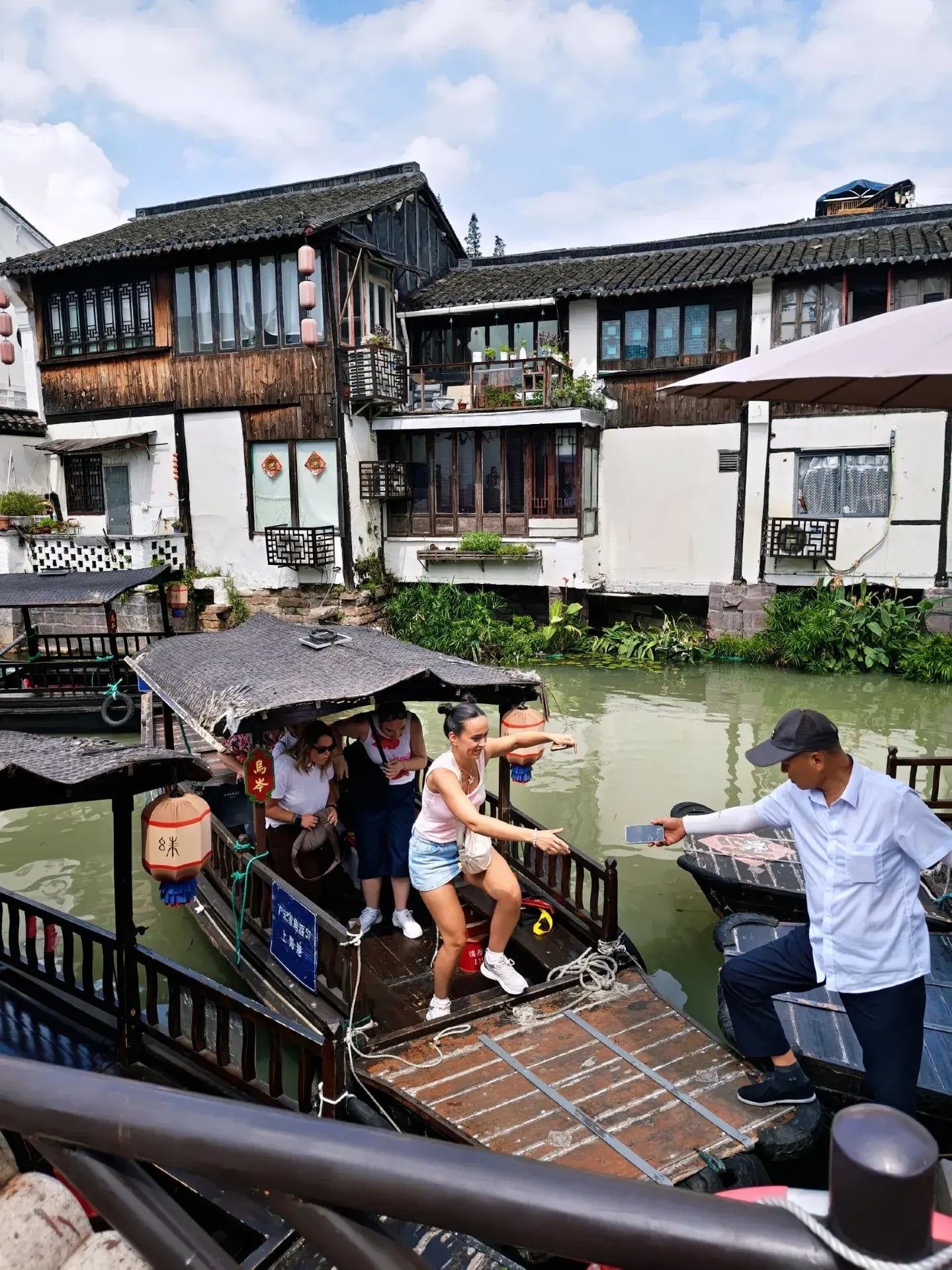
Confirm the route, landing and six-person capacity before boarding.
The operator’s boat guidance, checked on 13 October 2026, lists a maximum of six passengers per boat, counting infants and young children. Larger parties need separate arrangements rather than assuming a child can be excluded from the total.
At the pier, confirm the fare basis, route and expected duration. Ask about lifejackets, boarding assistance and whether a pushchair can be carried. The boat should remain optional if access or weather is unsuitable.
Choose the Landing Before the Ride
Think of the boat as part of the route. If the landing is near your planned meal or next attraction, it can reduce retracing your steps. If it finishes away from your return connection, it may add walking instead.
Ask staff to show the landing on the map. Establish where you will go next before boarding, particularly when different members of the group have different walking abilities.
Metro-Station Transfer Boats Are a Separate Service
A water-transfer service has been advertised between the Line 17 station pier and the Fangsheng Bridge area. It is different from a town sightseeing boat in purpose, ticketing and departure point.
Check whether it is operating on your date and find the actual pier. Published pages give different operating times, so do not use an assumed departure as the basis of a tight return journey.
If You Skip the Boat
A canal walk can still make a complete visit. Use the saved time for a garden, a seated lunch or a longer photography stop.
Avoid waiting through a long boat queue only because the ride appears on a standard checklist. The town’s waterfront setting is visible from land too.
Getting to Zhujiajiao from Shanghai
By Metro: Include the Whole Connection
The principal metro approach is Line 17 from Hongqiao Railway Station to Zhujiajiao station. Travellers starting in central Shanghai first need to reach the Hongqiao Railway Station interchange, commonly using Line 2 or Line 10 according to their starting point.
Hongqiao Railway Station and the airport terminals are different stops and facilities. Follow the correct interchange instructions rather than assuming any Hongqiao arrival puts you on Line 17.
At Zhujiajiao station, the old-town walk is not finished. Continue on foot or use a suitable local connection. The official walking approach from Exit 1 is approximately 1.3 kilometres to the tourist area; the distance to a specific garden, pier or restaurant may be greater. The destination’s official transport guide describes this walking approach and the advertised bus connection; confirm current services for your date.
Bus 1510 is one advertised link towards the visitor-centre area. Check the correct stop, direction and current service. A local vehicle connection can help when the group wants to save walking for the town itself.
A Realistic Door-to-Door Allowance
From many central Shanghai hotels, allow roughly 1.5–2 hours each way as an initial planning estimate for a metro-based journey with the station connection. Some starting points will be quicker; others will take longer.
This is an itinerary allowance, not a published journey time. Check a current route from your actual hotel and include walking, waiting and the interchange. Do not use the Line 17 ride alone as the total transfer duration.
Save your return route before leaving the hotel. Check the last useful services for the full journey, not just the train departing Zhujiajiao.
By Car or Private Transfer
A car can simplify the hotel connection, particularly for families or a group that wants fewer interchanges. It does not guarantee a faster arrival during congestion or busy holidays.
Agree on the drop-off and collection point, vehicle capacity, waiting arrangements and what the booking includes. A driver may need to use a designated area outside the walking streets.
Plan the town route around the collection point. A boat ending at the opposite side of your route can leave an unexpected walk before pickup.
For families, discuss suitable child restraints in advance. For travellers with limited mobility, establish the distance and surface between the vehicle and the first stop; a private car does not remove bridge steps inside the town.
Choose Transport for the Group
| Option | Useful when | Main trade-off |
|---|---|---|
| Metro plus walking | Budget and independent travel are priorities | Interchanges and additional walking |
| Metro plus a local connection | You want to save energy for the town | Waiting, locating the stop or pickup and service availability |
| Prearranged return car | A straightforward hotel connection matters | Higher cost and exposure to road traffic |
| Guided day trip | You want interpretation and coordinated timing | Check the actual route, inclusions and pace |
An advertised day trip may include transport but exclude boats, paid attractions or lunch. Compare the detailed inclusions and group arrangements before booking.
How Much Time Does the Complete Day Need?
Separate the time in the town from the whole excursion.
| Part of the outing | Suggested planning allowance |
|---|---|
| Hotel to the town | Check the actual route; around 1.5–2 hours is a useful starting allowance for many central-hotel metro journeys |
| A selected canal-and-street walk | Around 1.5–2.5 hours, with photo stops |
| A seated lunch or tea break | Around 45–75 minutes, excluding a long queue |
| A selected garden visit | Around 45–75 minutes or more |
| A boat addition | Add the quoted sailing time, ticketing, waiting and the onward walk |
| Town to hotel | Plan separately, with margin for the return connection |
A balanced visit of around 3–4 hours in Zhujiajiao can become a roughly 6–8-hour outing from a central Shanghai hotel. A broader visit may take longer. Use these ranges to budget the day, then refine them against your actual transport and priorities.
Calling it a “half-day tour” does not establish how much usable hotel-to-hotel time remains. Ask whether the advertised duration includes pickup, transfers and the final return.
A Balanced Shanghai–Zhujiajiao Day Trip
This structure gives the town enough attention while preserving a comfortable return. The clock times are illustrative and should be adjusted for the hotel, season and transport.
Before Leaving
Check the weather and current attraction or boat notices. Save the destination, return route and hotel address. Decide whether a garden is a priority, and arrange transport or tickets that require it.
Carry a small day bag rather than luggage. Bring water, a suitable layer, rain protection if needed, and a working payment method.
Morning: Travel and a First Canal Walk
For a typical central-hotel plan, an illustrative departure around 08:30 may place arrival in the town around 10:00–10:30, depending on the actual connection.
Begin with an orientation walk and a view of Fangsheng Bridge. Choose one bank-side section and part of North Street. Take a short break rather than walking continuously until lunch.
If Kezhi Garden is the main interest, visit it early in the town portion and adjust the subsequent route. The order should reflect your arrival point and interests rather than a mandatory landmark sequence.
Midday: A Proper Lunch
Have a seated lunch before the group becomes tired. Use it to decide whether the afternoon will include a garden, boat or shorter final walk.
Do not spend the whole break queuing for one famous snack. A simple meal with a table can serve the day better than several standing food stops.
Early Afternoon: One Optional Addition
Choose a garden or boat ride, or continue a modest canal walk. If a boat is selected, confirm where it finishes and how that connects to the exit route.
Keep a clear time to begin the return. An illustrative departure from the town around 14:30–15:30 may suit an unhurried central-Shanghai return, but check the actual journey before planning dinner or another booking.
Late Afternoon: Return and Rest
Allow the full transfer back to the hotel. A rest before dinner can be especially useful for children or anyone who has walked through the heat.
A short evening meal or Bund stop may fit if the group still has energy. Keep it flexible rather than committing to a fixed show or cruise that depends on a perfect return journey.
A Shorter Route for Families or Less Walking
Choose one canal section, one bridge viewpoint and one seated meal. Make the garden and boat optional alternatives rather than automatically including both.
Start from the arrival point that best suits the group. A station-to-town walk adds distance before the sightseeing begins, so consider a suitable local connection if walking energy is limited.
At Fangsheng Bridge, enjoy a bank-side view if climbing is inconvenient. Select a shorter street section and stop for lunch or tea before deciding whether to continue.
Aim for roughly 2–3 hours locally, including the break, then add the full outward and return journey. Reducing town time does not remove the suburban transfer.
Food, Lunch and Rest Stops
What to Try
Zhujiajiao is associated with leaf-wrapped rice dumplings, braised pork and other local snacks. A small selection can make the visit more memorable without turning it into a continuous eating tour.
| Food | What to expect | Useful question |
|---|---|---|
| Zongzi / leaf-wrapped rice dumplings | Glutinous rice with fillings that may be savoury or sweet | What is the filling, and is this ready to eat? |
| Zharou / wrapped braised pork | A rich pork dish with a soft texture | How large is the portion? |
| Shaomai | Steamed dumplings whose fillings vary | What does this version contain? |
| Sweet lotus root | A sweet local dish or snack | What is the filling or preparation? |
| Local fish and shrimp dishes | A seated-meal option where available | Does the fish contain small bones, and how is it cooked? |
Ask what is actually available and freshly prepared. A display of packaged food may be for takeaway rather than immediate eating.
Choose a Restaurant for Comfort as Well as the View
A waterside table can be enjoyable, but confirm the seating and price before committing. A river-facing address does not guarantee an available view table.
For families or older travellers, a comfortable chair, suitable food and convenient toilet may matter more than the most photographed frontage. Check stairs if the restaurant suggests an upstairs table.
Budget separately for snacks and lunch. Several small purchases can become a substantial meal cost without providing a proper rest.
Dietary Preferences and Family Eating
Confirm pork, seafood, meat stock and other ingredients explicitly. A vegetable dish or sweet snack should not be assumed suitable for a particular dietary restriction without asking.
For a serious allergy, carry a clear Chinese explanation and establish what the kitchen can accommodate. Choose the restaurant on that basis rather than relying only on a menu photograph.
With children, combine something new with familiar food. Hot fillings, sticky textures and small fish bones need care; a seated meal gives adults time to help.
| English | Chinese |
|---|---|
| What is the filling? | 里面是什么馅? |
| Does this contain pork? | 这个含猪肉吗? |
| Is there a table downstairs? | 楼下有座位吗? |
| Where is the toilet? | 洗手间在哪里? |
| Is this ready to eat? | 这个可以直接吃吗? |
| How much is one portion? | 一份多少钱? |
Bridges, Pushchairs and Mobility Needs
Bridge steps are an important part of planning a Zhujiajiao walk. Stone paving, raised thresholds and narrow passages can also affect the route.
A pushchair may help between stops but can become awkward at an arched bridge or a stepped entrance. Do not describe the whole ancient town as step-free. Check whether a chosen route can avoid a particular crossing before setting off.
For toddlers, short walking sections and frequent pauses are more useful than a long landmark list. Hold hands near water and in crowded lanes. Boats require individual access and safety checks rather than being treated as an automatic rest solution.
For older travellers, assess balance, stair confidence and standing time as well as distance. Keep a dependable seated break and an easy point to shorten the visit.
For wheelchair users, ask about a specific bank-side route, surface conditions, suitable toilets and access to the planned restaurant or attraction. General town access does not establish access inside every garden or onto every boat.
Weather, Photography and Crowds
Choose the Day for Comfort
On warm days, use an earlier town visit and a seated midday pause. The presence of water does not remove heat or humidity.
In cool weather, bring a layer for sitting outside or taking a boat. In rain, wet stone and bridge steps require extra care. An umbrella can be difficult to use in narrow crowded lanes.
Heavy rain or strong wind may change boat operations and reduce the appeal of a long walk. Check official notices and consider a central-Shanghai indoor alternative if the excursion no longer suits the conditions.
Avoid Depending on Quiet Streets
Weekends and public holidays can bring substantial crowds. Starting earlier may help, but it does not guarantee an empty bridge or short boat queue.
At peak times, routes can be controlled or made one-way. Allow the town walk to adapt instead of insisting on a fixed photograph or crossing order.
Photograph the Town Respectfully
Use the waterways, arches and rooflines to tell the story of the setting. A smaller detail or a wider bank-side composition can be more interesting than stopping repeatedly at the busiest viewpoint.
Leave bridge passages clear, stay away from unsafe canal edges and ask before close portraits. Shops and homes are not dedicated photographic sets.
If photography is the main priority, allow time for changing light and waiting without making the whole group stand. Choose a weekday when possible and keep expectations flexible.
Day Trip or Overnight Stay?
For most visitors on a short Shanghai itinerary, a day trip is enough. It avoids another hotel change and lets you return to the city for the rest of your plans.
An overnight stay may suit someone who specifically wants a slower town rhythm or has related activities in Qingpu. It is not necessary just to see the main canal streets and bridges.
Before booking local accommodation, check the distance from vehicle access, room stairs, breakfast, luggage handling and the final return to Shanghai. A guesthouse inside a picturesque lane may involve more carrying and walking than a roadside hotel.
Do not assume that paid attractions and boats operate later because you are staying overnight. Plan the daytime visits separately from an evening meal or walk.
How to Avoid an Overfull Shanghai Itinerary
Keep central Shanghai and Zhujiajiao as different geographical parts of the day. The excursion can combine with a simple evening, but should not depend on an immediate arrival at another timed attraction.
If you already have a Suzhou garden day and a Wuzhen overnight stay, consider whether another garden-and-canal outing serves the trip. It may be worth choosing a Shanghai museum or neighbourhood instead to give the itinerary greater variety.
If Zhujiajiao is your only water-town opportunity, give it enough time for walking, food and a pause. A rushed visit dominated by transfers is unlikely to deliver the experience you imagined.
For departure-day use, work backwards from the flight or train, including luggage collection and required check-in time. A location west of central Shanghai does not by itself make a detour practical for Hongqiao departures.
Frequently Asked Questions
1. Where is Zhujiajiao?
It is in Qingpu district in western Shanghai, away from the main central sightseeing area. Plan a suburban transfer rather than a short city-centre walk.
2. Is Zhujiajiao worth visiting with only two days in Shanghai?
It can be if a water-town experience is a priority. Otherwise, the transfer may use time you would prefer for the Bund, neighbourhoods, gardens or museums in the city.
3. Is the ancient town free to enter?
Ordinary access to the open streets is free. Selected attractions and boat services have separate charges.
4. Does the metro take me directly into the old streets?
No. Line 17 reaches Zhujiajiao station, after which you need to walk or use a local connection to the tourist area.
5. How long is the journey from central Shanghai?
Check your actual hotel route. Around 1.5–2 hours each way is a useful initial metro-based planning allowance for many central starting points, including the approach to the town.
6. How much time should I spend in Zhujiajiao?
Around 3–4 hours locally allows a selective walk, meal and optional addition. Add both transfers separately; the complete outing can take much of the day.
7. Do I need to take a boat?
No. Walking gives a satisfying view of the waterways and bridges. Choose a boat for the perspective from the water when access, waiting and the route suit your group.
8. Will the boat return to the same pier?
Check before payment. Standard published routes are one-way; the return arrangement may cost extra. Plan where you will walk after landing.
9. Is the station-transfer boat the same as a sightseeing boat?
No. Treat it as a separate service and confirm its availability and pier instructions for your date.
10. Is Fangsheng Bridge suitable for a pushchair?
Its steps make a crossing awkward with a pushchair. A bank-side viewpoint can be used instead, and the wider route should be checked for other obstacles.
11. Is the town suitable for older travellers?
It can be with a selected route, a proper break and careful attention to stairs, paving and transport. Avoid assuming that a canal walk is uniformly level.
12. What should I try for lunch?
Consider local rice dumplings or braised pork alongside a seated meal suited to the group. Confirm ingredients and avoid replacing lunch entirely with standing snacks.
13. Should I visit in rain?
Light rain may allow a shorter outing, but paving and steps become slippery. In poor conditions, check service notices and consider an indoor Shanghai alternative.
14. Can I see Zhujiajiao and the Bund on the same day?
Yes, if you leave enough time to return and rest. Keep the evening flexible and avoid relying on a tight connection to a fixed cruise or show.
15. Should I visit if my itinerary already includes Wuzhen?
Compare the purpose of both visits. A longer water-town stay may already provide the canal experience you want, leaving Shanghai time for a different theme.
16. Is an overnight stay necessary?
Usually not for a first visit. Stay overnight only if the slower town experience or related Qingpu plans justify the hotel change.
Plan a Water-Town Day That Fits Your Shanghai Stay
Choose a modest route, include a proper meal and leave space for the journey home. A bridge view, one canal walk and a thoughtful optional addition can provide enough variety without rushing between every attraction.
For a tailored Shanghai day trip, tell Discover East China Tours your hotel area, travel dates, walking preferences, children’s ages and whether you want a boat or garden visit. These details help match transport and timing to the group.
Prepared for Discover East China Tours. Updated: 13 October 2026.