
Explore Taoxichuan through its former factory buildings, exhibitions, ceramic shops and public spaces. Plan a daytime or evening visit and learn how to confirm markets, workshops and current opening arrangements.
Taoxichuan offers a useful introduction to the present-day creative life of Jingdezhen. Former porcelain-factory buildings provide the setting for exhibitions, ceramic shops, creative businesses and public spaces. You can look at the city’s industrial past, see how artists work with clay today and spend an evening browsing without needing to turn the visit into a shopping trip.
For first-time visitors, the most rewarding approach is to arrive with time for a daytime exhibition, walk through part of the district and stay for dinner or an evening outing. A confirmed market can add interest, but it should not be the only reason your visit works.
Plan Taoxichuan as a creative district with several independently operated venues, rather than a single attraction with one opening time. Museum admission, exhibition dates, shop hours, workshops and outdoor events each need their own check.
This guide explains the district’s industrial heritage, how to combine its different spaces, when a daytime or evening visit makes sense and how to verify markets and activities before travelling.
What Is Taoxichuan?
Taoxichuan, also described in English as Ceramic Art Avenue, is a cultural and creative district in Jingdezhen. Its core redevelopment grew from the former Yuzhou Porcelain Factory, whose Chinese name is 宇宙瓷厂.
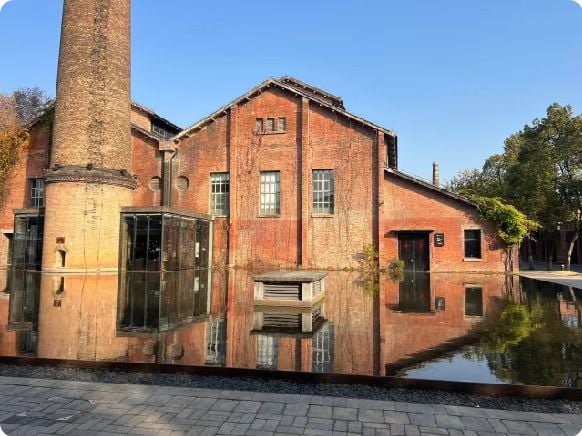
Former porcelain-factory buildings form the setting for Taoxichuan’s creative district.
Retained factory architecture and industrial structures help explain the setting. This is a different chapter of the city’s porcelain story from the imperial production associated with Taoyangli and the Imperial Kiln Museum.
The district also has a contemporary role. It accommodates cultural venues, creative enterprises, retail and hospitality, with activities that connect makers and visitors. The wider Taoxichuan development includes more than the original core, which matters when finding an exhibition, market or booked activity.
Do not assume every place bearing the Taoxichuan name is beside the same entrance. Use the exact venue name and current map location for your visit.
Why it belongs in a Jingdezhen itinerary
A historical museum can introduce how porcelain developed. Taoxichuan offers another question: how do people use ceramic knowledge, materials and skills now?
A visit can move from factory history to contemporary work, then to a conversation with a maker or a quiet meal. This makes it a useful counterpart to an imperial-kiln visit, especially if you want to understand Jingdezhen beyond famous old objects.
It is also a flexible place to spend part of an afternoon and evening. You can choose a substantial exhibition visit or keep the outing lighter with architecture, a few shops and dinner.
Taoxichuan at a Glance
| Experience | What it adds to the visit | What to check |
|---|---|---|
| Former factory buildings and public spaces | Context for the district’s industrial origins | The current map, accessible routes and any temporary restrictions |
| Jingdezhen Ceramic Industrial Heritage Museum | A closer look at modern ceramic production and factory life | Opening days, admission, last entry and language support |
| Taoxichuan Art Museum or another named exhibition venue | Contemporary artistic approaches and changing exhibitions | Exact venue, exhibition dates, ticketing and opening hours |
| Shops and creative retail spaces | A chance to compare objects, materials and individual styles | Individual opening hours and the origin of work you are considering |
| A confirmed creative market | Temporary stalls and opportunities to meet sellers or makers | Date, location, operating hours and weather changes |
| A booked workshop | A participatory introduction to a ceramic process | Age suitability, language, firing, collection and shipping |
| Cafés and restaurants | A seated break and an easy transition into the evening | Access, menu, seating and current hours |
| Evening walk | A different view of the architecture and public spaces | Weather, venue closing times and return transport |
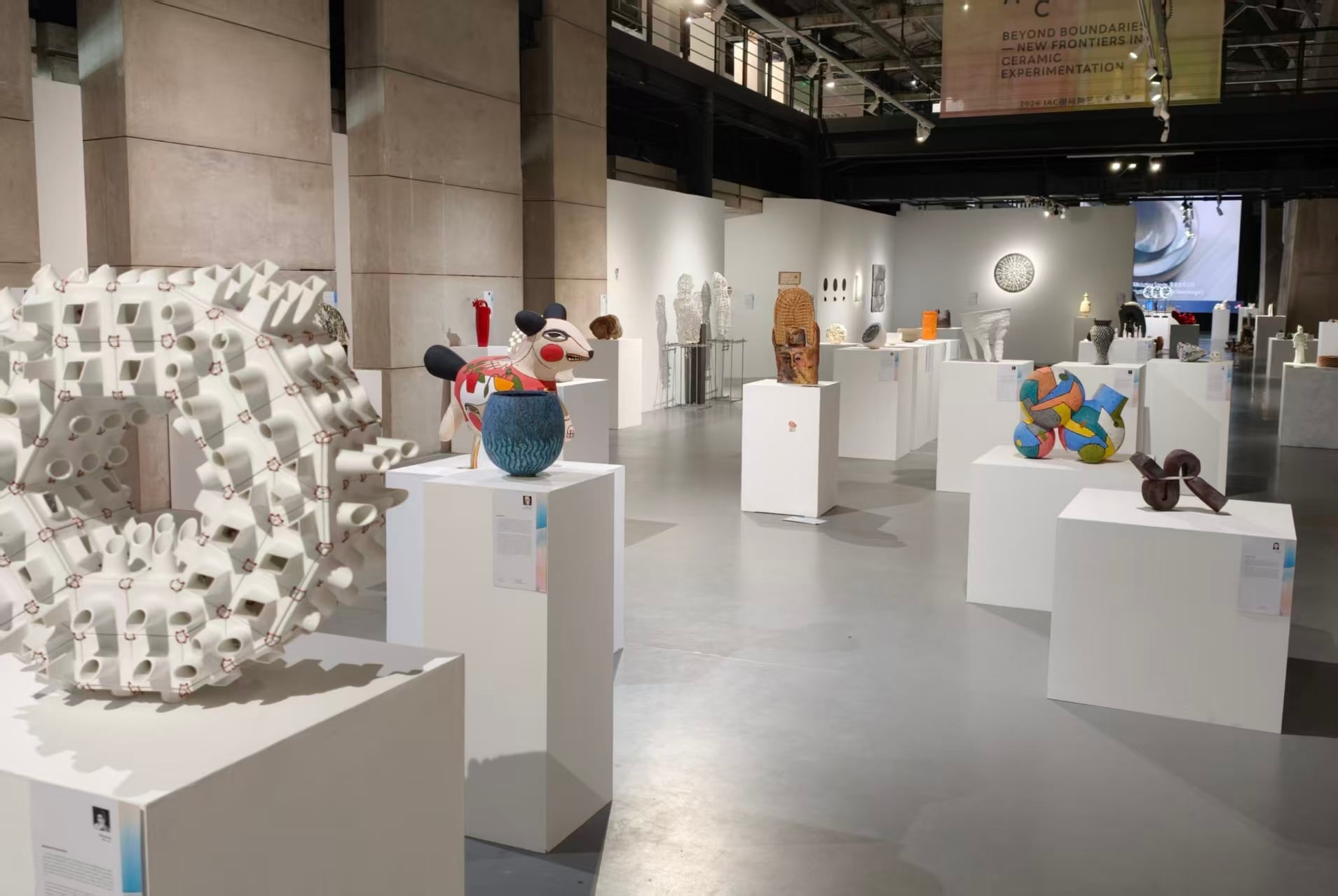
Allow time for a confirmed exhibition alongside shops and public spaces.
You do not need every element. Choose the parts that match your interests and build a visit around them.
How Much Time Should You Allow?
A short introduction: around two hours
As a planning allowance, a short visit can cover part of the public area, a few shops and a café break. It will be less suitable if you also want a substantial museum visit, a workshop and a market.
This version can work on an arrival day, provided you have already checked in or arranged luggage storage. Do not bring several suitcases into a casual browsing route.
A fuller visit: an afternoon into the evening
For many first-time visitors, an afternoon followed by dinner offers a useful balance. Visit a time-sensitive exhibition first, walk through the district while there is daylight and leave flexible time for shops or a confirmed market.
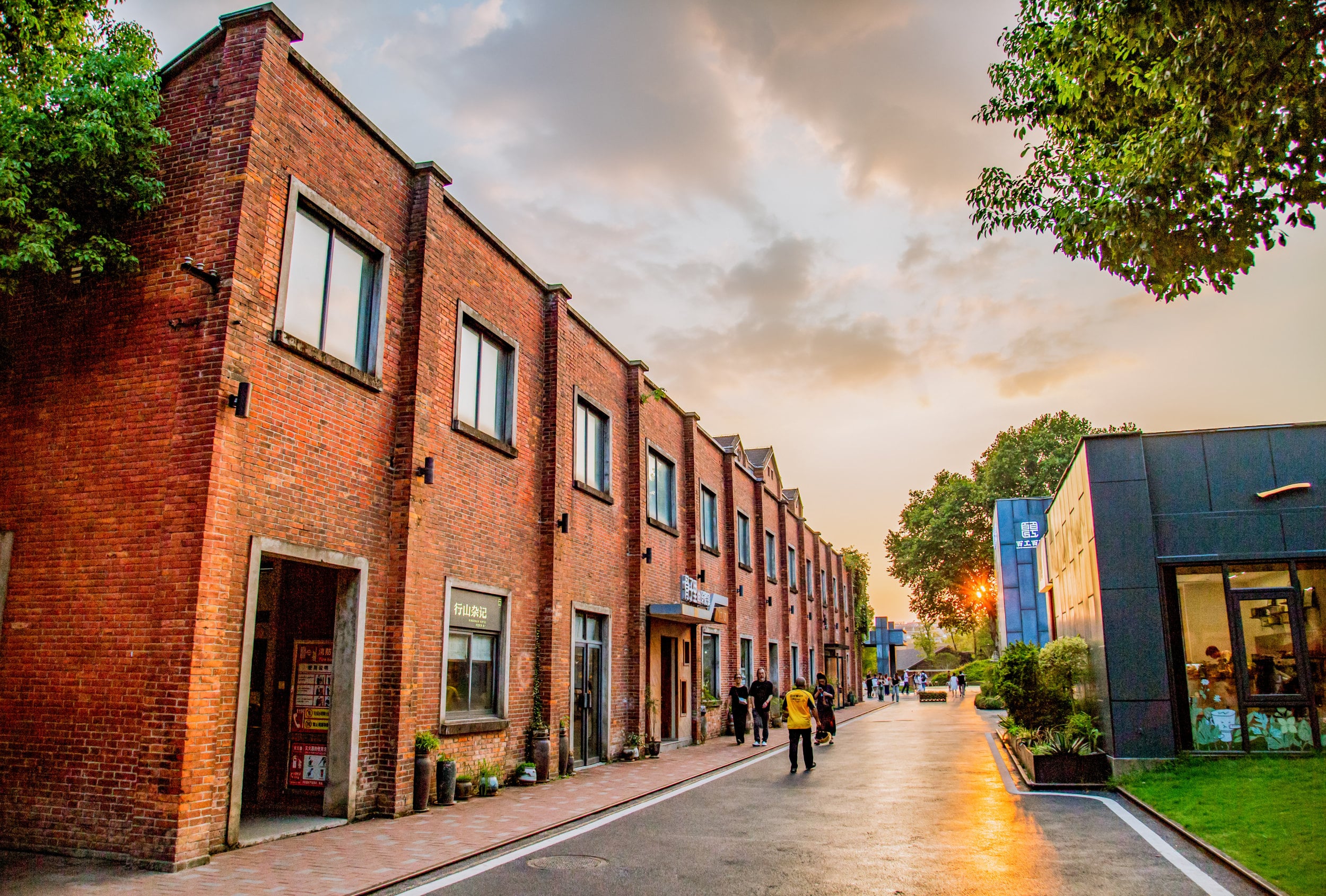
Combine daytime cultural visits with dinner and an evening walk.
This allows the atmosphere to change without requiring a separate journey back later. It also avoids arriving after the venue you most wanted to see has closed.
A focused art visit: half a day or longer
Allow more time if exhibitions, industrial history or a booked activity are central to the trip. A workshop can take a substantial part of the day, and a special event may involve a different venue or entry procedure.
The time ranges in this guide are itinerary allowances, not official visit durations. Adjust them to the actual exhibitions and the group’s preferred pace.
Start with the Industrial Heritage
Read the buildings before browsing the shops
Begin with a short orientation walk. Look for the relationship between the retained factory forms and the spaces now used for culture, commerce and leisure.
The practical question is how the site changed: which features suggest production, storage or circulation, and how do the current uses fit into those spaces? Signs and museum interpretation can help you distinguish documented history from your own impressions.
Avoid assuming that every brick building, chimney or piece of equipment has the same age or original function. A redevelopment can retain, restore and add structures. Read the explanation where available rather than assigning a history from appearance alone.
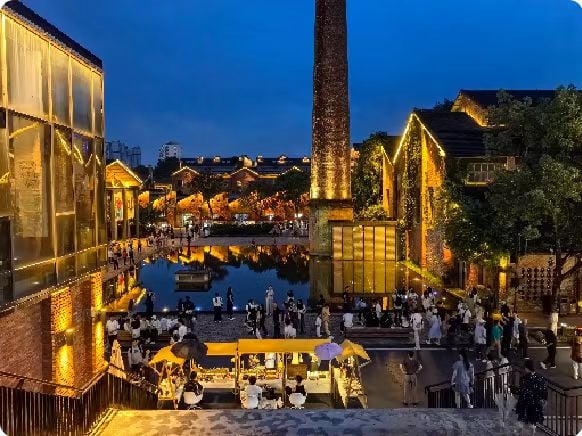
Read the retained factory architecture during a short orientation walk.
Jingdezhen Ceramic Industrial Heritage Museum
The industrial heritage museum provides a more direct introduction to the city’s modern porcelain industry. Its subject includes production equipment and processes, products, documentary material and the experience of factory workers.
It complements the imperial-kiln story by focusing on a different period and organisation of work. If your Jingdezhen trip is meant to explain the city rather than simply provide shopping opportunities, this context can make the rest of Taoxichuan more meaningful.
Confirm the museum’s current opening arrangements before planning around it. Check whether admission requires a ticket or reservation, the last-entry time and any language support you need.
A walk through the outdoor district is not a substitute for museum access. Equally, a museum closure does not necessarily prevent a shorter architecture-and-dining visit.
Choose an Exhibition That Interests You
Taoxichuan Art Museum
Taoxichuan Art Museum is an important name to look for when checking the current exhibition programme. A contemporary exhibition may approach ceramics through sculpture, installation or another artistic theme rather than present a chronological history of porcelain.
Read the exhibition description before buying a ticket or setting aside several hours. Contemporary art can be rewarding without looking like the decorative porcelain many visitors initially expect from Jingdezhen.
Check the title, dates and exact venue. An old image of an exhibition does not establish that it is still on view, and a social-media post may refer to another gallery within the wider development.
Other exhibition and creative spaces
The broader Taoxichuan programme can involve multiple venues. Do not use “the art museum” as a complete destination when booking transport or asking for directions.
Save the Chinese name and a map pin for the particular space. If attending more than one exhibition, check the journey between them and the time needed for entry.
Public access to one exhibition does not imply access to every studio or work area nearby. Some spaces serve artists, businesses or scheduled programmes rather than operate as unrestricted visitor attractions.
Exhibition planning questions
Before committing to a visit, confirm:
- Whether the exhibition is open on your date.
- Its opening and last-entry times.
- Any weekly closure or temporary installation period.
- Whether a reservation or separate ticket is required.
- Whether overseas visitors can use the booking procedure.
- Photography rules and available interpretation.
If a booking system needs an account or identification format you cannot use, ask the venue or your hotel for the permitted alternative. Do not assume that arriving without a reservation will solve the problem.
Shops, Makers and Contemporary Ceramic Culture
Browse by interest
Choose a few things to notice rather than trying to inspect every shop. You might compare cups, sculptural pieces, glazing approaches, jewellery or objects intended for everyday use.
Look at shape, weight, surface and the way an object is presented. Similar functions can produce very different work. Browsing becomes more interesting when you are asking how a maker made a particular choice.
Some places offer an opportunity to speak with the creator; others are retail businesses selling work from several sources. Ask about the relationship between the seller and the object rather than assuming everyone behind a counter made everything on display.
Conversations can be part of the experience
Where the seller is available, ask a focused question: what material was used, how the surface was achieved or whether the piece belongs to a series. A translation app can help, although detailed technical conversations may still be limited.
A brief exchange can be worthwhile even if you buy nothing. Be considerate when a seller is helping customers, and ask permission before close-up photography of work or people.
Shopping remains optional
Taoxichuan can be enjoyed through exhibitions, architecture and public spaces. You do not need to buy a ceramic object to justify spending time there.
If you prefer to browse without purchasing, give yourself a small selection of shops rather than an entire evening of retail visits. Keep a meal or exhibition as another part of the outing.
A guided visit should also be clear about whether shopping is optional and whether any commercial relationships affect the suggested stops. Choose arrangements that match your preferences.
Visiting a Creative Market
A market can add a distinct experience
A creative market can provide temporary stalls and a closer view of work offered by different creators. It can also make public spaces busier than on an ordinary visit.
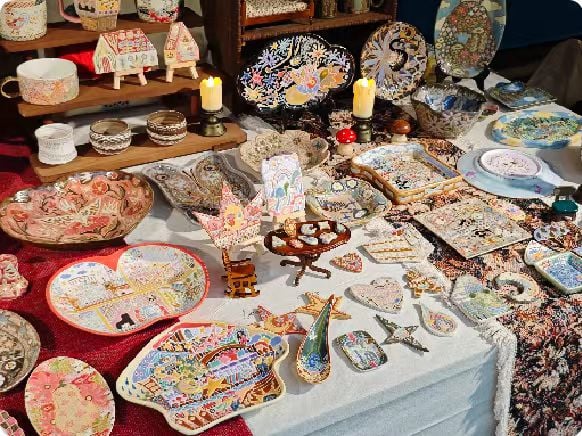
A confirmed creative market can add interest to a Taoxichuan visit.
A market is one part of Taoxichuan’s programme. It does not determine whether exhibitions, permanent shops or restaurants are open, and its operating hours may differ from theirs.
Do not rely on a permanent weekend formula
You may encounter descriptions of recurring weekend markets. Treat those as a reason to check the current announcement, not a guarantee that every Friday, Saturday or Sunday follows an identical schedule.
Holiday markets, designer markets and larger fairs can have separate dates, venues and hours. A post showing one event may not describe the market taking place during your stay.
Government activity calendars have listed different Taoxichuan markets at different locations. This makes the exact event name and map pin useful, particularly when the programme extends beyond the original core.
How to verify a market before travelling
Use the current official Taoxichuan announcement or the organiser’s named channel. A current local cultural-tourism calendar can provide a second check. Ask your hotel or guide to help interpret the details if needed.
Confirm the calendar date and year, event name, venue, opening hours, admission arrangements and any changes due to weather. Look for the publication date as well as the event dates.
Save the location and announcement on your phone. Check again shortly before the visit, particularly if the market is outdoors or the journey is being made specifically for it.
If the event cannot be confirmed, plan a visit that still works through an exhibition, shops and dinner. Do not make a non-refundable journey dependent on an unverified market.
Workshops: Seeing and Making Are Different
Watching work, joining a short activity and attending a structured class are different experiences. A studio in the district is not automatically a walk-in workshop for tourists.
For a hands-on visit, book a provider and confirm the actual process. Wheel throwing, hand building and painting a prepared form involve different skills, materials and time requirements.
Clarify what happens after the session
A newly formed clay object is not generally ready to put straight into your luggage. Drying, glazing and firing can occur after you have left Jingdezhen.
Ask what the price includes, who finishes the work, how long completion may take and whether international shipping is available. Confirm shipping charges, responsibility for damage and whether the provider can deliver to your destination.
If your trip is short, a session with a clear later-delivery arrangement may be more realistic than trying to collect the fired piece before departure.
Families and overseas visitors
Check minimum ages, adult supervision, session length, language support and how many participants the provider can accommodate. A family workshop should allow everyone to participate comfortably rather than simply fit everyone into the same room.
If English instruction matters, confirm who will provide it. A bilingual booking message does not establish that the session itself will be taught in English.
Keep the rest of the day manageable. A booked workshop followed by several museum visits and a long evening market may be more than the group wants.
Public Spaces and a Comfortable Walking Route
The outdoor district lets you connect architecture, shops and places to rest without following a compulsory sightseeing circuit. Start with the main area relevant to your first venue and expand only when there is a reason to do so.
A useful route links an exhibition, a short architecture walk, a few shops and a seated break. It should also leave you near an identifiable departure point.
Use the current map
The wider development and individual venues can be spread across different sections. A list of names may sound compact without revealing the walk between them.
Mark the exact venues before starting. Ask staff about the most direct route and whether an entrance or public section is temporarily restricted. Do not assume a working studio or industrial structure is open for exploration.
Access and rest
For a stroller or traveller with mobility needs, check entrances and the route between stops. A redeveloped public area does not guarantee that every room, exhibition level or bathroom is step-free.
Ask about seating, toilets and lifts where needed. Select an actual restaurant or café as a dependable break rather than assuming an outdoor seat will be available in rain or during a market.
If the group is tired, shorten the shop section first. The visit does not need a complete circuit to be satisfying.
Where to Eat and How to Fit Meals into the Visit
Dining can be part of the transition between daytime culture and an evening walk. Choose the meal location around the route rather than crossing the district repeatedly to follow a long list of recommendations.
A café may be suitable for a rest without providing the meal your group needs. Decide whether you want a snack, a substantial dinner or a place to sit while waiting for an event.
Before a busy market evening
Have a dependable meal before everyone becomes hungry. This is particularly useful with children or when an older traveller needs regular seated breaks.
Street snacks and drinks can add interest, but they need not replace dinner. Check the restaurant’s access, seating and hours, especially if your visit is tied to a late event.
Local food and dietary preferences
If you want regional food, ask for a restaurant serving suitable local dishes rather than assuming every creative-district restaurant offers a traditional Jingdezhen menu.
Explain preferences clearly when ordering, including the degree of spice and any ingredients you avoid. Use specific descriptions for vegetarian requirements. For a serious allergy, confirm ingredients and preparation directly rather than relying only on a translated menu.
For a family meal, familiar dishes alongside a few regional choices can be an easier arrangement than asking everyone to try the same unfamiliar items.
Daytime or Evening: Which Is Better?
| Visit period | A good fit for | Main limitation |
|---|---|---|
| Daytime | Industrial history, exhibitions and seeing building details | Some shops or activities may follow different hours |
| Late afternoon into evening | Combining an open exhibition with dinner and an evening walk | Requires careful timing before venue last entry |
| Evening only | Dining, selected shops and a confirmed market | Cannot assume museums or galleries remain open |
| A special event day | Travellers interested in that specific programme | More preparation, possible queues and separate venues |
| An ordinary non-market day | A focused exhibition visit and a lighter browsing outing | Less temporary-stall activity if the market was your main interest |
Daylight gives context
Factory forms and building relationships are easier to read when you have time to look at them in daylight. An exhibition can then provide the context for what you noticed outside.
Choose this version if architecture or industrial history matters more than a busy shopping atmosphere.
Evening gives a different outing
An evening can centre on dinner, a walk and the shops or event that are actually operating. Lighting changes the appearance of the district, but an evening plan should not depend on every building remaining open.
If you arrive late, enjoy the available public spaces rather than rushing between closed cultural venues. Return in daylight on another day only if the exhibition is important enough to justify it.
A Suggested Afternoon-to-Evening Visit
This is a flexible sequence rather than a fixed route or a promise of opening hours.
First: the venue with the earliest closing requirement
Arrive early enough for the exhibition or industrial heritage museum you have confirmed. Complete its entry process without using all the time in reserve on outdoor photographs.
If several venues interest you, choose one substantial visit first. Add another only if the current hours and travel between them make it comfortable.
Next: a short architecture walk
Use the museum context to look again at the public spaces and retained factory buildings. Take photographs, read interpretation and connect your route to the shops you want to see.
Avoid trying to cover every section of the wider development. Choose a few meaningful stops.
Then: selected shops and a rest
Browse a manageable selection of ceramic work, then sit down for a drink or meal. If you are considering a purchase, record the shop location so that you can return after comparing options.
Finally: dinner and a confirmed evening activity
Have dinner and continue to a market only if its date and location have been verified. Otherwise, finish with a short public-space walk or another shop that is open.
Leave enough time to reach the pickup point and return to the hotel comfortably. There is no need to remain until the latest possible closing time.
Alternative Plans
An arrival-day evening
Check into the hotel and leave luggage first. Make dinner, a short walk and perhaps a few shops the main programme.
Treat a market as an addition when confirmed. Schedule a museum for another day if history is central to the trip rather than expecting an evening arrival to cover everything.
A rainy afternoon
Choose an open exhibition and a suitable meal or café. Keep the outdoor route between them short and allow time for entry.
An outdoor market may change with weather. Check its current status rather than assuming stalls will operate as usual. Indoor stops still require a journey between buildings, so carry suitable rain protection.
A visit with children
Choose one cultural stop, a simple browsing focus and a meal. A pre-booked activity can replace the exhibition if making something is the family’s priority.
Allow children to look at a few interesting shapes or colours rather than turning every shop into a lesson. Ask before touching displayed work and keep them close around fragile objects.
A visit with older travellers
Use the shortest useful route between a confirmed venue and a seated break. Ask about access before choosing the exhibition, and make the market section optional if standing or crowds are tiring.
A comfortable meal and one strong cultural stop can be a complete visit.
Getting to Taoxichuan and Returning to the Hotel
Taoxichuan is an urban Jingdezhen destination. For overseas visitors moving between attractions, a taxi, ride-hailing car or arranged transfer is often straightforward to organise, provided the destination is specific.
Use 陶溪川文创街区 for the main creative district, then add the exact venue name or pickup point. The industrial heritage museum is 景德镇陶瓷工业遗产博物馆, while Taoxichuan Art Museum is 陶溪川美术馆. Verify the map result before confirming a ride.
Do not confuse similar ceramic destinations
Taoxichuan, Taoyangli, Taoyang New Village, the Sculpture Porcelain Factory and other creative or market areas are separate destinations. A guide or map grouping them under “Jingdezhen ceramics” does not make them interchangeable.
Save the Chinese name and pin for the place you actually intend to visit. If a particular fair uses another section of the Taoxichuan development, use that venue rather than a generic central pin.
Plan the return before an event ends
During a busy evening, the place where you were dropped off may not be the best pickup point. Confirm an identifiable, permitted location and allow time to walk there.
Check the vehicle plate and booking details when using ride-hailing. If you are relying on help from a hotel, ask how to contact them before setting out.
For public transport, check the current route, stop and final service rather than using an old bus number from a travel post. Do not assume an evening market ends before your transport does.
Should You Stay near Taoxichuan?
A nearby base can be useful if you want repeated creative-district visits, a booked workshop or an easy return after dinner. It is particularly convenient when you prefer to spend an evening out without crossing the city afterwards.
Check the actual hotel location. “Taoxichuan area” can describe properties with different walking distances and approaches. Confirm room access and noise conditions where a quiet early bedtime matters.
If historical streets and the Imperial Kiln Museum are the main priorities, a Taoyangli-area base may fit better. You can visit Taoxichuan as a separate afternoon and evening outing.
Avoid choosing accommodation solely by distance from the railway station. The hotel should serve the activities and daily rhythm of your trip.
Combine Taoxichuan with Other Jingdezhen Experiences
Taoyangli and the Imperial Kiln Museum
These provide a different historical emphasis and can complement Taoxichuan well. One introduces imperial production and historic urban spaces; the other adds modern industrial heritage and contemporary creative activity.
Visit them in separate blocks with a meal or hotel break between, rather than treating the journey across the city as part of one continuous walk.
China Ceramics Museum
A broader museum visit can provide another view of the city’s ceramic history. Check its current reservation and opening arrangements separately.
If you have only two days, choose museum time thoughtfully. Three substantial exhibitions in one day can become tiring, especially when combined with travel and an evening market.
Sanbao or a studio experience
A separate creative-area visit can be worthwhile if you want another setting or a particular studio programme. Choose it for a distinct interest and include the transfer time.
Do not book similar introductory workshops in several places simply because each area offers pottery. One well-chosen session can leave more time to see how different parts of the city work.
Buying Ceramics Carefully
If you decide to purchase, ask about the maker, material, intended use and price before paying. A creative-district address does not independently certify every object’s origin, age or quality.
For an everyday cup or bowl, ask whether it is intended for food use and what care the maker recommends. Decorative objects may have a different purpose.
Keep a receipt and photograph the item and seller details with permission. For a higher-value purchase, request the relevant documentation rather than relying on a verbal story.
Packing and shipping
Inspect the piece before it is wrapped. Confirm whether the seller provides protective packing and whether it is suitable for your onward journey.
For shipping, establish the destination, total cost, tracking, insurance or damage arrangements, and responsibility for customs charges. Do not assume a promise of free domestic delivery includes an overseas address.
If carrying work yourself, consider the weight and fragility alongside your airline’s luggage rules. Buying a large object at the start of a multi-city trip may add handling to every subsequent transfer.
Common Planning Mistakes
- Arriving in the evening and expecting every museum to be open.
- Treating a recurring-market description as a confirmed event calendar.
- Navigating to a generic district pin for a specific exhibition or fair.
- Confusing Taoxichuan with another Jingdezhen market destination.
- Assuming all studios welcome walk-in visitors.
- Booking a workshop without discussing firing and delivery.
- Filling the visit with shops when the group’s main interest is history.
- Carrying large suitcases through the district.
- Leaving dinner and return transport until everyone is tired.
- Assuming a redeveloped venue is fully accessible without checking the relevant route.
Frequently Asked Questions
What is Taoxichuan best known for?
It combines a former porcelain-factory setting with cultural venues, creative activity, ceramic retail and events. A visit can connect industrial history with contemporary work.
Is Taoxichuan worth visiting if we do not want to shop?
Yes. Choose an exhibition, industrial heritage, architecture and a meal. Buying ceramics can remain entirely optional.
Is Taoxichuan the same as Taoyangli?
No. They are different parts of Jingdezhen with different historical and visitor emphases. Confirm the name and map location before arranging transport.
How long should we spend there?
Around two hours can provide a short introduction. An afternoon into the evening is a useful planning allowance for an exhibition, browsing and dinner. A workshop or special event may require more time.
Is daytime or evening better?
Daytime suits museums, exhibitions and architectural detail. Evening suits dining, selected shops and a confirmed market. Combining them works well when the cultural venue’s closing time is checked first.
Is the creative market open every weekend?
Verify the current schedule. Recurring patterns, special fairs and holiday programmes can differ in dates, hours and locations.
How can overseas visitors check market dates?
Use current official organiser announcements and local cultural-tourism calendars. Ask the hotel or guide to confirm the event name, year, location and hours if language or account access is a problem.
Is entry free?
Check the arrangements for the specific places you want to visit. Public-area access, museum tickets, exhibitions, workshops and special events should not be assumed to share one admission policy.
Can we visit on a non-market day?
Yes, if the exhibitions, shops or dining you want are operating. Plan around those confirmed venues rather than expecting the same temporary-stall atmosphere.
Can we make pottery there?
Book a suitable provider and confirm the process, language, age limits and completion arrangements. A creative studio is not automatically a walk-in visitor workshop.
Can we take our workshop piece home the same day?
Newly formed work may need drying and firing later. Ask the provider exactly what will be completed during the session and how collection or shipping will work.
Is Taoxichuan suitable for families?
It can be with a short route, one interesting activity and regular breaks. Confirm workshop suitability and supervise children around fragile displayed work.
Is it suitable for older travellers or wheelchair users?
Check the actual venues, toilets and route. Select a manageable programme with seating, and obtain specific access information where step-free facilities are essential.
What should we do if it rains?
Choose a confirmed indoor exhibition and a seated meal, with a shorter outdoor route. Check whether an outdoor event has changed or been cancelled.
Should we stay nearby?
A nearby hotel can suit evening visits and repeated creative activities. Compare its actual location with a historical-area base, using your main sightseeing priorities rather than station distance alone.
Plan a Meaningful Taoxichuan Visit
Taoxichuan is most useful when you give each part of the visit a purpose: understand the factory setting, spend time with an exhibition that interests you, browse selectively and leave room for a comfortable meal.
Discover East China Tours can help you combine Taoxichuan with Jingdezhen’s historical sites, museums and a suitable hands-on experience. Tell us your travel dates, interests, walking preferences and whether a market or workshop is essential, so the arrangements can be checked before the visit.