
Explore Wuzhen's textiles, craft displays and local traditions, with practical advice on workshop selection, family participation and keeping shopping optional.
A cultural visit to Wuzhen can begin with something small: looking closely at a textile pattern, watching a craftsperson work or asking how an object was used in an ordinary household. The canals provide the setting, while the workshops, displays and local traditions give the streets more meaning.
For a first visit, choose one craft theme and give it enough attention. Blue-and-white patterned cloth is a useful starting point, supported by a dye-workshop visit and, if available, a separately confirmed hands-on session. Add one contrasting experience, such as woodcarving displays, a short performance or a literary stop, then leave time for walking and a meal.
The most important booking question is simple: what will you actually do? A display visit, live demonstration and hands-on workshop are different products. A place called a workshop may be primarily a visitor attraction or shop, while a paid session may teach only one stage of a larger process.
Choose an experience for the explanation, participation and connection to the place. A purchase can be optional, and the item you make may already be the most useful souvenir of the visit.
Choose the Kind of Cultural Experience You Want
| Experience format | What it offers | What to establish before planning it |
|---|---|---|
| Exhibition or display | Objects, tools, images and interpretation | Open areas, language support and admission conditions |
| Live demonstration | A chance to see a particular process carried out | Current schedule, visibility and whether questions are possible |
| Hands-on workshop | Guided participation in defined steps | Actual technique, duration, materials, age suitability and booking |
| Performance | A staged presentation of a musical, theatrical or other tradition | Date, venue, programme and language context |
| Guided cultural walk | Connections between buildings, crafts and local history | Guide’s focus, route, length and included stops |
| Retail visit | Finished products for optional purchase | Maker, method, origin and price; whether the visit has any learning component |
These formats can complement one another. The issue is matching your expectation to the service rather than assuming that one automatically includes the others.
Blue-Print Cloth: Start with the Technique
Blue-print cloth, commonly called lan yin hua bu (蓝印花布), is associated with Wuzhen’s textile heritage and the wider craft traditions of the region. Its characteristic blue-and-white patterns are a good subject for both observation and learning.
Traditional stencil-resist production uses a patterned stencil to apply a paste that protects selected areas of the cloth from the dye. After dyeing and subsequent finishing, the protected pattern is revealed against the coloured areas.
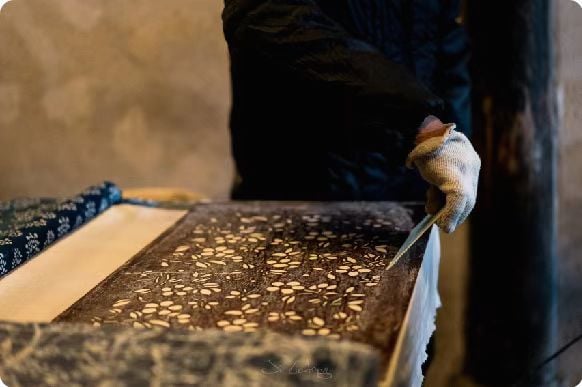
Stencil-resist cloth uses a patterned stencil to apply protective paste.
This differs from tying or folding cloth to resist dye. Both can produce attractive blue-and-white textiles, but the tools, decisions and results differ. A session advertised as “indigo dyeing” may use either approach, or a simplified visitor activity inspired by them.
You do not need to choose the most technically complex session. You do need to know which process you are booking.
Three textile activities that can sound similar
| Description | Typical participation | Question to ask |
|---|---|---|
| Stencil-resist blue-print cloth | Working with a stencil and resist application, with other stages handled according to the session | Will we apply resist paste through a stencil, and which stages will staff complete? |
| Tie-dye | Folding, binding or tying the fabric before dyeing | Will we choose the folds and ties ourselves, and can we see the result during the session? |
| Surface printing or decoration | Applying colour or a pattern to a ready-made textile | Is this a printing or decorating activity, or does it involve a dye bath and resist process? |
The descriptions are general technique comparisons. They do not establish what any particular Wuzhen venue currently offers.
Where to Begin Looking at Textiles
Hongyuantai Dye Workshop in Dongzha
Hongyuantai Dye Workshop (宏源泰染坊) is the relevant named textile stop in Dongzha. Its visitor setting includes patterned cloth and interpretation of production.
Begin with the tools and process, then look at the fabric display. Ask what the patterns, materials and stages represent. A guide or a short explanation can add more to the visit than another photograph in the drying yard.
Confirm separately whether a demonstration or visitor session is operating during your visit. Do not treat a historical description of workshop participation as a current booking confirmation.
Caomu Bense Dye Workshop in Xizha
Caomu Bense Dye Workshop (草木本色染坊) is the corresponding named textile stop in Xizha. It can fit naturally into a broader canal walk.
Use the visit to understand the fabric and its presentation, then consider a hands-on activity if the current programme meets your interests. Ask for the specific technique and item rather than booking from the venue name alone.
If you have limited time, one thoughtfully interpreted dye-workshop visit may be sufficient. Visiting both is most useful when you want to compare their settings or have a deeper textile interest.
Independent or hotel-based sessions
A separate studio or hotel programme may provide a more structured learning slot than a walk-in attraction visit. Its location and access arrangements need separate checking.
For example, Alila Wuzhen’s published activity description includes a guided blue-textile experience with a demonstration and hands-on participation. It is a useful example of an activity to enquire about, rather than a guarantee of a current place or suitability. Confirm the technique, availability, guest eligibility, language and price directly. The property is a separate hotel location, not an activity stop inside Xizha.
An independent studio can also be worthwhile when its teaching is clear and the journey fits your day. A venue outside the scenic area may add transfer and re-entry considerations.
How to Make a Display Visit Meaningful
A cultural experience does not require a class. A focused display visit can be rewarding if you look at the process behind the finished object.
For textiles, select one pattern and ask how it is repeated, which areas remain undyed and what happens between preparation and drying. Compare a tool with the result it creates.
At a production-related site, distinguish the historic equipment, visitor demonstration area and any working space. Do not assume every object is in daily use or every visible worker is part of a visitor performance.
If a demonstration is available, watch one stage properly rather than moving on after a few seconds. Ask a concise question when staff are able to respond.
For children, choose a visual task: find the same motif on two cloths, identify the stencil or describe what changed after a step. This turns looking into participation without requiring a paid activity.
What to Expect from a Hands-On Dyeing Session
A visitor session may introduce the process, show examples, let you choose a pattern or folding method and guide you through selected steps. It may use pre-prepared materials so that the activity fits a short visit.
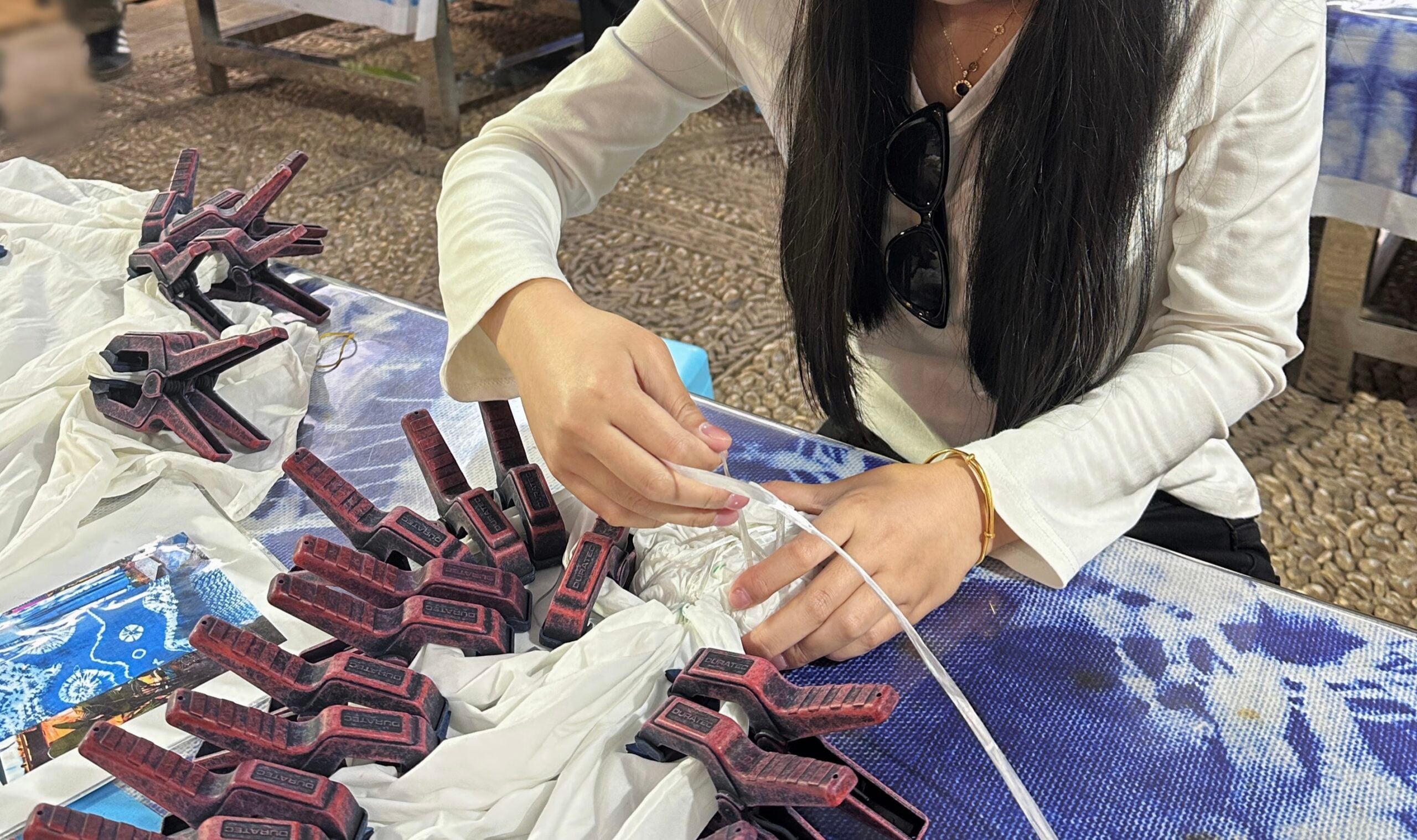
Confirm which textile-making steps participants perform themselves.
That can be a good beginner format, provided it is explained clearly. Completing a small piece under guidance is different from learning the entire production process or designing every element from scratch.
Ask how much of the work you will do and what happens before and after your participation. Find out whether staff handle dye preparation, rinsing, finishing or drying.
The reveal can be an enjoyable part of the experience, but the cloth may not be ready to pack immediately. Confirm whether you can collect it later, receive it by delivery or take it away with specific handling instructions.
A session should remain worthwhile because you learn and make choices, even if the final pattern differs from the sample photograph.
Other Crafts and Cultural Themes to Consider
Woodcarving and household objects
Dongzha’s Jiangnan Woodcarving Museum offers a way to study finished craftsmanship and its architectural setting. The Hundred Beds Museum provides another domestic context for decorative work.
Choose a few examples and ask how the decoration relates to the object’s use. Compare the building detail with the displayed pieces rather than treating the rooms as a checklist.
A collection of carved objects does not establish a visitor woodcarving lesson. If hands-on carving is important, ask about an actual class, tools, supervision and suitability instead of assuming it is available at the museum.
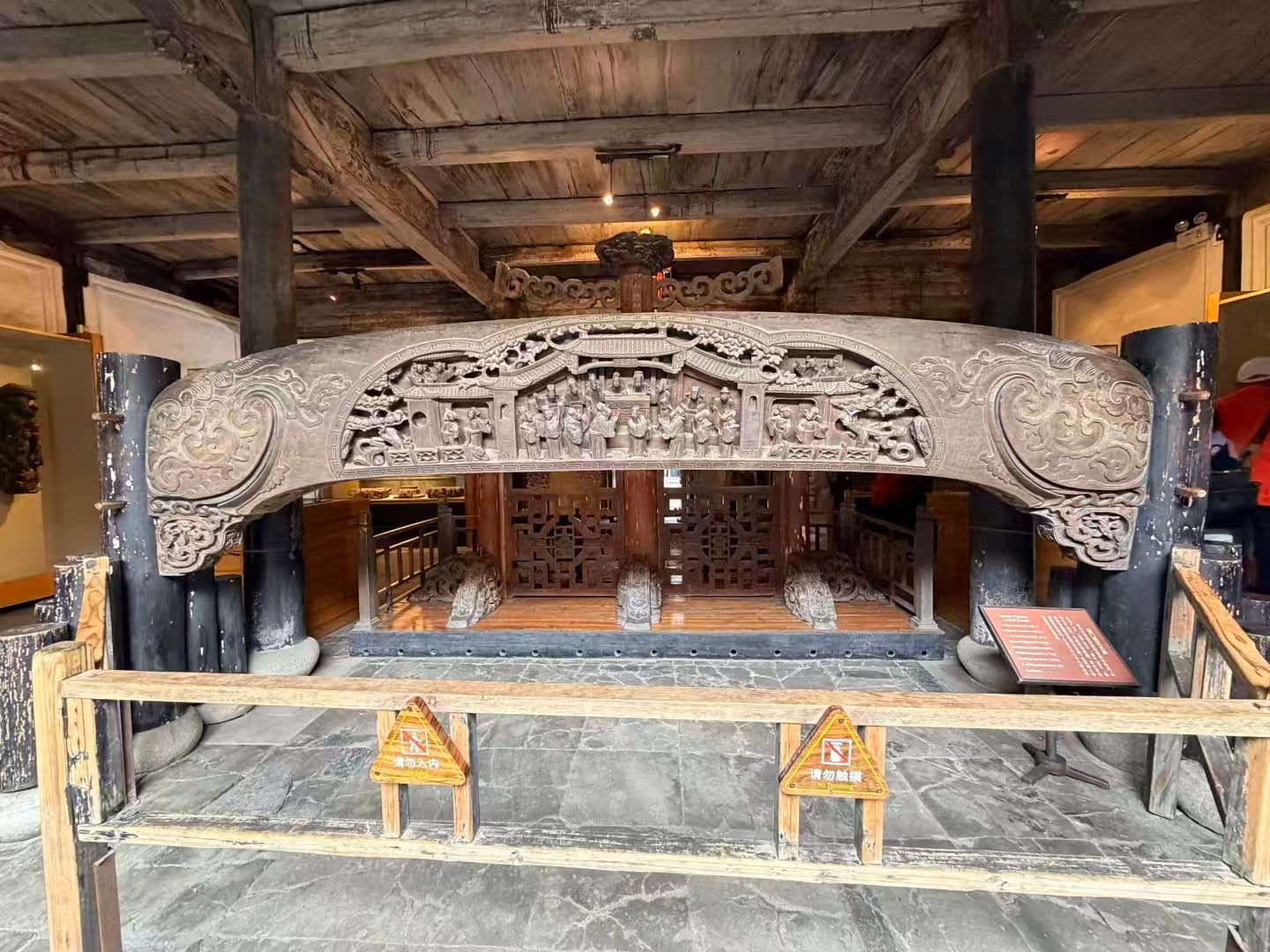
Look closely at carved details and their everyday or architectural use.
Silk, production and working traditions
Silk-related interpretation, including the named Yida Silk Workshop in Xizha, can add another material theme when open. Production displays may explain stages that are difficult to understand from a finished scarf or fabric alone.
Ask whether the visit includes a current demonstration or explanation, and select it because the subject interests you. A silk-themed shop and a production-learning visit have different purposes.
Likewise, a metalworking or other production display can be useful for observation without becoming a participant activity. Follow the designated visitor area and staff instructions.
Lanterns, fans and small decorative crafts
Visitor craft programmes may feature lantern-making, fan decoration or other small objects. The current activity menu determines what is available.
Such activities can be enjoyable and family-friendly. Their connection to Wuzhen varies: some introduce a local setting or story, while others are general creative activities offered in the town.
Choose them honestly for the experience they provide. Painting a ready-made object can be a suitable beginner activity without being described as mastery of an entire traditional craft.
Ask which parts are made, assembled or decorated by participants. This is especially useful when a photograph shows an elaborate finished item but the session involves only one stage.
Pottery and contemporary handwork
If a pottery-related session or other contemporary craft is offered, establish whether it involves shaping, decorating or painting a pre-made piece. Ask about firing, finishing and collection before booking around an onward journey.
You can enjoy a creative session in Wuzhen without claiming that every material or technique originated there. Look for a clear explanation of the activity’s relationship to the place.
Local Traditions Beyond Making an Object
Shadow puppetry and other performance
Dongzha visitor descriptions include shadow puppetry and boat-based traditional programmes. These should be treated as scheduled experiences whose current programme must be checked.
A short performance can be accessible even without understanding every word. Ask for a brief introduction to the story, characters or tradition so that you have a way to follow it.
Check whether the event is a live show, a display about performance or a separate participation session. Seeing puppets in an exhibition does not establish a show at that time.
Do not organise a whole day around a performance mentioned in an old article. Obtain the date, venue and start time from a current programme.
Food, tea and everyday social life
A seated tea break or a local meal can contribute to a cultural visit when there is explanation and time to observe the setting. Ask about one local dish or a drink rather than turning the meal into a long tasting challenge.
The Water Market morning experience known as Zaochake can interest overnight visitors, but it has its own access and booking conditions. Confirm eligibility and whether it replaces regular hotel breakfast under your package.
A tourist-facing breakfast programme is not the same thing as unrestricted access to a private local routine. Enjoy the experience as it is offered and respect the people working there.
Literature, education and historic interiors
Mao Dun’s Former Residence in Dongzha, Zhaoming Academy in Xizha and other literary or historical stops can provide context beyond craft production.
A short introduction to the person or building helps overseas visitors connect the site to the town. Choose one meaningful stop instead of entering several spaces with little understanding of what they represent.
These are cultural visits in their own right. They can make an effective contrast to a hands-on session, particularly for adults who want to understand the place as well as make something.
Festivals and special programmes
Special events can add performances, activities or a different atmosphere. They may also change access, crowd levels and accommodation availability.
Check the current calendar for your dates and the requirements of the specific event. General scenic-area admission should not be treated as admission to every festival performance or special workshop.
If your priority is a quieter cultural visit, compare that preference with the conditions expected during a major programme.
How to Choose a Good Workshop
A good workshop offers a clear description of the session, the teacher’s role and the participant’s work. It does not need an elaborate title or expensive take-home item.
Start with the learning objective. Do you want to understand a process, make a small object, share a family activity or spend longer with a specialist subject? Those are different needs.
| Booking detail | What to confirm |
|---|---|
| Technique | Exact method, materials and relationship to the advertised craft |
| Participation | Which steps guests perform and which are prepared or finished by staff |
| Teacher | Who leads the session and how instruction is delivered |
| Language | English support, interpretation or a demonstration-led format you can follow |
| Duration | Teaching time, preparation, waiting and any later collection |
| Group size | Private or shared session, capacity and amount of individual assistance |
| Age suitability | Minimum age, supervision, tools and tasks available to children |
| Price | Per person, per item or family booking; materials and finishing included |
| Location | Inside Dongzha, inside Xizha, elsewhere in town or at a separate hotel |
| Access | Scenic-area admission, guest eligibility and any additional requirements |
| Finished item | What you make, when it is ready and how to transport or care for it |
| Cancellation | Date changes, missed sessions and interruptions to operation |
| Retail | Whether additional purchases are optional |
Save the answers with the reservation. If the description says only “heritage DIY” without explaining the activity, ask for the missing details before paying.
Choosing a Workshop for a Family
Younger children
Choose a short, visual activity with manageable steps and active adult support. A simple pattern choice or supervised decorating task may suit a child better than a technically detailed process.
Ask about the particular child rather than relying on “family-friendly.” Explain their age, attention span and any support needs. Confirm whether an accompanying adult participates, pays separately or helps within the child’s booking.
Keep the rest of the day light. A workshop followed by a snack and canal walk may be enough; another class is not automatically better.
School-age children
Look for a session that lets them make decisions and see a result. Choosing a motif, arranging folds or assembling parts can provide more ownership than watching an adult complete the whole object.
Ask whether the explanation includes why the process works and how it connects to everyday use. A few clear ideas can make the activity more memorable than a perfect souvenir.
Teenagers
A more detailed session can suit a teenager with a genuine interest in design, materials or art. Offer a choice of theme rather than assuming a decorative activity appeals to everyone.
They may prefer a process demonstration, architectural walk or contemporary museum visit. A family cultural itinerary can include a common opening stop and different optional interests afterwards.
Mixed ages and multigenerational groups
Choose an activity whose difficulty can vary while everyone remains in the same setting. Ask whether staff can offer simpler tasks, seating and additional help.
For adults who prefer observing, check whether the session allows an observer and whether that affects capacity or charges. Do not book a class on the assumption that every family member must make an identical object.
Clothing, Access and Finished Pieces
For dyeing or painting, wear clothing you can comfortably work in and ask whether aprons or protective equipment are supplied. Materials, dyes and tools vary, so follow the workshop’s handling instructions.
Ask about seating, steps, table height, toilets and the route from your arrival point if these affect participation. A visually appealing historic studio may have an inconvenient layout for some guests.
Do not assume that a “natural” material is suitable for every participant or that a traditional technique uses no modern products. Tell the provider about relevant material sensitivities and ask what the session actually uses.
For textiles, obtain instructions for drying, washing, colour transfer and packing. Keep a damp piece separate from other belongings as directed by the provider.
For a fragile or unfinished object, establish the collection or delivery process. If overseas delivery is offered, confirm the address, charge and expected arrangements before leaving; local delivery availability does not establish international shipping.
How Much Time Should You Allocate?
A display stop can be brief, while a class may occupy a substantial part of the visit once access and finishing are included.
The ranges below are editorial scheduling allowances, not claims about any specific provider’s duration.
| Activity plan | Suggested initial allowance | What can add time |
|---|---|---|
| Focused craft display | 20–40 minutes | Detailed explanation, crowding or additional interiors |
| Demonstration and questions | 30–60 minutes | Waiting for a scheduled start or a longer process |
| Beginner hands-on session | Around 60–90 minutes, subject to the confirmed class | Registration, preparation, washing, finishing or collection |
| One craft session within sightseeing | Reserve a half-day rhythm rather than filling every minute | Travel to the venue, meals, rest and scenic-area entry |
Use the provider’s confirmed session length once booked. Then add the journey to the venue and a practical margin afterwards.
Do not schedule a train immediately after the advertised teaching period if your piece still needs rinsing, packing or collection.
Three Practical Cultural Visit Patterns
A light cultural day visit
Choose one scenic area. Visit its dye-workshop display, add a contrasting museum or historic interior and take a canal walk with a seated meal.
If a current demonstration fits naturally, include it. A paid workshop is optional, especially when the journey from your city base already makes the day long.
This format suits travellers who want context without committing the visit to a class.
A craft-focused afternoon
Begin with a short display or introduction, attend a confirmed hands-on session and take a proper break afterwards. Continue with a limited canal walk or another nearby sight if time allows.
If the class is outside the scenic area, plan access and transfers before deciding which walking section to add. Do not squeeze both Dongzha and Xizha around a session merely to cover more names.
One night with a family activity
Arrive with time for registration and luggage, complete one planned activity and enjoy a meal followed by an evening walk.
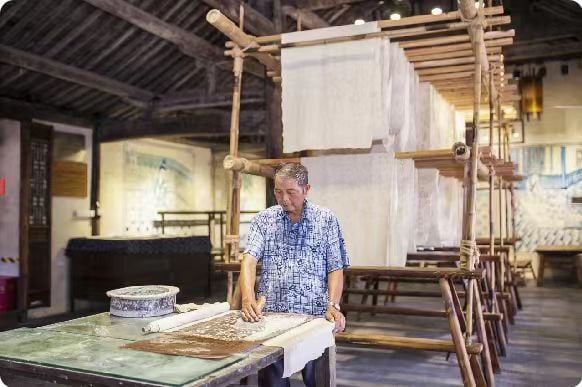
Choose a supervised craft session suited to the ages in your family.
Use the following morning for a quieter outing, breakfast and collection of any finished piece if arranged. Keep the departure logistics clear.
The extra night should provide breathing room. Avoid filling both days with consecutive workshops and souvenir stops.
Keep the Visit Focused on Learning, with Optional Shopping
Choose the activity before the shop
Reserve the time for explanation and participation. If the venue has a retail area, treat browsing as a separate, optional part of the visit.
Before booking a guided outing, ask whether any retail stops are included, how long they take and whether you can skip them. A cultural route should still make sense when nobody buys anything.
Pay a clear fee for the experience
A transparent teaching or admission fee makes it easier to understand the service. Ask what materials and take-home item are included, and whether there are optional upgrades.
A free demonstration can be informative, but it may also be part of a sales setting. Decide how much time you want to spend there and ask for any explanation you need before browsing.
If an advertised session turns into a request to buy an item before continuing, clarify the original inclusions. Do not feel obliged to make an unplanned purchase simply because staff have shown you the products.
Judge the cultural content by what you learn
Useful questions include: What is this object for? Which stage takes the most skill? What part of the process have visitors completed? How has its use changed?
These questions can reveal more than broad claims such as “ancient craft” or “authentic heritage.” A contemporary product can be a thoughtful continuation of a tradition if its method and connection are explained honestly.
Buying can remain a deliberate choice
If you want a textile or another craft item, ask who made it, where it was produced, what technique was used and how it should be cared for. Different production methods can be legitimate products at different prices.
Do not assume everything displayed at a heritage site was made there or by the person demonstrating. A clear answer is more useful than a romantic label.
Choose something you will use and can transport. You may already have a meaningful souvenir in the piece you made yourself.
Questions and Phrases for Overseas Visitors
English interpretation may be available through a guide, hotel or workshop, but confirm it before booking. A visual demonstration can help, yet it does not replace understanding the steps, tools or collection arrangements.
Use the Chinese name and map pin to reach the venue. A studio in Wuzhen town and a workshop inside a ticketed scenic area are different arrival arrangements.
| Question or request | Chinese phrase |
|---|---|
| Is this a demonstration or a hands-on class? | 这是演示,还是可以亲手制作的课程? |
| Which steps will we do ourselves? | 哪些步骤由我们自己完成? |
| Is this stencil-resist dyeing or tie-dye? | 这是刻版防染,还是扎染? |
| Is there English instruction? | 有英文讲解吗? |
| Is this suitable for a child aged [age]? | 这适合【年龄】岁的孩子吗? |
| How long does the complete session take? | 整个体验需要多长时间? |
| Are materials and finishing included? | 包含材料和后续处理吗? |
| When can we collect the finished piece? | 什么时候可以取成品? |
| Do we need a scenic-area ticket? | 需要另外购买景区门票吗? |
| We want to join the activity without buying other goods. | 我们只想参加体验,不购买其他商品。 |
Keep the booking confirmation and payment instructions. If a provider requires a document or phone verification you cannot supply, ask how overseas visitors should reserve rather than improvising incorrect information.
Rainy Days and Alternative Plans
An indoor activity can work well during rain, but the journeys between venues still need planning. Confirm that the class is indoors and how weather affects demonstrations, drying or collection.
If a workshop is cancelled or full, a dye-workshop display, museum visit or guided architectural walk can preserve the cultural theme. Choose an alternative that interests you rather than replacing the activity with several shops.
For an outdoor performance, ask about cancellation and any current indoor option. Do not assume a programme continues in unsuitable conditions.
On a busy day, one reserved activity and a shorter walk can be more comfortable than trying to fit several walk-in experiences around queues.
Common Cultural-Experience Mistakes
Booking by the word “heritage” alone. Ask for the technique, participant tasks and teacher’s role.
Treating tie-dye and stencil-resist cloth as identical. Both can be worthwhile; confirm which one you will practise.
Assuming a display includes a class. Admission and participation can be separate products.
Calling every creative activity a local tradition. Understand the relationship to Wuzhen and choose accordingly.
Expecting a complete production process in a short session. Ask which stages are prepared or completed by staff.
Scheduling several crafts back-to-back. Protect time for walking, meals and rest.
Forgetting collection and transport. A finished piece may need drying, firing, packing or later retrieval.
Allowing retail stops to take over. Agree on the learning content and optional shopping before the visit.
Frequently Asked Questions
What is the best first cultural experience in Wuzhen?
A focused dye-workshop visit is a useful starting point. If you want to participate, add a separately confirmed textile session whose technique and teaching format match your interest.
Are indigo dyeing and blue-print cloth the same thing?
Indigo refers to the dye theme, while blue-print cloth generally refers to a particular patterned textile tradition. A visitor session may use stencil-resist, tie-dye or another approach. Confirm the method.
Is a hands-on workshop necessary?
No. A good explanation, demonstration or museum visit can be rewarding. Choose a class if participating is important to you and the schedule supports it.
Can I simply arrive and join a class?
Some venues may have walk-in availability, while others use booked sessions. Confirm before travelling there, especially for a family or English instruction.
Should I visit the dye workshops in both Dongzha and Xizha?
You can if textiles are a main interest. With limited time, choose one area and give the visit attention rather than duplicating stops hurriedly.
Are all craft activities in the scenic areas included in admission?
No assumption should be made. Ask about separate fees, reservations and package inclusions for the exact activity.
Can young children join dyeing activities?
It depends on the session, tools and supervision. Tell the provider the child’s age and confirm the tasks, adult involvement and materials before booking.
Can we take the item home immediately?
Sometimes, but finishing may require more time. Confirm drying, washing, firing or packing and any later collection before reserving your onward transport.
Are hotel activities open to non-residents?
Ask the hotel about the specific programme. Published activity information does not by itself confirm eligibility or a place for your dates.
Is a boat ride a cultural activity?
It can form part of a cultural visit when it helps explain waterways and the town’s relationship with them. It remains a different experience from learning a craft or attending a performance.
Do we have to buy anything after a demonstration?
Additional purchases should follow your preference and the agreed booking terms. Confirm beforehand that the visit or class is complete without a retail purchase.
How many activities should we plan in one day?
For many first-time visitors, one hands-on session plus a contrasting cultural stop is enough alongside canal walking and meals. Adjust for the complete journey and your group’s interests.
Plan Your Wuzhen Cultural Visit with Discover East China Tours
A good cultural itinerary gives you time to understand a process, ask questions and enjoy the town around it. Tell us whether textiles, crafts, performance or literary history interest you most, and whether your group wants to watch, participate or combine the two.
Discover East China Tours can help fit selected cultural experiences into a Wuzhen day trip or overnight stay, alongside Shanghai, Hangzhou, Suzhou and other East China destinations. Share any family needs, language preferences and your wish to keep shopping optional when planning the route.