
Explore Xizha with a practical walking plan, boat-and-walk options, evening routes and morning ideas, plus admission advice for overseas visitors.
Xizha, the West Scenic Area of Wuzhen, rewards a visit with time to pause. Its appeal comes from the relationship between the water and the streets: boats passing beneath stone bridges, waterfront buildings seen from opposite banks, and narrow lanes opening onto another canal view.
For a first visit, plan a gradual walk through the area, choose a few cultural stops and leave space for a meal. Add a boat ride if you want to see the waterfront from the water, then use the evening for a shorter walk rather than repeating every street. If you stay overnight, a nearby canal loop the following morning provides a different experience without another full sightseeing programme.
The practical details matter. Scenic-area admission, museum access, boat tickets and accommodation benefits are separate arrangements. Check the product you have booked, use the current visitor map and confirm your return route before setting off.
Xizha at a Glance
| Question | Practical answer |
|---|---|
| What is Xizha? | Wuzhen’s West Scenic Area, with canals, historic streets, cultural sights, restaurants and accommodation |
| How long should you allow? | As an editorial planning recommendation, around five to seven hours for a relaxed visit with meals and breaks; longer if staying through the evening |
| Is a boat ride essential? | No. Walking provides the most flexibility; a boat adds a different waterfront perspective |
| Can you visit after dark without staying? | Yes, within admission and operating arrangements, with suitable return transport |
| Why stay overnight? | Easier evening walks, room breaks and a morning outing near your accommodation |
| What should you book first? | Your transport and admission or accommodation package, then any time-sensitive experience |
| What should you carry? | Original passport, booking details, a charged phone, comfortable shoes and weather-appropriate essentials |
A shorter visit can work, but it should have a smaller scope. The suggested time allocation is for an enjoyable pace, not a ticket requirement.
Understand the Layout Before Walking
Much of the classic Xizha visit follows the streets and sights around the Xishi River, the principal canal through the historic area. Bridges connect viewpoints and walking routes, while side lanes lead to courtyards, accommodation and other stops.
Think of the visit in several sections rather than as one straight street. Your arrival point, main walking route, boat landing and final exit may be different places.
For a first-time route, begin with the arrival-side sights, continue through the Water Market and cultural streets, then extend towards the Bridge-in-Bridge and White Lotus Pagoda area if time and energy allow. Return along selected streets or use an available boat route that suits your destination.
This is a suggested sightseeing sequence, not a guaranteed one-way route or turn-by-turn map. Use current signs and the visitor map for bridge crossings, temporary restrictions and the entrance you are authorised to use.
Keep these names on your phone
| English name used in this guide | Chinese name |
|---|---|
| Xizha / West Scenic Area | 西栅景区 |
| Xishi River | 西市河 |
| Caomu Bense Dye Workshop | 草木本色染坊 |
| Water Market | 水上集市 |
| Zhaoming Academy | 昭明书院 |
| Ling Shui Ju | 灵水居 |
| Dingsheng Bridge | 定升桥 |
| Wuzhen Old Post Office | 乌镇老邮局 |
| Bridge-in-Bridge | 桥里桥 |
| Tongji Bridge | 通济桥 |
| Renji Bridge | 仁济桥 |
| White Lotus Pagoda | 白莲塔 |
| Andufang Pier | 安渡坊码头 |
| Ruyi Bridge Pier | 如意桥码头 |
| Mu Xin Art Museum | 木心美术馆 |
English translations and spellings can vary between maps and booking platforms. The Chinese names help when asking staff for directions.
Before You Arrive: Admission and Reservations
Choose the right admission product
Decide whether you are visiting Xizha alone or combining it with another scenic area. Dongzha is separate, and a Xizha-only ticket should not be treated as admission to both.
Read the selected product’s date, entry conditions, cancellation terms and redemption instructions. If an arrival window is specified, establish whether it controls your entry time rather than the length of your visit.
The official admission listing reviewed for this guide displayed general Xizha visiting hours of 09:00–22:00. Recheck the schedule for your date, including any last-entry rule. Individual sights, dining venues and boat services operate on their own schedules and may close earlier.
Check accommodation inclusions before buying tickets
If staying overnight, first read the room or package confirmation. It may include admission for a specified number of guests, re-entry or other benefits. These are product-specific.
Some outside-hotel packages also offer scenic-area benefits. Conversely, the phrase “inside Xizha” does not tell you how every guest or activity is covered.
Confirm the validity on arrival and departure days, and ask how access is activated. Avoid buying an additional ticket for something already included.
Book separate experiences where needed
A scenic-area ticket does not establish admission to every separately controlled attraction or event. Check the Mu Xin Art Museum separately if it is important to your visit, including its current opening calendar, ticket and reservation requirements.
Likewise, workshops, performances and special breakfast experiences may need another booking. Schedule the experience you care most about first, then arrange the flexible walking sections around it.
Prepare for passport-based booking
Use a booking channel that supports your travel document and payment method. If an online form accepts only a mainland identity-card format or requires a mobile number you do not have, ask the operator or provider how overseas visitors should book.
Keep original passports accessible for the travelling party, along with the order reference and redemption instructions. Enter names and document details consistently wherever required.
Do not assume a QR code always permits direct gate entry. Some products require an exchange or confirmation step at a service counter. Save the instructions from your actual booking.
Arrival and Entry: A Practical Sequence
- Reach the correct arrival point. Tell your driver or transport provider that you are visiting Xizha, and confirm the designated drop-off or reception point.
- Resolve luggage first. For an overnight stay, follow the property’s registration and bag-handling instructions. Day visitors should confirm any storage they need.
- Check your ticket or guest-access status. Ask whether the order must be exchanged, validated or linked to the registered guests.
- Complete the required entry checks. Present the documents and booking information requested for your product.
- Collect or save a current map. Identify the walking start, toilets, intended boat landing and final exit or hotel route.
- Check time-sensitive details. Confirm the boat options and opening time of any attraction you do not want to miss.
Allow time for this process. Arriving at the visitor centre is different from being ready to begin a canal walk.
If a booking code does not work, use the service counter or provider contact rather than immediately purchasing another ticket. Ask staff to check the order and explain the required next step.
A Detailed First-Time Walking Plan
The sections below offer a flexible progression through Xizha. Their suggested time allocations include browsing and short pauses but are not measured route durations. Extend or shorten them according to open sights, crowds and your group.
Section 1: Arrival-side sights and the dye workshop
Suggested allocation: 45–75 minutes.
Begin by finding your position on the map. If the Mu Xin Art Museum is a priority, decide whether its opening hours make this the right moment to visit. A substantial museum visit needs its own time and should not be squeezed into the allocation for this first walking section.
The Caomu Bense Dye Workshop is a useful introduction to Xizha’s craft setting. The patterned fabrics and drying yard provide a visual starting point, while the displays can help connect the scene with textile production.

The dye workshop adds a craft stop to the opening walk.
Look at the process and materials as well as the photographs. Where displays or staff explanations are available, spend a little time understanding what you are seeing. Do not assume a live demonstration or a visitor workshop happens continuously.
Keep the opening stretch gentle. A long photo queue is optional; there will be other opportunities for portraits and canal views along the route.
Section 2: The Water Market and nearby bridges
Suggested allocation: 45–60 minutes, plus any meal.
Continue towards the Water Market, using the map to select the appropriate streets and crossing. This is a useful place to slow down and observe the relationship between waterfront paths, food venues and boats.
Take a few different views rather than remaining at one crowded spot. A canal scene can look quite different from the nearby bridge, the opposite bank or a lane opening.
Use this section for a first proper rest if it matches your timing. Choose a venue with seating and check what must be ordered; a waterfront viewpoint is not necessarily a public resting place.
Do not assume the market presents the same activity throughout the day. A special morning food experience, normal daytime dining and evening atmosphere are separate reasons to visit.
Section 3: Cultural streets, Ling Shui Ju and Zhaoming Academy
Suggested allocation: 60–90 minutes.
Choose one or two cultural stops rather than entering every building. Ling Shui Ju and Zhaoming Academy can provide variety alongside the canal walks, subject to the areas open during your visit.
At the academy, give yourself time to look at the courtyard and architecture. Treat the stop as a pause in the walking rhythm. Reading spaces or interior rooms may have their own access arrangements.
Use Dingsheng Bridge as a named orientation point if it fits the signed route. A bridge view can help you understand how the canal and waterfront buildings relate to each other, but there is no need to climb every bridge for a similar photograph.
This middle section is a good place to reassess the route. If the group is tired, choose a shorter return. If everyone is comfortable, continue towards the Old Post Office and farther canal sights.
Section 4: The Old Post Office and street-level details
Suggested allocation: 30–45 minutes.
The Wuzhen Old Post Office is a recognisable stop among the waterfront streets. If it is open and postal services are available, you can ask about sending a postcard abroad, including the postage and address format.
Allow time to write the card only if you want the experience. Otherwise, enjoy the building and move on rather than making every named stop a compulsory activity.
Between major sights, notice the smaller details: doorways, signs, rooflines and the way lanes meet the water. Select a short side-lane detour, then return to your planned route.
Follow public paths and respect signs around guest accommodation. An attractive courtyard may belong to a hotel or private area.
Section 5: Bridge-in-Bridge and the White Lotus Pagoda area
Suggested allocation: 45–75 minutes.
Bridge-in-Bridge refers to Tongji Bridge and Renji Bridge, a paired arrangement whose arches can frame one another from particular viewpoints. It is worth considering both the street-level scene and the view from the water if your boat route passes through the area.
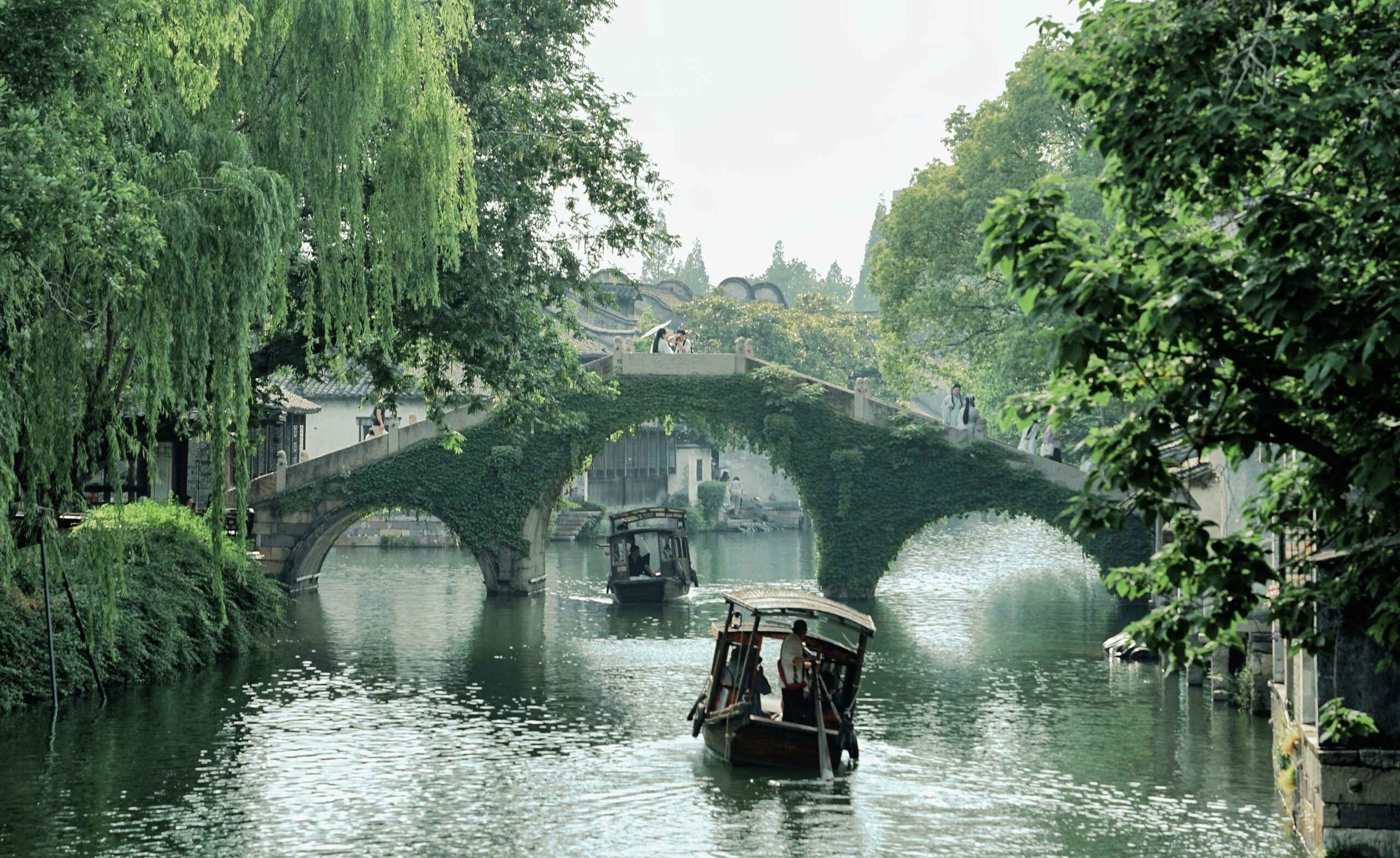
Bridge-in-Bridge is a distinctive canal viewpoint.
The bridges are working walking routes. Step aside for photographs and keep the passage clear, particularly when groups arrive together.
Continue towards the White Lotus Pagoda area if it fits your chosen path. The pagoda provides a distinctive landmark and a different setting from the earlier streets. Confirm whether any interior or upper-level access is available; an exterior visit should remain worthwhile without a climb.
This is a natural place to decide how to return. Check the available boat route before buying, or follow the map back through selected streets. Do not assume the nearest pier serves the direction you need.
Section 6: Return, refreshments and an optional evening loop
Suggested allocation: flexible; protect your departure margin.
Return with a purpose: another bank of the canal where practical, a meal venue, your hotel or the exit direction. Avoid repeatedly crossing bridges simply to follow a route list.
If staying until evening, use the intervening time for dinner and a proper seated break. Overnight guests can return to the room if its location and access rights make that practical.
After dark, choose a shorter loop around the views you enjoyed most in daylight. You do not need to repeat the full outward walk to appreciate the change in atmosphere.
Combine Streets, Bridges and Rest Stops
A comfortable Xizha walk alternates movement with time to look and sit.
One useful pattern is a street section, a bridge viewpoint, a cultural stop and a seated break. Repeat it only while the group is enjoying the pace.
| Route stage | Walking focus | Suitable pause |
|---|---|---|
| Opening section | Arrival-side paths and dye-workshop visit | Brief orientation stop; use visitor facilities before continuing |
| Water Market area | Canal viewpoints and nearby crossings | Seated drink, snack or meal at a venue that suits your needs |
| Middle cultural section | Academy, courtyard or another selected sight | A permitted seating area or a nearby café |
| Farther canal section | Bridge-in-Bridge and pagoda surroundings | Refreshment stop before deciding on the return |
| Evening return | Compact waterfront loop | Dinner beforehand, then a short pause away from narrow passages |
Plan a real meal rather than relying on repeated snacks. Food stalls may be useful for a light bite, but they do not always provide the seating, space or menu clarity a family needs.
Use the current map for toilets and confirm facilities before a long extension. Keep enough energy for the route back to the hotel or meeting point.
Boat Trips: What You Are Booking
Distinguish an entrance ferry from a sightseeing boat
An entrance-area ferry or other short transfer, where operating, serves a different purpose from a small rowing or sculling sightseeing boat through the canals. Ask which service is being offered rather than assuming every boat journey is the same experience.
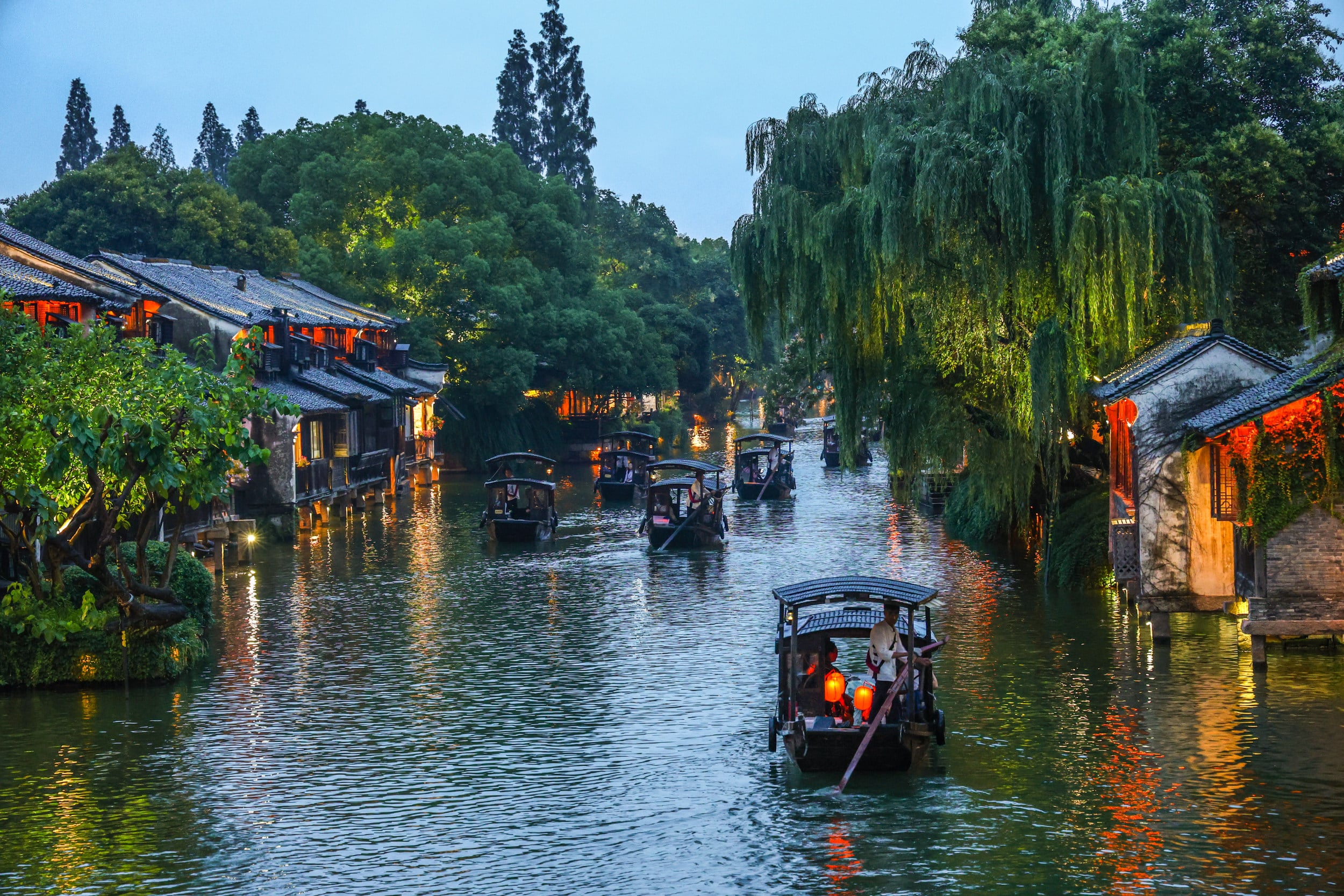
Confirm the sightseeing boat route and landing before booking.
A sightseeing boat adds the lower viewpoint of the waterfront and bridges. It complements walking because you see façades and canal relationships that are harder to appreciate from the paths.
A shared-boat ticket generally purchases places under that product’s operating conditions. A private-boat booking applies to a boat with a defined capacity and route. Confirm how children count, whether departure involves waiting for other passengers and what your payment covers.
A ticket included in a hotel or day package may have a specified pier, route or redemption process. Read those details before building the walk around it.
Confirm the route before paying
Ask these questions at the booking point:
- Where does this boat depart and where does it finish?
- Is it one-way or a return journey?
- How long is the ride, and what is the current waiting time?
- Does this product operate at the time I want?
- Are children, mobility aids or larger bags accommodated?
- What happens if weather or operations prevent departure?
Routes can differ in length and destination. A boat ride may reduce part of the return walk, but it will not deliver you to any chosen hotel or attraction.
Three Ways to Combine a Boat with Walking
Walk first, take a boat back
This often makes sense when you want to inspect streets and cultural sights at your own pace. Walk gradually through the area, then use a suitable one-way boat to return towards the arrival side.
Ruyi Bridge and Andufang are useful pier names to ask about when considering a farther-to-nearer return. Verify that the route is operating and covered by your chosen ticket; this is an option to check, not a guaranteed connection.
Allow for the remaining walk after landing. If the boat queue is long, compare it with a manageable walking return.
Take a boat first, then walk
This can provide an overview before your detailed exploration. Confirm the landing point and use it to organise the subsequent walk.
The drawback is that you may begin far from a time-sensitive museum or other sight. Plan those opening hours before choosing this pattern.
Walk during the day, take an evening boat
This suits visitors whose priority is the illuminated waterfront. Arrange dinner and the evening walking route around the confirmed pier and service period.
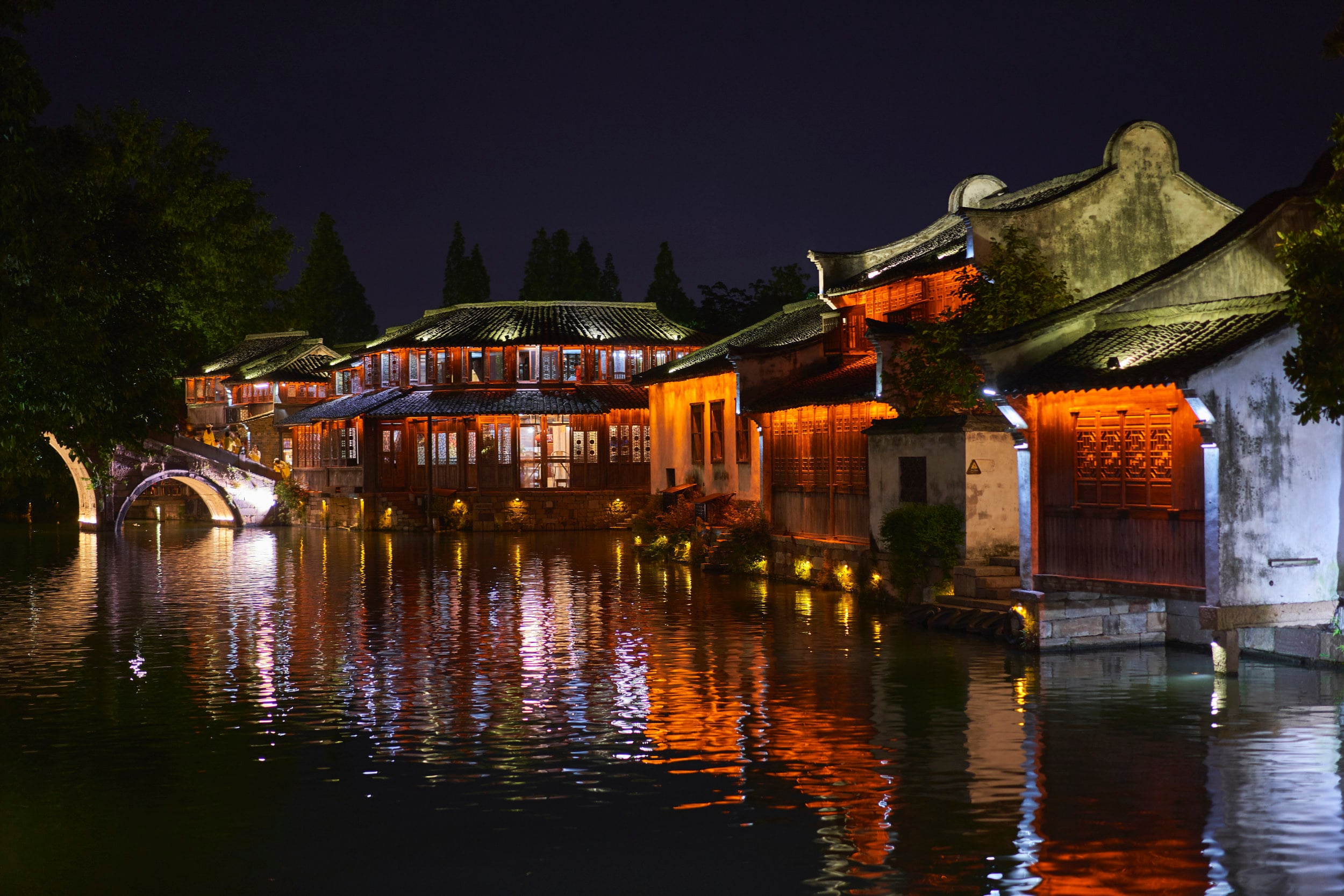
Allow time for an evening waterfront walk.
Do not make a sunset sailing essential unless the product actually guarantees a departure time. Queues, weather and operating conditions can change the experience. A twilight or evening walk should remain an enjoyable alternative.
Daytime, Evening and Morning: Different Reasons to Visit
| Period | Main appeal | Best use of your time | What to check |
|---|---|---|---|
| Daytime | Architecture, craft displays and cultural sights | Visit must-see interiors, then explore the canals | Individual opening hours and any reservation |
| Late afternoon | Changing light and a slower transition towards dinner | Finish an extended walk or take a suitable boat | Seasonal daylight, queues and route availability |
| Evening | Illuminated waterfront and reflections | A compact walk, dinner and optional boat | Last entry, boat hours and your hotel or intercity return |
| Morning after a stay | Another impression of familiar streets before the main day-visitor flow | A nearby loop and breakfast | Guest access, breakfast arrangements and departure logistics |
Daytime: give cultural stops priority
If a museum, academy interior or craft display matters to you, visit it within its own hours. Do not leave every named sight for after dinner simply because the scenic area remains open later.
Bright daylight can be useful for details and views, while shade and indoor pauses help break up the walk. On a busy day, move past a congested viewpoint and return if the route allows.
Evening: make the route shorter
Choose a few waterfront views and a convenient return. Familiarity from the afternoon makes it easier to navigate, but allow for busier passages and slower movement on bridges.
Night views are available to day visitors within the applicable arrangements. Staying overnight mainly makes the return easier; it does not reserve the streets for hotel guests.
Illumination and venue schedules are finite. Do not assume the full evening display or transport remains available throughout the night.
Morning: walk near your room
For an inside-Xizha stay, choose a short loop around your accommodation rather than walking to every landmark again. The pleasure can come from observing the same view under different light.
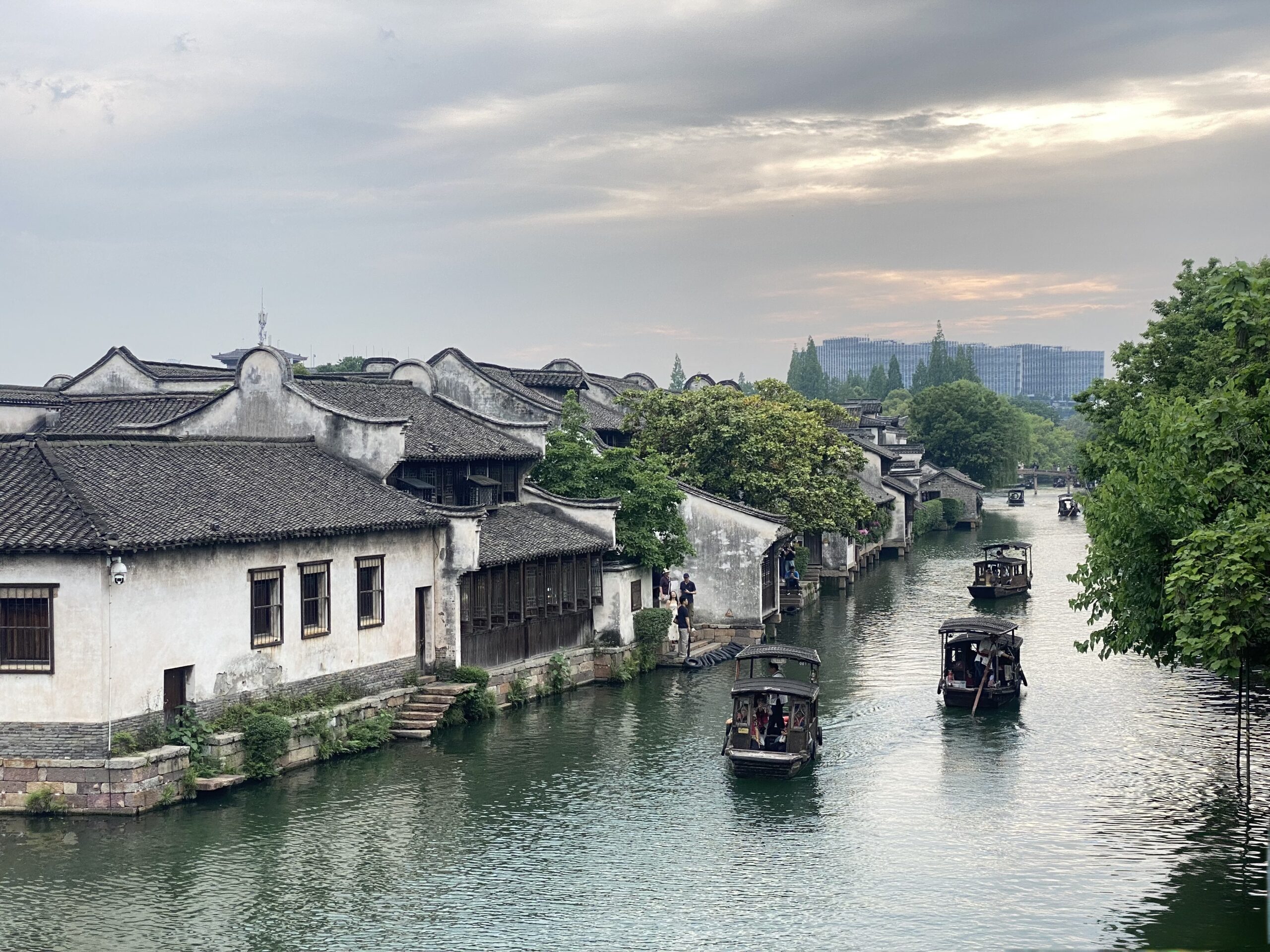
Choose a short morning canal loop near your accommodation.
A quiet morning is not guaranteed, particularly during busy periods. Staff movement and other guests are also part of the area.
If interested in the special morning tea or breakfast experience at the Water Market, ask your hotel about current eligibility, reservations, charges and whether it replaces or supplements hotel breakfast. Do not assume normal hotel breakfast includes it.
Return with enough time for packing and luggage arrangements. A final walk should not make your onward connection rushed.
Sample Plans for Different Visits
A relaxed afternoon and evening
Arrive with enough daylight for registration and selected cultural sights. Begin with the dye-workshop and Water Market sections, continue through the middle streets and pause for a drink or meal.
Extend towards Bridge-in-Bridge and the pagoda area if energy allows. Add a suitable boat or walk back, have dinner and enjoy a compact illuminated waterfront loop before departure.
Work backwards from your transport. The scenic-area closing time is not the time you should leave if you must reach a railway station first.
A shorter visit of around three hours
Choose two or three priorities. For example, the dye workshop, Water Market and one nearby cultural stop can provide variety without insisting on reaching the farthest landmark.
If a boat is the main interest, reduce other stops and confirm the landing point first. If visiting only in the evening, focus on the waterfront and expect fewer indoor options.
One night inside Xizha
Complete registration and luggage arrangements, explore in the afternoon and return for a room break if convenient. Have dinner, take a short evening walk and return without an intercity journey afterwards.
The next morning, walk locally, have breakfast and make one final stop if its opening fits your departure. Confirm check-out-day access and luggage collection separately.
Staying outside Xizha
Check your admission and re-entry rights before deciding to return to the room during the day. Plan the evening journey back to the hotel, including any shuttle deadline.
A following-morning visit depends on permitted entry and transport. A nearby hotel name or repeat-entry benefit does not guarantee early access.
Families and Travellers Who Prefer Less Walking
Keep the route smaller and put the first rest before anyone is exhausted. A boat can offer a seated experience, but queues, boarding steps and movement at the landing may still require effort.
For children, combine a visual craft stop, a short bridge section and food rather than several interiors in succession. Keep them close by the water and avoid turning bridge photographs into lengthy waits.
A stroller may help along some paths, while steps and crossings create limitations. Ask for the most suitable signed route and avoid assuming the entire scenic area is step-free.
For wheelchair users or anyone needing specific assistance, confirm the full route with the operator: arrival, entry, paths, toilets, transport stops and boat boarding if relevant. Permission to bring a mobility aid does not establish access to every building or boat.
Internal sightseeing vehicles may help where available, but their stops and eligibility differ from canal sightseeing. Confirm the remaining walking distance instead of treating them as door-to-door transport.
Rain, Heat and Busy Periods
During rain, shorten the walk and select open indoor stops. Wet stone and bridge steps require a slower pace. Confirm boat operations rather than assuming a ticket guarantees departure in unsuitable conditions.
In hot weather, use breaks and suitable indoor visits to divide the day. An afternoon-and-evening plan may suit some groups better than continuous walking through the warmest hours, provided transport works.
On busy dates, leave space for queues at admission, food venues and boat landings. Reaching one less landmark can improve the visit more than following a fixed checklist.
Special events may alter the atmosphere, movement and availability. Check whether your date coincides with a major programme, particularly if you want a quiet overnight experience.
Photography and Visitor Etiquette
Look for one clear subject: a bridge, passing boat, fabric display or doorway. Walk a little to find a simpler view rather than blocking a busy passage for a long session.
At night, brace the phone steadily and use night mode where it helps. Choose a static scene if moving boats blur. For people, a well-lit location often works better than relying on a long night exposure.
Keep bridges, narrow lanes and boarding areas clear. Current visitor rules restrict obstructive tripod use in busy passages and require permission for certain organised photography and drone activity. Consult the operator if your plans extend beyond ordinary personal sightseeing.
Respect hotel courtyards, closed areas and staff instructions. Keep litter out of the canals and avoid disturbing visitors or residents for a photograph.
Common Planning Mistakes
Treating every named sight as compulsory. Select the cultural stops that add interest to your canal walk.
Assuming every boat is the same. Establish the service type, pier, route and landing point.
Leaving indoor sights for the evening. Their hours may be shorter than scenic-area access.
Relying on a boat to meet a tight departure. Allow for waiting and keep a walking or other practical alternative.
Confusing Xizha with Dongzha. They are separate areas with different arrival and admission arrangements.
Assuming admission permits leaving and returning. Confirm your actual ticket or accommodation benefit before exiting.
Planning a dawn visit from outside without checking the gate. Morning access depends on the booking and operating arrangements.
Ignoring the final journey. Allow time to reach the meeting point, collect bags or continue to the station.
Frequently Asked Questions
How long should I spend in Xizha?
For a relaxed first visit, around five to seven hours is a useful sightseeing allocation with meals and breaks. Staying through the evening or including a substantial museum visit may need longer. A shorter visit should focus on fewer sections.
What is the best first-time walking route?
A useful progression is the arrival-side sights, dye workshop, Water Market, selected cultural streets, Old Post Office and, if time allows, Bridge-in-Bridge and the pagoda area. Use the current map to choose the crossings and return.
Do I need to take a boat?
No. Walking allows you to stop whenever you like. A boat adds a different canal perspective and can replace part of a walk when its landing point fits your plan.
Is the boat included in admission?
Do not assume so. A particular package may include a boat ticket with defined conditions. Check the product before purchasing another ride.
Should I walk first or take the boat first?
Walk first if cultural stops and flexible exploration are the priority, then consider a suitable return boat. Boat first can provide an overview, but arrange the remaining walk from its landing point.
Can I choose any pier with an included boat ticket?
Not necessarily. Confirm permitted piers, route, redemption and operating period. An included ticket may have conditions different from another boat product.
Can I see Xizha at night without a hotel booking?
Yes, within the applicable admission and hours. Organise the complete return to your city hotel, including travel from Wuzhen to any station.
Are all attractions open at night?
No. Individual museums, displays and experiences can close before the scenic area. Use daytime for your must-see interiors.
Can overseas visitors book and enter with a passport?
Choose a channel that supports passport details and confirm its redemption process. Carry original passports and order information, and ask the provider for help if the form or gate process does not support your documents directly.
Can I leave for a meal outside and come back?
Only if your booking permits re-entry at that time. Ask before exiting rather than relying on another visitor’s hotel benefits.
Is the morning tea experience included with my hotel?
It depends on the package. Check eligibility, reservation, charges and whether it replaces regular breakfast. A room booking alone is not confirmation.
Is Xizha suitable for a visit with parents or children?
Yes, with a route adapted to their pace. Plan fewer crossings, regular seating and a manageable return. Check specific accessibility and boarding needs in advance.
Plan Your Xizha Visit with Discover East China Tours
A good Xizha visit combines a few meaningful stops with time beside the canals. Tell us whether you prefer a daytime walk, evening views, a boat ride or one night in Wuzhen, along with your starting city and onward destination.
Discover East China Tours can help fit Xizha into a comfortable Shanghai, Hangzhou, Suzhou or wider East China route, with sightseeing and transfers planned around your group’s pace.