11Oct

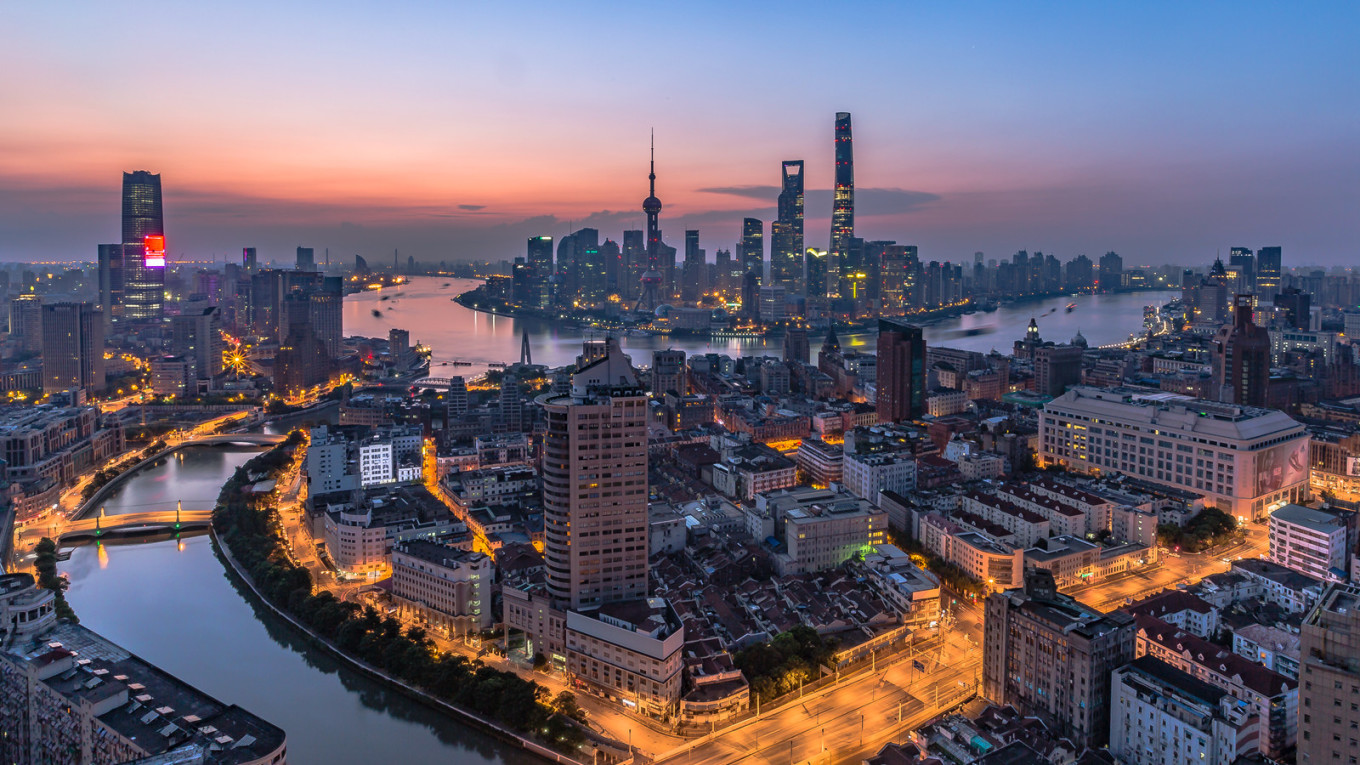
Shanghai’s older streets reveal a city built around water, commerce and changing ideas of home. Steel bridgework meets stone bank façades beside the Bund. A few neighbourhoods west, temple roofs, Art Deco towers and garden villas share the streets with shops and cafés. This two-day route connects those contrasts, leaving room to stop for food and look closely at the buildings.
Spend the first day around the Bund, People’s Square and Great World, then use the second for Jing’an and the streets of the former French Concession. Treat the route as a selection rather than a checklist: a museum visit or an evening performance deserves more time than a quick exterior stop.
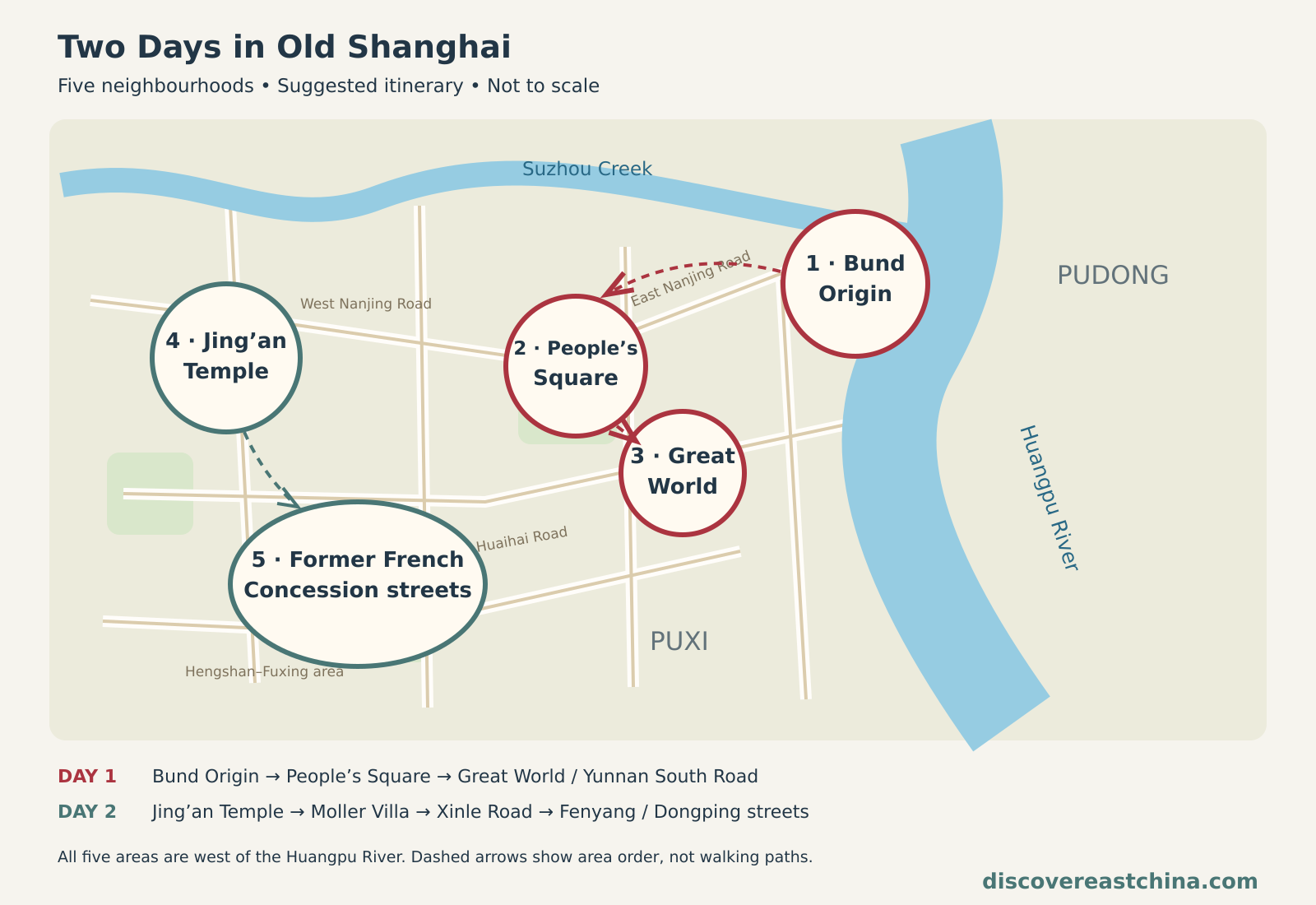
Day 1: Waibaidu Bridge → South Suzhou Road → Yuanmingyuan Road and the Bund → People’s Square and Park Hotel → Great World, Yunnan South Road and Shanghai Concert Hall.
Day 2: Jing’an Temple → an optional Nanyang Road detour → Moller Villa → Jin Jiang Hotel and Xinle Road → Shanghai Museum of Arts and Crafts → Dongping Road and Hengshan Road.
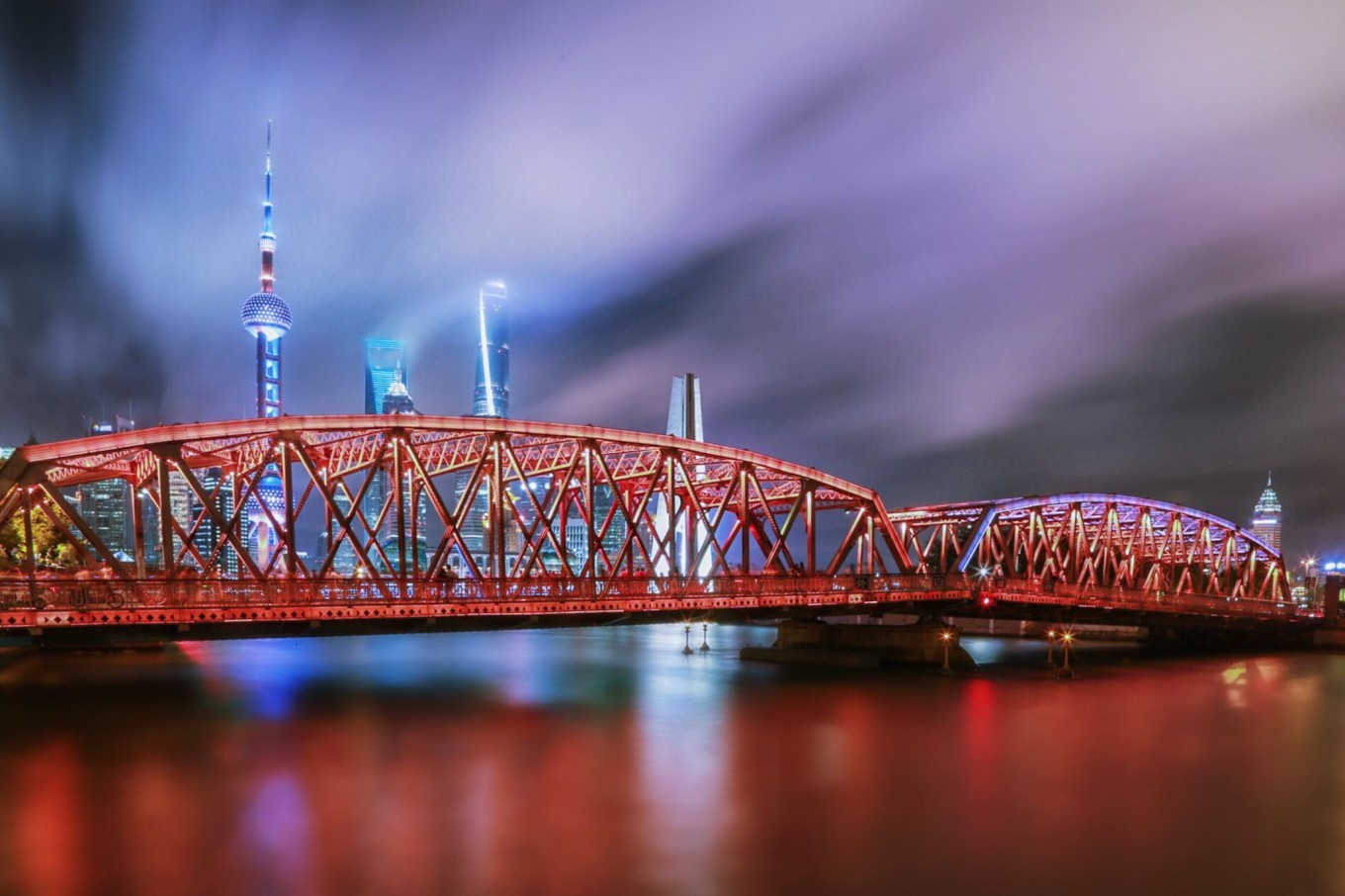
Waibaidu Bridge makes a natural starting point. Its steel frame spans Suzhou Creek near the Huangpu River, with the towers of Pudong rising beyond the water. Stay on the public pavements and pause where there is room to see the bridge’s structure without blocking pedestrians.
Continue along South Suzhou Road, then turn into Yuanmingyuan Road in the Bund Origin area. The riverfront opens out to broad views, while the quieter streets behind it bring the architecture closer: windows, stonework and entrances become the focus. The experience changes after dark, when warm lighting picks out façades and the bridge reflects in the creek.
On the Bund promenade, look in both directions. Historic buildings stand on the Puxi bank; Lujiazui’s modern skyline lies across the Huangpu in Pudong. This route stays in Puxi, so a river crossing is an optional addition. If you return for the evening views, check the day’s lighting arrangements rather than planning around a fixed switch-off time.
Head west towards People’s Square. Allow time for the walk from the Bund, or use the Metro when your feet need a break. The square and neighbouring park offer a change from the riverfront, with more open space between the surrounding buildings.
At 170 West Nanjing Road, Park Hotel is a useful architectural stop. Designed by László Hudec and opened in 1934, its dark, stepped outline recalls Shanghai’s early skyscraper era. An exterior view fits easily into the route; hotel interiors should be visited only where public access is permitted.
Continue towards Great World, or Dashijie, at 1 South Xizang Road. Its prominent tower marks a long-established entertainment landmark. Today, performances are a reason to linger, but check the programme and language before buying tickets; seeing the building does not mean that every show is included.
Nearby Yunnan South Road brings food into the day’s architectural route. Xian De Lai, at 36 Yunnan South Road, is known for pork chops with rice cakes, a classic Shanghai combination. The crisp pork and soft rice cakes make a satisfying pause between the building stops. Check the menu and opening arrangements on the day, and mention any dietary requirements before ordering.
Shanghai Concert Hall, at 523 East Yan’an Road, adds another architectural contrast. It opened in 1930 as the Nanking Theatre, and its classical façade makes a worthwhile exterior stop. If a concert appeals, book separately and give it space in your evening instead of trying to squeeze it between other sights.
Begin around Jing’an Temple, where richly decorated roofs sit beside modern shopping streets. Jing’an Park offers a gentler place to pause across the road. Choose whether to enter the temple or simply include its exterior in the walk; confirm visitor hours and admission before making an interior visit part of the plan.
Architecture enthusiasts can add a detour along Nanyang Road to the former Bei family residence at No. 170. Keep this as an exterior interest rather than a promised house tour. There is no need to enter private gardens or hotel areas to enjoy the variety of buildings in the neighbourhood.
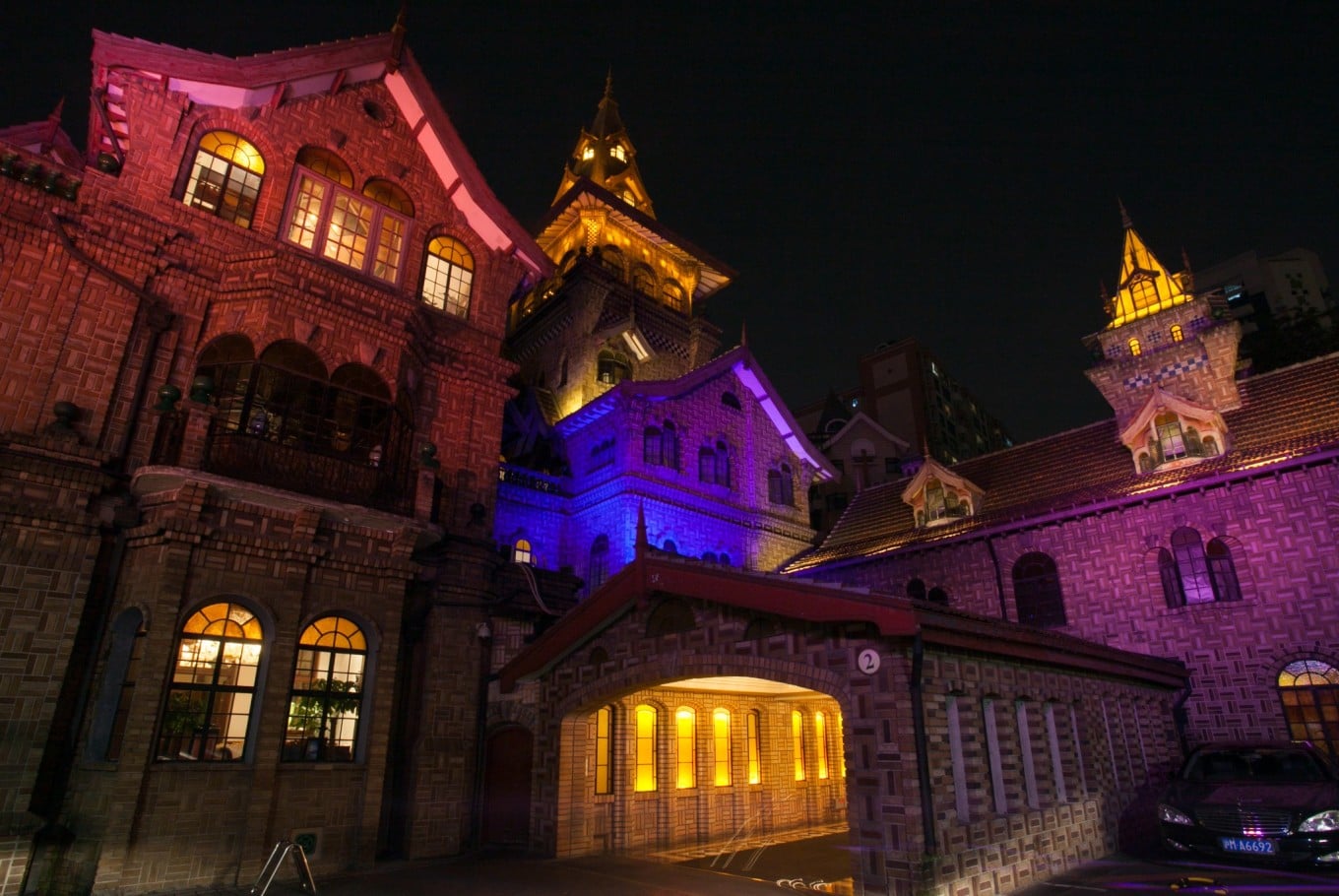
Continue towards Moller Villa, whose steep roofs and brick façades give it a markedly different character from the surrounding city blocks. Look at the arrangement of towers, windows and rooflines. Plan around views from permitted public areas; access to the grounds and interior depends on the property’s current arrangements.
From the Moller Villa area, continue south towards the Jin Jiang Hotel buildings on South Maoming Road, then west towards Xinle Road. The pace becomes more intimate here: shorter streets, garden walls and trees replace the long riverfront vista.
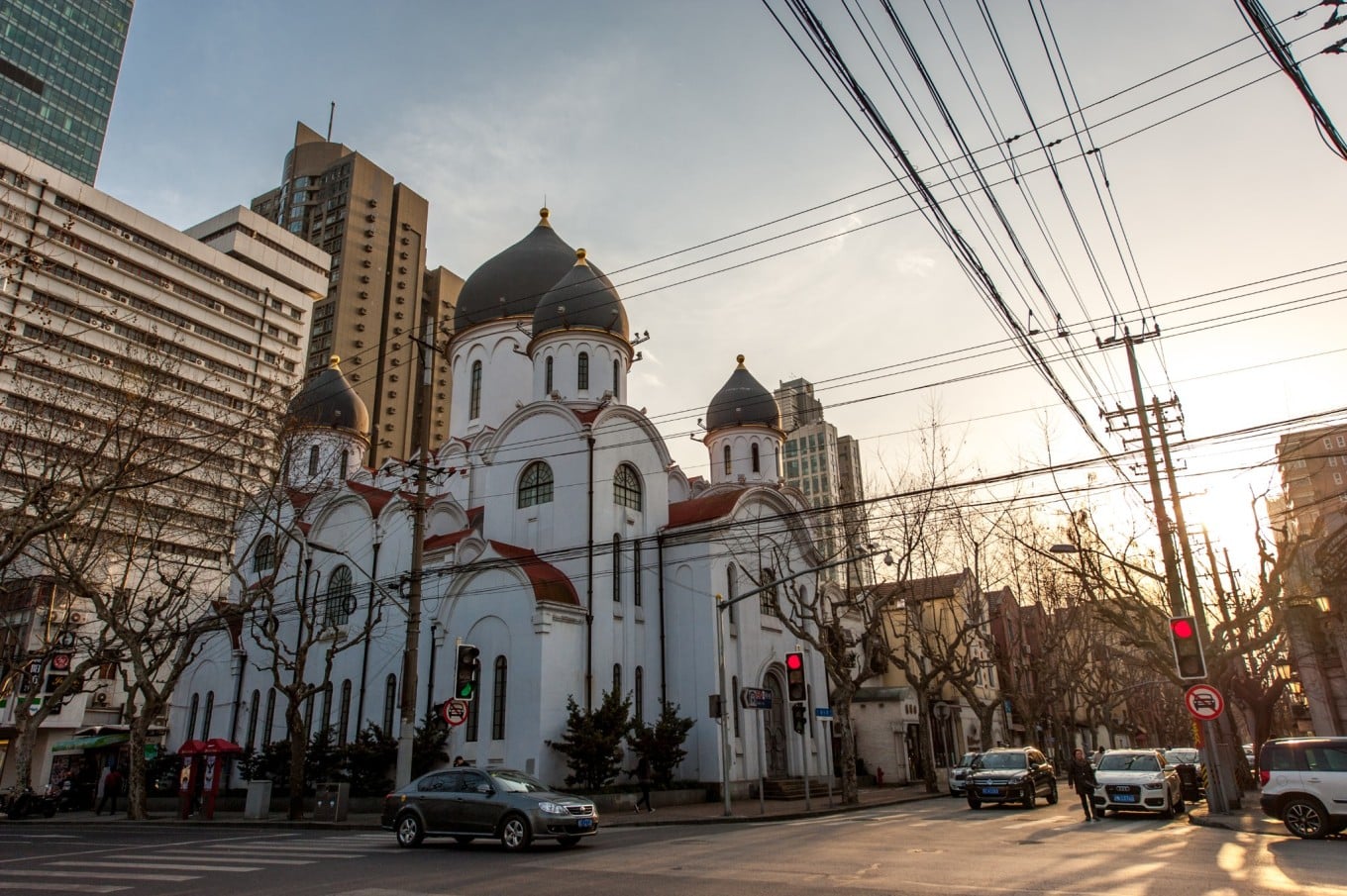
The former Russian Orthodox church on Xinle Road is distinctive for its domes and rounded forms. An exterior stop lets you see how this building sits among apartments, traffic and overhead wires. Do not assume that the doors are open to casual visitors.
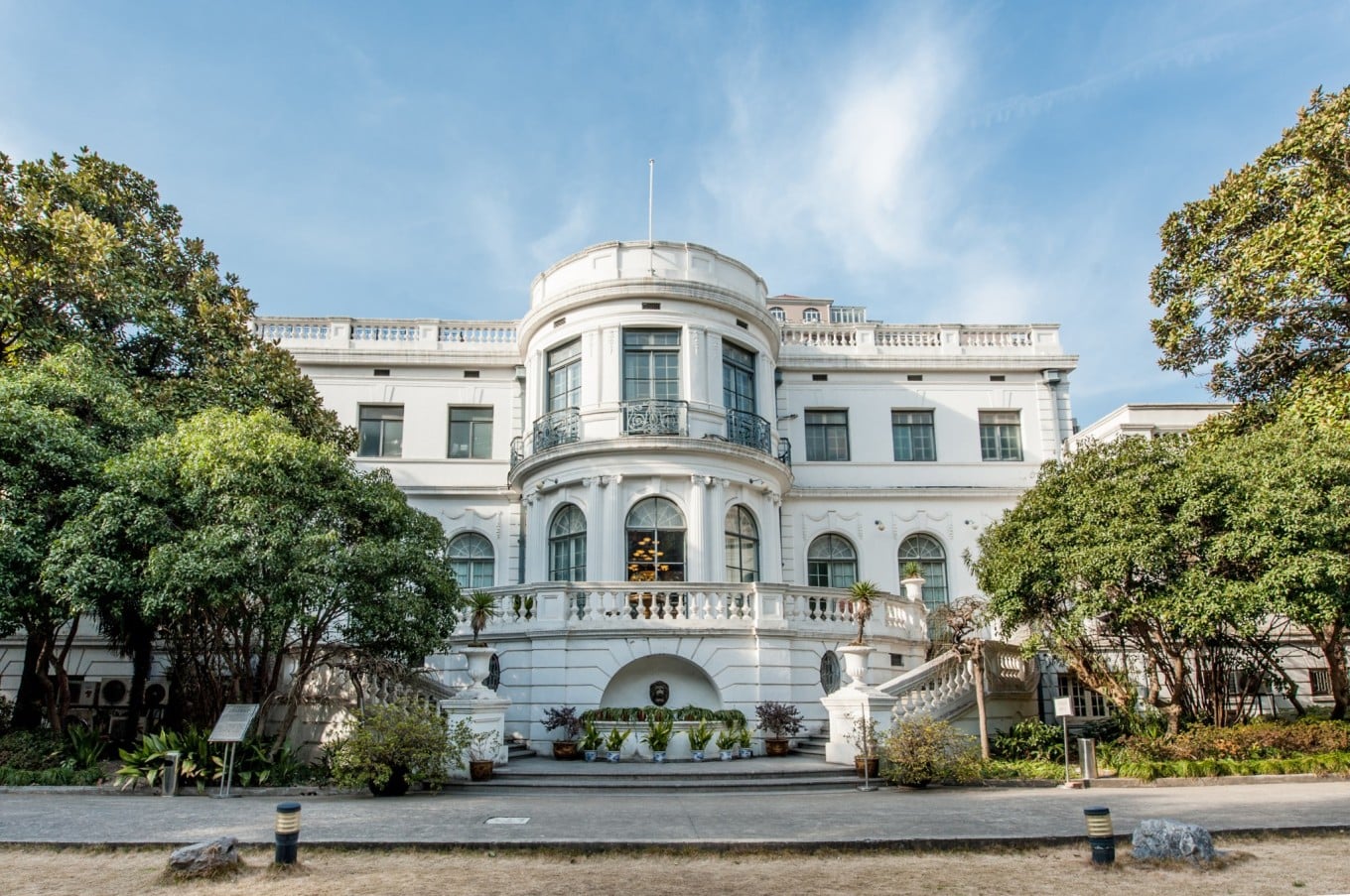
Continue through the Fenyang Road area to the Shanghai Museum of Arts and Crafts at No. 79. The white mansion is part of the appeal, but the displays give the walk a different focus: carving, embroidery and other craft traditions bring the attention from the scale of buildings to the detail of objects.
The official visitor information lists opening sessions of 09:00–11:30 and 13:00–16:30, with last entry at 11:00 and 16:00; the museum is closed on Mondays. Check holiday arrangements before visiting. On a Monday, keep the street walk and choose another indoor stop rather than relying on museum admission.
Finish around Dongping Road and Hengshan Road. These streets suit a slower ending, with time to notice villa façades and the trees overhead. Choose a café or meal stop according to what is open and appealing when you arrive. The pleasure is in the street itself, so there is no need to seek out a particular business from an older photograph.
A good old-Shanghai walk leaves space between its landmarks. Pause beside the creek, look back along a villa-lined street, or take longer over a simple lunch. Those smaller moments help connect the city’s architecture with the everyday life around it.