13Oct
+8619705475100
[email protected]

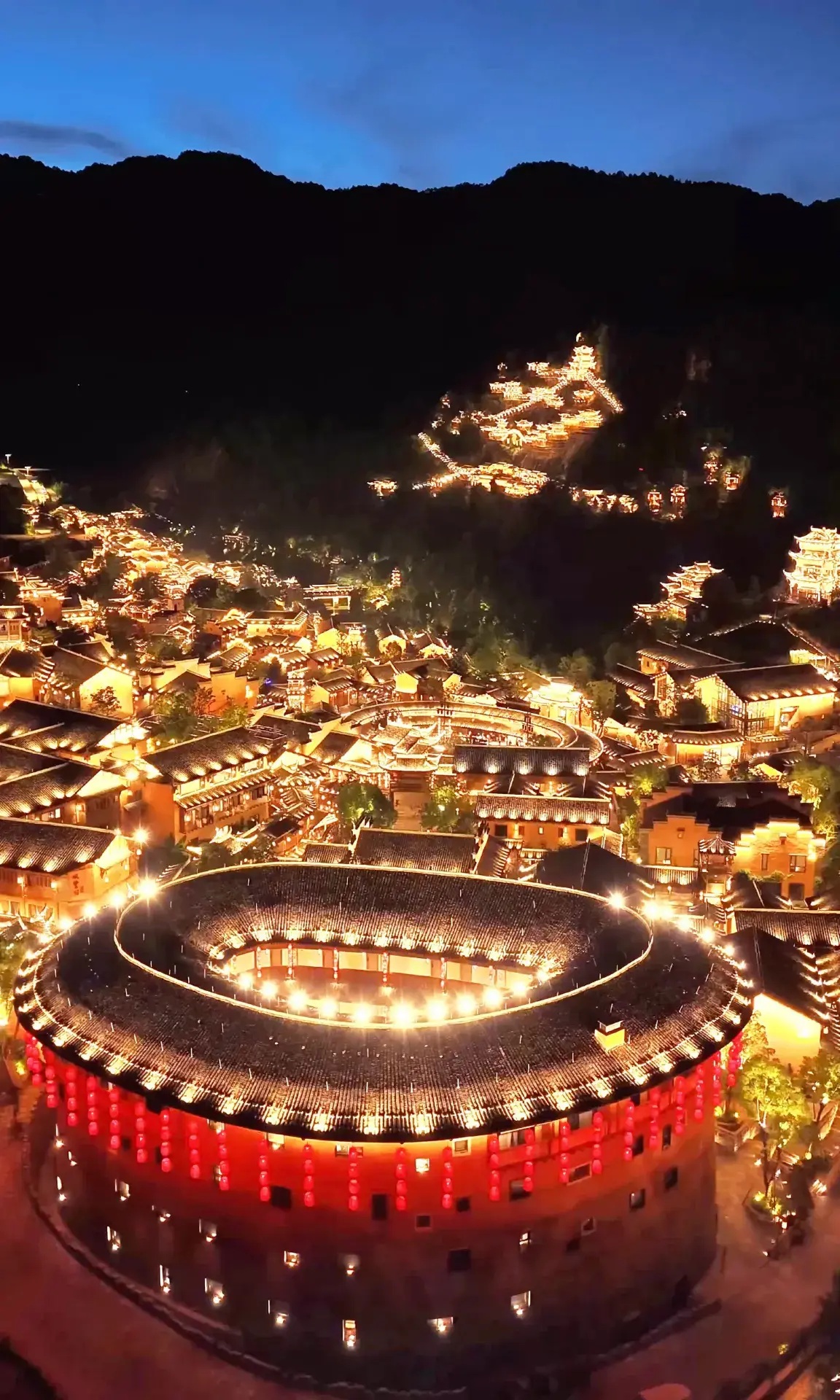
Wangxian Valley changes character as the light falls. In daylight, the eye follows the stream, green slopes and layers of tiled roofs; after sunset, illuminated stairways and cliffside buildings seem to float above the gorge. Seeing both makes a stronger visit than arriving for a single photograph.
Set in Guangxin District near Shangrao, Jiangxi, the valley combines mountain scenery with traditional-style buildings, food streets and staged performances. Its dramatic architecture belongs to a contemporary tourism development shaped by ecological restoration of former quarry land. The appeal lies in how the buildings, water and landscape are brought together.
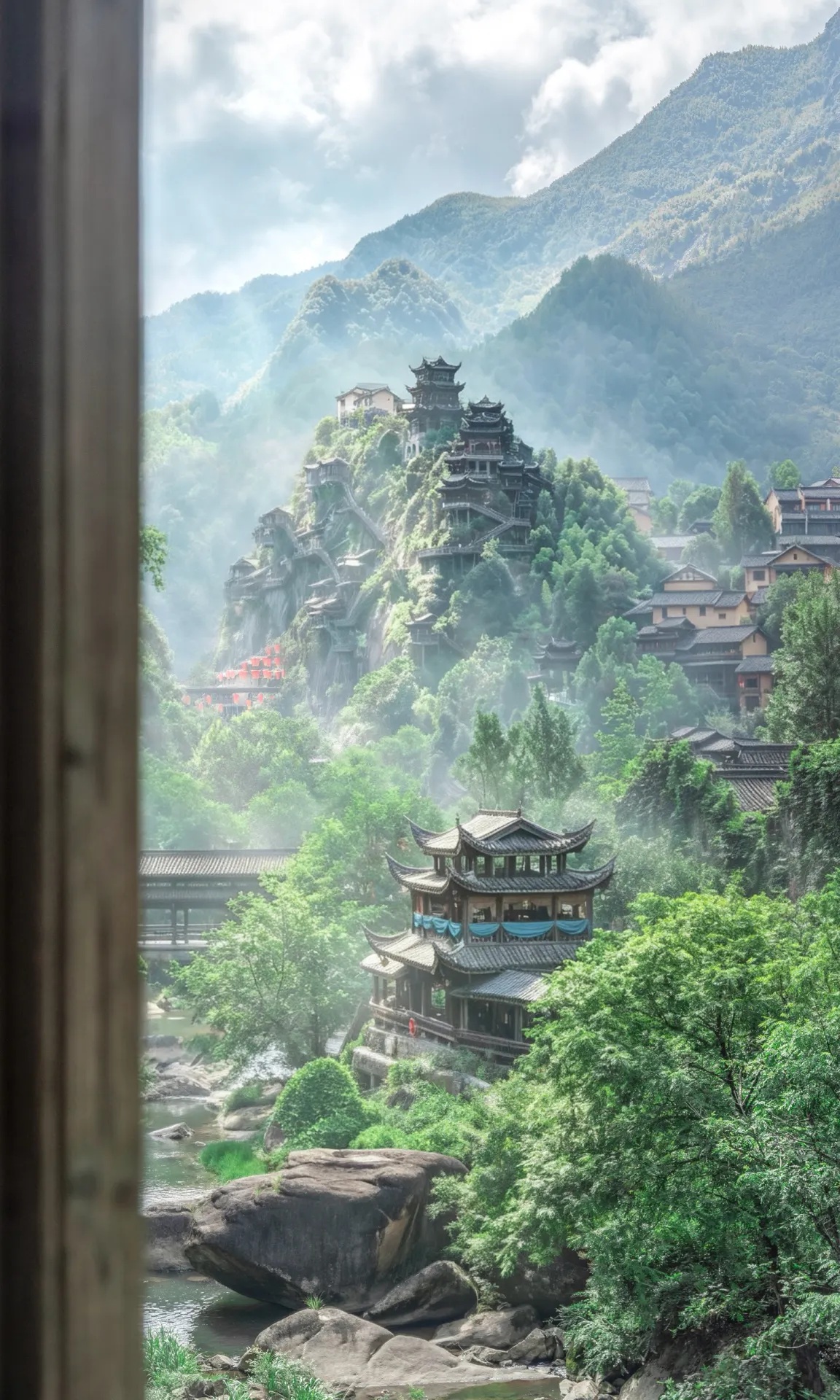
Arrive on the first day with time to explore before dusk. Follow the open paths beside the water, identify a few viewpoints and take a break before the evening programme. Stay overnight if you want to enjoy the illuminated valley without planning the whole evening around a return transfer.
Use the following morning for a slower walk and views you missed. An overnight stay creates that opportunity, but early access and re-entry depend on your accommodation and ticket conditions. Confirm these before booking rather than assuming every nearby hotel includes them.
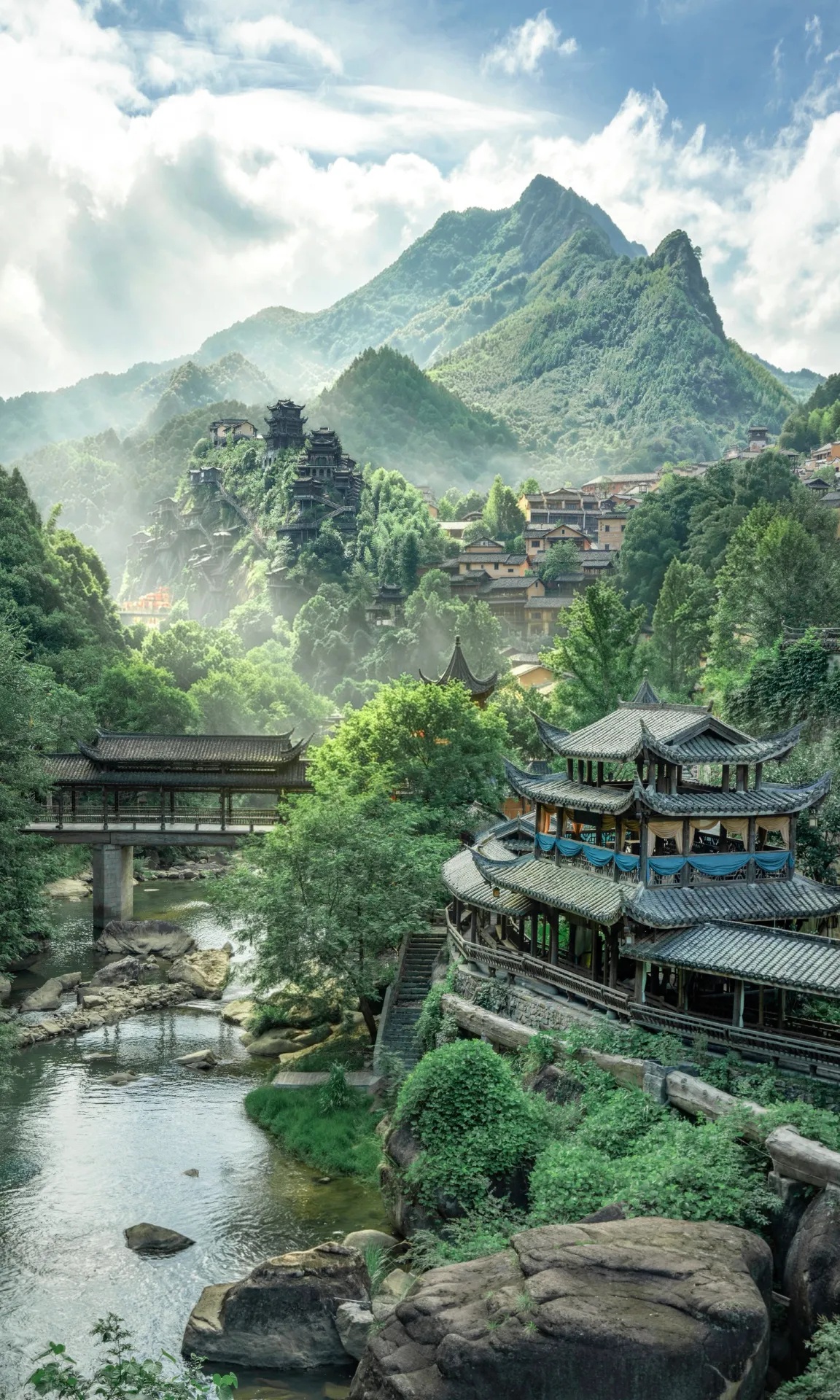
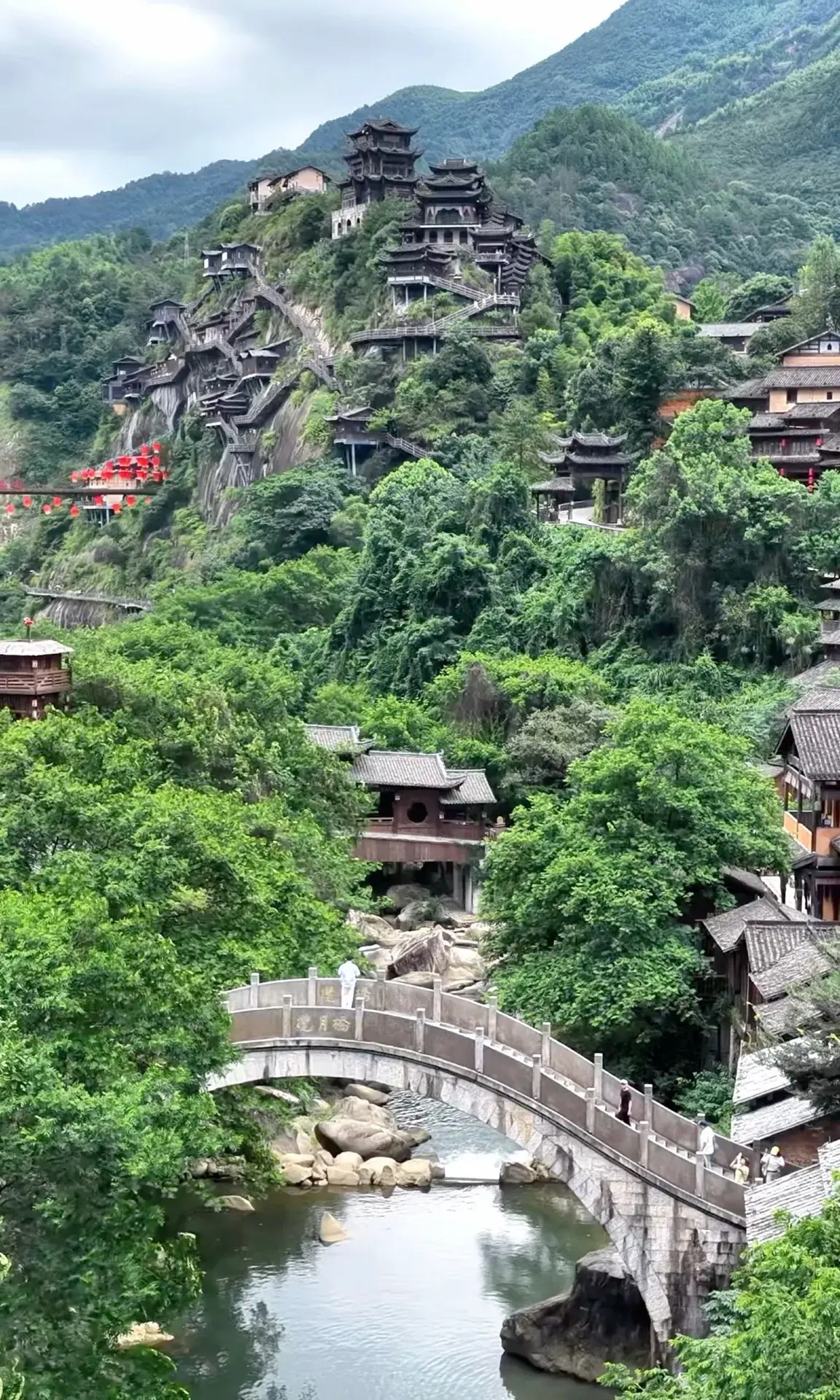
Begin by looking at the valley from different heights. At stream level, bridges and rocks provide a foreground for the buildings above; from an open viewing area, the roofs become a pattern against the green slopes. Allow time between viewpoints so that the walk remains enjoyable in warm or humid weather.
The photographs show how cloud and mist can soften the mountains. Such conditions cannot be guaranteed, and rain also changes the walking experience. Choose sheltered pauses when needed and keep to marked paths on wet steps and bridges.
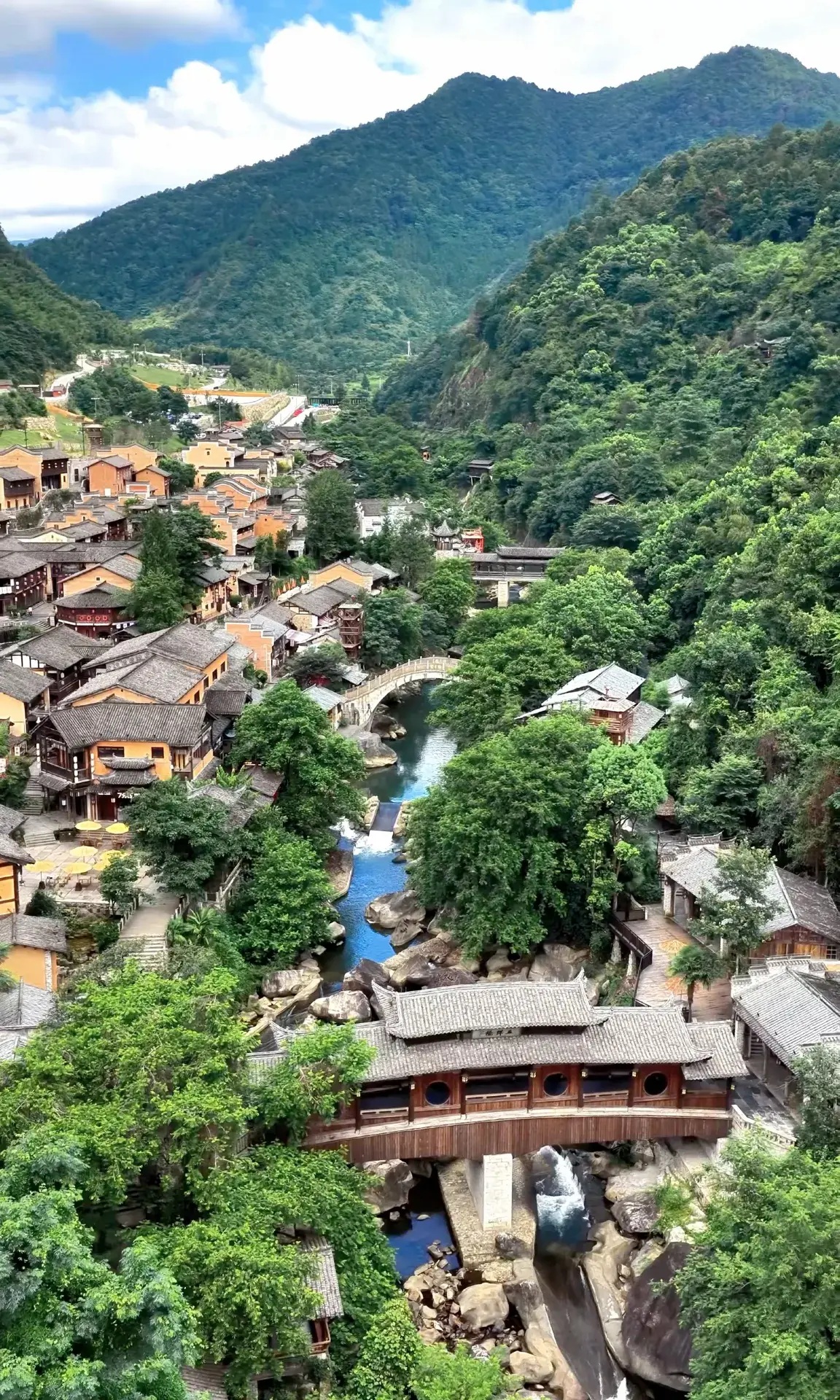
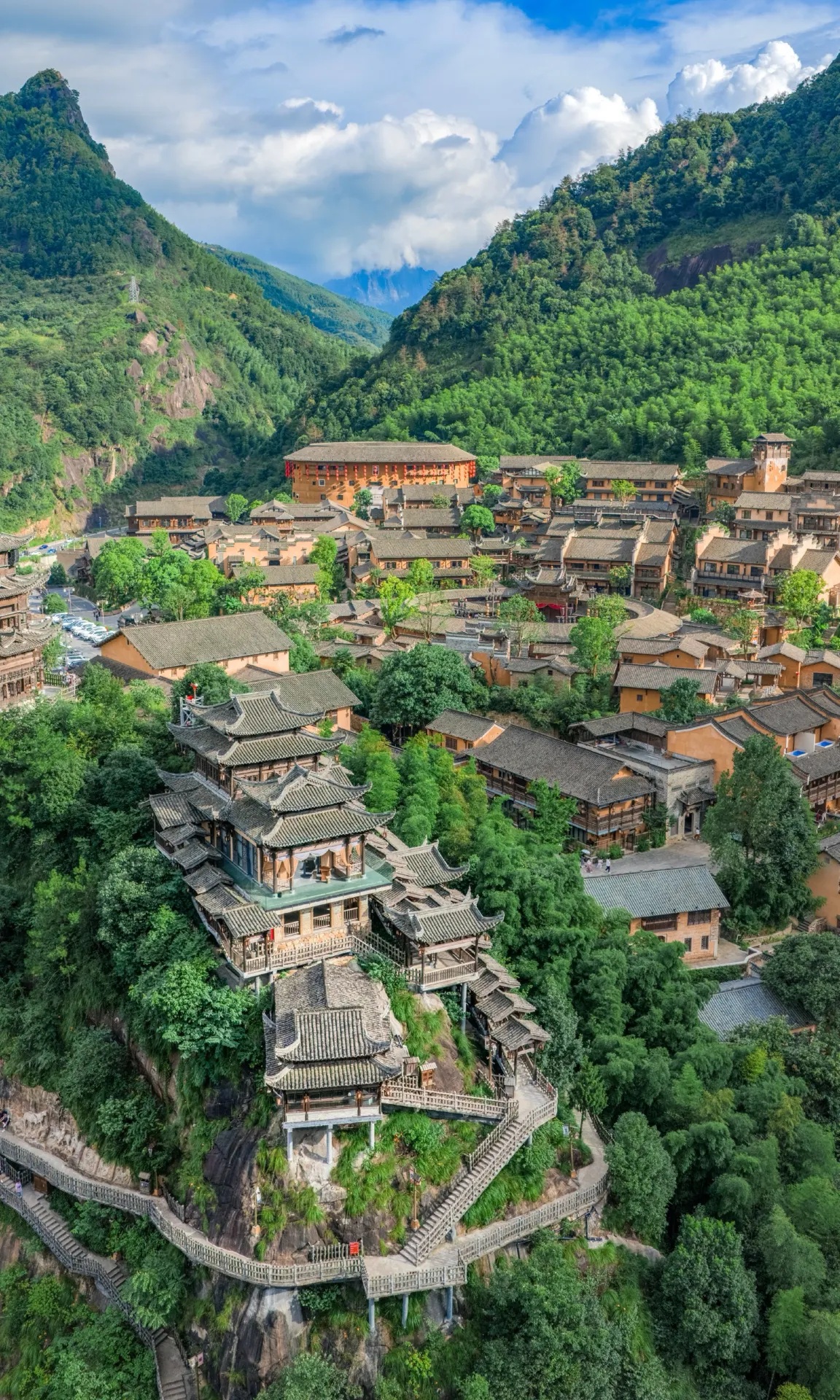
Chaohe Tower is a useful name to look for on the visitor map when seeking an overview of the valley. At Baige Bridge, the views towards Baihe Cliff and Lanyue Bridge offer a different relationship between the water and the cliff buildings. Use local signs to choose the open approach on the day.
Yangxian Village offers another change of scale, with yellow-toned walls and dark tiled roofs. Chengyuan Tower is worth considering towards evening, when the changing sky can add depth to the architecture. These are options to work into your walk rather than a rigid sequence requiring every stop.
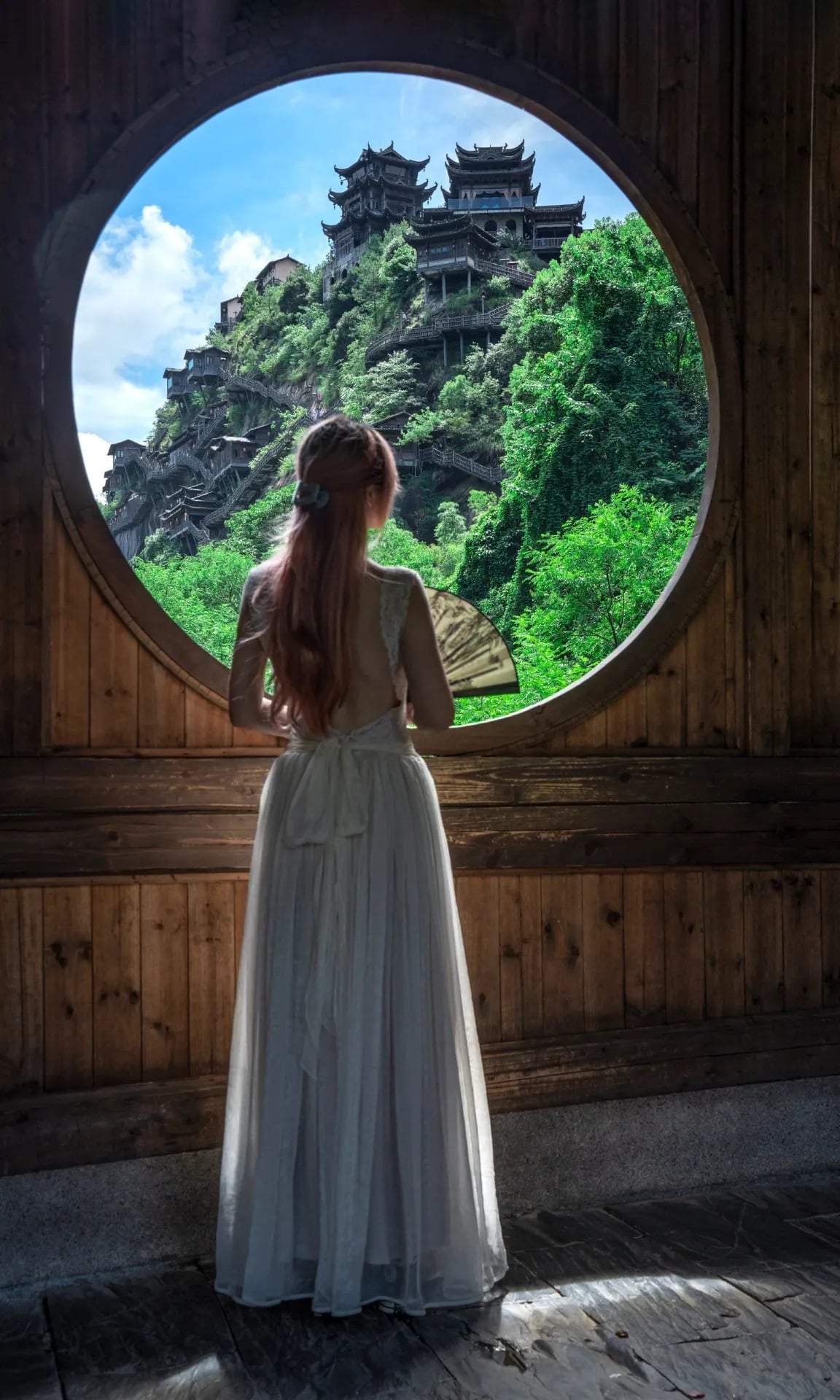
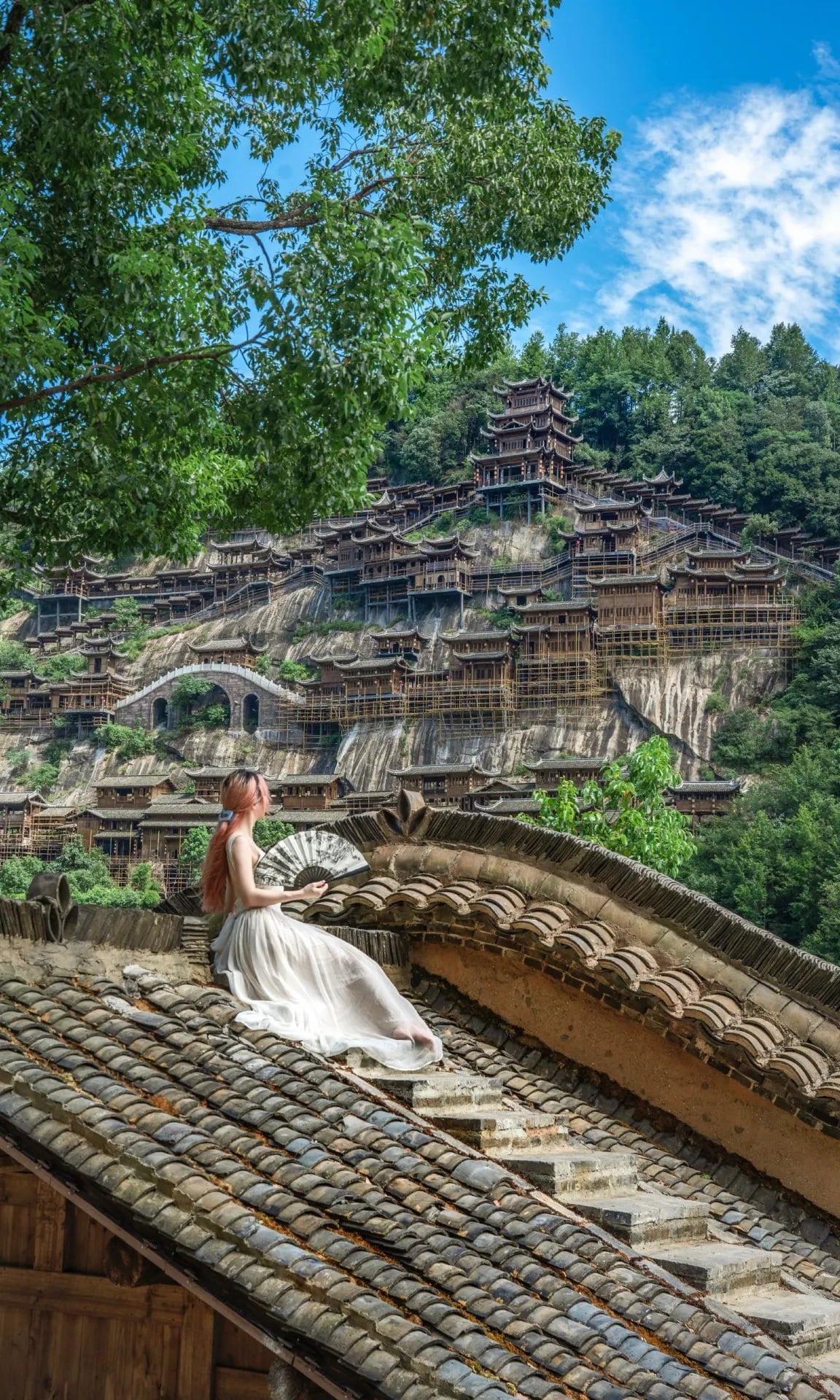
For portraits, use permitted viewpoints and photo settings. A circular window or roofline can frame the landscape, but an attractive picture does not make a roof or cliff edge a safe place to stand. Follow staff instructions and keep narrow routes clear for other visitors.
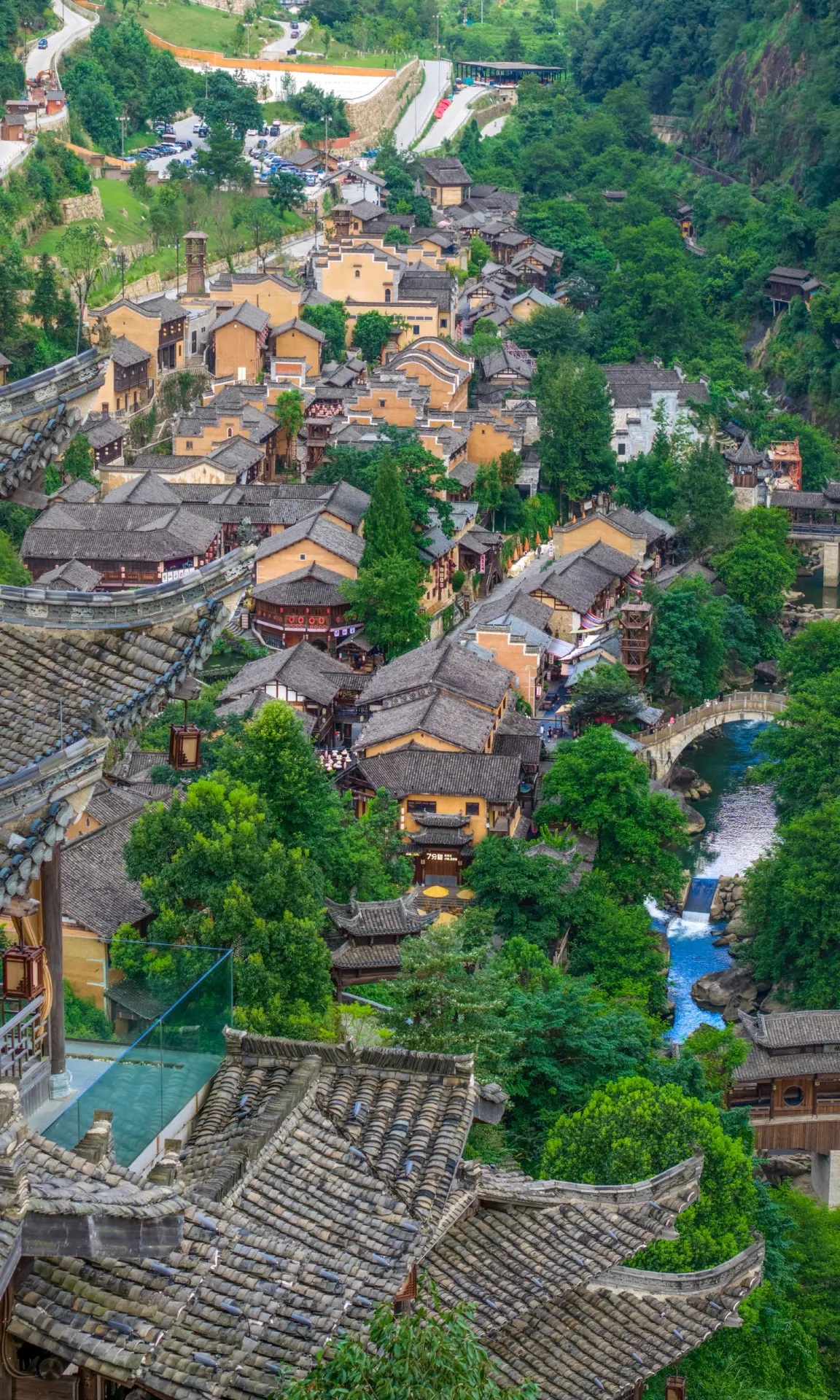
Give yourself time to settle into a viewing area before the lights become the main attraction. Dusk offers a short transition in which the mountains remain visible while the buildings begin to glow. Later, the strongest contrast comes from the illuminated architecture against the dark cliff.
The Wangxian Chengque evening presentation is associated with the lighting of Yunhai Cliff. Potential viewing areas include the ancestral-hall square, the entrance to Mingchan Lane and the viewing platform on Yanpu Middle Road, subject to access and staff directions. Check the current programme before deciding where to wait; lighting and performance times change with the season and operating arrangements.
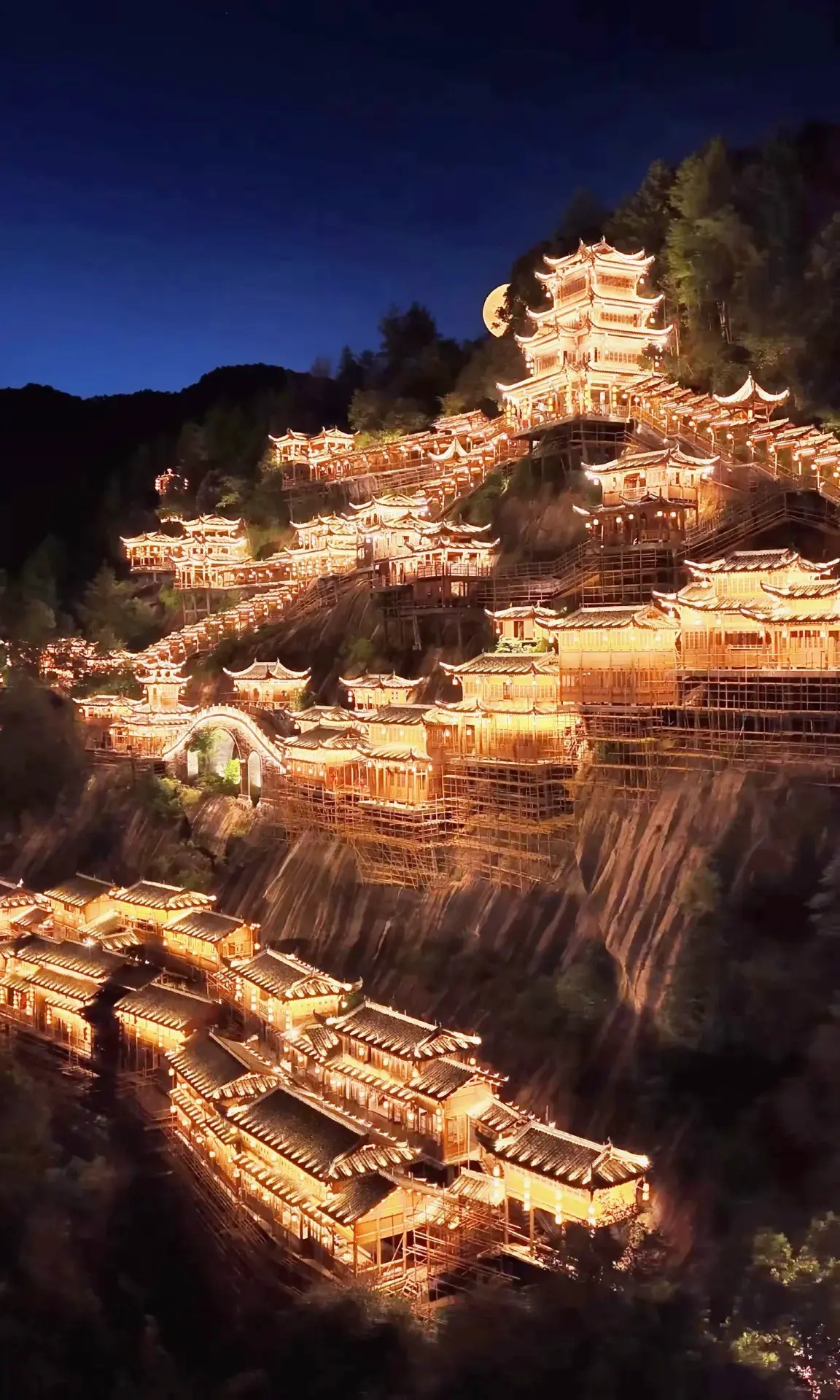
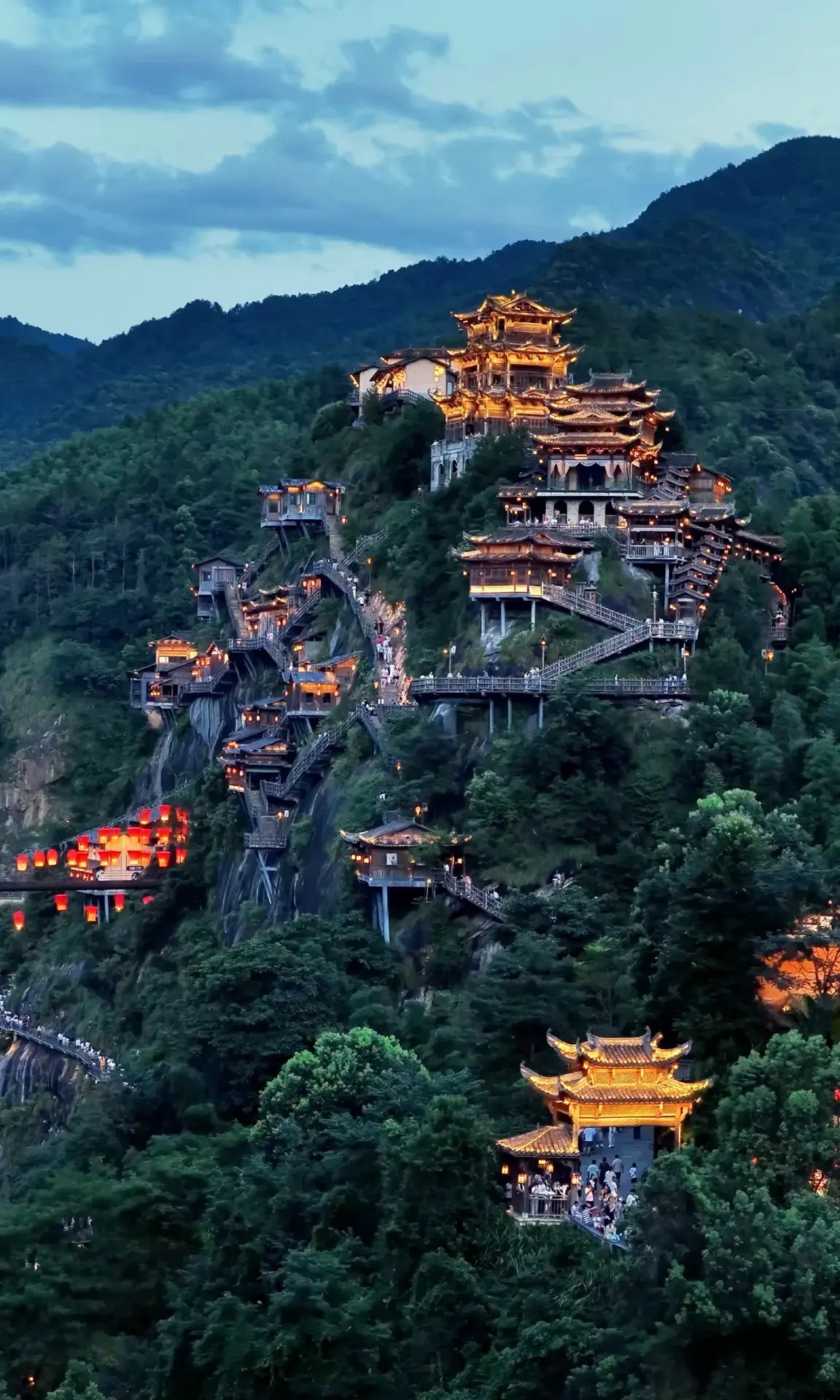
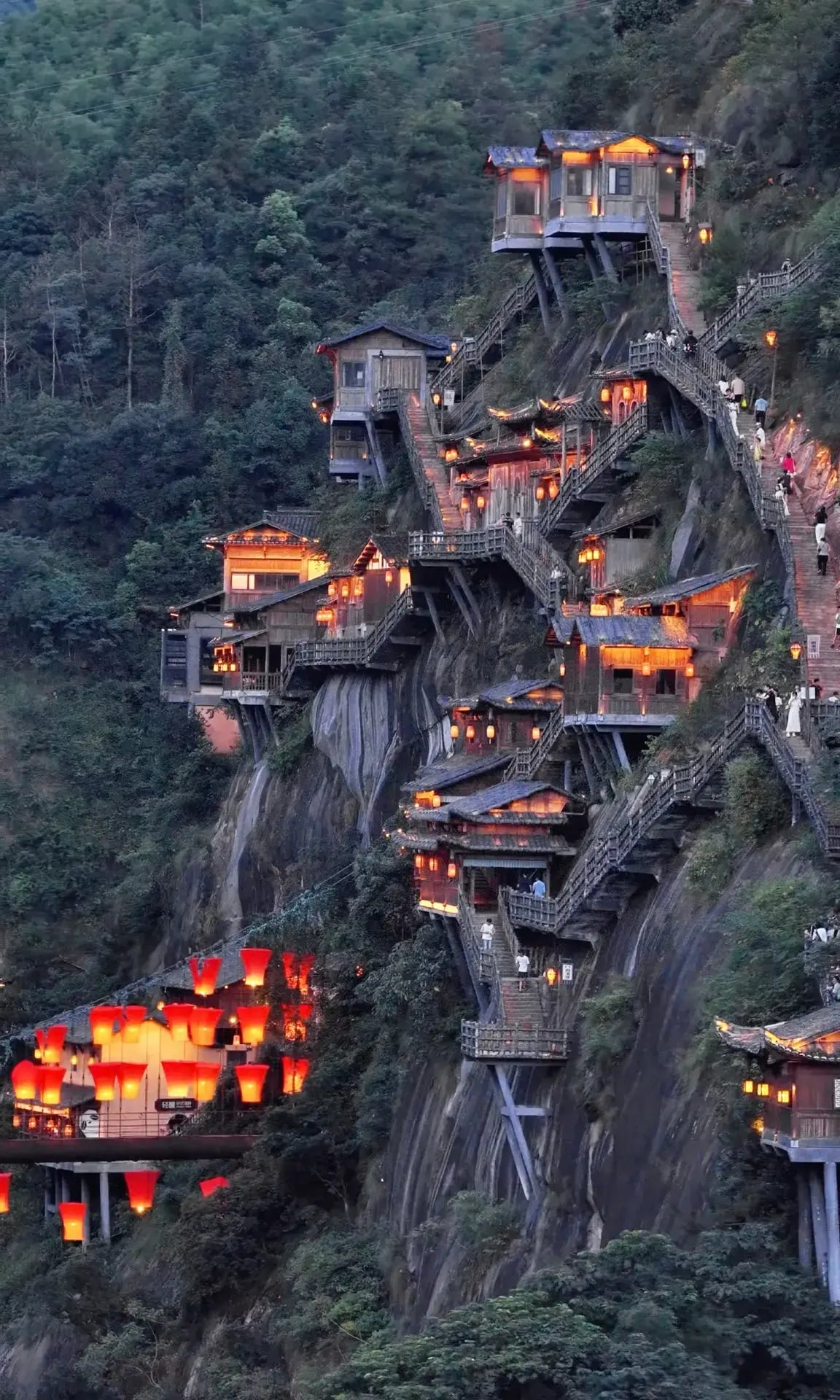
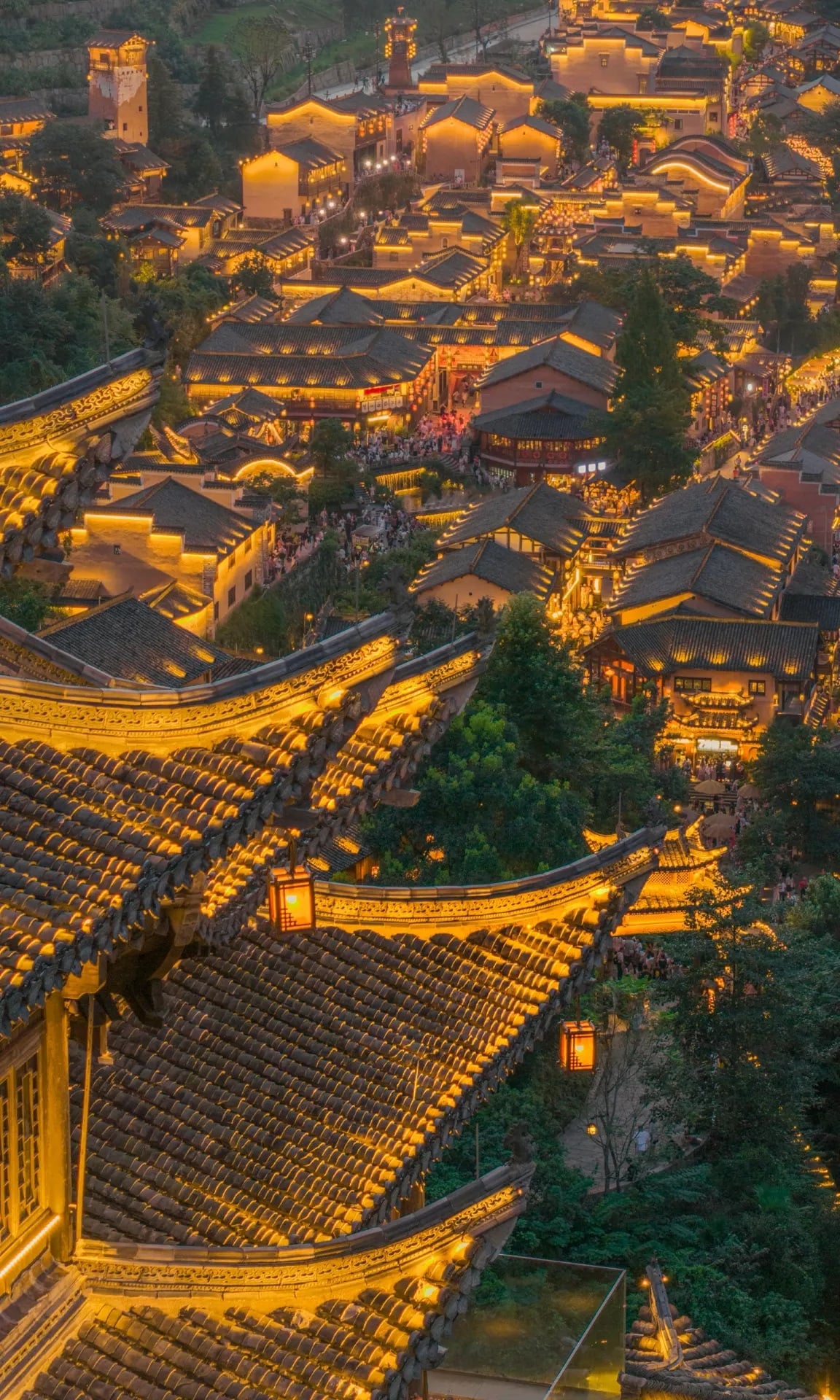
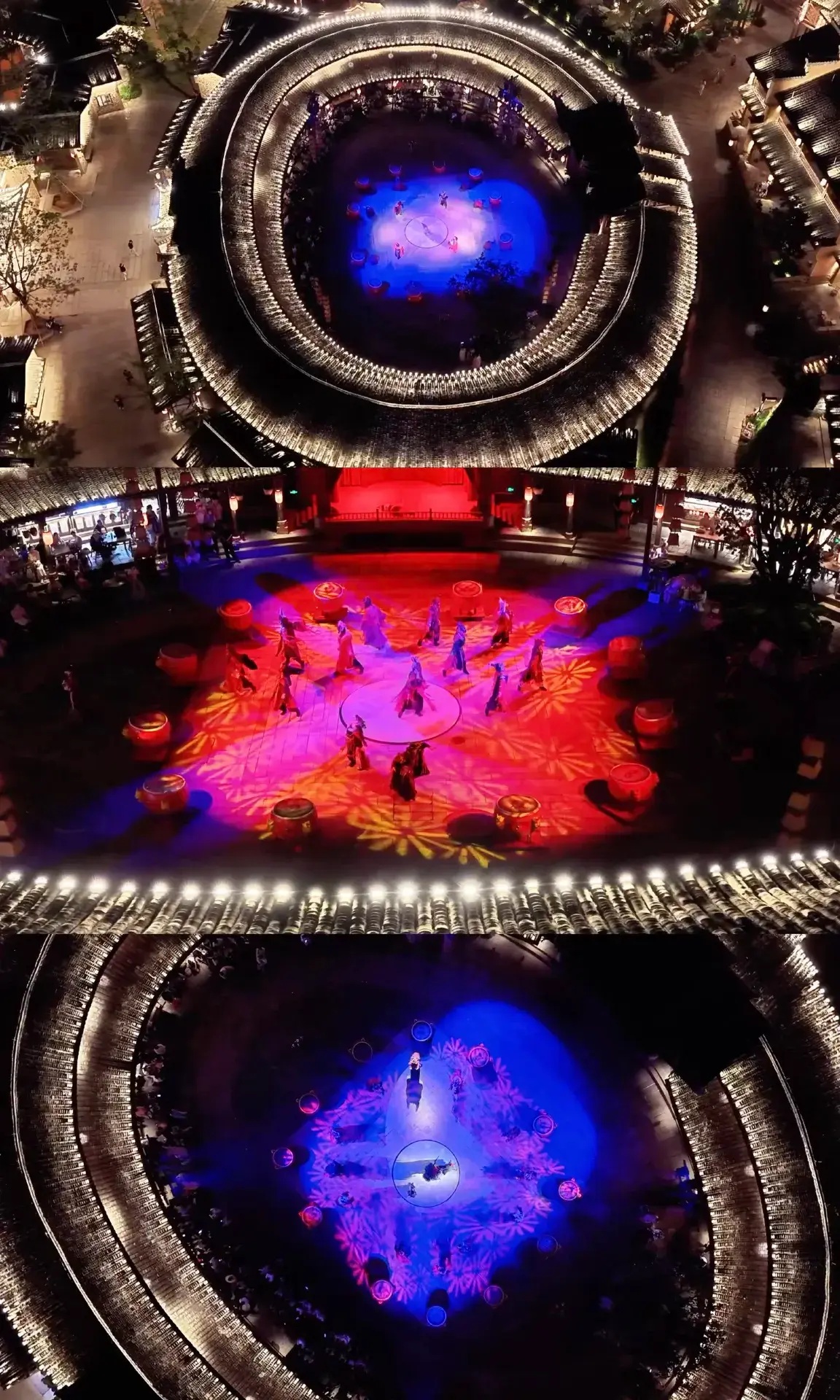
The entertainment is part of the destination rather than simply a background to the photographs. Look for the day’s programme for Qianmen Rugu and Qianmen Poju, which bring interactive drama into the streets, and Nuo Mian Shi’er Xiang, a performance drawing on masked Nuo traditions. Participation and understanding of the story may depend on Chinese-language dialogue.
Yangfu Qitan offers an immersive theatre setting with costumes, sets and dramatic lighting. If it appeals, confirm the session, admission conditions and any separate reservation. An indoor performance can also give the walking itinerary a pause, although you should not assume that every theatre runs continuously or has seats available.
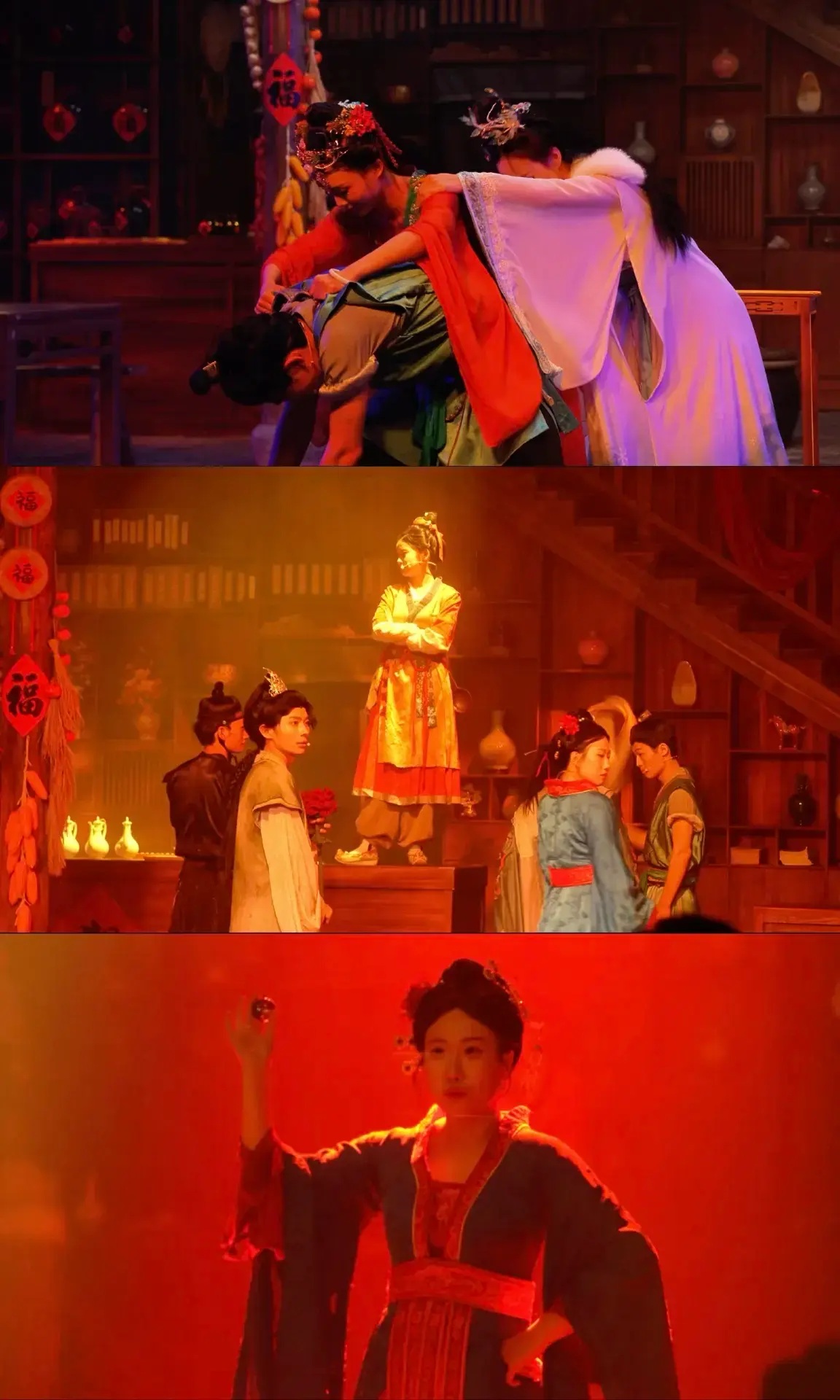
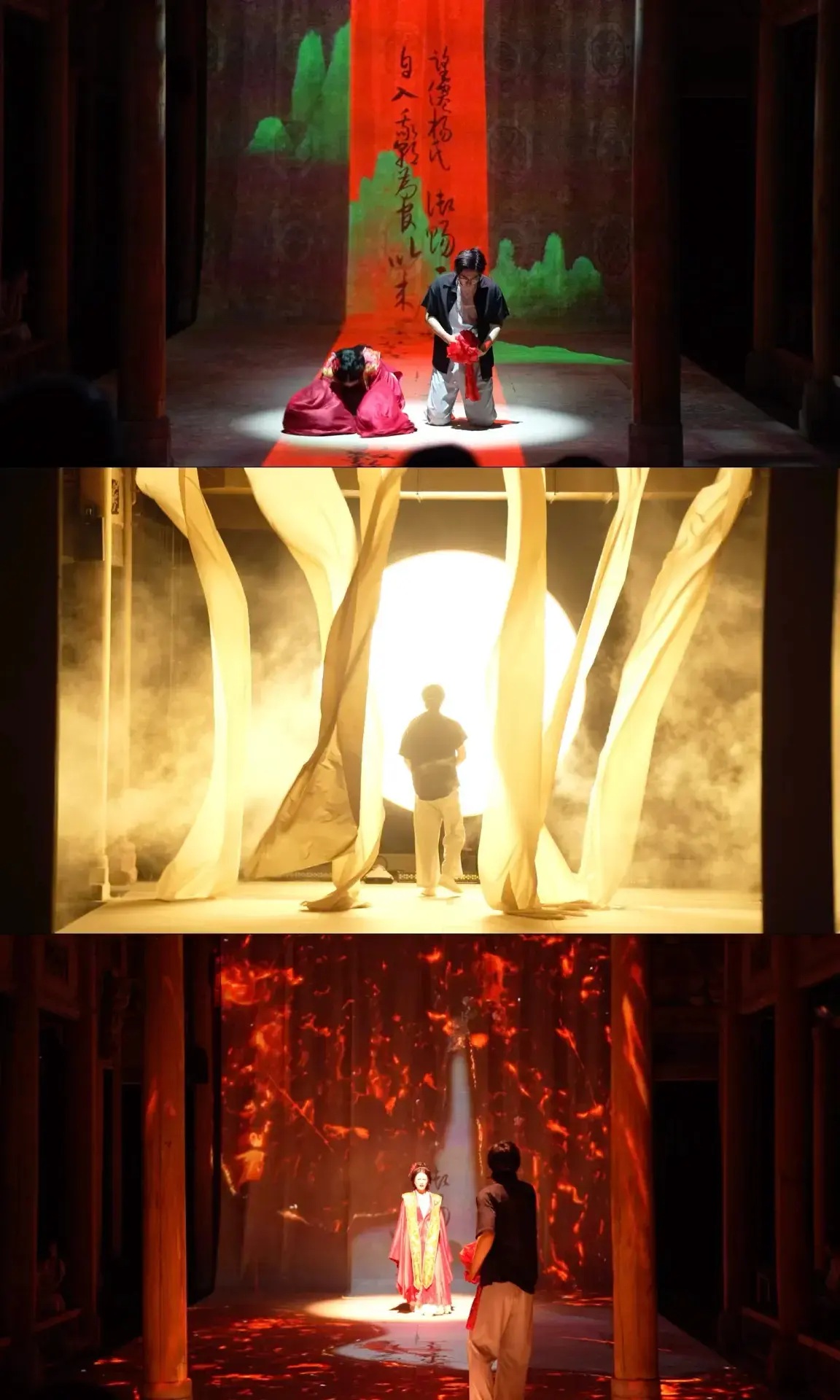
The Wangxian Ranmeng bonfire gathering adds a more communal evening atmosphere. Outdoor events may change in wet weather, and a photographed scene is not a guarantee of the programme on another date. Choose one or two priorities and leave enough time to walk between venues.
Read the current schedule at arrival and ask staff about language support, suitability for children and entry rules. Keep away from performance boundaries and follow crowd-management directions around fire and stage effects.
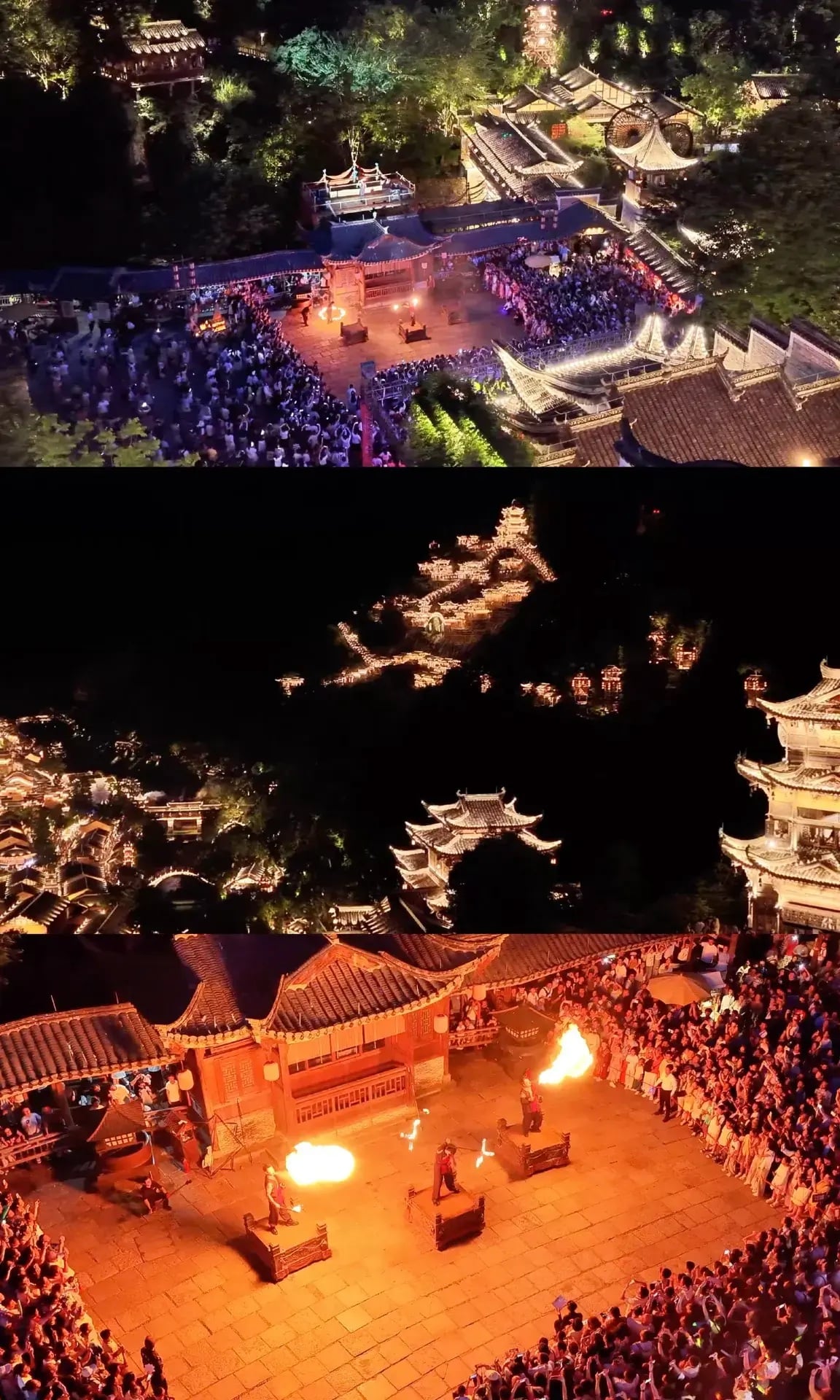
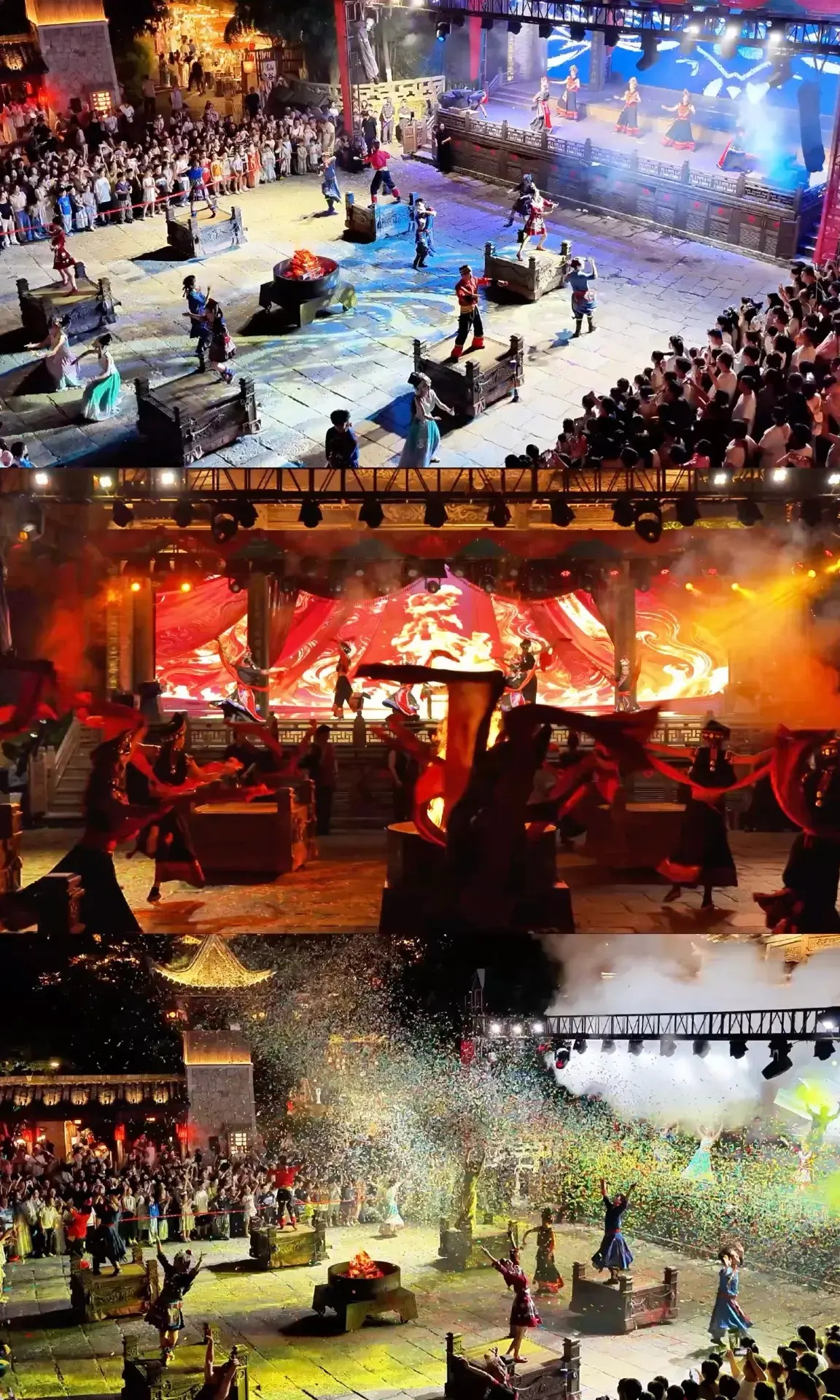
Leave space for a meal or snacks between sightseeing and the evening shows. Compare menus before ordering rather than assuming prices across the scenic area are identical. Ask about ingredients and spice levels if needed, and plan a seated break when the day is hot.
After a late evening, the next morning need not become a checklist. Return to a favourite bridge, look at details in the streets or find a quieter view of the stream. The same roofscape that glows gold at night becomes a study of timber, tiles and greenery in daylight.
Shangrao railway station is a practical arrival point for travellers using high-speed rail. Scenic-area coaches connect the station-side Shangrao East Coach Station with Wangxian Valley; consult the current operator timetable and booking channel for your date. Allow time to find the boarding point after leaving the train.
For a day visit, check the return service before committing to the last evening show. A bus timetable and the scenic area’s closing time are separate matters. If travelling by car, navigate to the official visitor parking area and confirm the entrance and onward walking arrangements.
Check the official ticket and accommodation information for your dates, including opening hours, last entry, identification requirements and which experiences need an additional booking. Overseas visitors should confirm how to register passport details if the booking platform requests a Chinese identity number.
Staying inside the scenic area can make an evening visit easier, but confirm where the room is located, how luggage reaches it and what the package actually includes. Cliffside rooms are only one type of accommodation; a picturesque location may involve steps or a longer walk.
Weekdays outside school holidays can be a sensible starting point when looking for a less crowded visit, though weather, weekends and special events still influence demand. Do not plan around guaranteed solitude or a guaranteed misty morning. Comfortable footwear, a light rain layer and a charged phone will be more useful than rushing between every photo spot.
The most satisfying plan leaves room for both versions of Wangxian Valley: the green gorge and its water by day, then the illuminated cliffs and performances after dark. An overnight stay gives those changes time to unfold.