
Suzhou’s classical gardens are places to explore slowly. A doorway reveals a pond, a corridor leads into a courtyard, and a window turns a patch of bamboo into a framed view. Their appeal comes from how water, rocks, plants and buildings work together within a carefully arranged space.
For most first-time visitors, we recommend one main garden, with an optional second garden chosen for contrast. Start with the Humble Administrator’s Garden if your day centres on the northeastern old city and Pingjiang Road. Choose the Lingering Garden if a western old-city route works better. Add a smaller garden such as the Master of the Nets Garden when you want to compare scale and detail.
You do not need to visit every famous garden to understand why Suzhou is special. This guide compares the main choices, explains how to combine them with the surrounding city and helps you plan reservations, walking and breaks.
For the wider trip, see our Suzhou Travel Guide.
Which Suzhou Garden Should You Choose?
| Your priority | Our suggested starting choice | Why we would consider it |
|---|---|---|
| A first introduction with ponds and broad garden views | Humble Administrator’s Garden | A substantial main visit that fits the northeastern old-city route |
| Architecture, courtyards and changing enclosed spaces | Lingering Garden | A varied sequence of buildings, corridors, water and rocks |
| A compact garden with carefully composed views | Master of the Nets Garden | A useful contrast to a larger garden |
| Rock formations and winding rockery paths | Lion Grove Garden | A distinctive visit for people particularly interested in garden rockeries |
| A different garden setting and an older garden tradition | Canglang Pavilion | A rewarding alternative for a longer stay or repeat visit |
| A residential garden near the eastern old-city lanes | Couple’s Retreat Garden | A different garden-and-neighbourhood combination |
| A smaller garden within old-city lanes | Garden of Cultivation | A choice for visitors comfortable finding a less obvious entrance |
| A special interest in rockery design | Mountain Villa with Embracing Beauty | A focused option for garden enthusiasts after checking current access |
| A garden within a separate water-town outing | Retreat and Reflection Garden in Tongli | Fits a Tongli visit rather than a central Suzhou garden circuit |
These are planning recommendations, not a ranking. Your route, interests and walking comfort should decide the choice.
How Many Gardens Should You Visit?
If you have half a day
Choose one garden and a nearby meal or short walk. Allow for the approach, entry process and a break.
Trying to visit two gardens in a short sightseeing window often leaves too little time to enjoy either. It can also make your return train or next booking less comfortable.
If you have one full day
Choose one main garden and a canal neighbourhood. Add a second garden only if garden design is your main interest and you are willing to reduce another part of the day.
For a general first visit, we would usually favour the garden, a proper lunch and Pingjiang Road or Shantang Street.
If you have two days
One garden on each day is a comfortable starting plan. The Humble Administrator’s Garden and Lingering Garden can work well because they fit different sightseeing areas.
If you prefer a greater difference in scale, pair one of those main gardens with the Master of the Nets Garden on a separate outing.
If you are particularly interested in gardens
Three or more visits can be worthwhile over a longer stay. Choose them for different layouts, settings and rockery styles, and leave a meal or another experience between visits.
A guide who can explain the design may add more to your understanding than another admission ticket.
What Makes a Suzhou Classical Garden Different?
A classical garden is more than a collection of ornamental plants. Its spaces were designed to create an experience of landscape within the surroundings of a residence.
Water gives the eye somewhere to rest. Rocks suggest mountains and introduce texture. Buildings provide shelter and viewpoints. Plants change the scene through the seasons, while walls and passages shape what you can see.
UNESCO’s Classical Gardens of Suzhou World Heritage property comprises nine gardens, inscribed in 1997 and extended in 2000. They represent a tradition of creating landscape within limited urban space.
That does not mean every garden in Suzhou belongs to the World Heritage property, or that every listed garden is equally convenient for a first visit. Recognition is useful context; your itinerary still needs practical choices.
Look for these details during a visit
- Framed views: a doorway, window or opening that draws attention to a particular scene.
- Changing viewpoints: a pond or building that appears different after a few steps.
- Connections between spaces: a corridor that links a residential room with a garden courtyard.
- Rock and water together: contrasting surfaces, reflections and the suggestion of a larger landscape.
- Seasonal details: leaves, flowers, shade and light that change the garden’s appearance.
You do not need specialist vocabulary to enjoy these things. Pause at a few viewpoints and notice what the designer has brought into view.
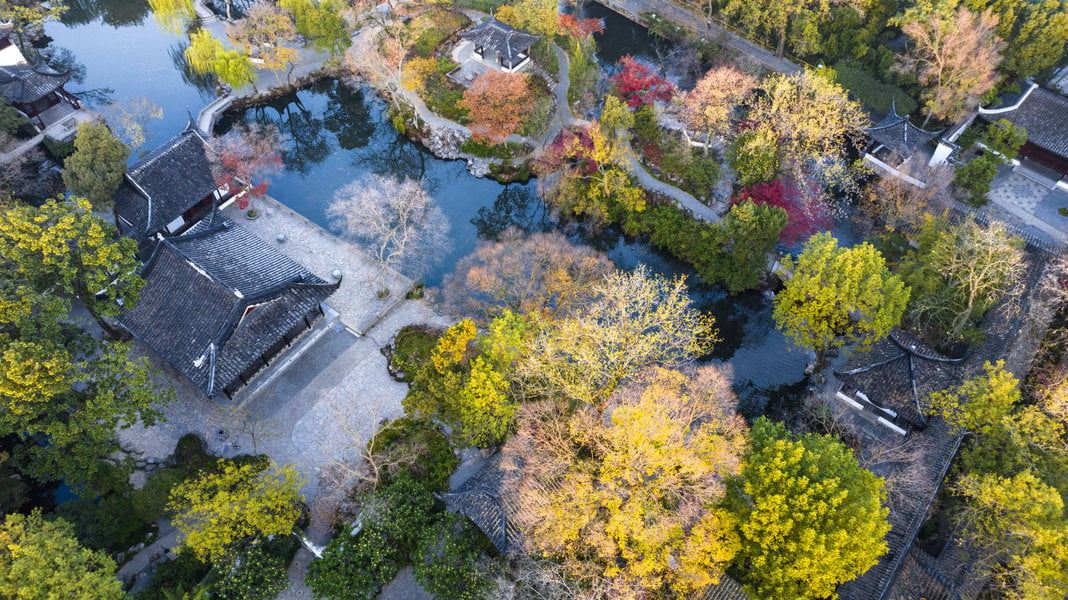
1. Humble Administrator’s Garden: A Main First-Visit Choice
Choose this garden if you want a substantial introduction that fits the northeastern old city.
The Humble Administrator’s Garden is known for its water-centred landscape, pavilions and relatively open garden views. It makes a natural main visit when your wider plan includes the main Suzhou Museum or Pingjiang Road.
The different parts of the garden give you more to explore than a single pond-side photograph. Follow the permitted visitor route, pause around the water and look at how the passages and buildings frame the next scene.
What to notice
Look for changes between broad views and smaller spaces. Watch how a pavilion, bridge or planted edge appears in relation to the water, then compare the view from another position.
If the busiest viewpoints are crowded, move on and return where the route permits. Waiting for one photograph should not consume the visit.
How long should you allow?
We suggest roughly two to three hours for a leisurely first visit, excluding transport and significant entry queues. This is an editorial planning allowance, not a required visit length.
Families and travellers who tire easily may prefer a shorter selected route. Garden enthusiasts may want longer.
What are the trade-offs?
This is a prominent attraction, and popular dates can be busy. Its size also means more continuous walking than a brief garden stop.
Arrange admission in advance and choose the rest of the day around the confirmed entry window. An earlier visit may suit your pace or photography, but it does not guarantee empty paths.
How should you combine it?
Pair it with lunch and Pingjiang Road. Add the main Suzhou Museum only if you have a suitable reservation and enough time to reduce another part of the day.
Our recommendation: use it as the principal attraction of an eastern old-city day. Keep Lion Grove Garden as a deliberate alternative or extra visit for enthusiasts.
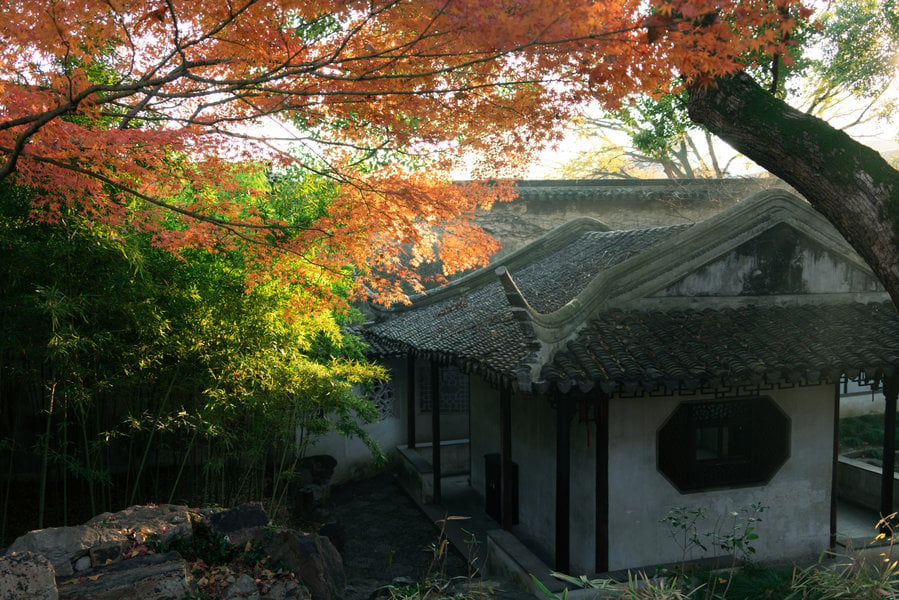
2. Lingering Garden: Courtyards, Corridors and Architecture
Choose this garden if you enjoy the relationship between buildings and landscape.
The Lingering Garden offers a varied sequence of halls, courtyards, covered passages, water and rock compositions. It is particularly rewarding when you pay attention to how one space leads to another.
It also fits a different part of the city from the Humble Administrator’s Garden, making it useful for a western sightseeing day.
What to notice
Compare the more enclosed architectural spaces with the water and rock scenes. Look through openings before walking through them, and notice how walls separate views while corridors reconnect them.
Take time with the rock compositions instead of treating them as background decoration.
How long should you allow?
We suggest about one and a half to two and a half hours, excluding transport and substantial queues. Your interest in the rooms and details will affect the length.
What are the trade-offs?
A succession of narrow passages and popular viewpoints can feel busy even when the overall garden is not crowded throughout.
Covered corridors provide shelter in places, but the visit still includes outdoor sections, paving and thresholds. Do not assume it is fully step-free.
How should you combine it?
Combine the garden with lunch and a later Shantang Street visit. Use transport where the connection is more comfortable than walking.
Tiger Hill can be an additional attraction for a fuller day, but it should not be added automatically.
Our recommendation: a strong alternative to the Humble Administrator’s Garden, or a worthwhile second main garden on another day.
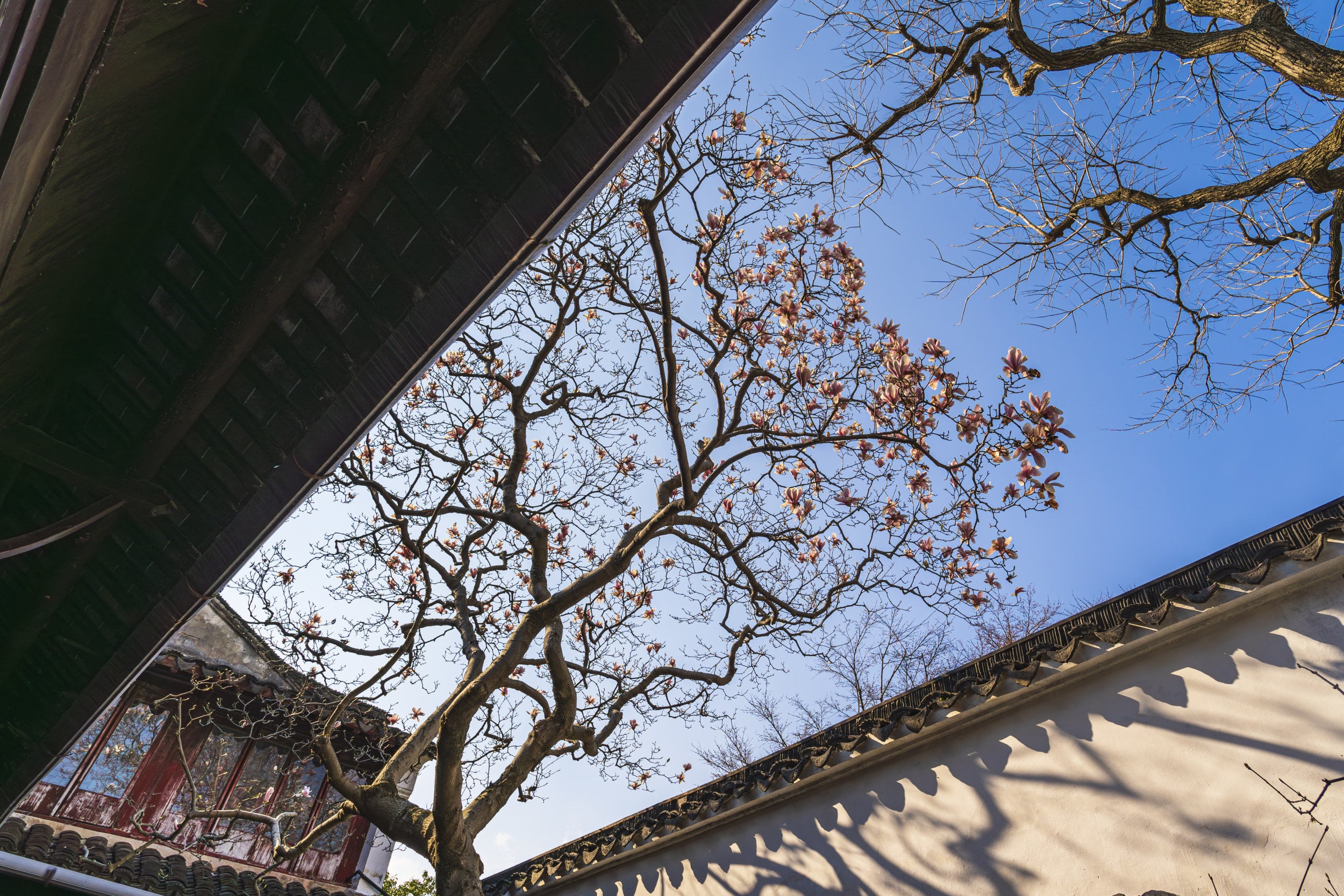
3. Master of the Nets Garden: A Compact Contrast
Choose this garden if you want to spend time with a smaller, carefully composed landscape.
The Master of the Nets Garden, also called the Master-of-Nets Garden, brings residential buildings and garden spaces together around a central pond. Its compact scale makes it useful for comparing how a smaller garden creates depth and variety.
It rewards a patient visit. A quick circuit may miss the relationships between rooms, openings, the pond and the structures around it.
What to notice
Look at the proportions of the pond-side spaces and the views from different positions. Notice how small openings and changes in direction extend the experience beyond the garden’s physical size.
How long should you allow?
We suggest one to one and a half hours for a selected daytime visit, excluding the approach and any queue. Give it more time if you want detailed interpretation or photography.
What are the trade-offs?
A small garden is not automatically a quiet one. Popular dates, seasonal flowers and concentrated visitor groups can make compact spaces feel crowded.
Its size also does not establish accessibility. Confirm the route if thresholds or steps are a concern.
What about the night garden?
Night visits and cultural programmes may be available as separate products. They can offer a different atmosphere, but their routes, programme and admission arrangements may differ from a daytime visit.
Confirm the current date, session, language support and ticket inclusions. Do not assume a daytime ticket includes an evening programme.
Our recommendation: a useful second garden after a larger one, or a main choice for visitors who prefer a shorter, detailed visit.
4. Lion Grove Garden: Choose It for the Rockeries
Choose this garden if its rock landscape is one of your reasons for visiting Suzhou.
Lion Grove Garden is known for its limestone rockeries, winding paths and cave-like passages. The rock formations give it a distinctive character compared with a visit centred primarily on broad pond views.
You can appreciate the rockery composition without trying every passage. Choose the permitted route that suits your group rather than treating it as a challenge to complete.
What to notice
Look at the relationship between the rocks and the surrounding buildings and water. From a more open viewpoint, consider how the rockery creates the impression of a larger landscape.
Inside the permitted passages, pay attention to changing views and directions rather than rushing.
How long should you allow?
We suggest one to two hours, depending on the route, queues and how much of the rockery your group wants to explore.
What are the trade-offs?
Narrow, uneven or stepped rockery sections deserve careful consideration. They may be unsuitable for a pushchair, limited mobility or visitors uncomfortable in tight passages.
Children may find the route interesting, but need close supervision. Wet conditions can make stone surfaces more difficult.
How should you combine it?
Its northeastern old-city location allows a pairing with Pingjiang Road and lunch. For a general first visit, choose it instead of another main garden rather than adding several nearby admissions.
Our recommendation: choose it for a clear interest in rockeries. It is not our automatic additional stop after the Humble Administrator’s Garden.
5. Canglang Pavilion: A Different Garden Setting
Choose this garden if you want to explore beyond the two most familiar first-visit choices.
Canglang Pavilion is associated with an early chapter in Suzhou’s garden history. Its water-side approach and wooded, rocky garden setting provide a different experience from a large pond-centred circuit.
It is useful for visitors who enjoy looking at how a garden relates to the space around it, as well as the scenes inside.
What to notice
Pay attention to the approach, the boundary between water and garden, and the movement between planting, rocks and buildings.
A slower visit can help you appreciate the setting without needing a long list of named viewpoints.
How long should you allow?
We suggest one to one and a half hours, with additional time for the approach and a nearby meal or neighbourhood walk.
What are the trade-offs?
Its different atmosphere does not remove the need to check steps and the actual route. Avoid choosing it purely on the assumption that it will be quiet or easier to walk.
How should you combine it?
Build a southern old-city outing around the garden and a meal. The Master of the Nets Garden can be considered on the same wider day if you want two smaller visits, but check the connection and include a break.
Our recommendation: a worthwhile alternative for a longer stay, repeat visit or deliberate comparison of garden settings.
6. Couple’s Retreat Garden: A Garden-and-Neighbourhood Visit
Choose this garden if its residential setting and eastern old-city surroundings appeal to you.
The Couple’s Retreat Garden, also called the Couple’s Garden Retreat, offers another way to combine a garden visit with the historic lanes of eastern Suzhou.
Use it as a considered choice rather than a promise of a hidden, empty attraction. It can fit well when you want a different garden selection near the wider Pingjiang area.
What to notice
Look at the relationship between the residential spaces and the gardens, and how the route moves between built rooms and outdoor scenes.
Take the surrounding neighbourhood into account when planning your approach. A garden in old-city lanes requires a more precise destination than a general district name.
How long should you allow?
We suggest one to one and a half hours, excluding the approach and queues.
What are the trade-offs?
Lane access, thresholds and individual garden paths need checking. A smaller or less standard attraction does not guarantee a simple vehicle drop-off or a step-free visit.
How should you combine it?
Pair it with a selected Pingjiang Road walk and lunch. If you choose it after another garden, reduce the rest of the day rather than adding it to a full museum-and-canal programme.
Our recommendation: an alternative eastern garden for visitors who are interested in the setting or have already visited the better-known choices.
7. Garden of Cultivation: A Smaller Garden in Old-City Lanes
Choose this garden if you are comfortable navigating to a less obvious entrance and want another compact landscape.
The Garden of Cultivation, or Yipu, centres its garden composition on a pond within a relatively small site. It is useful for visitors who want to look closely at the arrangement of water, buildings and garden edges.
The approach through the old city is part of the practical planning. Save the exact location and entrance before setting out.
What to notice
Look at how the pond connects the surrounding spaces and how its edges influence the view. Notice changes between the garden and the residential approach.
How long should you allow?
We suggest one to one and a half hours, plus time to find the entrance and reach the next stop.
What are the trade-offs?
The entrance can be less obvious than those of the major attractions. Confirm the current access arrangements rather than relying on a general map label.
It can attract visitors seeking a smaller garden experience, so avoid describing it as reliably empty.
How should you combine it?
Use it as a selected old-city visit with lunch and a neighbourhood walk. If combining it with Shantang Street or another garden, check the route and use a transfer when that improves the day.
Our recommendation: a useful choice for a repeat visit or a garden enthusiast, without making it a compulsory first-trip stop.
Other Gardens for a Longer or More Specialised Visit
Mountain Villa with Embracing Beauty
The Mountain Villa with Embracing Beauty, or Huanxiu Shanzhuang, is particularly relevant to visitors interested in rockery composition.
Check current public access, the visitor route and any restrictions before arranging the day. Do not assume that World Heritage status guarantees access to every rockery passage.
Consider it as a focused addition to a longer visit, rather than building a short first itinerary around an unconfirmed entry.
Retreat and Reflection Garden in Tongli
The Retreat and Reflection Garden, or Tuisi Garden, belongs to the World Heritage property and sits in Tongli.
It can make a water-town outing more rewarding for a garden enthusiast. However, Tongli requires a separate transport allowance from central Suzhou.
Plan it within a Tongli day. It is not another nearby admission to add between central gardens.
Garden Names for Maps and Bookings
English translations vary. Save the Chinese name and the specific address or entrance from your booking.
| English name used in this guide | Chinese name |
|---|---|
| Humble Administrator’s Garden | 拙政园 |
| Lingering Garden | 留园 |
| Master of the Nets Garden | 网师园 |
| Lion Grove Garden | 狮子林 |
| Canglang Pavilion | 沧浪亭 |
| Couple’s Retreat Garden | 耦园 |
| Garden of Cultivation | 艺圃 |
| Mountain Villa with Embracing Beauty | 环秀山庄 |
| Retreat and Reflection Garden, Tongli | 退思园 |
A place name identifies the garden. It does not establish where a taxi can stop or which entrance your ticket requires.
Four Practical Ways to Plan Your Garden Route
These are suggested sightseeing combinations, not measured walking trails. Verify the connections on a current map and adapt them to your hotel, admission windows and walking comfort.
Route 1: one main eastern garden and Pingjiang Road
Suggested plan: Humble Administrator’s Garden → lunch → a selected Pingjiang Road walk.
This is our simplest recommendation for a first visit with one garden. It gives the garden a meaningful morning and leaves time to enjoy the city beyond its entrance.
Add the main Suzhou Museum only if you have a suitable reservation. Allow a proper visit there and shorten the later canal walk. The main museum and Suzhou Museum West are separate sites.
Best for: a general first visit, a focused day trip or visitors who want a balanced mix.
Route 2: the Lingering Garden and Shantang Street
Suggested plan: Lingering Garden → lunch and a break → Shantang Street.
Use transport where the connecting walk adds unnecessary effort. If staying overnight, a later canal walk can fit well after a rest.
Tiger Hill can be considered for a fuller day, but it adds another substantial visit. For a relaxed route, keep the garden and canal neighbourhood as the main experiences.
Best for: visitors choosing the western side of the city, or a second day after an eastern outing.
Route 3: two smaller gardens with a proper break
Suggested plan: Canglang Pavilion → lunch → Master of the Nets Garden, or the reverse according to opening times and your base.
The two gardens allow a comparison of settings and scale without making a larger garden the centre of the day. Check the actual approach and connecting journey.
Keep a meal and seated break between the visits. Add a neighbourhood stroll only if the group still wants one.
Best for: repeat visitors, garden enthusiasts and travellers who prefer selected smaller visits.
Route 4: a two-day garden comparison
Day 1: Humble Administrator’s Garden, lunch and Pingjiang Road.
Day 2: Lingering Garden, lunch and Shantang Street.
This is a practical starting structure for two full sightseeing days. If you prefer a smaller second garden, replace the Lingering Garden with the Master of the Nets Garden and revise the surrounding route accordingly.
Best for: first-time visitors staying overnight who want to compare two main gardens without visiting them back to back.
Pair Gardens for Contrast
| Pairing | What you can compare | Planning consideration |
|---|---|---|
| Humble Administrator’s Garden + Lingering Garden | Broad water views and varied architectural sequences | Best spread across two days or a deliberately fuller day |
| Humble Administrator’s Garden + Master of the Nets Garden | A larger landscape and compact pond-centred composition | Separate sightseeing areas; arrange a sensible transfer |
| Lingering Garden + Master of the Nets Garden | Different scales and relationships between residence and garden | Include lunch and travel time between visits |
| Canglang Pavilion + Master of the Nets Garden | Different smaller-garden settings and approaches | Check the connection rather than assuming neighbouring entrances |
| One main garden + Lion Grove Garden | A broader introduction followed by a rockery-focused visit | Best for a clear interest in rocks, with sufficient energy |
| One main garden + a canal neighbourhood | Designed garden landscape and the city around it | Our usual choice for visitors with one day |
Contrast is about what you want to notice. It does not require an extra garden if your group would enjoy a different experience more.
Tickets, Reservations and Passport Entry
Book the key gardens before fixing your route
Current garden guidance identifies the Humble Administrator’s Garden, Lingering Garden and Lion Grove Garden as requiring advance online reservations.
Start with the official Suzhou garden tourism booking channels or the garden’s clearly identified entry information. Search for “苏州园林旅游” when using Chinese-language services, and check that you are using the official account or platform.
Overseas visitors should confirm the passport document option. If the form is unclear, arrange assistance before the visit rather than arriving without confirmed admission.
Requirements at other gardens and special programmes can differ. Check each selected venue and product separately.
Check the document details and admission window
Make sure the name and document number match the passport used for the booking. Save the confirmation, garden name, date and permitted entry time.
Bring the original travel document required by the venue. Ask how passport holders should enter if the confirmation does not make the process clear.
A request, waitlist or payment for a package is not sufficient evidence of confirmed garden entry. Obtain the actual admission details.
Avoid assuming that a bundle guarantees access
Some products combine admission with guiding, transport or other services. Read the inclusions and ask what happens if the garden is fully booked.
Choose a guided visit for the explanation and practical support you want, and confirm the ticket arrangements separately.
Check the current price and opening notice
This guide does not use a permanent ticket-price table. Prices, concessions, special products and opening times need checking for the actual visit.
Confirm age-based concessions and required documents before paying. Do not assume that a rule for local residents applies to every overseas visitor.
Allow enough time before last admission to enjoy the garden. The final entry time and closing time are different.
Daytime Visits and Night Gardens
A daytime visit is the most straightforward choice for examining layout, materials and the relationship between garden spaces.
A night garden may focus on lighting, performances or a particular visitor route. It can be a rewarding cultural addition, especially if you are interested in music or theatre.
Confirm the exact product before booking:
- Is it an independent evening visit or a timed programme?
- Which parts of the garden are included?
- Is a separate ticket required?
- How long does the session last?
- Is any English explanation provided?
- Are there steps, limited seating or restrictions relevant to your group?
- What happens if the weather affects the programme?
Do not treat a night garden as identical access to a daytime visit. If you want to study garden design, visit in daylight and consider the evening experience separately.
How to Enjoy a Garden Without Rushing
Start by understanding the layout
Use the entrance map or ask your guide for a simple introduction. Identify the main water area, the residential section and any paths that may involve steps.
Choose a route that suits your group. You do not need to enter every passage to appreciate the garden.
Pause before moving through a doorway
An opening often frames a deliberate view. Stop briefly where you can do so without blocking the path, then look at what becomes visible when you move.
This is a simple way to notice the design without needing a detailed architectural lesson.
Give yourself time around water
Watch reflections and the relationship between a pavilion and its surroundings. A small change in light or viewpoint can make a scene feel different.
Avoid leaning across barriers or stepping into restricted areas for a photograph.
Use a guide when interpretation matters to you
An English-speaking guide can explain names, inscriptions, design choices and cultural references that are difficult to understand from a short sign.
Discuss your interests and preferred pace in advance. A photography-focused visit, family introduction and detailed garden study need different amounts of explanation.
Leave with energy for the wider city
A meal or canal walk helps place the garden within Suzhou rather than making the day a series of enclosed sites.
If you are tired after one garden, adjust the afternoon. An enjoyable first visit does not require another admission.
Families, Older Travellers and Accessibility
Visiting with children
Keep the route selective and include breaks before children become tired. Look for simple things together: a framed view, a reflection, a bridge or an interesting window.
Rockery paths need close supervision. Water edges and narrow bridges also deserve care.
A pushchair may help with parts of the visit, but thresholds and steps can interrupt the route. Confirm suitable paths before relying on it.
Visiting with older travellers
Prioritise the length of continuous walking, available places to pause and the approach from the vehicle drop-off.
A smaller garden may reduce the overall visit length, but it can still contain thresholds and uneven paving. Choose according to the route, not size alone.
Use transport between districts and allow a real lunch break.
Visiting with limited mobility
Confirm the exact entrance, feasible internal route, toilet facilities and any areas that cannot be reached without steps.
Covered passages are not necessarily step-free. A general description such as “easy walk” should not replace specific access information.
Tell your guide or organiser about mobility needs before booking the route so the itinerary can be adapted.
Photography, Seasons and Crowds
Photograph the relationships, not only the landmarks
Try including a doorway around the scene, a reflection below a pavilion or a planted foreground that gives the view depth.
Keep paths clear and follow venue rules for equipment. Check permission before using a tripod or arranging a formal shoot.
Choose timing around conditions
An earlier visit can offer different light and a more comfortable summer temperature, but popular admission windows may still be busy.
In rain, shorten exposed paths and take care on stone surfaces. Covered corridors provide shelter in places; the garden remains an outdoor visit.
Enjoy what the season actually offers
Flowering periods, autumn colours and seasonal displays depend on weather and maintenance. Choose a garden for its design as well as any hoped-for seasonal feature.
A small garden with a popular flower display may attract concentrated crowds. Smaller does not automatically mean quieter.
Keep holiday plans simpler
On busy public-holiday dates, secure the main booking and leave flexibility between visits. Avoid several tightly spaced admission windows.
A less famous garden can offer a different experience, but it should not be promised as empty.
Common Mistakes to Avoid
- Choosing only by fame. Match the garden to your interests and route.
- Visiting several gardens without a break. Include a meal and time outside formal sightseeing.
- Assuming all gardens are near each other. Check the actual entrance-to-entrance journey.
- Treating smaller gardens as guaranteed quiet alternatives. Crowds can concentrate in compact spaces.
- Choosing Lion Grove without considering the rockery paths. Adapt the route to walking comfort.
- Confusing daytime admission with night-garden access. Check the product and ticket separately.
- Assuming every World Heritage garden has identical public access. Confirm current visitor arrangements.
- Adding Tongli’s garden to a central Suzhou circuit. Give the water-town outing its own travel allowance.
- Leaving booking details until arrival. Confirm documents and admission windows before setting out.
Frequently Asked Questions
Which Suzhou garden is best for a first visit?
Our starting choices are the Humble Administrator’s Garden for an eastern old-city route or the Lingering Garden for a western route. Both provide a substantial introduction. Choose according to your interests, reservations and the rest of the day.
Should I visit the Humble Administrator’s Garden or Lingering Garden?
Choose the Humble Administrator’s Garden if its pond-centred landscape and eastern location fit your plans. Choose the Lingering Garden if courtyards, corridors and architectural sequences appeal to you. With two days, you can visit both at a comfortable pace.
How many gardens should I visit?
One or two is our usual recommendation for a first stay. More can be worthwhile for enthusiasts over a longer visit, provided the choices offer useful contrast.
Is the Master of the Nets Garden too small to be worthwhile?
No. Its compact scale is part of its interest. Spend time looking at the relationship between the pond, buildings and framed views rather than judging the experience by size.
Is Lion Grove Garden suitable for children?
It can interest children who enjoy winding routes, but rockery passages, steps and water edges require supervision. Choose a manageable permitted route and avoid treating every passage as essential.
Which garden is easiest for limited mobility?
There is no single choice we can recommend solely by name. Confirm the entrance, thresholds, internal route and facilities for the individual traveller. A small site is not necessarily step-free.
Do I need to reserve tickets in advance?
Prioritise advance online reservations for the Humble Administrator’s Garden, Lingering Garden and Lion Grove Garden. Check the current requirements for every other selected garden and any evening programme.
Can overseas visitors book with a passport?
Check the passport document option in the official booking process and confirm the entry procedure. Obtain assistance in advance if the form is unclear, and bring the original passport required for admission.
Can I visit two gardens in one day?
Yes, especially if gardens are your main interest. Choose a sensible pairing, include lunch and allow for transfers. For a general first visit, one garden and a canal neighbourhood often make a more varied day.
Are all Suzhou gardens UNESCO World Heritage sites?
No. The Classical Gardens of Suzhou World Heritage property comprises nine gardens. Suzhou has other gardens outside that property.
Are night gardens included in daytime tickets?
Do not assume so. Evening visits and performances may use separate tickets, admission times and routes. Check the current product before booking.
Can I combine a garden with Suzhou Museum?
Yes, particularly on an eastern old-city day with the Humble Administrator’s Garden. Reserve the main museum separately and give both visits enough time. The main museum and Suzhou Museum West are different locations.
Which garden should I visit if the main choices are fully booked?
Consider a different garden that fits your interests and confirm its current access before revising the route. A smaller garden, meal and neighbourhood walk can make a rewarding alternative day.
Do I need a guide to appreciate the gardens?
You can enjoy them independently by paying attention to framed views and changing spaces. A guide is useful when you want deeper interpretation or practical help with the route and bookings.
Plan a Garden Visit That Fits Your Trip
Choose one garden you are interested in, give it enough time and build the rest of the day around it. A second garden is most useful when it adds a different perspective.
Discover East China Tours can help select gardens, coordinate admission arrangements and combine them with canal walks, local meals and cultural experiences. Tell us your dates, group size, interests and walking comfort so we can suggest a route that suits you.
For a wider city plan, read our Suzhou Travel Guide. See our No Shopping Guarantee for our approach to touring.