11Oct
+8619705475100
[email protected]

Huangshan’s cableways make a day among the granite peaks possible without climbing all the way from the valley. A Yungu ascent and Yuping descent connect two different sides of the mountain, with pines, strange rock formations and wide views between them. The walk across the upper mountain is still a substantial part of the day.
This route starts from the South Gate transfer system in Tangkou, enters by the Yungu Cableway and finishes near the Welcoming Pine before descending by the Yuping Cableway. The illustrated map shows a longer sightseeing version through northern viewpoints and Paiyun Pavilion. Use those detours selectively, and keep the onward walk and descent within your energy and the operating hours.
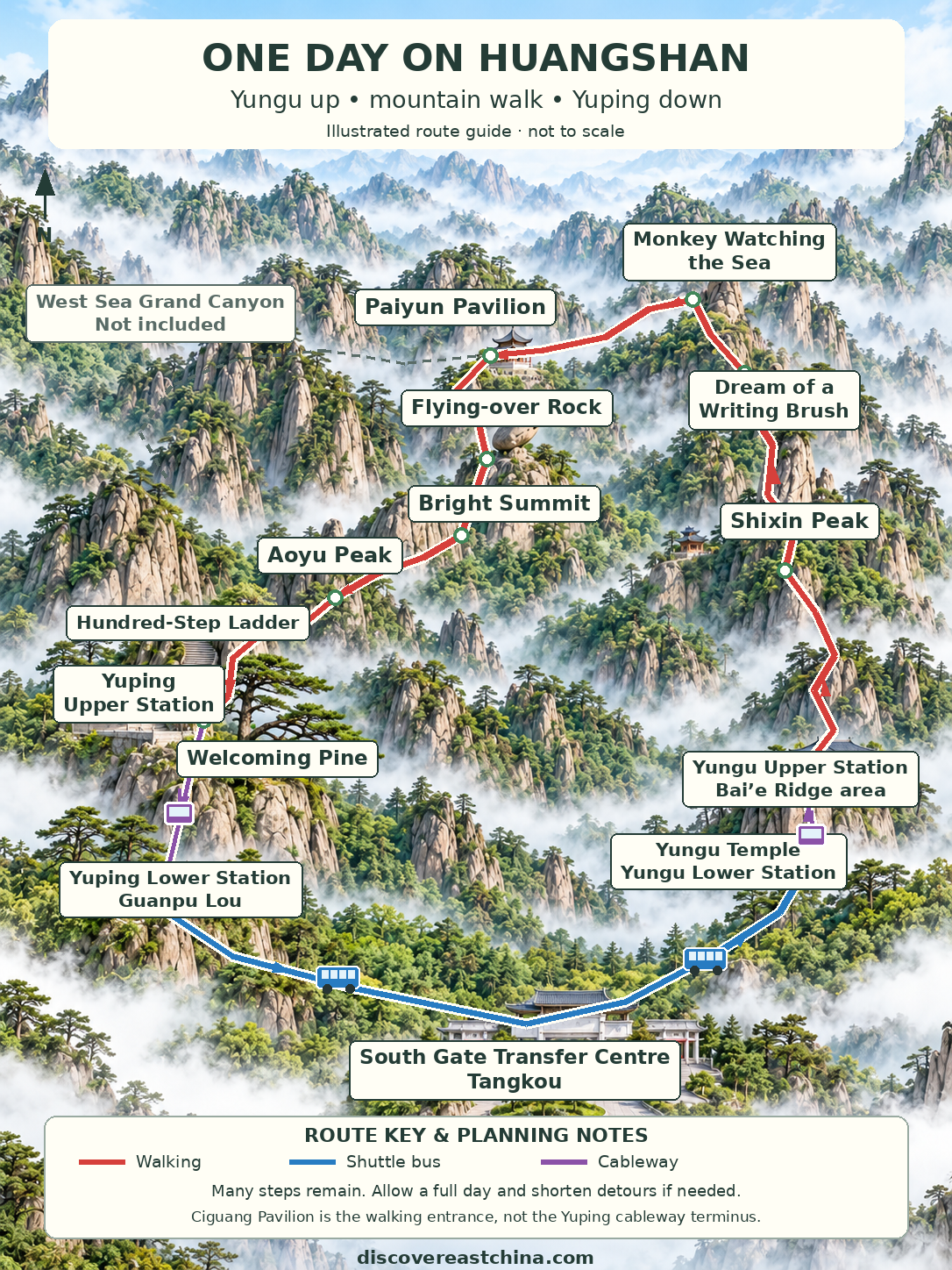
The two rides remove the main ascent and descent from the valley. They do not remove the stone steps, repeated climbs or walking between viewpoints. Plan a full mountain day, with proper footwear and a flexible list of sights. This route is best for visitors comfortable with extended walking on stairs.
A shorter version follows the Yungu upper-station area towards Shixin Peak and Beihai, then continues to Bright Summit, Tianhai, Aoyu Peak and the Yuping area. The additional sweep towards Monkey Watching the Sea, Paiyun Pavilion and Flying-over Rock makes the day longer. Choose that extension only if you start early and are making comfortable progress.
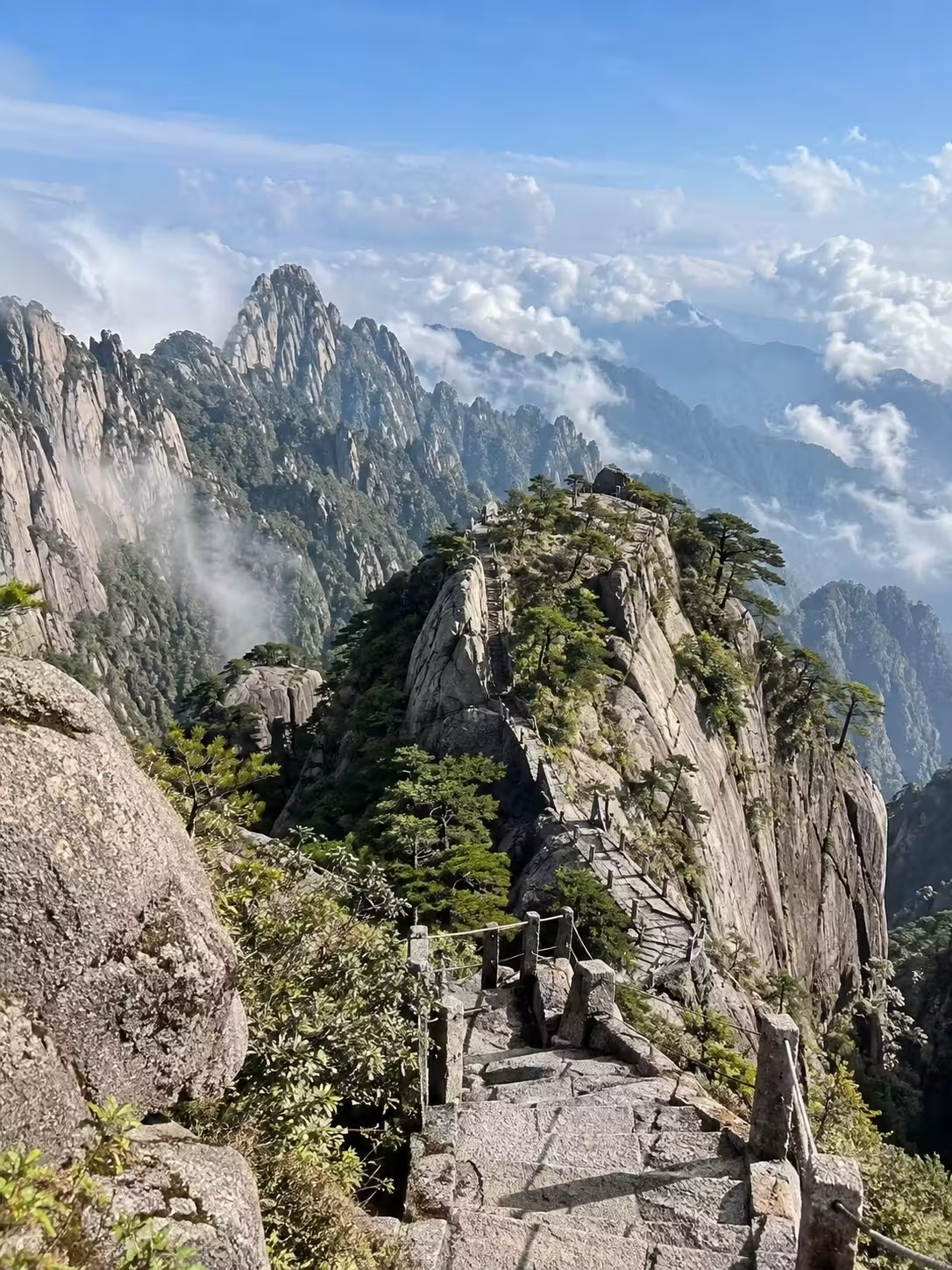
Stay in Tangkou the night before if an early mountain start matters. Huangshan North railway station and central Huangshan city are separate from the scenic area’s southern approach; check the connection that matches your actual arrival station and date.
At the transfer centre, take the authorised scenic-area shuttle towards Yungu Temple and the lower Yungu Cableway station. Allow time for boarding, ticket checks and queues. The bus journey and cableway ride are separate stages, and a fixed arrival time copied from another traveller will not account for a busy day.
Arrange scenic-area admission and transport tickets through the official booking process. Overseas visitors should confirm passport details, identity checks, entrance direction and entry time before travelling. Check the first and last services for your date, then work backwards from the planned descent.
The Yungu Cableway brings you into the northern mountain area around Bai’e Ridge. Follow the open signs towards Shixin Peak, also known as Beginning-to-Believe Peak. Granite pinnacles and pines provide plenty to look at without committing to every nearby branch path.
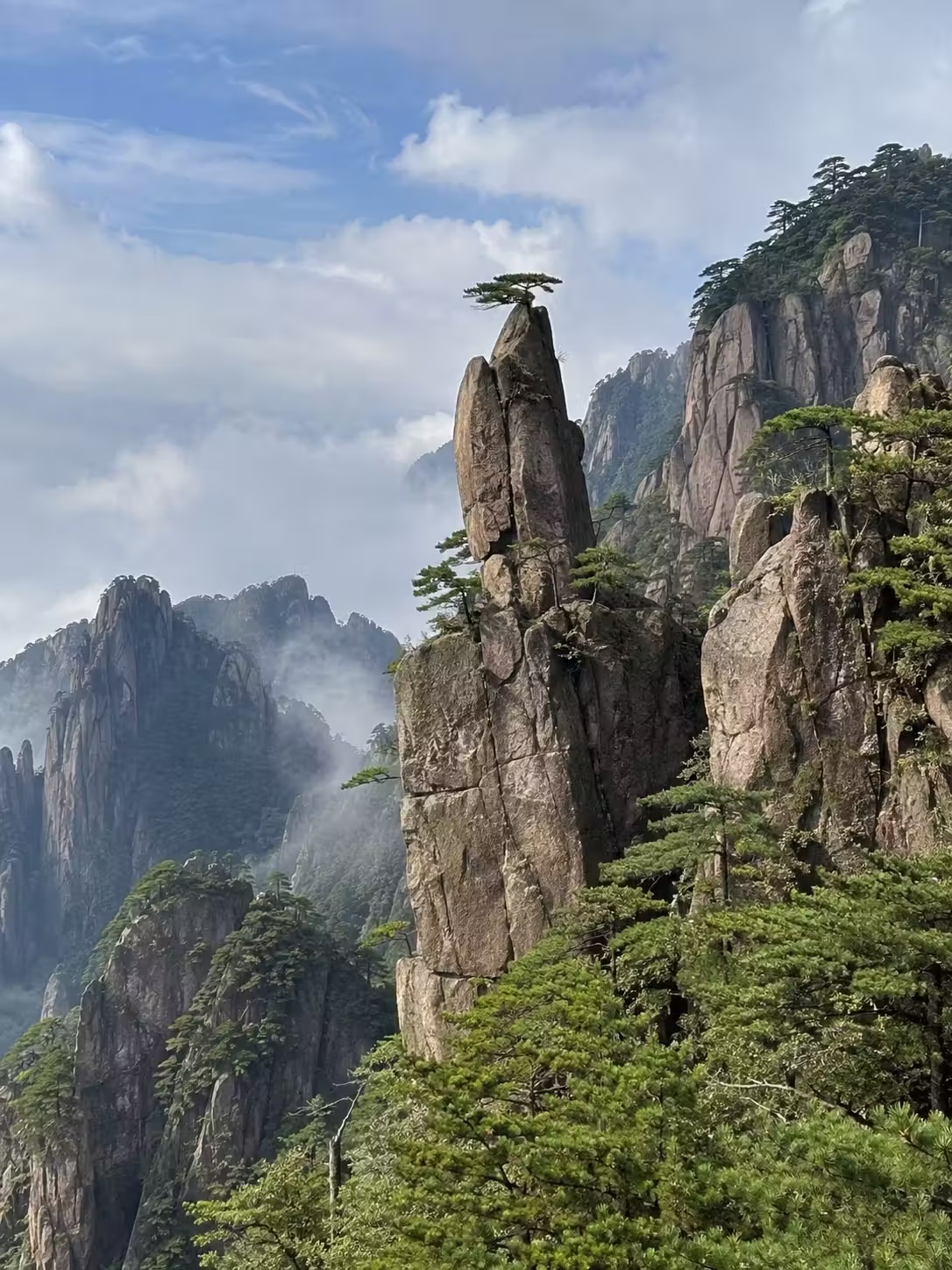
Continue towards Beihai, where Dream of a Writing Brush is one of the distinctive rock scenes to look for. Monkey Watching the Sea is another famous formation, seen from the northern viewing area around Lion Peak. Treat the walk to its viewpoint as a deliberate addition rather than assuming it sits directly on every onward path.
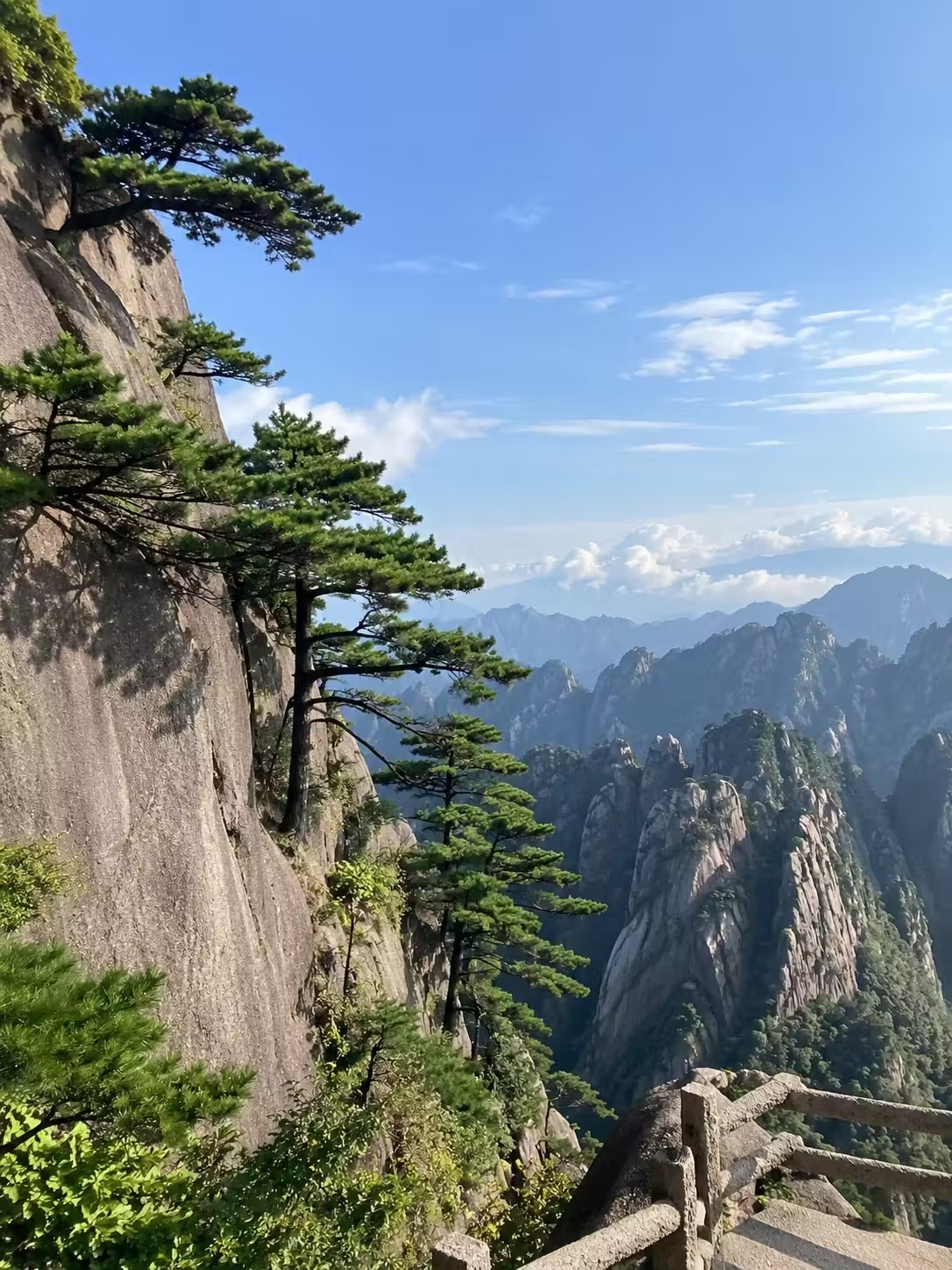
If the morning is going well, continue through the northern sightseeing area towards Paiyun Pavilion. The landscape opens towards the West Sea, with steep ridges dropping into the valley. The illustrated route then heads towards Flying-over Rock before reaching Bright Summit.
This is the longer version of the day. If you start late, encounter queues or feel tired, use the signed connection from the Beihai area towards Bright Summit instead of collecting every named viewpoint. Confirm the open path with scenic-area staff; the drawing shows the sightseeing sequence, not every junction.
The West Sea Grand Canyon is excluded from this route. A full canyon traversal adds considerable descending and another transport decision. Looking towards the canyon from the Paiyun area is different from entering its lower trails. Keep a dedicated canyon walk for a plan with enough time and stamina.
Bright Summit, or Guangming Ding, is an important point in the crossing towards the southern mountain. Pause for the view when conditions allow, then continue towards Tianhai and Aoyu Peak. Leave room for rest and food before the remaining steps towards Yuping.
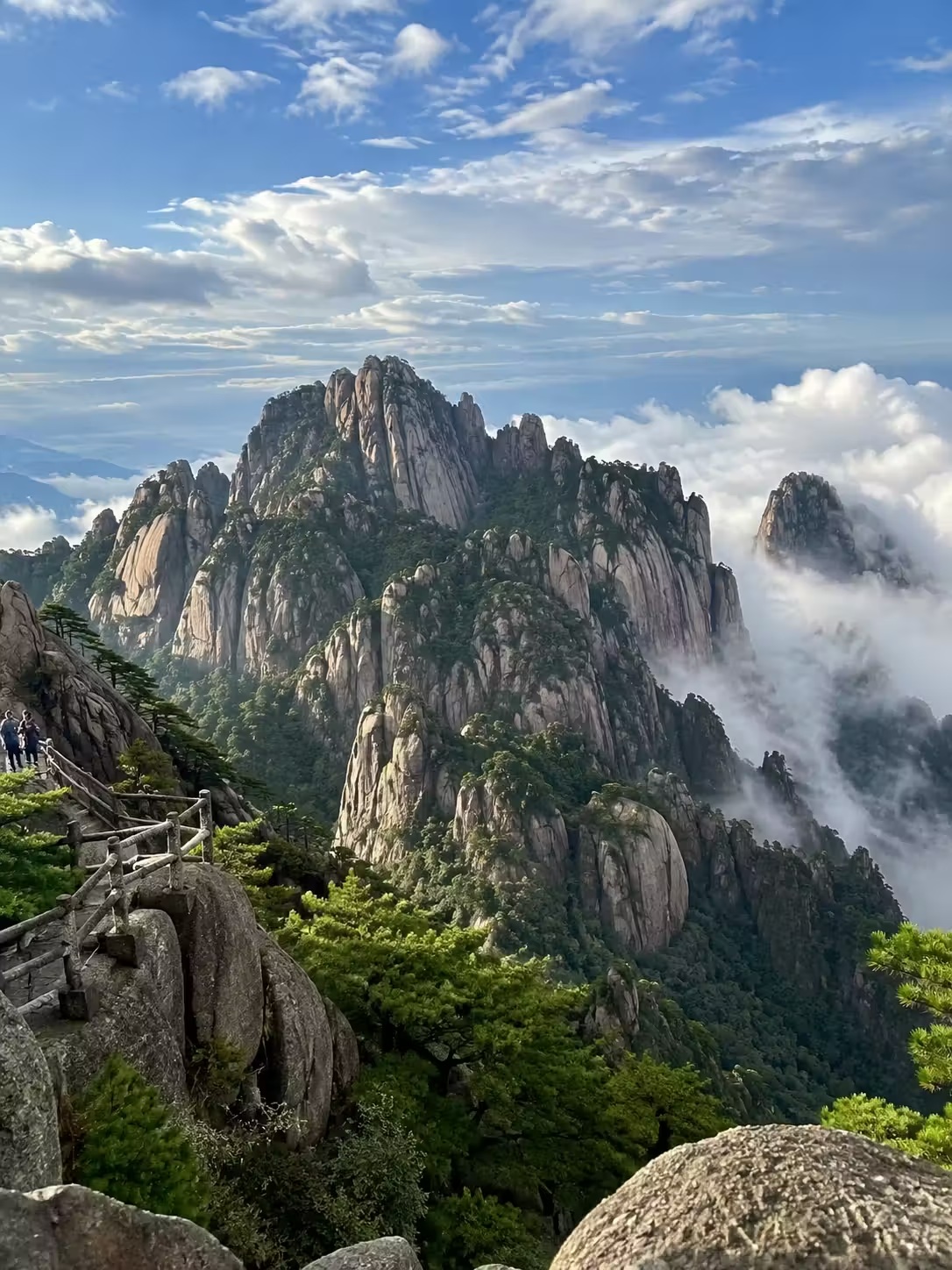
The Hundred-Step Ladder is one of the named stair sections in the southern part of the mountain. Its name should not be read as the total number of steps remaining. Follow the permitted path and any temporary one-way arrangements, and take wet stone slowly.
Lotus Peak and Tiandu Peak are separate climbs with their own access arrangements. They are not included in this day route. Do not add a major summit climb simply because it appears close on an illustrated map; use the day’s official notices to decide which paths are available.
The Welcoming Pine, or Yingke Song, is the main landmark to aim for in the Yuping area. Allow time for a photograph and the walk to the cableway. On this Yungu-to-Yuping route you reach it later in the day, so advice to photograph it before an early-morning hour does not fit this direction of travel.
Descend by the Yuping Cableway, then use the authorised transfer system to return towards the South Gate. The lower cableway station is at Guanpu Lou in the hot-spring area. Ciguang Pavilion is the nearby walking entrance; it is not the cableway terminus. Follow the current signs for the correct shuttle stop.
Check the last cableway and bus services before starting and again before committing to extra viewpoints. Keep a generous margin for queues and onward travel. Staying for sunset is unsuitable if it would leave you unable to catch the planned descent.
A one-day cableway crossing is a daylight sightseeing plan. For sunrise on the upper mountain, book an overnight mountain stay and choose a viewpoint within a sensible walk of the hotel. A room in Tangkou helps with an early ascent, but does not put you at a summit before dawn.
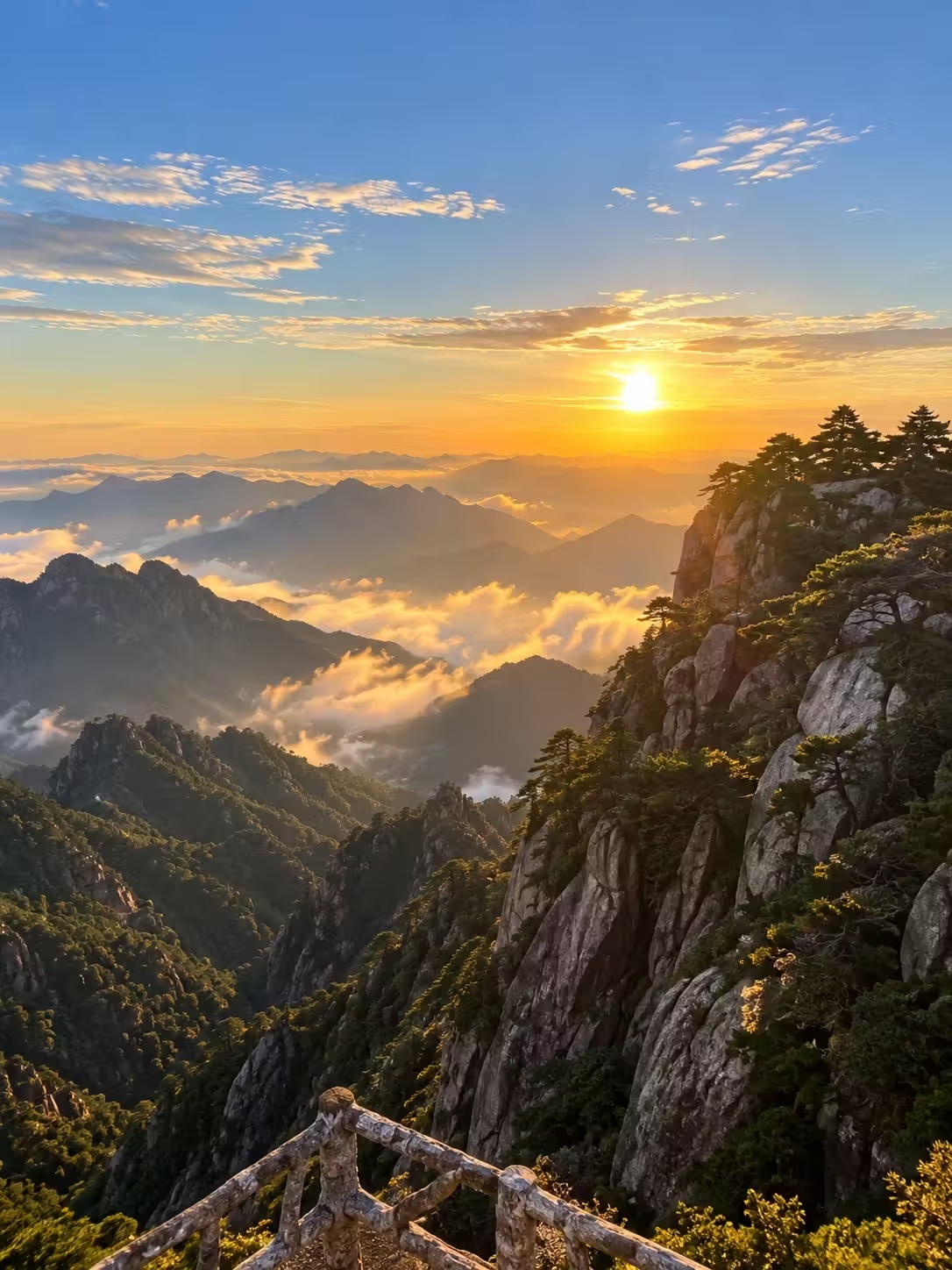
Baiyun Hotel around Tianhai and accommodation near Paiyun Pavilion suit different walking plans. Choose by location, availability and your intended route, and check the property’s current name and arrival instructions. A mountain overnight stay creates time for dawn or dusk; cloud, rain and visibility still decide what you see.
Huizhou cooking makes a good finish in Tangkou. Look for chou gui yu, fermented mandarin fish, or mao tofu, a local fermented tofu dish. Dried bamboo shoots with meat are another regional choice to check on the menu.
Huangshan shaobing, small crisp pastries often filled with preserved vegetables and meat, can be a convenient snack. Ask about ingredients if you have dietary restrictions. Carry water and modest food for the mountain, and confirm refill or meal options instead of relying on every viewpoint having a shop.
Weather, queues and tired legs can change the day. Rest before fatigue affects your footing and ask staff about the safest open onward route. If you need a much gentler outing, choose a smaller mountain area rather than assuming two cableways make the full crossing easy.
The core plan is simple: South Gate transfer, Yungu ascent, selected northern views, Bright Summit and Tianhai, Aoyu Peak, the Welcoming Pine, then Yuping descent. Paiyun Pavilion, Flying-over Rock and the northern Monkey Watching the Sea viewpoint are choices that lengthen the walk.
Give the landscape time instead of measuring the day by a complete checklist. A pine growing from granite, a ridge briefly revealed by mist and a comfortable pause beside the path can be the moments that stay with you after the cableway ride home.