11Oct
+8619705475100
[email protected]

Huangshan is a journey through more than mountain peaks. Beyond the granite ridges lie old merchant streets, villages shaped by water, memorial archways and the distinctive white walls of Huizhou. Giving each landscape its own time makes the region easier to understand and far more enjoyable to explore.
A useful starting point is to divide the trip into four areas: Tunxi and the city, Huangshan Mountain with Tangkou, the heritage sites around Shexian, and the villages of Yi County with a separate option for Mount Qiyun in Xiuning. These are practical planning groups. Choose the stops that interest you, then decide how many days they need.
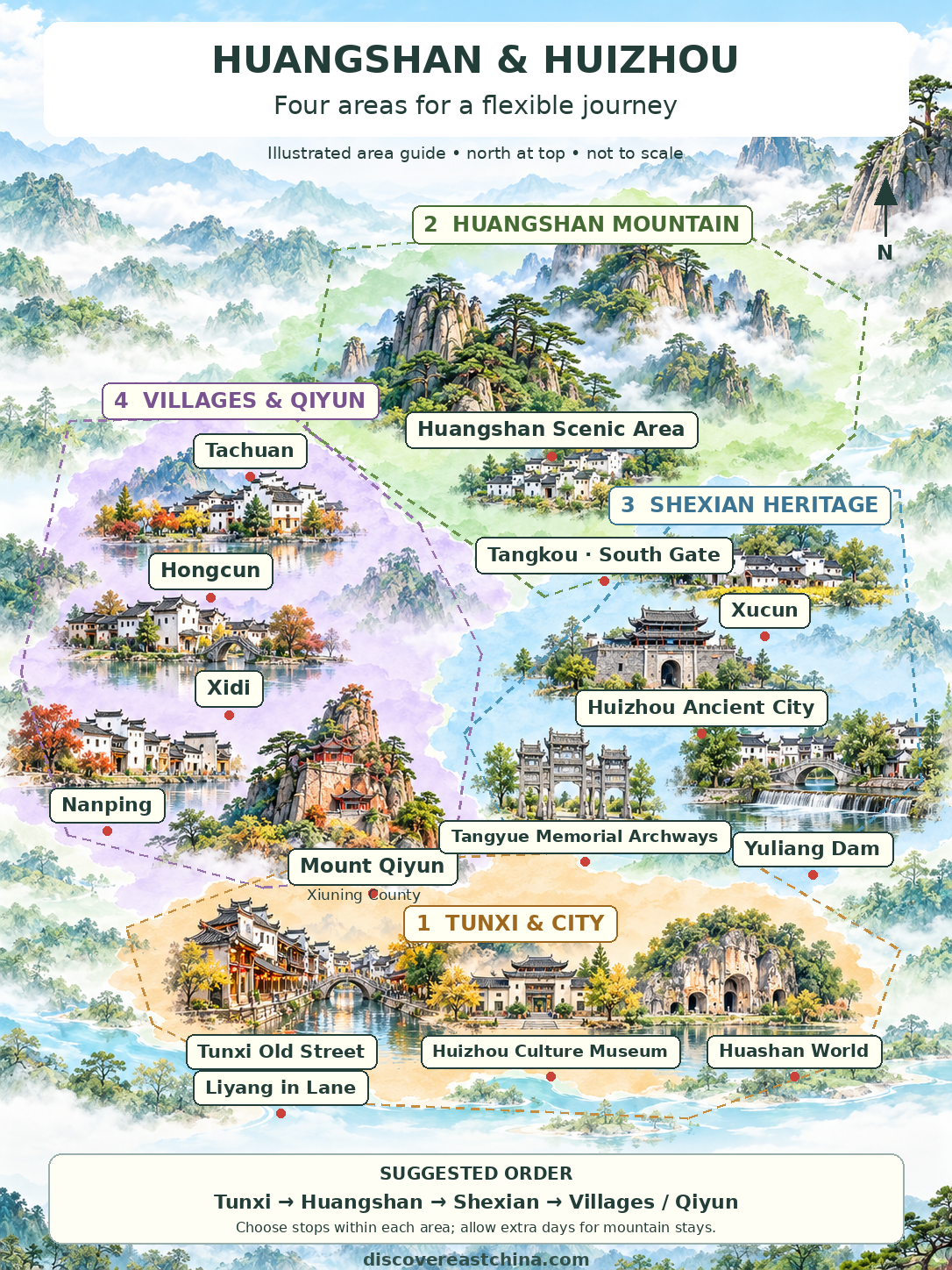
The mountain lies north of central Huangshan city. Tangkou is the town at its southern approach; Tunxi is the city area farther south. Hongcun, Xidi and Nanping are in Yi County to the west, while Shexian’s historic sights are to the east. Mount Qiyun belongs to Xiuning County, west of Tunxi.
The illustrated map shows their broad relationship and a suggested order of travel. Use a live navigation service for actual roads and journey times. A stop that looks close on a regional drawing may still require a transfer, and a mountain cableway journey still leaves plenty of walking.
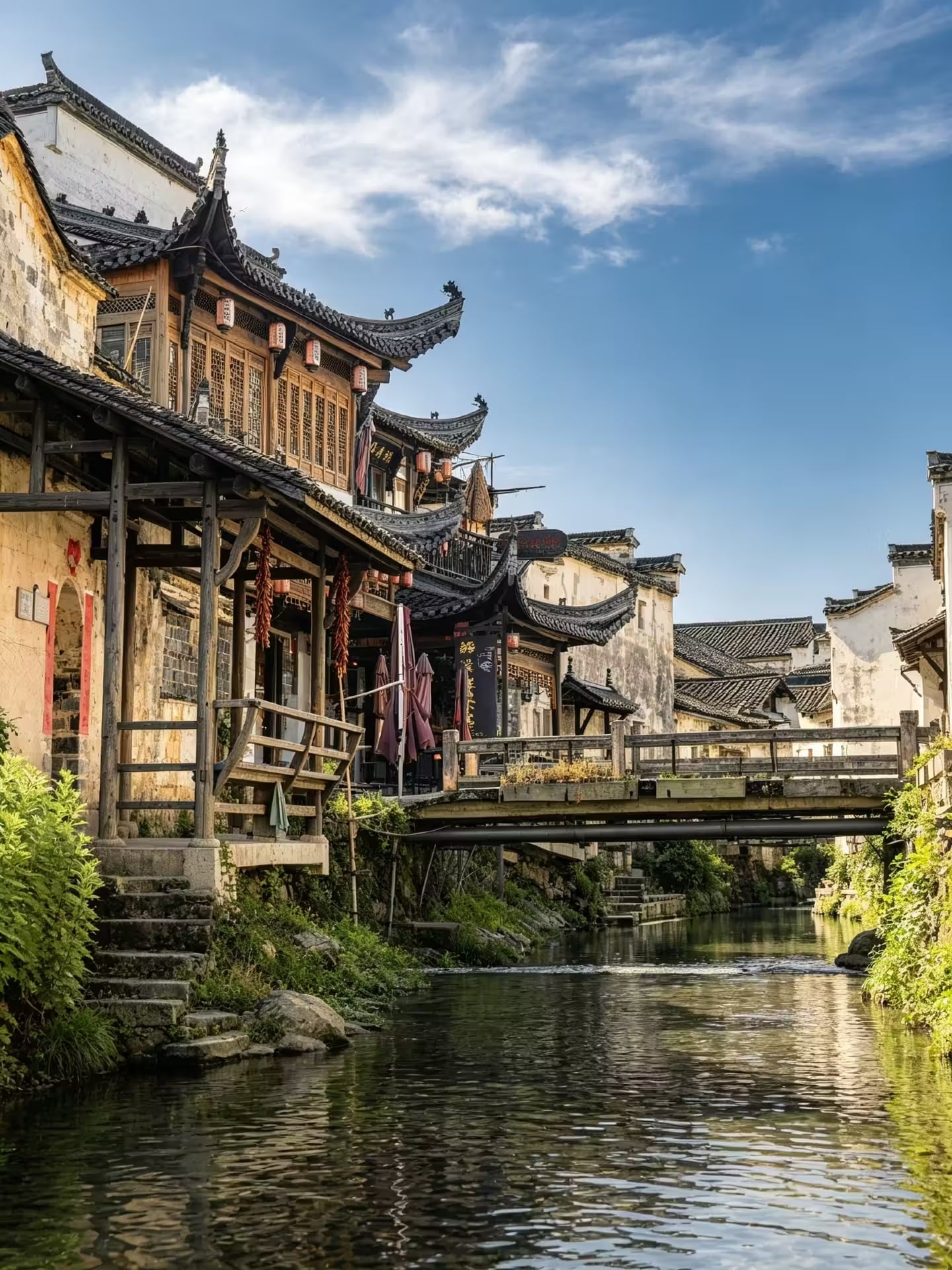
Tunxi works well for an arrival afternoon or a final night before departure. Start with Tunxi Old Street, where tiled roofs, shopfronts and narrow lanes introduce the local architectural character. Keep time for wandering, browsing and a meal instead of treating it as a quick photo stop.
Liyang in Lane offers another city walk, with restored historic buildings and places to eat. It pairs naturally with an unhurried day in Tunxi. For more context, consider the Anhui China Huizhou Culture Museum, also known as Huangshan Museum; check its current opening arrangements before visiting.
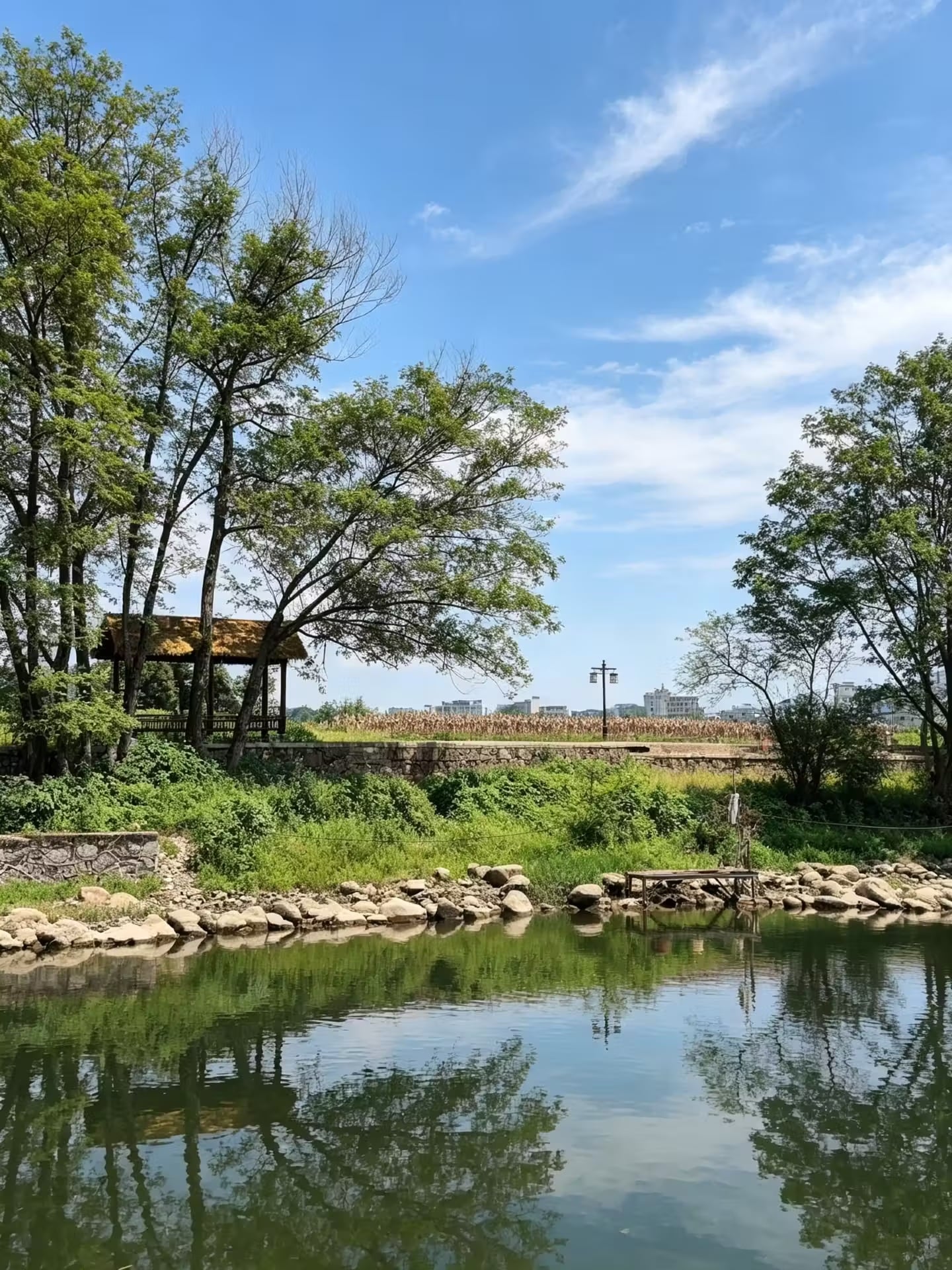
Huashan World, associated with the Huashan Mysterious Grottoes, is another possible excursion from the city. Choose it for its grotto setting and themed visitor experience. Evening programmes and opening times can change, so confirm what is running for your date rather than building the day around a promised show.
Give Huangshan a full day at minimum. Staying in Tangkou the previous night makes an early start easier than travelling from Tunxi that morning. From the southern transfer system, a route using the Yungu Cableway up and the Yuping Cableway down can connect northern viewpoints with the Welcoming Pine area, subject to the day’s open paths and services.
Beginning-to-Believe Peak, or Shixin Peak, and Bright Summit, or Guangming Ding, are well-known names to consider when planning. They are not effortless additions to every itinerary. Choose a route around your walking ability, cableway timings and the conditions, and leave room for stairs, queues and rests.
If sunrise is a priority, plan an overnight stay on the mountain and choose accommodation near a suitable viewing area. Sleeping in Tangkou is not the same as being on the upper mountain before dawn. An overnight booking makes the attempt practical, but weather still determines the view.
Arrange scenic-area admission separately from accommodation. Check the official reservation process, passport requirements, entrance direction, trail closures and the last services for your date. Carry footwear with grip, water, rain protection and warm layers even when the city feels mild.
Huizhou Ancient City is the natural starting point for a day around Shexian. Slow down around its streets and historic architecture, then continue to Yuliang Dam if you want to see how the river forms part of the local landscape. The two stops make a more comfortable core day than a long list of scattered attractions.
Tangyue’s memorial archways add another view of Huizhou’s architectural heritage. Xucun is a further village option, north-west of the county town, with historic buildings that reward a closer look. Choose one additional excursion if transport and time allow; visiting the city, dam, archways and Xucun in one day leaves limited room to explore them properly.
A private car can make rural transfers more convenient. If travelling by public transport, check both the outward and return connections before setting off. Avoid planning the final stop so late that you depend on an unconfirmed evening service.
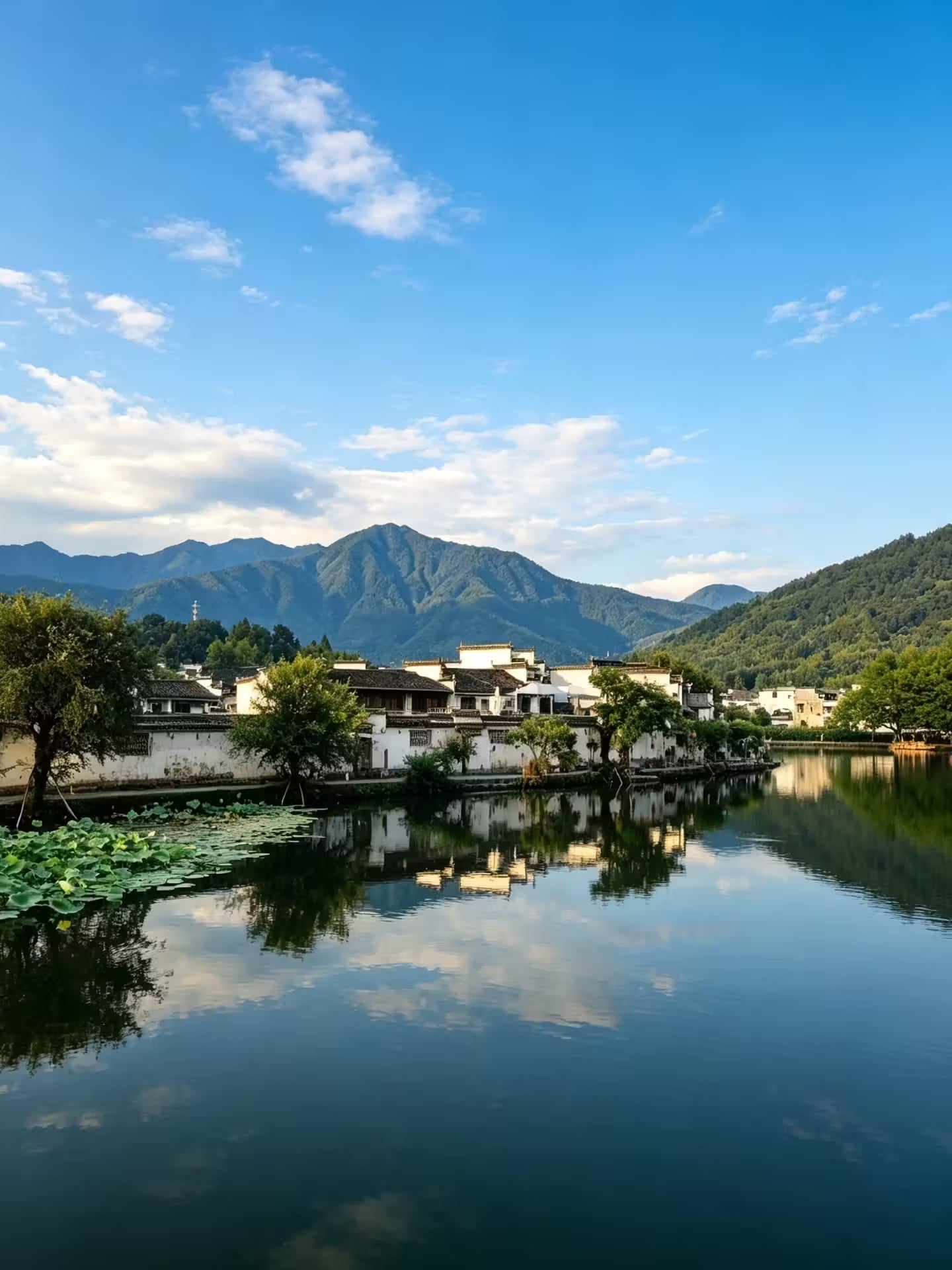
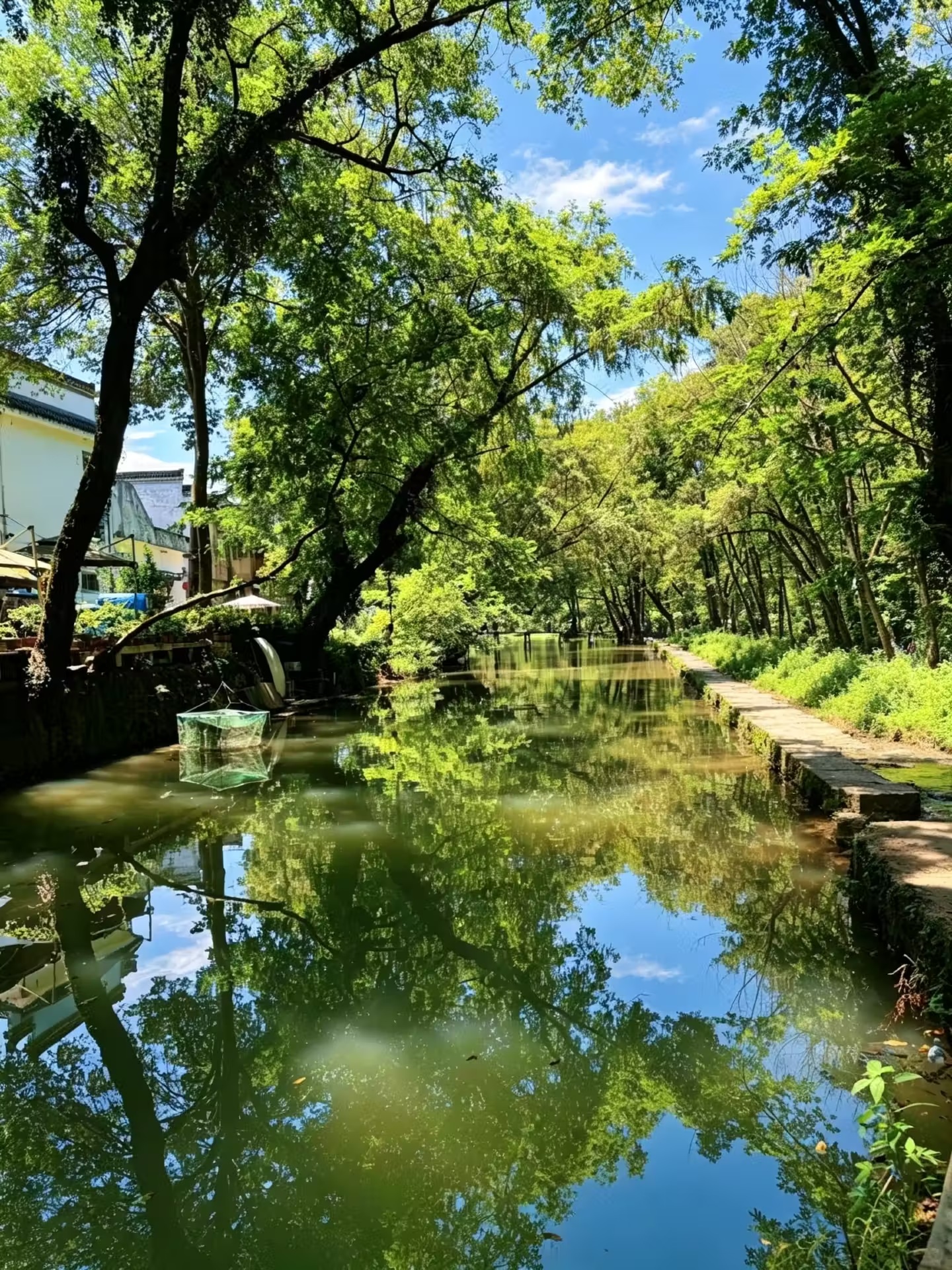
Hongcun and Xidi are the region’s best-known village pairing and together form a UNESCO World Heritage site. Their appeal lies in the relationship between houses, lanes and waterways as much as in individual landmarks. In Hongcun, South Lake and the central Moon Pond are useful points around which to plan a walk; leave the busiest viewpoints to explore the smaller lanes as well.
Xidi gives the day a different rhythm, with traditional houses, carved details and a village layout shaped by streams. Choose one village for a deeper visit, or combine Hongcun and Xidi if you are happy with a longer day and have straightforward transport.
Nanping is another heritage village to consider, while Tachuan is particularly associated with autumn scenery. Seasonal colour depends on the year and weather; confirm conditions near your travel date. These places are choices within the village area, rather than mandatory stops on a single loop.
Mount Qiyun is a separate mountain outing in Xiuning County, with a Taoist cultural landscape and red sandstone scenery. Give it its own day if it is a priority. Combining Hongcun, Xidi, Nanping, Tachuan and Qiyun into one day would turn the trip into a succession of transfers.
The order can change to match your train, accommodation and forecast. If the mountain weather is poor, a city or heritage day may be a better use of the time, provided your reservations can be changed. Keep an arrival or departure margin rather than placing a demanding climb immediately before a fixed train.
Tunxi is a practical city base for the start or finish. Tangkou suits an early mountain ascent, while an upper-mountain hotel is needed for a realistic sunrise attempt. A night in or near a village gives you more time for an early walk before day visitors arrive.
Check the exact address, luggage arrangements and onward transport before booking. Moving between these bases can save repeated journeys, but daily hotel changes may be tiring. Choose a balance that suits your luggage and pace.
Look for chou gui yu, fermented mandarin fish, and mao tofu, the region’s fermented tofu. A bowl of wontons or noodles can suit a quick lunch, while shared dishes such as Hu Shi yi pin guo offer a fuller meal. Ask about ingredients, preparation and prices before ordering, especially if strong fermented flavours are unfamiliar.
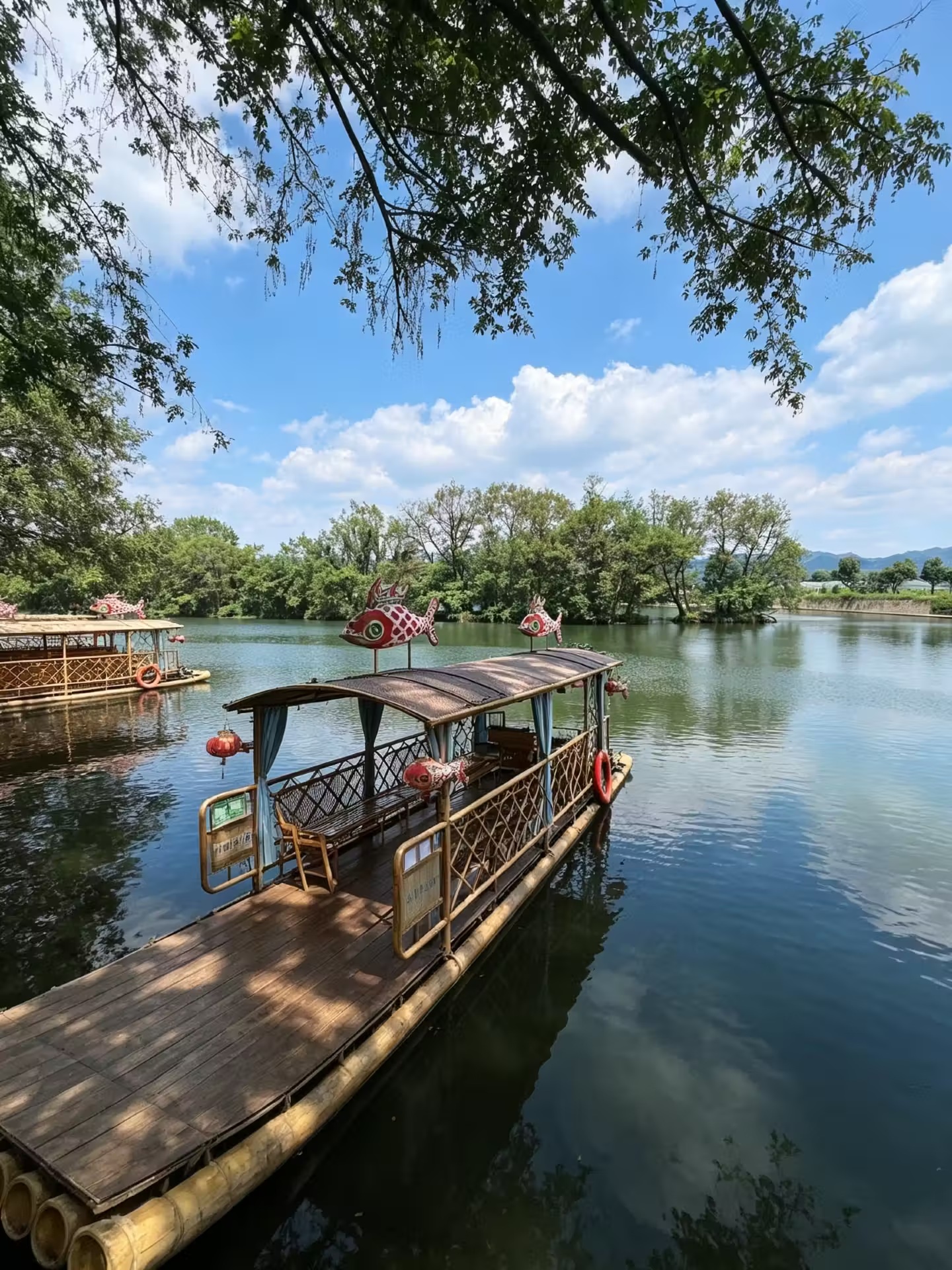
A successful Huizhou journey leaves space between the named sights: a street after breakfast, reflections beneath a bridge, or a village lane away from the main viewpoint. Choose fewer stops each day and the four areas become a connected journey through the region’s landscapes and culture.