11Oct

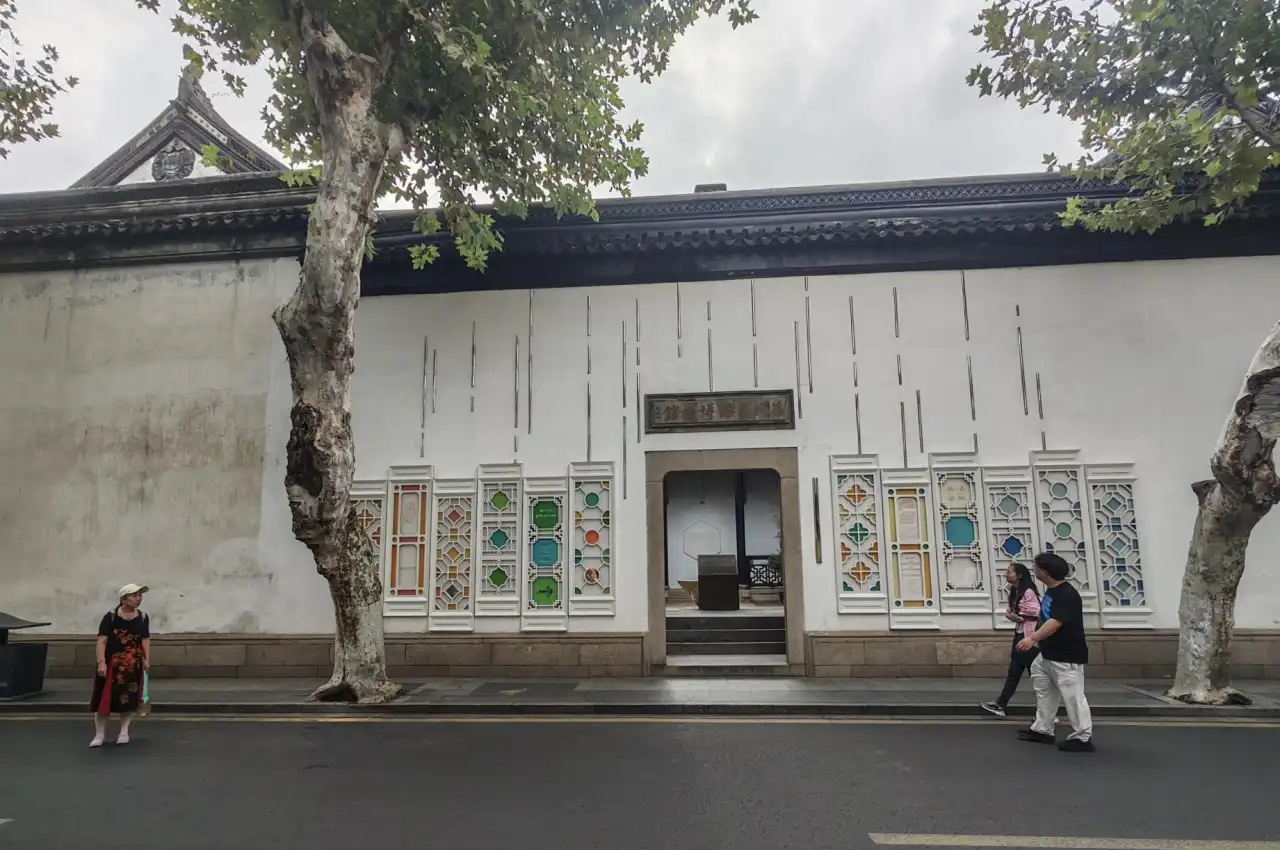
Lion Grove Garden brings a miniature mountain landscape into Suzhou’s old town. Pitted limestone rises beside white walls, corridors frame small courtyards, and a turn towards the pond changes the view again. Its appeal lies in these contrasts: enclosed rooms and open water, carefully arranged stones and the freedom to wander.
Start by looking at the buildings rather than rushing straight to the rockery. Yunlin Yiyun Hall and Yanyu Hall introduce the garden’s domestic side. In Yanyu Hall, a screen divides the space into two parts; coloured glazing adds another layer to the windows and the views beyond them.
Continue through the smaller courtyard towards Nine Lions Peak, or Jiushi Feng. Here, looking for animal shapes in the stones becomes part of the pleasure. A rock can suggest a crouching body from one angle and an entirely different silhouette from another. The patterned windows in the surrounding walls reward the same patient attention.
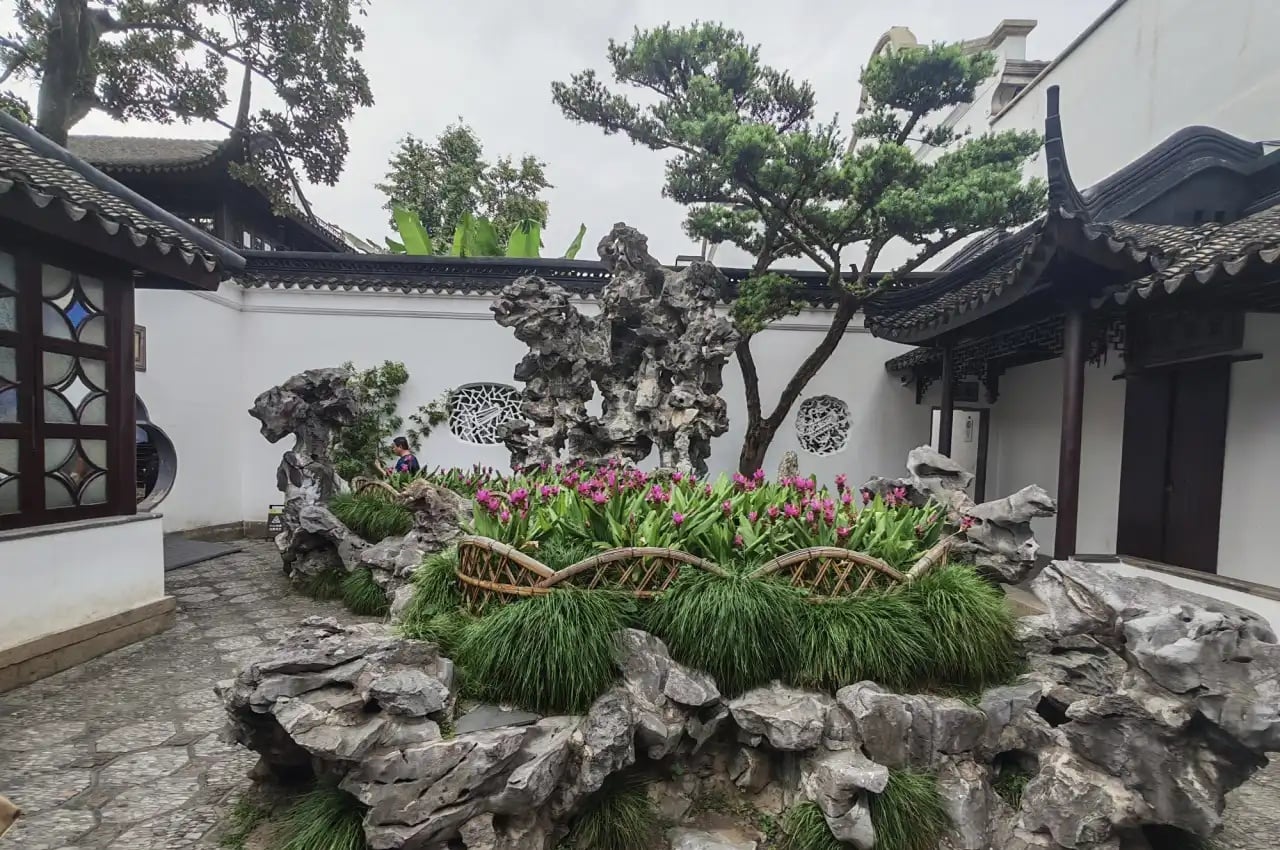
The garden began in 1342 with Buddhist origins and later became a private residence. Its rock formations help explain the name Lion Grove. Restoration by the Bei family in the early twentieth century added another chapter to a place already shaped by generations of owners.
That layered history is easier to appreciate when you alternate between the rooms and the outdoor scenery. Look back through a doorway, then step into the courtyard: a framed arrangement becomes a space you can move around.
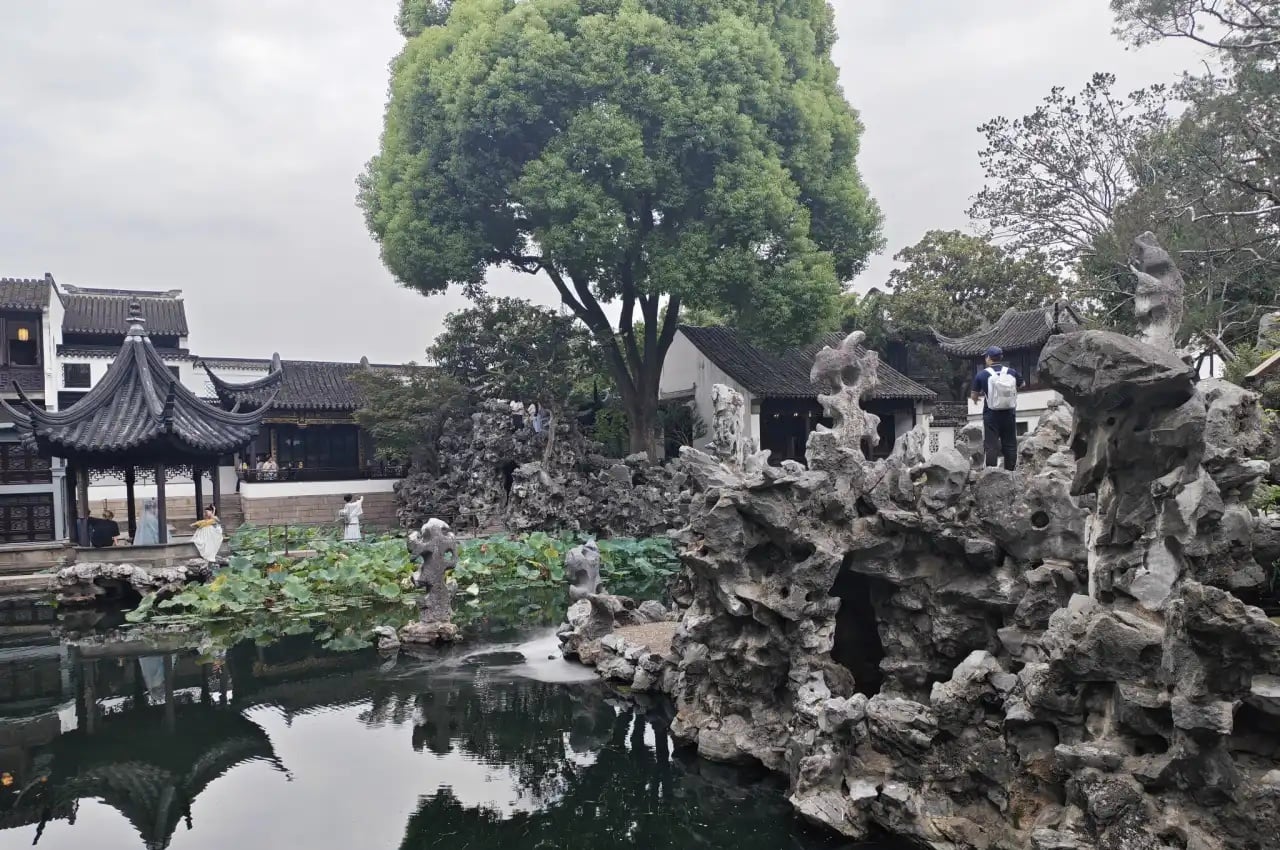
Near Yifeng Zhibai Xuan and Jianshan Lou, the stones become the main attraction. Openings, short passages and changing levels make the rockery feel larger than its footprint. You need not explore every turn to enjoy it. Views from beside the rocks also reveal how peaks, walls and buildings have been composed together.
Follow the signs and choose passages that suit your footing. Uneven steps and narrow openings call for care, particularly with children or anyone who finds climbing difficult. Pause where there is room rather than stopping in a tight passage.
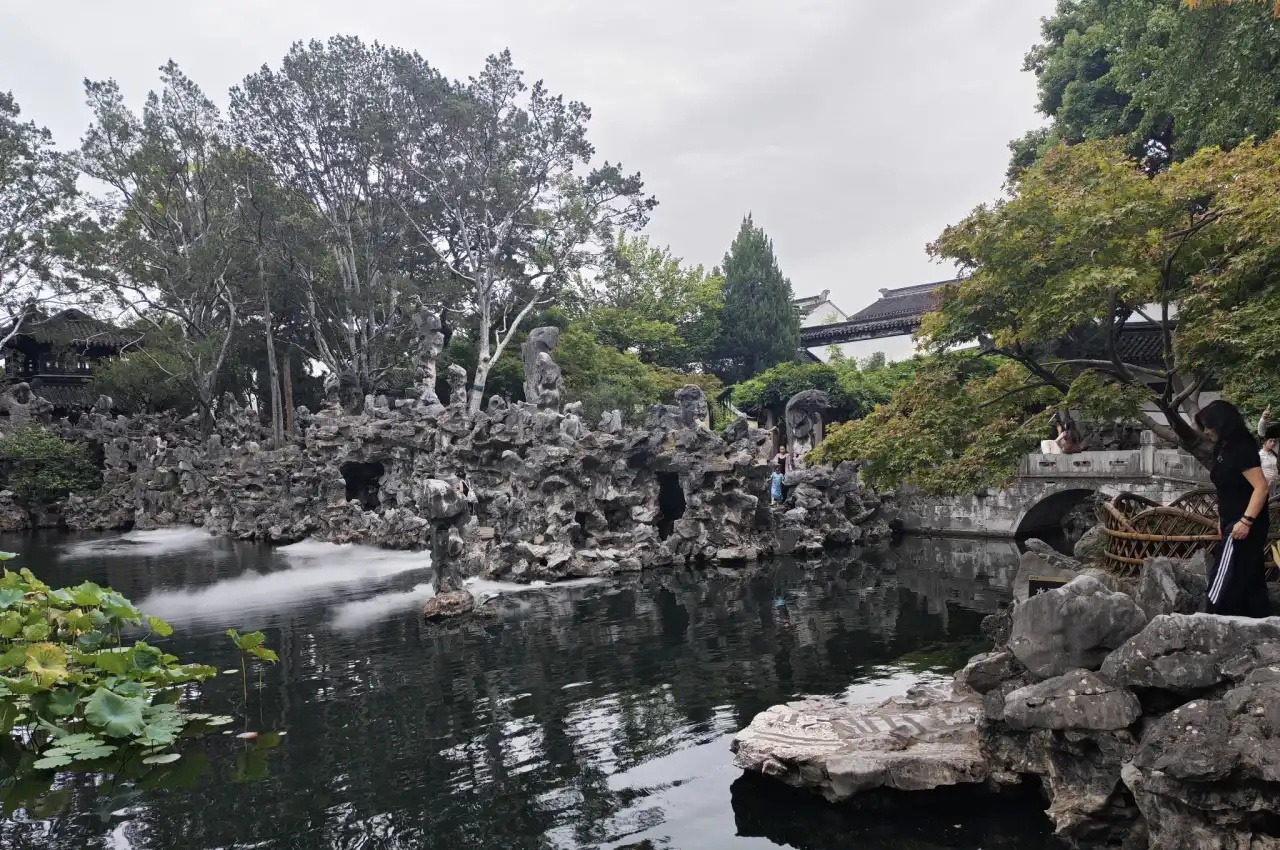
After the enclosed rockery views, the water offers a change of pace. Wusong Yuan, the Five Pines area, leads into a sequence of pondside sights that includes the Lotus Hall, Zhenqu Pavilion and the stone boat. Each gives a different way to look across the garden: from a sheltered room, beneath a pavilion roof or alongside the boat-shaped structure.
Zhenqu Pavilion is associated with the Qianlong emperor, but the familiar story about the wording of its plaque is best treated as garden lore. The setting itself needs little explanation. Rocks, roofs and reflected greenery turn a small stretch of water into a layered scene.
Continue towards Anxiang Shuying Lou, then return towards the Lotus Hall and the zigzag stone bridge. The pavilion on the water creates another pause, with views towards the garden’s waterfall setting. Notice how bridges and corridors guide the eye as well as the feet. Follow current signs and accessible paths rather than treating this sequence as a fixed navigation route.
The circuit can continue past Wenmei Ge and Shuangxiang Xianguan, then along the southern corridors past the Fan Pavilion and Ninghui Pavilion. Xiaofeihong Bridge, Xiuzhu Ge (Bamboo Pavilion) and Lixue Hall lead back towards Yanyu Hall and Yunlin Yiyun Hall.
This circuit offers plenty to see without exploring every rock passage. If the rockery is a priority, leave room for it while planning your visit: a circuit around the pond can leave the main labyrinth unexplored. Choose your route according to current access, crowding and your comfort with steps.
There is no need to fit every nearby attraction into the same outing. Concentrating on Lion Grove, instead of rushing between it, the Humble Administrator’s Garden and Suzhou Museum, leaves more attention for windows, stone textures and the changing pond views.
Jianshan Lou here should not be confused with the similarly named building in the Humble Administrator’s Garden. When checking a map or a guidebook, confirm the garden as well as the building name.
Lion Grove Garden is at 23 Yuanlin Road, Suzhou. The municipal gardens authority lists standard admission at RMB 40 in the peak season and RMB 30 in the low season. Peak-season rates apply in April–May and July–October; the remaining months use the low-season rate.
The published regular hours are 07:30–17:30 from March to October, with last admission at 17:00, and 07:30–17:00 from November to February, with last admission at 16:30. Check current notices before travelling, including any holiday extensions or temporary closures.
Entry uses real-name, timed booking. Overseas visitors should confirm the passport booking and entry procedure with the official ticketing service before purchasing; entry procedures can differ by identity document. Wear shoes with good grip and keep the route flexible if the rock passages are busy.