Jingdezhen is a city where porcelain connects the past with everyday creative work. You can spend a morning looking at imperial ceramics, walk through a former factory district in the afternoon, and sit down at a studio to try shaping or decorating a piece yourself.
Located in northeastern Jiangxi Province, Jingdezhen rewards visitors who want more than a quick stop at a souvenir market. Its appeal lies in understanding how materials, skilled hands, kilns and trade produced a city known for porcelain, and how contemporary makers continue to work with that inheritance.
In 2026, the Jingdezhen Handicraft Porcelain Industry Sites were inscribed on the UNESCO World Heritage List. The designation recognizes a specific group of heritage components associated with the porcelain industry, rather than every attraction or the whole modern city.
For a first visit, allow two full sightseeing days if you can. Pair a museum or kiln-related heritage visit with a creative district, then leave time for a properly arranged studio experience. A third day gives you room for Sanbao Valley, a slower city visit or a separate excursion into the surrounding countryside.
This guide explains which places to prioritize, how to combine them without excessive transfers, and what overseas visitors should confirm before booking museums, workshops or transport.
Jingdezhen at a Glance
| Planning question | Recommended starting point |
|---|---|
| What is the main reason to visit? | Porcelain history, working craft and contemporary ceramic design |
| How long should first-time visitors stay? | Two full sightseeing days; add a third for a slower pace or countryside excursion |
| What should you prioritize? | A heritage or museum visit, Taoxichuan, and one experience matched to your interests |
| Which museum gives a broad introduction? | Jingdezhen China Ceramics Museum |
| Which area explains imperial production? | Taoyangli and the Imperial Kiln Museum, with access arrangements checked separately |
| Where should you investigate contemporary ceramics? | Taoxichuan, the Sculpture Porcelain Factory area and selected Sanbao studios |
| Is a hands-on class worthwhile? | Yes, if the activity, language support and finished-piece arrangements suit you |
| Which railway station should you check first? | Jingdezhen North, then the actual station on your ticket |
| Can you walk between all the main attractions? | Plan road transfers between districts and walk within each selected area |
| Do markets operate identically every day? | No. Confirm the organizer, date, hours and current location |
Two sightseeing days may require two or three nights, depending on your arrival and departure. A late afternoon arrival should not be counted as a full museum day.
Why Visit Jingdezhen?
Jingdezhen’s porcelain history is about a complete production system. Raw materials needed preparation, shapes required specialist hands, decoration involved different techniques, and firing demanded control over heat and kiln conditions. Workshops, merchants and communities developed around this work.
The city’s ceramics also traveled widely. Blue-and-white porcelain became an important traded product, and Jingdezhen’s materials, techniques and designs influenced ceramic production and taste beyond China.
You do not need to be a collector to enjoy the visit. A few useful questions give the sights a shared thread:
- How was this object made?
- Who used it, and who decided what it should look like?
- What could go wrong during firing?
- How does a contemporary maker use the same material differently?
A museum introduces the finished objects. A kiln-related site explains production. A studio or creative district shows what is being made now. Combining those perspectives gives the trip more depth than visiting several similar shopping streets.
Understand the Main Areas Before Planning Your Route
Jingdezhen’s principal sights are spread across different districts. A guidebook list can make them appear close together, but they do not form one continuous walking route.
| Area or sight | Main purpose | How to use it in a first visit |
|---|---|---|
| Taoyangli and the Imperial Kiln area | Imperial production, archaeology and historic urban context | A substantial heritage visit with time for the museum if access is arranged |
| Jingdezhen China Ceramics Museum | A broader view of ceramic history and objects | A focused museum session, followed by another district rather than more galleries all day |
| Ancient Kiln Folk Customs Exhibition Area | Kiln forms, traditional production and available craft demonstrations | An alternative or additional process-focused visit |
| Taoxichuan | Reused industrial buildings, design, exhibitions and creative activity | A district walk, meal and any confirmed market or exhibition |
| Sculpture Porcelain Factory area | Ceramic shops, studios and creative activity | A selective browse or booked activity according to the current program |
| Sanbao Valley | Studios and creative spaces in a greener setting | A planned visit to selected venues, with transport between them |
| Yaoli and the Gaoling area | Countryside, historic settlements and material heritage | A separate excursion when you have an extra day |
Use a current map and your reservation times to decide the order. Avoid crossing the city repeatedly just to follow a list of popular sights.
Taoyangli and the Imperial Kiln Museum
This is a useful starting point for understanding Jingdezhen’s connection with imperial porcelain. The historic kiln area and surrounding streets give context to the organization of production and the city that grew around it.
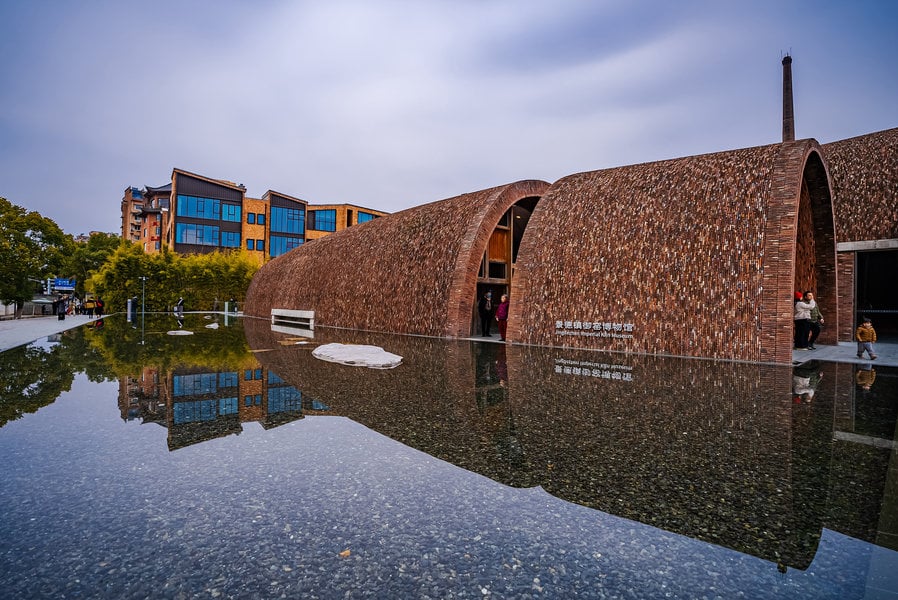
The Imperial Kiln Museum combines ceramics and archaeology with a distinctive contemporary building. Its brick-vaulted spaces attract architecture and photography visitors, but the collection deserves time beyond the exterior photographs.
Look at the relationship between an object’s form, decoration and intended use. Archaeological evidence and restored pieces can help explain how specialists reconstruct the story of production rather than simply display intact treasures.
Separate the Museum from the Wider Area
Taoyangli, the kiln-related heritage spaces and the museum are connected in your visit, but their access arrangements should not be treated as interchangeable.
Before arriving, confirm which ticket or reservation you need for the wider area, whether museum entry needs a separate time slot, and how overseas passport holders complete the process.
A photograph of the museum after dark does not establish that its galleries are open at that hour. Plan the collection visit around actual museum access; use any permitted evening walk as a separate part of the experience.
How Long to Allow
Reserve a half-day block if you want the museum, heritage context and surrounding streets without rushing. A shorter visit can work when you choose a smaller route, but a guided collection visit needs its own time.
This is a planning recommendation, not an official duration or guarantee of venue access.
Jingdezhen China Ceramics Museum
The China Ceramics Museum is a useful choice for a broad introduction. Its collections help you compare objects from different periods and understand ceramic development beyond one kiln or one decorative style.
For first-time visitors, select a few themes rather than trying to examine every display. You might compare vessel shapes, look at changes in decoration, or follow how porcelain was used for different purposes.
It is a separate museum from the Imperial Kiln Museum. Confirm the full Chinese name and map location when booking and taking transport.
Is It Worth Visiting Both Museums?
Yes, if ceramics are a principal reason for your trip. Their emphasis differs: the China Ceramics Museum gives a broader overview, while the Imperial Kiln visit concentrates more closely on imperial production and its site context.
If you prefer a lighter introduction, choose one main museum and spend the remaining time at a kiln-related site, creative district or workshop.
Reservations for Overseas Visitors
Use the museum’s current official reservation instructions. Its published system uses the Changyou Jingdezhen WeChat mini-program, and advance booking is important.
The publicly available entry instructions focus on Chinese identity-card verification. They do not clearly resolve every foreign-passport situation. Confirm the accepted overseas-visitor booking and manual-entry procedure directly before making the museum a fixed stop.
Do not assume that an unofficial paid reservation service creates a valid admission. A guide or hotel can help you contact the museum, but the reservation still needs to follow the museum’s accepted process.
Also check closure days and temporary notices. Build your itinerary around the confirmed visit slot rather than arriving and hoping to enter.
Ancient Kiln Folk Customs Exhibition Area
The Ancient Kiln area, often called Guyao, is useful when you want to understand production as well as finished porcelain. Its kiln-related displays and traditional craft interpretation add a different perspective from a collection-focused museum.
Ask about the demonstrations available on your date. A scheduled firing, kiln opening or particular performance should be treated as a confirmed event, not an activity that happens whenever visitors arrive.
An interpreter can help explain stages such as shaping, trimming, decoration and firing. Even a short demonstration becomes more meaningful when you know what the craftsperson is trying to control.
Museum or Guyao?
Choose the museum when your main interest is objects, visual comparison and historical collections. Choose Guyao when the production process and kiln traditions appeal more strongly.
You can include both over two or three days, but alternating them with a district walk or a seated activity helps avoid an overloaded sightseeing schedule.
Taoxichuan: Industrial Heritage and Contemporary Design
Taoxichuan developed around the former Yuzhou Porcelain Factory. Reused factory buildings make it an important part of Jingdezhen’s more recent industrial story as well as a place to investigate current design.
Walk through the district with time to look at the buildings, browse selected ceramic spaces and enter an exhibition if one interests you. The difference between a factory’s working past and its present creative use is part of the attraction.
It is a good place to include a meal or a break. Shops, galleries and activity spaces have their own hours, so do not assume that an open outdoor district means every indoor venue is available.
Visiting a Creative Market
A market can be a highlight when its actual program fits your dates. It lets you compare pieces by different makers and ask about their materials, process and design.
Check the organizer’s announcement for the date, location and operating hours. Regular markets, seasonal events and holiday programs are not the same thing.
If no market is running, Taoxichuan can still be worth visiting for its buildings and open venues. Plan a district visit that works without depending entirely on rows of temporary stalls.
The Sculpture Porcelain Factory Area
The Sculpture Porcelain Factory area offers another setting for looking at contemporary ceramic work, shops and studios. It suits visitors who enjoy browsing with a specific interest, such as small sculptural objects, cups, jewelry or decorative pieces.
Choose a manageable section and avoid treating every shop as a required stop. If you find a maker whose work interests you, spending time in one studio can be more rewarding than a fast circuit.
Market information needs particular care here. Named organizers can change their venue, and a market mentioned in an older guide may no longer operate at the same place or on the same weekly schedule.
If you want to attend a particular market, verify its own announcement. Do not assume that “Sculpture Porcelain Factory market” and a named pottery organization’s event are interchangeable.
Sanbao Valley: Studios and a Slower Creative Visit
Sanbao combines ceramic activity with a greener valley setting. It can provide a change of pace after museum galleries and central-city streets.
Its venues are spread out. Select one or two studios, a confirmed class, a gallery or a meal stop, then arrange transport to those actual locations.
A place described online as an artists’ village is not necessarily a compact pedestrian attraction with every studio open to walk-ins. Some spaces are working environments and may require an appointment.
A Good Sanbao Plan
Choose a confirmed studio visit or workshop as the main activity. Add a nearby open venue or a café break, and arrange the return pickup before arrival.
If your accommodation is in the valley, confirm its road access, distance to meals and evening transport. A quiet room can be appealing, but it may require more transfers for a museum-heavy itinerary.
When to Add Sanbao
Sanbao works well on a third day or as a replacement for another district when creative work and a slower setting are your priority. Avoid adding it to a day already filled with two museums and several markets.
Ceramic Workshops: Choose the Experience You Want
A hands-on class can be one of the most memorable parts of Jingdezhen. The important choice is the actual activity, not simply a booking labeled “pottery experience.”
| Activity | What it generally involves | What to confirm |
|---|---|---|
| Wheel throwing | Shaping soft clay on a rotating wheel with instruction | Assistance level, group size and who completes the later stages |
| Hand building | Making a form using methods such as pinching, coils or slabs | Time available and whether the proposed object is realistic for beginners |
| Painting or decorating | Adding a design to a prepared ceramic form | Material used, firing requirements and what the finished piece will be |
| Demonstration | Watching a maker explain or perform a process | Language support and whether visitors can participate |
| Artist-led studio visit | Discussion of working methods and selected pieces | Appointment, duration and any photography restrictions |
Finished Pieces Usually Need More Time
An object made from wet clay is not ready to put straight into a suitcase. Drying, finishing, glazing and firing may continue after your visit.
Ask the studio for the actual production and dispatch timeline. Confirm whether it ships to your country, what shipping costs, how the item is packed and what happens if it is damaged or does not survive firing.
Some studios may offer only domestic delivery. If delivery to a later hotel is suggested, compare the production time with your remaining itinerary rather than assuming the piece will arrive before checkout.
Questions to Ask Before Paying
- What activity will each participant actually do?
- Is English instruction available, or should an interpreter attend?
- Are children welcome, and what assistance is provided?
- Does the price include clay, decoration, finishing, glazing and firing?
- How many pieces are included?
- Can the finished work be sent overseas?
- What is the expected dispatch time and total delivery cost?
Arrange the class before filling the rest of the day. Leave time to clean up, eat and travel afterward.
Buying Ceramics without Making Shopping the Whole Trip
Shopping is optional. You can appreciate Jingdezhen’s craft without buying a vase or attending a sales-focused visit.
If you do want a piece, decide what matters to you: everyday use, an artist’s design, a gift or a decorative object. A cup you will use regularly may be a better purchase than a large item chosen under time pressure.
Ask who made it and how it was produced. Hand-painted, handmade and designed locally describe different aspects of a piece; price alone does not explain them.
Check the dimensions, finish and packing before purchase. For tableware, ask whether the item is intended for food contact and the relevant care instructions. A decorative piece should not automatically be treated as a serving vessel.
For shipping, get the total cost, recipient details, tracking arrangements and damage terms in writing. Photograph the purchased piece and keep the seller’s contact and receipt.
Allow room in your route for browsing, but avoid scheduling purchases as an obligation. A useful studio visit can focus entirely on the maker’s process.
How Many Days Should You Spend in Jingdezhen?
One Day: A Focused Introduction
A day can work if arrival and departure leave meaningful sightseeing time. Choose one main heritage or museum visit, then Taoxichuan or another creative district.
Do not attempt both major museums, Guyao, Sanbao and several markets. Road transfers and reservations would leave little time to engage with any of them.
Two Full Days: The Best Starting Point
Two full days allow you to combine historical context with contemporary activity. You can include a museum, imperial-kiln heritage, a creative district and one workshop without treating every stop as a brief photo opportunity.
Three Days: A Slower Visit or Countryside Extension
A third day gives you room for Sanbao, another process-focused visit or a separate excursion to Yaoli and related countryside sights.
For dedicated ceramic interests, longer stays can be built around specialist workshops or studio appointments. Those should be arranged around the actual teaching or production schedule.
A Practical Two-Day Jingdezhen Itinerary
This example assumes two usable sightseeing days. Adjust it to museum reservations, workshop availability and your arrival district.
Day 1: Museum Context and Imperial Heritage
Morning: Jingdezhen China Ceramics Museum
Begin with a confirmed reservation and a focused look at selected collections. Use the visit to understand the forms and decorative styles you will encounter elsewhere.
If museum access is unavailable or you prefer process, consider Guyao as the morning alternative after checking admission and available activities.
Lunch and transfer
Have a proper lunch and move to the historic core. This is a transfer, not a continuous walk from the morning venue.
Afternoon: Taoyangli and the Imperial Kiln Museum
Visit the confirmed museum slot and selected heritage spaces. Leave room for the surrounding streets and the building’s architecture.
Evening: Dinner and a shorter local walk
Stay near the heritage area for dinner and any permitted evening exploration. Check current hours and evening access rather than assuming all galleries remain open.
Day 2: Making and Contemporary Ceramics
Morning: A booked workshop or studio visit
Choose an activity that suits your group. Confirm language support and finished-piece arrangements in advance.
Lunch and a break
Keep time between the class and afternoon sightseeing. Do not make the workshop fit into an unrealistically short slot.
Afternoon: Taoxichuan
Explore the former factory district, choose open ceramic or exhibition spaces, and take a seated break.
Optional additional stop: Sculpture Porcelain Factory area
Add a selective browse if it matches your interests and the remaining time. If the workshop is in Sanbao or requires a longer transfer, shorten the afternoon instead.
Evening: A confirmed market or relaxed dinner
Attend a market when its current program fits. Otherwise, enjoy dinner and the open parts of the district without treating the missing market as a failed visit.
A Third-Day Choice
Choose either a planned Sanbao visit or a countryside excursion. If you already used Sanbao for the workshop, another city museum or a slower departure may make more sense.
Avoid adding an excursion to an early train-departure day.
Day Trips beyond the Main City
Yaoli
Yaoli offers a historic settlement and greener surroundings northeast of the city. It suits travelers who want a countryside contrast to museum and studio visits.
Treat it as a separate excursion with its own transport and return arrangements. Decide which village streets, landscapes or managed attractions you intend to visit rather than assuming one ticket covers every place described as Yaoli.
Current regional passenger services may be available, but check the actual stop, frequency and return for your date. An arranged vehicle can simplify a selective route for a family or small group.
The Gaoling area can add context about the raw materials associated with porcelain production. This is useful when you want to connect the city collections with the landscape and resources behind the industry.
Ask about the particular site you can visit, access conditions and interpretation. An archaeological or material-heritage location is not necessarily a walk-in attraction with the same facilities as a city museum.
Other Specialist Kiln or Studio Visits
Add an outlying kiln only when access or an event is confirmed. A firing, an artist appointment and a general architectural visit are different experiences.
Do not expect an active wood-firing kiln simply because a place is called a kiln. Plan around the event or visit that is actually offered.
Getting to Jingdezhen
By Train
Jingdezhen North is the main station to investigate for high-speed rail itineraries. Read the full station name on the ticket and arrange the journey from the station to your actual hotel.
The railway network makes Jingdezhen a destination to compare with routes involving Hangzhou, Huangshan, Wuyuan and other regional cities. Check direct departures, changes and stopping patterns for the travel date.
From Shanghai, compare a suitable through service with alternatives involving a change. From Hangzhou, compare the actual departure station as well as the ride. From Huangshan, distinguish Huangshan North Station from the mountain scenic area: getting off the mountain and reaching the station are separate legs.
If traveling from Suzhou or another city, check whether the offered route is direct and whether station access makes it worthwhile. Do not assume the same service operates at every useful time.
For overseas visitors, use the correct passport details, confirm that the ticket is issued and carry the original document used for booking. Leave time for station procedures and any manual document checks.
By Air
Jingdezhen Luojia Airport uses the code JDZ. Check current flights rather than relying on a historic route list.
Compare the full airport journey with rail, including access to your departure airport, baggage collection and transfer into the city. A short flight is not always the shortest overall journey.
By Road
A road transfer can suit a one-way regional itinerary or an excursion with stops that are difficult to connect by public transport.
Confirm vehicle capacity, luggage, the pickup location and the day’s actual route. Distances shown on a map do not account for a mountain visit, several village stops or a late return.
Getting Around Jingdezhen
Use walking within selected districts and road transport between them. Taxis, supported ride-hailing services or arranged vehicles can reduce repeated transfers for a first visit.
For independent travel, save each venue’s Chinese name and current map pin. Be particularly careful with the two principal museums and any studio using a separate meeting point.
Public transport can work when the route and timetable fit, but avoid building several reservations around uncertain transfers. Check the actual pickup square at Jingdezhen North, especially if using a regional passenger service.
For Sanbao or countryside trips, arrange the return before heading to a quieter venue. Ask whether the driver waits or collects you later, and confirm the relevant price and waiting terms.
Useful Chinese Names
| English | Chinese |
|---|---|
| Jingdezhen | 景德镇 |
| Jingdezhen North Railway Station | 景德镇北站 |
| Jingdezhen Luojia Airport | 景德镇罗家机场 |
| Jingdezhen China Ceramics Museum | 景德镇中国陶瓷博物馆 |
| Imperial Kiln Museum | 景德镇御窑博物馆 |
| Taoyangli Imperial Kiln Scenic Area | 陶阳里御窑景区 |
| Ancient Kiln Folk Customs Exhibition Area | 古窑民俗博览区 |
| Taoxichuan Cultural and Creative District | 陶溪川文创街区 |
| Sculpture Porcelain Factory | 雕塑瓷厂 |
| Sanbao Valley | 三宝国际瓷谷 |
| Yaoli | 瑶里 |
| Gaoling | 高岭 |
Use the exact venue name from your current reservation or appointment if it differs from the broader district name.
Where to Stay in Jingdezhen
| Area to consider | Main advantage | What to check |
|---|---|---|
| Taoyangli and the historic core | Convenient for an imperial-heritage focus and local evening walks | Vehicle access, noise, room access and luggage drop-off |
| Taoxichuan and nearby eastern districts | Useful for contemporary ceramics, dining and creative spaces | Actual walking distance, event noise and transfers to museums |
| A central full-service hotel | A practical base for a mixed itinerary | Transport convenience, breakfast and family room arrangements |
| Sanbao Valley | A greener setting suited to studio-focused plans | Exact venue location, meals, evening transport and city-transfer needs |
| Near Jingdezhen North | Convenient for particular late arrivals or early departures | Whether reduced station travel is worth extra sightseeing transfers |
For most short first visits, choose one base and use transfers between districts. Changing hotels during a two-day stay usually adds more handling of luggage than it saves in travel.
Check that the property supports your booking and passport-registration arrangements. For boutique accommodation, ask about stairs, bathroom layout, road access and sound insulation, especially when traveling with children or older relatives.
What to Eat in Jingdezhen
Food gives the visit another local dimension. Try one breakfast or snack alongside a seated regional meal, and ask about spice levels before ordering.
Lengfen: Seasoned Rice Noodles
Lengfen is a local noodle dish to investigate. Although the name refers to a cold-style preparation, it does not mean mild flavor. Ask about chili and toppings according to your preferences.
Jianshuiba: Alkaline Rice Cakes
Jianshuiba is a distinctive rice-based food, commonly sliced and cooked with other ingredients. It offers a chewy texture different from noodles or ordinary rice.
The dish’s final ingredients depend on the kitchen. Ask whether meat, egg or chili is included if those details matter to you.
Jiaoziba: Rice-Based Dumplings
Jiaoziba resembles a dumpling but uses a rice-based wrapper. Fillings vary, including versions with vegetables, tofu or other ingredients.
Some fillings may contain dried shrimp or meat, so do not assume that a vegetable-looking dumpling is vegetarian. A few pieces with a soup can make a simple meal.
Ordering Comfortably
For less chili, ask for “shao la” — 少辣. If you need none, say “bu yao la jiao” — 不要辣椒, and confirm that chili is not already mixed into the dish.
Tell staff about allergies in specific terms. A translation of the ingredient you need to avoid is more useful than a general request for “healthy” or “light” food.
Reservations, Costs and Timing
Book the experiences with limited availability first: museums, a specific workshop, an artist appointment or an event. Then arrange the flexible district walks around them.
Confirm current operating days and entry cutoffs for each venue. A free museum can still require a reservation; an outdoor area being accessible does not guarantee indoor access.
For your budget, separate admission, guiding, transport, workshop fees and any optional purchase. Ask whether firing, finishing and shipping are included in a class price.
A quoted tour or transfer price should explain its actual inclusions. English interpretation, museum access, meals and vehicle waiting are separate details unless the booking explicitly combines them.
Leave some time unassigned. An interesting conversation with a maker or a longer museum visit can be more valuable than an extra planned stop.
Best Time to Visit
Spring and autumn are useful seasons to consider for a mix of indoor and outdoor visits. Check holiday dates and major ceramic events before choosing accommodation.
Summer can be hot and humid, so place a seated workshop, museum or room break within the day. Carry water and shorten long outdoor district walks when needed.
Winter suits visitors happy to focus on museums, studios and meals, with warmer clothing for outdoor sections.
Rain does not prevent a rewarding visit. Shift time toward confirmed indoor venues and keep transfer arrangements clear. Market operation and outdoor activities may change with the weather.
If a creative market or ceramics fair is your priority, choose dates around the organizer’s confirmed program rather than a general seasonal recommendation.
Traveling with Children or Older Visitors
Choose fewer major stops and give each more time. A museum visit, meal and one engaging activity can be enough for a day.
For children, confirm the minimum age, practical assistance and duration of a workshop. Painting a prepared form or hand building may suit some children better than an ambitious wheel session.
For older travelers, reduce lengthy browsing circuits and add seated breaks. Check steps, surfaces and walking distances at the actual venues, not just hotel access.
A taxi between districts can preserve energy for the visit itself. For any mobility requirement, ask about the full route from vehicle drop-off to the attraction, classroom or room.
Common Planning Mistakes
Confusing the Two Major Museums
Use their full names and map pins. The China Ceramics Museum and Imperial Kiln Museum are different visits with different reservation arrangements.
Scheduling Too Many Ceramic Shopping Areas
Choose districts that offer something distinct. Leave room for history, process or a workshop instead of repeating the same browsing activity.
Assuming Every Studio Accepts Walk-Ins
Working spaces may require appointments. Confirm the activity and meeting point rather than arriving with a general district address.
Expecting to Take a Newly Made Piece Home Immediately
Ask about drying, firing and delivery before the class. International shipping may not be available from every provider.
Following an Old Market Schedule
Verify the organizer and venue. A named market may have moved even while the original creative district remains worth visiting.
Treating the City as One Pedestrian Quarter
Use road transfers between the main clusters and walk within them. Protect reservation times by allowing for those journeys.
Calling Every Attraction World Heritage
Use the specific inscription title. Contemporary districts and attractions have their own value without being described as components of the designated property.
Frequently Asked Questions
Is Jingdezhen worth visiting if I am not a porcelain collector?
Yes. The city offers architecture, industrial heritage, craft and contemporary design. A guide or a carefully chosen workshop can make the material approachable without specialist knowledge.
How many days do I need?
Two full sightseeing days are a good starting point. Add a third for Sanbao, a slower pace or a countryside excursion.
Which museum should I visit first?
The China Ceramics Museum is useful for a broad introduction. The Imperial Kiln Museum suits a visit focused on imperial production and the historic kiln area. Availability and your interests should determine the order.
Are Taoyangli and the Imperial Kiln Museum the same attraction?
They belong to the same wider heritage context, but do not assume their admission or reservation arrangements are identical. Confirm both parts of your intended visit.
Can foreign visitors reserve the museums online?
Check each museum’s current passport procedure. If the official system only presents Chinese identity-card fields, contact the museum for an accepted overseas-visitor route rather than using an unofficial substitute.
Do I need an English-speaking guide?
You can explore independently, but interpretation helps with historical collections and production techniques. For a workshop, confirm actual language support before booking.
Can I make my own cup?
Many visitor activities involve shaping or decorating a piece, but the exact task varies. Ask what you will do and who handles the finishing and firing afterward.
Can my finished work be shipped overseas?
Some providers may offer it; others may not. Confirm destination coverage, dispatch time, total cost and damage terms before paying.
Are the creative markets open every day?
Do not assume so. Check the organizer’s date-specific program and current location. Permanent shops and exhibitions have their own schedules.
Should I stay in Sanbao?
It can suit a studio-focused visit and a greener setting. For a short itinerary centered on city museums, a more central or eastern base may reduce transfers.
Can I combine Jingdezhen with Huangshan or Wuyuan?
Yes, after checking actual transport and the time spent reaching stations. A visit to the Huangshan mountain scenic area is separate from arrival at Huangshan North Station.
Is buying ceramics required?
No. Museums, heritage interpretation and creative experiences can form a complete visit. Any shopping should follow your own interests and budget.
Plan Your Jingdezhen Visit with Discover East China Tours
A rewarding Jingdezhen itinerary connects the historical objects, the production process and the people making ceramics today. The best choices depend on your interests, museum access and the time available for a genuine visit to a working space.
Discover East China Tours can help fit Jingdezhen into a wider journey, with heritage visits, studio experiences and transfers arranged around your group. Shopping can remain optional, with time focused on the places and activities you want to explore.
Share your dates, arrival city, group size and interests in history, design, photography or hands-on craft. Tell us whether you prefer two focused sightseeing days or a slower stay with countryside time.