
Beyond West Lake, Hangzhou’s hills open into tea-growing landscapes, village lanes and places where a pot of tea can become the centre of an afternoon. A visit here adds something different to the city: time to look at the landscape, ask how tea is made and enjoy it where its story is closely connected to everyday life.
“Longjing Tea Village” usually refers to Longjing Village, but travellers often use the phrase more broadly for Hangzhou’s tea country. Longjing Village, Meijiawu and Manjuelong offer different ways to experience it.
For a first visit, we suggest choosing one village and one clearly arranged tea experience. A short walk followed by a tasting is often more satisfying than driving between several villages or squeezing a sales-focused stop into an already busy day.
This guide compares the main options, explains what a tea visit can include and helps you plan an experience that suits your interests, walking comfort and travel dates.
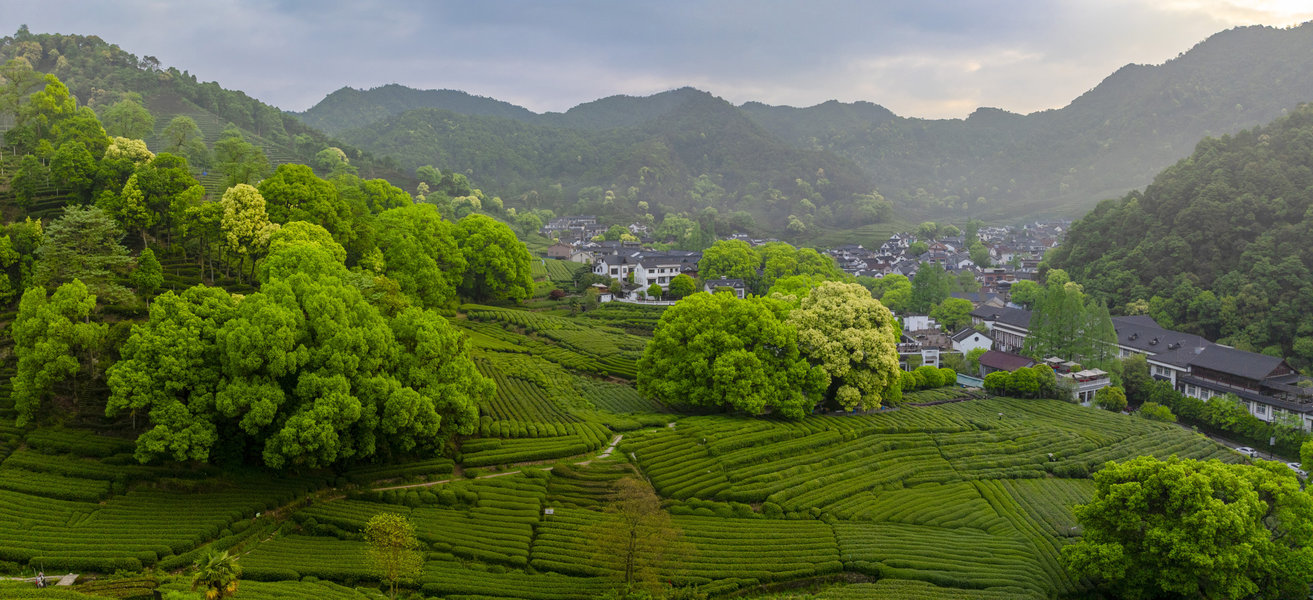
Meijiawu Longjing tea fields, Hangzhou.
Which Tea Village Should You Choose?
These are our itinerary recommendations rather than ratings of every business in each village.
| Area | We would choose it for | A useful visit format | Main consideration |
|---|---|---|---|
| Longjing Village — 龙井村 | A first introduction centred on Longjing’s name, landscape and local stories | Village walk followed by a pre-arranged tasting | Check walking access and the exact location of your host |
| Meijiawu — 梅家坞 | A leisurely visit combining tea-growing surroundings, a meal and tea | Short walk, lunch and a seated tea session | Individual venues vary; agree on the experience and charges |
| Manjuelong — 满觉陇 | A relaxed village outing with tea and seasonal interests | Village stroll and a chosen tea stop | A leisurely outing is not automatically a production-focused tea experience |
| China National Tea Museum | Learning about tea history, varieties and utensils | Museum visit, optionally followed by one village | Confirm the branch, opening arrangements and any separately booked activity |
Our starting recommendation: choose Longjing Village for a first tea-focused outing, Meijiawu for a meal-and-tea afternoon, or the museum if understanding the wider culture is your main aim. A carefully selected host matters as much as the village name.
1. Understand Longjing Tea Before You Visit
Longjing, often translated as Dragon Well, is a Chinese green tea associated with flat leaves and pan-fired processing. The landscape around Hangzhou’s West Lake is especially closely linked to its reputation.
Longjing tea and West Lake Longjing are not interchangeable labels
“Longjing” is a broader designation than West Lake Longjing, or Xihu Longjing — 西湖龙井. West Lake Longjing refers to tea from the designated producing area around West Lake.
Tea sold in Hangzhou, or served in a tea village, is not automatically West Lake Longjing. If origin matters to you, ask where the leaves were grown and what information supports that description.
Other Longjing-producing areas also make tea. A different origin is not by itself a reason to dismiss a tea; the important thing is that the description and price are clear.
A tea village is a working place
The tea bushes, paths and village homes belong to a living agricultural landscape. Some areas are suitable for visitors, while others are working plots or private property.
An open-looking field is not an invitation to enter, and seeing someone harvesting does not mean a visitor activity is available. Ask permission and follow the host’s instructions.
Cultural interest does not depend on buying expensive tea
You can learn a great deal from a well-explained tasting, a museum visit or a walk with someone who understands the landscape.
Before booking, decide whether you want scenery, conversation, a practical activity or a deeper introduction to tea. That choice will help you avoid an experience that is mostly about shopping.
2. Longjing Village: A First Tea-Focused Visit
Longjing Village is a natural place to start if you want your visit to focus on the tea’s best-known local associations.
The area connects with the Lion Peak, or Shifeng, landscape and stories surrounding the imperial tea trees. The account of Emperor Qianlong designating eighteen trees for imperial use should be understood as part of the area’s traditional story, rather than a claim that every tea sold nearby comes from those trees.
What we suggest doing
Begin with a manageable walk through permitted village and tea-growing paths. Notice the relationship between the tea rows, slopes and homes before settling down for a tasting.
Ask your host to explain the origin and harvest of the tea being served, and how the fresh leaves become the finished tea in your cup. If a demonstration is important to you, arrange it explicitly rather than expecting it to happen during a casual visit.
Who is it best for?
We recommend considering Longjing Village for first-time visitors interested in tea, couples who enjoy gentle exploring and travellers who want local context alongside the scenery.
What should you check?
Confirm the exact meeting point, the walking route and whether steps or steep sections are involved. A general map pin for the village may be some distance from your host.
Also ask whether the tasting is a paid cultural session, a teahouse order or an introduction connected to a shop. Each can be legitimate, but the expectations should be clear.
3. Meijiawu: Tea, a Meal and a Slower Afternoon
Meijiawu is a tea-growing village southwest of West Lake with a long-established connection to tea leisure and hospitality.
We would consider it when you want to give the outing enough time for a meal, a short walk and a seated tea session.
What we suggest doing
Choose a venue first, then build the walk around it. Have lunch before or after the tasting and leave room for conversation rather than rushing to the next attraction.
If you are booking through a guide, specify whether you want a farmer-hosted introduction, a teahouse experience or a practical demonstration. The village name alone does not define what is included.
Who is it best for?
Meijiawu is worth comparing for families, small groups and visitors who prefer a relaxed outing with a substantial seated break.
What should you check?
Confirm vehicle access, toilets, seating and any dietary requirements. Ask for a clear explanation of meal and tea charges, including whether tea is charged per person, per pot or by another arrangement.
A convenient venue with an informative host is often a better choice than a more photogenic one that is difficult for your group to reach.
4. Manjuelong: Village Atmosphere and Seasonal Interest
Manjuelong is associated with Hangzhou’s tea traditions and with the osmanthus scenery of the Manlong Guiyu area.
We would choose it for a leisurely village outing, particularly if your interests include seasonal atmosphere and a relaxed stop for tea.
What we suggest doing
Plan a village stroll and choose one place to sit. If learning about Longjing production is your priority, confirm that your host can provide that explanation; a pleasant place to drink tea does not necessarily offer a structured cultural session.
Autumn can add the interest of osmanthus, but flowering depends on conditions. Do not book a specific date on the assumption that the trees will be in bloom.
Who is it best for?
Consider Manjuelong if you enjoy unhurried exploring, village surroundings and seasonal details more than a tightly organised workshop.
What should you check?
Look at the exact walking approach and the location of your chosen venue. If a particular terrace, view or seasonal activity is the reason for visiting, check its current availability.
5. Add the China National Tea Museum for Context
The China National Tea Museum is a useful alternative or addition when you want a broader understanding of tea before visiting a village.
It has two separate locations: Shuangfeng and Longjing. Do not treat them as one building or assume that “Longjing branch” means the centre of Longjing Village.
The Shuangfeng location includes exhibitions on Chinese tea culture and West Lake Longjing. The Longjing location also presents tea culture within tea-growing surroundings.
For a first visit, we suggest one museum location rather than trying to cover both. Confirm current opening arrangements, reservations if required, and the availability of any workshop or demonstration. An exhibition visit does not automatically include a guided tasting.
Our recommendation: if you prefer learning to shopping, compare a museum visit followed by a short village walk. It gives the outing a clear cultural purpose without requiring a purchase.
6. Choose the Right Kind of Tea Experience
“Tea experience” can describe very different activities. Ask what you will actually do before paying.
| Experience | What it can involve | What to confirm |
|---|---|---|
| Tea-country walk | Village lanes and permitted paths beside tea fields | Distance, slopes, access and guide commentary |
| Seated tasting | Brewing, sampling and discussion | Tea selection, duration, language and charges |
| Processing demonstration | Watching an explanation of tea-making techniques | Whether it is live, seasonal or a visitor demonstration |
| Tea picking | Supervised picking in an authorised plot | Season, conditions, permission and participant requirements |
| Practical workshop | A structured activity with an instructor | Safety, hands-on content and what you take away |
Tea walking
A tea walk is a good choice if the landscape is your main interest. You do not need to spend the whole outing learning technical terminology.
Choose a route suited to your group. Hillside scenery can involve uneven surfaces, narrow paths and exposed sections, so ask about the actual terrain.
Tea tasting
A useful tasting explains what is in the cup and gives you time to ask questions. It need not be an elaborate ceremony.
Confirm whether English explanation is included or whether your guide will translate. Ask how many teas you will try and whether the session includes comparisons between origins, harvests or processing methods.
Tea picking and processing
Picking is seasonal and depends on the condition of the bushes, weather and the host’s arrangements. It should never be promised simply because you are visiting a tea village.
Processing demonstrations can also vary. A demonstration for visitors may differ from the day’s commercial production; that is acceptable when it is described honestly.
Do not handle hot equipment unless the activity is specifically organised for supervised participation. Ask whether children can take part and what alternative is offered if outdoor work is cancelled.
7. When Is the Best Time to Visit?
Spring: the main season to enquire about fresh-leaf activities
Spring is the main period to consider if you hope to see harvesting or arrange a fresh-leaf activity. March and April are useful planning months, but the timing varies with weather, plant varieties and individual plots.
Confirm availability close to your travel date. Farmers may be busy, and a production day does not necessarily mean they can host visitors.
Summer: plan around heat and outdoor conditions
For a summer outing, choose a manageable walk, carry water and leave time for a seated break. Ask about indoor alternatives if rain affects the route.
Autumn: a good fit for a slower village visit
An autumn outing can combine tea, walking and seasonal interests such as Manjuelong’s osmanthus. Check flowering reports if the blossoms are central to your plans.
Do not assume an autumn visit includes the spring harvest experience.
Winter: focus on conversation and tasting
A winter visit can still be worthwhile when you choose a comfortable venue and a clear cultural introduction. Confirm opening and heating arrangements, particularly at smaller properties.
You do not need to visit during harvest to enjoy tea culture. A thoughtful tasting can be rewarding throughout the year when the venue is operating and the session is arranged.
8. A Suggested Half-Day Tea Village Visit
For most first-time visitors, we suggest allowing around three to four hours at your chosen area, including a walk and tea session. Add transfers separately.
Start with the landscape
Meet your host or guide at a precise location. Begin with a short permitted walk and an introduction to the village, choosing a route that suits the group’s comfort.
Sit down for tea
Leave enough time to taste without rushing. Ask where the tea comes from, when it was harvested and how the host recommends brewing it.
Add lunch or a cultural stop
Choose one addition: a meal, a museum visit or another nearby stop that genuinely fits the route. Check the transfer rather than assuming everything in the western hills is close together.
Finish with room to spare
Allow time to return to your hotel, reach a station or meet another arrangement. A half-day outing works best when the final transfer is part of the plan.
These are planning suggestions, not fixed activity durations. A workshop, longer walk or mobility needs may require more time.
9. What to Ask During a Tasting
You do not need to be an expert. A few direct questions can turn a cup of tea into a useful introduction:
- Where were these leaves grown?
- Which harvest year and season is this tea from?
- How was it processed?
- What should we notice when tasting it?
- How would you brew this particular tea at home?
- What is included in the tasting charge?
Take small sips and notice how the aroma and taste change as the cup cools or the leaves are infused again. You do not need to agree with every flavour description to enjoy the experience.
If several teas are being compared, ask the host to identify them clearly. Keep your own simple notes about which you prefer.
Tea contains caffeine. If you wish to limit it, ask for smaller servings or choose not to finish each cup. A host should respect that preference.
10. Buying Tea Without Pressure
Buying tea is optional. Decide beforehand whether you want a souvenir, tea for everyday drinking or no purchase at all.
Clarify the price and quantity
Ask for the total price in renminbi and the quantity in grams. A quote per small packet, per 100 grams or per 500 grams produces very different totals.
Confirm that the tea being packed is the same tea you tasted, and check whether packaging or other charges are additional.
Ask about origin and harvest
If the tea is sold as West Lake Longjing, ask for clear origin information and available traceability details. A village address, an attractive box or an impressive story is not sufficient proof by itself.
Distinguish the harvest year from the date the tea was packaged. You can also ask how it has been stored.
Buy an amount you will enjoy
A small purchase of a tea you genuinely like can be more useful than a large gift box chosen under pressure.
Keep the receipt and any product information. Ask for practical storage and brewing advice for the tea you bought.
You can decline politely
A tasting should have clear conditions. Confirm its charge before it begins, and do not accept a supposedly complimentary session without understanding whether a purchase is expected.
If a visit becomes uncomfortable, you can decline the purchase and end the conversation. Do not feel obliged to buy because someone has spent time talking to you.
For organised tours, ask in advance whether the tea stop involves sales, commissions or a minimum purchase. Discover East China Tours’ No Shopping Guarantee explains our approach. Any optional purchase should remain your decision.
11. Getting to the Tea Villages
Taxi or ride-hailing
Use the specific village and your venue’s full Chinese address:
| Destination | Chinese name |
|---|---|
| Longjing Village | 龙井村 |
| Meijiawu | 梅家坞 |
| Manjuelong | 满觉陇 |
Confirm where the vehicle can stop and how far you must walk. Some lanes or hillside venues may not have direct vehicle access.
For the return journey, agree on a suitable pickup point. Check the map pin carefully and allow flexibility during busy periods.
Public transport
Use a current journey planner for the exact venue rather than the broad village name. Check the final stop, remaining walk and return service.
A route involving a metro journey may still require a bus or taxi connection. Avoid relying on old route numbers or fixed journey estimates.
Private transfer or guided visit
A pre-arranged transfer can make the outing easier for families, visitors with limited mobility or anyone combining the tea area with another stop.
Confirm the route, host, activity and pickup arrangements. Private transport does not itself guarantee a tasting, workshop or access to tea fields; these need to be arranged separately.
12. Comfort, Photography and Responsible Visiting
Wear shoes with a good grip and carry suitable weather protection. Paths can be uneven or slippery, and a hillside route may offer little shade.
For older visitors or anyone with limited mobility, choose a venue with convenient vehicle access and a short optional walk. Confirm steps, toilets and seating in advance.
Families can keep the outing simple: notice how tea grows, ask a few questions and leave time for a meal. A hands-on activity needs age-appropriate supervision, especially around hot equipment.
Photograph from permitted paths. Do not step into the rows, pick leaves or move farming equipment for a better picture. Ask before photographing residents or workers at close range.
Respect homes, gardens and quiet working spaces. Your host can help distinguish a visitor route from private land.
13. How to Fit a Tea Village into Your Hangzhou Itinerary
Tea village and West Lake
This is a useful first-visit combination. Give the tea outing a clear half-day allocation, then choose one manageable lake section for the remaining time.
Tea village and Lingyin Temple
The combination can work with confirmed temple reservations and planned transport. Choose one tea village rather than adding several stops, and leave time for lunch and transfers.
Museum and village
This is our suggested format for travellers particularly interested in culture: one museum location, one village and a clearly arranged tasting. Check both the schedule and the travel between them.
A short trip from Shanghai
For a day trip, choose either a substantial tea visit or a more modest tea stop alongside lake sightseeing. Protect the transfer back to your actual railway station.
An overnight stay makes it easier to include the lake, Lingyin and tea country without rushing.
Frequently Asked Questions
Is Longjing Tea Village one place?
Longjing Village is a specific place. The phrase is also used loosely for Hangzhou’s tea-growing areas, so confirm the village and venue included in your plan.
Which village should I choose for a first visit?
We suggest Longjing Village for a tea-focused introduction, or Meijiawu for a leisurely meal-and-tea outing. The quality and clarity of the arranged experience matter more than visiting several villages.
Can I visit without booking?
You may be able to explore public village routes independently, subject to access on the day. For a tasting with explanation, a workshop or tea picking, arrange the activity in advance. Individual venues set their own schedules and charges.
Can I pick tea whenever I visit?
No. Picking requires permission and suitable seasonal conditions. Book a supervised activity and confirm what happens if weather or production needs prevent it.
Is every tea sold in a village West Lake Longjing?
Do not assume so. Ask about the tea’s origin, harvest and available traceability information, especially when its price depends on a particular origin claim.
Do I need to buy tea after a tasting?
Purchasing should be optional unless a package clearly includes a product you have agreed to buy. Confirm the tasting charge and any conditions before starting.
Is the visit worthwhile if I am not a regular tea drinker?
Yes, if village scenery, farming traditions and local conversation interest you. Choose a short introduction rather than a specialist tasting that does not match your interests.
Do I need a guide?
Independent exploring is possible with preparation. A guide can help with translation, cultural context and coordinating a host, but should not replace clear information about activities and charges.
Can I take tea home overseas?
Check the current customs and biosecurity requirements for your destination and any transit points before purchasing. Keep the tea labelled and retain the receipt; do not assume that packaging alone makes it admissible. Declare it where required.
Plan a Tea Visit That Suits You
A rewarding tea visit needs time, a suitable place and someone willing to explain what you are seeing and drinking. You do not need an ambitious hiking route or an expensive purchase.
Choose one village, confirm the activity and leave room for a relaxed conversation. That gives you a better chance to understand how tea connects Hangzhou’s landscape with the people who live and work there.
Use our Hangzhou Travel Guide to plan the wider stay. If you would like a tea-country visit arranged around your interests and walking comfort, tell us about your trip. Discover East China Tours can help coordinate a private Hangzhou itinerary with clearly described experiences, seasonal activities subject to confirmation and no compulsory tea purchase.