
Suzhou rewards a little time and attention. Inside a garden, a doorway frames a pond, a covered corridor changes the view with every turn, and a courtyard offers a quiet pause between busier streets. Outside, canals run beside whitewashed houses, bridges lead into narrow lanes, and a bowl of noodles can become the most satisfying stop of the morning.
For a first visit, we recommend two days in Suzhou, with one or two carefully chosen gardens, time around Pingjiang Road and Shantang Street, and a local meal or cultural experience. A day trip from Shanghai can give you a worthwhile introduction. Staying overnight gives you more flexibility for evening walks and an unhurried second morning. With three days, you can add a nearby water town or explore beyond the main sightseeing areas.
This guide helps you decide what to include, where to stay and how to organise the practical details. Our suggested routes favour comfortable days with time to notice the city, rather than a long list of attraction entrances.
Suzhou at a Glance
| Planning question | Our recommendation |
|---|---|
| How long should I stay? | Two days for a balanced first visit; three days if you want a water-town outing |
| What should I prioritise? | One main garden, a canal-side neighbourhood and time for local food |
| Is a day trip worthwhile? | Yes, if you keep the route focused and count station transfers separately |
| Where should I stay? | Start with the old city for garden and canal sightseeing; consider Jinji Lake for a modern hotel or business-led stay |
| Which railway station should I choose? | Compare Suzhou Railway Station with your hotel and route; Suzhou North is a separate station |
| What should I book first? | Your train, accommodation and any timed garden or museum visits |
| Do I need a separate water-town trip? | Only if that experience interests you and your itinerary has room for the return journey |
| What is the main planning mistake? | Combining too many gardens, both canal districts and a water town in one hurried day |
Why Visit Suzhou?
Suzhou brings together several experiences that fit naturally into a short stay: classical gardens, historic waterways, regional food and traditional arts. It can be a particularly good choice if you enjoy architecture and walking, or want a smaller-scale sightseeing experience between visits to larger cities.
The appeal of a garden lies in its arrangement. Water, rocks, plants and buildings create a sequence of views within a limited space. UNESCO recognises nine gardens within the Classical Gardens of Suzhou World Heritage property. You do not need to visit all of them to appreciate the tradition.
The historic city also deserves time beyond its ticketed attractions. A walk beside a canal, a stop in a teahouse or a small neighbourhood detour can help you connect the gardens with the city around them.
Suzhou is also a substantial modern city. Jinji Lake and the Suzhou Industrial Park offer a different setting from the old town. Choose that part of the city when its hotel facilities, business connections or waterfront surroundings suit your trip.
Understand Suzhou Before Planning Your Route
The old city is the starting point for a classic first visit
Many of the best-known gardens and historic streets are in or around the old city, principally in Gusu District. For sightseeing, it helps to group places by area rather than assume that everything described as “central Suzhou” is a short walk apart.
The Humble Administrator’s Garden, Lion Grove Garden, Suzhou Museum’s main site and Pingjiang Road form a useful eastern sightseeing cluster. The Lingering Garden, Shantang Street and Tiger Hill belong to a different part of your route and need their own walking or transport plan.
Even within a cluster, allow for the approach to an entrance, queues and breaks. A short map distance can still involve more walking than your group wants.
Pingjiang Road and Shantang Street are separate outings
Both offer canal-side scenery, but they are in different parts of the old city. You can visit them during the same stay without treating the journey between them as another short stroll.
We generally suggest pairing Pingjiang Road with the northeastern garden and museum area, and Shantang Street with a western or northwestern sightseeing day. This keeps the route easier to manage.
Jinji Lake is modern Suzhou, not the historic canal quarter
Jinji Lake lies in Suzhou Industrial Park, east of the old city. Its waterfront, larger hotels and contemporary urban setting can be appealing, especially for a longer visit or a combined business and leisure trip.
A lakefront hotel does not place you beside the classical gardens. Plan a separate journey for old-city sightseeing, and choose a specific lakeside destination if you want an evening outing.
Water towns require a separate travel allowance
Tongli and Zhouzhuang are outings beyond the central garden-and-canal route. They are not stops you can casually add between Pingjiang Road and your return train.
For a short first stay, enjoy Suzhou itself first. Add a water town when you have enough time for transport, a relaxed visit and the return journey.
How Many Days Do You Need in Suzhou?
One day: a focused introduction
Choose one main garden, have lunch and explore one canal district. Add the museum only if you have a suitable reservation and are willing to shorten another part of the day.
For a Shanghai day trip, count the full journey: getting to the departure station, boarding, the train, travel into Suzhou’s sightseeing area and the return. The train ride alone does not represent the time your trip will take.
Two days: our recommendation for a first visit
Two days let you visit gardens with different characters, explore both Pingjiang Road and Shantang Street, and include a museum, teahouse or another cultural stop according to your interests.
An overnight stay also means that an evening walk does not have to compete with a tightly timed return train.
Three days: add a water town or a slower cultural day
With three days, keep the first two focused on Suzhou and use the third for Tongli or Zhouzhuang. Alternatively, stay in the city for a smaller garden, a museum or craft experience, neighbourhood food and time around Jinji Lake.
We usually recommend one water town during a short trip. Visiting several can create repetition and consume time you might prefer to spend elsewhere.
Which Suzhou Gardens Should You Visit?
For most first-time visitors, one substantial garden and an optional second garden with a different character are enough. Choose according to your interests, walking comfort and the rest of your route.
| Garden | What makes it worth considering | How we would use it in a first visit |
|---|---|---|
| Humble Administrator’s Garden | A substantial garden with ponds, pavilions and broad landscape views | A main garden visit on an eastern old-city day |
| Lingering Garden | A varied sequence of halls, courtyards, corridors and rock compositions | An alternative main garden, or a second visit on a different day |
| Master of the Nets Garden | A compact garden that rewards attention to proportion and detail | A smaller-scale contrast to a larger garden |
| Lion Grove Garden | A distinctive rockery landscape and winding passages | A choice for visitors particularly interested in rocks and garden paths |
| Canglang Pavilion | A different garden setting with water around its approach | An option for a longer stay or a less standard garden selection |
| Couple’s Retreat Garden | A residential garden setting that can fit an eastern old-city outing | An alternative when you prefer a different garden-and-neighbourhood combination |
Start with one main garden
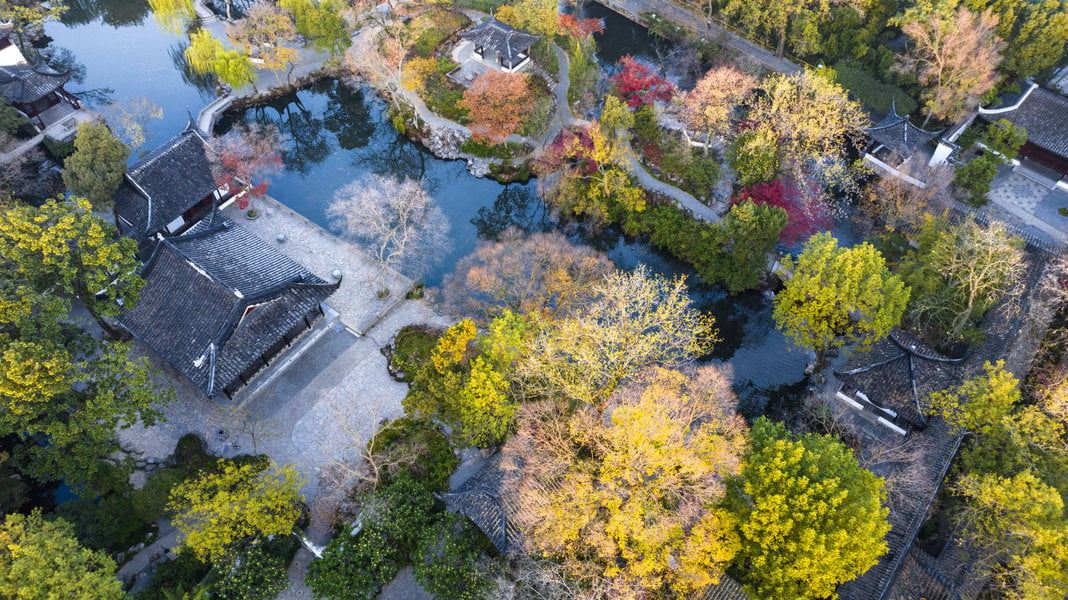
The Humble Administrator’s Garden is a natural starting choice if your day includes the main Suzhou Museum or Pingjiang Road. The Lingering Garden works well when you are organising a western old-city route.
Neither choice needs to become part of a garden marathon. Give your main visit enough time to pause, look through windows and doorways, and notice how the spaces connect.
Make the second garden a deliberate choice
If you enjoy garden design, a second visit can help you compare layouts and scale. A smaller garden may offer a useful contrast after a substantial first visit.
If your group is already tired, choose a meal, canal walk or seated cultural experience instead. Adding another garden simply because it is famous does not always improve the day.
Plan for uneven surfaces and thresholds
Historic gardens can involve stone paving, raised door thresholds, narrow passages and steps. The rockery paths at Lion Grove deserve particular consideration if anyone is uncomfortable with tight or uneven routes.
Do not assume that a compact garden is fully accessible. Confirm the appropriate entrance and feasible route for your group.
What to See Beyond the Gardens
Pingjiang Road: canals, lanes and a slower walk
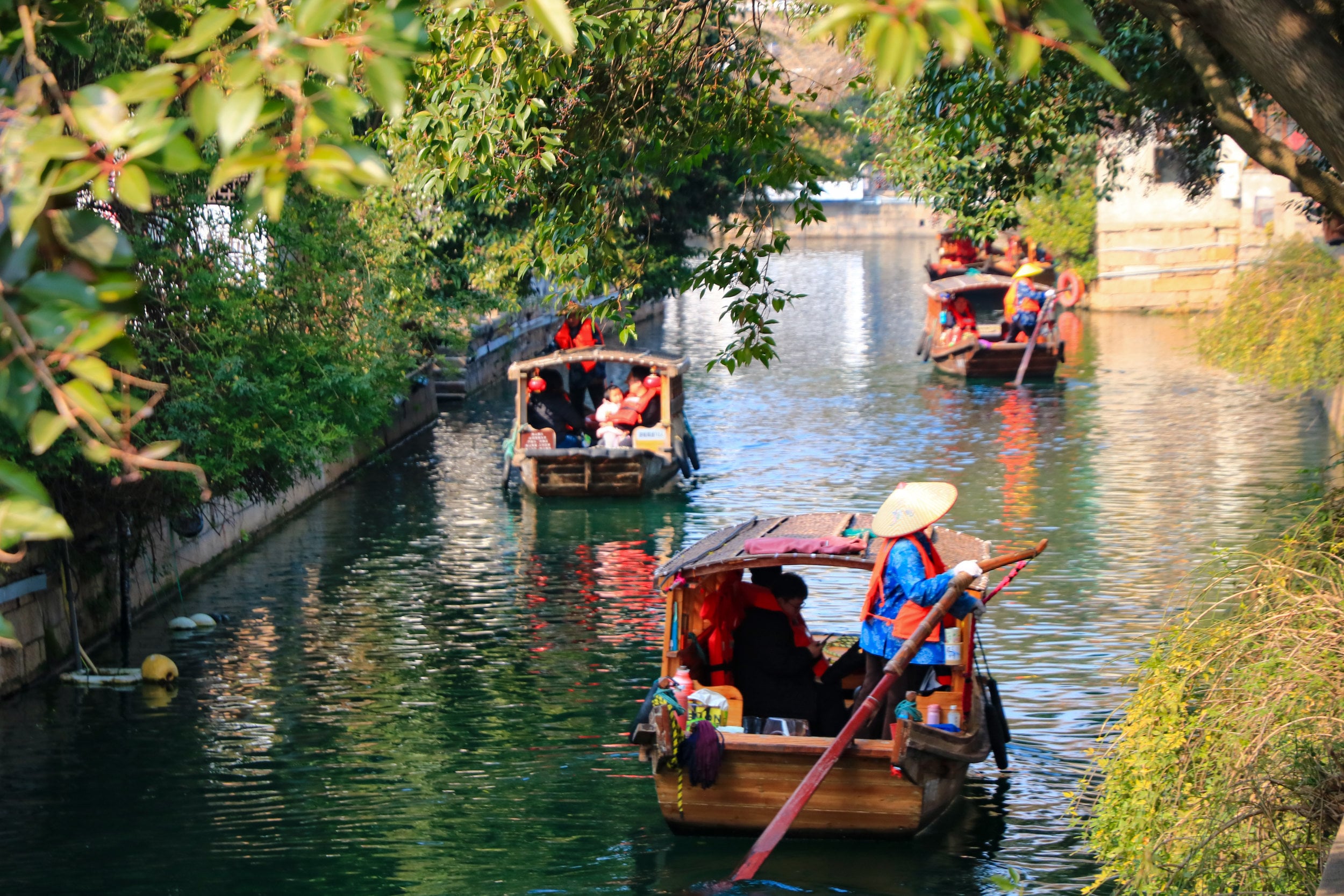
Pingjiang Road follows a canal in the northeastern old city. It is a useful place to spend time between formal sightseeing visits, with bridges, side lanes and places to stop for food or tea.
Walk a manageable section rather than trying to cover every lane. Leave space for a seated break, and explore public side streets when they suit your route. The district includes residential surroundings as well as visitor businesses, so avoid entering private courtyards or photographing residents at close range without permission.
Popular sections can be crowded. An earlier walk may suit photography or a gentler pace, but it does not guarantee quiet streets.
Shantang Street: a separate canal-side experience
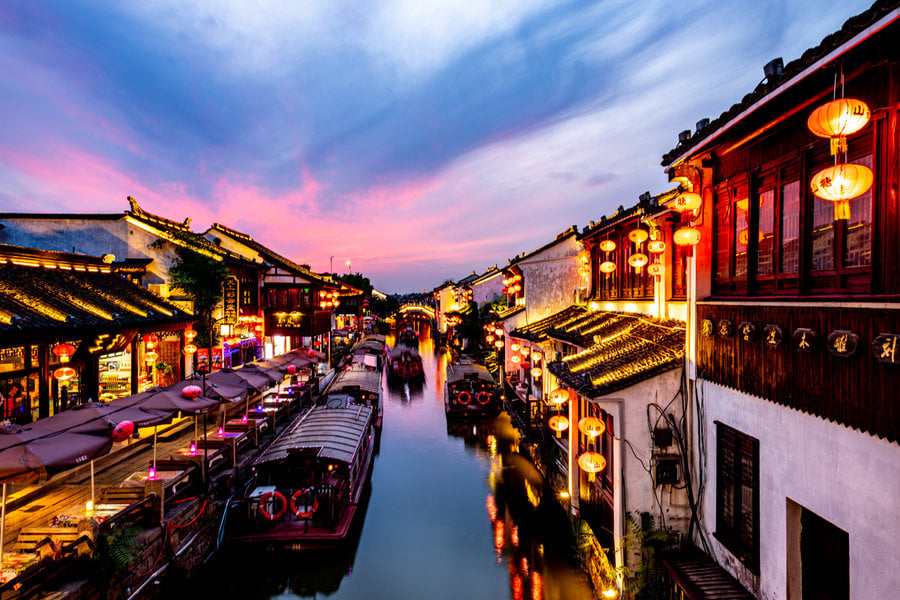
Shantang Street sits in the northwestern part of the historic city and can fit well after a western sightseeing day. Its busier visitor section is a natural choice for an evening walk, when the canal-side buildings and bridges take on a different appearance.
The wider Shantang route extends beyond the section many visitors explore. You do not need to walk its full length towards Tiger Hill to enjoy the neighbourhood.
If you want a boat outing, confirm the actual departure pier, route and return point. Walking and boating provide different views; choose the combination that suits your remaining time and energy.
Suzhou Museum: reserve the correct site
The main Suzhou Museum on Dongbei Street is associated with architect I. M. Pei and sits near the Humble Administrator’s Garden. It can add historical and artistic context to a garden-focused visit.
Suzhou Museum’s main site and Suzhou Museum West are different locations. Check the site name on your reservation before organising transport.
The main site uses timed advance reservations. Use the museum’s official booking channels, select the appropriate document type and bring the original passport recorded in your booking. Check the current opening calendar, particularly around Mondays and public holidays.
If you cannot secure a suitable slot, continue with your garden and neighbourhood plan. Do not rely on a last-minute museum entry to complete the day.
Tiger Hill: landscape and a historic pagoda
Tiger Hill offers a change from enclosed gardens, with a hillside setting and a well-known leaning pagoda. It suits visitors who enjoy a landscape outing and are comfortable with the walking involved.
Allow a proper sightseeing block rather than treating it as a quick photograph stop. Discuss steps, slopes and your preferred route before visiting, especially with older travellers or anyone with limited mobility.
Combine it with the western side of the city when practical. A transfer between Tiger Hill and Shantang Street may be more comfortable than adding a long connecting walk.
Jinji Lake: an optional modern waterfront evening
Jinji Lake can suit visitors staying nearby or those with time to see another side of Suzhou. Choose one waterfront area for a walk and meal instead of planning an entire lake circuit.
Check the current schedule for any fountain, performance or boat service you hope to see. An enjoyable lake visit should not depend on an event being available on your date.
Local Experiences Worth Making Time For
Pingtan in a teahouse or performance venue
Pingtan combines storytelling and music and is closely associated with Suzhou. A performance can be an enjoyable seated pause between walking visits.
Much of the storytelling is in the local language. Overseas visitors may appreciate the instruments and singing while missing the narrative detail, so ask about the format, duration and any available interpretation before booking.
Confirm whether tea is included, whether there is a minimum spend and whether the session is a full performance or a short visitor presentation.
Silk and embroidery as cultural experiences
Suzhou’s silk and embroidery traditions can add another dimension to your visit. A museum, exhibition or clearly arranged workshop is a useful way to learn about materials and craftsmanship.
If you want to try an activity, confirm the language, length, what you will make and whether the session suits children. A demonstration in a shop is different from a museum visit or hands-on workshop.
Shopping should remain your choice. Discover East China Tours plans cultural experiences around your interests, with no compulsory shopping stops or purchase obligations.
A market visit or neighbourhood food walk
A local market can give you a different view of daily life from the main attraction routes. Shuangta Market is one option to consider when your plans already include the eastern old city.
Keep the visit modest: look around, choose a few foods you would like to try and leave room for a proper meal. Avoid making every stop another queue for a popular snack.
Markets are workplaces as well as places to visit. Keep pathways clear and ask before taking close photographs of people or their stalls.
A guide who explains what you are seeing
An English-speaking guide can be particularly useful in a garden, where the layout, names and cultural references may be difficult to understand from a brief sign.
Before arranging a guided visit, discuss your interests and pace. Architecture, photography, food and family travel call for different approaches. A good day should include enough explanation to make the places meaningful and enough free time to enjoy them.
What to Eat in Suzhou
Food fits best into the route as part of the day, rather than something squeezed between visits. For a first stay, consider a noodle breakfast or lunch, a shared regional meal and a few small snacks.
| Food or meal | What to expect | Practical tip |
|---|---|---|
| Suzhou-style noodles | Soup noodles with a choice of toppings; preparation varies by shop | Choose a topping you recognise and ask about the broth if you have dietary restrictions |
| Squirrel-shaped mandarin fish | A fried fish dish served with a sweet-and-sour sauce | A shared restaurant dish; check the price and portion before ordering |
| Seasonal pastries and rice-based sweets | Small sweet or savoury items, with availability changing through the year | Try a small selection rather than buying everything at the first stop |
| A regional shared meal | Several dishes suited to the group’s preferences | Explain dietary needs before ordering and check ingredients beyond the visible topping |
Some regional dishes have a noticeable sweetness, but menus and cooking styles vary. Tell your guide or restaurant what you enjoy rather than assuming all Suzhou food tastes the same.
Vegetarian travellers should ask about stocks, lard, sauces and fillings. For allergies, carry a clear Chinese explanation and confirm preparation with the venue. A dish without visible meat is not sufficient evidence of its ingredients.
A Suggested Two-Day Suzhou Itinerary
This is our planning recommendation, not a fixed timetable. Arrange the sequence around confirmed reservations, your hotel and the walking comfort of your group.
Day 1: a main garden, museum or cultural stop, and Pingjiang Road
Morning: begin with the Humble Administrator’s Garden, using your confirmed admission time. Enjoy the main garden without rushing to the next entrance.
Lunch: take a proper break in the eastern old-city area.
Afternoon: visit the main Suzhou Museum if you have a suitable reservation. Otherwise, choose a different cultural stop or begin your Pingjiang Road walk earlier. Avoid automatically adding Lion Grove Garden simply because it is nearby.
Late afternoon or evening: explore a selected section of Pingjiang Road, with time for tea and dinner. Finish when the group has had enough rather than walking until every lane has been covered.
For a gentler day, choose the garden and Pingjiang Road only. For a museum-led visit, shorten the garden or give the museum its own larger part of the day.
Day 2: western Suzhou and Shantang Street
Morning: visit the Lingering Garden if you would enjoy a second garden. If one garden was enough, start with Tiger Hill instead.
Lunch: pause before deciding how much more sightseeing you want.
Afternoon: add Tiger Hill only if you have the energy and time for another substantial visit. Otherwise, enjoy a seated cultural experience, a hotel break or an earlier Shantang Street outing.
Late afternoon or evening: explore Shantang Street. Add a boat trip only when the operator’s arrangements fit your schedule.
If departing that day, work backwards from your train time and leave a comfortable station allowance. An evening visit is optional, not a reason to risk the departure.
If you have only one day
Choose either an eastern route—one garden, lunch and Pingjiang Road—or a western route—one main attraction, lunch and Shantang Street. Confirm the return train before committing to extra visits.
If you have three days
Add one water-town outing, or remain in Suzhou for a smaller garden, silk or embroidery experience and modern waterfront time. Decide based on what your group enjoyed during the first two days.
Should You Visit Tongli or Zhouzhuang?
Both are established water-town destinations with canals, bridges and historic buildings. Neither should be promised as an undiscovered or consistently quiet alternative.
| Choice | Why you might choose it | What to plan carefully |
|---|---|---|
| Tongli | A water-town outing that can include the Retreat and Reflection Garden | The journey to the actual scenic entrance, admission arrangements and walking route |
| Zhouzhuang | A classic water-town visit centred on waterways, bridges and historic streets | Travel from your Suzhou base, crowd conditions and the return connection |
| Stay in central Suzhou | More time for gardens, food and canal neighbourhoods without a separate day trip | Choosing varied experiences so the extra day feels worthwhile |
The Retreat and Reflection Garden in Tongli is part of the Classical Gardens of Suzhou World Heritage property. That recognition applies to the garden, not to every building or the whole town.
Choose one town according to your hotel, transport and interests. For public transport, check the complete journey, including the final connection to the entrance. Do not assume that a station bearing a town’s name places you at its historic centre.
If considering an overnight stay, check vehicle access, luggage handling, room noise and evening dining. A canal-view guesthouse can be appealing, but it needs to work comfortably for your group.
Where to Stay in Suzhou
For a short first sightseeing visit, begin your search in the old city. Compare the exact hotel entrance and room quality before choosing by neighbourhood name alone.
| Area | Best suited to | Main trade-off |
|---|---|---|
| Pingjiang Road and the northeastern old city | Gardens, museum visits and canal-side exploring | Lane access, crowds and noise vary by property |
| Guanqian Street and central old-city surroundings | Meals, shops and a flexible central base | A central address does not mean every attraction is walkable |
| Shantang Street and western old-city surroundings | Western sightseeing and evening canal visits | Separate transport for the eastern garden and museum cluster |
| Jinji Lake and Suzhou Industrial Park | Modern hotels, business trips and waterfront stays | Old-city sightseeing requires a separate journey |
| Suzhou Railway Station area | Arrival convenience, early trains or a short stopover | Check the actual walking route and whether the surroundings suit your stay |
A small guesthouse in a historic lane may have steps, limited vehicle access or no lift. Ask where a driver can stop and how far you must carry your luggage.
Families should confirm occupancy, bed arrangements, breakfast charges and connecting rooms. Older travellers should prioritise the entrance, lift, bathroom and nearby meals over the appeal of an address.
For one or two nights, we normally recommend one hotel throughout the stay.
Getting to Suzhou
From Shanghai by train
Rail is a practical option for many Shanghai–Suzhou journeys. Choose the departure station in Shanghai and arrival station in Suzhou together with your hotel locations.
Suzhou Railway Station and Suzhou North Railway Station are different stations. Suzhou Railway Station is a useful starting comparison for an old-city visit; Suzhou North may fit a different train service or onward plan. Check the actual connection rather than selecting the first result containing “Suzhou”.
Use China Railway’s 12306 service or an established booking provider, and enter passenger details to match the travel document. Carry the original passport used for the booking.
Save the departure station, train number, date, time and destination. Allow for station security and boarding, and ask staff for assistance if your passport requires a staffed check.
Compare the full hotel-to-hotel or hotel-to-attraction journey. A shorter train ride can offer less convenience if it arrives at a station poorly suited to your route.
From Hangzhou or another East China city
Compare direct rail options for your date and the station connections at both ends. If combining Suzhou with Hangzhou and Shanghai, arrange the order around your international arrival, departure and confirmed transport.
For wider planning, see our Hangzhou Travel Guide.
From an airport
For international arrivals, compare Shanghai’s airport connections with a private transfer or a train journey involving an onward station transfer. Include immigration, luggage collection and time to reach the railway station.
A prearranged vehicle may suit families, larger luggage or a late arrival. Confirm the airport, terminal, pickup procedure, total charge and hotel entrance before travelling.
Getting Around Suzhou
Walk within a chosen neighbourhood
Walking is rewarding around the historic streets, but it works best in manageable sections. Use transport between districts when the connecting walk adds effort without adding much to the visit.
Wear comfortable shoes with grip. Wet stone paving, bridges and garden thresholds deserve care.
Use the metro for suitable connections
The metro can help with travel between railway stations, city districts and sightseeing areas. Check the current route and the exit closest to your destination.
The nearest station on a map may still leave a walk to the entrance. Count that final section when planning with luggage, a pushchair or limited mobility.
Use taxis or arranged transfers between sightseeing areas
Save your destination in Chinese and use the specific attraction entrance or hotel address. Agree a practical pickup point near pedestrian streets before your visit ends.
For an arranged driver, confirm whether the service includes waiting, parking and return transport. A vehicle improves connections, but you will still need to walk inside gardens and historic districts.
Boat Trips: Choose the Route Before Buying
A canal ride can be a pleasant seated part of a Suzhou visit, but services in different areas are not interchangeable.
Before purchasing, ask:
- Which pier do we use?
- What route does the boat follow?
- How long is the outing?
- Does it return to the departure point?
- Is the price per person or per boat?
- Are there steps, narrow boarding points or restrictions relevant to our group?
A Shantang outing, another city canal service and a water-town boat trip each have their own arrangements. Confirm the current service rather than relying on a generic “Suzhou boat tour” description.
Ask separately about English commentary, weather changes and cancellation conditions. Do not assume a boat ride provides guided interpretation or fully step-free boarding.
Reservations and Practical Preparation
Arrange the visits that determine your route
Prioritise the Humble Administrator’s Garden, Lingering Garden, Lion Grove Garden and the main Suzhou Museum when checking advance booking needs. Current garden guidance requires advance online reservations for the three named gardens; requirements at other sites differ.
Use the official garden tourism platform or the venue’s clearly identified booking channel. Overseas visitors should check that the process supports their passport document and obtain assistance before the visit if the form is unclear.
Confirm the actual ticket and entry time. A request submitted to a booking provider or a waitlist is not the same as confirmed admission.
Keep passport details consistent
Check names, document numbers and dates before completing bookings. Carry original passports when required for admission, rail travel and hotel check-in.
If someone else arranges tickets, obtain the confirmations and understand what you must present at the entrance.
Check the calendar for your actual date
Opening hours, last admission, museum closure days and evening programmes can change for holidays, seasons or operational reasons.
Check the venue’s current notice shortly before travelling. Do not use a special holiday opening time as a permanent year-round schedule.
Prepare payment, maps and useful addresses
Set up your preferred payment method before the trip and confirm essential arrangements with your hotel or guide. Keep some cash available for practical flexibility.
Save hotel and attraction names in Chinese, along with booking confirmations. Download or screenshot key information so that a weak connection does not interrupt your arrival.
Best Time to Visit Suzhou
Spring and autumn are useful starting choices for a walking-focused trip, provided your dates and the weather cooperate. Rain is possible, and popular weekends and holidays can be busy.
Summer visits benefit from earlier outdoor sightseeing, drinking water and indoor breaks. A covered garden corridor provides shelter in places, but a garden remains an outdoor visit.
Winter can suit a slower itinerary with warm layers, hot meals and shorter outdoor sections. Do not choose a date on the assumption that one season guarantees empty attractions.
If you can travel flexibly, compare weekdays outside major Chinese public-holiday periods. For fixed holiday dates, secure key reservations and reduce the number of timed commitments.
Suzhou with Children, Older Travellers or Limited Mobility
For families, choose one main attraction at a time and include meals, toilets and rest breaks in the plan. A shorter garden visit followed by a canal walk can work better than repeated museum and garden admissions.
For older travellers, consider continuous walking, raised thresholds, bridge steps and the distance from vehicle drop-off to the entrance. A taxi between districts can preserve energy for the places you actually want to see.
For wheelchair users or travellers needing step-free access, confirm the specific entrance, feasible internal route, toilets and any boat boarding arrangements. A general description of a district as “flat” is not enough.
Tell your guide about mobility needs before the day is planned. This makes it easier to choose suitable places, realistic visit lengths and pickup points.
Common Planning Mistakes to Avoid
- Booking every famous garden. Start with one or two that offer a useful contrast.
- Treating Pingjiang Road and Shantang Street as neighbouring stops. Plan the connection between them.
- Confusing Suzhou Railway Station with Suzhou North. Check the full station name on the ticket.
- Booking the wrong museum site. Match your reservation to your intended location.
- Adding a water town to an already full city day. Give the outing its own travel allowance.
- Choosing a hotel by its name alone. Check the entrance, location, room and vehicle access.
- Making the return train too tight. Leave time for the station transfer and boarding.
- Assuming cultural visits include shopping. Choose museum, performance or workshop experiences with clear arrangements and optional purchases.
Frequently Asked Questions
Is Suzhou worth visiting on a first trip to China?
Yes, particularly if gardens, historic architecture and canal neighbourhoods interest you. It fits naturally into an East China trip that also includes Shanghai or Hangzhou. Choose it for those experiences rather than expecting a smaller version of Shanghai.
How many days should I spend in Suzhou?
We recommend two days for a balanced first visit. One day works for a focused introduction; three days allow a water town or more cultural time.
Can I visit Suzhou as a day trip from Shanghai?
Yes. Choose one main garden and one neighbourhood, confirm your train stations and allow for both station transfers. An overnight stay gives you more flexibility for evening exploring.
Which Suzhou garden is best for a first visit?
Our starting choices are the Humble Administrator’s Garden for an eastern old-city route or the Lingering Garden for a western route. Choose according to your itinerary and interests rather than assuming one garden suits everyone.
How many gardens should I visit?
One or two is our usual recommendation for a first stay. Garden enthusiasts may want more, but most visitors benefit from including food, canals and a different cultural experience between visits.
Do I need to book Suzhou attractions in advance?
Check each site separately. Prioritise advance arrangements for the Humble Administrator’s Garden, Lingering Garden, Lion Grove Garden and the main Suzhou Museum. Confirm current requirements and passport booking arrangements for your date.
Should I choose Pingjiang Road or Shantang Street?
Pingjiang Road fits an eastern old-city day; Shantang Street fits a western route and can suit an evening outing. With two days, you can enjoy both without rushing between them.
Is Suzhou Museum West beside the main museum?
No. They are separate locations. Check the site named in your plan and reservation before arranging transport.
Should I stay in the old city or near Jinji Lake?
For a short trip centred on gardens and historic streets, we usually recommend the old city. Jinji Lake may suit modern hotel preferences, business plans or a longer waterfront stay.
Do I need to visit Tongli or Zhouzhuang?
No. Central Suzhou already offers gardens and canal-side neighbourhoods. Add a water town if you specifically want that outing and have enough time for the full journey.
Is Suzhou suitable for older travellers?
It can be, with a carefully chosen route and comfortable transfers. Check garden thresholds, bridge steps, walking lengths and hotel access. Adapt the day to the individual traveller.
Can Suzhou be combined with Shanghai and Hangzhou?
Yes. The three cities offer different experiences: Shanghai for metropolitan sightseeing, Suzhou for gardens and historic waterways, and Hangzhou for West Lake and its surrounding cultural landscape. Plan the sequence around your arrival, departure and transport connections.
Plan a Suzhou Visit Around Your Interests
Begin with the experience you most want: understanding a classical garden, walking beside a canal, sharing a local meal or spending time with Suzhou’s traditional arts. Build the day around that choice and leave room for pauses.
Discover East China Tours can help combine Suzhou with Shanghai, Hangzhou and a wider East China journey. Tell us your dates, group size, interests and preferred pace so we can suggest a comfortable route, appropriate cultural experiences and practical transfers.
Read our No Shopping Guarantee for our approach to touring.