
Getting around Jingdezhen is easiest when you organize the city into a few sightseeing clusters. Walk within a district, then use a taxi, app-based car or a suitable bus to move between areas.
The main visitor destinations are not all on one compact walking route. The China Ceramics Museum, imperial kiln area, Taoxichuan and Sanbao require separate planning, especially if your day includes a timed museum entry or workshop.
For most first-time visitors, a practical approach is to arrange the arrival transfer, keep luggage at one hotel and use individual car journeys between major sightseeing clusters. Public transport can be useful when its current route matches your plans. A private vehicle becomes more valuable for scattered studio appointments, family requirements or a countryside day involving several stops.
This guide focuses on travel after you arrive in Jingdezhen, including station and airport pickups, local journeys, luggage and trips toward Yaoli and the wider Fuliang area.
Quick Guide: Which Transport Works Best?
| Situation | First option to consider | Main point to check |
|---|---|---|
| Station or airport to hotel with luggage | Taxi, app-based car or prearranged transfer | Correct exit, pickup point and hotel address |
| One city attraction to another | Individual taxi or app-based car | Entrance and legal drop-off location |
| A straightforward daytime route with light bags | Public bus or currently operating tourist service | Actual stops, direction and return service |
| Walking within Taoyangli or Taoxichuan | Walking | Access boundaries, weather and walking surfaces |
| A Sanbao workshop appointment | Confirmed car journey or suitable bus plus final connection | Exact studio address and return pickup |
| Several countryside stops | Prearranged private vehicle | Written route, waiting time and return arrangement |
| Yaoli as a single destination | Compare regional passenger service with a private transfer | Confirmed outbound and return departures |
| Late departure after sightseeing | Hotel luggage storage plus planned station transfer | Time to retrieve bags and reach the correct station |
You do not need a car and driver for every city sightseeing day. Equally, a low-cost bus is not always the best choice if it creates several changes or puts a booked activity at risk.
Understand the City Before Planning Journeys
The Historical Center: Taoyangli and the Imperial Kiln Area
The Imperial Kiln Museum and the surrounding Taoyangli heritage area form a natural sightseeing combination.
Arrive at the entrance appropriate to your booking, then explore the accessible areas on foot. A vehicle may not be able to reach the precise location shown by a map pin inside a pedestrian or managed visitor area.
When leaving, choose a permitted pickup point on an accessible road rather than placing the app pin in the middle of a heritage street.
The Western Museum Area
The Jingdezhen China Ceramics Museum is a separate destination from the imperial kiln area.
Treat the journey between them as a transfer, not a short continuation of the same walking visit. This distinction matters if you are planning both museums in one day.
The Ancient Kiln Folk Customs Museum is another substantial attraction. If you include it, verify its entrance and plan the route deliberately rather than assuming that every ceramic-themed attraction is beside the others.
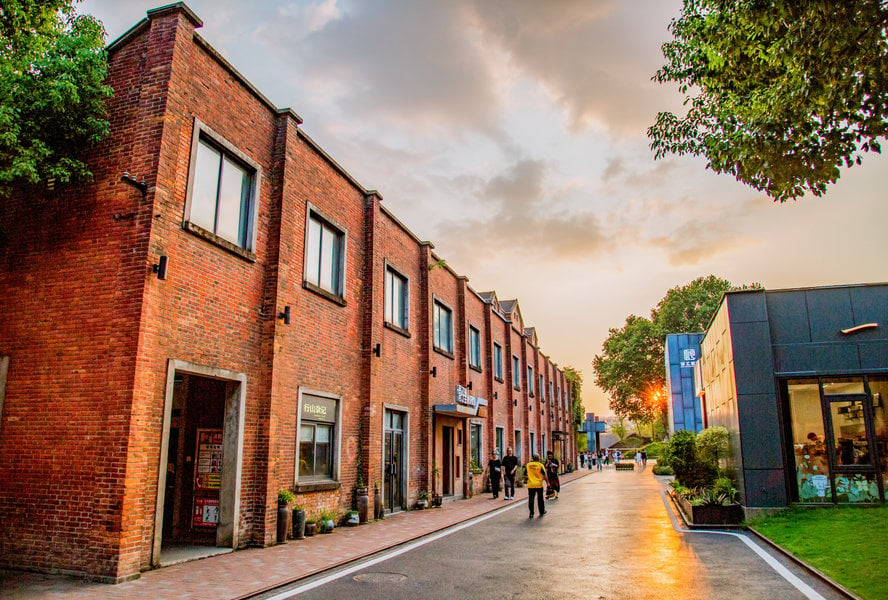
The Eastern Creative Areas
Taoxichuan and the Sculpture Porcelain Factory can be combined in an eastern creative-area day.
They are separate sites. Whether walking between your actual stops is worthwhile depends on the route, weather, mobility and how much walking remains inside each destination.
A short car journey can be sensible when you have purchases, children or a workshop appointment. You can save your walking time for the districts themselves.
Sanbao
Sanbao contains studios and other destinations spread through a valley setting.
“Go to Sanbao” is not a precise enough instruction for a driver if you have booked a class. Send the actual studio or property name, full address and a map pin.
A bus or shuttle that reaches a Sanbao entrance or transport hub may still leave a final journey to your appointment. Ask the studio about the correct approach.
The Countryside
Yaoli, Dongbu, Gaoling-related sites and other Fuliang destinations should be treated as a separate countryside route.
A day with several rural stops is different from taking a city taxi to a museum. You need to understand the distances, available services, waiting arrangements and how to return.
Arriving at Jingdezhen North Railway Station
Chinese: 景德镇北站
Booking name: Jingdezhenbei
Jingdezhen North is a principal arrival point for high-speed rail visitors. It has north and south plaza arrangements, so the side you use can matter.
Before the Train Arrives
Have these details ready:
- Your hotel’s Chinese name and full address.
- The hotel map pin.
- Your pickup instructions, if a transfer is booked.
- A working contact method.
- The number of passengers and bags.
If a driver is meeting you, confirm the exit or plaza before leaving the platform area. The right meeting point is the one agreed with your actual driver.
Taking a Taxi
Follow station signs to the designated taxi area.
Show the hotel address rather than relying on the English name alone. Confirm that the driver understands the destination, particularly for a smaller guesthouse or studio stay.
Use the normal metered arrangement where applicable. If the journey is quoted at a fixed price, establish the total and inclusions before departing.
Keep a record of the vehicle or receipt if you may need help locating an item afterward.
Using an App-Based Car
Select the station pickup location provided by the app and check that it matches where you are standing.
A pin placed at the station building may not correspond to an accessible vehicle area. Read the pickup instructions and use signs or staff assistance to find the appropriate zone.
Before boarding, match the vehicle registration to the app and confirm your destination.
Using Public Transport
Station services may include urban buses, tourist connections and regional passenger routes. They are different services, even if they depart from the same wider station area.
Check the current route, departure side and operating time. Do not choose a north or south exit solely from an old online description.
If your hotel is near a usable stop and you have manageable bags, public transport can work. If you would need several changes, a direct car journey is usually easier after arrival.
Prearranged Pickup
A prearranged transfer is particularly useful for:
- Families with several bags.
- Travelers needing assistance.
- Late arrivals.
- Larger groups.
- Accommodation in Sanbao or another less straightforward location.
Provide the train number, arrival time and exact hotel. Agree how the driver handles delays and where you will meet.
A vehicle booking does not necessarily include English-speaking assistance. Confirm language support separately if you need it.
Arriving at Jingdezhen Railway Station
Chinese: 景德镇站
Booking name: Jingdezhen
This is a different station from Jingdezhen North.
Use the station printed on your ticket when arranging pickup, ordering a car or asking the hotel for directions.
The basic arrival process is the same: leave through the signed exit, use the designated pickup area and travel to the hotel with its full address.
Do not ask a driver to meet you at “Jingdezhen station” when your train actually arrives at Jingdezhen North. Send the Chinese station name and your ticket details to remove ambiguity.
Arriving at Jingdezhen Luojia Airport
Chinese: 景德镇罗家机场
Airport code: JDZ
The airport requires an onward road journey to your accommodation.
For a straightforward arrival, use a designated taxi, an app-based car with a confirmed meeting point or a prearranged transfer.
Check Late-Arrival Arrangements
If you arrive late, notify the hotel and confirm that you can check in.
A daytime bus route does not establish that public transport will still be operating after your flight. Confirm airport-bus arrangements for your actual arrival, or plan a car journey.
If a transfer is booked, provide the flight number and confirm what happens if the flight is delayed.
Allow for Luggage Collection
Do not arrange a timed workshop immediately after the scheduled landing time. Landing, baggage collection, pickup and hotel arrival are separate stages.
Keep the first evening flexible if it follows a longer travel day.
Moving Between the Main Attractions
The following table describes useful pairings and the decisions each journey involves. It does not give fixed driving times, which depend on the exact entrance, traffic and pickup location.
| Journey | Practical approach | What to watch |
|---|---|---|
| China Ceramics Museum → imperial kiln area | Car transfer, or a verified bus route that suits your entry time | Museum exit, lunch and afternoon reservation |
| Imperial Kiln Museum → surrounding Taoyangli area | Walk within accessible sections | Tickets, entrances and pedestrian boundaries |
| Taoyangli → Taoxichuan | Separate cross-city journey | Traffic and the correct Taoxichuan entrance |
| Taoxichuan → Sculpture Porcelain Factory | Compare a local car journey with a comfortable walking route | Exact shops, weather and walking tolerance |
| Taoxichuan → Sanbao studio | Car journey or suitable service with a confirmed final connection | Studio address and access restrictions |
| Hotel → Ancient Kiln attraction | Direct transfer or verified bus | Correct visitor entrance |
| Any attraction → railway station | Planned departure transfer | Luggage collection, station choice and entry time |
Build a Transfer Window into the Itinerary
For a city journey between major sightseeing clusters, a 30–45-minute schedule block can be a useful starting point. This includes finding the pickup point, waiting and getting oriented at the next entrance.
It is a planning allowance, not a claim that every journey takes that long. Check the live estimate and adjust for your route, holiday traffic and appointment.
For Sanbao, the airport or an unfamiliar hotel location, use an address-specific estimate rather than applying one standard city allowance.
Reserve Walking for the Places You Want to Explore
A long connecting walk along ordinary streets can leave less energy for the heritage area or creative district.
Use walking when it is enjoyable and practical. Use a vehicle when the connection itself adds little to the visit or when weather and luggage make it uncomfortable.
Taxis and App-Based Cars
Conventional Taxis
Taxis are useful when you want a straightforward journey without arranging a full-day vehicle.
Keep the destination written in Chinese. If you need to reach a particular entrance, include that detail rather than only the attraction name.
Carry some RMB cash as a backup. Do not rely on tapping an overseas bank card directly in every taxi.
If using a payment app, confirm that your payment setup works before the first journey.
Ride-Hailing for Overseas Visitors
Didi and ride-hailing services accessible through Alipay can be useful for visitors with suitable accounts and payment arrangements.
Set up the service before you need it:
- Register and complete any required checks.
- Add a supported payment method.
- Confirm that your mobile number and data connection work.
- Save the hotel and key destinations.
- Check the pickup instructions each time.
Available features and interface labels may vary. If registration or payment does not work, use a hotel-assisted taxi or a prearranged transfer.
An English interface does not mean the driver speaks English. Keep messages short and use the written address or app translation where available.
Choose the Right Vehicle
Check passenger and luggage capacity before confirming the order.
A group that fits the seat count may still have too many suitcases or ceramic boxes for the boot. Use a larger vehicle or split the group deliberately if needed.
Confirm child seats or mobility equipment requirements separately. They should not be assumed to be available in an ordinary car booking.
Choose a Pickup Point the Driver Can Reach
At Taoxichuan, museum grounds and pedestrian areas, use a signed or permitted pickup location.
Tell the driver which entrance you are using, especially if the site has several gates.
Do not move away from the agreed pickup point without updating the driver. A photograph of nearby signage can help identify where you are.
Returning After Dinner or a Market
Allow time for a car to reach you during busy evening periods.
If you have a train departure, leave the district with enough time to collect luggage and complete the station journey. A live estimate is useful, but it should not consume your entire remaining margin.
Public Buses and Tourist Connections
Public transport can be a practical part of a Jingdezhen trip, especially for a direct daytime journey with light bags.
The important task is to identify what kind of service you are considering.
| Service type | Main use | What to verify |
|---|---|---|
| Regular urban bus | Everyday travel within the city | Stop, direction, operating hours and payment |
| Tourist-oriented urban route | Connections between visitor areas | Current routing and whether your stop is served |
| Holiday shuttle | Managing demand during a specified period | Exact dates and boarding arrangements |
| Regional passenger service | Travel toward surrounding towns or rural attractions | Departure point, ticket and return service |
Recent Changes Matter
Jingdezhen has recently adjusted tourist transport, including services described as the “Yaohuo Hong” cultural-tourism trunk route, “Ye Zhushan” loop and Sanbao direct connection.
These are useful leads when checking current public transport. Confirm the actual stops, timetable and operating arrangements for your visit rather than treating the names as sufficient instructions.
Older holiday notices may show additional services that operated only during a specified festival. Do not assume that a Qingming, May Day or Spring Festival shuttle runs throughout the year.
Check the Journey in Both Directions
Before boarding, establish:
- The stop you need.
- The correct direction.
- Whether the bus reaches the attraction entrance or a nearby road.
- The return boarding point.
- The last useful departure.
- How to pay.
For a bus route with unfamiliar Chinese stop names, ask the hotel to write down the destination stop and return instructions.
Keep some small-denomination cash if the operator accepts it, and confirm digital payment options. Do not assume that a payment setup working on one city’s transport also works on another operator.
When a Bus Is Worth Using
A bus is a good option when the route is clear, the stop is convenient and your schedule is flexible.
It is less useful when you have a strict workshop appointment, large luggage, several transfers or a late return without a confirmed service.
A mixed approach often works well: bus for one easy journey, car for the next and walking within the attraction.
Do You Need a Private Car and Driver?
For a Normal City Day
Usually, individual transfers are enough if your plan has two or three major stops and no unusual assistance requirements.
A car waiting throughout a long museum visit may add cost without providing much benefit.
Consider a private vehicle if you have several appointments, a larger group, limited mobility or a strong preference for coordinated pickups.
For Sanbao and Scattered Studios
A booked vehicle can help when the day involves several specific studio addresses.
Agree the order of visits with the studios first. A driver cannot turn an unannounced stop into a confirmed workshop or artist meeting.
Vehicle access may be restricted in busy periods. Confirm whether the driver can reach the studio entrance or must use a designated transfer point.
For a Countryside Day
A private vehicle becomes more useful when you want Yaoli plus another rural stop, or when the available public service does not support your return.
Ask for a written plan covering:
- Pickup and final drop-off.
- Named stops and their order.
- Approximate time available at each.
- Vehicle and luggage capacity.
- Included hours or distance.
- Waiting, tolls, parking and overtime.
- Child seats or other assistance.
- Driver communication.
- Whether any guide service is included.
A driver and a guide are different services. If you want historical explanation or English-language support inside attractions, arrange that explicitly.
Sanbao: Plan the Final Connection and Return
Sanbao deserves specific transport planning because the studios are spread out.
Book the Destination Before the Journey
Ask the studio for its Chinese name, full address, map pin and preferred approach.
Also ask whether recent traffic arrangements require a shuttle or a walk from a designated point. Busy-period restrictions may limit how close a car can get.
Confirm How You Will Leave
Before the workshop starts, decide how to return:
- A prebooked pickup.
- The same driver waiting under an agreed arrangement.
- A confirmed bus or shuttle.
- A studio-assisted car booking, if the studio offers it.
Do not assume that an urban-style pickup will be equally easy at every studio location or time.
Allow for the workshop ending later than expected and for walking to the actual pickup point.
Keep the Day Focused
A practical day might include a Sanbao workshop, lunch nearby and one further visit before returning toward Taoxichuan.
Adding several city museums and a countryside excursion to the same day makes the transport dominate the experience.
Luggage: Keep It Out of the Sightseeing Route
Before Hotel Check-In
Ask the hotel whether it can store your bags when you arrive.
If storage is available, go there first rather than carrying suitcases into museums or creative districts.
Confirm any limits, collection hours and whether valuables should remain with you.
After Check-Out
For an evening train or flight, leave luggage at the hotel if the property agrees.
Include the return to collect it in the route. Going directly from an attraction to the station may look convenient until your bags are on the other side of the city.
Check that reception or the storage area will be accessible when you return.
Station and Attraction Storage
Do not rely on unverified lockers or luggage facilities.
If you intend to use storage outside the hotel, check its location, operating hours, bag-size limits, payment and collection procedure in advance.
A facility serving small bags may not accommodate several large suitcases.
Bags in a Private Vehicle
Agree whether bags may stay in the vehicle while you visit.
Keep passports, cash, valuables and essential medication with you. Confirm the driver’s waiting arrangements and the final luggage handover.
For an attraction-to-station transfer, specify the extra luggage when booking the vehicle.
Ceramic Purchases
Ceramic boxes can change your vehicle and luggage requirements.
Ask sellers about protective packaging and whether shipping is available. Confirm costs and delivery arrangements before assuming that a purchase can be sent overseas.
Recently made workshop pieces may need finishing and firing after you leave. Arrange collection or delivery with the studio rather than expecting your driver to handle it automatically.
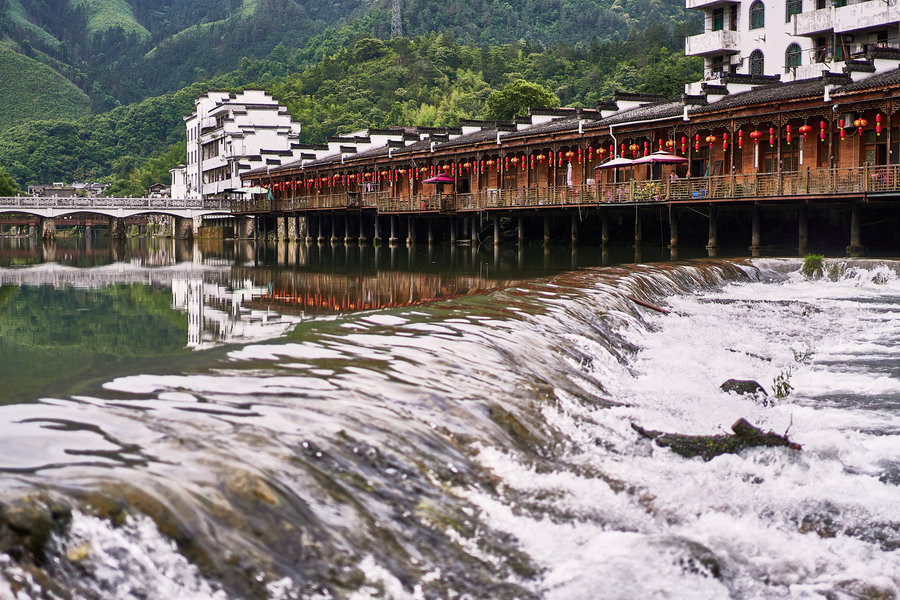
Getting to Yaoli
Chinese: 瑶里
Yaoli is a countryside destination. Plan it as a substantial outing rather than a quick addition between city attractions.
Regional Passenger Transport
Regional services have been introduced through Jingdezhen North’s north plaza, including a Yaoli route.
The published route has included stops associated with the wider Fuliang corridor, such as Fuliang’s historical county office, Hanxi junction, Gaoling China Village and Dongbu.
This does not mean you can hop off at every place and find an immediate onward bus. Check the current timetable and permitted boarding arrangements before planning multiple stops.
Ask about the present departure point, ticket purchase and return service. An older announcement’s fare or departure time should not be used as a permanent promise.
The Return Journey Comes First
Before committing to public transport, confirm:
- Where you board in Jingdezhen.
- Where you arrive in Yaoli.
- The journey duration for that service.
- Where you board the return.
- The return departure you intend to use.
- What you will do if that service is missed or unavailable.
If the return cannot be confirmed, arrange a private round trip or change the plan.
Do not assume that the last outbound departure from Jingdezhen tells you the last return from Yaoli.
Taxi Versus a Private Round Trip
A one-way city car booking may get you there without solving the return.
For a planned day trip, compare a clearly agreed round trip or vehicle-and-driver booking with the regional service.
Establish waiting time, stops and final destination. If you intend to finish at a railway station, state that before the quote is confirmed.
How Much of the Day Should You Allow?
Protect a substantial block for the road journeys, village visit, lunch and return.
Use the current route estimate to create the schedule. If you also want another countryside stop, reduce the number of activities rather than compressing everything around an evening train.
For an important onward departure, a separate countryside day with a relaxed return is easier to manage.
Combining Yaoli with Dongbu, Gaoling or Other Rural Stops
A countryside itinerary should have a clear theme and a limited number of destinations.
| Interest | Suitable planning approach |
|---|---|
| A slower village visit | Yaoli as the main destination, with time to walk and eat |
| Porcelain materials and production context | A focused route with one confirmed Gaoling-related stop |
| Village landscape and a second heritage stop | Yaoli plus Dongbu, if transport and visit time fit |
| Multiple studios or rural appointments | Prearranged vehicle with confirmed visits |
Verify exactly what a place name refers to. A historical material site, visitor complex and viewpoint may have different entrances and access arrangements.
Public transport serving a junction does not necessarily bring you to the attraction itself. Check the final connection and return pickup.
Avoid building a rural route from a list of nearby map pins alone.
A Transport Plan for Two Days in Jingdezhen
Day 1: Museums and the Historical Center
Start from the hotel, transfer to the China Ceramics Museum, then move toward the imperial kiln area for lunch and an afternoon visit.
Walk within the historical area and return to the hotel or dinner location afterward.
For this day, individual car journeys are usually a straightforward choice. A suitable bus can replace a transfer if it matches your reserved entry time.
Day 2: Workshop and Contemporary Creative Life
If the workshop is near the eastern creative areas, continue to Taoxichuan afterward and explore on foot.
If the workshop is in Sanbao, plan both the outward and return journey. Add Taoxichuan only if the remaining time supports it.
Do not repeatedly cross the city to add individual shops from unrelated areas.
Optional Third Day
Choose one countryside route or a more focused studio day.
Arrange its transport separately from the ordinary city plan, including a confirmed return and luggage arrangements if you are departing that evening.
Rain, Holidays and Busy Evenings
Rain
Use more direct transfers and reduce long connecting walks.
Allow extra time for car availability and road conditions. Protect fragile purchases and avoid waiting at an exposed pickup point when a nearby permitted sheltered area is available.
Major Holidays
Temporary traffic controls may affect approaches to Taoyangli, the Sculpture Porcelain Factory and Sanbao.
A private car does not automatically provide door-to-door access inside a restricted area. Follow current signs and staff instructions, and allow for shuttles or final walking sections.
Check the latest transport notice rather than relying on last year’s holiday plan.
Evening Events
Market and event traffic can make pickups slower.
Choose a recognizable meeting point on an accessible road. If several people are traveling together, keep the group at the same location.
Do not schedule a final shopping stop so tightly that a short pickup delay puts your train at risk.
Useful Chinese Names and Messages
| English | Chinese |
|---|---|
| Jingdezhen North Railway Station | 景德镇北站 |
| Jingdezhen Railway Station | 景德镇站 |
| Jingdezhen Luojia Airport | 景德镇罗家机场 |
| China Ceramics Museum | 景德镇中国陶瓷博物馆 |
| Imperial Kiln Museum | 景德镇御窑博物馆 |
| Taoyangli | 陶阳里 |
| Taoxichuan | 陶溪川 |
| Sculpture Porcelain Factory | 雕塑瓷厂 |
| Sanbao | 三宝 |
| Yaoli | 瑶里 |
| Dongbu | 东埠 |
| Please take us to this address. | 请送我们到这个地址。 |
| Where is the taxi pickup area? | 出租车上车点在哪里? |
| Where is the ride-hailing pickup area? | 网约车上车点在哪里? |
| Which entrance should we use? | 我们应该从哪个入口进去? |
| Where do we board the return bus? | 回程车在哪里上车? |
| What time is the last return bus today? | 今天最后一班回程车几点发车? |
| Is waiting time included in the price? | 这个价格包含等候时间吗? |
Use the exact property or studio name alongside these general destination names.
Frequently Asked Questions
Can I walk between all the major attractions?
No. Walking works within visitor districts, but major clusters need separate journeys.
Do I need a private car for the whole visit?
Not necessarily. Individual car journeys often suit a normal city itinerary. A private vehicle is more useful for scattered appointments or countryside stops.
Is Jingdezhen North the same as Jingdezhen Railway Station?
No. Use the exact station on your ticket.
Can overseas visitors use ride-hailing apps?
Yes, supported services offer registration and payment options for overseas visitors. Complete setup and confirm that it works before relying on it.
Will the driver speak English?
Do not assume so. Use a written address or arrange language assistance explicitly.
Are tourist buses available all year?
Some services may operate beyond holidays, while others are temporary. Confirm the actual route and dates.
Can I take a taxi straight to a Sanbao studio?
Often a car journey is useful, but access restrictions and the studio’s exact location matter. Confirm the drop-off and final connection.
Is public transport to Yaoli an option?
Yes, regional services have included a Yaoli route. Verify current operations and the return before traveling.
Can I visit several countryside stops by bus?
Only if the timetable and final connections support it. A route passing a place does not establish a practical hop-on, hop-off itinerary.
Where should I leave luggage before an evening departure?
Hotel storage is often the simplest option if the property agrees. Include collection time in the departure plan.
Plan Your Jingdezhen Transfers
A good transport plan keeps luggage out of the sightseeing day, groups nearby experiences and makes every return journey clear.
Discover East China Tours can help coordinate station or airport pickups, workshop transfers and countryside visits around your group’s pace. Share your arrival details, hotel locations, passenger and luggage numbers, and any mobility or language needs when making an inquiry.