
Hangzhou’s cultural life is woven into its landscapes and neighborhoods. Tea grows in the hills around West Lake, silk connects the city with a long history of textiles and trade, and museums and workshops preserve traditions ranging from fan making to seal carving.
For visitors, these interests can become a museum afternoon, a guided tea tasting, a walk through a tea-growing village or a carefully chosen craft activity. You do not need to understand every tradition before arriving. A good experience gives you enough explanation to appreciate what you see and enough time to ask questions.
For a first trip, choose one main theme and one complementary stop. A tea museum and a village tasting make a useful half-day outing. The China National Silk Museum works well with time around southern West Lake. Craft museums fit naturally into a Grand Canal visit.
This guide helps you choose between those options, understand what needs advance arrangements, and include cultural experiences in your Hangzhou itinerary without spending the day traveling between unrelated places.
Cultural Experiences at a Glance
| Experience | Best suited to | Suggested time | Key planning point |
|---|---|---|---|
| China National Tea Museum | Tea history, varieties and utensils | 1–2 hours at one campus | Choose the campus and check its opening arrangements |
| Tea village walk and tasting | Growing landscapes and meeting a host | A half day with travel and a relaxed stop | Confirm the tasting separately from the village walk |
| Seasonal tea picking or processing activity | Understanding how tea is made | As specified by the provider | Depends on season, weather and arrangements |
| China National Silk Museum | Textile history, clothing and craftsmanship | 1.5–2.5 hours | Workshops and guided services are separate from general admission |
| Fan or umbrella museum | Design, materials and regional crafts | 45–90 minutes at a selected venue | Confirm any practical activity in advance |
| Seal-art visit or arranged introduction | Calligraphy, carved seals and scholarly culture | 45–90 minutes, or longer for a class | A heritage-site visit does not guarantee a workshop |
| Historic pharmacy or old-town museum | Architecture and commercial history | 45–90 minutes plus a street walk | Check the individual venue’s admission and hours |
These are planning estimates, not advertised session lengths. Add transfers, meals and breaks to build a realistic day.
Why Tea, Silk and Crafts Matter in Hangzhou
Tea and silk are useful starting points because they connect several sides of the city: agricultural work, skilled production, daily habits, artistic expression and commerce.
The tea-growing hills help explain why the landscape around West Lake matters beyond its scenery. A museum or a conversation with a tea producer adds context to the rows of bushes you see on a walk.
Silk tells another story, involving materials, weaving, clothing, trade and changing tastes. Museum collections make it possible to look beyond the idea of silk as a souvenir and notice how much knowledge goes into textiles.
Other crafts offer a closer look at particular skills. An umbrella may combine bamboo work and textile decoration; a fan brings together structure, surface and sometimes painting or calligraphy. A carved seal links written characters with a small, carefully made object.
Some traditions have formal heritage recognition. China’s traditional tea processing techniques and associated social practices were inscribed on UNESCO’s Representative List of the Intangible Cultural Heritage of Humanity in 2022. That recognition concerns knowledge and living practices across China; it is not an endorsement of every tea shop, tasting or tour advertised in Hangzhou.
Tea Experiences: Choosing the Right Kind of Visit
A Museum Visit, a Tea Break and a Tasting Are Different
Before booking, decide what you actually want to do.
A museum visit provides history, objects and interpretation. A tea-house stop gives you time to sit and drink tea. A guided tasting should explain the tea and how it is prepared, usually through a planned session. A production activity focuses on growing, picking or processing and requires more specific arrangements.
You can combine them, but one does not automatically include the others. A museum ticket does not promise a private tasting, and a tea shop offering a sample may be conducting a sales interaction rather than a paid lesson.
For a first visit, a museum followed by a clearly arranged tasting is often an accessible introduction. If you mainly want scenery and a break from the city, a village walk and tea stop may be enough.
Visit the China National Tea Museum
China National Tea Museum — 中国茶叶博物馆
The museum has two campuses. They are separate destinations, so specify the one you intend to visit when searching, booking transport or arranging a guide.
| Campus | Chinese name | Location | Why choose it? |
|---|---|---|---|
| Shuangfeng | 双峰馆区 | 88 Longjing Road — 龙井路88号 | A practical introduction to Chinese tea culture and West Lake Longjing in a garden setting |
| Longjing | 龙井馆区 | 268 Wengjiashan — 翁家山268号 | A hillside museum setting with a broader world-tea perspective |
The Shuangfeng campus is a sensible first choice if you want historical context and an introduction to local tea. Spend time with the displays that interest you rather than trying to read everything.
The Longjing campus may appeal if you enjoy a hillside setting and want to explore how tea is understood in different places. Its terrain makes route planning more important for visitors who prefer fewer slopes or steps.
You generally do not need to visit both on a short trip. Choose one and allow time for a walk or tasting afterward.
The museum’s published visitor guide lists a Tuesday closure with holiday exceptions. Check the selected campus’s current opening and entry arrangements; do not assume it follows the Monday closure common at some other museums.
Suggested time: Around 1–2 hours at one campus, longer if you add a separately arranged activity.
Choose a Tea-Growing Village
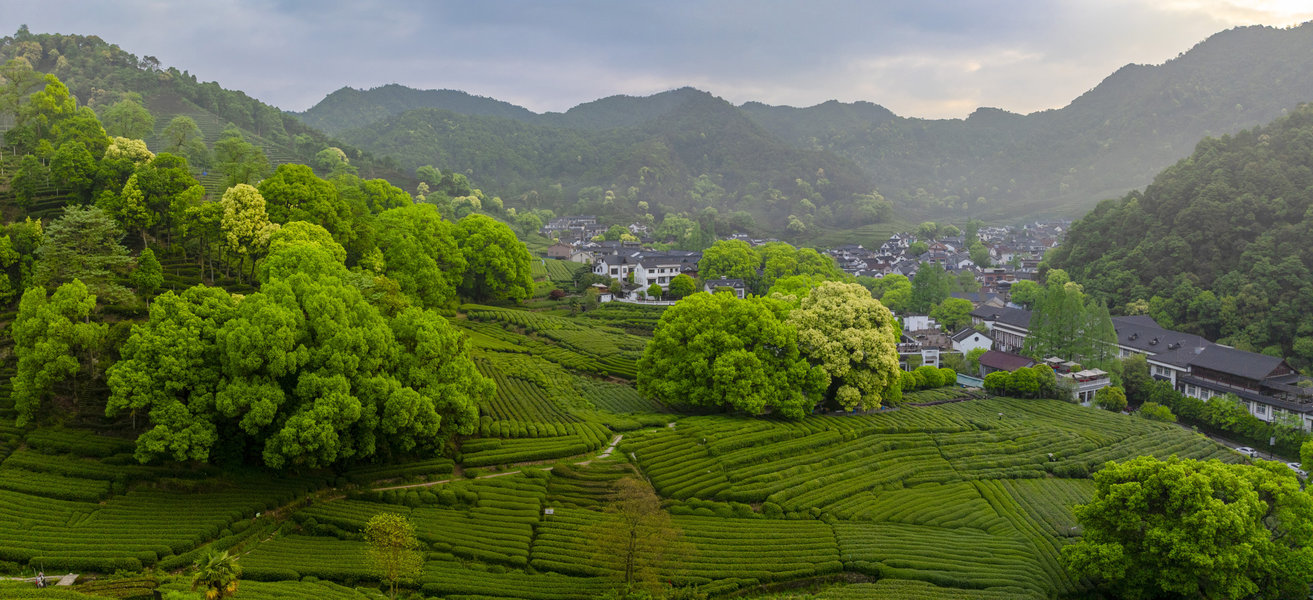
Three places are useful to investigate, depending on the kind of outing you want.
| Area | What it can add to your visit | Planning consideration |
|---|---|---|
| Longjing Village — 龙井村 | A recognizable place to connect tea with the hills near West Lake | Confirm the host or venue rather than using only the village name |
| Meijiawu — 梅家坞 | A village-based tea outing with opportunities for a meal or tasting | It is a separate destination; allow travel time and arrange the return |
| Longwu Tea Town — 龙坞茶镇 | A broader tea-growing-area outing for travelers with more time | Better treated as a dedicated excursion than a quick add-on |
These are working places with farms, homes and businesses. A walk through a village does not give you permission to enter every tea field or watch a producer at work inside private premises.
Choose a public walking route or follow your host’s instructions. Ask before stepping among the bushes, picking leaves or photographing workers closely.
If your schedule is limited, select one village. Visiting several in a single afternoon can leave little time for the experience you came for.
What to Expect from a Good Longjing Tea Tasting
Longjing, often translated as Dragon Well tea, is a green tea associated with Hangzhou. A useful tasting helps you understand the particular tea being served rather than relying only on a famous name.
A host might introduce the dry leaves, explain origin and harvest, prepare the tea and invite you to notice the aroma, taste and changes during brewing. The exact format varies; a simple glass preparation can be appropriate, and not every session needs an elaborate ceremony.
Before booking, ask:
- Which teas will we taste, and is the session focused on Longjing?
- How long does the session last?
- Is explanation available in English, or will interpretation be provided?
- Is the price per person or per group?
- Are snacks, a meal or transport included?
- Is purchasing tea optional?
If your interest is in comparing teas, request that specifically. If you want to meet a producer, confirm who will host the visit and what part of their work they can explain.
Tea Picking and Processing: Understand the Season
Spring, particularly March and April, is the main period to investigate first-harvest Longjing activity. The timing changes with weather and the tea variety, so fixed dates should not be treated as a guarantee.
Picking, watching tea being processed and learning through a demonstration are also different experiences. A booked visitor activity may use a teaching setup, while a working producer follows the needs of that day’s harvest.
Outside the main spring season, a tasting, museum visit or landscape walk can still be worthwhile. What you should not expect is a guaranteed live spring harvest throughout the year.
For a practical activity, confirm access, group size, clothing requirements and what you will do yourself. Tea-processing equipment can be hot, so follow the instructor’s directions and check the suitability of the activity for children.
Buying Tea Without Rushing
Treat the experience fee and any purchase as separate decisions. Agree on the cost of the visit before it starts and buy only if you want the tea being offered.
Useful questions include:
- Where was this tea grown?
- When was it harvested and processed?
- What quantity does the quoted price cover?
- Can I taste the same batch I am considering buying?
- How should it be stored?
Longjing is a broader tea name than the specific origin claim “West Lake Longjing.” Ask about the actual origin rather than assuming every product with a Hangzhou-themed label comes from the same growing area.
Very early harvest descriptions and elaborate packaging do not tell you whether you personally prefer the tea. Set a budget, taste where possible and check the weight and total price before paying.
Silk Experiences: Begin with the Material and the Craft
Visit the China National Silk Museum
China National Silk Museum — 中国丝绸博物馆
Address: 73-1 Yuhuangshan Road — 玉皇山路73-1号
The China National Silk Museum is a strong starting point for visitors interested in textiles, clothing and design. Located near the southern West Lake area, it offers more context than a retail stop alone.
Its collections and exhibitions address silk and wider textile heritage, including history, techniques, clothing and conservation. Look for the subjects that interest you most: the making of textiles, patterns and garments, trade connections or the work involved in preserving fragile materials.
Allow enough time to look closely. A short explanation of how a fabric was made can change what you notice in a display, especially when the detail is small.
The museum’s ordinary public admission is free. Its published visitor arrangements removed advance booking for individual visits in July 2024, while groups and guided services require separate coordination. Bring your passport for any required registration and confirm the current procedure before visiting.
Published opening arrangements list Tuesday–Sunday, 9:00 a.m.–5:00 p.m., with last admission at 4:30 p.m., and Monday closure except on statutory holidays. Check for temporary gallery closures and special notices; an open museum does not guarantee access to every exhibition.
Suggested time: Around 1.5–2.5 hours for a selective visit.
Can You Take a Silk or Textile Workshop?
The museum offers educational and practical activities, but the program changes. A class advertised for a particular event, date or age group should not be assumed to run every day.
Ask what is available during your visit and whether you can join as an overseas traveler. Confirm the language, session length, minimum group size and whether booking is required.
Be precise about the activity. Looking at weaving equipment, watching a demonstration, decorating a textile and learning a weaving technique are different experiences.
If you want to take your work home, ask whether the item will be ready the same day. Some activities may need drying, finishing or another process before collection.
Guided museum explanation can also add value if no suitable workshop is available. It is better to arrange a clear, relevant visit than book an activity with a title that does not explain what you will do.
Silk Shopping and Cultural Interpretation
Hangzhou’s silk retail scene includes specialist shops, established brands and the China Hangzhou Silk City area. It can be useful if buying a scarf, fabric or garment is one of your goals.
Keep the museum and shopping visit distinct. A shop may explain its products well, but a sales demonstration is not automatically a hands-on cultural class.
Before buying, check:
- Fiber composition and whether the item is silk or a blend.
- Whether decoration is woven, printed or embroidered.
- Care instructions, size and any alterations.
- The complete price and return arrangements.
- Whether the item is ready to take away or must be collected later.
Do not use shine or softness alone to judge the material. Ask for a written label or product description and keep the receipt.
For a custom garment, confirm measurement, fitting and delivery dates before placing an order. A short stay may not leave enough time for alterations.
Fans, Umbrellas and Other Hands-On Crafts
Explore the Grand Canal Craft-Museum Area
The Hangzhou Arts and Crafts Museum complex near Gongchen Bridge includes venues associated with fans, umbrellas, knives, scissors and swords, as well as broader craft displays and demonstration spaces.
It fits naturally into a canal outing. You can select one museum, walk around Gongchen Bridge and Qiaoxi, and leave time for lunch or tea.
The China Fan Museum suits visitors interested in how an everyday object becomes a surface for design and art. The China Umbrella Museum offers another perspective on materials, construction and decoration.
These collections can be enjoyed without taking a class. Notice the different uses of bamboo, textile, paper and decoration, and compare structure as well as surface design.
Suggested time: Around 45–90 minutes for one selected museum, plus time for a separate activity if booked.
Choose a Workshop by What You Will Actually Do
An activity related to umbrella decoration may involve making an image on a postcard rather than constructing a complete umbrella. A fan-painting class may use a prepared fan rather than teach frame making.
Both can be enjoyable, provided you know what you are booking. In 2026, the China Umbrella Museum featured a visitor activity applying a decorative technique associated with West Lake silk umbrellas to a postcard. That illustrates the kind of introduction a museum can offer; it does not establish a daily drop-in program for all visitors.
Ask for a plain description of the activity, the materials supplied and the finished object. Also confirm whether the instructor demonstrates the underlying traditional technique or mainly helps you decorate a prepared item.
Demonstrations and Artisan Visits
The canal-area Workmanship Demonstration Pavilion is associated with the display and transmission of traditional skills. If you want to meet a particular maker or watch a specific craft, arrange that in advance where possible.
Do not assume all artisans work publicly on every opening day. Their production schedules, teaching arrangements and event commitments can vary.
An interpreter can be helpful for questions about tools, materials and training. Ask before touching tools, unfinished work or display objects, and keep photography within the maker’s rules.
Calligraphy and Seal Art
Visit Xiling Seal Art Society’s Gushan Setting
Xiling Seal Art Society — 西泠印社
Xiling Seal Art Society is closely associated with Hangzhou’s seal-carving tradition. Its headquarters on the western side of Gushan makes it a cultural point of interest during a northern West Lake outing.
The site offers a connection between written characters, inscriptions, garden spaces and scholarly culture. It can be particularly rewarding if you already enjoy calligraphy or small-scale craftsmanship.
A visit to the heritage setting does not automatically include a lesson, a resident artist meeting or access to every interior. Check the areas currently open to visitors and arrange any practical session separately.
Suggested time: Around 45–90 minutes for a selective visit, depending on available spaces and your interests.
What to Check Before Booking a Class or Custom Seal
For a class, ask whether you will practice brush writing, learn about seal design, carve a material yourself or observe an instructor. These activities require different tools and teaching approaches.
If you want a custom name seal, confirm the characters, design, material, cost and completion time. Ask for help choosing a Chinese rendering of your name if you need one, and approve it before carving begins.
The instructor should explain how tools will be used and whether the session suits your group. For younger children, a supervised printing or writing activity may be more appropriate than a carving lesson.
Historic Streets, Medicine Heritage and Song-Dynasty Interpretation
Hu Qing Yu Tang and the Old Town
Hu Qing Yu Tang — 胡庆余堂 is a useful cultural stop in the Hefang Street and Dajing Lane area. Its historic pharmacy complex and medicine museum connect architecture, skilled work and commercial history.
Combine it with a manageable old-town walk rather than treating it as a compulsory shopping stop. Museum entry, business areas and any organized activity have separate arrangements.
Visit for heritage and interpretation. A cultural visit does not require purchasing remedies or booking a medical consultation.
Deshou Palace Ruins Museum
Southern Song Deshou Palace Ruins Museum — 南宋德寿宫遗址博物馆 provides another route into Hangzhou’s history as the Southern Song capital. Archaeological remains and modern interpretation help explain the palace setting.
It is a different kind of experience from a craft class or a shopping-street walk. Check its current reservations and entry arrangements before building your day around it.
For an English-speaking visit, decide whether the available interpretation meets your needs or whether a guide would help. Photographs of the red exterior wall do not provide the same context as seeing the museum.
Performances and Contemporary Interpretations
An evening performance can be a useful addition if you enjoy music, dance or visual storytelling. Ask what kind of show it is, how much language matters, and whether it is indoors or outdoors.
Distinguish a contemporary tourism production from a traditional local performing-art form. Both can be enjoyable, but they offer different experiences.
Check the actual date, venue and seating category before booking. Seasonal events or a one-off museum program should not be treated as a year-round evening option.
How to Choose an Experience That Fits You
If You Want a First Introduction
Start with a museum and one relaxed stop afterward. The Tea Museum plus a tasting, or the Silk Museum plus a lake-side break, gives the day a clear focus.
If You Prefer Doing Something Yourself
Prioritize a confirmed workshop. Read the description carefully and check the language, duration and finished item. Keep sightseeing around it flexible so you can arrive on time.
If You Enjoy Meeting People
Arrange a host-led tea visit or an artisan session with interpretation. Confirm who is hosting and what they can show you, rather than booking only a broad label such as “local culture experience.”
If You Mostly Want Scenery and a Slower Pace
Choose a tea-village walk and a tea stop. A formal class is optional; time in the landscape can be enough.
If You Are Traveling with Children
Choose a shorter practical session with a clear activity and age-appropriate tools. Leave room for a snack and a break instead of placing several long museum visits back to back.
Three Practical Ways to Arrange the Day
Option 1: A Tea-Focused Half Day
Suggested plan: One Tea Museum campus → a prearranged village tasting or tea stop → return to your hotel or the city.
Begin with exhibitions to understand what you will taste later. Choose the village or venue according to the host you want to meet and the route that makes sense, rather than assuming all tea locations are next to one another.
Allow around 4–5 hours including transfers and a relaxed stop. Add a meal or seasonal activity only if the schedule permits it.
Option 2: Silk and Southern West Lake
Suggested plan: China National Silk Museum → lunch or a break → a selected southern West Lake walk.
This suits travelers who want textiles and scenery without turning the day into a shopping tour. If you book a museum activity, use its time as the fixed point and adjust the walk around it.
Check the actual route between the museum and the lake stop you choose. West Lake is large, and a destination on another shore may need a separate transfer.
Option 3: Canal Crafts and Neighborhood Life
Suggested plan: One craft museum near Gongchen Bridge → a confirmed workshop if available → Gongchen Bridge and Qiaoxi → lunch or tea.
Allow around 4–5 hours for an unhurried half day with a modest activity. If you want to add Xiaohe Street, extend the time or shorten another part of the visit.
This is a better geographical combination than trying to add the tea hills immediately after a canal workshop. Keep those as separate outings unless you have a longer day and planned transport.
Can You Combine Tea and Silk in One Day?
Yes, with a selective itinerary. Choose one tea campus or tasting venue and the Silk Museum, allowing travel and a meal between them.
Keep the activity list short. Two museum campuses, a tea village, a hands-on harvest activity and the Silk Museum together would leave little room for a relaxed experience.
Check the day of the week first: the Tea Museum’s published Tuesday closure and the Silk Museum’s published Monday closure mean a generic “museum day” can fail if the individual schedules are overlooked.
Booking Checklist for Overseas Visitors
For any paid experience, establish the following before confirming:
- Activity: What will you see, learn and do yourself?
- Venue: What is the exact meeting point, campus or workshop?
- Language: Who will explain the experience, and is interpretation included?
- Time: How long is the session, and when should you arrive?
- Price: Is the fee per person or per group, and what does it include?
- Participation: Are there age requirements or a minimum group size?
- Finished work: Can you take it home that day, or is collection or delivery needed?
- Purchases: Are optional retail purchases separate from the experience fee?
- Changes: What happens if weather, harvest conditions or the instructor’s availability affect the session?
Some museums and providers use WeChat accounts or mini-programs. If a booking flow does not accept your passport, phone number or payment method, ask the venue, your hotel or travel provider for the correct alternative.
General museum entry, guided explanation and workshop reservations may use different processes. Do not assume an admission arrangement also reserves a class.
Getting Between Cultural Areas
The main experiences are spread across Hangzhou. Plan them as clusters:
- Tea hills and museum campuses: Useful for a tea-focused outing west and southwest of the lake.
- Southern West Lake: Useful for the Silk Museum and a selective scenic walk.
- Gushan: Useful for seal-art heritage during a northern lake visit.
- Grand Canal: Useful for craft museums, Gongchen Bridge and nearby neighborhoods.
- Old town: Useful for Hu Qing Yu Tang, Hefang Street and Southern Song history.
Metro travel can help reach urban districts, but the final section to a tea venue or museum may be easier by taxi, bus or an arranged transfer. Check the complete route rather than choosing a station solely because it sounds close.
For a tea visit, give the driver the exact host or venue pin. For museums, specify the campus. Arrange the return from less central locations, especially after a late meal or session.
Avoid promising a fixed cross-city transfer time. Weekend traffic and busy holiday periods can affect roads around scenic areas.
Useful Chinese Names to Save
| English name | Chinese name |
|---|---|
| China National Tea Museum | 中国茶叶博物馆 |
| Shuangfeng campus | 双峰馆区 |
| Longjing campus | 龙井馆区 |
| Longjing Village | 龙井村 |
| Meijiawu | 梅家坞 |
| Longwu Tea Town | 龙坞茶镇 |
| China National Silk Museum | 中国丝绸博物馆 |
| China Hangzhou Silk City | 杭州中国丝绸城 |
| China Fan Museum | 中国扇博物馆 |
| China Umbrella Museum | 中国伞博物馆 |
| Workmanship Demonstration Pavilion | 手工艺活态展示馆 |
| Xiling Seal Art Society | 西泠印社 |
| Hu Qing Yu Tang | 胡庆余堂 |
| Southern Song Deshou Palace Ruins Museum | 南宋德寿宫遗址博物馆 |
Save precise map pins as well as names. A broad craft-museum complex or tea village may have several entrances and businesses.
Budgeting and Choosing What to Pay For
A cultural visit can be modest in cost if it focuses on public museums and a simple tea stop. Private instruction, interpretation, materials, transfers and specialist host visits add different expenses.
Compare experiences by what is included, not just the title. Two “tea experiences” might differ substantially: one may be a drink with a short explanation, while another includes a producer visit, interpretation and a seasonal activity.
For a workshop, ask whether the fee includes materials and the finished item. For tea, clarify the number of teas and whether a meal is included. For a guided museum visit, separate the guide’s fee from any admission or other services.
You can appreciate tea, silk and crafts without buying goods. When arranging a tour, state whether you want optional shopping time and confirm that the cultural session is not dependent on a purchase.
Seasons, Weather and Accessibility
Spring is the main time to investigate Longjing harvest activity, while museums, tastings and many indoor classes can suit other seasons. The availability of an individual workshop depends on the provider’s program rather than the season alone.
In hot or wet weather, a museum can provide a useful anchor for the day. Keep outdoor walks shorter and leave room to change the route if conditions make the hills uncomfortable.
Tea villages and hillside campuses may involve slopes, steps or uneven paths. Ask about access to the specific tasting room or class space if anyone needs a step-free route.
For a seated workshop, also check chair comfort, toilet access and the amount of standing required. An activity labeled “suitable for everyone” may still involve fine hand movements or tools that some participants would prefer to avoid.
Respectful Participation
Ask before photographing artisans, workers or other participants closely. Follow museum restrictions, and do not touch tools or textiles unless invited.
Tea fields are productive land. Stay on permitted routes, avoid damaging plants and pick only as part of an authorized activity.
During a class, let the instructor explain the method before starting. You do not need to make a perfect object; understanding the skill and effort can be the most useful part of the experience.
When buying something handmade, ask questions about the work and materials rather than assuming the maker can reproduce a complex piece immediately. Leave time for production if you request a custom item.
Frequently Asked Questions
Which cultural experience should I choose for a first visit?
Choose according to your interests. Tea combines landscape and tasting; silk suits textiles and design; a craft activity suits travelers who want to make something. One focused outing is usually enough for a short stay.
Can I visit tea villages without a guide?
Yes, you can organize a public-route walk and tea stop independently. A guide or interpreter can help if you want a producer conversation or an activity that needs advance arrangements.
Can I pick tea at any time of year?
Do not assume so. Spring harvest activity depends on weather and production, and visitor participation needs permission and arrangement. Tastings and museum visits are alternatives outside that period.
Are the Tea Museum’s two campuses next to each other?
They are separate destinations. Choose one for a short visit and specify the campus when arranging transport.
Is the Tea Museum closed on Mondays?
Its published guide lists Tuesday as the weekly closing day, with holiday exceptions. Check current campus information rather than applying another museum’s schedule.
Do I need a reservation for the Silk Museum?
Published arrangements removed individual advance entry reservations in July 2024. Confirm current registration rules before visiting; group tours, guided services and workshops still need separate coordination.
Are craft workshops available every day?
Not necessarily. Check the actual program, date, language and booking requirements. A museum being open does not guarantee a workshop place.
Can I make a complete silk umbrella in one session?
Do not assume that from the activity’s title. Some introductory programs focus on decoration or one technique using a prepared object. Ask what you will make and take home.
Do I have to buy tea or silk during an experience?
Purchases should be clarified separately from the agreed experience fee. Confirm that buying goods is optional before booking if you want to focus on learning.
Are these experiences suitable for children?
Many can be, but the activity matters. Check age guidance, tools, duration and supervision. Short decoration or writing activities may suit younger children better than a long lecture or carving lesson.
Can I fit tea, silk and canal crafts into one day?
You could make brief stops, but travel would take a substantial share of the day. Choose two compatible experiences or spread the themes across a longer stay.
Plan a Cultural Visit Around Your Interests
The most rewarding cultural visit gives you time to understand one subject. Learn about tea before tasting it, look closely at textiles before shopping, or try one part of a craft after seeing how the finished object is made.
If you would like help arranging a tea tasting, an interpreted museum visit or a suitable craft session as part of your Hangzhou trip, Discover East China Tours can help plan around your interests, pace and travel dates. Share your preferred language, group ages and any access needs so the arrangements can be checked before booking.